
A Parade of Horribles (Dungeon Crawler Carl)
Hardcover
• 704 Pages
• USD 32.00
• English
• 9798217190065
No ratings yet
| Publisher | Ace |
|---|---|
| ISBN13 | 9798217190065 |
| ASIN/SKU | B0FY26HLTD |
| Book Format | Hardcover |
| Language | English |
| Pages | 704 |
| List Price | USD 32.00 |
| Publishing Date | 12/05/2026 |
| Dimensions | 6.31 x 2.12 x 9.29 inches |
| Weight | 1.79 pounds |
| Book Code | BD00054638 |
Buy this Book
Amazon Stores
Ebook Stores
Other Stores
Discover A Parade of Horribles (Dungeon Crawler Carl) by Matt Dinniman. This book is published by Ace in Hardcover format, ISBN 9798217190065, ASIN B0FY26HLTD, under Children's Books, Fantasy, Adventure.
Book Description
AN INSTANT #1 NEW YORK TIMES BESTSELLER • It’s off to the races in the explosive eighth book in the Dungeon Crawler Carl series—featuring bonus material exclusive to this print edition.
As chaos and mass panic spread outside the dungeon in the wake of Faction Wars, Carl and Donut find themselves on the tenth floor, where they’re forced to compete in a surprisingly normal set of tasks. Well, normal for the dungeon.
Races. Get from point A to point B, and don’t come in last. After each race, they pick an upgrade for their vehicle and the track gets more challenging. It all seems a little too normal, a little too simple.
Ignore those strange glitches that are occurring with increasing frequency. Don’t listen to those whispers about what’s happening on the mysterious eleventh floor, something the system AI calls A Parade of Horribles. Nobody, not even the showrunners, knows what that means. Just that the AI has ominously dubbed it “a coming-out party for the ages.”
Everything is fine, Crawler. I repeat, everything is fine.
Carl hates that it’s business as usual. The rules of this floor have taken away his agency. That just will not do.
So Carl is planning a party of his own. It’s a plan so dangerous, so insane, he can’t even consult his friends lest the AI put a stop to it. Because if it goes wrong, it’s not just the end of Carl and Donut. No. The stakes are higher than they’ve ever been.
Includes part eight of the exclusive bonus story “Backstage at the Pineapple Cabaret.”
As chaos and mass panic spread outside the dungeon in the wake of Faction Wars, Carl and Donut find themselves on the tenth floor, where they’re forced to compete in a surprisingly normal set of tasks. Well, normal for the dungeon.
Races. Get from point A to point B, and don’t come in last. After each race, they pick an upgrade for their vehicle and the track gets more challenging. It all seems a little too normal, a little too simple.
Ignore those strange glitches that are occurring with increasing frequency. Don’t listen to those whispers about what’s happening on the mysterious eleventh floor, something the system AI calls A Parade of Horribles. Nobody, not even the showrunners, knows what that means. Just that the AI has ominously dubbed it “a coming-out party for the ages.”
Everything is fine, Crawler. I repeat, everything is fine.
Carl hates that it’s business as usual. The rules of this floor have taken away his agency. That just will not do.
So Carl is planning a party of his own. It’s a plan so dangerous, so insane, he can’t even consult his friends lest the AI put a stop to it. Because if it goes wrong, it’s not just the end of Carl and Donut. No. The stakes are higher than they’ve ever been.
Includes part eight of the exclusive bonus story “Backstage at the Pineapple Cabaret.”
Author Biography
Matt Dinniman is a writer and artist from Gig Harbor, Washington. He is the author of the NYTs best-selling Dungeon Crawler Carl series along with several other books about the end of the world. He doesn't really hate Cocker Spaniels, and he plays bass in a metal band.
Editorial Reviews
Editorial Reviews will be added soon…
Book Summary
“A Parade of Horribles” is the eighth Dungeon Crawler Carl book, and it throws Carl and Princess Donut into a strange and dangerous phase of the dungeon where the rules seem almost ordinary at first, but only on the surface. After the chaos of the earlier faction wars, the tenth floor forces the crawlers into a series of races, and the basic command is simple enough: get from point A to point B and do not finish last. But in the world of this series, nothing is ever truly simple, and every race becomes more brutal, more absurd, and more revealing as the competition tightens and the dungeon itself starts to feel unstable.
The setup of the book gives the impression that the crawl has shifted into a kind of sporting event, but that calm is deceptive. Each race adds pressure, and after every round the survivors are forced to make upgrades to their vehicles while the track becomes even harder. The races are not just about speed or skill; they are about adaptation, planning, and the ability to survive while the system keeps changing the conditions under everyone’s feet. As the field narrows, crawlers who once could avoid direct conflict are pushed into harsher and more personal confrontations. The tenth floor becomes a stage where strategy matters as much as raw strength, and where failure is not merely embarrassing but fatal.
At the same time, strange glitches begin appearing more often, hinting that something deeper is wrong with the dungeon. Whispers spread about an ominous eleventh floor called A Parade of Horribles, a phrase that the system AI uses with unsettling confidence but no clear explanation. That mystery hangs over the whole novel. The title itself becomes a kind of warning, suggesting that the true danger is not the visible race tracks and enemies, but whatever is waiting underneath the floor’s apparent normality. The AI’s breezy reassurance that everything is fine only makes the situation more disturbing, because Carl knows that when the system says things are under control, they usually are not.
Carl’s role in the novel is shaped by frustration as much as survival. One of the most important tensions in the story is that the dungeon’s rules have stripped away his agency. He hates being forced into a pattern he cannot control, and that loss of control becomes a major emotional engine for the book. Rather than simply endure the floor’s games, Carl begins planning something of his own, something so risky and complicated that he cannot even discuss it with Donut or his allies. He has to act in isolation, knowing that the AI may intervene if it detects his intentions too early. That secrecy creates a different kind of suspense from the usual dungeon carnage. It is not only about what will happen in the races, but about whether Carl’s larger plan can succeed without being crushed before it begins.
Princess Donut remains a vital part of the story, as sharp and dramatic as ever, but the book also places unusual weight on Carl’s loneliness. The separation from the wider found family that has supported the series for so long makes this installment feel more emotionally exposed. Carl is still surrounded by allies, enemies, factions, and absurd dungeon logic, yet he is also carrying something enormous by himself. That isolation gives the book a darker emotional shape. The humor and chaos are still present, but they sit beside a real sense of pressure and sacrifice.
The outside world continues to unravel as well, and that chaos bleeds back into the dungeon. The sense of mass panic and instability beyond the crawl raises the stakes far beyond one floor or one race. Carl and Donut are not just trying to win a game; they are trying to navigate a collapsing system where every action may have consequences for far more than themselves. That wider crisis helps explain why the tenth floor feels deceptively calm. The dungeon may be staging races, but the world around it is in turmoil, and the story keeps reminding the reader that there is a larger catastrophe taking shape.
“A Parade of Horribles” feels like a turning point rather than just another stop on the crawl. It combines brutal competition, escalating weirdness, and a major shift in Carl’s sense of purpose. The book is full of the series’ trademark violence, absurdity, and dark comedy, but underneath all of that is a story about resisting control and trying to act with purpose in a system designed to erase both. Carl’s refusal to accept the rules at face value gives the novel its shape, and the growing mystery of the eleventh floor makes the whole book feel like a trap door opening beneath the story.
The setup of the book gives the impression that the crawl has shifted into a kind of sporting event, but that calm is deceptive. Each race adds pressure, and after every round the survivors are forced to make upgrades to their vehicles while the track becomes even harder. The races are not just about speed or skill; they are about adaptation, planning, and the ability to survive while the system keeps changing the conditions under everyone’s feet. As the field narrows, crawlers who once could avoid direct conflict are pushed into harsher and more personal confrontations. The tenth floor becomes a stage where strategy matters as much as raw strength, and where failure is not merely embarrassing but fatal.
At the same time, strange glitches begin appearing more often, hinting that something deeper is wrong with the dungeon. Whispers spread about an ominous eleventh floor called A Parade of Horribles, a phrase that the system AI uses with unsettling confidence but no clear explanation. That mystery hangs over the whole novel. The title itself becomes a kind of warning, suggesting that the true danger is not the visible race tracks and enemies, but whatever is waiting underneath the floor’s apparent normality. The AI’s breezy reassurance that everything is fine only makes the situation more disturbing, because Carl knows that when the system says things are under control, they usually are not.
Carl’s role in the novel is shaped by frustration as much as survival. One of the most important tensions in the story is that the dungeon’s rules have stripped away his agency. He hates being forced into a pattern he cannot control, and that loss of control becomes a major emotional engine for the book. Rather than simply endure the floor’s games, Carl begins planning something of his own, something so risky and complicated that he cannot even discuss it with Donut or his allies. He has to act in isolation, knowing that the AI may intervene if it detects his intentions too early. That secrecy creates a different kind of suspense from the usual dungeon carnage. It is not only about what will happen in the races, but about whether Carl’s larger plan can succeed without being crushed before it begins.
Princess Donut remains a vital part of the story, as sharp and dramatic as ever, but the book also places unusual weight on Carl’s loneliness. The separation from the wider found family that has supported the series for so long makes this installment feel more emotionally exposed. Carl is still surrounded by allies, enemies, factions, and absurd dungeon logic, yet he is also carrying something enormous by himself. That isolation gives the book a darker emotional shape. The humor and chaos are still present, but they sit beside a real sense of pressure and sacrifice.
The outside world continues to unravel as well, and that chaos bleeds back into the dungeon. The sense of mass panic and instability beyond the crawl raises the stakes far beyond one floor or one race. Carl and Donut are not just trying to win a game; they are trying to navigate a collapsing system where every action may have consequences for far more than themselves. That wider crisis helps explain why the tenth floor feels deceptively calm. The dungeon may be staging races, but the world around it is in turmoil, and the story keeps reminding the reader that there is a larger catastrophe taking shape.
“A Parade of Horribles” feels like a turning point rather than just another stop on the crawl. It combines brutal competition, escalating weirdness, and a major shift in Carl’s sense of purpose. The book is full of the series’ trademark violence, absurdity, and dark comedy, but underneath all of that is a story about resisting control and trying to act with purpose in a system designed to erase both. Carl’s refusal to accept the rules at face value gives the novel its shape, and the growing mystery of the eleventh floor makes the whole book feel like a trap door opening beneath the story.
Sample Chapters
Sample Chapters will be added soon…
Reader Reviews
No reviews yet.
A Parade of Horribles (Dungeon Crawler Carl)
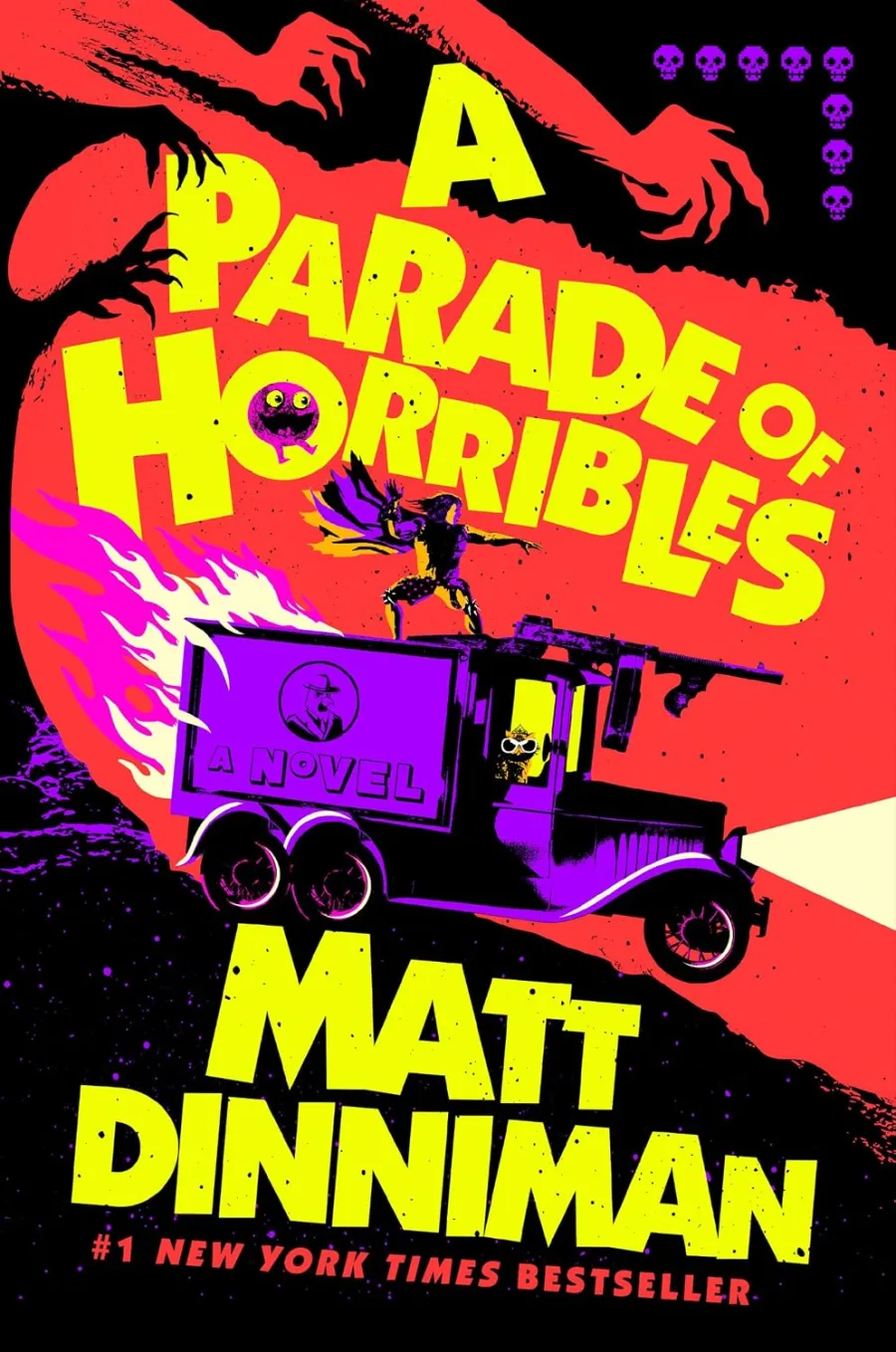
Download Cover Image
Do you want to download the full cover image for A Parade of Horribles (Dungeon Crawler Carl)?