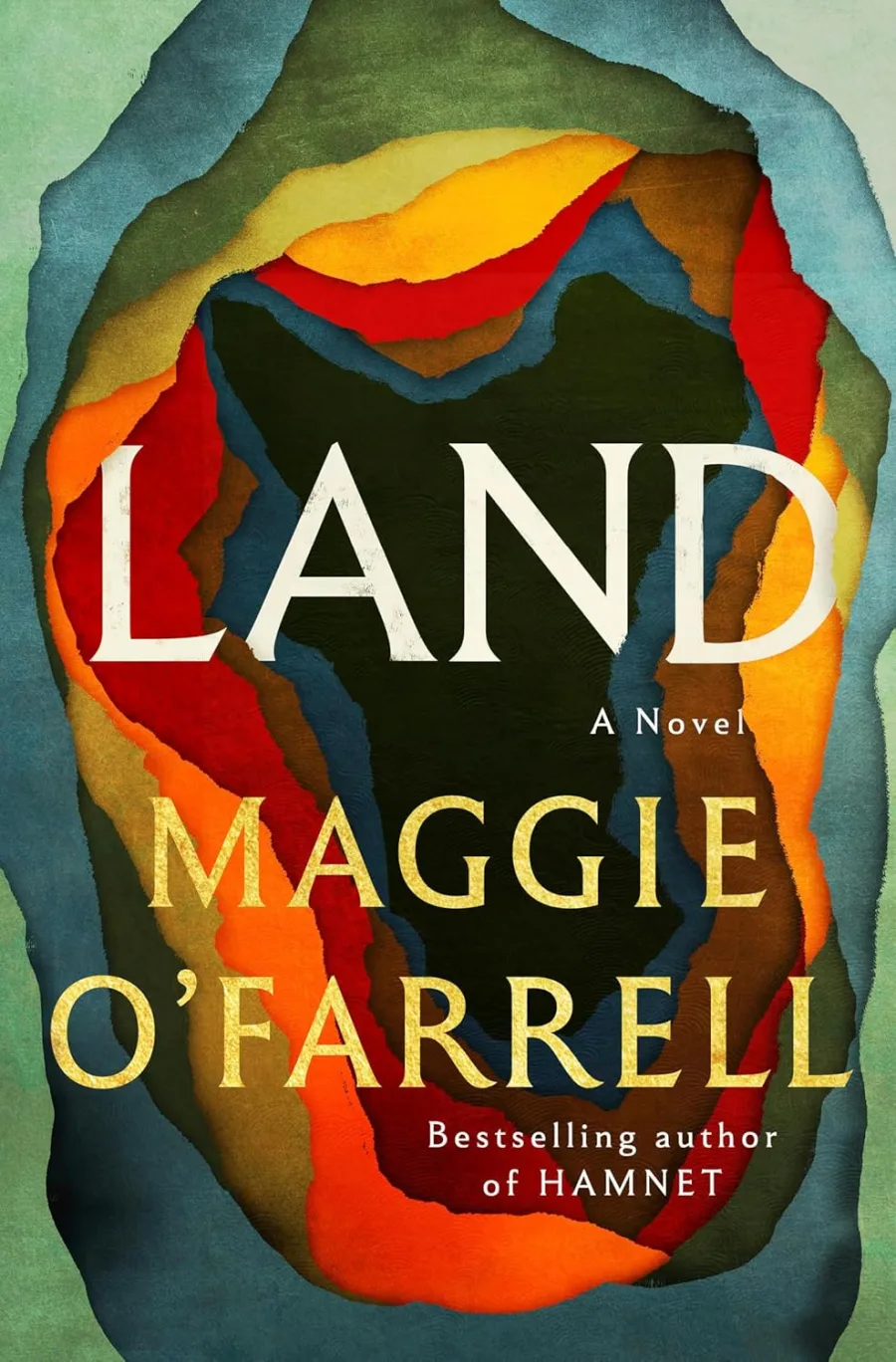
Land: A Novel
Hardcover
• 400 Pages
• USD 32.00
• English
• 9780593320648
No ratings yet
| Publisher | Knopf |
|---|---|
| ISBN13 | 9780593320648 |
| ASIN/SKU | 0593320646 |
| Book Format | Hardcover |
| Language | English |
| Pages | 400 |
| List Price | USD 32.00 |
| Publishing Date | 02/06/2026 |
| Dimensions | 6.42 x 1.28 x 9.52 inches |
| Weight | 1.23 pounds |
| Book Code | BD00054640 |
Buy this Book
Amazon Stores
Ebook Stores
Other Stores
Discover Land: A Novel by Maggie O'Farrell. This book is published by Knopf in Hardcover format, ISBN 9780593320648, ASIN 0593320646, under Literature and Fiction, Historical, Fiction.
Book Description
NEW YORK TIMES BESTSELLER • The award-winning, bestselling author of Hamnet and The Marriage Portrait returns with a soaring historical novel set in Ireland in the years before and after the Great Hunger.
“A breathtaking hymn to the sanctity of natural spaces, operating on timescales both intimate and geological. I finished Land moved not only by the vivid lives of its human characters, but the thrumming, gorgeous presence of its mosses, waters, winds, and skies.” —Daniel Mason, author of North Woods
On a windswept peninsula stretching out into the Atlantic, Tomás and his reluctant son, Liam, are working for the great Ordnance Survey project to map the whole of Ireland. The year is 1865, and in a country not long since ravaged and emptied by the Great Hunger, the task is not an easy one. Tomás, however, is determined that his maps will be a record of the disaster.
The British soldiers in charge are due to arrive any day, expecting the work to be completed, but Tomás is unexpectedly sent off course by an unsettling encounter in a copse. His life, and the lives of those of his family, will never be the same again. Liam is terrified by the sudden change in his taciturn father. What was it that caused such cracks to open in Tomás, and how is Liam, aged only ten, going to finish the mapping and get them both home?
Land is a novel about separation and reunion, tragedy and recovery, colonization and rebellion. It is a story of buried treasure, overlapping lives, ancient woodland, persistent ghosts, a particularly loyal dog, and how, when it comes to both land and history, nothing ever goes away. As spellbinding and varied as the landscape that inspired it, Land is, above all, a story of survival, for our times and for all time.
“A breathtaking hymn to the sanctity of natural spaces, operating on timescales both intimate and geological. I finished Land moved not only by the vivid lives of its human characters, but the thrumming, gorgeous presence of its mosses, waters, winds, and skies.” —Daniel Mason, author of North Woods
On a windswept peninsula stretching out into the Atlantic, Tomás and his reluctant son, Liam, are working for the great Ordnance Survey project to map the whole of Ireland. The year is 1865, and in a country not long since ravaged and emptied by the Great Hunger, the task is not an easy one. Tomás, however, is determined that his maps will be a record of the disaster.
The British soldiers in charge are due to arrive any day, expecting the work to be completed, but Tomás is unexpectedly sent off course by an unsettling encounter in a copse. His life, and the lives of those of his family, will never be the same again. Liam is terrified by the sudden change in his taciturn father. What was it that caused such cracks to open in Tomás, and how is Liam, aged only ten, going to finish the mapping and get them both home?
Land is a novel about separation and reunion, tragedy and recovery, colonization and rebellion. It is a story of buried treasure, overlapping lives, ancient woodland, persistent ghosts, a particularly loyal dog, and how, when it comes to both land and history, nothing ever goes away. As spellbinding and varied as the landscape that inspired it, Land is, above all, a story of survival, for our times and for all time.
Author Biography
Maggie O’Farrell, Fellow of the Royal Society of Literature, is the author of HAMNET, Winner of the Women’s Prize for Fiction 2020, and the memoir I AM, I AM, I AM, both Sunday Times no. 1 bestsellers. Her novels include AFTER YOU’D GONE, MY LOVER’S LOVER, THE DISTANCE BETWEEN US, which won a Somerset Maugham Award, THE VANISHING ACT OF ESME LENNOX, THE HAND THAT FIRST HELD MINE, which won the 2010 Costa Novel Award, INSTRUCTIONS FOR A HEATWAVE and THIS MUST BE THE PLACE, and THE MARRIAGE PORTRAIT. She is also the author of two books for children, WHERE SNOW ANGELS GO and THE BOY WHO LOST HIS SPARK. She lives in Edinburgh.
Editorial Reviews
Editorial Reviews will be added soon…
Book Summary
“Land” by Maggie O’Farrell is a sweeping historical story set in post-famine Ireland, centered on a family trying to survive grief, poverty, and the long shadow of colonial rule. At its heart is Tomás, a quiet and gifted mapmaker working for the British Ordnance Survey, and his young son Liam, who accompanies him as they chart a country that has been devastated by the Great Hunger. The work is meant to help the British measure and control Ireland, but Tomás begins to see the land in a different way, as something that holds memory, pain, and history. A powerful encounter in an unmapped grove changes him deeply and sets the rest of the novel in motion.
After this encounter, Tomás becomes convinced that the official maps erase too much of what Ireland really is. He grows determined to create a truer record of the land, one that reflects the scars left by famine, the old place names, and the deeper life of the country. This decision separates him from the job that has supported his family and forces his wife, Phina, to confront the risks of his choice. Phina is practical and fearful for their future, especially because the family has already lived through starvation, loss, and instability. Her perspective grounds the novel in domestic reality, while Tomás’s vision pulls the story into questions of memory, identity, and belonging.
The family leaves Dublin and settles on a remote western peninsula, where life is harsh but full of possibility. The landscape is rugged and haunted, and the novel treats it almost like another character, one that remembers everything that has happened there. As the family tries to build a home, old wounds and buried truths rise to the surface. O’Farrell weaves in themes of colonial power, cultural erasure, and the way history survives in place, language, and story. The novel suggests that land is never just land: it carries the traces of those who were displaced, silenced, or lost.
The second half of the novel expands beyond Tomás and Phina to follow the children as they grow up and are scattered by the forces of history. Liam’s path takes him far from home, and other family members are pulled into the wider Irish diaspora. This movement outward gives the book a larger emotional range, showing how one family’s struggle is tied to migration, survival, and the afterlife of famine. The story becomes less about a single event than about generations of separation and recovery, and about what it means to carry a homeland with you when you can no longer stay in it.
There is also a strong sense of mystery running through the novel. The grove, the spring, and the altered state Tomás enters all suggest a world where the natural and the spiritual are close to each other. That atmosphere gives the book a mythic quality without losing its historical grounding. O’Farrell uses this blend of realism and wonder to show how people make meaning from trauma. The family’s hardships are real and severe, but so is their connection to landscape, folklore, and inherited memory.
At the same time, Land is a novel about love under strain. Tomás and Phina are bound together by shared survival, but also by conflict over what security should look like and what sacrifices a family can endure. Their marriage is tested by poverty, pride, and difficult choices, yet the book never treats them as symbols alone. They are parents trying to protect their children while living in a country shaped by loss. That human scale keeps the novel emotionally close even as its themes stretch across history.
By the end, Land feels less like a conventional plot-driven novel than a layered meditation on place, inheritance, and the stories nations tell about themselves. It asks what gets mapped, what gets ignored, and what remains in the soil long after official histories move on. The result is a moving and haunting family saga, one that links private grief to public history and shows how deeply people are shaped by the ground beneath them.
After this encounter, Tomás becomes convinced that the official maps erase too much of what Ireland really is. He grows determined to create a truer record of the land, one that reflects the scars left by famine, the old place names, and the deeper life of the country. This decision separates him from the job that has supported his family and forces his wife, Phina, to confront the risks of his choice. Phina is practical and fearful for their future, especially because the family has already lived through starvation, loss, and instability. Her perspective grounds the novel in domestic reality, while Tomás’s vision pulls the story into questions of memory, identity, and belonging.
The family leaves Dublin and settles on a remote western peninsula, where life is harsh but full of possibility. The landscape is rugged and haunted, and the novel treats it almost like another character, one that remembers everything that has happened there. As the family tries to build a home, old wounds and buried truths rise to the surface. O’Farrell weaves in themes of colonial power, cultural erasure, and the way history survives in place, language, and story. The novel suggests that land is never just land: it carries the traces of those who were displaced, silenced, or lost.
The second half of the novel expands beyond Tomás and Phina to follow the children as they grow up and are scattered by the forces of history. Liam’s path takes him far from home, and other family members are pulled into the wider Irish diaspora. This movement outward gives the book a larger emotional range, showing how one family’s struggle is tied to migration, survival, and the afterlife of famine. The story becomes less about a single event than about generations of separation and recovery, and about what it means to carry a homeland with you when you can no longer stay in it.
There is also a strong sense of mystery running through the novel. The grove, the spring, and the altered state Tomás enters all suggest a world where the natural and the spiritual are close to each other. That atmosphere gives the book a mythic quality without losing its historical grounding. O’Farrell uses this blend of realism and wonder to show how people make meaning from trauma. The family’s hardships are real and severe, but so is their connection to landscape, folklore, and inherited memory.
At the same time, Land is a novel about love under strain. Tomás and Phina are bound together by shared survival, but also by conflict over what security should look like and what sacrifices a family can endure. Their marriage is tested by poverty, pride, and difficult choices, yet the book never treats them as symbols alone. They are parents trying to protect their children while living in a country shaped by loss. That human scale keeps the novel emotionally close even as its themes stretch across history.
By the end, Land feels less like a conventional plot-driven novel than a layered meditation on place, inheritance, and the stories nations tell about themselves. It asks what gets mapped, what gets ignored, and what remains in the soil long after official histories move on. The result is a moving and haunting family saga, one that links private grief to public history and shows how deeply people are shaped by the ground beneath them.
Sample Chapters
Sample Chapters will be added soon…
Reader Reviews
No reviews yet.
Land: A Novel