
The Things We Never Say: A Novel
Hardcover
• 224 Pages
• USD 29.00
• English
• 9798217154746
No ratings yet
| Publisher | Random House |
|---|---|
| ISBN13 | 9798217154746 |
| ASIN/SKU | B0FSPVLCM1 |
| Book Format | Hardcover |
| Language | English |
| Pages | 224 |
| List Price | USD 29.00 |
| Publishing Date | 05/05/2026 |
| Dimensions | 5.72 x 0.86 x 8.54 inches |
| Weight | 13.6 ounces |
| Book Code | BD00054675 |
Buy this Book
Amazon Stores
Ebook Stores
Other Stores
Discover The Things We Never Say: A Novel by Elizabeth Strout. This book is published by Random House in Hardcover format, ISBN 9798217154746, ASIN B0FSPVLCM1, under Literature and Fiction, Contemporary, Family.
Book Description
NEW YORK TIMES BESTSELLER • In this “profound, resplendent novel”* from Pulitzer Prize–winning, #1 New York Times bestselling author Elizabeth Strout, a chance incident sparks a powerful realization in a beloved teacher’s life
“Strout’s capacious empathy and rigorous attention to the nuances of human behavior and psychology are as evident as ever.”—The Boston Globe
“Artie Dam is someone you may never be able to forget.”—Financial Times*
Artie Dam is living a double life. He spends his days teaching history to eleventh graders, expanding their young minds, correcting their casual cruelties, and lending a kind word to those who need it most. He goes to holiday parties with his wife of three decades, makes small talk with neighbors, and, on weekends, takes his sailboat out on the beautiful Massachusetts Bay. He is, by all appearances, present and alive. But inside, Artie is plagued by feelings of isolation. He looks out at a world gone mad—at himself and the people around him—and turns a question over and over in his mind: How is it that we know so little about one another, even those closest to us?
And then, one day, Artie learns that life has been keeping a secret from him, one that threatens to upend his entire world. Once he learns it, he is forced to chart a new course, to reconsider the relationships he holds most dear—and to make peace with the mysteries at the heart of our existence.
Elizabeth Strout, as we have come to expect, delivers a moving exploration of the human condition—one that brims with compassion for each and every one of her indelible characters. With exquisite prose and profound insight, The Things We Never Say takes one man’s fears and loneliness and makes them universal. And in the same breath, captures the abiding love that sustains and holds us all.
“Strout’s capacious empathy and rigorous attention to the nuances of human behavior and psychology are as evident as ever.”—The Boston Globe
“Artie Dam is someone you may never be able to forget.”—Financial Times*
Artie Dam is living a double life. He spends his days teaching history to eleventh graders, expanding their young minds, correcting their casual cruelties, and lending a kind word to those who need it most. He goes to holiday parties with his wife of three decades, makes small talk with neighbors, and, on weekends, takes his sailboat out on the beautiful Massachusetts Bay. He is, by all appearances, present and alive. But inside, Artie is plagued by feelings of isolation. He looks out at a world gone mad—at himself and the people around him—and turns a question over and over in his mind: How is it that we know so little about one another, even those closest to us?
And then, one day, Artie learns that life has been keeping a secret from him, one that threatens to upend his entire world. Once he learns it, he is forced to chart a new course, to reconsider the relationships he holds most dear—and to make peace with the mysteries at the heart of our existence.
Elizabeth Strout, as we have come to expect, delivers a moving exploration of the human condition—one that brims with compassion for each and every one of her indelible characters. With exquisite prose and profound insight, The Things We Never Say takes one man’s fears and loneliness and makes them universal. And in the same breath, captures the abiding love that sustains and holds us all.
Author Biography
Elizabeth Strout is the author of the New York Times bestseller Olive Kitteridge, for which she was awarded the Pulitzer Prize; the national bestseller Abide with Me; and Amy and Isabelle, winner of the Los Angeles Times Art Seidenbaum Award and the Chicago Tribune Heartland Prize. She has also been a finalist for the PEN/Faulkner Award and the Orange Prize in London. She lives in Maine and New York City.
Editorial Reviews
Editorial Reviews will be added soon…
Book Summary
Elizabeth Strout’s 2026 novel, "The Things We Never Say," marks a refreshing and deeply moving departure from the interconnected, Maine-based universe of her previous beloved works. Instead, Strout introduces readers to an entirely new protagonist in a standalone narrative set in an unnamed coastal town in Massachusetts. Published against the backdrop of a fractured world, the novel is a profound meditation on male loneliness, the echoes of family tragedy, and the terrifying difficulty of authentic human communication. At its core, the book explores a pervasive modern anxiety, probing what happens when the things we leave unsaid build an insurmountable wall between ourselves and the people we love. Through her signature gimlet-eyed insight and capacious empathy, Strout paints a portrait of a man quietly drowning in plain sight, offering a narrative that is as excoriating about contemporary society as it is tender toward its flawed inhabitants.
The story centers on Artie Dam, a fifty-seven-year-old high school history teacher who, by all outward appearances, leads a pleasant and stable life. Deeply beloved by his students and engaged in his community, he has been married for three decades to his wife, Evie. They live in a beautifully renovated house on a private road overlooking the ocean—a home inherited from Evie’s wealthy parents. On weekends, Artie takes his sailboat out onto Massachusetts Bay, the picture of middle-class contentment. Yet, beneath this placid surface, Artie is engulfed by a secret despair. He feels profoundly isolated and disconnected from his own life, plagued by an existential dread that has led him to privately contemplate suicide. He becomes obsessed with the concept of free will, wondering how much of his life was genuinely chosen and how much was predetermined by circumstance, class, and the unspoken rules of his marriage.
The emotional distance between Artie and Evie traces back to a devastating family tragedy that occurred ten years earlier. Their son, Rob, was the driver in a horrific car crash that killed his teenage girlfriend. While Rob survived, went to MIT, and became a successful software developer, the emotional fallout irreparably fractured the family. Rob remains withdrawn, consumed by a quiet shame that breaks Artie’s heart every time he looks at his son. In the crash's aftermath, Evie reconfigured her life by retraining as a family therapist, using her clinical expertise to build an emotional fortress. When Artie tries to express his anxieties, Evie responds with detached, therapeutic distance, shutting down genuine vulnerability. Artie, who grew up working-class and has always felt that he married up, finds himself increasingly alienated in his grand house, realizing that he and his wife have spent years traveling through life completely blind to one another's pain.
Strout masterfully intertwines Artie’s internal crisis with the external turmoil of the world around him. The novel unfolds during the summer and autumn of 2024, leading up to a highly polarized United States presidential election. As a history teacher, Artie is acutely aware of the historical weight of the moment. He notices a stark change in his students in the post-pandemic era; they have lost their argumentative spark and are instead burdened by a pervasive anxiety. The impending election hangs over Artie like a tightening noose, exacerbating his sense that the country itself is committing a slow suicide. This broader societal breakdown mirrors Artie's realization that people crave authority and simplistic answers rather than doing the difficult work of real communication. He laments why people never say anything real, highlighting the novel's central thesis: true loneliness does not stem from a lack of company, but from the inability to share the most vital parts of oneself.
The narrative momentum accelerates when Artie experiences a terrifying near-drowning accident, slipping between his dinghy and his sailboat. The visceral brush with death momentarily shocks him out of his depressive stupor, reigniting a fragile, primal desire to stay alive. However, this renewed grip on life is immediately challenged when Rob reveals a massive, long-held secret about Evie. This revelation acts as a detonation within the family, forcing Artie to completely reassess the woman he has loved for thirty years and the foundation upon which their entire marriage was built. The secret threatens to upend the delicate, unspoken truce that has kept the family functioning, pushing Artie to a breaking point just as the dreaded election results finally roll in and plunge him into a deeper unraveling.
Ultimately, "The Things We Never Say" is a testament to Strout’s unparalleled ability to make the ordinary feel urgent and profoundly significant. While the novel explores the darkest corners of human experience—suicide, unfathomable grief, and political despair—it is far from hopeless. Strout strips away the polite fictions that govern her characters' lives, forcing them to confront the terrifying vulnerability of truth. Through Artie’s grueling journey of self-discovery, the novel suggests that while we may never fully comprehend the mysteries of the people we sleep next to, the courageous act of breaking the silence is our only salvation. It is a beautifully crafted story about finding the lexicon for our loneliness and discovering that the messy attempts to connect are what make life worth living.
The story centers on Artie Dam, a fifty-seven-year-old high school history teacher who, by all outward appearances, leads a pleasant and stable life. Deeply beloved by his students and engaged in his community, he has been married for three decades to his wife, Evie. They live in a beautifully renovated house on a private road overlooking the ocean—a home inherited from Evie’s wealthy parents. On weekends, Artie takes his sailboat out onto Massachusetts Bay, the picture of middle-class contentment. Yet, beneath this placid surface, Artie is engulfed by a secret despair. He feels profoundly isolated and disconnected from his own life, plagued by an existential dread that has led him to privately contemplate suicide. He becomes obsessed with the concept of free will, wondering how much of his life was genuinely chosen and how much was predetermined by circumstance, class, and the unspoken rules of his marriage.
The emotional distance between Artie and Evie traces back to a devastating family tragedy that occurred ten years earlier. Their son, Rob, was the driver in a horrific car crash that killed his teenage girlfriend. While Rob survived, went to MIT, and became a successful software developer, the emotional fallout irreparably fractured the family. Rob remains withdrawn, consumed by a quiet shame that breaks Artie’s heart every time he looks at his son. In the crash's aftermath, Evie reconfigured her life by retraining as a family therapist, using her clinical expertise to build an emotional fortress. When Artie tries to express his anxieties, Evie responds with detached, therapeutic distance, shutting down genuine vulnerability. Artie, who grew up working-class and has always felt that he married up, finds himself increasingly alienated in his grand house, realizing that he and his wife have spent years traveling through life completely blind to one another's pain.
Strout masterfully intertwines Artie’s internal crisis with the external turmoil of the world around him. The novel unfolds during the summer and autumn of 2024, leading up to a highly polarized United States presidential election. As a history teacher, Artie is acutely aware of the historical weight of the moment. He notices a stark change in his students in the post-pandemic era; they have lost their argumentative spark and are instead burdened by a pervasive anxiety. The impending election hangs over Artie like a tightening noose, exacerbating his sense that the country itself is committing a slow suicide. This broader societal breakdown mirrors Artie's realization that people crave authority and simplistic answers rather than doing the difficult work of real communication. He laments why people never say anything real, highlighting the novel's central thesis: true loneliness does not stem from a lack of company, but from the inability to share the most vital parts of oneself.
The narrative momentum accelerates when Artie experiences a terrifying near-drowning accident, slipping between his dinghy and his sailboat. The visceral brush with death momentarily shocks him out of his depressive stupor, reigniting a fragile, primal desire to stay alive. However, this renewed grip on life is immediately challenged when Rob reveals a massive, long-held secret about Evie. This revelation acts as a detonation within the family, forcing Artie to completely reassess the woman he has loved for thirty years and the foundation upon which their entire marriage was built. The secret threatens to upend the delicate, unspoken truce that has kept the family functioning, pushing Artie to a breaking point just as the dreaded election results finally roll in and plunge him into a deeper unraveling.
Ultimately, "The Things We Never Say" is a testament to Strout’s unparalleled ability to make the ordinary feel urgent and profoundly significant. While the novel explores the darkest corners of human experience—suicide, unfathomable grief, and political despair—it is far from hopeless. Strout strips away the polite fictions that govern her characters' lives, forcing them to confront the terrifying vulnerability of truth. Through Artie’s grueling journey of self-discovery, the novel suggests that while we may never fully comprehend the mysteries of the people we sleep next to, the courageous act of breaking the silence is our only salvation. It is a beautifully crafted story about finding the lexicon for our loneliness and discovering that the messy attempts to connect are what make life worth living.
Sample Chapters
Sample Chapters will be added soon…
Reader Reviews
No reviews yet.
The Things We Never Say: A Novel
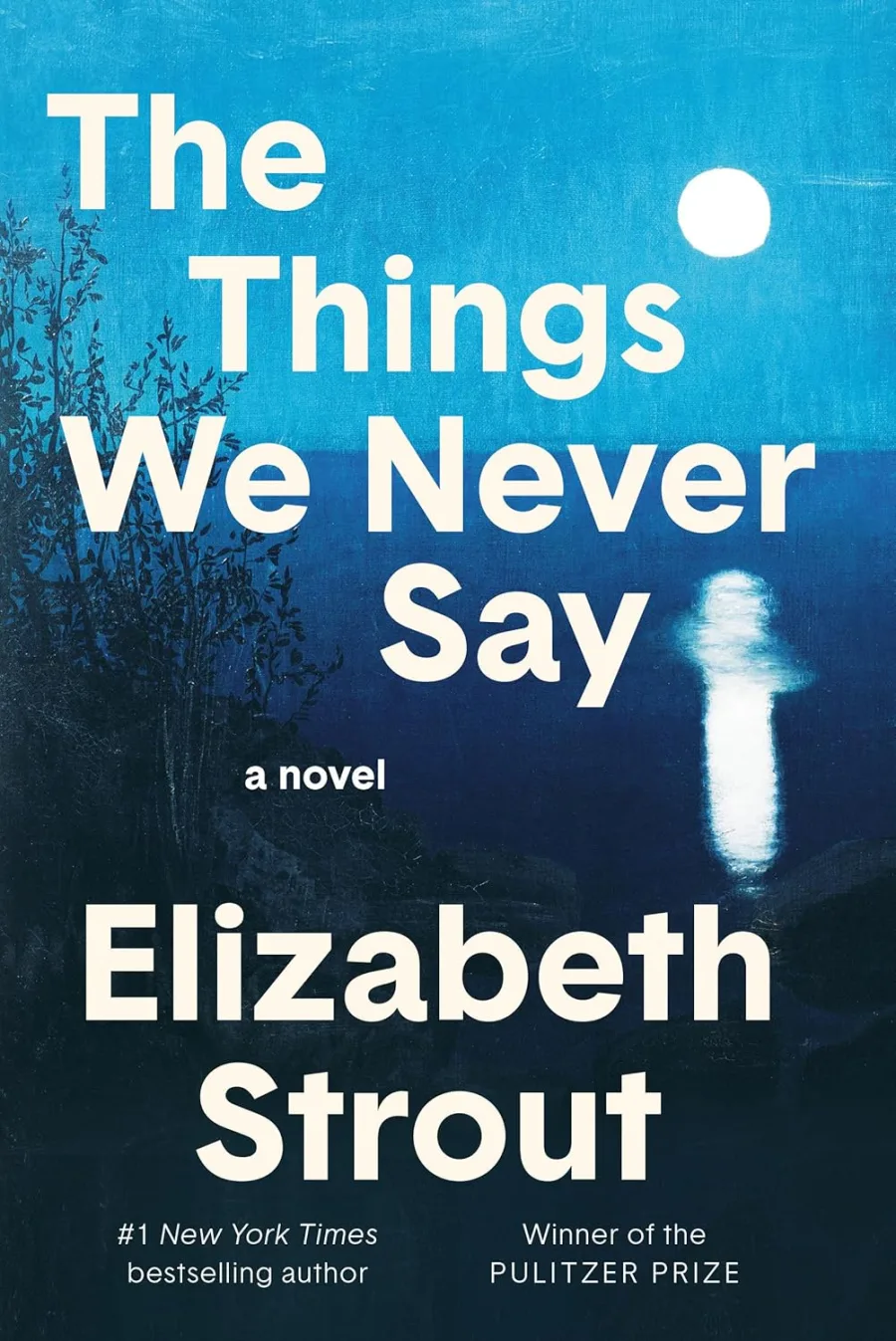
Download Cover Image
Do you want to download the full cover image for The Things We Never Say: A Novel?