
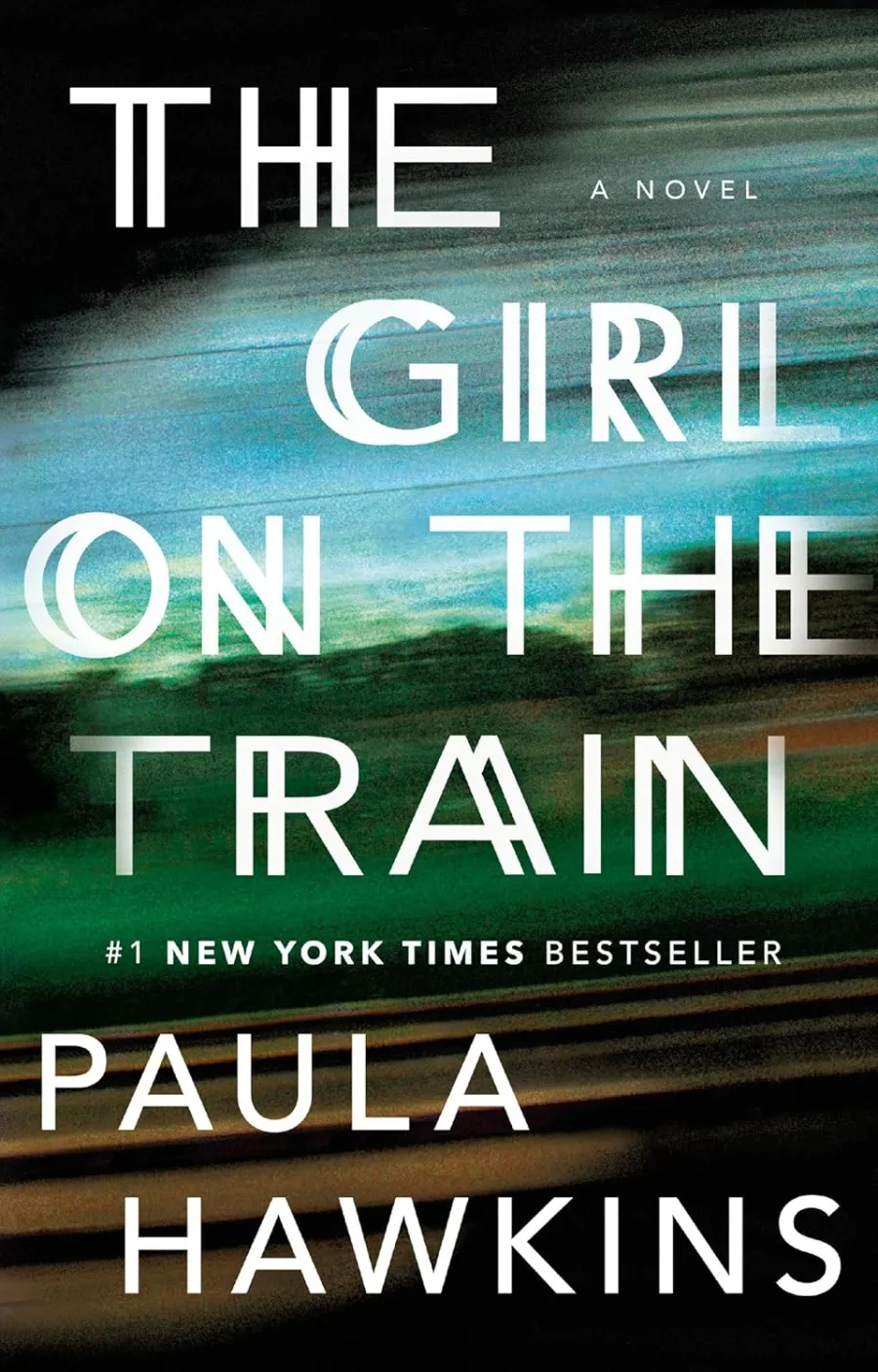
The Girl on the Train
Paperback
• 336 Pages
• USD 18.00
• English
• 9781594634024
No ratings yet
| Publisher | Riverhead Books |
|---|---|
| ISBN13 | 9781594634024 |
| ASIN/SKU | 1594634025 |
| Book Format | Paperback |
| Language | English |
| Pages | 336 |
| List Price | USD 18.00 |
| Publishing Date | 12/07/2016 |
| Dimensions | 5.1 x 0.85 x 8 inches |
| Weight | 11.2 ounces |
| Book Code | BD00054873 |
Buy this Book
Amazon Stores
Ebook Stores
Other Stores
Discover The Girl on the Train by Paula Hawkins. This book is published by Riverhead Books in Paperback format, ISBN 9781594634024, ASIN 1594634025, under Mystery, Thriller and Suspense, Literary Fiction, Suspense Thrillers.
Book Description
The #1 New York Times Bestseller, USA Today Book of the Year, now a major motion picture starring Emily Blunt.
The debut psychological thriller that will forever change the way you look at other people's lives, from the author of Into the Water and A Slow Fire Burning.
“Nothing is more addicting than The Girl on the Train.”—Vanity Fair
“The Girl on the Train has more fun with unreliable narration than any chiller since Gone Girl. . . . [It] is liable to draw a large, bedazzled readership.”—The New York Times
“Marries movie noir with novelistic trickery. . . hang on tight. You'll be surprised by what horrors lurk around the bend.”—USA Today
“Like its train, the story blasts through the stagnation of these lives in suburban London and the reader cannot help but turn pages.”—The Boston Globe
“Gone Girl fans will devour this psychological thriller.”—People
EVERY DAY THE SAME
Rachel takes the same commuter train every morning and night. Every day she rattles down the track, flashes past a stretch of cozy suburban homes, and stops at the signal that allows her to daily watch the same couple breakfasting on their deck. She’s even started to feel like she knows them. Jess and Jason, she calls them. Their life—as she sees it—is perfect. Not unlike the life she recently lost.
UNTIL TODAY
And then she sees something shocking. It’s only a minute until the train moves on, but it’s enough. Now everything’s changed. Unable to keep it to herself, Rachel goes to the police. But is she really as unreliable as they say? Soon she is deeply entangled not only in the investigation but in the lives of everyone involved. Has she done more harm than good?
The debut psychological thriller that will forever change the way you look at other people's lives, from the author of Into the Water and A Slow Fire Burning.
“Nothing is more addicting than The Girl on the Train.”—Vanity Fair
“The Girl on the Train has more fun with unreliable narration than any chiller since Gone Girl. . . . [It] is liable to draw a large, bedazzled readership.”—The New York Times
“Marries movie noir with novelistic trickery. . . hang on tight. You'll be surprised by what horrors lurk around the bend.”—USA Today
“Like its train, the story blasts through the stagnation of these lives in suburban London and the reader cannot help but turn pages.”—The Boston Globe
“Gone Girl fans will devour this psychological thriller.”—People
EVERY DAY THE SAME
Rachel takes the same commuter train every morning and night. Every day she rattles down the track, flashes past a stretch of cozy suburban homes, and stops at the signal that allows her to daily watch the same couple breakfasting on their deck. She’s even started to feel like she knows them. Jess and Jason, she calls them. Their life—as she sees it—is perfect. Not unlike the life she recently lost.
UNTIL TODAY
And then she sees something shocking. It’s only a minute until the train moves on, but it’s enough. Now everything’s changed. Unable to keep it to herself, Rachel goes to the police. But is she really as unreliable as they say? Soon she is deeply entangled not only in the investigation but in the lives of everyone involved. Has she done more harm than good?
Author Biography
PAULA HAWKINS worked as a journalist for fifteen years before writing her first novel. Born and brought up in Zimbabwe, Paula moved to London in 1989. Her first thriller, The Girl on the Train, has sold more than 23 million copies worldwide. Published in over fifty languages, it has been a Number 1 bestseller around the world and was a box office hit film starring Emily Blunt.
Paula's thrillers, Into the Water and A Slow Fire Burning, were also instant Number 1 bestsellers.
Paula's thrillers, Into the Water and A Slow Fire Burning, were also instant Number 1 bestsellers.
Editorial Reviews
“The Girl on the Train has more fun with unreliable narration than any chiller since Gone Girl. . . . The Girl on the Train is liable to draw a large, bedazzled readership too. . . . The Girl on the Train is full of back-stabbing, none of it literal.”—Janet Maslin, The New York Times
“The Girl on the Train marries movie noir with novelistic trickery. . . hang on tight. You'll be surprised by what horrors lurk around the bend.”—USA Today
“Like its train, the story blasts through the stagnation of these lives in suburban London and the reader cannot help but turn pages. . . . The welcome echoes ofRear Window throughout the story and its propulsive narrative make The Girl on the Train an absorbing read.”—The Boston Globe
“[The Girl on the Train] pulls off a thriller's toughest trick: carefully assembling everything we think we know, until it reveals the one thing we didn't see coming."—Entertainment Weekly
“Gone Girl fans will devour this psychological thriller. . . . Hawkins’s debut ends with a twist that no one—least of all its victims—could have seen coming.”—People
“Given the number of titles that are declared to be 'the next' of a bestseller . . . book fans have every right to be wary. But Paula Hawkins’ novel The Girl on the Train just might have earned the title of 'the next Gone Girl.”—Christian Science Monitor
“Hawkins’s taut story roars along at the pace of, well, a high-speed train. …Hawkins delivers a smart, searing thriller that offers readers a 360-degree view of lust, love, marriage and divorce.”—Good Housekeeping
“There’s nothing like a possible murder to take the humdrum out of your daily commute.”—Cosmopolitan
"Paula Hawkins has come up with an ingenious slant on the currently fashionable amnesia thriller. . . . Hawkins juggles perspectives and timescales with great skill, and considerable suspense builds up along with empathy for an unusual central character."—The Guardian
“Paula Hawkins deftly imbues her debut psychological thriller with inventive twists and a shocking denouement. … Hawkins delivers an original debut that keeps the exciting momentum of The Girl on the Train going until the last page.”—Denver Post
“The Girl on the Train, Hawkins’s first thriller, is well-written and ingeniously constructed.” – The Washington Post
“The novel is at its best in the moment of maximum confusion, when neither the reader nor the narrators know what is occurring” – The Financial Times
“This fresh take on Hitchcock’s Rear Window is getting raves and will likely be one of the biggest debuts of the year.”—Omaha World-Herald
“Hawkins’s tale of love, regret, violence and forgetting is an engrossing psychological thriller with plenty of surprises. . . . The novel gets harder and harder to put down as the story screeches toward its unexpected ending.”—Minneapolis Star Tribune
“The Girl on the Train marries movie noir with novelistic trickery. . . hang on tight. You'll be surprised by what horrors lurk around the bend.”—USA Today
“Like its train, the story blasts through the stagnation of these lives in suburban London and the reader cannot help but turn pages. . . . The welcome echoes ofRear Window throughout the story and its propulsive narrative make The Girl on the Train an absorbing read.”—The Boston Globe
“[The Girl on the Train] pulls off a thriller's toughest trick: carefully assembling everything we think we know, until it reveals the one thing we didn't see coming."—Entertainment Weekly
“Gone Girl fans will devour this psychological thriller. . . . Hawkins’s debut ends with a twist that no one—least of all its victims—could have seen coming.”—People
“Given the number of titles that are declared to be 'the next' of a bestseller . . . book fans have every right to be wary. But Paula Hawkins’ novel The Girl on the Train just might have earned the title of 'the next Gone Girl.”—Christian Science Monitor
“Hawkins’s taut story roars along at the pace of, well, a high-speed train. …Hawkins delivers a smart, searing thriller that offers readers a 360-degree view of lust, love, marriage and divorce.”—Good Housekeeping
“There’s nothing like a possible murder to take the humdrum out of your daily commute.”—Cosmopolitan
"Paula Hawkins has come up with an ingenious slant on the currently fashionable amnesia thriller. . . . Hawkins juggles perspectives and timescales with great skill, and considerable suspense builds up along with empathy for an unusual central character."—The Guardian
“Paula Hawkins deftly imbues her debut psychological thriller with inventive twists and a shocking denouement. … Hawkins delivers an original debut that keeps the exciting momentum of The Girl on the Train going until the last page.”—Denver Post
“The Girl on the Train, Hawkins’s first thriller, is well-written and ingeniously constructed.” – The Washington Post
“The novel is at its best in the moment of maximum confusion, when neither the reader nor the narrators know what is occurring” – The Financial Times
“This fresh take on Hitchcock’s Rear Window is getting raves and will likely be one of the biggest debuts of the year.”—Omaha World-Herald
“Hawkins’s tale of love, regret, violence and forgetting is an engrossing psychological thriller with plenty of surprises. . . . The novel gets harder and harder to put down as the story screeches toward its unexpected ending.”—Minneapolis Star Tribune
Book Summary
The Girl on the Train by Paula Hawkins is a gripping psychological thriller told from the intertwined perspectives of three unreliable female narrators: Rachel, Megan, and Anna. The novel explores themes of memory, alcoholism, domestic abuse, and the dangerous gap between outward appearances and hidden realities. Rather than traditional numbered chapters, the book progresses through dated journal-style entries, slowly peeling back the layers of a complex murder mystery.
Part 1: The Commute and the Illusion
Rachel Watson is a depressed, unemployed alcoholic who lost her job months ago but continues to ride the commuter train to London every day to hide her termination from her roommate. Her life is in shambles; her heavy drinking cost her her marriage to Tom, who left her for his mistress, Anna. Tom and Anna now live in the house Rachel helped buy, raising their new baby girl. From the train window, Rachel obsesses over a house a few doors down from her old home. She fixates on the couple living there, naming them "Jess and Jason," and projects a fantasy of perfect, idyllic love onto them to cope with her own misery.
In reality, "Jess and Jason" are Megan and Scott Hipwell. Megan’s perspective reveals a life far from perfect. She is restless, suffering from insomnia, and feels stifled by Scott’s controlling, jealous behavior. Burdened by a dark, secret past—the accidental death of her infant daughter years prior—Megan seeks reckless escapes, engaging in affairs to feel alive.
Part 2: The Blackout and the Disappearance
The plot ignites when Rachel sees "Jess" (Megan) kissing a stranger on her patio. Rachel is devastated and enraged by this perceived betrayal of the perfect marriage. Shortly after, Megan goes missing. The night of her disappearance, Rachel had been on a massive drinking binge in that very neighborhood, intending to confront Anna. Rachel wakes up the next morning covered in bruises, bleeding from a head wound, and completely unable to remember what happened during her blackout. Terrified that her drunken rage caused her to harm Megan—or Anna—Rachel becomes obsessed with uncovering the truth.
She inserts herself into the police investigation, approaching Scott Hipwell under false pretenses to tell him about the man she saw Megan kissing. That man is revealed to be Kamal Abdic, Megan’s therapist. The police are highly skeptical of Rachel due to her alcoholism, erratic behavior, and history of harassing Tom and Anna.
Part 3: Unraveling the Lies
As the search for Megan intensifies, the narrative shifts to include Anna’s perspective. Anna is fiercely protective of her new family and deeply paranoid about Rachel, whom she views as a dangerous, unhinged stalker. However, as the investigation drags on, Anna begins to notice disturbing inconsistencies in Tom’s stories. She discovers a burner phone hidden in Tom’s gym bag, forcing her to confront the reality that the man she stole from Rachel is a habitual liar.
Meanwhile, Rachel slowly begins to reduce her drinking, desperate to recover the lost memories of that fateful night. As fragments of the blackout return, she realizes that the memories she has of herself being abusive and out of control during her marriage were largely fabricated by Tom. Tom is a master gaslighter; he used Rachel’s blackouts against her, convincing her she did terrible things while drunk to cover up his own infidelities and verbal abuse.
Part 4: The Climax and the Truth
The gruesome discovery of Megan’s buried body confirms she was murdered. The autopsy reveals a shocking detail: Megan was pregnant, and neither Scott nor Kamal was the father. Through recovered memories, Rachel finally pieces together the night of the blackout. She remembers seeing Megan getting into Tom’s car. The horrific truth crystallizes: Tom and Megan were having an affair, and Megan was pregnant with his child. When Megan threatened to expose him and ruin his comfortable new life with Anna, Tom drove her to the woods and bludgeoned her to death. Tom also assaulted Rachel that same night to keep her from interfering, which caused her head wound.
Rachel goes to her old house to warn Anna that Tom is a murderer. Anna, who has already deduced Tom's affair with Megan, is trapped between her fear of Rachel and her dawning realization of Tom’s true nature. When Tom arrives, the confrontation turns violent. Tom attempts to strangle Rachel, mocking her and revealing his true, sociopathic colors. In a desperate act of self-defense, Rachel stabs Tom in the neck with a corkscrew. As Tom bleeds on the floor, Anna approaches. Rather than helping her husband, Anna takes the corkscrew and twists it deeper into his neck, ensuring he dies. When the police arrive, the two women silently corroborate each other’s stories, claiming it was self-defense, finally binding them together in a shared, dark truth.
Key Lessons
• The Illusion of Perfect Lives: Rachel’s obsession with "Jess and Jason" demonstrates how easily we project perfection onto strangers. The novel is a stark reminder that we never truly know what happens behind closed doors, and idealizing the lives of others is a dangerous fantasy.
• The Devastating Impact of Gaslighting: Tom’s manipulation of Rachel highlights the profound psychological damage of gaslighting. By exploiting her alcoholism, he made her doubt her own sanity and memory. The story emphasizes the importance of trusting one’s own reality and recognizing the signs of emotional and psychological abuse.
• The Destructive Weight of Unresolved Trauma: Every major character is driven by unhealed wounds. Rachel self-medicates her infertility and divorce with alcohol; Megan recklessly acts out to escape the grief of losing her child; Anna clings to a stolen husband to validate her self-worth. Their interwoven tragedies illustrate how unaddressed trauma can spiral into catastrophic consequences.
Part 1: The Commute and the Illusion
Rachel Watson is a depressed, unemployed alcoholic who lost her job months ago but continues to ride the commuter train to London every day to hide her termination from her roommate. Her life is in shambles; her heavy drinking cost her her marriage to Tom, who left her for his mistress, Anna. Tom and Anna now live in the house Rachel helped buy, raising their new baby girl. From the train window, Rachel obsesses over a house a few doors down from her old home. She fixates on the couple living there, naming them "Jess and Jason," and projects a fantasy of perfect, idyllic love onto them to cope with her own misery.
In reality, "Jess and Jason" are Megan and Scott Hipwell. Megan’s perspective reveals a life far from perfect. She is restless, suffering from insomnia, and feels stifled by Scott’s controlling, jealous behavior. Burdened by a dark, secret past—the accidental death of her infant daughter years prior—Megan seeks reckless escapes, engaging in affairs to feel alive.
Part 2: The Blackout and the Disappearance
The plot ignites when Rachel sees "Jess" (Megan) kissing a stranger on her patio. Rachel is devastated and enraged by this perceived betrayal of the perfect marriage. Shortly after, Megan goes missing. The night of her disappearance, Rachel had been on a massive drinking binge in that very neighborhood, intending to confront Anna. Rachel wakes up the next morning covered in bruises, bleeding from a head wound, and completely unable to remember what happened during her blackout. Terrified that her drunken rage caused her to harm Megan—or Anna—Rachel becomes obsessed with uncovering the truth.
She inserts herself into the police investigation, approaching Scott Hipwell under false pretenses to tell him about the man she saw Megan kissing. That man is revealed to be Kamal Abdic, Megan’s therapist. The police are highly skeptical of Rachel due to her alcoholism, erratic behavior, and history of harassing Tom and Anna.
Part 3: Unraveling the Lies
As the search for Megan intensifies, the narrative shifts to include Anna’s perspective. Anna is fiercely protective of her new family and deeply paranoid about Rachel, whom she views as a dangerous, unhinged stalker. However, as the investigation drags on, Anna begins to notice disturbing inconsistencies in Tom’s stories. She discovers a burner phone hidden in Tom’s gym bag, forcing her to confront the reality that the man she stole from Rachel is a habitual liar.
Meanwhile, Rachel slowly begins to reduce her drinking, desperate to recover the lost memories of that fateful night. As fragments of the blackout return, she realizes that the memories she has of herself being abusive and out of control during her marriage were largely fabricated by Tom. Tom is a master gaslighter; he used Rachel’s blackouts against her, convincing her she did terrible things while drunk to cover up his own infidelities and verbal abuse.
Part 4: The Climax and the Truth
The gruesome discovery of Megan’s buried body confirms she was murdered. The autopsy reveals a shocking detail: Megan was pregnant, and neither Scott nor Kamal was the father. Through recovered memories, Rachel finally pieces together the night of the blackout. She remembers seeing Megan getting into Tom’s car. The horrific truth crystallizes: Tom and Megan were having an affair, and Megan was pregnant with his child. When Megan threatened to expose him and ruin his comfortable new life with Anna, Tom drove her to the woods and bludgeoned her to death. Tom also assaulted Rachel that same night to keep her from interfering, which caused her head wound.
Rachel goes to her old house to warn Anna that Tom is a murderer. Anna, who has already deduced Tom's affair with Megan, is trapped between her fear of Rachel and her dawning realization of Tom’s true nature. When Tom arrives, the confrontation turns violent. Tom attempts to strangle Rachel, mocking her and revealing his true, sociopathic colors. In a desperate act of self-defense, Rachel stabs Tom in the neck with a corkscrew. As Tom bleeds on the floor, Anna approaches. Rather than helping her husband, Anna takes the corkscrew and twists it deeper into his neck, ensuring he dies. When the police arrive, the two women silently corroborate each other’s stories, claiming it was self-defense, finally binding them together in a shared, dark truth.
Key Lessons
• The Illusion of Perfect Lives: Rachel’s obsession with "Jess and Jason" demonstrates how easily we project perfection onto strangers. The novel is a stark reminder that we never truly know what happens behind closed doors, and idealizing the lives of others is a dangerous fantasy.
• The Devastating Impact of Gaslighting: Tom’s manipulation of Rachel highlights the profound psychological damage of gaslighting. By exploiting her alcoholism, he made her doubt her own sanity and memory. The story emphasizes the importance of trusting one’s own reality and recognizing the signs of emotional and psychological abuse.
• The Destructive Weight of Unresolved Trauma: Every major character is driven by unhealed wounds. Rachel self-medicates her infertility and divorce with alcohol; Megan recklessly acts out to escape the grief of losing her child; Anna clings to a stolen husband to validate her self-worth. Their interwoven tragedies illustrate how unaddressed trauma can spiral into catastrophic consequences.
Sample Chapters
Sample Chapters will be added soon…
Reader Reviews
No reviews yet.
The Girl on the Train
Download Cover Image
Do you want to download the full cover image for The Girl on the Train?