
The Daily Stoic: 366 Meditations on Wisdom, Perseverance, and the Art of Living
Ryan Holiday, Stephen Hanselman
Hardcover
• 416 Pages
• USD 29.00
• English
• 9780735211735
No ratings yet
| Publisher | Portfolio |
|---|---|
| ISBN13 | 9780735211735 |
| ASIN/SKU | 0735211736 |
| Book Format | Hardcover |
| Language | English |
| Pages | 416 |
| List Price | USD 29.00 |
| Publishing Date | 18/10/2016 |
| Dimensions | 5.87 x 1.43 x 8.51 inches |
| Weight | 2.31 pounds |
| Book Code | BD00054938 |
Buy this Book
Amazon Stores
Ebook Stores
Other Stores
Discover The Daily Stoic: 366 Meditations on Wisdom, Perseverance, and the Art of Living by Ryan Holiday. This book is published by Portfolio in Hardcover format, ISBN 9780735211735, ASIN 0735211736, under Business and Money, Motivational Management and Leadership.
Book Description
The beloved classic daily devotional of Stoic meditations—the only authorized print edition in the US and complete with a ribbon marker—with more than two million copies sold!
Why have history's greatest minds—from George Washington to Frederick the Great to Ralph Waldo Emerson, along with today's top performers from Super Bowl-winning football coaches to CEOs and celebrities—embraced the wisdom of the ancient Stoics? Because they realize that the most valuable wisdom is timeless and that philosophy is for living a better life, not a classroom exercise.
The Daily Stoic offers 366 days of Stoic insights and exercises, featuring all-new translations from the Emperor Marcus Aurelius, the playwright Seneca, or slave-turned-philosopher Epictetus, as well as lesser-known luminaries like Zeno, Cleanthes, and Musonius Rufus. Every day of the year you'll find one of their pithy, powerful quotations, as well as historical anecdotes, provocative commentary, and a helpful glossary of Greek terms.
By following these teachings over the course of a year (and, indeed, for years to come) you'll find the serenity, self-knowledge, and resilience you need to live well.
Why have history's greatest minds—from George Washington to Frederick the Great to Ralph Waldo Emerson, along with today's top performers from Super Bowl-winning football coaches to CEOs and celebrities—embraced the wisdom of the ancient Stoics? Because they realize that the most valuable wisdom is timeless and that philosophy is for living a better life, not a classroom exercise.
The Daily Stoic offers 366 days of Stoic insights and exercises, featuring all-new translations from the Emperor Marcus Aurelius, the playwright Seneca, or slave-turned-philosopher Epictetus, as well as lesser-known luminaries like Zeno, Cleanthes, and Musonius Rufus. Every day of the year you'll find one of their pithy, powerful quotations, as well as historical anecdotes, provocative commentary, and a helpful glossary of Greek terms.
By following these teachings over the course of a year (and, indeed, for years to come) you'll find the serenity, self-knowledge, and resilience you need to live well.
Author Biography
Stephen Hanselman has worked for four decades in publishing as a bookseller, publisher, and literary agent. He is co-author of the #1 Wall Street Journal and New York Times bestseller LIVES OF THE STOICS, as well as the #1 Wall Street Journal bestseller THE DAILY STOIC and THE DAILY STOIC JOURNAL. He is a graduate of Harvard Divinity School where he received a master's degree while studying extensively in Harvard's philosophy department. He lives with his wife, twin sons, and a Beagle named Luigi in South Orange, New Jersey.
Editorial Reviews
Editorial Reviews will be added soon…
Book Summary
In The Daily Stoic: 366 Meditations on Wisdom, Perseverance, and the Art of Living, authors Ryan Holiday and Stephen Hanselman successfully rescue ancient Stoic philosophy from the dusty shelves of academia and translate it into a highly accessible, practical daily manual for modern life. Rather than presenting Stoicism as a dense, theoretical text, the book is uniquely structured as a day-by-day guide, offering a single page of wisdom for every day of the year, including leap years. Each entry begins with a carefully selected quotation from one of the great Stoic thinkers—most notably the Roman emperor Marcus Aurelius, the formerly enslaved philosopher Epictetus, and the playwright and political advisor Seneca. Following the translation, Holiday and Hanselman provide insightful, modern commentary that bridges the two-thousand-year gap between ancient Rome and the twenty-first century. The central premise of the book is that while the external circumstances of our world have changed drastically since the days of antiquity, the internal struggles of the human mind—dealing with anxiety, grief, anger, and ambition—remain exactly the same.
To navigate these timeless human challenges, the book is thoughtfully organized around the three core disciplines of Stoic philosophy: the Discipline of Perception, the Discipline of Action, and the Discipline of Will. The first section, focusing on perception, addresses how we see and understand the world around us. The foundational tenet of Stoicism is the dichotomy of control: the profound realization that we have absolutely no control over external events, other people's opinions, or the inevitable twists of fate, but we retain complete and unyielding control over our own thoughts, opinions, and reactions. Holiday and Hanselman emphasize that we are rarely upset by events themselves, but rather by the judgments and stories we attach to those events. By learning to view our circumstances objectively and stripping away our emotional biases, we can prevent external chaos from disturbing our internal peace. This discipline teaches readers to pause before reacting, to question their immediate emotional responses, and to reframe their perspective so that a perceived disaster can be seen simply as an objective fact.
Once the mind is cleared through proper perception, the book transitions into the Discipline of Action, which dictates how we should behave in the world. Stoicism is not a philosophy of passive resignation; it is deeply concerned with duty, community, and doing the right thing. The authors highlight that right action requires moving through the world with deliberate purpose, integrity, and a commitment to the greater good. It is about doing the work that is in front of you, treating others with justice and fairness, and not allowing obstacles to deter your progress. In fact, a recurring theme within this section is the idea that obstacles are not roadblocks, but rather opportunities for growth. When faced with a difficult person, a professional setback, or an unexpected tragedy, the Stoic uses the situation to practice virtues like patience, courage, and resilience. Every challenge becomes a training ground for character, turning what could be a source of frustration into a catalyst for positive action.
The final third of the book delves into the Discipline of Will, which deals with how we handle the things we cannot change, overcome, or control. This discipline is about building an inner fortress that can withstand the harshest elements of life, including suffering, aging, and ultimately, death. A significant focus here is the concept of amor fati, or the love of fate. Instead of merely tolerating or surviving difficult circumstances, the Stoic actively embraces them, understanding that everything that happens is part of the natural order of the universe. Coupled with this is the practice of memento mori, the constant meditation on our own mortality. By keeping the reality of death at the forefront of our minds, we are less likely to waste time on trivial anxieties, meaningless arguments, or superficial pursuits. The Discipline of Will teaches us to accept our limitations with grace and to find a deep, unshakeable tranquility regardless of what life throws our way.
Ultimately, The Daily Stoic serves as a powerful antidote to the frantic, often overwhelming pace of modern existence. By breaking down profound philosophical concepts into daily, bite-sized lessons, Holiday and Hanselman have created a book that is meant to be lived with rather than simply read. It is a tool for daily reflection that gently guides readers toward a more resilient, focused, and emotionally grounded way of living. The book effectively dispels the misconception that Stoicism is about suppressing emotion or adopting a grim, joyless outlook on life. Instead, it reveals the philosophy as a remarkably practical framework for maximizing happiness, minimizing suffering, and cultivating a sense of enduring peace that no external circumstance can ever take away.
To navigate these timeless human challenges, the book is thoughtfully organized around the three core disciplines of Stoic philosophy: the Discipline of Perception, the Discipline of Action, and the Discipline of Will. The first section, focusing on perception, addresses how we see and understand the world around us. The foundational tenet of Stoicism is the dichotomy of control: the profound realization that we have absolutely no control over external events, other people's opinions, or the inevitable twists of fate, but we retain complete and unyielding control over our own thoughts, opinions, and reactions. Holiday and Hanselman emphasize that we are rarely upset by events themselves, but rather by the judgments and stories we attach to those events. By learning to view our circumstances objectively and stripping away our emotional biases, we can prevent external chaos from disturbing our internal peace. This discipline teaches readers to pause before reacting, to question their immediate emotional responses, and to reframe their perspective so that a perceived disaster can be seen simply as an objective fact.
Once the mind is cleared through proper perception, the book transitions into the Discipline of Action, which dictates how we should behave in the world. Stoicism is not a philosophy of passive resignation; it is deeply concerned with duty, community, and doing the right thing. The authors highlight that right action requires moving through the world with deliberate purpose, integrity, and a commitment to the greater good. It is about doing the work that is in front of you, treating others with justice and fairness, and not allowing obstacles to deter your progress. In fact, a recurring theme within this section is the idea that obstacles are not roadblocks, but rather opportunities for growth. When faced with a difficult person, a professional setback, or an unexpected tragedy, the Stoic uses the situation to practice virtues like patience, courage, and resilience. Every challenge becomes a training ground for character, turning what could be a source of frustration into a catalyst for positive action.
The final third of the book delves into the Discipline of Will, which deals with how we handle the things we cannot change, overcome, or control. This discipline is about building an inner fortress that can withstand the harshest elements of life, including suffering, aging, and ultimately, death. A significant focus here is the concept of amor fati, or the love of fate. Instead of merely tolerating or surviving difficult circumstances, the Stoic actively embraces them, understanding that everything that happens is part of the natural order of the universe. Coupled with this is the practice of memento mori, the constant meditation on our own mortality. By keeping the reality of death at the forefront of our minds, we are less likely to waste time on trivial anxieties, meaningless arguments, or superficial pursuits. The Discipline of Will teaches us to accept our limitations with grace and to find a deep, unshakeable tranquility regardless of what life throws our way.
Ultimately, The Daily Stoic serves as a powerful antidote to the frantic, often overwhelming pace of modern existence. By breaking down profound philosophical concepts into daily, bite-sized lessons, Holiday and Hanselman have created a book that is meant to be lived with rather than simply read. It is a tool for daily reflection that gently guides readers toward a more resilient, focused, and emotionally grounded way of living. The book effectively dispels the misconception that Stoicism is about suppressing emotion or adopting a grim, joyless outlook on life. Instead, it reveals the philosophy as a remarkably practical framework for maximizing happiness, minimizing suffering, and cultivating a sense of enduring peace that no external circumstance can ever take away.
Sample Chapters
Sample Chapters will be added soon…
Reader Reviews
No reviews yet.
The Daily Stoic: 366 Meditations on Wisdom, Perseverance, and the Art of Living
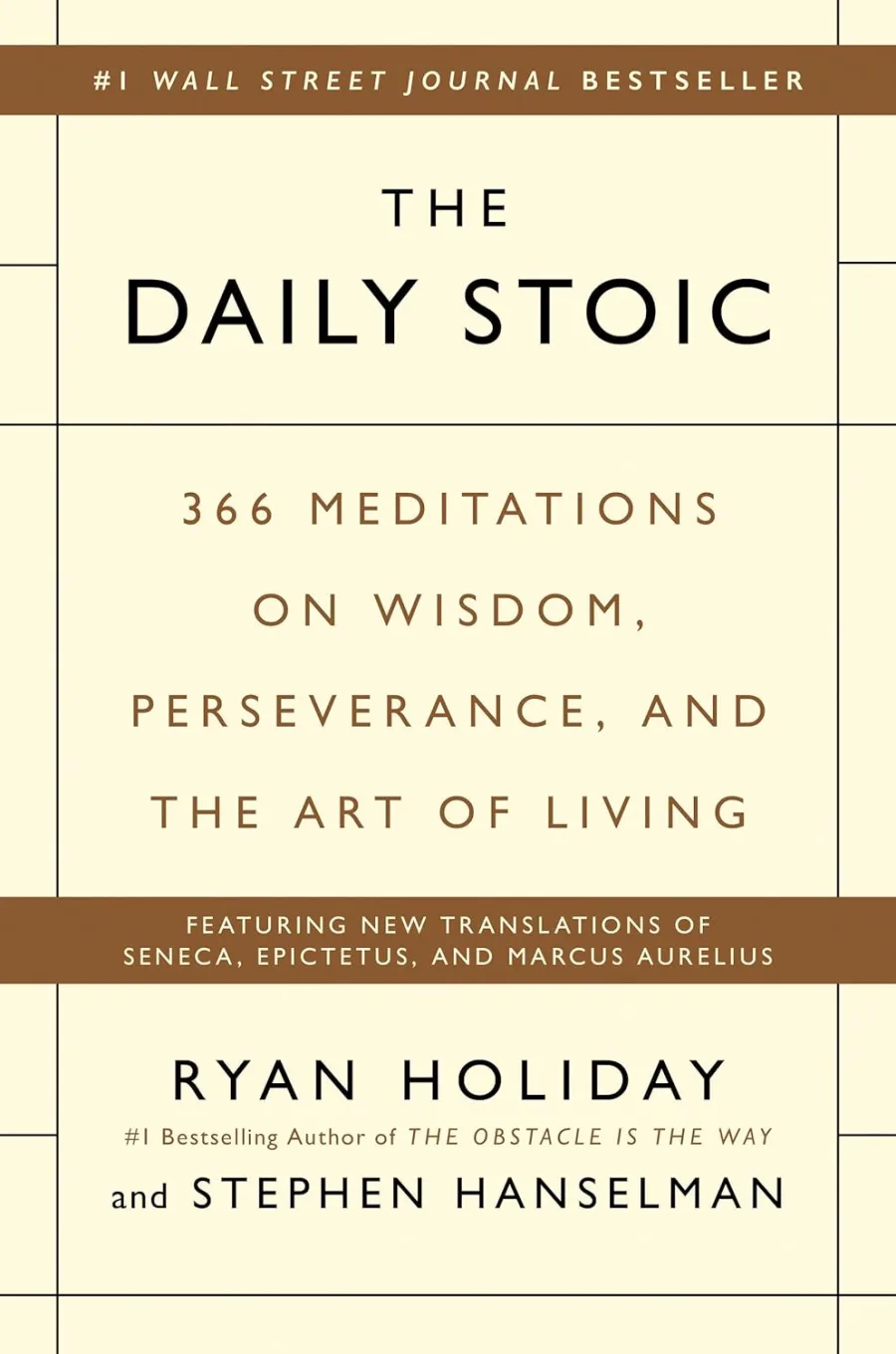
Download Cover Image
Do you want to download the full cover image for The Daily Stoic: 366 Meditations on Wisdom, Perseverance, and the Art of Living?