
Lessons in Chemistry: A Novel
Paperback
• 400 Pages
• USD 19.00
• English
• 9780593314487
No ratings yet
| Publisher | Vintage |
|---|---|
| ISBN13 | 9780593314487 |
| ASIN/SKU | 0593314484 |
| Book Format | Paperback |
| Language | English |
| Pages | 400 |
| List Price | USD 19.00 |
| Publishing Date | 01/04/2025 |
| Dimensions | 5.16 x 0.81 x 7.96 inches |
| Weight | 11.2 ounces |
| Book Code | BD00054943 |
Buy this Book
Amazon Stores
Ebook Stores
Other Stores
Discover Lessons in Chemistry: A Novel by Bonnie Garmus. This book is published by Vintage in Paperback format, ISBN 9780593314487, ASIN 0593314484, under Literature and Fiction, Humorous Fiction, Literary Fiction.
Book Description
#1 GLOBAL BESTSELLER WITH MORE THAN 8 MILLION COPIES SOLD • Meet Elizabeth Zott: “a gifted research chemist, absurdly self-assured and immune to social convention” (The Washington Post) in 1960s California whose career takes a detour when she becomes the unlikely star of a beloved TV cooking show. • STREAM ON APPLE TV+
This novel is “irresistible, satisfying and full of fuel” (The New York Times Book Review) and “witty, sometimes hilarious...the Catch-22 of early feminism” (Stephen King, via Twitter).
A BEST BOOK OF THE YEAR: The New York Times, Washington Post, NPR, Oprah Daily, Entertainment Weekly, Newsweek
Chemist Elizabeth Zott is not your average woman. In fact, Elizabeth Zott would be the first to point out that there is no such thing as an average woman. But it’s the early 1960s and her all-male team at Hastings Research Institute takes a very unscientific view of equality. Except for one: Calvin Evans; the lonely, brilliant, Nobel–prize nominated grudge-holder who falls in love with—of all things—her mind. True chemistry results.
But like science, life is unpredictable. Which is why a few years later Elizabeth Zott finds herself not only a single mother, but the reluctant star of America’s most beloved cooking show Supper at Six. Elizabeth’s unusual approach to cooking (“combine one tablespoon acetic acid with a pinch of sodium chloride”) proves revolutionary. But as her following grows, not everyone is happy. Because as it turns out, Elizabeth Zott isn’t just teaching women to cook. She’s daring them to change the status quo.
Laugh-out-loud funny, shrewdly observant, and studded with a dazzling cast of supporting characters, Lessons in Chemistry is as original and vibrant as its protagonist.
This novel is “irresistible, satisfying and full of fuel” (The New York Times Book Review) and “witty, sometimes hilarious...the Catch-22 of early feminism” (Stephen King, via Twitter).
A BEST BOOK OF THE YEAR: The New York Times, Washington Post, NPR, Oprah Daily, Entertainment Weekly, Newsweek
Chemist Elizabeth Zott is not your average woman. In fact, Elizabeth Zott would be the first to point out that there is no such thing as an average woman. But it’s the early 1960s and her all-male team at Hastings Research Institute takes a very unscientific view of equality. Except for one: Calvin Evans; the lonely, brilliant, Nobel–prize nominated grudge-holder who falls in love with—of all things—her mind. True chemistry results.
But like science, life is unpredictable. Which is why a few years later Elizabeth Zott finds herself not only a single mother, but the reluctant star of America’s most beloved cooking show Supper at Six. Elizabeth’s unusual approach to cooking (“combine one tablespoon acetic acid with a pinch of sodium chloride”) proves revolutionary. But as her following grows, not everyone is happy. Because as it turns out, Elizabeth Zott isn’t just teaching women to cook. She’s daring them to change the status quo.
Laugh-out-loud funny, shrewdly observant, and studded with a dazzling cast of supporting characters, Lessons in Chemistry is as original and vibrant as its protagonist.
Author Biography
Bonnie Garmus is a copywriter and creative director who has worked for a wide range of clients, in the US and abroad, focusing primarily on technology, medicine, and education. She’s an open water swimmer, a rower, and mother to two pretty amazing daughters. Most recently from Seattle, she currently lives in London with her husband and her dog, 99.
Editorial Reviews
GOODREADS CHOICE AWARD WINNER • A BEST BOOK OF THE YEAR: The New York Times, Washington Post, NPR, Elle, Oprah Daily, Newsweek, GoodReads, Bookpage, Kirkus
ONE OF THE MOST ANTICIPATED BOOKS OF THE YEAR: The New York Times, Bustle, Real Simple, Parade, CNN, Today, E! News, Library Journal
“In Garmus’s debut novel, a frustrated chemist finds herself at the helm of a cooking show that sparks a revolution. Welcome to the 1960s, where a woman’s arsenal of tools was often limited to the kitchen—and where Elizabeth Zott is hellbent on overturning the status quo one meal at a time.”
—The New York Times
"Strikingly relevant.... Darkly funny and poignant...Lessons in Chemistry’s excellent experiment [is] quirky and heartwarming."
—The Atlantic
"The most delightful novel I read this year—fresh and surprising—was Lessons in Chemistry: a fish-out-of-water story about a feminist hero who never stops pushing for what’s right. (I laughed out loud!)"
—Philip Galanes, The New York Times
“Elizabeth Zott is going to be an important character to a lot of people . . . Absolute chemistry.”
—Scott Simon, NPR
"An irresistible buoyancy, along with a deliberately sharp bite. Garmus’s novel focuses on a female scientist whose ambitions are impeded—and then rerouted—by a world not yet ready for her."
—Frank Bruni, The New York Times
"[Garmus] delivers an assured voice, an indelible heroine and relatable love stories...At the center of the novel is Elizabeth Zott, a gifted research chemist, absurdly self-assured and immune to social convention...Elizabeth is a feminist and modern thinker […] in a world nowhere ready for her mind, character or ambition...[Garmus] charm[s]. She’s created an indelible assemblage of stubborn, idiosyncratic characters. She’s given us a comic novel at precisely the moment we crave one.”
—Washington Post
“Feminism is the catalyst that makes [Lessons in Chemistry] fizz like hydrochloric acid on limestone. Elizabeth Zott does not have ‘moxie’; she has courage. She is not a ‘girl boss’ or a ‘lady chemist’; she’s a groundbreaker and an expert in abiogenesis...To file Elizabeth Zott among the pink razors of the book world is to miss the sharpness of Garmus’s message. Lessons in Chemistry will make you wonder about all the real-life women born ahead of their time—women who were sidelined, ignored and worse because they weren’t as resourceful, determined and lucky as Elizabeth Zott. She’s a reminder of how far we’ve come, but also how far we still have to go.”
—New York Times Book Review
“Between the outrageous sexism and the bitter misfortune that thwart our heroine at every turn, this may not sound like a comic novel, but it is. Full of charm, energy and hope—and featuring a really great dog—it’s one to savor.”
—People Magazine
ONE OF THE MOST ANTICIPATED BOOKS OF THE YEAR: The New York Times, Bustle, Real Simple, Parade, CNN, Today, E! News, Library Journal
“In Garmus’s debut novel, a frustrated chemist finds herself at the helm of a cooking show that sparks a revolution. Welcome to the 1960s, where a woman’s arsenal of tools was often limited to the kitchen—and where Elizabeth Zott is hellbent on overturning the status quo one meal at a time.”
—The New York Times
"Strikingly relevant.... Darkly funny and poignant...Lessons in Chemistry’s excellent experiment [is] quirky and heartwarming."
—The Atlantic
"The most delightful novel I read this year—fresh and surprising—was Lessons in Chemistry: a fish-out-of-water story about a feminist hero who never stops pushing for what’s right. (I laughed out loud!)"
—Philip Galanes, The New York Times
“Elizabeth Zott is going to be an important character to a lot of people . . . Absolute chemistry.”
—Scott Simon, NPR
"An irresistible buoyancy, along with a deliberately sharp bite. Garmus’s novel focuses on a female scientist whose ambitions are impeded—and then rerouted—by a world not yet ready for her."
—Frank Bruni, The New York Times
"[Garmus] delivers an assured voice, an indelible heroine and relatable love stories...At the center of the novel is Elizabeth Zott, a gifted research chemist, absurdly self-assured and immune to social convention...Elizabeth is a feminist and modern thinker […] in a world nowhere ready for her mind, character or ambition...[Garmus] charm[s]. She’s created an indelible assemblage of stubborn, idiosyncratic characters. She’s given us a comic novel at precisely the moment we crave one.”
—Washington Post
“Feminism is the catalyst that makes [Lessons in Chemistry] fizz like hydrochloric acid on limestone. Elizabeth Zott does not have ‘moxie’; she has courage. She is not a ‘girl boss’ or a ‘lady chemist’; she’s a groundbreaker and an expert in abiogenesis...To file Elizabeth Zott among the pink razors of the book world is to miss the sharpness of Garmus’s message. Lessons in Chemistry will make you wonder about all the real-life women born ahead of their time—women who were sidelined, ignored and worse because they weren’t as resourceful, determined and lucky as Elizabeth Zott. She’s a reminder of how far we’ve come, but also how far we still have to go.”
—New York Times Book Review
“Between the outrageous sexism and the bitter misfortune that thwart our heroine at every turn, this may not sound like a comic novel, but it is. Full of charm, energy and hope—and featuring a really great dog—it’s one to savor.”
—People Magazine
Book Summary
Set in the early 1960s, "Lessons in Chemistry" by Bonnie Garmus follows the life of Elizabeth Zott, a brilliant and fiercely uncompromising chemist whose professional aspirations are constantly thwarted by the pervasive sexism of the scientific community. Elizabeth works at the Hastings Research Institute, an environment where her male colleagues treat her with varying degrees of condescension, dismissal, and outright hostility. They view her presence in the lab as an anomaly and refuse to acknowledge her scientific intellect, preferring to label her as a secretary or simply ignoring her contributions to their research. Elizabeth, however, is not a woman who conforms. She is deeply committed to her work in abiogenesis—the study of the origins of life—and she refuses to apologize for her competence or her refusal to adhere to the restrictive societal norms of the era. She is a woman who speaks the truth with blunt, refreshing honesty, a trait that makes her both an outcast and a threat to the status quo at Hastings.
Elizabeth’s life changes dramatically when she meets Calvin Evans, a fellow scientist at Hastings who is also a world-renowned, Nobel Prize-nominated researcher and an avid rower. Unlike the other men at the institute, Calvin is not threatened by Elizabeth’s intelligence; rather, he is captivated by it. He recognizes her brilliance immediately and treats her as an intellectual equal. Their relationship blossoms rapidly, built on a foundation of shared scientific passion, mutual respect, and a profound, unconventional love. They do not follow the standard courtship rituals of the time, opting instead for a partnership based on genuine connection and understanding. Their life together becomes a sanctuary against the suffocating expectations of the outside world, and for the first time, Elizabeth finds someone who truly sees her.
Their happiness, however, is tragically short-lived. Calvin dies suddenly in a freak accident while out for a run with their beloved dog, Six-Thirty, a moment that leaves Elizabeth devastated and reeling. To make matters worse, she soon discovers that she is pregnant. Her situation becomes even more precarious when, shortly after Calvin’s death, she is fired from Hastings. Left without a job, a partner, or a support system, Elizabeth faces the daunting reality of raising her daughter, Madeline, on her own. She struggles to make ends meet, eventually finding herself in a position she never anticipated: hosting a cooking show called Supper at Six. Through a series of misunderstandings and a desperate need for income, Elizabeth accepts the role, but she approaches it with her signature scientific rigor.
Elizabeth does not treat Supper at Six like a standard daytime cooking program. She refuses to use the patronizing, cheerful tone expected of female television hosts. Instead, she approaches cooking as chemistry, explaining the science behind food preparation to her viewers. She speaks to her audience of housewives as if they are intelligent, capable adults, encouraging them to challenge their own circumstances and pursue their own dreams rather than settling for domesticity. She tells them, "Combine H2O with sodium chloride," effectively turning a recipe for a simple meal into a lesson in molecular structure. Her refusal to dumb down her content or wear the restrictive clothing mandated by the producers makes the show a massive, unexpected hit. Women across America begin to tune in, not just to learn how to cook, but to hear Elizabeth Zott validate their worth and intelligence in a society that constantly tells them they are only meant for the kitchen.
As Elizabeth becomes a household name, she continues to navigate the complexities of her personal life and the mysteries surrounding Calvin’s past. Her daughter, Madeline, is a child prodigy who begins her own investigation into her father’s background, attempting to uncover who Calvin really was before he became the famous scientist she knew. This investigation leads them to a deeper understanding of the institutional corruption at Hastings and the truth about Calvin’s origins, which involve a powerful and wealthy family that had previously abandoned him. Elizabeth’s path continues to intersect with the people from her past at Hastings, forcing her to confront the men who attempted to silence and exploit her.
Throughout her journey, Elizabeth remains steadfast in her belief that the status quo is not inevitable and that change is both possible and necessary. She consistently challenges the women she interacts with to think for themselves and to recognize their potential beyond their prescribed roles. Her influence extends far beyond the television screen; she becomes a symbol of resistance for women who have felt marginalized and forgotten. Even as she faces personal loss and professional obstacles, she refuses to compromise her integrity or her identity. She treats her dog, Six-Thirty, with the same respect and attention as any other sentient being, and his presence provides a unique, often humorous perspective on the human condition throughout the narrative.
The story culminates in a series of resolutions that see justice served to those who acted with malice toward Elizabeth and Calvin. Elizabeth’s journey is one of resilience and authenticity. She never sets out to be a revolutionary, but her commitment to the truth and her refusal to be defined by gendered expectations inevitably make her one. By the end of the narrative, the structures that once sought to diminish her are dismantled, and she finds herself in a position where she can continue her scientific research with the respect she always deserved. The legacy of her time on Supper at Six remains, having fundamentally altered the lives of countless women who saw in her the possibility of a different kind of life. Elizabeth Zott stands as a testament to the power of staying true to oneself, even when the world is intent on keeping you in a box.
Elizabeth’s life changes dramatically when she meets Calvin Evans, a fellow scientist at Hastings who is also a world-renowned, Nobel Prize-nominated researcher and an avid rower. Unlike the other men at the institute, Calvin is not threatened by Elizabeth’s intelligence; rather, he is captivated by it. He recognizes her brilliance immediately and treats her as an intellectual equal. Their relationship blossoms rapidly, built on a foundation of shared scientific passion, mutual respect, and a profound, unconventional love. They do not follow the standard courtship rituals of the time, opting instead for a partnership based on genuine connection and understanding. Their life together becomes a sanctuary against the suffocating expectations of the outside world, and for the first time, Elizabeth finds someone who truly sees her.
Their happiness, however, is tragically short-lived. Calvin dies suddenly in a freak accident while out for a run with their beloved dog, Six-Thirty, a moment that leaves Elizabeth devastated and reeling. To make matters worse, she soon discovers that she is pregnant. Her situation becomes even more precarious when, shortly after Calvin’s death, she is fired from Hastings. Left without a job, a partner, or a support system, Elizabeth faces the daunting reality of raising her daughter, Madeline, on her own. She struggles to make ends meet, eventually finding herself in a position she never anticipated: hosting a cooking show called Supper at Six. Through a series of misunderstandings and a desperate need for income, Elizabeth accepts the role, but she approaches it with her signature scientific rigor.
Elizabeth does not treat Supper at Six like a standard daytime cooking program. She refuses to use the patronizing, cheerful tone expected of female television hosts. Instead, she approaches cooking as chemistry, explaining the science behind food preparation to her viewers. She speaks to her audience of housewives as if they are intelligent, capable adults, encouraging them to challenge their own circumstances and pursue their own dreams rather than settling for domesticity. She tells them, "Combine H2O with sodium chloride," effectively turning a recipe for a simple meal into a lesson in molecular structure. Her refusal to dumb down her content or wear the restrictive clothing mandated by the producers makes the show a massive, unexpected hit. Women across America begin to tune in, not just to learn how to cook, but to hear Elizabeth Zott validate their worth and intelligence in a society that constantly tells them they are only meant for the kitchen.
As Elizabeth becomes a household name, she continues to navigate the complexities of her personal life and the mysteries surrounding Calvin’s past. Her daughter, Madeline, is a child prodigy who begins her own investigation into her father’s background, attempting to uncover who Calvin really was before he became the famous scientist she knew. This investigation leads them to a deeper understanding of the institutional corruption at Hastings and the truth about Calvin’s origins, which involve a powerful and wealthy family that had previously abandoned him. Elizabeth’s path continues to intersect with the people from her past at Hastings, forcing her to confront the men who attempted to silence and exploit her.
Throughout her journey, Elizabeth remains steadfast in her belief that the status quo is not inevitable and that change is both possible and necessary. She consistently challenges the women she interacts with to think for themselves and to recognize their potential beyond their prescribed roles. Her influence extends far beyond the television screen; she becomes a symbol of resistance for women who have felt marginalized and forgotten. Even as she faces personal loss and professional obstacles, she refuses to compromise her integrity or her identity. She treats her dog, Six-Thirty, with the same respect and attention as any other sentient being, and his presence provides a unique, often humorous perspective on the human condition throughout the narrative.
The story culminates in a series of resolutions that see justice served to those who acted with malice toward Elizabeth and Calvin. Elizabeth’s journey is one of resilience and authenticity. She never sets out to be a revolutionary, but her commitment to the truth and her refusal to be defined by gendered expectations inevitably make her one. By the end of the narrative, the structures that once sought to diminish her are dismantled, and she finds herself in a position where she can continue her scientific research with the respect she always deserved. The legacy of her time on Supper at Six remains, having fundamentally altered the lives of countless women who saw in her the possibility of a different kind of life. Elizabeth Zott stands as a testament to the power of staying true to oneself, even when the world is intent on keeping you in a box.
Sample Chapters
Sample Chapters will be added soon…
Reader Reviews
No reviews yet.
Lessons in Chemistry: A Novel
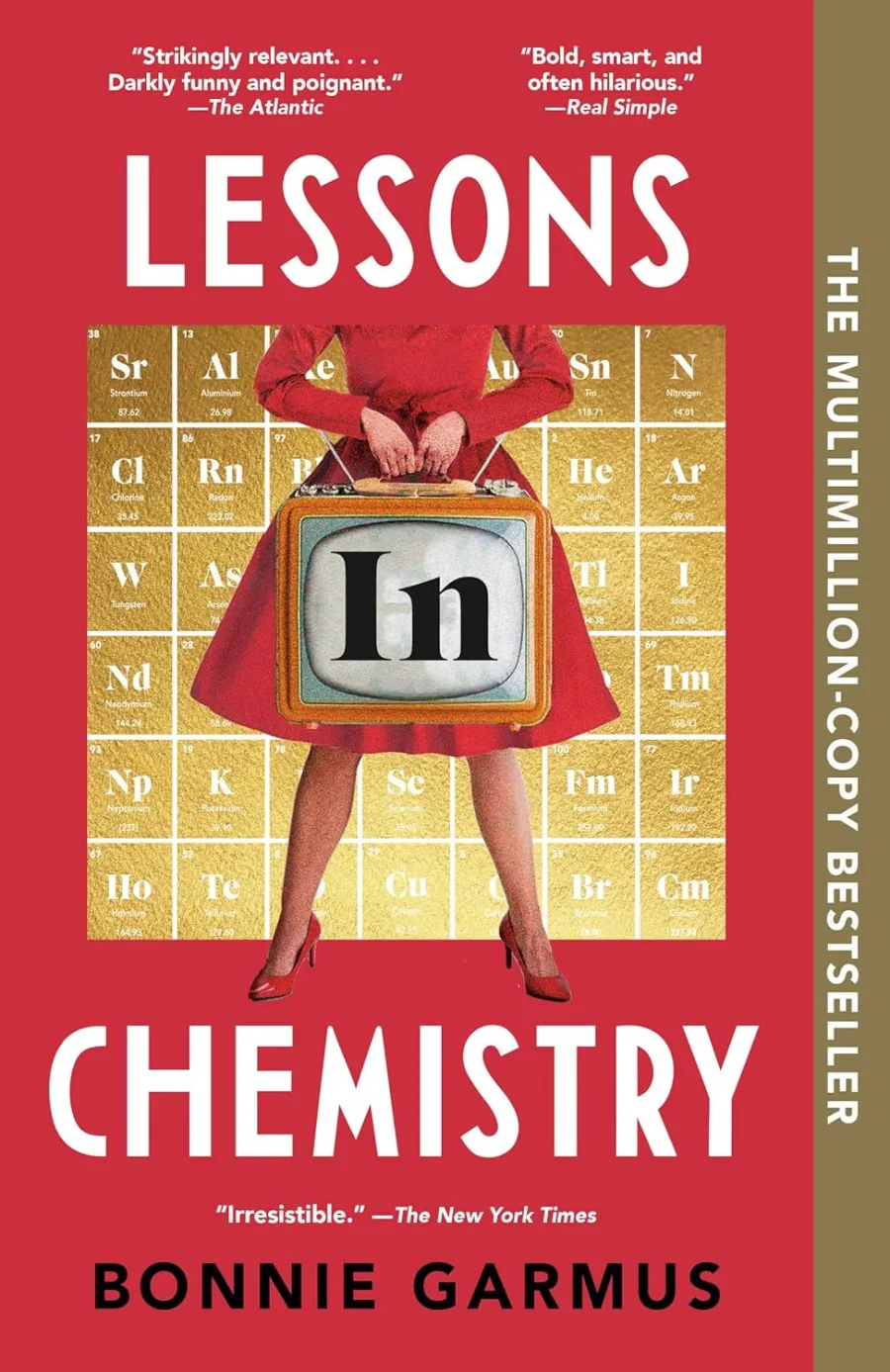
Download Cover Image
Do you want to download the full cover image for Lessons in Chemistry: A Novel?