
The Midnight Library: A GMA Book Club Pick: A Novel
Paperback
• 304 Pages
• USD 18.00
• English
• 9780525559498
No ratings yet
| Publisher | Penguin Books |
|---|---|
| ISBN13 | 9780525559498 |
| ASIN/SKU | 0525559493 |
| Book Format | Paperback |
| Language | English |
| Pages | 304 |
| List Price | USD 18.00 |
| Publishing Date | 09/05/2023 |
| Dimensions | 5.03 x 0.82 x 7.68 inches |
| Weight | 2.31 pounds |
| Book Code | BD00054948 |
Buy this Book
Amazon Stores
Ebook Stores
Other Stores
Discover The Midnight Library: A GMA Book Club Pick: A Novel by Matt Haig. This book is published by Penguin Books in Paperback format, ISBN 9780525559498, ASIN 0525559493, under Literature and Fiction, Time Travel Fiction, Literary Fiction.
Book Description
The #1 New York Times bestselling WORLDWIDE phenomenon
Winner of the Goodreads Choice Award for Fiction | A Good Morning America Book Club Pick | Independent (London) Ten Best Books of the Year
"A feel-good book guaranteed to lift your spirits."—The Washington Post
The dazzling reader-favorite about the choices that go into a life well lived, from the acclaimed author of How To Stop Time and The Comfort Book.
Don’t miss Matt Haig’s latest instant New York Times besteller, The Life Impossible, available now
Somewhere out beyond the edge of the universe there is a library that contains an infinite number of books, each one the story of another reality. One tells the story of your life as it is, along with another book for the other life you could have lived if you had made a different choice at any point in your life. While we all wonder how our lives might have been, what if you had the chance to go to the library and see for yourself? Would any of these other lives truly be better?
In The Midnight Library, Matt Haig's enchanting blockbuster novel, Nora Seed finds herself faced with this decision. Faced with the possibility of changing her life for a new one, following a different career, undoing old breakups, realizing her dreams of becoming a glaciologist; she must search within herself as she travels through the Midnight Library to decide what is truly fulfilling in life, and what makes it worth living in the first place.
Winner of the Goodreads Choice Award for Fiction | A Good Morning America Book Club Pick | Independent (London) Ten Best Books of the Year
"A feel-good book guaranteed to lift your spirits."—The Washington Post
The dazzling reader-favorite about the choices that go into a life well lived, from the acclaimed author of How To Stop Time and The Comfort Book.
Don’t miss Matt Haig’s latest instant New York Times besteller, The Life Impossible, available now
Somewhere out beyond the edge of the universe there is a library that contains an infinite number of books, each one the story of another reality. One tells the story of your life as it is, along with another book for the other life you could have lived if you had made a different choice at any point in your life. While we all wonder how our lives might have been, what if you had the chance to go to the library and see for yourself? Would any of these other lives truly be better?
In The Midnight Library, Matt Haig's enchanting blockbuster novel, Nora Seed finds herself faced with this decision. Faced with the possibility of changing her life for a new one, following a different career, undoing old breakups, realizing her dreams of becoming a glaciologist; she must search within herself as she travels through the Midnight Library to decide what is truly fulfilling in life, and what makes it worth living in the first place.
Author Biography
Matt Haig is the internationally bestselling author of the novels The Midnight Library, How to Stop Time, The Humans, The Radleys, children's novel A Boy Called Christmas, and memoir Reasons to Stay Alive. His latest novel is The Life Impossible, which will be published in summer 2024. His work has been translated into over fifty languages.
Editorial Reviews
An instant New York Times bestseller
Winner of the Goodreads Choice Award for Fiction
A GOOD MORNING AMERICA Book Club Pick!
One of the LibraryReads 2020 Voter Favorites
Independent (London) One of Ten Best Books of the Year
Included in best-of-year and year-end roundups by The Washington Post, Christian Science Monitor, New York Public Library, Amazon, Boston Globe, PureWow, St. Louis Public Radio, She Reads, Lit Hub, The Mary Sue, and more
“Whimsical.” —Washington Post, named one of the 15 Feel-Good Books Guaranteed to Lift Your Spirits
"An absorbing but comfortable read...a vision of limitless possibility, of new roads taken, of new lives lived, of a whole different world available to us somehow, somewhere, might be exactly what’s wanted in these troubled and troubling times.” —The New York Times
“Charming...a celebration of the ordinary: ordinary revelations, ordinary people, and the infinity of worlds seeded in ordinary choices.” —The Guardian
“A brilliant premise and great fun.”—Daily Mail
"This book really makes you think all about our choices in life and that big question of “Where would I be if I had made a different choice?” It’s a book that definitely made me self-reflect." ―Millie Bobbie Brown, actor and author of Nineteen Steps
"I can't describe how much his work means to me. So necessary...[Matt Haig is] the king of empathy." —Jameela Jamil, actor and host of I Weigh with Jameela Jamil
“A beautiful fable, an It’s a Wonderful Life for the modern age – impossibly timely when we are all stuck in a world we wish could be different.” —Jodi Picoult, author of My Sister's Keeper
“This brainy, captivating pleasure read feels like what you might get if TV’s The Good Place collided with Where’d You Go, Bernadette.” —People
“Thanks to the storytelling chops of writer Matt Haig, The Midnight Library is an engaging read, full of gentle insights and soothing wisdom… This is a book about shedding regret by gaining perspective. It’s full of quirky plot lines, with glimpses of opportunities and potential in unexpected places and people.” —Psychology Today
“A charming book.” —Dolly Parton, award-winning singer-songwriter
“Although I don’t read fiction as much as I used to—because I’m always writing fiction—during these sad and difficult days in 2020 I broke that rule because I needed to escape into other people’s fictional worlds. One of my favorite books of the year was "The Midnight Library" by Matt Haig, a powerful and uplifting story about regrets and the choices we make.” —Alice Hoffman, author of Magic Lessons and Practical Magic
“Clever, emotional and thought-inspiring.” —Jenny Colgan, author of The Bookshop on the Corner
“Amazing and utterly beautiful, The Midnight Library is everything you'd expect from the genius storyteller who is Matt Haig.” —Joanna Cannon, author of The Trouble with Goats and Sheep
Winner of the Goodreads Choice Award for Fiction
A GOOD MORNING AMERICA Book Club Pick!
One of the LibraryReads 2020 Voter Favorites
Independent (London) One of Ten Best Books of the Year
Included in best-of-year and year-end roundups by The Washington Post, Christian Science Monitor, New York Public Library, Amazon, Boston Globe, PureWow, St. Louis Public Radio, She Reads, Lit Hub, The Mary Sue, and more
“Whimsical.” —Washington Post, named one of the 15 Feel-Good Books Guaranteed to Lift Your Spirits
"An absorbing but comfortable read...a vision of limitless possibility, of new roads taken, of new lives lived, of a whole different world available to us somehow, somewhere, might be exactly what’s wanted in these troubled and troubling times.” —The New York Times
“Charming...a celebration of the ordinary: ordinary revelations, ordinary people, and the infinity of worlds seeded in ordinary choices.” —The Guardian
“A brilliant premise and great fun.”—Daily Mail
"This book really makes you think all about our choices in life and that big question of “Where would I be if I had made a different choice?” It’s a book that definitely made me self-reflect." ―Millie Bobbie Brown, actor and author of Nineteen Steps
"I can't describe how much his work means to me. So necessary...[Matt Haig is] the king of empathy." —Jameela Jamil, actor and host of I Weigh with Jameela Jamil
“A beautiful fable, an It’s a Wonderful Life for the modern age – impossibly timely when we are all stuck in a world we wish could be different.” —Jodi Picoult, author of My Sister's Keeper
“This brainy, captivating pleasure read feels like what you might get if TV’s The Good Place collided with Where’d You Go, Bernadette.” —People
“Thanks to the storytelling chops of writer Matt Haig, The Midnight Library is an engaging read, full of gentle insights and soothing wisdom… This is a book about shedding regret by gaining perspective. It’s full of quirky plot lines, with glimpses of opportunities and potential in unexpected places and people.” —Psychology Today
“A charming book.” —Dolly Parton, award-winning singer-songwriter
“Although I don’t read fiction as much as I used to—because I’m always writing fiction—during these sad and difficult days in 2020 I broke that rule because I needed to escape into other people’s fictional worlds. One of my favorite books of the year was "The Midnight Library" by Matt Haig, a powerful and uplifting story about regrets and the choices we make.” —Alice Hoffman, author of Magic Lessons and Practical Magic
“Clever, emotional and thought-inspiring.” —Jenny Colgan, author of The Bookshop on the Corner
“Amazing and utterly beautiful, The Midnight Library is everything you'd expect from the genius storyteller who is Matt Haig.” —Joanna Cannon, author of The Trouble with Goats and Sheep
Book Summary
"The Midnight Library" by Matt Haig is a thoughtful and emotional novel about regret, depression, possibility, and the meaning of life. The story follows Nora Seed, a woman in her mid-thirties who feels that her life has completely fallen apart. She is overwhelmed by sadness, loneliness, and the feeling that she has wasted her potential. Nora once had many talents and dreams. She was a strong swimmer, a gifted musician, an intelligent student, and someone who might have built a very different future. But over time, one decision after another seemed to close doors. By the beginning of the novel, she feels trapped in a life that appears small, disappointing, and painfully empty.
Nora lives alone in Bedford, England, and feels disconnected from nearly everyone around her. She has lost her job, her cat dies, and her relationships with family and friends are strained or broken. She especially carries deep regret about the many paths she did not take. She wonders what would have happened if she had stayed in the band with her brother, continued competitive swimming, married her former fiancé, or pursued academic dreams more seriously. These regrets weigh heavily on her, and she becomes convinced that her life has little value. In a moment of complete despair, she decides she no longer wants to live.
Instead of dying immediately, Nora finds herself in a strange and magical place called the Midnight Library. It exists between life and death, at the exact moment between one day and the next. The library is endless, filled with shelves of books, and watched over by Mrs. Elm, Nora’s old school librarian. Mrs. Elm appears calm, wise, and familiar, offering Nora guidance in this unusual space. In the Midnight Library, every book represents a different version of Nora’s life, based on choices she could have made. There is also a special book called the Book of Regrets, which contains all the things Nora believes she did wrong or failed to do. This book reflects the emotional burden she has carried for years.
Mrs. Elm explains that Nora has the opportunity to try out these alternate lives. By opening a book, Nora can step into a life where she made a different choice and see what that life became. If she finds one that truly satisfies her, she may be able to stay in it. This idea creates the central structure of the novel. Nora begins moving from life to life, exploring the possibilities she once imagined would have made her happy. At first, she approaches these alternate realities with hope. She believes there must be one perfect life in which all her regrets disappear.
In one life, Nora becomes an Olympic swimmer, achieving the success she once seemed capable of reaching. In another, she stays with her former fiancé and lives a more settled domestic life. In yet another, she becomes a famous musician. She also experiences a life as a glaciologist, fulfilling her old academic interests, and other versions of herself that reflect different dreams, sacrifices, and values. Each life initially appears to offer something attractive. Some bring fame, some romance, some intellectual fulfillment, and others a sense of purpose. But as Nora lives within them, she begins to realize that no life is free from pain, complexity, or disappointment.
This is one of the novel’s most important ideas. Nora learns that the lives she once idealized were never as perfect as she imagined. Success in one area often brings losses in another. Fame can come with isolation. Love can still contain sadness. Achievement does not guarantee peace. Even lives that seem admirable from the outside may carry hidden suffering. Through these experiences, Nora slowly begins to understand that her unhappiness did not come only from making the wrong choices. It also came from the way she looked at her own life through the lens of regret and comparison.
As she moves through different lives, Nora becomes more aware of how little any person can fully know about the consequences of a single decision. A choice that seems wrong in one moment may lead to unexpected meaning later, while a choice that appears ideal may create entirely new difficulties. The novel uses its fantasy structure to explore a very human emotional truth: people often imagine that happiness exists somewhere else, in the road not taken, when in reality every life includes uncertainty and struggle. Nora’s journey through the library helps her understand that regret can distort reality by making imagined alternatives seem better than they really would have been.
Another important part of Nora’s transformation comes through her encounters with other people in these alternate lives. She sees how her presence affects others more than she had realized. In her original life, she believed she hardly mattered, but the alternate lives reveal that small actions, conversations, and relationships can have lasting significance. She begins to see that she has touched people in meaningful ways, even when she did not recognize it at the time. This growing awareness helps challenge her belief that her life was empty or worthless.
The novel also explores depression with compassion and honesty. Nora’s emotional pain is not treated as simple weakness or ingratitude. Instead, Matt Haig presents it as a heavy and isolating force that shapes how she sees herself and the world. The Midnight Library does not magically erase her suffering. Rather, it gives her a new perspective on it. She gradually learns that life does not need to be perfect to be worth living, and that hope can return not because all pain disappears, but because meaning can still exist alongside pain. This shift in perspective is slow and believable, making Nora’s emotional development feel genuine.
As the story progresses, Nora begins to stop searching for a flawless life and starts paying attention to what actually makes life meaningful. She learns to value connection, presence, curiosity, and the possibility of change. Instead of asking which life would allow her to avoid all regret, she begins to ask what it means to live honestly and fully. This movement from fantasy to acceptance is the emotional heart of the novel. Nora’s deepest transformation is not that she finds a better life somewhere else, but that she begins to see her own life differently.
The climax comes when the library itself becomes unstable, reflecting Nora’s changing state of mind and the urgency of her decision. She realizes that what she truly wants is not escape into an imagined perfect existence, but a chance to return to her real life and live it with new understanding. This is a powerful moment because it marks the complete reversal of her original despair. At the beginning of the novel, Nora wanted life to end. By the end, she wants life back, not because it has suddenly become easy, but because she has rediscovered its possibility.
When Nora returns to her own life, the external circumstances are not magically transformed into perfection. However, her attitude has changed deeply. She is more open to connection, more willing to seek help, and more able to appreciate the unfinished nature of existence. She understands that life is always full of unknown potential. As long as someone is alive, new choices can still be made, relationships can still be repaired, and meaning can still be created. This gives the ending a quiet but powerful hopefulness.
Overall, The Midnight Library is a reflective and imaginative novel that uses fantasy to examine regret, mental health, and the complexity of human choice. Through Nora’s journey across alternate lives, Matt Haig shows that there is no perfect path free from pain, and that the search for an ideal life can blind people to the value of the life they already have. The novel suggests that meaning is found not in certainty or perfection, but in openness, resilience, and the willingness to keep living despite uncertainty. It is ultimately a story about learning that life’s worth does not depend on having made all the right decisions, but on recognizing that possibility still exists even after disappointment, loss, and regret.
Nora lives alone in Bedford, England, and feels disconnected from nearly everyone around her. She has lost her job, her cat dies, and her relationships with family and friends are strained or broken. She especially carries deep regret about the many paths she did not take. She wonders what would have happened if she had stayed in the band with her brother, continued competitive swimming, married her former fiancé, or pursued academic dreams more seriously. These regrets weigh heavily on her, and she becomes convinced that her life has little value. In a moment of complete despair, she decides she no longer wants to live.
Instead of dying immediately, Nora finds herself in a strange and magical place called the Midnight Library. It exists between life and death, at the exact moment between one day and the next. The library is endless, filled with shelves of books, and watched over by Mrs. Elm, Nora’s old school librarian. Mrs. Elm appears calm, wise, and familiar, offering Nora guidance in this unusual space. In the Midnight Library, every book represents a different version of Nora’s life, based on choices she could have made. There is also a special book called the Book of Regrets, which contains all the things Nora believes she did wrong or failed to do. This book reflects the emotional burden she has carried for years.
Mrs. Elm explains that Nora has the opportunity to try out these alternate lives. By opening a book, Nora can step into a life where she made a different choice and see what that life became. If she finds one that truly satisfies her, she may be able to stay in it. This idea creates the central structure of the novel. Nora begins moving from life to life, exploring the possibilities she once imagined would have made her happy. At first, she approaches these alternate realities with hope. She believes there must be one perfect life in which all her regrets disappear.
In one life, Nora becomes an Olympic swimmer, achieving the success she once seemed capable of reaching. In another, she stays with her former fiancé and lives a more settled domestic life. In yet another, she becomes a famous musician. She also experiences a life as a glaciologist, fulfilling her old academic interests, and other versions of herself that reflect different dreams, sacrifices, and values. Each life initially appears to offer something attractive. Some bring fame, some romance, some intellectual fulfillment, and others a sense of purpose. But as Nora lives within them, she begins to realize that no life is free from pain, complexity, or disappointment.
This is one of the novel’s most important ideas. Nora learns that the lives she once idealized were never as perfect as she imagined. Success in one area often brings losses in another. Fame can come with isolation. Love can still contain sadness. Achievement does not guarantee peace. Even lives that seem admirable from the outside may carry hidden suffering. Through these experiences, Nora slowly begins to understand that her unhappiness did not come only from making the wrong choices. It also came from the way she looked at her own life through the lens of regret and comparison.
As she moves through different lives, Nora becomes more aware of how little any person can fully know about the consequences of a single decision. A choice that seems wrong in one moment may lead to unexpected meaning later, while a choice that appears ideal may create entirely new difficulties. The novel uses its fantasy structure to explore a very human emotional truth: people often imagine that happiness exists somewhere else, in the road not taken, when in reality every life includes uncertainty and struggle. Nora’s journey through the library helps her understand that regret can distort reality by making imagined alternatives seem better than they really would have been.
Another important part of Nora’s transformation comes through her encounters with other people in these alternate lives. She sees how her presence affects others more than she had realized. In her original life, she believed she hardly mattered, but the alternate lives reveal that small actions, conversations, and relationships can have lasting significance. She begins to see that she has touched people in meaningful ways, even when she did not recognize it at the time. This growing awareness helps challenge her belief that her life was empty or worthless.
The novel also explores depression with compassion and honesty. Nora’s emotional pain is not treated as simple weakness or ingratitude. Instead, Matt Haig presents it as a heavy and isolating force that shapes how she sees herself and the world. The Midnight Library does not magically erase her suffering. Rather, it gives her a new perspective on it. She gradually learns that life does not need to be perfect to be worth living, and that hope can return not because all pain disappears, but because meaning can still exist alongside pain. This shift in perspective is slow and believable, making Nora’s emotional development feel genuine.
As the story progresses, Nora begins to stop searching for a flawless life and starts paying attention to what actually makes life meaningful. She learns to value connection, presence, curiosity, and the possibility of change. Instead of asking which life would allow her to avoid all regret, she begins to ask what it means to live honestly and fully. This movement from fantasy to acceptance is the emotional heart of the novel. Nora’s deepest transformation is not that she finds a better life somewhere else, but that she begins to see her own life differently.
The climax comes when the library itself becomes unstable, reflecting Nora’s changing state of mind and the urgency of her decision. She realizes that what she truly wants is not escape into an imagined perfect existence, but a chance to return to her real life and live it with new understanding. This is a powerful moment because it marks the complete reversal of her original despair. At the beginning of the novel, Nora wanted life to end. By the end, she wants life back, not because it has suddenly become easy, but because she has rediscovered its possibility.
When Nora returns to her own life, the external circumstances are not magically transformed into perfection. However, her attitude has changed deeply. She is more open to connection, more willing to seek help, and more able to appreciate the unfinished nature of existence. She understands that life is always full of unknown potential. As long as someone is alive, new choices can still be made, relationships can still be repaired, and meaning can still be created. This gives the ending a quiet but powerful hopefulness.
Overall, The Midnight Library is a reflective and imaginative novel that uses fantasy to examine regret, mental health, and the complexity of human choice. Through Nora’s journey across alternate lives, Matt Haig shows that there is no perfect path free from pain, and that the search for an ideal life can blind people to the value of the life they already have. The novel suggests that meaning is found not in certainty or perfection, but in openness, resilience, and the willingness to keep living despite uncertainty. It is ultimately a story about learning that life’s worth does not depend on having made all the right decisions, but on recognizing that possibility still exists even after disappointment, loss, and regret.
Sample Chapters
Sample Chapters will be added soon…
Reader Reviews
No reviews yet.
The Midnight Library: A GMA Book Club Pick: A Novel
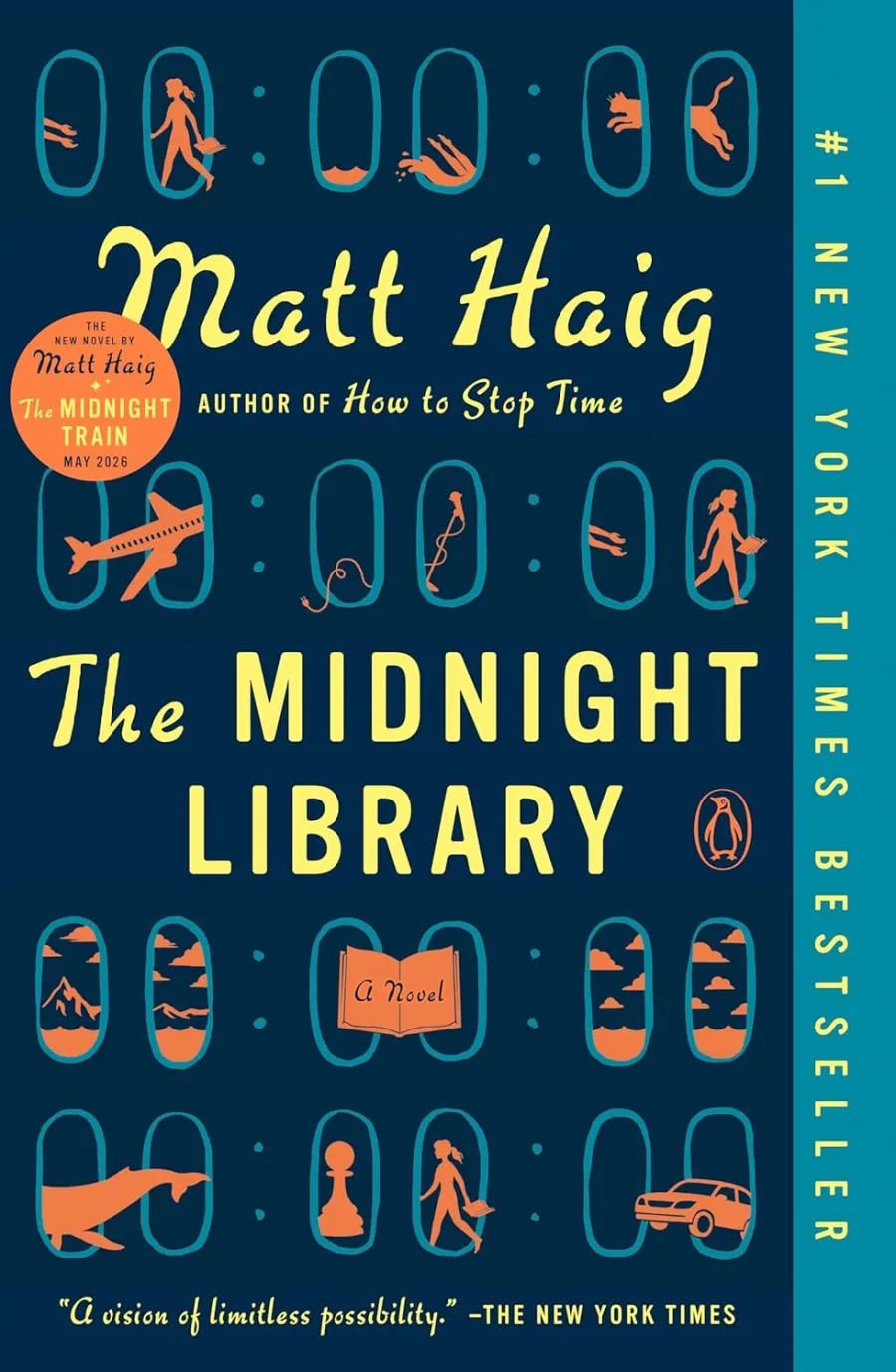
Download Cover Image
Do you want to download the full cover image for The Midnight Library: A GMA Book Club Pick: A Novel?