
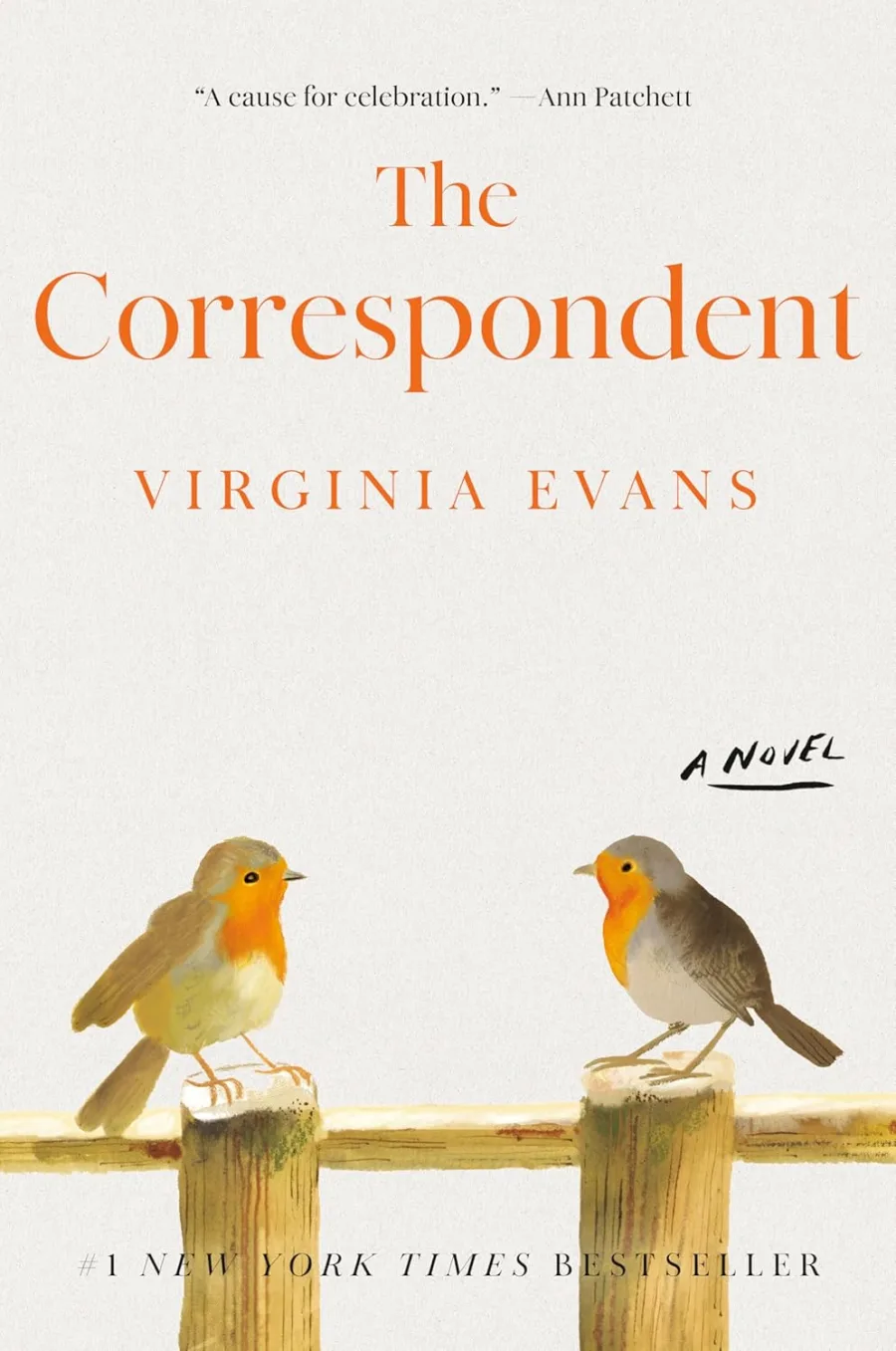
The Correspondent: A Novel
Hardcover
• 304 Pages
• USD 28.00
• English
• 9780593798430
No ratings yet
| Publisher | Crown |
|---|---|
| ISBN13 | 9780593798430 |
| ASIN/SKU | 0593798430 |
| Book Format | Hardcover |
| Language | English |
| Pages | 304 |
| List Price | USD 28.00 |
| Publishing Date | 29/04/2025 |
| Dimensions | 6.13 x 0.75 x 9.13 inches |
| Weight | 1.05 pounds |
| Book Code | BD00055182 |
Buy this Book
Amazon Stores
Ebook Stores
Other Stores
Discover The Correspondent: A Novel by Virginia Evans. This book is published by Crown in Hardcover format, ISBN 9780593798430, ASIN 0593798430, under Literature and Fiction, Family Life Fiction, Epistolary Fiction.
Book Description
#1 NEW YORK TIMES BESTSELLER • OVER TWO MILLION COPIES SOLD • Discover the word-of-mouth hit hailed by Ann Patchett as “A cause for celebration”—an intimate novel about the transformative power of the written word and the beauty of slowing down to reconnect with the people we love.
“This novel is a complete and utter joy.”—Ann Napolitano, author of Hello Beautiful
“Quietly dazzling.”—The New York Times
“I cried more than once as I witnessed this brilliant woman come to understand herself more deeply.”—Florence Knapp, author of The Names
In development as a major motion picture
WINNER OF THE WOMEN’S PRIZE FOR FICTION • LONGLISTED FOR THE CENTER FOR FICTION FIRST NOVEL PRIZE AND THE ANDREW CARNEGIE MEDAL • A BEST BOOK OF THE YEAR: NPR, The Washington Post, Boston Globe, Elle, Christian Science Monitor, She Reads
“Imagine, the letters one has sent out into the world, the letters received back in turn, are like the pieces of a magnificent puzzle. . . . Isn’t there something wonderful in that, to think that a story of one’s life is preserved in some way, that this very letter may one day mean something, even if it is a very small thing, to someone?”
Filled with knowledge that only comes from a life fully lived, The Correspondent is a gem of a novel about the power of finding solace in literature and connection with people we might never meet in person. It is about the hubris of youth and the wisdom of old age, and the mistakes and acts of kindness that occur during a lifetime.
Sybil Van Antwerp has throughout her life used letters to make sense of the world and her place in it. Most mornings, around half past ten, Sybil sits down to write letters—to her brother, to her best friend, to the president of the university who will not allow her to audit a class she desperately wants to take, to Joan Didion and Larry McMurtry to tell them what she thinks of their latest books, and to one person to whom she writes often yet never sends the letter.
Sybil expects her world to go on as it always has—a mother, grandmother, wife, divorcee, distinguished lawyer, she has lived a very full life. But when letters from someone in her past force her to examine one of the most painful periods of her life, she realizes that the letter she has been writing over the years needs to be read and that she cannot move forward until she finds it in her heart to offer forgiveness.
Sybil Van Antwerp’s life of letters might be “a very small thing,” but she also might be one of the most memorable characters you will ever read.
“This novel is a complete and utter joy.”—Ann Napolitano, author of Hello Beautiful
“Quietly dazzling.”—The New York Times
“I cried more than once as I witnessed this brilliant woman come to understand herself more deeply.”—Florence Knapp, author of The Names
In development as a major motion picture
WINNER OF THE WOMEN’S PRIZE FOR FICTION • LONGLISTED FOR THE CENTER FOR FICTION FIRST NOVEL PRIZE AND THE ANDREW CARNEGIE MEDAL • A BEST BOOK OF THE YEAR: NPR, The Washington Post, Boston Globe, Elle, Christian Science Monitor, She Reads
“Imagine, the letters one has sent out into the world, the letters received back in turn, are like the pieces of a magnificent puzzle. . . . Isn’t there something wonderful in that, to think that a story of one’s life is preserved in some way, that this very letter may one day mean something, even if it is a very small thing, to someone?”
Filled with knowledge that only comes from a life fully lived, The Correspondent is a gem of a novel about the power of finding solace in literature and connection with people we might never meet in person. It is about the hubris of youth and the wisdom of old age, and the mistakes and acts of kindness that occur during a lifetime.
Sybil Van Antwerp has throughout her life used letters to make sense of the world and her place in it. Most mornings, around half past ten, Sybil sits down to write letters—to her brother, to her best friend, to the president of the university who will not allow her to audit a class she desperately wants to take, to Joan Didion and Larry McMurtry to tell them what she thinks of their latest books, and to one person to whom she writes often yet never sends the letter.
Sybil expects her world to go on as it always has—a mother, grandmother, wife, divorcee, distinguished lawyer, she has lived a very full life. But when letters from someone in her past force her to examine one of the most painful periods of her life, she realizes that the letter she has been writing over the years needs to be read and that she cannot move forward until she finds it in her heart to offer forgiveness.
Sybil Van Antwerp’s life of letters might be “a very small thing,” but she also might be one of the most memorable characters you will ever read.
Author Biography
Virginia Evans is from the east coast of the United States. She attended James Madison University for her bachelor’s in English literature. After starting a family, she went back to school for her master’s of philosophy in creative writing at Trinity College in Dublin, Ireland, where she had the good fortune to study under Carlo Gébler, Eoin McNamee, Claire Keegan, Harry Clifton and Kevin Power. She now lives in Winston-Salem, North Carolina, with her husband, Mark, two children, Jack and Mae, and her Red Labrador, Brigid.
Editorial Reviews
“Subtly told and finely made, The Correspondent is a portrait of a small life expanding. Virginia Evans shows how one woman changes at a point when change had seemed impossible. That change, like this novel, turns out to be a cause for celebration.”—Ann Patchett
“The Correspondent is at turns amusing and, poignant and ultimately, a pleasure to read. This moving novel unfurls its truths one letter at a time, filling in a complex and memorable picture of one woman’s life. Like a handwritten letter at its best, The Correspondent is meant to be savored.”—Charmaine Wilkerson, New York Times bestselling author of Black Cake
“This novel is a complete and utter joy.”—Ann Napolitano
“Evans’s enchanting epistolary novel revolves around prickly septuagenarian Sybil Van Antwerp . . . [with] a dash of mystery that keeps the pages flying.”—The Washington Post
“The word-of-mouth bestseller of 2025 might be this quietly dazzling epistolary novel, which calls to mind Susie Boyt’s ‘Loved and Missed,’ another book that was passed around like a beloved recipe. . . . Note by note, Sybil’s world takes shape, raising poignant, timely questions about mercy and how we’re all connected.”—The New York Times, “Book of the Week”
“The charming debut from Evans takes the form of letters and emails exchanged by a divorced and retired woman with her friends, family, foes, and literary idols. . . . the detailed connections between each character are brilliantly mapped through the correspondence. It adds up to an appealing family drama.”—Publishers Weekly
“The circus of beautifully drawn characters, who receive and respond to Sybil’s letters, is vibrant and rich. Sybil has survived trauma, grief, and lost love. The letters are so deliciously crafted, Sybil’s life itself becomes a work of art.”—Adriana Trigiani, bestselling author of The Good Left Undone
“I finished this wonderful, wonderful book in tears, and had to take a moment—several moments—to pull myself together. . . . Equal parts sorrow and quiet joy, the stuff of life, it will make you laugh, it will make you cry, it will make you reflect, as all the best novels do.”—Fran Littlewood, New York Times bestselling author of Amazing Grace Adams
“I can’t praise it enough. Sybil is such a wonderful character, and the supporting cast so vivid and real. For a book about grief and regret it was also properly funny. It’s an absolute triumph.”—Clare Chambers, bestselling author of Small Pleasures and Shy Creatures
“Thank you, Virginia Evans, for a life beautifully told in letters, for creating a character whose mind struggles with her heart in a most intriguing, sympathetic, witty, and binge-worthy way.”—Elinor Lipman, author of Ms. Demeanor
“The Correspondent is the rarest of debuts with not a misplaced word or beat missed. Moving, funny and exquisite, it is a masterpiece in human frailty.”—Anne Griffin, #1 Irish bestselling author of When All Is Said
“The Correspondent is at turns amusing and, poignant and ultimately, a pleasure to read. This moving novel unfurls its truths one letter at a time, filling in a complex and memorable picture of one woman’s life. Like a handwritten letter at its best, The Correspondent is meant to be savored.”—Charmaine Wilkerson, New York Times bestselling author of Black Cake
“This novel is a complete and utter joy.”—Ann Napolitano
“Evans’s enchanting epistolary novel revolves around prickly septuagenarian Sybil Van Antwerp . . . [with] a dash of mystery that keeps the pages flying.”—The Washington Post
“The word-of-mouth bestseller of 2025 might be this quietly dazzling epistolary novel, which calls to mind Susie Boyt’s ‘Loved and Missed,’ another book that was passed around like a beloved recipe. . . . Note by note, Sybil’s world takes shape, raising poignant, timely questions about mercy and how we’re all connected.”—The New York Times, “Book of the Week”
“The charming debut from Evans takes the form of letters and emails exchanged by a divorced and retired woman with her friends, family, foes, and literary idols. . . . the detailed connections between each character are brilliantly mapped through the correspondence. It adds up to an appealing family drama.”—Publishers Weekly
“The circus of beautifully drawn characters, who receive and respond to Sybil’s letters, is vibrant and rich. Sybil has survived trauma, grief, and lost love. The letters are so deliciously crafted, Sybil’s life itself becomes a work of art.”—Adriana Trigiani, bestselling author of The Good Left Undone
“I finished this wonderful, wonderful book in tears, and had to take a moment—several moments—to pull myself together. . . . Equal parts sorrow and quiet joy, the stuff of life, it will make you laugh, it will make you cry, it will make you reflect, as all the best novels do.”—Fran Littlewood, New York Times bestselling author of Amazing Grace Adams
“I can’t praise it enough. Sybil is such a wonderful character, and the supporting cast so vivid and real. For a book about grief and regret it was also properly funny. It’s an absolute triumph.”—Clare Chambers, bestselling author of Small Pleasures and Shy Creatures
“Thank you, Virginia Evans, for a life beautifully told in letters, for creating a character whose mind struggles with her heart in a most intriguing, sympathetic, witty, and binge-worthy way.”—Elinor Lipman, author of Ms. Demeanor
“The Correspondent is the rarest of debuts with not a misplaced word or beat missed. Moving, funny and exquisite, it is a masterpiece in human frailty.”—Anne Griffin, #1 Irish bestselling author of When All Is Said
Book Summary
"The Correspondent" is an epistolary novel told through letters and emails, centered on Sybil Van Antwerp, a seventy-something retired lawyer living alone and trying to make sense of the life she has built and the life she still carries inside her. The novel uses Sybil’s correspondence to slowly reveal her personality: sharp, intelligent, private, sometimes prickly, but also deeply observant and emotionally layered. Through the letters she writes to family members, friends, strangers, authors she admires, and one unnamed recipient she never quite sends her words to, the reader sees a woman who has spent much of her life thinking carefully about everything and everyone around her, even when she has not always known how to say the most important things out loud.
At the surface, Sybil appears to have a full and structured life. She has been a mother, grandmother, wife, divorcee, and respected lawyer, and she has built a routine around writing letters as a way of staying connected to the world. But beneath that order is a great deal of emotional unfinished business. She is approaching the later stage of life with a mix of wit, stubbornness, loneliness, and reflection. Her eyesight is beginning to fail, which gives the book an added sense of urgency, because her correspondence is not only her preferred form of communication but also her main way of preserving memory and identity. The possibility that she may eventually lose the ability to write and read as she has always done hangs over the story quietly but powerfully.
What gives the novel its emotional weight is the way Sybil’s letters gradually open up the hidden parts of her past. When letters from someone connected to a painful period in her life begin to arrive, she is forced to confront memories she has tried to bury for years. The book does not rush this process. Instead, it lets the reader see how one carefully preserved life can still contain guilt, regret, grief, and unresolved harm. Sybil has spent years keeping certain truths at a distance, but the new letters make that impossible. She must revisit old choices, old injuries, and the people she once loved or hurt, and that process becomes the heart of the story.
The novel is also about connection, especially the strange, fragile, and often surprising ways people reach one another. Sybil’s correspondence with a teenage boy, the child of a fellow judge, becomes one of the more meaningful relationships in the book. That connection gives her a sense of companionship and purpose that contrasts with her more difficult family ties. Her relationship with her children, especially her daughter, is more strained, and much of the novel’s emotional tension comes from the gap between the love she feels and the damage that time, personality, and old misunderstandings have created. The book does not treat family as simple comfort; it shows it as a place where care and pain often exist together.
Another important part of the story is Sybil’s search for forgiveness. The novel gradually makes clear that her life has been shaped by both the things done to her and the things she has done to others. She is not presented as a perfect or especially soft character. She can be difficult, judgmental, and self-protective. But the book is generous with her because it understands that those traits often grow out of fear, grief, and long habit. As Sybil begins to revisit the most painful parts of her past, she starts to see that moving forward will require her to let go of some old defenses. Forgiveness, in the novel, is not presented as a neat moral conclusion but as a difficult form of emotional survival.
The epistolary form makes all of this feel intimate and alive. Because the novel is built entirely from letters and emails, every piece of information feels chosen, shaped, and personal. Sybil’s voice carries the story, and through it the reader gets not only events but temperament: her humor, her irritation, her loneliness, her intelligence, and her gradual softening. The structure also mirrors the way memory actually works. Life is not presented in a smooth timeline but in fragments, returns, echoes, and unfinished replies. That gives the book a reflective, human quality that fits its themes very well.
By the end, The Correspondent becomes a quiet but powerful story about aging, regret, self-knowledge, and the desire to be understood before time runs out. It is not a dramatic plot-driven novel so much as a deeply felt portrait of one woman’s interior life. Through letters, Sybil comes to understand that the stories she has told herself about her past are incomplete, and that real peace may only come when she is willing to face what she has avoided. The result is a moving novel about the endurance of human connection and the possibility of change, even late in life.
At the surface, Sybil appears to have a full and structured life. She has been a mother, grandmother, wife, divorcee, and respected lawyer, and she has built a routine around writing letters as a way of staying connected to the world. But beneath that order is a great deal of emotional unfinished business. She is approaching the later stage of life with a mix of wit, stubbornness, loneliness, and reflection. Her eyesight is beginning to fail, which gives the book an added sense of urgency, because her correspondence is not only her preferred form of communication but also her main way of preserving memory and identity. The possibility that she may eventually lose the ability to write and read as she has always done hangs over the story quietly but powerfully.
What gives the novel its emotional weight is the way Sybil’s letters gradually open up the hidden parts of her past. When letters from someone connected to a painful period in her life begin to arrive, she is forced to confront memories she has tried to bury for years. The book does not rush this process. Instead, it lets the reader see how one carefully preserved life can still contain guilt, regret, grief, and unresolved harm. Sybil has spent years keeping certain truths at a distance, but the new letters make that impossible. She must revisit old choices, old injuries, and the people she once loved or hurt, and that process becomes the heart of the story.
The novel is also about connection, especially the strange, fragile, and often surprising ways people reach one another. Sybil’s correspondence with a teenage boy, the child of a fellow judge, becomes one of the more meaningful relationships in the book. That connection gives her a sense of companionship and purpose that contrasts with her more difficult family ties. Her relationship with her children, especially her daughter, is more strained, and much of the novel’s emotional tension comes from the gap between the love she feels and the damage that time, personality, and old misunderstandings have created. The book does not treat family as simple comfort; it shows it as a place where care and pain often exist together.
Another important part of the story is Sybil’s search for forgiveness. The novel gradually makes clear that her life has been shaped by both the things done to her and the things she has done to others. She is not presented as a perfect or especially soft character. She can be difficult, judgmental, and self-protective. But the book is generous with her because it understands that those traits often grow out of fear, grief, and long habit. As Sybil begins to revisit the most painful parts of her past, she starts to see that moving forward will require her to let go of some old defenses. Forgiveness, in the novel, is not presented as a neat moral conclusion but as a difficult form of emotional survival.
The epistolary form makes all of this feel intimate and alive. Because the novel is built entirely from letters and emails, every piece of information feels chosen, shaped, and personal. Sybil’s voice carries the story, and through it the reader gets not only events but temperament: her humor, her irritation, her loneliness, her intelligence, and her gradual softening. The structure also mirrors the way memory actually works. Life is not presented in a smooth timeline but in fragments, returns, echoes, and unfinished replies. That gives the book a reflective, human quality that fits its themes very well.
By the end, The Correspondent becomes a quiet but powerful story about aging, regret, self-knowledge, and the desire to be understood before time runs out. It is not a dramatic plot-driven novel so much as a deeply felt portrait of one woman’s interior life. Through letters, Sybil comes to understand that the stories she has told herself about her past are incomplete, and that real peace may only come when she is willing to face what she has avoided. The result is a moving novel about the endurance of human connection and the possibility of change, even late in life.
Sample Chapters
Sample Chapters will be added soon…
Reader Reviews
No reviews yet.
The Correspondent: A Novel
Download Cover Image
Do you want to download the full cover image for The Correspondent: A Novel?