
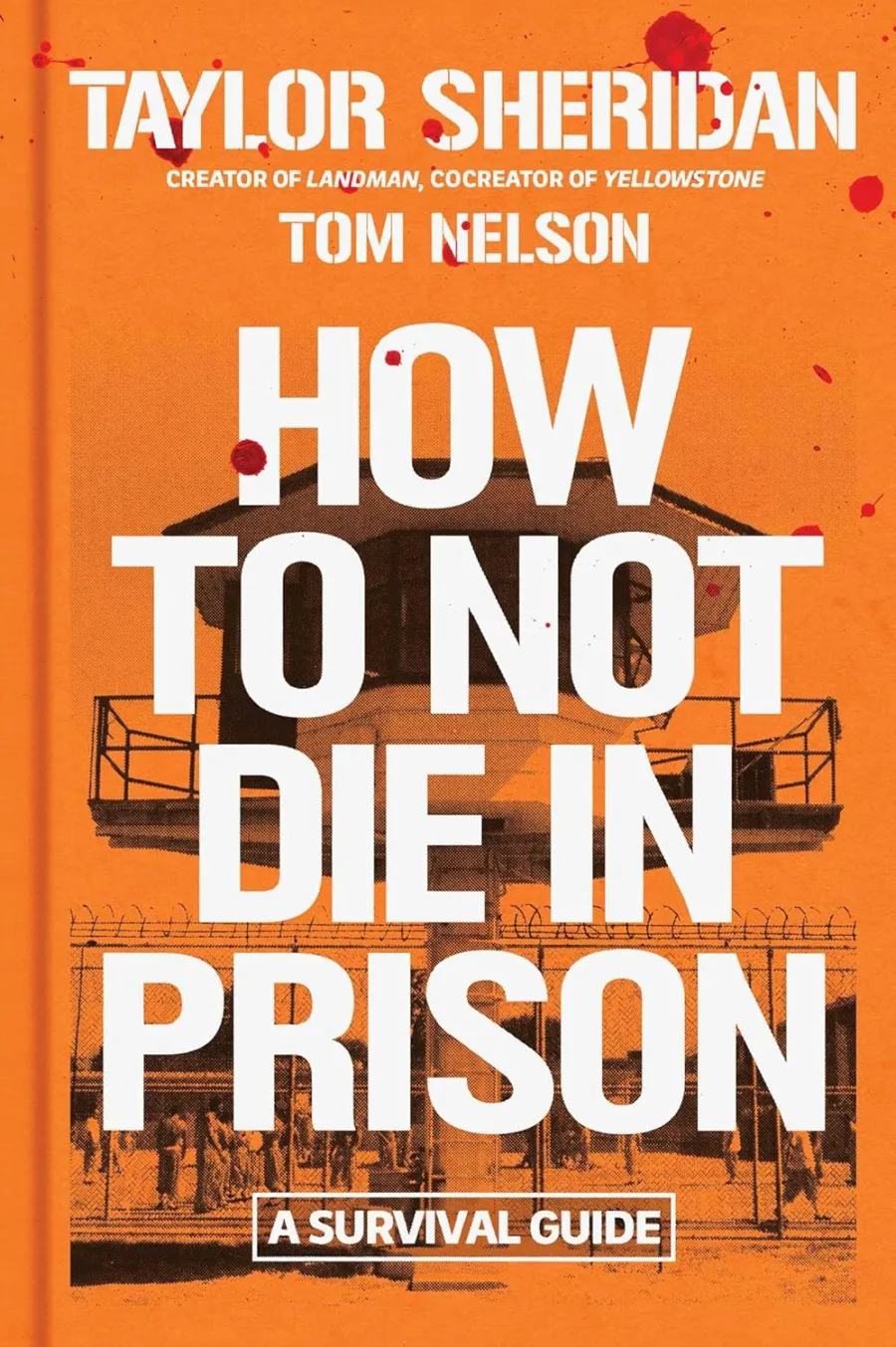
How to Not Die in Prison: A Survival Guide
Hardcover
• 256 Pages
• USD 29.00
• English
• 9781668213452
No ratings yet
| Publisher | Simon & Schuster |
|---|---|
| ISBN13 | 9781668213452 |
| ASIN/SKU | 1668213451 |
| Book Format | Hardcover |
| Language | English |
| Pages | 256 |
| List Price | USD 29.00 |
| Publishing Date | 23/06/2026 |
| Dimensions | 6 x 0.9 x 9 inches |
| Weight | 11.9 ounces |
| Book Code | BD00055215 |
Buy this Book
Amazon Stores
Ebook Stores
Other Stores
Discover How to Not Die in Prison: A Survival Guide by Taylor Sheridan. This book is published by Simon and Schuster in Hardcover format, ISBN 9781668213452, ASIN 1668213451, under Self-Help, Survival and Emergency Preparedness.
Book Description
The debut book from Academy Award–nominated filmmaker Taylor Sheridan, creator of Landman and cocreator of Yellowstone—a no-bullsh*t, darkly funny survival guide to life inside a maximum-security prison, cowritten with prison-hardened ex-con Tom Nelson.
So, you f*cked up. Can't talk your way out of it, buy your way out of it, or beg your way out of it.
You are going to prison. You will be living under a set of rules made up by men who have demonstrated to society that they need a big ol' time out. There is no book of these rules. Nobody will tell them to you. But when you break one—boy, will you know it. For the newbie, the fish, the fresh meat—this book is your survival guide. How to mind your business without becoming a target. When to walk away. When to stand your ground.
This is how you don't die. Follow the advice in this book, and you just might make it out alive.
So, you f*cked up. Can't talk your way out of it, buy your way out of it, or beg your way out of it.
You are going to prison. You will be living under a set of rules made up by men who have demonstrated to society that they need a big ol' time out. There is no book of these rules. Nobody will tell them to you. But when you break one—boy, will you know it. For the newbie, the fish, the fresh meat—this book is your survival guide. How to mind your business without becoming a target. When to walk away. When to stand your ground.
This is how you don't die. Follow the advice in this book, and you just might make it out alive.
Author Biography
Tom Nelson was a cocaine trafficker during the crack epidemic of Los Angeles. His clientele ranged from Hollywood celebrities to supplying crack houses in Downtown and South Central LA. That life came to an end when Tom was busted in 1997 and sentenced to 7 years in prison. Now, Tom is an entrepreneur and philanthropist who gives back to the communities he once harmed by performing public speaking and other forms of community outreach.
Tom is the founder and president of the Kelly Maddon Foundation which helps existing domestic violence organizations with managerial and fundraising support.
Tom also owns the largest private training facility in Los Angeles and is one of the most sought after nutrition specialists and fitness trainers in California. In 2013, Tom was voted “Trainer of the Year” and received a commendation from the City of West Hollywood for his contributions to fitness within the community. In addition, Tom’s facility - Muscle Mechanics - won the “Best of Los Angeles Award” for being the Best Gym in Los Angeles - 2020.
Tom restores classic American muscle cars in his spare time and writes novels about the harrowing experiences of his past.
Tom resides in the quiet little town of Solvang, California with his loving family - a million miles away from the crazy life he once lived!
Tom is the founder and president of the Kelly Maddon Foundation which helps existing domestic violence organizations with managerial and fundraising support.
Tom also owns the largest private training facility in Los Angeles and is one of the most sought after nutrition specialists and fitness trainers in California. In 2013, Tom was voted “Trainer of the Year” and received a commendation from the City of West Hollywood for his contributions to fitness within the community. In addition, Tom’s facility - Muscle Mechanics - won the “Best of Los Angeles Award” for being the Best Gym in Los Angeles - 2020.
Tom restores classic American muscle cars in his spare time and writes novels about the harrowing experiences of his past.
Tom resides in the quiet little town of Solvang, California with his loving family - a million miles away from the crazy life he once lived!
Editorial Reviews
"A guide to surviving (but not necessarily thriving) in prison if you’ve made some really bad decisions. . . . Frank and enlightening." ― Kirkus
Book Summary
“How to Not Die in Prison” by Taylor Sheridan and Tom Nelson is a darkly funny survival guide for anyone who has to enter prison and wants to understand how to get through it alive. Instead of presenting prison as a heroic or cinematic place, the book treats it as a dangerous social system with strict, unwritten rules, constant pressure, and the real possibility of violence, humiliation, and manipulation. Its basic message is simple: if you are going in, you need to stop thinking like a civilian and start thinking like someone who must learn fast, stay alert, and avoid becoming a target.
The book is framed like a practical manual for the “newbie,” the “fish,” or the “fresh meat,” meaning the person who has just arrived and has no idea how the system works. It walks the reader through the earliest and most stressful parts of prison life, beginning with intake, processing, and the shock of realizing that every movement, word, and look can matter. The authors emphasize that prison is not governed by official rules alone. There are also the hidden rules enforced by other inmates, gangs, and the informal hierarchy of the yard. Much of the tension comes from learning how to read that hierarchy quickly enough to avoid making a fatal mistake.
A major part of the book is about posture, behavior, and awareness. It argues that surviving prison depends less on toughness in the movie sense and more on discipline, observation, and self-control. The reader is warned to mind their business, avoid unnecessary attention, show respect where it is due, and never assume that someone’s appearance tells the full story. The book repeatedly returns to the idea that prison punishes carelessness. Seemingly small mistakes can lead to debt, extortion, threats, or worse. At the same time, it presents prison as a place where social intelligence matters just as much as physical strength.
The book also explores how prisoners form relationships, alliances, and rivalries. Friendship in prison can be useful, but trust is always limited because everyone is trying to survive. The authors explain how to recognize power players, how to avoid the wrong people, and how to tell the difference between someone who is genuinely helpful and someone who is setting a trap. This part of the book shows prison as a constantly shifting social environment where reputation spreads fast and can either protect you or destroy you. The underlying lesson is that survival requires emotional restraint as much as tactical caution.
Another major theme is the prison economy. The book describes how goods, services, and favors circulate inside, often through unofficial channels. Commissary items, cigarettes, food, jobs, and small privileges all have value, and people often trade, barter, or hustle to get what they need. The book explains how inmates create side hustles and make use of the limited opportunities available to them, showing that prison is not only a place of punishment but also a strange and highly structured marketplace. It treats this economy as another layer of survival, where knowing how value works can help someone stay afloat.
The tone stays deliberately blunt and sometimes absurd, which is part of the book’s appeal. Sheridan and Nelson use humor to make the material readable, but the humor never hides the seriousness of what they are describing. They cover violence, riots, lockdowns, solitary confinement, disease, and the mental strain of being cut off from the outside world. The book presents these dangers as ordinary features of prison life rather than rare exceptions. That makes the guide feel less like a sensational crime book and more like a practical warning about life in an extreme environment.
The authors also pay attention to sanity and self-preservation. Prison can wear people down through boredom, fear, isolation, and constant uncertainty, so the book gives advice on keeping your mind together while your body is trapped. Small routines, mental discipline, and emotional control become survival tools. In that sense, the book is not only about avoiding physical harm but also about avoiding psychological collapse. It suggests that staying calm, patient, and observant may be the difference between leaving prison intact or being broken by it.
At its core, How to Not Die in Prison is both a guide and a performance. It is meant to be useful, but it is also written with a sharp, entertaining voice that makes the subject feel surprising and vivid. The combination of Taylor Sheridan’s outsider curiosity and Tom Nelson’s firsthand experience gives the book its energy. One voice brings structure and wit, while the other brings lived reality and hard-earned credibility. Together, they create a portrait of prison as a place where every day is a test, every interaction matters, and survival depends on understanding the rules nobody ever officially explains.
The book is framed like a practical manual for the “newbie,” the “fish,” or the “fresh meat,” meaning the person who has just arrived and has no idea how the system works. It walks the reader through the earliest and most stressful parts of prison life, beginning with intake, processing, and the shock of realizing that every movement, word, and look can matter. The authors emphasize that prison is not governed by official rules alone. There are also the hidden rules enforced by other inmates, gangs, and the informal hierarchy of the yard. Much of the tension comes from learning how to read that hierarchy quickly enough to avoid making a fatal mistake.
A major part of the book is about posture, behavior, and awareness. It argues that surviving prison depends less on toughness in the movie sense and more on discipline, observation, and self-control. The reader is warned to mind their business, avoid unnecessary attention, show respect where it is due, and never assume that someone’s appearance tells the full story. The book repeatedly returns to the idea that prison punishes carelessness. Seemingly small mistakes can lead to debt, extortion, threats, or worse. At the same time, it presents prison as a place where social intelligence matters just as much as physical strength.
The book also explores how prisoners form relationships, alliances, and rivalries. Friendship in prison can be useful, but trust is always limited because everyone is trying to survive. The authors explain how to recognize power players, how to avoid the wrong people, and how to tell the difference between someone who is genuinely helpful and someone who is setting a trap. This part of the book shows prison as a constantly shifting social environment where reputation spreads fast and can either protect you or destroy you. The underlying lesson is that survival requires emotional restraint as much as tactical caution.
Another major theme is the prison economy. The book describes how goods, services, and favors circulate inside, often through unofficial channels. Commissary items, cigarettes, food, jobs, and small privileges all have value, and people often trade, barter, or hustle to get what they need. The book explains how inmates create side hustles and make use of the limited opportunities available to them, showing that prison is not only a place of punishment but also a strange and highly structured marketplace. It treats this economy as another layer of survival, where knowing how value works can help someone stay afloat.
The tone stays deliberately blunt and sometimes absurd, which is part of the book’s appeal. Sheridan and Nelson use humor to make the material readable, but the humor never hides the seriousness of what they are describing. They cover violence, riots, lockdowns, solitary confinement, disease, and the mental strain of being cut off from the outside world. The book presents these dangers as ordinary features of prison life rather than rare exceptions. That makes the guide feel less like a sensational crime book and more like a practical warning about life in an extreme environment.
The authors also pay attention to sanity and self-preservation. Prison can wear people down through boredom, fear, isolation, and constant uncertainty, so the book gives advice on keeping your mind together while your body is trapped. Small routines, mental discipline, and emotional control become survival tools. In that sense, the book is not only about avoiding physical harm but also about avoiding psychological collapse. It suggests that staying calm, patient, and observant may be the difference between leaving prison intact or being broken by it.
At its core, How to Not Die in Prison is both a guide and a performance. It is meant to be useful, but it is also written with a sharp, entertaining voice that makes the subject feel surprising and vivid. The combination of Taylor Sheridan’s outsider curiosity and Tom Nelson’s firsthand experience gives the book its energy. One voice brings structure and wit, while the other brings lived reality and hard-earned credibility. Together, they create a portrait of prison as a place where every day is a test, every interaction matters, and survival depends on understanding the rules nobody ever officially explains.
Sample Chapters
Sample Chapters will be added soon…
Reader Reviews
No reviews yet.
How to Not Die in Prison: A Survival Guide
Download Cover Image
Do you want to download the full cover image for How to Not Die in Prison: A Survival Guide?