
Murdoku: 80 Murder Mystery Logic Puzzles
Paperback
• 208 Pages
• USD 18.99
• English
• 9781454961796
No ratings yet
| Publisher | Puzzlewright Press |
|---|---|
| ISBN13 | 9781454961796 |
| ASIN/SKU | 1454961791 |
| Book Format | Paperback |
| Language | English |
| Pages | 208 |
| List Price | USD 18.99 |
| Publishing Date | 28/10/2025 |
| Dimensions | 6.07 x 0.55 x 9.04 inches |
| Weight | 14.4 ounces |
| Book Code | BD00055374 |
Buy this Book
Amazon Stores
Ebook Stores
Other Stores
Discover Murdoku: 80 Murder Mystery Logic Puzzles by Manuel Garand. This book is published by Puzzlewright Press in Paperback format, ISBN 9781454961796, ASIN 1454961791, under Humor and Entertainment, Puzzles, Sudoku.
Book Description
Place the suspects, reveal the killer!
These visually appealing, addictive puzzles drop solvers into immersive mini murder mysteries, combining the elegant simplicity of games like sudoku with the storytelling of classic logic problems. But Murdoku introduces its own unique element: full-color visual representations of the characters' environments, with each element playing into the investigation: rooms, furniture, plants, animals, and sometimes additional rules that add an extra twist. You’ll explore 80 crime scenes including a bakery, a casino, a chess tournament, a farm, an opera, … the variety is endless. The puzzles start out easy and gradually increase in difficulty to expert level. Do you have what it takes to become a master detective?
These visually appealing, addictive puzzles drop solvers into immersive mini murder mysteries, combining the elegant simplicity of games like sudoku with the storytelling of classic logic problems. But Murdoku introduces its own unique element: full-color visual representations of the characters' environments, with each element playing into the investigation: rooms, furniture, plants, animals, and sometimes additional rules that add an extra twist. You’ll explore 80 crime scenes including a bakery, a casino, a chess tournament, a farm, an opera, … the variety is endless. The puzzles start out easy and gradually increase in difficulty to expert level. Do you have what it takes to become a master detective?
Author Biography
Manuel Garand is a puzzle designer and artist from Montreal, Canada, whose puzzles have appeared in the Financial Times. When he’s not inventing new logic puzzles, he’s spending time with his two favourite sidekicks – his two-year-old and six-month-old sons – and his wife, Cindy, who was the first to get hooked on his puzzles and remains his most passionate (and competitive) test-solver.
Editorial Reviews
"One of the richest and most rewarding puzzles I've ever done. Murdoku is deeply satisfying and filled with layers of strategy and variety."―Peter McPherson, Origins Award-winning designer of Tiny Towns
Book Summary
Murdoku: 80 Murder Mystery Logic Puzzles by Manuel Garand is a unique puzzle book that combines the satisfaction of solving logic-based challenges with the excitement of unraveling murder mysteries. Instead of presenting a traditional novel with recurring characters and a continuous storyline, the book offers eighty individual cases in which readers must use deduction, observation, and logical reasoning to identify the murderer. Every puzzle is designed to challenge the mind while providing the feeling of being a detective piecing together clues to solve a crime.
Each mystery begins with a fictional crime scene and a brief description of the events surrounding the murder. Readers are introduced to a small group of suspects, each with their own motives, opportunities, and alibis. Rather than relying on hidden information or random guessing, every case includes enough evidence for the reader to determine exactly who committed the crime. The challenge lies in carefully analyzing the clues, eliminating impossible possibilities, and drawing logical conclusions from the information provided.
The puzzles are built around a format inspired by classic logic-grid games. Clues are presented in a structured way, allowing readers to compare facts and gradually narrow down the list of suspects. Some clues focus on where each person was at the time of the murder, while others reveal relationships, objects, times, or specific actions. As each clue is examined, readers eliminate incorrect possibilities until only one solution remains. This process rewards patience and attention to detail rather than intuition alone.
Although every mystery is independent, the book maintains a consistent style throughout. The fictional scenarios vary widely, keeping the experience fresh and engaging. Murders take place in mansions, offices, restaurants, hotels, museums, and many other settings. The suspects include business owners, family members, employees, neighbors, travelers, and other ordinary people who suddenly find themselves connected to a crime. Because the locations and characters change from puzzle to puzzle, readers encounter a wide variety of situations that prevent the experience from becoming repetitive.
One of the book's greatest strengths is its accessibility. The explanations are clear, the clues are concise, and the puzzles can be solved without requiring advanced mathematical skills or specialized knowledge. Success depends entirely on logical thinking. Readers are encouraged to take their time, organize the information, and work through each possibility carefully. This makes the book suitable for both experienced puzzle enthusiasts and beginners who are interested in developing their reasoning abilities.
As the puzzles progress, they gradually become more challenging. Early mysteries help readers become familiar with the format and the process of deduction. Later cases introduce more complex combinations of clues that require deeper analysis and greater concentration. Despite the increasing difficulty, the puzzles remain fair because every solution can be reached through logic. There are no trick answers or impossible leaps in reasoning, making each completed case feel satisfying and well earned.
An important aspect of the book is the way it encourages critical thinking. Readers learn to distinguish between facts and assumptions, recognizing that careful analysis often leads to better conclusions than quick judgments. Every clue matters, and overlooking even a small detail can delay the solution. This focus on evidence mirrors the careful reasoning used in real investigations, although the crimes themselves remain fictional and are presented in a lighthearted puzzle format rather than as realistic crime stories.
Unlike traditional mystery novels, where the author guides readers through an unfolding narrative, Murdoku places the responsibility for solving each case directly on the reader. Instead of passively following a detective's investigation, readers become the detective themselves. This interactive approach creates a greater sense of involvement because every conclusion is the result of personal reasoning rather than simply reading to the final chapter. Solving a case provides a rewarding feeling of accomplishment that comes from successfully interpreting the clues.
The murder themes add excitement to the puzzles without making the book overly graphic or disturbing. The focus remains on intellectual problem-solving rather than violence. The fictional crimes simply provide an engaging framework that motivates readers to analyze the evidence carefully. As a result, the book appeals to fans of classic detective fiction as well as those who enjoy crossword puzzles, Sudoku, and other brain-training activities.
Another appealing feature is the flexibility of the book. Readers can complete one puzzle in a short amount of time or spend hours working through several cases in succession. Since each mystery stands on its own, there is no need to solve the puzzles in a particular order. This makes the book ideal for short breaks, travel, or relaxing evenings when readers want an enjoyable mental challenge without committing to a lengthy novel.
The solutions provided for each puzzle not only identify the murderer but also explain the logical reasoning that leads to the correct answer. These explanations help readers understand where they succeeded or made mistakes, making each puzzle a learning experience as well as a source of entertainment. Over time, readers often notice improvements in their ability to recognize patterns, organize information, and think systematically.
Throughout the collection, Manuel Garand successfully balances challenge and enjoyment. The puzzles are carefully designed to test observation, deduction, and analytical thinking while remaining entertaining. The murder mystery theme adds suspense, but the real focus is on logical reasoning and the satisfaction of uncovering the truth through careful thought.
Overall, Murdoku: 80 Murder Mystery Logic Puzzles is an engaging collection that blends detective fiction with classic logic puzzles in a creative and accessible way. Rather than telling one continuous story, it offers eighty unique opportunities for readers to test their reasoning skills and solve carefully constructed mysteries. Its combination of varied scenarios, fair clues, increasing difficulty, and satisfying solutions makes it an enjoyable choice for anyone who loves brain teasers, detective stories, and the challenge of solving problems through logic. The book ultimately demonstrates that careful observation, patience, and methodical thinking are the keys to uncovering the truth, making every completed puzzle both entertaining and intellectually rewarding.
Each mystery begins with a fictional crime scene and a brief description of the events surrounding the murder. Readers are introduced to a small group of suspects, each with their own motives, opportunities, and alibis. Rather than relying on hidden information or random guessing, every case includes enough evidence for the reader to determine exactly who committed the crime. The challenge lies in carefully analyzing the clues, eliminating impossible possibilities, and drawing logical conclusions from the information provided.
The puzzles are built around a format inspired by classic logic-grid games. Clues are presented in a structured way, allowing readers to compare facts and gradually narrow down the list of suspects. Some clues focus on where each person was at the time of the murder, while others reveal relationships, objects, times, or specific actions. As each clue is examined, readers eliminate incorrect possibilities until only one solution remains. This process rewards patience and attention to detail rather than intuition alone.
Although every mystery is independent, the book maintains a consistent style throughout. The fictional scenarios vary widely, keeping the experience fresh and engaging. Murders take place in mansions, offices, restaurants, hotels, museums, and many other settings. The suspects include business owners, family members, employees, neighbors, travelers, and other ordinary people who suddenly find themselves connected to a crime. Because the locations and characters change from puzzle to puzzle, readers encounter a wide variety of situations that prevent the experience from becoming repetitive.
One of the book's greatest strengths is its accessibility. The explanations are clear, the clues are concise, and the puzzles can be solved without requiring advanced mathematical skills or specialized knowledge. Success depends entirely on logical thinking. Readers are encouraged to take their time, organize the information, and work through each possibility carefully. This makes the book suitable for both experienced puzzle enthusiasts and beginners who are interested in developing their reasoning abilities.
As the puzzles progress, they gradually become more challenging. Early mysteries help readers become familiar with the format and the process of deduction. Later cases introduce more complex combinations of clues that require deeper analysis and greater concentration. Despite the increasing difficulty, the puzzles remain fair because every solution can be reached through logic. There are no trick answers or impossible leaps in reasoning, making each completed case feel satisfying and well earned.
An important aspect of the book is the way it encourages critical thinking. Readers learn to distinguish between facts and assumptions, recognizing that careful analysis often leads to better conclusions than quick judgments. Every clue matters, and overlooking even a small detail can delay the solution. This focus on evidence mirrors the careful reasoning used in real investigations, although the crimes themselves remain fictional and are presented in a lighthearted puzzle format rather than as realistic crime stories.
Unlike traditional mystery novels, where the author guides readers through an unfolding narrative, Murdoku places the responsibility for solving each case directly on the reader. Instead of passively following a detective's investigation, readers become the detective themselves. This interactive approach creates a greater sense of involvement because every conclusion is the result of personal reasoning rather than simply reading to the final chapter. Solving a case provides a rewarding feeling of accomplishment that comes from successfully interpreting the clues.
The murder themes add excitement to the puzzles without making the book overly graphic or disturbing. The focus remains on intellectual problem-solving rather than violence. The fictional crimes simply provide an engaging framework that motivates readers to analyze the evidence carefully. As a result, the book appeals to fans of classic detective fiction as well as those who enjoy crossword puzzles, Sudoku, and other brain-training activities.
Another appealing feature is the flexibility of the book. Readers can complete one puzzle in a short amount of time or spend hours working through several cases in succession. Since each mystery stands on its own, there is no need to solve the puzzles in a particular order. This makes the book ideal for short breaks, travel, or relaxing evenings when readers want an enjoyable mental challenge without committing to a lengthy novel.
The solutions provided for each puzzle not only identify the murderer but also explain the logical reasoning that leads to the correct answer. These explanations help readers understand where they succeeded or made mistakes, making each puzzle a learning experience as well as a source of entertainment. Over time, readers often notice improvements in their ability to recognize patterns, organize information, and think systematically.
Throughout the collection, Manuel Garand successfully balances challenge and enjoyment. The puzzles are carefully designed to test observation, deduction, and analytical thinking while remaining entertaining. The murder mystery theme adds suspense, but the real focus is on logical reasoning and the satisfaction of uncovering the truth through careful thought.
Overall, Murdoku: 80 Murder Mystery Logic Puzzles is an engaging collection that blends detective fiction with classic logic puzzles in a creative and accessible way. Rather than telling one continuous story, it offers eighty unique opportunities for readers to test their reasoning skills and solve carefully constructed mysteries. Its combination of varied scenarios, fair clues, increasing difficulty, and satisfying solutions makes it an enjoyable choice for anyone who loves brain teasers, detective stories, and the challenge of solving problems through logic. The book ultimately demonstrates that careful observation, patience, and methodical thinking are the keys to uncovering the truth, making every completed puzzle both entertaining and intellectually rewarding.
Sample Chapters
Sample Chapters will be added soon…
Reader Reviews
No reviews yet.
Murdoku: 80 Murder Mystery Logic Puzzles
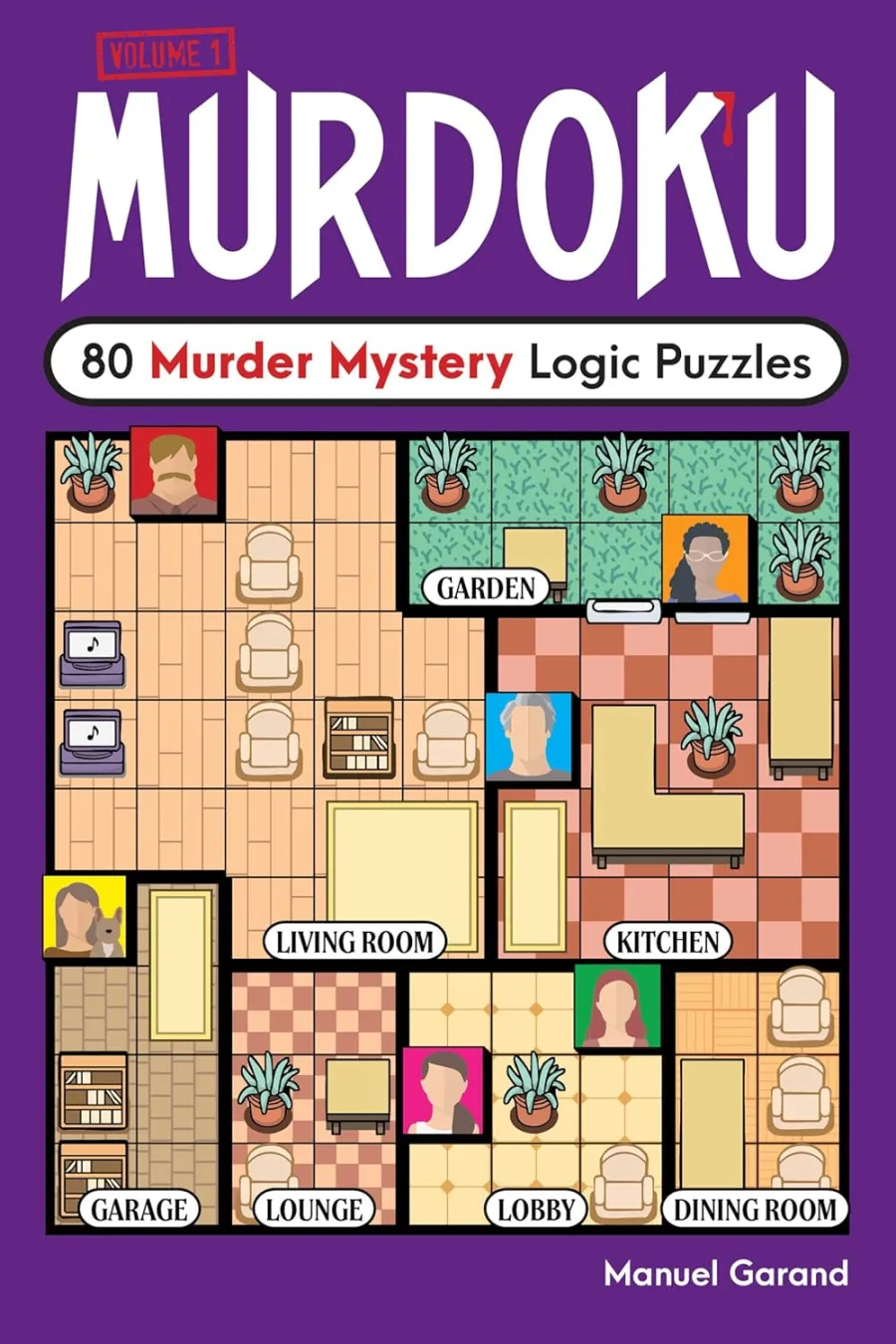
Download Cover Image
Do you want to download the full cover image for Murdoku: 80 Murder Mystery Logic Puzzles?