Atomic Habits: An Easy & Proven Way to Build Good Habits & Break Bad Ones
Hardcover
• 320 Pages
• USD 27.00
• English
• 9780735211292
5.0
| 1 rating
|
| Publisher | Avery |
|---|---|
| ISBN13 | 9780735211292 |
| ASIN/SKU | 0735211299 |
| Book Format | Hardcover |
| Language | English |
| Pages | 320 |
| List Price | USD 27.00 |
| Publishing Date | 16/10/2018 |
| Dimensions | 6.24 x 1.08 x 9.3 inches |
| Weight | 1.13 pounds |
| Book Code | BD00055376 |
Buy this Book
Amazon Stores
Ebook Stores
Other Stores
Discover Atomic Habits: An Easy and Proven Way to Build Good Habits and Break Bad Ones by James Clear. This book is published by Avery in Hardcover format, ISBN 9780735211292, ASIN 0735211299, under Self-Help, Personal Transformation Self-Help.
Book Description
The #1 New York Times bestseller.
Over 25 million copies sold!
Translated into 60+ languages!
Tiny Changes, Remarkable Results
No matter your goals, Atomic Habits offers a proven framework for improving--every day. James Clear, one of the world's leading experts on habit formation, reveals practical strategies that will teach you exactly how to form good habits, break bad ones, and master the tiny behaviors that lead to remarkable results.
If you're having trouble changing your habits, the problem isn't you. The problem is your system. Bad habits repeat themselves again and again not because you don't want to change, but because you have the wrong system for change. You do not rise to the level of your goals. You fall to the level of your systems. Here, you'll get a proven system that can take you to new heights.
Clear is known for his ability to distill complex topics into simple behaviors that can be easily applied to daily life and work. Here, he draws on the most proven ideas from biology, psychology, and neuroscience to create an easy-to-understand guide for making good habits inevitable and bad habits impossible. Along the way, readers will be inspired and entertained with true stories from Olympic gold medalists, award-winning artists, business leaders, life-saving physicians, and star comedians who have used the science of small habits to master their craft and vault to the top of their field.
Learn how to:
make time for new habits (even when life gets crazy);
overcome a lack of motivation and willpower;
design your environment to make success easier;
get back on track when you fall off course;
...and much more.
Atomic Habits will reshape the way you think about progress and success, and give you the tools and strategies you need to transform your habits--whether you are a team looking to win a championship, an organization hoping to redefine an industry, or simply an individual who wishes to quit smoking, lose weight, reduce stress, or achieve any other goal.
Over 25 million copies sold!
Translated into 60+ languages!
Tiny Changes, Remarkable Results
No matter your goals, Atomic Habits offers a proven framework for improving--every day. James Clear, one of the world's leading experts on habit formation, reveals practical strategies that will teach you exactly how to form good habits, break bad ones, and master the tiny behaviors that lead to remarkable results.
If you're having trouble changing your habits, the problem isn't you. The problem is your system. Bad habits repeat themselves again and again not because you don't want to change, but because you have the wrong system for change. You do not rise to the level of your goals. You fall to the level of your systems. Here, you'll get a proven system that can take you to new heights.
Clear is known for his ability to distill complex topics into simple behaviors that can be easily applied to daily life and work. Here, he draws on the most proven ideas from biology, psychology, and neuroscience to create an easy-to-understand guide for making good habits inevitable and bad habits impossible. Along the way, readers will be inspired and entertained with true stories from Olympic gold medalists, award-winning artists, business leaders, life-saving physicians, and star comedians who have used the science of small habits to master their craft and vault to the top of their field.
Learn how to:
make time for new habits (even when life gets crazy);
overcome a lack of motivation and willpower;
design your environment to make success easier;
get back on track when you fall off course;
...and much more.
Atomic Habits will reshape the way you think about progress and success, and give you the tools and strategies you need to transform your habits--whether you are a team looking to win a championship, an organization hoping to redefine an industry, or simply an individual who wishes to quit smoking, lose weight, reduce stress, or achieve any other goal.
Author Biography
James Clear is a writer and speaker focused on habits, decision making, and continuous improvement. He is the author of the #1 New York Times bestseller, Atomic Habits. The book has sold over 20 million copies worldwide and has been translated into more than 60 languages.
Clear is a regular speaker at Fortune 500 companies and his work has been featured in places like Time magazine, the New York Times, the Wall Street Journal and on CBS This Morning. His popular "3-2-1" email newsletter is sent out each week to more than 3 million subscribers.
Clear is a regular speaker at Fortune 500 companies and his work has been featured in places like Time magazine, the New York Times, the Wall Street Journal and on CBS This Morning. His popular "3-2-1" email newsletter is sent out each week to more than 3 million subscribers.
Editorial Reviews
Wall Street Journal bestseller
USA Today bestseller
Publisher's Weekly bestseller
One of Fast Company's 7 Best Business Books of 2018
One of Business Insider's Best Self-Help Books of 2018
"A supremely practical and useful book. James Clear distills the most fundamental information about habit formation, so you can accomplish more by focusing on less."
-Mark Manson, #1 New York Times best-selling author of The Subtle Art of Not Giving a F*ck
“James Clear has spent years honing the art and studying the science of habits. This engaging, hands-on book is the guide you need to break bad routines and make good ones.”
-Adam Grant, New York Times best-selling author of Originals, Give and Take, and Option B with Sheryl Sandberg
"A special book that will change how you approach your day and live your life."
-Ryan Holiday, bestselling author of The Obstacle is the Way and Ego is the Enemy
“As a physician attempting to help my patients build healthy habits to decrease and reverse chronic disease, Atomic Habits is the playbook I have been searching for. Not only does the book offer actionable items I can teach my patients, I can refer them to read and implement the ideas themselves. The format is powerful and simple. This should be taught in all medical schools.”
-Laurie Marbas, MD, United States Air Force veteran
“Atomic Habits was a great read. I learned a lot and think it’ll be helpful to a lot of people.”
—Gayle King, co-anchor of CBS This Morning and editor-at-large for O, The Oprah Magazine
“Useful new book”
–Wall Street Journal
“In Atomic Habits, Clear will show you how to overcome a lack of motivation, change your environment to encourage success, and make time for new (and better) habits.
–Glamour.com
“Atomic Habits is a great book for anyone who is frustrated with the way they can’t seem to kick that one (or two dozen) bad habit(s) and wants to finally achieve health, fitness, financial freedom, great relationships, and a good life.”
–Medium.com
“Excellent. Well worth the read.”
–Benjamin Hardy, Inc.com
USA Today bestseller
Publisher's Weekly bestseller
One of Fast Company's 7 Best Business Books of 2018
One of Business Insider's Best Self-Help Books of 2018
"A supremely practical and useful book. James Clear distills the most fundamental information about habit formation, so you can accomplish more by focusing on less."
-Mark Manson, #1 New York Times best-selling author of The Subtle Art of Not Giving a F*ck
“James Clear has spent years honing the art and studying the science of habits. This engaging, hands-on book is the guide you need to break bad routines and make good ones.”
-Adam Grant, New York Times best-selling author of Originals, Give and Take, and Option B with Sheryl Sandberg
"A special book that will change how you approach your day and live your life."
-Ryan Holiday, bestselling author of The Obstacle is the Way and Ego is the Enemy
“As a physician attempting to help my patients build healthy habits to decrease and reverse chronic disease, Atomic Habits is the playbook I have been searching for. Not only does the book offer actionable items I can teach my patients, I can refer them to read and implement the ideas themselves. The format is powerful and simple. This should be taught in all medical schools.”
-Laurie Marbas, MD, United States Air Force veteran
“Atomic Habits was a great read. I learned a lot and think it’ll be helpful to a lot of people.”
—Gayle King, co-anchor of CBS This Morning and editor-at-large for O, The Oprah Magazine
“Useful new book”
–Wall Street Journal
“In Atomic Habits, Clear will show you how to overcome a lack of motivation, change your environment to encourage success, and make time for new (and better) habits.
–Glamour.com
“Atomic Habits is a great book for anyone who is frustrated with the way they can’t seem to kick that one (or two dozen) bad habit(s) and wants to finally achieve health, fitness, financial freedom, great relationships, and a good life.”
–Medium.com
“Excellent. Well worth the read.”
–Benjamin Hardy, Inc.com
Book Summary
Book Summary will be added soon…
Sample Chapters
Sample Chapters will be added soon…
Reader Reviews
Jennifer
07-08-2026
Atomic Habits by James Clear is one of the most practical and easy-to-understand books on building better habits and making lasting personal improvements. Instead of focusing on dramatic life changes, Clear explains how small, consistent actions can lead to remarkable results over time. Using real-life examples, scientific research, and simple frameworks, he shows readers how to create good habits, break bad ones, and design an environment that supports success.
What makes this book stand out is its clarity. The ideas are straightforward, actionable, and easy to apply, whether you want to improve your health, productivity, finances, or relationships. Clear also emphasizes that success is driven by systems and daily routines rather than motivation alone.
While some concepts are repeated throughout the book, the repetition helps reinforce the key lessons. Overall, Atomic Habits is an inspiring, practical, and highly valuable read that offers tools anyone can use to create meaningful, long-term change in everyday life.
Atomic Habits: An Easy & Proven Way to Build Good Habits & Break Bad Ones
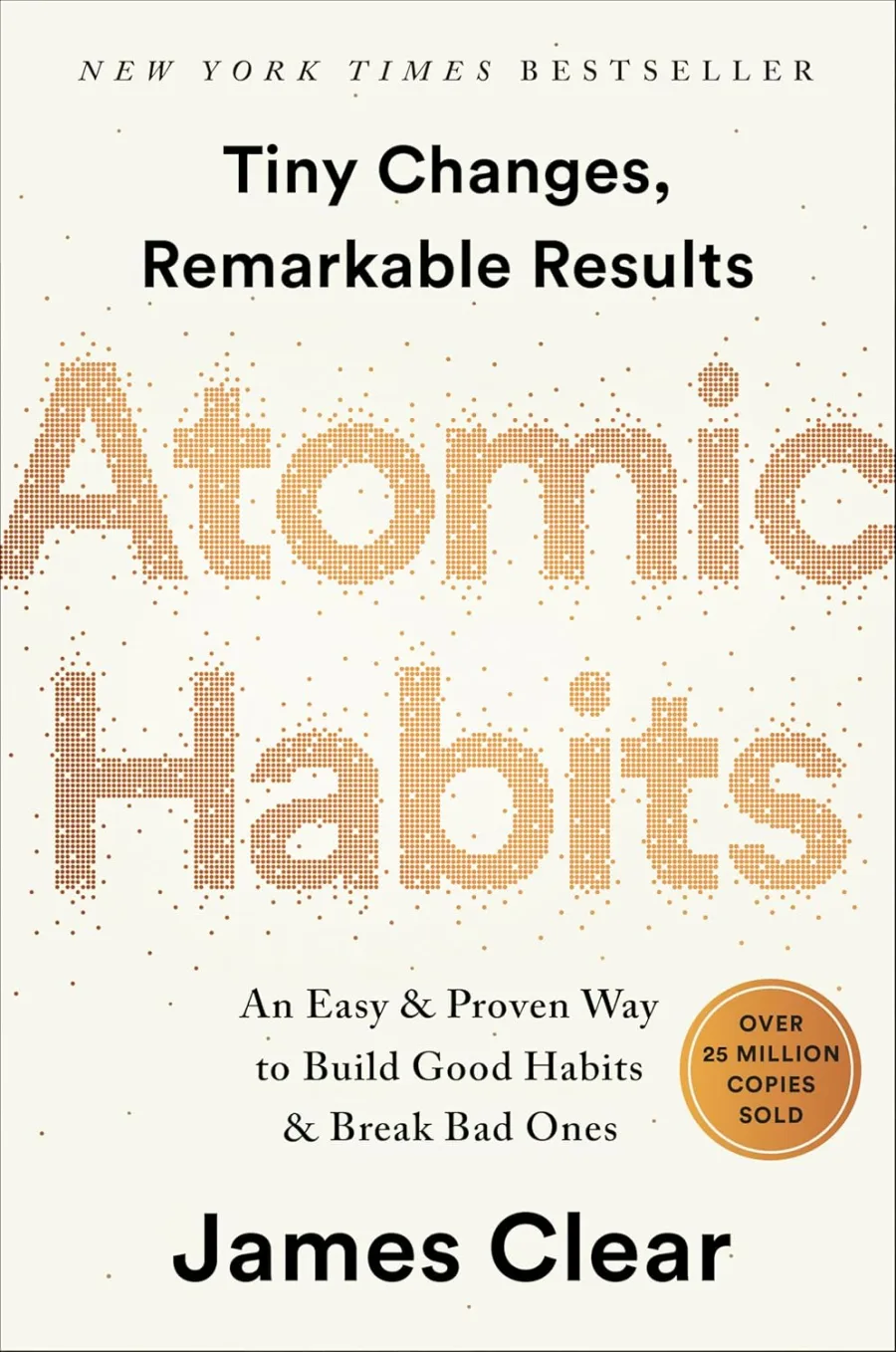
Download Cover Image
Do you want to download the full cover image for Atomic Habits: An Easy & Proven Way to Build Good Habits & Break Bad Ones?