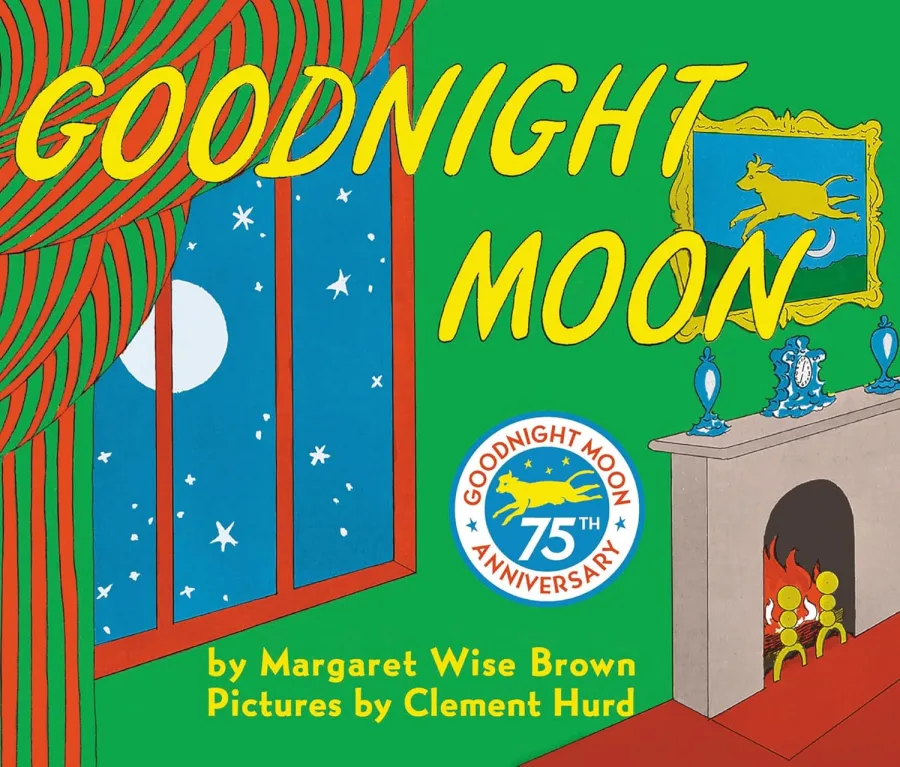
Goodnight Moon
Margaret Wise Brown, Clement Hurd
Board Book
• 34 Pages
• USD 2.77
• English
• 9780694003617
No ratings yet
| Publisher | HarperCollins |
|---|---|
| ISBN13 | 9780694003617 |
| ASIN/SKU | 0694003611 |
| Book Format | Board Book |
| Language | English |
| Pages | 34 |
| List Price | USD 2.77 |
| Publishing Date | 02/08/1991 |
| Dimensions | 5.8 x 0.7 x 4.9 inches |
| Weight | 2.31 pounds |
| Book Code | BD00055378 |
Buy this Book
Amazon Stores
Ebook Stores
Other Stores
Discover Goodnight Moon by Margaret Wise Brown. This book is published by HarperCollins in Board Book format, ISBN 9780694003617, ASIN 0694003611, under Children's Books, Children's Mammal Books, Children's Short Story Collections.
Book Description
In this classic of children's literature, beloved by generations of readers and listeners, the quiet poetry of the words and the gentle, lulling illustrations combine to make a perfect book for the end of the day.
In a great green room, tucked away in bed, is a little bunny. "Goodnight room, goodnight moon." And to all the familiar things in the softly lit room—to the picture of the three little bears sitting on chairs, to the clocks and his socks, to the mittens and the kittens, to everything one by one—the little bunny says goodnight.
One of the most beloved books of all time, Goodnight Moon is a must for every bookshelf. This board book edition is the right size for little hands and is the perfect gift for baby showers, toddler birthday parties, and holidays.
In a great green room, tucked away in bed, is a little bunny. "Goodnight room, goodnight moon." And to all the familiar things in the softly lit room—to the picture of the three little bears sitting on chairs, to the clocks and his socks, to the mittens and the kittens, to everything one by one—the little bunny says goodnight.
One of the most beloved books of all time, Goodnight Moon is a must for every bookshelf. This board book edition is the right size for little hands and is the perfect gift for baby showers, toddler birthday parties, and holidays.
Author Biography
Margaret Wise Brown wrote hundreds of books and stories during her life, but she is best known for Goodnight Moon and Runaway Bunny. Even though she died over 45 years ago, her books still sell very well. Margaret loved animals. Most of her books have animals as characters in the story. She liked to write books that had a rhythm to them. Sometimes she would put a hard word into the story or poem. She thought this made children think harder when they are reading. She wrote all the time. There are many scraps of paper where she quickly wrote down a story idea or a poem. She said she dreamed stories and then had to write them down in the morning before she forgot them. She tried to write the way children wanted to hear a story, which often isn't the same way an adult would tell a story. She also taught illustrators to draw the way a child saw things. One time she gave two puppies to someone who was going to draw a book with that kind of dog. The illustrator painted many pictures one day and then fell asleep. When he woke up, the papers he painted on were bare. The puppies had licked all the paint off the paper. Margaret died after surgery for a bursting appendix while in France. She had many friends who still miss her. They say she was a creative genius who made a room come to life with her excitement. Margaret saw herself as something else - a writer of songs and nonsense.
Editorial Reviews
"A little rabbit bids goodnight to each familiar thing in his moonlit room. Rhythmic, gently lulling words combined with warm and equally lulling pictures make this beloved classic "an ideal bedtime book."-- "The Christian Science Monitor"
Book Summary
Goodnight Moon by Margaret Wise Brown, illustrated by Clement Hurd, is one of the most beloved bedtime books ever written because of how perfectly it captures the quiet, familiar feeling of going to sleep. The story is very simple on the surface, but that simplicity is exactly what gives it its lasting charm. It follows a small bunny in the “great green room” as he gets ready for bed and slowly says goodnight to everything he can see around him. There is no dramatic plot, no conflict, and no big surprise. Instead, the book creates a peaceful bedtime ritual that feels comforting, steady, and deeply recognizable to both children and adults.
The setting is important because it feels warm, cozy, and safe. The great green room contains many everyday objects, from the balloon and the telephone to the mittens, kittens, clock, and brush. There is also a picture of a cow jumping over the moon, which adds a playful touch to the room and gives the story one of its most memorable images. As the bunny settles down, he begins naming each object one by one and saying goodnight to it. This repeating pattern is soothing and rhythmic, almost like a lullaby in book form. Children often enjoy this repetition because it helps them anticipate what comes next, and that sense of predictability is part of what makes the book feel so calming before sleep.
What makes the book special is the way it turns an ordinary bedtime routine into something tender and almost magical. The bunny does not just get into bed and fall asleep. He notices the world around him, acknowledges it, and gently lets each thing go for the night. He says goodnight to the room, to the moon, to the cow jumping over the moon, to the kittens, to the mittens, and eventually to more general things like the air and the quiet noises around him. This slow movement from specific objects to the larger world creates a feeling of widening stillness, as if the child is gradually leaving the busy day behind and entering sleep one step at a time.
The quiet old lady in the room also plays an important role, even though she is not described in great detail. She is the one who seems to guide the bunny toward sleep, whispering “hush” in the background. Her presence gives the room an added feeling of safety and care. She is not strict or harsh; she is gentle, patient, and restful. That matters because bedtime can be difficult for young children, and the book helps turn that moment into something loving rather than stressful. The old lady’s soft authority and the bunny’s calm responses work together to create a reassuring atmosphere.
Clement Hurd’s illustrations are just as important as the text. The pictures are simple but full of warmth, and they help the room feel alive without making it feel busy. The green walls, soft shadows, and familiar objects all contribute to the quiet mood. The illustrations support the text by giving children something comforting to look at while the words guide them toward sleep. There is a balance between detail and stillness, and that balance helps the book feel timeless. Even though the story is short, the images make the room feel like a real place that children could imagine themselves in.
The power of Goodnight Moon also comes from its language. Margaret Wise Brown uses short, gentle phrases that are easy to hear and remember. The repeated word “goodnight” becomes more than a farewell; it becomes a kind of rhythm that carries the reader from wakefulness into rest. The book does not rush. It pauses over each object, giving everything its due before letting it fade into the quiet of the night. That careful pacing is one reason the book works so well as a bedtime read-aloud. It slows both the reader and the child down.
At a deeper level, the book is about learning how to separate from the day in a peaceful way. The bunny does not fight sleep. Instead, he makes peace with his surroundings and lets them go. This small act has emotional meaning for children, even if they do not think about it in those terms. Bedtime often means being alone, being still, and leaving the noise of the day behind. Goodnight Moon turns that transition into a loving ritual, making it feel safe rather than lonely.
That is why the book has lasted for generations. It understands something very basic about childhood: children need reassurance, rhythm, and familiarity. The book offers all three without being preachy or complicated. It creates a tiny world that feels complete, then slowly quiets that world until only rest remains. It is a book about attention, comfort, and letting go, all expressed through a few carefully chosen words and a handful of memorable pictures.
Overall, Goodnight Moon is much more than a simple story about a bunny saying goodnight. It is a gentle meditation on bedtime, a calming ritual, and a small masterpiece of children’s literature. Its beauty lies in its quietness, its repetition, and its deep understanding of what helps a child feel secure at the end of the day. Even after so many years, it still feels soft, warm, and timeless, which is why so many families return to it night after night.
The setting is important because it feels warm, cozy, and safe. The great green room contains many everyday objects, from the balloon and the telephone to the mittens, kittens, clock, and brush. There is also a picture of a cow jumping over the moon, which adds a playful touch to the room and gives the story one of its most memorable images. As the bunny settles down, he begins naming each object one by one and saying goodnight to it. This repeating pattern is soothing and rhythmic, almost like a lullaby in book form. Children often enjoy this repetition because it helps them anticipate what comes next, and that sense of predictability is part of what makes the book feel so calming before sleep.
What makes the book special is the way it turns an ordinary bedtime routine into something tender and almost magical. The bunny does not just get into bed and fall asleep. He notices the world around him, acknowledges it, and gently lets each thing go for the night. He says goodnight to the room, to the moon, to the cow jumping over the moon, to the kittens, to the mittens, and eventually to more general things like the air and the quiet noises around him. This slow movement from specific objects to the larger world creates a feeling of widening stillness, as if the child is gradually leaving the busy day behind and entering sleep one step at a time.
The quiet old lady in the room also plays an important role, even though she is not described in great detail. She is the one who seems to guide the bunny toward sleep, whispering “hush” in the background. Her presence gives the room an added feeling of safety and care. She is not strict or harsh; she is gentle, patient, and restful. That matters because bedtime can be difficult for young children, and the book helps turn that moment into something loving rather than stressful. The old lady’s soft authority and the bunny’s calm responses work together to create a reassuring atmosphere.
Clement Hurd’s illustrations are just as important as the text. The pictures are simple but full of warmth, and they help the room feel alive without making it feel busy. The green walls, soft shadows, and familiar objects all contribute to the quiet mood. The illustrations support the text by giving children something comforting to look at while the words guide them toward sleep. There is a balance between detail and stillness, and that balance helps the book feel timeless. Even though the story is short, the images make the room feel like a real place that children could imagine themselves in.
The power of Goodnight Moon also comes from its language. Margaret Wise Brown uses short, gentle phrases that are easy to hear and remember. The repeated word “goodnight” becomes more than a farewell; it becomes a kind of rhythm that carries the reader from wakefulness into rest. The book does not rush. It pauses over each object, giving everything its due before letting it fade into the quiet of the night. That careful pacing is one reason the book works so well as a bedtime read-aloud. It slows both the reader and the child down.
At a deeper level, the book is about learning how to separate from the day in a peaceful way. The bunny does not fight sleep. Instead, he makes peace with his surroundings and lets them go. This small act has emotional meaning for children, even if they do not think about it in those terms. Bedtime often means being alone, being still, and leaving the noise of the day behind. Goodnight Moon turns that transition into a loving ritual, making it feel safe rather than lonely.
That is why the book has lasted for generations. It understands something very basic about childhood: children need reassurance, rhythm, and familiarity. The book offers all three without being preachy or complicated. It creates a tiny world that feels complete, then slowly quiets that world until only rest remains. It is a book about attention, comfort, and letting go, all expressed through a few carefully chosen words and a handful of memorable pictures.
Overall, Goodnight Moon is much more than a simple story about a bunny saying goodnight. It is a gentle meditation on bedtime, a calming ritual, and a small masterpiece of children’s literature. Its beauty lies in its quietness, its repetition, and its deep understanding of what helps a child feel secure at the end of the day. Even after so many years, it still feels soft, warm, and timeless, which is why so many families return to it night after night.
Sample Chapters
Sample Chapters will be added soon…
Reader Reviews
No reviews yet.
Goodnight Moon