
Born a Crime: Stories from a South African Childhood (One World Essentials)
Paperback
• 336 Pages
• USD 20.00
• English
• 9780399588198
No ratings yet
| Publisher | One World |
|---|---|
| ISBN13 | 9780399588198 |
| ASIN/SKU | 0399588191 |
| Book Format | Paperback |
| Language | English |
| Pages | 336 |
| List Price | USD 20.00 |
| Publishing Date | 12/02/2019 |
| Dimensions | 5.38 x 0.65 x 8.06 inches |
| Weight | 2.31 pounds |
| Book Code | BD00055390 |
Buy this Book
Amazon Stores
Ebook Stores
Other Stores
Discover Born a Crime: Stories from a South African Childhood (One World Essentials) by Trevor Noah. This book is published by One World in Paperback format, ISBN 9780399588198, ASIN 0399588191, under Biographies and Memoirs, Performing Arts, Comedy.
Book Description
#1 NEW YORK TIMES BESTSELLER • More than one million copies sold! A “brilliant” (Lupita Nyong’o, Time), “poignant” (Entertainment Weekly), “soul-nourishing” (USA Today) memoir about coming of age during the twilight of apartheid
“Noah’s childhood stories are told with all the hilarity and intellect that characterizes his comedy, while illuminating a dark and brutal period in South Africa’s history that must never be forgotten.”—Esquire
Winner of the Thurber Prize for American Humor and an NAACP Image Award • Named one of the best books of the year by The New York Time, USA Today, San Francisco Chronicle, NPR, Esquire, Newsday, and Booklist
Trevor Noah’s unlikely path from apartheid South Africa to the desk of The Daily Show began with a criminal act: his birth. Trevor was born to a white Swiss father and a black Xhosa mother at a time when such a union was punishable by five years in prison. Living proof of his parents’ indiscretion, Trevor was kept mostly indoors for the earliest years of his life, bound by the extreme and often absurd measures his mother took to hide him from a government that could, at any moment, steal him away. Finally liberated by the end of South Africa’s tyrannical white rule, Trevor and his mother set forth on a grand adventure, living openly and freely and embracing the opportunities won by a centuries-long struggle.
Born a Crime is the story of a mischievous young boy who grows into a restless young man as he struggles to find himself in a world where he was never supposed to exist. It is also the story of that young man’s relationship with his fearless, rebellious, and fervently religious mother—his teammate, a woman determined to save her son from the cycle of poverty, violence, and abuse that would ultimately threaten her own life.
The stories collected here are by turns hilarious, dramatic, and deeply affecting. Whether subsisting on caterpillars for dinner during hard times, being thrown from a moving car during an attempted kidnapping, or just trying to survive the life-and-death pitfalls of dating in high school, Trevor illuminates his curious world with an incisive wit and unflinching honesty. His stories weave together to form a moving and searingly funny portrait of a boy making his way through a damaged world in a dangerous time, armed only with a keen sense of humor and a mother’s unconventional, unconditional love.
“Noah’s childhood stories are told with all the hilarity and intellect that characterizes his comedy, while illuminating a dark and brutal period in South Africa’s history that must never be forgotten.”—Esquire
Winner of the Thurber Prize for American Humor and an NAACP Image Award • Named one of the best books of the year by The New York Time, USA Today, San Francisco Chronicle, NPR, Esquire, Newsday, and Booklist
Trevor Noah’s unlikely path from apartheid South Africa to the desk of The Daily Show began with a criminal act: his birth. Trevor was born to a white Swiss father and a black Xhosa mother at a time when such a union was punishable by five years in prison. Living proof of his parents’ indiscretion, Trevor was kept mostly indoors for the earliest years of his life, bound by the extreme and often absurd measures his mother took to hide him from a government that could, at any moment, steal him away. Finally liberated by the end of South Africa’s tyrannical white rule, Trevor and his mother set forth on a grand adventure, living openly and freely and embracing the opportunities won by a centuries-long struggle.
Born a Crime is the story of a mischievous young boy who grows into a restless young man as he struggles to find himself in a world where he was never supposed to exist. It is also the story of that young man’s relationship with his fearless, rebellious, and fervently religious mother—his teammate, a woman determined to save her son from the cycle of poverty, violence, and abuse that would ultimately threaten her own life.
The stories collected here are by turns hilarious, dramatic, and deeply affecting. Whether subsisting on caterpillars for dinner during hard times, being thrown from a moving car during an attempted kidnapping, or just trying to survive the life-and-death pitfalls of dating in high school, Trevor illuminates his curious world with an incisive wit and unflinching honesty. His stories weave together to form a moving and searingly funny portrait of a boy making his way through a damaged world in a dangerous time, armed only with a keen sense of humor and a mother’s unconventional, unconditional love.
Author Biography
Trevor Noah is one of the most successful comedians in the world and was the host of the Emmy® Award-winning “The Daily Show” on Comedy Central. Trevor has also notably served as the Grammy Awards host for four years in a row. Trevor currently hosts a Spotify original weekly podcast titled What Now? With Trevor Noah. Trevor is the author of the #1 New York Times bestseller Born a Crime: Stories from a South African Childhood which won the 2017 Thurber Prize for American Humor. Trevor's success has also spanned to sold out stand-up comedy shows across 5 continents and 4 Netflix stand-up specials which received multiple Emmy and Grammy nominations. Trevor moved from in front of the camera to a behind-the-scenes turn as executive producer with his Emmy-nominated production company, Day Zero Productions (DZP). In 2018, Trevor launched the Trevor Noah Foundation to improve equitable access to quality education for underserved youth in South Africa. Trevor’s vision is a world where education enables youth to dream, see and build the impossible.
Editorial Reviews
“A soul-nourishing pleasure . . . an enormous gift.”—USA Today
“By turns alarming, sad and funny . . . not just an unnerving account of growing up in South Africa under apartheid, but a love letter to the author’s remarkable mother.”—Michiko Kakutani, The New York Times
“You’d be hard-pressed to find a comic’s origin story better than the one Trevor Noah serves up in Born a Crime. . . . Witty truth-telling . . . brilliant comedy.”—O: The Oprah Magazine
“Remarkable . . . smart . . . extraordinary . . . essential reading on every level.”—The Seattle Times
“[Noah] thrives with the help of his astonishingly fearless mother. . . . Their fierce bond makes this story soar.”—People
“When I think of Trevor Noah, the first image I see is from his brilliant memoir, Born a Crime, of Trevor’s mother throwing him out of a moving vehicle while he’s asleep in order to save his life. Through other eyes this could be remembered as traumatic and harrowing. Through Trevor’s it is bonding and hilarious, a testament to the love of someone who truly had to think on their feet. That is how Trevor sees the world. A fantastic storyteller, he has always been a defier of rules, which he broke simply by being born in his native country.”—Lupita Nyong’o, Time
“Noah’s not the main character in his own story—his mother is the constant . . . and by the end, Noah lovingly makes clear that the book belongs to her. . . . Noah proves to be a gifted storyteller, able to deftly lace his poignant tales with amusing irony.”—Entertainment Weekly
“[An] unforgettable memoir.”—Parade
“This isn’t your average comic-writes-a-memoir: It’s a unique look at a man who is a product of his culture—and a nuanced look at a part of the world whose people have known dark times easily pushed aside.”—Refinery29
“[Noah’s] electrifying memoir sparkles with funny stories . . . and his candid and compassionate essays deepen our perception of the complexities of race, gender, and class.”—Booklist (starred review)
“Powerful prose . . . told through stories and vignettes that are sharply observed, deftly conveyed and consistently candid. Growing organically from them is an affecting investigation of identity, ethnicity, language, masculinity, nationality and, most of all, humanity.”—Mail & Guardian (South Africa)
“[Noah’s] story of surviving—and thriving—is mind-blowing.”—Cosmopolitan
“Noah has a real tale to tell, and he tells it well. . . . Among the many virtues of Born a Crime is a frank and telling portrait of life in South Africa during the 1980s and ’90s.”—Newsday
“An affecting memoir, Born a Crime [is] a love letter to his mother.”—The Washington Post
“Witty and revealing . . . Noah’s story is the story of modern South Africa.”—Publishers Weekly (starred review)
“By turns alarming, sad and funny . . . not just an unnerving account of growing up in South Africa under apartheid, but a love letter to the author’s remarkable mother.”—Michiko Kakutani, The New York Times
“You’d be hard-pressed to find a comic’s origin story better than the one Trevor Noah serves up in Born a Crime. . . . Witty truth-telling . . . brilliant comedy.”—O: The Oprah Magazine
“Remarkable . . . smart . . . extraordinary . . . essential reading on every level.”—The Seattle Times
“[Noah] thrives with the help of his astonishingly fearless mother. . . . Their fierce bond makes this story soar.”—People
“When I think of Trevor Noah, the first image I see is from his brilliant memoir, Born a Crime, of Trevor’s mother throwing him out of a moving vehicle while he’s asleep in order to save his life. Through other eyes this could be remembered as traumatic and harrowing. Through Trevor’s it is bonding and hilarious, a testament to the love of someone who truly had to think on their feet. That is how Trevor sees the world. A fantastic storyteller, he has always been a defier of rules, which he broke simply by being born in his native country.”—Lupita Nyong’o, Time
“Noah’s not the main character in his own story—his mother is the constant . . . and by the end, Noah lovingly makes clear that the book belongs to her. . . . Noah proves to be a gifted storyteller, able to deftly lace his poignant tales with amusing irony.”—Entertainment Weekly
“[An] unforgettable memoir.”—Parade
“This isn’t your average comic-writes-a-memoir: It’s a unique look at a man who is a product of his culture—and a nuanced look at a part of the world whose people have known dark times easily pushed aside.”—Refinery29
“[Noah’s] electrifying memoir sparkles with funny stories . . . and his candid and compassionate essays deepen our perception of the complexities of race, gender, and class.”—Booklist (starred review)
“Powerful prose . . . told through stories and vignettes that are sharply observed, deftly conveyed and consistently candid. Growing organically from them is an affecting investigation of identity, ethnicity, language, masculinity, nationality and, most of all, humanity.”—Mail & Guardian (South Africa)
“[Noah’s] story of surviving—and thriving—is mind-blowing.”—Cosmopolitan
“Noah has a real tale to tell, and he tells it well. . . . Among the many virtues of Born a Crime is a frank and telling portrait of life in South Africa during the 1980s and ’90s.”—Newsday
“An affecting memoir, Born a Crime [is] a love letter to his mother.”—The Washington Post
“Witty and revealing . . . Noah’s story is the story of modern South Africa.”—Publishers Weekly (starred review)
Book Summary
Born a Crime: Stories from a South African Childhood by Trevor Noah is a memoir about growing up in South Africa during the last years of apartheid and the difficult period that followed. The title comes from the fact that Trevor was born to a black Xhosa mother and a white Swiss-German father at a time when relationships between black and white people were illegal. Under apartheid law, his very existence was considered a crime. This strange and painful reality shaped his childhood. He could not openly walk with both parents, and his mother often had to pretend he was not her child in public. From the beginning, Trevor’s life was marked by confusion, danger, and the feeling of not fully belonging anywhere.
The heart of the book is Trevor’s relationship with his mother, Patricia Nombuyiselo Noah. She is the strongest and most important person in his life. Patricia is deeply religious, fearless, independent, and determined to raise her son differently from what society expects. She refuses to let apartheid define Trevor’s future. Even though she lives in a world built to limit black people, especially black women, she teaches Trevor to think freely, question authority, speak many languages, and believe he can be more than what the system says he should be. She takes him to churches across the city every Sunday, sometimes attending several services in one day. For Trevor, this is often boring and exhausting, but it also shows his mother’s faith and discipline.
Trevor grows up feeling like an outsider in almost every community. He is too light-skinned to be fully accepted as black in some places, but not white enough to belong in white society. Among colored people, he is also seen as different. Because apartheid divided people into strict racial categories, Trevor’s mixed identity makes him hard to place. He learns early that language can help him survive. He speaks several South African languages, including English, Xhosa, Zulu, and Afrikaans, and he discovers that speaking someone’s language can change how they see him. Language becomes his way of crossing boundaries. It helps him make friends, avoid fights, and move between different groups.
Much of the memoir shows the absurdity and cruelty of apartheid through Trevor’s childhood experiences. He explains how the system was designed to keep people separated, poor, and afraid. Black South Africans were forced into townships, denied equal education, and controlled by laws that shaped every part of daily life. But Trevor tells these stories with humor as well as seriousness. He often shows how ridiculous racism is by describing its everyday contradictions. For example, because he was light-skinned, people sometimes treated him differently, even though he was still the same child. His humor does not make the pain disappear, but it helps readers understand how people survive under impossible conditions.
Trevor’s childhood is full of mischief, mistakes, and lessons. He is curious, clever, and often troublesome. He burns down a white family’s house by accident while playing with matches, gets into trouble at school, and constantly tests limits. His mother disciplines him strictly, often chasing him or punishing him when he disobeys. But her discipline comes from love and fear for his future. She knows that the world will not be gentle with him, so she tries to prepare him to be strong, smart, and responsible. Trevor does not always understand this as a child, but as he grows older, he realizes how much his mother sacrificed for him.
The book also explores poverty and survival. Trevor and his mother often struggle financially, but Patricia works hard to provide for him. She makes sure he reads, studies, and sees life beyond the township. Later, as a teenager, Trevor begins finding ways to make money. He sells pirated CDs, works as a DJ, and becomes involved in small hustles with friends. These experiences show both his creativity and the limited opportunities available to young people in poor communities. He is not presented as perfect; he makes bad choices and learns from them. Through these stories, Trevor gives readers a view of township life that is lively, complicated, and full of both hardship and community.
One of the most memorable parts of the memoir is Trevor’s friendship with a boy named Hitler, whose name shocks readers but is explained through South Africa’s different historical context. Trevor uses this story to show how history is understood differently in different places. In South Africa, some people gave children names from history without fully knowing their meanings. When Trevor and Hitler perform at a Jewish school and the name causes outrage, it becomes a darkly comic example of cultural misunderstanding. Like many stories in the book, it is funny on the surface but also reveals deeper truths about education, history, and ignorance.
As Trevor grows older, the political system changes, but life does not suddenly become easy. Apartheid ends, Nelson Mandela becomes president, and South Africa begins a new chapter, but the damage of the past remains. Communities are still divided, poverty continues, and violence is common. Trevor’s family life also becomes more painful when his mother marries Abel, a mechanic who at first seems charming but later becomes abusive. Abel is controlling, jealous, and violent. Trevor watches his mother suffer in a marriage that becomes increasingly dangerous. Patricia, however, remains strong and refuses to let Abel completely break her spirit.
The most painful part of the book comes near the end, when Abel shoots Patricia in the head after years of abuse. Miraculously, she survives. The bullet passes through her face and misses her brain and major arteries. This moment is terrifying, but it also shows Patricia’s extraordinary resilience. Even after nearly dying, she keeps her faith and humor. Trevor is devastated, angry, and amazed by her survival. This event brings together many of the memoir’s themes: violence, faith, love, survival, and the strength of women who endure more than they should have to.
Born a Crime is not just a celebrity memoir; it is a story about identity, family, racism, poverty, and hope. Trevor Noah writes with warmth and honesty, mixing comedy with painful memories. He shows how apartheid shaped his life, but he also shows that he was shaped even more by his mother’s love and courage. The book’s message is that a person can come from a broken system and still find a way to grow, laugh, learn, and become free. At its center, it is a tribute to Patricia Noah, the woman who taught Trevor to challenge the world rather than accept its limits.
The heart of the book is Trevor’s relationship with his mother, Patricia Nombuyiselo Noah. She is the strongest and most important person in his life. Patricia is deeply religious, fearless, independent, and determined to raise her son differently from what society expects. She refuses to let apartheid define Trevor’s future. Even though she lives in a world built to limit black people, especially black women, she teaches Trevor to think freely, question authority, speak many languages, and believe he can be more than what the system says he should be. She takes him to churches across the city every Sunday, sometimes attending several services in one day. For Trevor, this is often boring and exhausting, but it also shows his mother’s faith and discipline.
Trevor grows up feeling like an outsider in almost every community. He is too light-skinned to be fully accepted as black in some places, but not white enough to belong in white society. Among colored people, he is also seen as different. Because apartheid divided people into strict racial categories, Trevor’s mixed identity makes him hard to place. He learns early that language can help him survive. He speaks several South African languages, including English, Xhosa, Zulu, and Afrikaans, and he discovers that speaking someone’s language can change how they see him. Language becomes his way of crossing boundaries. It helps him make friends, avoid fights, and move between different groups.
Much of the memoir shows the absurdity and cruelty of apartheid through Trevor’s childhood experiences. He explains how the system was designed to keep people separated, poor, and afraid. Black South Africans were forced into townships, denied equal education, and controlled by laws that shaped every part of daily life. But Trevor tells these stories with humor as well as seriousness. He often shows how ridiculous racism is by describing its everyday contradictions. For example, because he was light-skinned, people sometimes treated him differently, even though he was still the same child. His humor does not make the pain disappear, but it helps readers understand how people survive under impossible conditions.
Trevor’s childhood is full of mischief, mistakes, and lessons. He is curious, clever, and often troublesome. He burns down a white family’s house by accident while playing with matches, gets into trouble at school, and constantly tests limits. His mother disciplines him strictly, often chasing him or punishing him when he disobeys. But her discipline comes from love and fear for his future. She knows that the world will not be gentle with him, so she tries to prepare him to be strong, smart, and responsible. Trevor does not always understand this as a child, but as he grows older, he realizes how much his mother sacrificed for him.
The book also explores poverty and survival. Trevor and his mother often struggle financially, but Patricia works hard to provide for him. She makes sure he reads, studies, and sees life beyond the township. Later, as a teenager, Trevor begins finding ways to make money. He sells pirated CDs, works as a DJ, and becomes involved in small hustles with friends. These experiences show both his creativity and the limited opportunities available to young people in poor communities. He is not presented as perfect; he makes bad choices and learns from them. Through these stories, Trevor gives readers a view of township life that is lively, complicated, and full of both hardship and community.
One of the most memorable parts of the memoir is Trevor’s friendship with a boy named Hitler, whose name shocks readers but is explained through South Africa’s different historical context. Trevor uses this story to show how history is understood differently in different places. In South Africa, some people gave children names from history without fully knowing their meanings. When Trevor and Hitler perform at a Jewish school and the name causes outrage, it becomes a darkly comic example of cultural misunderstanding. Like many stories in the book, it is funny on the surface but also reveals deeper truths about education, history, and ignorance.
As Trevor grows older, the political system changes, but life does not suddenly become easy. Apartheid ends, Nelson Mandela becomes president, and South Africa begins a new chapter, but the damage of the past remains. Communities are still divided, poverty continues, and violence is common. Trevor’s family life also becomes more painful when his mother marries Abel, a mechanic who at first seems charming but later becomes abusive. Abel is controlling, jealous, and violent. Trevor watches his mother suffer in a marriage that becomes increasingly dangerous. Patricia, however, remains strong and refuses to let Abel completely break her spirit.
The most painful part of the book comes near the end, when Abel shoots Patricia in the head after years of abuse. Miraculously, she survives. The bullet passes through her face and misses her brain and major arteries. This moment is terrifying, but it also shows Patricia’s extraordinary resilience. Even after nearly dying, she keeps her faith and humor. Trevor is devastated, angry, and amazed by her survival. This event brings together many of the memoir’s themes: violence, faith, love, survival, and the strength of women who endure more than they should have to.
Born a Crime is not just a celebrity memoir; it is a story about identity, family, racism, poverty, and hope. Trevor Noah writes with warmth and honesty, mixing comedy with painful memories. He shows how apartheid shaped his life, but he also shows that he was shaped even more by his mother’s love and courage. The book’s message is that a person can come from a broken system and still find a way to grow, laugh, learn, and become free. At its center, it is a tribute to Patricia Noah, the woman who taught Trevor to challenge the world rather than accept its limits.
Sample Chapters
Sample Chapters will be added soon…
Reader Reviews
No reviews yet.
Born a Crime: Stories from a South African Childhood (One World Essentials)
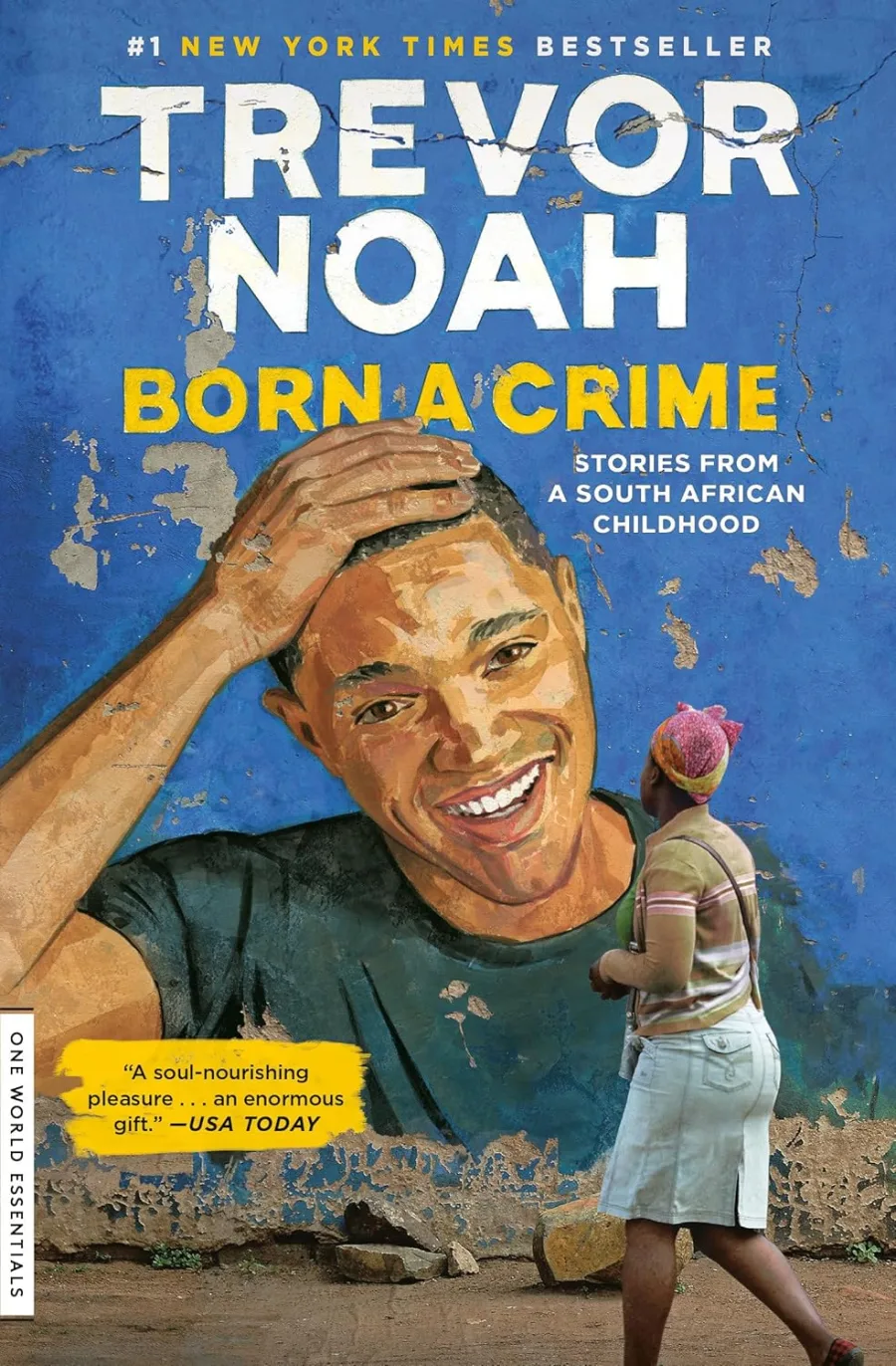
Download Cover Image
Do you want to download the full cover image for Born a Crime: Stories from a South African Childhood (One World Essentials)?