
National Geographic Little Kids First Big Book of Why: Questions and Answers
Hardcover
• 128 Pages
• USD 16.99
• English
• 9781426307935
No ratings yet
| Publisher | National Geographic Kids |
|---|---|
| ISBN13 | 9781426307935 |
| ASIN/SKU | 1426307934 |
| Book Format | Hardcover |
| Language | English |
| Pages | 128 |
| List Price | USD 16.99 |
| Publishing Date | 10/05/2011 |
| Dimensions | 10.16 x 0.55 x 10.16 inches |
| Weight | 1.53 pounds |
| Book Code | BD00055405 |
Buy this Book
Amazon Stores
Ebook Stores
Other Stores
Discover National Geographic Little Kids First Big Book of Why: Questions and Answers by Amy Shields. This book is published by National Geographic Kids in Hardcover format, ISBN 9781426307935, ASIN 1426307934, under Children's Books, Children's Mystery and Wonders Books, Children's Almanacs.
Book Description
WALL STREET JOURNAL BESTSELLER • Answer some of life’s most peculiar questions with this fascinating, browsable book that brings the fun of National Geographic Kids to preschoolers and curious kids!
Why do I have a belly button? Why can't fish breathe air? What makes a plane fly?
Kids are relentless question-askers, and this colorful, charming book helps provide them with easy-to-understand, age-appropriate answers! Using an interactive Q&A format and content grounded in a child's immediate world, the Little Kids First Big Book of Why delivers lively and accurate information, plus hands-on activities, simple recipes, crafts, and more.
The Little Kids First Big Book of Why helps prepare children for school by inviting them to ask big questions and think big thoughts. Perfect for kids in preschool through first grade, it's also an essential parent reference with trustworthy, engaging, level-appropriate explanations based on sound educational findings. Highly photographic and playful, this big book is an adventure in exploration!
Continue exploring with these other National Geographic Little Kids First books:
The Little Kids First Big Book of Dinosaurs
The Little Kids First Big Book of Animals
The Little Kids First Big Book of Space
The Little Kids First Big Book of Where
The Little Kids First Big Book of Sports
Why do I have a belly button? Why can't fish breathe air? What makes a plane fly?
Kids are relentless question-askers, and this colorful, charming book helps provide them with easy-to-understand, age-appropriate answers! Using an interactive Q&A format and content grounded in a child's immediate world, the Little Kids First Big Book of Why delivers lively and accurate information, plus hands-on activities, simple recipes, crafts, and more.
The Little Kids First Big Book of Why helps prepare children for school by inviting them to ask big questions and think big thoughts. Perfect for kids in preschool through first grade, it's also an essential parent reference with trustworthy, engaging, level-appropriate explanations based on sound educational findings. Highly photographic and playful, this big book is an adventure in exploration!
Continue exploring with these other National Geographic Little Kids First books:
The Little Kids First Big Book of Dinosaurs
The Little Kids First Big Book of Animals
The Little Kids First Big Book of Space
The Little Kids First Big Book of Where
The Little Kids First Big Book of Sports
Author Biography
Amy Shields is a longtime editor of National Geographic books who is known for her work in children's literature. She has written several popular titles, including Little Kids First Big Book of Why and numerous installments for the National Geographic Readers series. Shields lives in upstate New York with her beloved dogs, Jenny and Toby.
Editorial Reviews
“Highly photographic and playful, this big book is an adventure in exploration and will make long car rides seem like a quick trip around the corner!”–Woman of Many Roles blog
Book Summary
National Geographic Little Kids First Big Book of Why: Questions and Answers by Amy Shields is an engaging nonfiction book created to satisfy the endless curiosity of young children. Rather than telling a single story with characters and a plot, the book is organized around the many "why" questions that children naturally ask about the world around them. Covering topics such as animals, nature, space, weather, the human body, science, and everyday life, it provides simple, accurate, and entertaining answers that encourage learning through curiosity. Filled with colorful photographs, fun illustrations, and easy-to-understand explanations, the book transforms ordinary questions into exciting opportunities for discovery.
The book begins by embracing one of childhood's most important qualities: curiosity. Young children constantly ask why things happen, why animals behave in certain ways, why the sky changes color, or why people look different from one another. Instead of treating these questions as unimportant, the book celebrates them, showing that asking questions is one of the best ways to learn. Every page invites children to continue exploring, reminding them that the world is full of fascinating mysteries waiting to be understood.
One of the largest sections focuses on the natural world. Children learn why the sky appears blue during the day, why rain falls from clouds, why rainbows appear after storms, and why the seasons change throughout the year. These scientific ideas are explained using simple language and familiar examples that make complex concepts easy to understand. Instead of relying on difficult technical terms, the explanations connect science to everyday experiences that children can observe for themselves.
Animals receive special attention throughout the book because they are among the subjects children find most fascinating. Readers discover why giraffes have such long necks, why zebras have stripes, why polar bears have white fur, why birds build nests, and why some animals sleep during the day while others are active at night. Each answer highlights how different animals have adapted to survive in their environments. These facts help children appreciate the incredible diversity of life on Earth while encouraging respect for wildlife and nature.
The book also explores the human body by answering questions children frequently ask about themselves. Readers learn why people need sleep, why hearts beat continuously, why bones are important, why people grow taller, and why healthy food helps the body function properly. The explanations encourage children to understand how their bodies work while gently introducing healthy habits such as eating nutritious foods, exercising, and getting enough rest.
Space and astronomy provide another exciting area of exploration. The book explains why the Sun shines, why the Moon changes shape, why stars twinkle, and why astronauts travel into space. These answers introduce children to basic astronomy while inspiring a sense of wonder about the universe. Rather than overwhelming readers with scientific detail, the book focuses on clear, memorable explanations that spark imagination and encourage further learning.
Weather is another topic that naturally interests young readers. Questions about thunderstorms, lightning, snow, wind, and hurricanes are answered in ways that make these powerful natural events less mysterious and less frightening. Children begin to understand that weather follows predictable patterns based on how nature works. This knowledge helps replace fear with curiosity, encouraging children to observe weather changes with greater confidence.
Everyday life also provides many opportunities for learning. The book answers questions about why people wear different kinds of clothing, why some foods taste sweet while others are sour, why vehicles move, why trees lose their leaves, and why families celebrate holidays. These practical topics help children connect scientific ideas to their own daily experiences, making learning feel relevant and enjoyable.
One of the book's greatest strengths is its ability to encourage observation. Rather than simply providing facts, many answers inspire children to look more carefully at the world around them. After learning why flowers bloom or why insects behave in certain ways, young readers are naturally encouraged to notice these things outdoors. The book turns ordinary walks, family trips, and everyday activities into opportunities for exploration and discovery.
The colorful National Geographic photographs greatly enhance the learning experience. High-quality images of animals, landscapes, plants, people, and natural wonders help children visualize the concepts being explained. These photographs make the information more memorable while also inspiring appreciation for the beauty and diversity of the world. The combination of real-life photography and simple explanations creates an engaging experience that appeals to both beginning readers and younger children listening to the book being read aloud.
The writing style is friendly, conversational, and reassuring. Amy Shields presents information in a way that feels like a thoughtful conversation rather than a formal lesson. Difficult ideas are broken into manageable pieces, allowing children to understand scientific concepts without feeling overwhelmed. This approachable style encourages confidence and helps children develop a positive attitude toward learning.
Another important message running throughout the book is that curiosity should always be encouraged. Every answered question naturally leads to new ones, demonstrating that learning is an ongoing process rather than something that ever truly ends. The book reminds children that scientists, explorers, and inventors all begin by asking simple questions about the world. By nurturing this natural curiosity, it helps lay the foundation for lifelong learning and critical thinking.
Parents, teachers, and caregivers can also use the book as a valuable educational resource. Each section provides opportunities for discussion, hands-on activities, and further exploration. Adults can expand on the answers by encouraging children to conduct simple experiments, observe nature, visit museums, or read additional books about topics that capture their interest. In this way, the book becomes more than just a collection of facts—it becomes a starting point for meaningful conversations and shared discoveries.
Overall, National Geographic Little Kids First Big Book of Why: Questions and Answers is an entertaining and informative introduction to the wonders of science, nature, and everyday life. Amy Shields successfully transforms children's endless "why" questions into engaging lessons that are both educational and enjoyable. Through clear explanations, stunning photographs, and a warm, encouraging tone, the book celebrates curiosity as one of the greatest tools for understanding the world. Rather than simply providing answers, it inspires young readers to keep asking questions, keep exploring, and discover that every new piece of knowledge opens the door to even more exciting possibilities.
The book begins by embracing one of childhood's most important qualities: curiosity. Young children constantly ask why things happen, why animals behave in certain ways, why the sky changes color, or why people look different from one another. Instead of treating these questions as unimportant, the book celebrates them, showing that asking questions is one of the best ways to learn. Every page invites children to continue exploring, reminding them that the world is full of fascinating mysteries waiting to be understood.
One of the largest sections focuses on the natural world. Children learn why the sky appears blue during the day, why rain falls from clouds, why rainbows appear after storms, and why the seasons change throughout the year. These scientific ideas are explained using simple language and familiar examples that make complex concepts easy to understand. Instead of relying on difficult technical terms, the explanations connect science to everyday experiences that children can observe for themselves.
Animals receive special attention throughout the book because they are among the subjects children find most fascinating. Readers discover why giraffes have such long necks, why zebras have stripes, why polar bears have white fur, why birds build nests, and why some animals sleep during the day while others are active at night. Each answer highlights how different animals have adapted to survive in their environments. These facts help children appreciate the incredible diversity of life on Earth while encouraging respect for wildlife and nature.
The book also explores the human body by answering questions children frequently ask about themselves. Readers learn why people need sleep, why hearts beat continuously, why bones are important, why people grow taller, and why healthy food helps the body function properly. The explanations encourage children to understand how their bodies work while gently introducing healthy habits such as eating nutritious foods, exercising, and getting enough rest.
Space and astronomy provide another exciting area of exploration. The book explains why the Sun shines, why the Moon changes shape, why stars twinkle, and why astronauts travel into space. These answers introduce children to basic astronomy while inspiring a sense of wonder about the universe. Rather than overwhelming readers with scientific detail, the book focuses on clear, memorable explanations that spark imagination and encourage further learning.
Weather is another topic that naturally interests young readers. Questions about thunderstorms, lightning, snow, wind, and hurricanes are answered in ways that make these powerful natural events less mysterious and less frightening. Children begin to understand that weather follows predictable patterns based on how nature works. This knowledge helps replace fear with curiosity, encouraging children to observe weather changes with greater confidence.
Everyday life also provides many opportunities for learning. The book answers questions about why people wear different kinds of clothing, why some foods taste sweet while others are sour, why vehicles move, why trees lose their leaves, and why families celebrate holidays. These practical topics help children connect scientific ideas to their own daily experiences, making learning feel relevant and enjoyable.
One of the book's greatest strengths is its ability to encourage observation. Rather than simply providing facts, many answers inspire children to look more carefully at the world around them. After learning why flowers bloom or why insects behave in certain ways, young readers are naturally encouraged to notice these things outdoors. The book turns ordinary walks, family trips, and everyday activities into opportunities for exploration and discovery.
The colorful National Geographic photographs greatly enhance the learning experience. High-quality images of animals, landscapes, plants, people, and natural wonders help children visualize the concepts being explained. These photographs make the information more memorable while also inspiring appreciation for the beauty and diversity of the world. The combination of real-life photography and simple explanations creates an engaging experience that appeals to both beginning readers and younger children listening to the book being read aloud.
The writing style is friendly, conversational, and reassuring. Amy Shields presents information in a way that feels like a thoughtful conversation rather than a formal lesson. Difficult ideas are broken into manageable pieces, allowing children to understand scientific concepts without feeling overwhelmed. This approachable style encourages confidence and helps children develop a positive attitude toward learning.
Another important message running throughout the book is that curiosity should always be encouraged. Every answered question naturally leads to new ones, demonstrating that learning is an ongoing process rather than something that ever truly ends. The book reminds children that scientists, explorers, and inventors all begin by asking simple questions about the world. By nurturing this natural curiosity, it helps lay the foundation for lifelong learning and critical thinking.
Parents, teachers, and caregivers can also use the book as a valuable educational resource. Each section provides opportunities for discussion, hands-on activities, and further exploration. Adults can expand on the answers by encouraging children to conduct simple experiments, observe nature, visit museums, or read additional books about topics that capture their interest. In this way, the book becomes more than just a collection of facts—it becomes a starting point for meaningful conversations and shared discoveries.
Overall, National Geographic Little Kids First Big Book of Why: Questions and Answers is an entertaining and informative introduction to the wonders of science, nature, and everyday life. Amy Shields successfully transforms children's endless "why" questions into engaging lessons that are both educational and enjoyable. Through clear explanations, stunning photographs, and a warm, encouraging tone, the book celebrates curiosity as one of the greatest tools for understanding the world. Rather than simply providing answers, it inspires young readers to keep asking questions, keep exploring, and discover that every new piece of knowledge opens the door to even more exciting possibilities.
Sample Chapters
Sample Chapters will be added soon…
Reader Reviews
No reviews yet.
National Geographic Little Kids First Big Book of Why: Questions and Answers
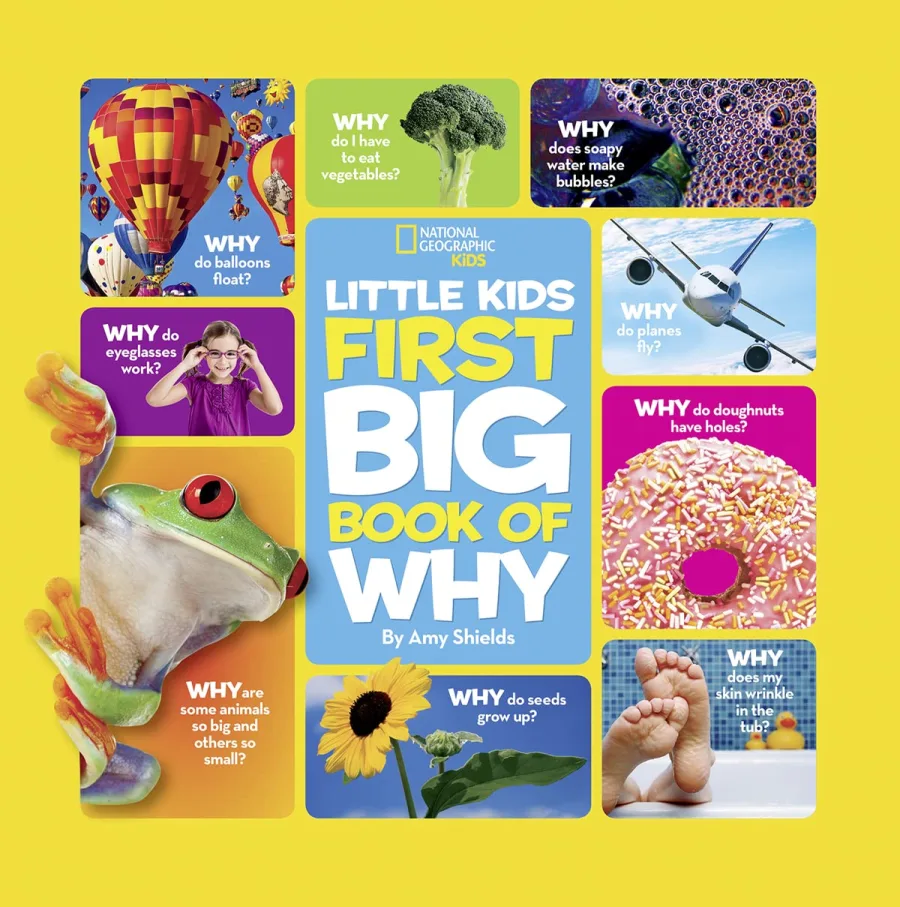
Download Cover Image
Do you want to download the full cover image for National Geographic Little Kids First Big Book of Why: Questions and Answers?