
The Man Who Died Twice: A Thursday Murder Club Mystery
Paperback
• 400 Pages
• USD 18.00
• English
• 9781984881014
No ratings yet
| Publisher | Penguin Books |
|---|---|
| ISBN13 | 9781984881014 |
| ASIN/SKU | 1984881019 |
| Book Format | Paperback |
| Language | English |
| Pages | 400 |
| List Price | USD 18.00 |
| Publishing Date | 26/07/2022 |
| Dimensions | 5.4 x 0.9 x 8.2 inches |
| Weight | 2.31 pounds |
| Book Code | BD00055441 |
Buy this Book
Amazon Stores
Ebook Stores
Other Stores
Discover The Man Who Died Twice: A Thursday Murder Club Mystery by Richard Osman. This book is published by Penguin Books in Paperback format, ISBN 9781984881014, ASIN 1984881019, under Literature and Fiction, Cozy Mysteries, Amateur Sleuths.
Book Description
The second installment in the beloved and New York Times bestselling series from Richard Osman, now streaming on Netflix
“It’s taken a mere two books for Richard Osman to vault into the upper leagues of crime writers. . . The Man Who Died Twice. . . dives right into joyous fun."
—The New York Times Book Review
Elizabeth, Joyce, Ron and Ibrahim—the Thursday Murder Club—are still riding high off their recent real-life murder case and are looking forward to a bit of peace and quiet at Cooper’s Chase, their posh retirement village.
But they are out of luck.
An unexpected visitor—an old pal of Elizabeth’s (or perhaps more than just a pal?)—arrives, desperate for her help. He has been accused of stealing diamonds worth millions from the wrong men and he’s seriously on the lam.
Then, as night follows day, the first body is found. But not the last. Elizabeth, Joyce, Ron and Ibrahim are up against a ruthless murderer who wouldn’t bat an eyelid at knocking off four septuagenarians. Can our four friends catch the killer before the killer catches them? And if they find the diamonds, too? Well, wouldn’t that be a bonus? You should never put anything beyond the Thursday Murder Club.
Richard Osman is back with everyone’s favorite mystery-solving quartet, and the second installment of the Thursday Murder Club series is just as clever and warm as the first—an unputdownable, laugh-out-loud pleasure of a read.
“It’s taken a mere two books for Richard Osman to vault into the upper leagues of crime writers. . . The Man Who Died Twice. . . dives right into joyous fun."
—The New York Times Book Review
Elizabeth, Joyce, Ron and Ibrahim—the Thursday Murder Club—are still riding high off their recent real-life murder case and are looking forward to a bit of peace and quiet at Cooper’s Chase, their posh retirement village.
But they are out of luck.
An unexpected visitor—an old pal of Elizabeth’s (or perhaps more than just a pal?)—arrives, desperate for her help. He has been accused of stealing diamonds worth millions from the wrong men and he’s seriously on the lam.
Then, as night follows day, the first body is found. But not the last. Elizabeth, Joyce, Ron and Ibrahim are up against a ruthless murderer who wouldn’t bat an eyelid at knocking off four septuagenarians. Can our four friends catch the killer before the killer catches them? And if they find the diamonds, too? Well, wouldn’t that be a bonus? You should never put anything beyond the Thursday Murder Club.
Richard Osman is back with everyone’s favorite mystery-solving quartet, and the second installment of the Thursday Murder Club series is just as clever and warm as the first—an unputdownable, laugh-out-loud pleasure of a read.
Author Biography
Richard Osman is an author and television presenter. His novels, The Thursday Murder Club, The Man Who Died Twice, The Bullet That Missed, and The Last Devil to Die, were number one, million-copy international bestsellers as well as New York Times bestsellers. He lives in London with his wife, Ingrid, and Liesl the cat. We Solve Murders is his fifth novel. The movie adaptation for The Thursday Murder Club will start filming in 2024, produced by Amblin Entertainment.
Editorial Reviews
Praise for The Man Who Died Twice:
“These septuagenarian sleuths of the Thursday Murder Club don’t miss a beat…”
—People
“It’s taken a mere two books for Richard Osman to vault into the upper leagues of crime writers… The Man Who Died Twice. . . dives right into joyous fun. Osman’s writing reminds me of Anthony Berkeley’s in its mixing of sparkling humor and resonant emotion. . . No wonder readers, myself included, have surrendered to [the Thursday Murder Club members’] abundant charms.”
—The New York Times Book Review
“Think of the Thursday Murder Club itself as a senior version of 'The A-Team'. . . Funny, moving and suspenseful. . . So delicious, even adorable . . A wildly entertaining book.”
—The Washington Post
“[Feels] like a reunion with old friends. Clever, witty, and touching, this thriller has it all.”
—Lisa Gardner, #1New York Timesbestselling author of Before She Disappeared
“A thing of joy. Osman has a natural sense of humor that he's able to translate into both character and dialogue.”
—Kate Atkinson, #1New York Timesbestselling author of Big Sky
“Osman delivers another must read full of humor and heart. I loved it.”
—Harlan Coben, #1 New York Times bestselling author of Win
“This book is SO MUCH FUN! Fiendishly clever and brimming with wit on every page, The Man Who Died Twice is the tonic we all need. Osman just gets better.”
—Shari Lapena, New York Times bestselling author of The Couple Next Door
“He’s back and he’s better than ever! By turns moving, hilarious, and brilliantly suspenseful, the novel keeps us flipping pages from start to finish.”
—Jeffery Deaver, #1 international bestselling author of The Final Twist
“Osman’s novels are so much more than just brilliantly engineered mysteries... They're also funny, warm, and big-hearted. He can't possibly write them fast enough to suit me. These books are absolute gold.”
—Joe Hill, #1 New York Times bestselling author of The Fireman
“Richard Osman’s action-packed second outing with the Thursday Murder Club overflows with wit, friendship, and derring-do, as the eccentric quartet of British crime solvers joins forces from a countryside retirement village. They tussle with the mafia, investigate murders, and, of course, enjoy teatime.”
—The Christian Science Monitor
“The club makes a triumphant return… The Man Who Died Twice, like its series predecessor, is an unalloyed delight, full of sharp writing, sudden surprises, heart, comedy, sorrow and great banter.”
—Tom Nolan, The Wall Street Journal
“Fun and ingenious … Osman blends humor and pathos while weaving his tangled web of intrigue and deception. This is the perfect book with which to unwind.”
—Malcolm Forbes, Minneapolis Star-Tribune
“Osman follows The Thursday Murder Club, his supremely entertaining debut, with an even better second installment. . . A clever, funny mystery peopled with captivating characters that enhance the story at every quirky turn.”
—Kirkus Reviews (starred review)
“It’s impossible to single o
“These septuagenarian sleuths of the Thursday Murder Club don’t miss a beat…”
—People
“It’s taken a mere two books for Richard Osman to vault into the upper leagues of crime writers… The Man Who Died Twice. . . dives right into joyous fun. Osman’s writing reminds me of Anthony Berkeley’s in its mixing of sparkling humor and resonant emotion. . . No wonder readers, myself included, have surrendered to [the Thursday Murder Club members’] abundant charms.”
—The New York Times Book Review
“Think of the Thursday Murder Club itself as a senior version of 'The A-Team'. . . Funny, moving and suspenseful. . . So delicious, even adorable . . A wildly entertaining book.”
—The Washington Post
“[Feels] like a reunion with old friends. Clever, witty, and touching, this thriller has it all.”
—Lisa Gardner, #1New York Timesbestselling author of Before She Disappeared
“A thing of joy. Osman has a natural sense of humor that he's able to translate into both character and dialogue.”
—Kate Atkinson, #1New York Timesbestselling author of Big Sky
“Osman delivers another must read full of humor and heart. I loved it.”
—Harlan Coben, #1 New York Times bestselling author of Win
“This book is SO MUCH FUN! Fiendishly clever and brimming with wit on every page, The Man Who Died Twice is the tonic we all need. Osman just gets better.”
—Shari Lapena, New York Times bestselling author of The Couple Next Door
“He’s back and he’s better than ever! By turns moving, hilarious, and brilliantly suspenseful, the novel keeps us flipping pages from start to finish.”
—Jeffery Deaver, #1 international bestselling author of The Final Twist
“Osman’s novels are so much more than just brilliantly engineered mysteries... They're also funny, warm, and big-hearted. He can't possibly write them fast enough to suit me. These books are absolute gold.”
—Joe Hill, #1 New York Times bestselling author of The Fireman
“Richard Osman’s action-packed second outing with the Thursday Murder Club overflows with wit, friendship, and derring-do, as the eccentric quartet of British crime solvers joins forces from a countryside retirement village. They tussle with the mafia, investigate murders, and, of course, enjoy teatime.”
—The Christian Science Monitor
“The club makes a triumphant return… The Man Who Died Twice, like its series predecessor, is an unalloyed delight, full of sharp writing, sudden surprises, heart, comedy, sorrow and great banter.”
—Tom Nolan, The Wall Street Journal
“Fun and ingenious … Osman blends humor and pathos while weaving his tangled web of intrigue and deception. This is the perfect book with which to unwind.”
—Malcolm Forbes, Minneapolis Star-Tribune
“Osman follows The Thursday Murder Club, his supremely entertaining debut, with an even better second installment. . . A clever, funny mystery peopled with captivating characters that enhance the story at every quirky turn.”
—Kirkus Reviews (starred review)
“It’s impossible to single o
Book Summary
The Man Who Died Twice by Richard Osman is a witty, warm, and twisty crime novel that brings back the Thursday Murder Club, a group of four retirees living in the Coopers Chase retirement village who spend their time solving murders for fun—and increasingly, for survival. This second book in the series dives deeper into their lives while throwing them into a far more dangerous adventure involving stolen diamonds, drug dealers, and the British secret service. At the center of the story is Elizabeth, a former intelligence operative whose calm, sharp mind and mysterious past make her the natural leader of the group. When she receives a letter from a man she thought was firmly in her past—her ex-husband Douglas, also ex-MI5—she is pulled into a situation that is much bigger than the small-scale mysteries they’ve tackled before. Douglas claims he is in serious trouble, hiding from dangerous people after stealing millions in diamonds, and he wants Elizabeth’s help. This sets off a chain of events that will pull in the entire Thursday Murder Club and threaten the safety of everyone at Coopers Chase.
Douglas arrives under government protection, but it’s clear from the start that he is a charming manipulator who has done something very risky. He says that he and his handler have taken twenty million pounds’ worth of diamonds from a brutal money launderer linked to a major drug dealer. The plan was to use the diamonds to bring down the criminal network, but things have gone wrong, and now the criminals want their diamonds back, MI5 wants control, and Douglas wants to stay alive. Elizabeth, skeptical but intrigued, agrees to help him, though she knows very well that Douglas never tells the whole truth. Her friends—Joyce, Ron, and Ibrahim—are quickly drawn into the drama. Joyce, who delights in being involved and narrates much of the story through her diary-style observations, sees this as the club’s most exciting case yet. Ron, bold and loud, is ready to take on any villain. Ibrahim, the thoughtful psychiatrist, worries about the danger but is fascinated by the psychology behind it all.
The calm of Coopers Chase is shattered when Douglas is apparently murdered in his safe house, shot in what looks like a professional hit. For a moment, it seems straightforward: the criminal gang must have found him and exacted revenge. But this is a Thursday Murder Club story, so nothing is that simple. It turns out Douglas’s death has been staged—he has faked his own murder to disappear, with help from someone on the inside. The man who “died” once is still alive. Elizabeth and the club realize they are dealing with a tangled web of lies involving MI5, ruthless gangsters, and Douglas’s own slippery moral compass. Soon after, though, Douglas really is killed for real. The title “The Man Who Died Twice” comes from this double death: one staged, one permanent. The second, genuine murder becomes the core mystery the club is determined to solve, even as the question of the missing diamonds and the threat of violent criminals hangs over them.
Parallel to the main plot, Osman gives each member of the club personal challenges and quiet emotional arcs. Ibrahim, usually calm and in control, is attacked during a simple trip into town—knocked down by a couple of young muggers and left injured and deeply shaken. This incident hits him hard, leaving him fearful and withdrawn, and brings out a different side of the group. Ron, furious at what has been done to his friend, becomes determined to track down the mugger and ensure there are consequences. This smaller, local crime runs alongside the bigger diamond plot, reminding us that danger can be both global and painfully close to home. Ibrahim’s journey through trauma, his slow return to confidence, and the way the others rally around him add emotional depth and tenderness to the larger, more explosive storyline.
As the case unfolds, the club finds itself surrounded by dangerous people: Martin Lomax, the polished but vicious money man; his enforcer Connie, who is far more intelligent and threatening than she first appears; and the shadowy presence of drug kingpin Mike Whelan, whose empire and violence lurk behind Lomax’s world. On the other side is MI5, represented by the cool and pragmatic Sue Reardon, who views Elizabeth with a mixture of respect and irritation. For Sue, the Thursday Murder Club members are unpredictable civilians getting involved in state business. For Elizabeth, MI5 is just another organization full of people to be manipulated if necessary. The tension between official power and unofficial old-age cunning is one of the book’s pleasures. The retirees are constantly underestimated, and they use that to their advantage, gathering information, negotiating with criminals, and playing both sides in a way that is often very funny and surprisingly effective.
Joyce’s voice provides much of the book’s charm. Her diary entries show how she sees the events with a mix of wide-eyed excitement and quiet wisdom. She loves being close to danger, loves meeting new people, and is constantly amused by the absurdity of their situation: elderly residents of a retirement community casually dealing with killers and spies. Yet she also notices small emotional details—the way Elizabeth looks when Douglas is mentioned, the strain on Ibrahim’s face, the gentle bond forming between their police friends, Chris and Donna. Her combination of innocence and insight makes the heavier parts of the story feel lighter, without removing their seriousness. Ron brings humor and heart too, with his blustering manner and fierce loyalty, while Ibrahim’s logic keeps them grounded. Elizabeth’s calm, almost cold professionalism stands out, but Osman also shows her vulnerability: the complicated feelings she still has for Douglas, the weight of her past in espionage, and her fear of losing her friends.
The investigation reaches a high-stakes climax as the Thursday Murder Club untangles who really has the diamonds, who is playing whom, and who killed Douglas the second time. Elizabeth understands that everyone—Douglas, MI5, the criminals—has their own agenda, and she builds a clever plan that uses those agendas against each other. The final reveal pulls together all the scattered clues about Douglas’s actions, the diamonds disappearing and reappearing, the movements of Lomax’s people, and the quiet interventions of Elizabeth and her friends. The solution is satisfying because it shows how the club’s combination of experience, empathy, and mischief can outmaneuver both hardened criminals and government agents. Even when lives are on the line, they still find time for friendship, tea, and jokes.
In the end, “The Man Who Died Twice” is not just a crime story about a man with two deaths and a pile of stolen gems. It is also about aging and refusing to be pushed to the margins. The four members of the Thursday Murder Club prove, again and again, that intelligence, courage, and curiosity do not fade with age. They care deeply for one another, they grieve when one of them is hurt, and they celebrate small joys in between dangerous encounters. The book mixes suspense with humor, sharp dialogue with emotional moments, and the coziness of village life with the tension of international crime. Readers are left with the sense that while bodies may grow older, minds and hearts can remain brilliantly alive—and that sometimes, the least likely detectives are the ones who see the truth most clearly.
Douglas arrives under government protection, but it’s clear from the start that he is a charming manipulator who has done something very risky. He says that he and his handler have taken twenty million pounds’ worth of diamonds from a brutal money launderer linked to a major drug dealer. The plan was to use the diamonds to bring down the criminal network, but things have gone wrong, and now the criminals want their diamonds back, MI5 wants control, and Douglas wants to stay alive. Elizabeth, skeptical but intrigued, agrees to help him, though she knows very well that Douglas never tells the whole truth. Her friends—Joyce, Ron, and Ibrahim—are quickly drawn into the drama. Joyce, who delights in being involved and narrates much of the story through her diary-style observations, sees this as the club’s most exciting case yet. Ron, bold and loud, is ready to take on any villain. Ibrahim, the thoughtful psychiatrist, worries about the danger but is fascinated by the psychology behind it all.
The calm of Coopers Chase is shattered when Douglas is apparently murdered in his safe house, shot in what looks like a professional hit. For a moment, it seems straightforward: the criminal gang must have found him and exacted revenge. But this is a Thursday Murder Club story, so nothing is that simple. It turns out Douglas’s death has been staged—he has faked his own murder to disappear, with help from someone on the inside. The man who “died” once is still alive. Elizabeth and the club realize they are dealing with a tangled web of lies involving MI5, ruthless gangsters, and Douglas’s own slippery moral compass. Soon after, though, Douglas really is killed for real. The title “The Man Who Died Twice” comes from this double death: one staged, one permanent. The second, genuine murder becomes the core mystery the club is determined to solve, even as the question of the missing diamonds and the threat of violent criminals hangs over them.
Parallel to the main plot, Osman gives each member of the club personal challenges and quiet emotional arcs. Ibrahim, usually calm and in control, is attacked during a simple trip into town—knocked down by a couple of young muggers and left injured and deeply shaken. This incident hits him hard, leaving him fearful and withdrawn, and brings out a different side of the group. Ron, furious at what has been done to his friend, becomes determined to track down the mugger and ensure there are consequences. This smaller, local crime runs alongside the bigger diamond plot, reminding us that danger can be both global and painfully close to home. Ibrahim’s journey through trauma, his slow return to confidence, and the way the others rally around him add emotional depth and tenderness to the larger, more explosive storyline.
As the case unfolds, the club finds itself surrounded by dangerous people: Martin Lomax, the polished but vicious money man; his enforcer Connie, who is far more intelligent and threatening than she first appears; and the shadowy presence of drug kingpin Mike Whelan, whose empire and violence lurk behind Lomax’s world. On the other side is MI5, represented by the cool and pragmatic Sue Reardon, who views Elizabeth with a mixture of respect and irritation. For Sue, the Thursday Murder Club members are unpredictable civilians getting involved in state business. For Elizabeth, MI5 is just another organization full of people to be manipulated if necessary. The tension between official power and unofficial old-age cunning is one of the book’s pleasures. The retirees are constantly underestimated, and they use that to their advantage, gathering information, negotiating with criminals, and playing both sides in a way that is often very funny and surprisingly effective.
Joyce’s voice provides much of the book’s charm. Her diary entries show how she sees the events with a mix of wide-eyed excitement and quiet wisdom. She loves being close to danger, loves meeting new people, and is constantly amused by the absurdity of their situation: elderly residents of a retirement community casually dealing with killers and spies. Yet she also notices small emotional details—the way Elizabeth looks when Douglas is mentioned, the strain on Ibrahim’s face, the gentle bond forming between their police friends, Chris and Donna. Her combination of innocence and insight makes the heavier parts of the story feel lighter, without removing their seriousness. Ron brings humor and heart too, with his blustering manner and fierce loyalty, while Ibrahim’s logic keeps them grounded. Elizabeth’s calm, almost cold professionalism stands out, but Osman also shows her vulnerability: the complicated feelings she still has for Douglas, the weight of her past in espionage, and her fear of losing her friends.
The investigation reaches a high-stakes climax as the Thursday Murder Club untangles who really has the diamonds, who is playing whom, and who killed Douglas the second time. Elizabeth understands that everyone—Douglas, MI5, the criminals—has their own agenda, and she builds a clever plan that uses those agendas against each other. The final reveal pulls together all the scattered clues about Douglas’s actions, the diamonds disappearing and reappearing, the movements of Lomax’s people, and the quiet interventions of Elizabeth and her friends. The solution is satisfying because it shows how the club’s combination of experience, empathy, and mischief can outmaneuver both hardened criminals and government agents. Even when lives are on the line, they still find time for friendship, tea, and jokes.
In the end, “The Man Who Died Twice” is not just a crime story about a man with two deaths and a pile of stolen gems. It is also about aging and refusing to be pushed to the margins. The four members of the Thursday Murder Club prove, again and again, that intelligence, courage, and curiosity do not fade with age. They care deeply for one another, they grieve when one of them is hurt, and they celebrate small joys in between dangerous encounters. The book mixes suspense with humor, sharp dialogue with emotional moments, and the coziness of village life with the tension of international crime. Readers are left with the sense that while bodies may grow older, minds and hearts can remain brilliantly alive—and that sometimes, the least likely detectives are the ones who see the truth most clearly.
Sample Chapters
1.
The following Thursday . . .
I was talking to a woman in Ruskin Court, and she said she's on a diet," says Joyce, finishing her glass of wine. "She's eighty-two!"
"Walkers make you look fat," says Ron. "It's the thin legs."
"Why diet at eighty-two?" says Joyce. "What's a sausage roll going to do to you? Kill you? Well, join the queue."
The Thursday Murder Club has concluded its latest meeting. This week they have been looking at the cold case of a Hastings newsagent who murdered an intruder with a crossbow. He'd been arrested, but then the media had got involved, and the consensus was that a man should be allowed to protect his own shop with a crossbow, for goodness' sake, and he walked free, head held high.
A month or so later, police had discovered that the intruder was dating the newsagent's teenage daughter, and the newsagent had a long record of assault, but at that point everybody had moved on. It was 1975, after all. No CCTV, and no one wanting to make a fuss.
"Do you think a dog might be good company?" asks Joyce. "I thought I might either get a dog or join Instagram."
"I would advise against it," says Ibrahim.
"Oh, you'd advise against everything," says Ron.
"Broadly, yes," agrees Ibrahim.
"Not a big dog, of course," says Joyce. "I haven't got the Hoover for a big dog."
Joyce, Ron, Ibrahim, and Elizabeth are enjoying lunch at the restaurant that sits at the heart of the Coopers Chase community. There is a bottle of red and a bottle of white on their table. It is around a quarter to twelve.
"Don't get a small dog, though, Joyce," says Ron. "Small dogs are like small men: always got a point to prove. Yapping it up, barking at cars."
Joyce nods. "Perhaps a medium dog, then? Elizabeth?"
"Mmm, good idea," replies Elizabeth, though she is not really listening. How could she be, after the letter she received last night?
She's picking up the main points, of course. Elizabeth always stays alert, because you never know what might fall into your lap. She has heard all sorts over the years. A snippet of conversation in a Berlin bar, a loose-lipped Russian sailor on shore leave in Tripoli. In this instance, on a Thursday lunchtime in a sleepy Kent retirement village, it seems that Joyce wants a dog, there is a discussion about sizes, and Ibrahim has doubts. But her mind is elsewhere.
The letter was slipped under Elizabeth's door last night, by unseen hand.
Dear Elizabeth,
I wonder if you remember me? Perhaps you don't, but without blowing my own trumpet, I imagine you might.
Life has worked its magic once more, and I discover, upon moving in this week, that we are now neighbors. What company I keep! You must be thinking they let in any old riffraff these days.
I know it has been some while since you last saw me, but I think it would be wonderful to renew our acquaintance after all these years.
Would you like to join me at 14 Ruskin Court for a drink?
A little housewarming? If so, how would three p.m. tomorrow
suit? No need to reply, I shall await with a bottle of wine regardless.
It really would be lovely to see you. So much to catch up on. An awful lot of water under the bridge, and so on.
I do hope you remember me, and I do hope to see you tomorrow.
Your old friend,
Marcus Carmichael
Elizabeth has been mulling it over ever since.
The last time she had seen Marcus Carmichael would have been late November, 1981, a very dark, very cold night by Lambeth Bridge, the Thames at low tide, her breath clouding in the freezing air. There had been a team of them, each one a specialist, and Elizabeth was in charge. They arrived in a white Transit van, shabby on the outside, seemingly owned by g. procter-windows, gutters, all jobs considered, but, on the inside, gleaming, full of buttons and screens. A young constable had cordoned off an area of the foreshore, and the pavement on the Albert Embankment had been closed.
Elizabeth and her team had clambered down a flight of stone steps, lethal with slick moss. The low tide had left behind a corpse, propped, almost sitting, against the near parapet of the bridge. Everything had been done properly; Elizabeth had made sure of that. One of her team had examined the clothing and rifled through the pockets of the heavy overcoat, a young woman from Highgate had taken photographs, and the doctor had recorded the death. It was clear the man had jumped into the Thames further upstream, or been pushed. That was for the coroner to decide. It would all be typed into a report by somebody or other, and Elizabeth would simply add her initials at the bottom. Neat and tidy.
The journey back up those slick steps with the corpse on a military stretcher had taken some time. A young constable, thrilled to have been called to help, had fallen and broken an ankle, which was all they needed. They explained they wouldn't be able to call an ambulance for the time being, and he took it in fairly good part. He received an unwarranted promotion several months later, so no lasting harm was done.
Her little unit eventually reached the embankment, and the body was loaded into the white Transit van. all jobs considered.
The team dispersed, save for Elizabeth and the doctor, who stayed in the van with the corpse as it was driven to a morgue in Hampshire. She hadn't worked with this particular doctor before-broad, red faced, a dark mustache turning gray-but he was interesting enough. A man you would remember. They'd discussed euthanasia and cricket until the doctor had dozed off.
Ibrahim is making a point with his wine glass. "I'm afraid I would advise against a dog altogether, Joyce-small, medium, or large-at your time in life."
"Oh, here he comes," says Ron.
"A medium dog," says Ibrahim, "say a terrier, or a Jack Russell perhaps, would have a life expectancy of around fourteen years."
"Says who?" asks Ron.
"Says the Kennel Club, in case you want to take it up with them, Ron. Would you like to take it up with them?"
"No, you're all right."
"Now, Joyce," Ibrahim continues, "you are seventy-seven years old?"
Joyce nods. "Seventy-eight next year."
"Well, that goes without saying, yes," agrees Ibrahim. "So, at seventy-seven years old, we have to take a look at your life expectancy."
"Ooh, yes?" says Joyce. "I love this sort of thing. I had my tarot done on the pier once. She said I was going to come into money."
"Specifically, we have to look at the chances of your life expectancy exceeding the life expectancy of a medium dog."
"It's a mystery to me why you never got married, old son," says Ron to Ibrahim, and takes the bottle of white wine from the cooler on the table. "With that silver tongue of yours. Top-up, anyone?"
"Thank you, Ron," says Joyce. "Fill it to the brim to save having to do it again."
Ibrahim continues. "A woman of seventy-seven has a fifty-one percent chance of living for another fifteen years."
"This is jolly," says Joyce. "I didn't come into money, by the way."
"So if you were to get a dog now, Joyce, would you outlive it? That's the question."
"I'd outlive a dog through pure spite," says Ron. "We'd just sit in opposite corners of the room, staring each other out, and see who went first. Not me. It's like when we were negotiating with British Leyland in 'seventy-eight. The moment one of their lot went to the loo first, I knew we had 'em." Ron knocks back more wine. "Never go to the loo first. Tie a knot in it if you have to."
"The truth is, Joyce," says Ibrahim, "maybe you would, and maybe you wouldn't. Fifty-one percent. It's the toss of a coin, and I don't believe that is a risk worth taking. You must never die before your dog."
"And is that an old Egyptian saying, or an old psychiatrist's saying?" asks Joyce. "Or something you just made up?"
Ibrahim tips his glass toward Joyce again, an indication of more wisdom to come. "You must die before your children, of course, because you have taught them to live without you. But not your dog. You teach your dog only to live with you."
"Well, that is certainly food for thought, Ibrahim; thank you," says Joyce. "A bit soulless perhaps. Don't you think, Elizabeth?"
Elizabeth hears, but her mind is still in the back of the speeding Transit van with the corpse and the doctor with the mustache. Not the only such occasion in Elizabeth's career, but unusual enough to be memorable-
anyone who knew Marcus Carmichael would have known that.
"Get a dog that's old already; beat Ibrahim's system," Elizabeth says.
And here was Carmichael again, years later. Looking for what? A friendly chat? Cozy reminiscence by an open fire? Who knew?
The following Thursday . . .
I was talking to a woman in Ruskin Court, and she said she's on a diet," says Joyce, finishing her glass of wine. "She's eighty-two!"
"Walkers make you look fat," says Ron. "It's the thin legs."
"Why diet at eighty-two?" says Joyce. "What's a sausage roll going to do to you? Kill you? Well, join the queue."
The Thursday Murder Club has concluded its latest meeting. This week they have been looking at the cold case of a Hastings newsagent who murdered an intruder with a crossbow. He'd been arrested, but then the media had got involved, and the consensus was that a man should be allowed to protect his own shop with a crossbow, for goodness' sake, and he walked free, head held high.
A month or so later, police had discovered that the intruder was dating the newsagent's teenage daughter, and the newsagent had a long record of assault, but at that point everybody had moved on. It was 1975, after all. No CCTV, and no one wanting to make a fuss.
"Do you think a dog might be good company?" asks Joyce. "I thought I might either get a dog or join Instagram."
"I would advise against it," says Ibrahim.
"Oh, you'd advise against everything," says Ron.
"Broadly, yes," agrees Ibrahim.
"Not a big dog, of course," says Joyce. "I haven't got the Hoover for a big dog."
Joyce, Ron, Ibrahim, and Elizabeth are enjoying lunch at the restaurant that sits at the heart of the Coopers Chase community. There is a bottle of red and a bottle of white on their table. It is around a quarter to twelve.
"Don't get a small dog, though, Joyce," says Ron. "Small dogs are like small men: always got a point to prove. Yapping it up, barking at cars."
Joyce nods. "Perhaps a medium dog, then? Elizabeth?"
"Mmm, good idea," replies Elizabeth, though she is not really listening. How could she be, after the letter she received last night?
She's picking up the main points, of course. Elizabeth always stays alert, because you never know what might fall into your lap. She has heard all sorts over the years. A snippet of conversation in a Berlin bar, a loose-lipped Russian sailor on shore leave in Tripoli. In this instance, on a Thursday lunchtime in a sleepy Kent retirement village, it seems that Joyce wants a dog, there is a discussion about sizes, and Ibrahim has doubts. But her mind is elsewhere.
The letter was slipped under Elizabeth's door last night, by unseen hand.
Dear Elizabeth,
I wonder if you remember me? Perhaps you don't, but without blowing my own trumpet, I imagine you might.
Life has worked its magic once more, and I discover, upon moving in this week, that we are now neighbors. What company I keep! You must be thinking they let in any old riffraff these days.
I know it has been some while since you last saw me, but I think it would be wonderful to renew our acquaintance after all these years.
Would you like to join me at 14 Ruskin Court for a drink?
A little housewarming? If so, how would three p.m. tomorrow
suit? No need to reply, I shall await with a bottle of wine regardless.
It really would be lovely to see you. So much to catch up on. An awful lot of water under the bridge, and so on.
I do hope you remember me, and I do hope to see you tomorrow.
Your old friend,
Marcus Carmichael
Elizabeth has been mulling it over ever since.
The last time she had seen Marcus Carmichael would have been late November, 1981, a very dark, very cold night by Lambeth Bridge, the Thames at low tide, her breath clouding in the freezing air. There had been a team of them, each one a specialist, and Elizabeth was in charge. They arrived in a white Transit van, shabby on the outside, seemingly owned by g. procter-windows, gutters, all jobs considered, but, on the inside, gleaming, full of buttons and screens. A young constable had cordoned off an area of the foreshore, and the pavement on the Albert Embankment had been closed.
Elizabeth and her team had clambered down a flight of stone steps, lethal with slick moss. The low tide had left behind a corpse, propped, almost sitting, against the near parapet of the bridge. Everything had been done properly; Elizabeth had made sure of that. One of her team had examined the clothing and rifled through the pockets of the heavy overcoat, a young woman from Highgate had taken photographs, and the doctor had recorded the death. It was clear the man had jumped into the Thames further upstream, or been pushed. That was for the coroner to decide. It would all be typed into a report by somebody or other, and Elizabeth would simply add her initials at the bottom. Neat and tidy.
The journey back up those slick steps with the corpse on a military stretcher had taken some time. A young constable, thrilled to have been called to help, had fallen and broken an ankle, which was all they needed. They explained they wouldn't be able to call an ambulance for the time being, and he took it in fairly good part. He received an unwarranted promotion several months later, so no lasting harm was done.
Her little unit eventually reached the embankment, and the body was loaded into the white Transit van. all jobs considered.
The team dispersed, save for Elizabeth and the doctor, who stayed in the van with the corpse as it was driven to a morgue in Hampshire. She hadn't worked with this particular doctor before-broad, red faced, a dark mustache turning gray-but he was interesting enough. A man you would remember. They'd discussed euthanasia and cricket until the doctor had dozed off.
Ibrahim is making a point with his wine glass. "I'm afraid I would advise against a dog altogether, Joyce-small, medium, or large-at your time in life."
"Oh, here he comes," says Ron.
"A medium dog," says Ibrahim, "say a terrier, or a Jack Russell perhaps, would have a life expectancy of around fourteen years."
"Says who?" asks Ron.
"Says the Kennel Club, in case you want to take it up with them, Ron. Would you like to take it up with them?"
"No, you're all right."
"Now, Joyce," Ibrahim continues, "you are seventy-seven years old?"
Joyce nods. "Seventy-eight next year."
"Well, that goes without saying, yes," agrees Ibrahim. "So, at seventy-seven years old, we have to take a look at your life expectancy."
"Ooh, yes?" says Joyce. "I love this sort of thing. I had my tarot done on the pier once. She said I was going to come into money."
"Specifically, we have to look at the chances of your life expectancy exceeding the life expectancy of a medium dog."
"It's a mystery to me why you never got married, old son," says Ron to Ibrahim, and takes the bottle of white wine from the cooler on the table. "With that silver tongue of yours. Top-up, anyone?"
"Thank you, Ron," says Joyce. "Fill it to the brim to save having to do it again."
Ibrahim continues. "A woman of seventy-seven has a fifty-one percent chance of living for another fifteen years."
"This is jolly," says Joyce. "I didn't come into money, by the way."
"So if you were to get a dog now, Joyce, would you outlive it? That's the question."
"I'd outlive a dog through pure spite," says Ron. "We'd just sit in opposite corners of the room, staring each other out, and see who went first. Not me. It's like when we were negotiating with British Leyland in 'seventy-eight. The moment one of their lot went to the loo first, I knew we had 'em." Ron knocks back more wine. "Never go to the loo first. Tie a knot in it if you have to."
"The truth is, Joyce," says Ibrahim, "maybe you would, and maybe you wouldn't. Fifty-one percent. It's the toss of a coin, and I don't believe that is a risk worth taking. You must never die before your dog."
"And is that an old Egyptian saying, or an old psychiatrist's saying?" asks Joyce. "Or something you just made up?"
Ibrahim tips his glass toward Joyce again, an indication of more wisdom to come. "You must die before your children, of course, because you have taught them to live without you. But not your dog. You teach your dog only to live with you."
"Well, that is certainly food for thought, Ibrahim; thank you," says Joyce. "A bit soulless perhaps. Don't you think, Elizabeth?"
Elizabeth hears, but her mind is still in the back of the speeding Transit van with the corpse and the doctor with the mustache. Not the only such occasion in Elizabeth's career, but unusual enough to be memorable-
anyone who knew Marcus Carmichael would have known that.
"Get a dog that's old already; beat Ibrahim's system," Elizabeth says.
And here was Carmichael again, years later. Looking for what? A friendly chat? Cozy reminiscence by an open fire? Who knew?
Reader Reviews
No reviews yet.
The Man Who Died Twice: A Thursday Murder Club Mystery
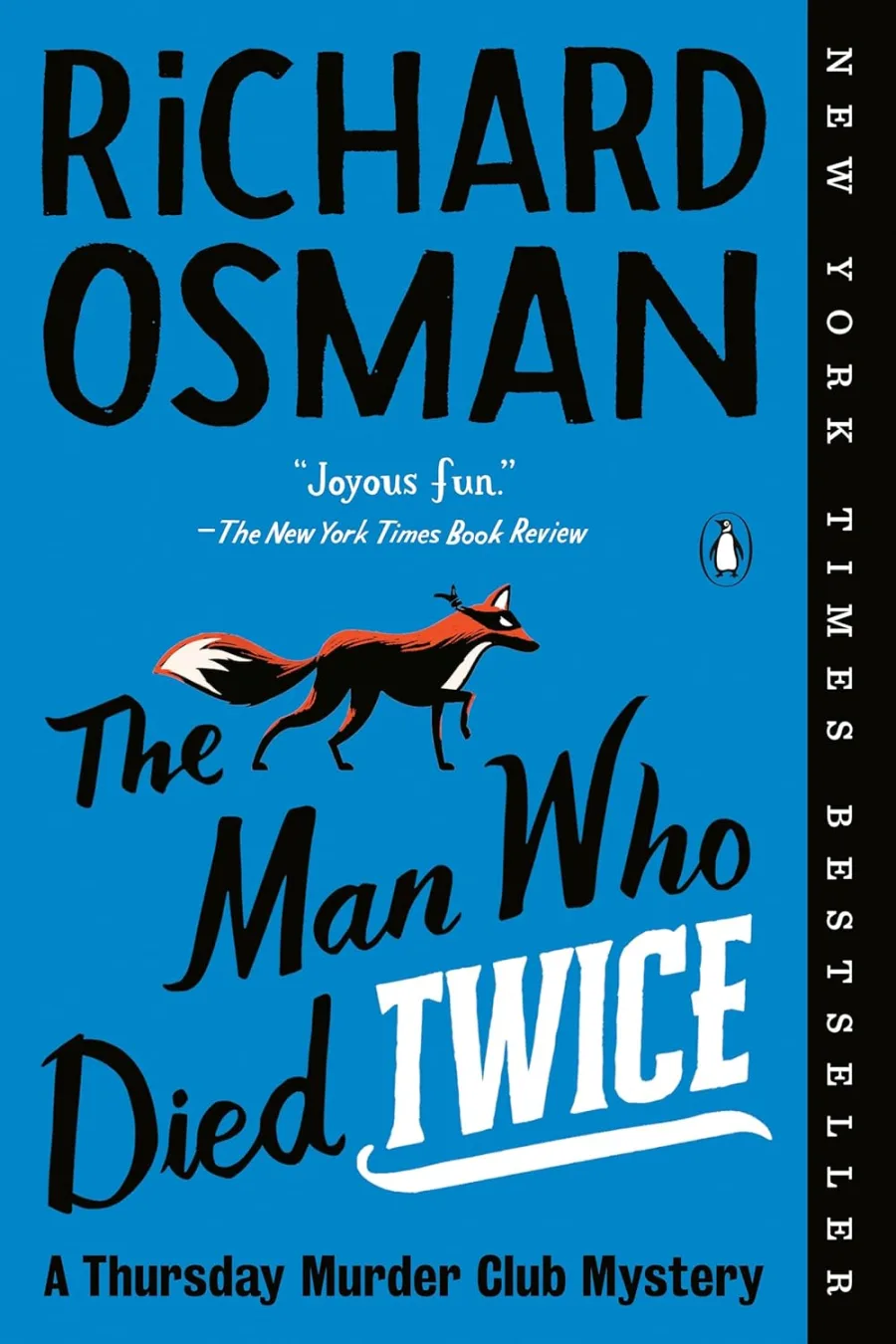
Download Cover Image
Do you want to download the full cover image for The Man Who Died Twice: A Thursday Murder Club Mystery?