
The Ballad of Songbirds and Snakes (A Hunger Games Novel) (The Hunger Games)
Paperback
• 528 Pages
• USD 16.99
• English
• 9781339016573
No ratings yet
Teen & Young Adult
Teen & Young Adult Survival Stories
Teen & Young Adult Fiction on Physical & Emotional Abuse
| Publisher | Scholastic Press |
|---|---|
| ISBN13 | 9781339016573 |
| ASIN/SKU | 1339016575 |
| Book Format | Paperback |
| Language | English |
| Pages | 528 |
| List Price | USD 16.99 |
| Publishing Date | 01/08/2023 |
| Dimensions | 5.33 x 1.18 x 8.08 inches |
| Weight | 2.31 pounds |
| Book Code | BD00055496 |
Buy this Book
Amazon Stores
Ebook Stores
Other Stores
Discover The Ballad of Songbirds and Snakes (A Hunger Games Novel) (The Hunger Games) by Suzanne Collins. This book is published by Scholastic Press in Paperback format, ISBN 9781339016573, ASIN 1339016575, under Teen and Young Adult, Teen and Young Adult Survival Stories, Teen and Young Adult Fiction on Physical and Emotional Abuse.
Book Description
Ambition will fuel him.
Competition will drive him.
But power has its price.
It is the morning of the reaping that will kick off the tenth annual Hunger Games. In the Capitol, eighteen-year-old Coriolanus Snow is preparing for his one shot at glory as a mentor in the Games. The once-mighty house of Snow has fallen on hard times, its fate hanging on the slender chance that Coriolanus will be able to outcharm, outwit, and outmaneuver his fellow students to mentor the winning tribute.
The odds are against him. He's been given the humiliating assignment of mentoring the female tribute from District 12, the lowest of the low. Their fates are now completely intertwined -- every choice Coriolanus makes could lead to favor or failure, triumph or ruin. Inside the arena, it will be a fight to the death. Outside the arena, Coriolanus starts to feel for his doomed tribute... and must weigh his need to follow the rules against his desire to survive no matter what it takes.
Competition will drive him.
But power has its price.
It is the morning of the reaping that will kick off the tenth annual Hunger Games. In the Capitol, eighteen-year-old Coriolanus Snow is preparing for his one shot at glory as a mentor in the Games. The once-mighty house of Snow has fallen on hard times, its fate hanging on the slender chance that Coriolanus will be able to outcharm, outwit, and outmaneuver his fellow students to mentor the winning tribute.
The odds are against him. He's been given the humiliating assignment of mentoring the female tribute from District 12, the lowest of the low. Their fates are now completely intertwined -- every choice Coriolanus makes could lead to favor or failure, triumph or ruin. Inside the arena, it will be a fight to the death. Outside the arena, Coriolanus starts to feel for his doomed tribute... and must weigh his need to follow the rules against his desire to survive no matter what it takes.
Author Biography
Suzanne Collins is the internationally bestselling author of the Hunger Games series, which also includes the novels The Hunger Games, Catching Fire, Mockingjay, and The Ballad of Songbirds and Snakes. Together, the books have sold over 100 million copies and were the basis for five popular films. Her other books include the acclaimed Underland Chronicles series, which begins with Gregor the Overlander, and the picture book Year of the Jungle, illustrated by James Proimos. To date, her books have been published in fifty-three languages around the world.
Editorial Reviews
Praise for The Ballad of Songbirds and Snakes:
#1 USA Today Bestseller
#1 New York Times Bestseller
"The Ballad of Songbirds and Snakes delivers a mesmerizing look into the life of Coriolanus Snow and the root causes of his villainous behavior. Collins once again proves that she is a master of building a fascinating world around complex characters who must grapple with the complications of chaos and control and their effects on human nature." -- The Associated Press
"It is a steep challenge to write a book whose hero is, everyone knows, destined to become deeply evil. Do we want to hear -- now, after we know the endgame -- that the young Voldemort was unfairly saddled with a demerit in class or that the adolescent Sauron fretted because he had to wear hand-me-down clothes? Yes, please." -- New York Times
"For true fans of The Hunger Games, Collins shines most as she weaves in tantalizing details that lend depth to the gruesome world she created in the original series and Coriolanus's place in its history." -- Time
"The Ballad of Songbirds and Snakes is your apocalyptic escape from our current apocalypse." -- Vox
"It's the pull between Coryo's head and heart -- and the realization that he actually has a beating heart, not just a rose-scented lump of coal -- that makes the future President Snow very worthy of a 517-page prequel." -- Washington Post
"[B]y introducing a new cast of teenagers, Collins is able to raise questions about privilege, the uses of violence, and the futility of war." -- People
"Collins's themes of friendship, betrayal, authority and oppression, as well as the extra layers of lore about mockingjays and Capitol's history, will please and thrill." -- MSN
"The Ballad of Songbirds and Snakes describes how most lives are actually lived, the consequences of countless small choices that ultimately amount to a big one: not just how to feel but who to be." -- Slate
"Collins reminds readers that even the most horrible people may have at one point done the right thing, but that doesn't make them any less despicable or less worth overthrowing." -- Polygon
* "Both a tense, character-driven piece and a cautionary tale... The twists and heartbreaks captivate despite tragic inevitabilities." -- Kirkus Reviews, starred review
"A gripping mix of whipsaw plot twists and propulsive writing make this story's complex issues -- vulnerability and abuse, personal responsibility, and institutionalized power dynamics -- vivid and personal." -- Publishers Weekly
Praise for The Hunger Games:
"I couldn't stop reading." -- Stephen King, Entertainment Weekly
"The Hunger Games is amazing." -- Stephenie Meyer
"Brilliantly plotted and perfectly paced." -- John Green, New York Times Book Review
Praise for Catching Fire:
"Whereas Katniss kills with finesse, Collins writes with raw power." -- Time Magazine
"Collins expertly blends fantasy, romance and political intrigue." -- People Magazine
Praise for Mockingjay:
"Fans will be happy to hear th
#1 USA Today Bestseller
#1 New York Times Bestseller
"The Ballad of Songbirds and Snakes delivers a mesmerizing look into the life of Coriolanus Snow and the root causes of his villainous behavior. Collins once again proves that she is a master of building a fascinating world around complex characters who must grapple with the complications of chaos and control and their effects on human nature." -- The Associated Press
"It is a steep challenge to write a book whose hero is, everyone knows, destined to become deeply evil. Do we want to hear -- now, after we know the endgame -- that the young Voldemort was unfairly saddled with a demerit in class or that the adolescent Sauron fretted because he had to wear hand-me-down clothes? Yes, please." -- New York Times
"For true fans of The Hunger Games, Collins shines most as she weaves in tantalizing details that lend depth to the gruesome world she created in the original series and Coriolanus's place in its history." -- Time
"The Ballad of Songbirds and Snakes is your apocalyptic escape from our current apocalypse." -- Vox
"It's the pull between Coryo's head and heart -- and the realization that he actually has a beating heart, not just a rose-scented lump of coal -- that makes the future President Snow very worthy of a 517-page prequel." -- Washington Post
"[B]y introducing a new cast of teenagers, Collins is able to raise questions about privilege, the uses of violence, and the futility of war." -- People
"Collins's themes of friendship, betrayal, authority and oppression, as well as the extra layers of lore about mockingjays and Capitol's history, will please and thrill." -- MSN
"The Ballad of Songbirds and Snakes describes how most lives are actually lived, the consequences of countless small choices that ultimately amount to a big one: not just how to feel but who to be." -- Slate
"Collins reminds readers that even the most horrible people may have at one point done the right thing, but that doesn't make them any less despicable or less worth overthrowing." -- Polygon
* "Both a tense, character-driven piece and a cautionary tale... The twists and heartbreaks captivate despite tragic inevitabilities." -- Kirkus Reviews, starred review
"A gripping mix of whipsaw plot twists and propulsive writing make this story's complex issues -- vulnerability and abuse, personal responsibility, and institutionalized power dynamics -- vivid and personal." -- Publishers Weekly
Praise for The Hunger Games:
"I couldn't stop reading." -- Stephen King, Entertainment Weekly
"The Hunger Games is amazing." -- Stephenie Meyer
"Brilliantly plotted and perfectly paced." -- John Green, New York Times Book Review
Praise for Catching Fire:
"Whereas Katniss kills with finesse, Collins writes with raw power." -- Time Magazine
"Collins expertly blends fantasy, romance and political intrigue." -- People Magazine
Praise for Mockingjay:
"Fans will be happy to hear th
Book Summary
The Ballad of Songbirds and Snakes is a prequel to The Hunger Games that follows a young Coriolanus Snow long before he becomes the president of Panem. The story is set during the Tenth Hunger Games, a time when the Capitol is still recovering from war and the Games themselves are far less polished and grand than they are in the original trilogy. Instead of a spectacle of wealth and power, the early Games are harsh, awkward, and unstable, with the Capitol trying to figure out how to turn a brutal punishment into a controlled public event. The novel shows how Coriolanus, who comes from a once-powerful but now struggling Capitol family, is desperate to restore his family’s status, survive socially, and earn a future for himself. His ambition is strong, but so is his fear of failure, and that mix drives much of his behavior.
Coriolanus is assigned as a mentor for one of the tribute participants, Lucy Gray Baird, a girl from District 12. At first, Lucy Gray seems like an unlikely tribute to inspire confidence. She is slender, unconventional, and clearly underdog material in a system built to favor the powerful. But she is also clever, charismatic, and captivating in ways Coriolanus does not expect. When she performs at the reaping and later in the arena, she immediately shows that she understands how to command attention. Her talent for singing and her ability to charm a crowd make her stand out in a Games environment where survival is not only about strength, but also about performance and image. Coriolanus quickly becomes fascinated by her, and the relationship between them grows increasingly complicated as he tries to balance his genuine attraction to her with his own ambition.
The novel is not simply about romance or survival. It is about the formation of power, morality, and cruelty. Coriolanus begins the story still capable of warmth, compassion, and even idealism, but he is also deeply shaped by fear, pride, and the belief that the world is a competition where winners get to define the rules. His family’s poverty makes him resentful and insecure, and he constantly worries about being exposed as less than the polished Capitol boy he pretends to be. He is deeply concerned with appearances and deeply invested in the idea of restoring his family’s name. These pressures influence his decisions throughout the novel, especially when he starts to believe that helping Lucy Gray could bring him personal gain. What begins as a strategic connection slowly becomes something more emotionally real, but even then, Coriolanus never fully stops thinking about what the relationship means for him.
A major part of the story focuses on the early, experimental version of the Hunger Games itself. The Capitol is still deciding how to make the Games effective as propaganda. Students are assigned to mentor tributes, bets are placed, and the audience is encouraged to watch and participate in the spectacle. The cruelty of the system is still obvious, but the novel shows how it is being packaged and refined into something people can be taught to accept. This is one of the most unsettling parts of the book, because it reveals how violence becomes normalized not only through force, but through entertainment, language, and routine. Coriolanus is not the architect of the Games, but he becomes one of the people helping shape them. His choices matter, and his willingness to bend rules, manipulate situations, and justify his actions foreshadows the much darker man he will become.
Lucy Gray is one of the most memorable parts of the novel because she is neither helpless nor easily controlled. She understands the power of performance, community, and survival. Unlike Coriolanus, who is obsessed with order and status, Lucy Gray comes from a world where people survive through adaptability, music, and instinct. She is connected to the Covey, a traveling musical group in District 12, and that background gives her an identity outside the rigid Capitol-District hierarchy. She also brings uncertainty into Coriolanus’s life. He is drawn to her, but he does not fully understand her, and that inability to possess or define her becomes one of the story’s central tensions. Their relationship contains real tenderness, but it is also shaped by mistrust, imbalance, and the constant possibility that each of them is using the other in some way.
As the Games and the aftermath unfold, the novel gradually darkens. Coriolanus becomes involved in decisions that reveal how easily he can rationalize cruelty when it serves him. He is increasingly willing to manipulate people, hide the truth, and put his own survival above loyalty or honesty. The pressure of the Games, his family’s precarious position, and the political expectations around him all push him toward choices that cut away at whatever innocence he still has left. At the same time, the novel keeps showing that he is not yet the cold dictator he will become; instead, it carefully traces the moments where that transformation becomes possible. The book’s strength lies in how it shows that evil often develops gradually, through self-justification, ambition, and the repeated decision to value power more than empathy.
The setting of District 12 also matters greatly. It is poor, rough, and very different from the Capitol’s polished world, but it is also full of life and community. Through Lucy Gray and the people around her, the novel reveals a side of Panem that the Capitol tends to ignore or erase. Coriolanus’s experiences there challenge him, but they do not transform him in a hopeful direction. Instead, they expose the limits of his conscience. He can admire the people of District 12, even feel affection for them, but he still tends to view them through the lens of what they mean for his future. That imbalance is crucial to understanding the book and the character he becomes.
By the end of The Ballad of Songbirds and Snakes, the story makes clear that Coriolanus Snow’s rise is not accidental. It is built on choices, compromises, and a worldview that gradually hardens him. The novel does not excuse him, but it does explain how he learned to think the way he does. Lucy Gray, meanwhile, remains elusive, leaving behind a sense of mystery and sadness. Her influence on him is undeniable, yet he ultimately cannot step outside himself long enough to be changed in a lasting way. The ending is tense, morally bleak, and emotionally unresolved, which fits the larger purpose of the book: to show how a young man with enough intelligence, charm, and ambition can become dangerous when empathy gives way to control.
What makes the novel compelling is that it asks readers to watch the making of a villain in real time. Coriolanus is still capable of feeling, loving, and doubting, but he is also already willing to choose himself over others when the stakes rise. Suzanne Collins uses that tension to create a story that is both tragic and revealing. It shows that the Hunger Games are not only about children forced to kill each other, but about the systems and personalities that make such a thing possible. In that sense, the book is not just a prequel; it is an origin story for tyranny, written with careful attention to how power grows from fear, ambition, and the desire to win at any cost.
Coriolanus is assigned as a mentor for one of the tribute participants, Lucy Gray Baird, a girl from District 12. At first, Lucy Gray seems like an unlikely tribute to inspire confidence. She is slender, unconventional, and clearly underdog material in a system built to favor the powerful. But she is also clever, charismatic, and captivating in ways Coriolanus does not expect. When she performs at the reaping and later in the arena, she immediately shows that she understands how to command attention. Her talent for singing and her ability to charm a crowd make her stand out in a Games environment where survival is not only about strength, but also about performance and image. Coriolanus quickly becomes fascinated by her, and the relationship between them grows increasingly complicated as he tries to balance his genuine attraction to her with his own ambition.
The novel is not simply about romance or survival. It is about the formation of power, morality, and cruelty. Coriolanus begins the story still capable of warmth, compassion, and even idealism, but he is also deeply shaped by fear, pride, and the belief that the world is a competition where winners get to define the rules. His family’s poverty makes him resentful and insecure, and he constantly worries about being exposed as less than the polished Capitol boy he pretends to be. He is deeply concerned with appearances and deeply invested in the idea of restoring his family’s name. These pressures influence his decisions throughout the novel, especially when he starts to believe that helping Lucy Gray could bring him personal gain. What begins as a strategic connection slowly becomes something more emotionally real, but even then, Coriolanus never fully stops thinking about what the relationship means for him.
A major part of the story focuses on the early, experimental version of the Hunger Games itself. The Capitol is still deciding how to make the Games effective as propaganda. Students are assigned to mentor tributes, bets are placed, and the audience is encouraged to watch and participate in the spectacle. The cruelty of the system is still obvious, but the novel shows how it is being packaged and refined into something people can be taught to accept. This is one of the most unsettling parts of the book, because it reveals how violence becomes normalized not only through force, but through entertainment, language, and routine. Coriolanus is not the architect of the Games, but he becomes one of the people helping shape them. His choices matter, and his willingness to bend rules, manipulate situations, and justify his actions foreshadows the much darker man he will become.
Lucy Gray is one of the most memorable parts of the novel because she is neither helpless nor easily controlled. She understands the power of performance, community, and survival. Unlike Coriolanus, who is obsessed with order and status, Lucy Gray comes from a world where people survive through adaptability, music, and instinct. She is connected to the Covey, a traveling musical group in District 12, and that background gives her an identity outside the rigid Capitol-District hierarchy. She also brings uncertainty into Coriolanus’s life. He is drawn to her, but he does not fully understand her, and that inability to possess or define her becomes one of the story’s central tensions. Their relationship contains real tenderness, but it is also shaped by mistrust, imbalance, and the constant possibility that each of them is using the other in some way.
As the Games and the aftermath unfold, the novel gradually darkens. Coriolanus becomes involved in decisions that reveal how easily he can rationalize cruelty when it serves him. He is increasingly willing to manipulate people, hide the truth, and put his own survival above loyalty or honesty. The pressure of the Games, his family’s precarious position, and the political expectations around him all push him toward choices that cut away at whatever innocence he still has left. At the same time, the novel keeps showing that he is not yet the cold dictator he will become; instead, it carefully traces the moments where that transformation becomes possible. The book’s strength lies in how it shows that evil often develops gradually, through self-justification, ambition, and the repeated decision to value power more than empathy.
The setting of District 12 also matters greatly. It is poor, rough, and very different from the Capitol’s polished world, but it is also full of life and community. Through Lucy Gray and the people around her, the novel reveals a side of Panem that the Capitol tends to ignore or erase. Coriolanus’s experiences there challenge him, but they do not transform him in a hopeful direction. Instead, they expose the limits of his conscience. He can admire the people of District 12, even feel affection for them, but he still tends to view them through the lens of what they mean for his future. That imbalance is crucial to understanding the book and the character he becomes.
By the end of The Ballad of Songbirds and Snakes, the story makes clear that Coriolanus Snow’s rise is not accidental. It is built on choices, compromises, and a worldview that gradually hardens him. The novel does not excuse him, but it does explain how he learned to think the way he does. Lucy Gray, meanwhile, remains elusive, leaving behind a sense of mystery and sadness. Her influence on him is undeniable, yet he ultimately cannot step outside himself long enough to be changed in a lasting way. The ending is tense, morally bleak, and emotionally unresolved, which fits the larger purpose of the book: to show how a young man with enough intelligence, charm, and ambition can become dangerous when empathy gives way to control.
What makes the novel compelling is that it asks readers to watch the making of a villain in real time. Coriolanus is still capable of feeling, loving, and doubting, but he is also already willing to choose himself over others when the stakes rise. Suzanne Collins uses that tension to create a story that is both tragic and revealing. It shows that the Hunger Games are not only about children forced to kill each other, but about the systems and personalities that make such a thing possible. In that sense, the book is not just a prequel; it is an origin story for tyranny, written with careful attention to how power grows from fear, ambition, and the desire to win at any cost.
Sample Chapters
Sample Chapters will be added soon…
Reader Reviews
No reviews yet.
The Ballad of Songbirds and Snakes (A Hunger Games Novel) (The Hunger Games)
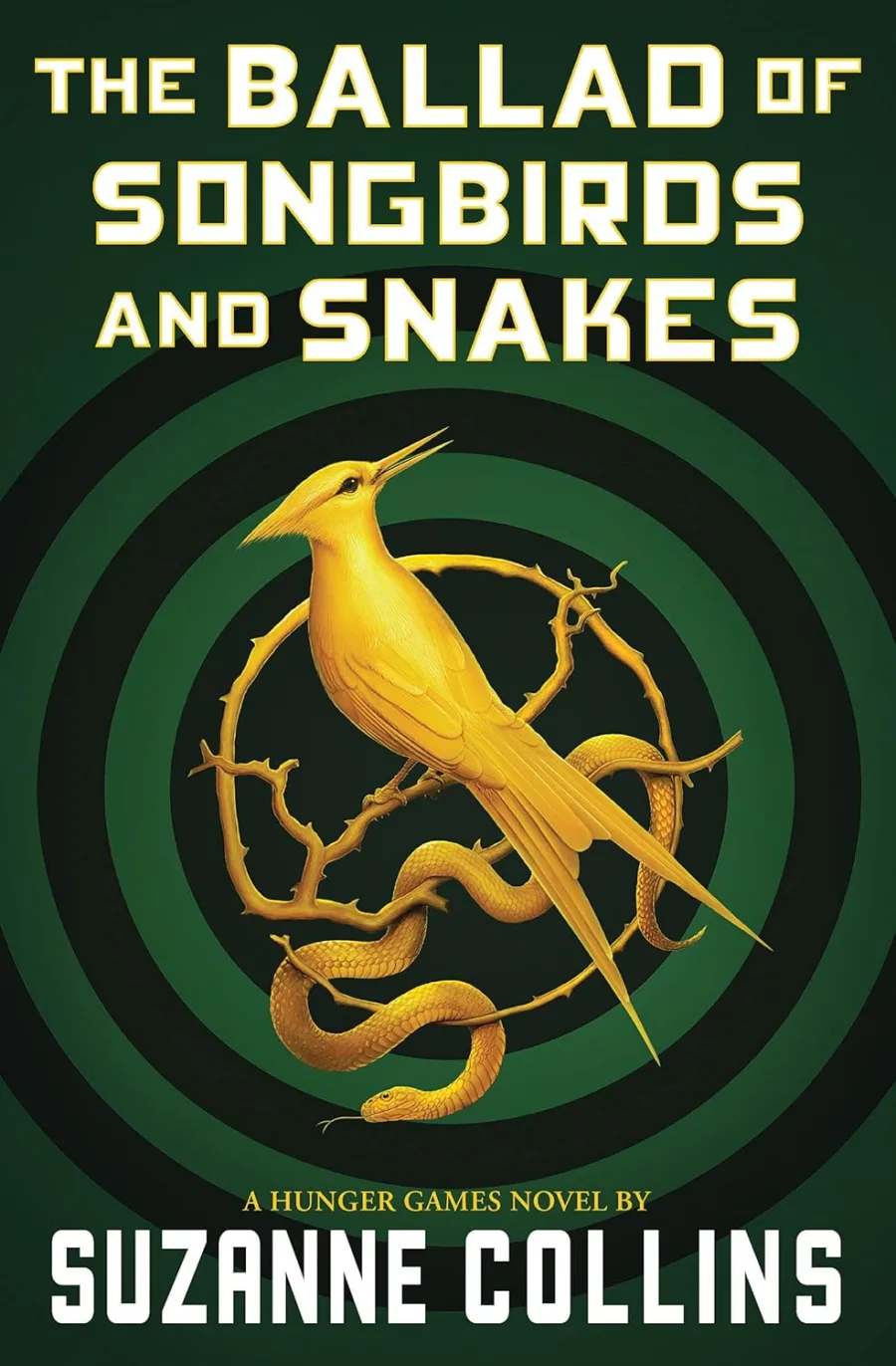
Download Cover Image
Do you want to download the full cover image for The Ballad of Songbirds and Snakes (A Hunger Games Novel) (The Hunger Games)?