
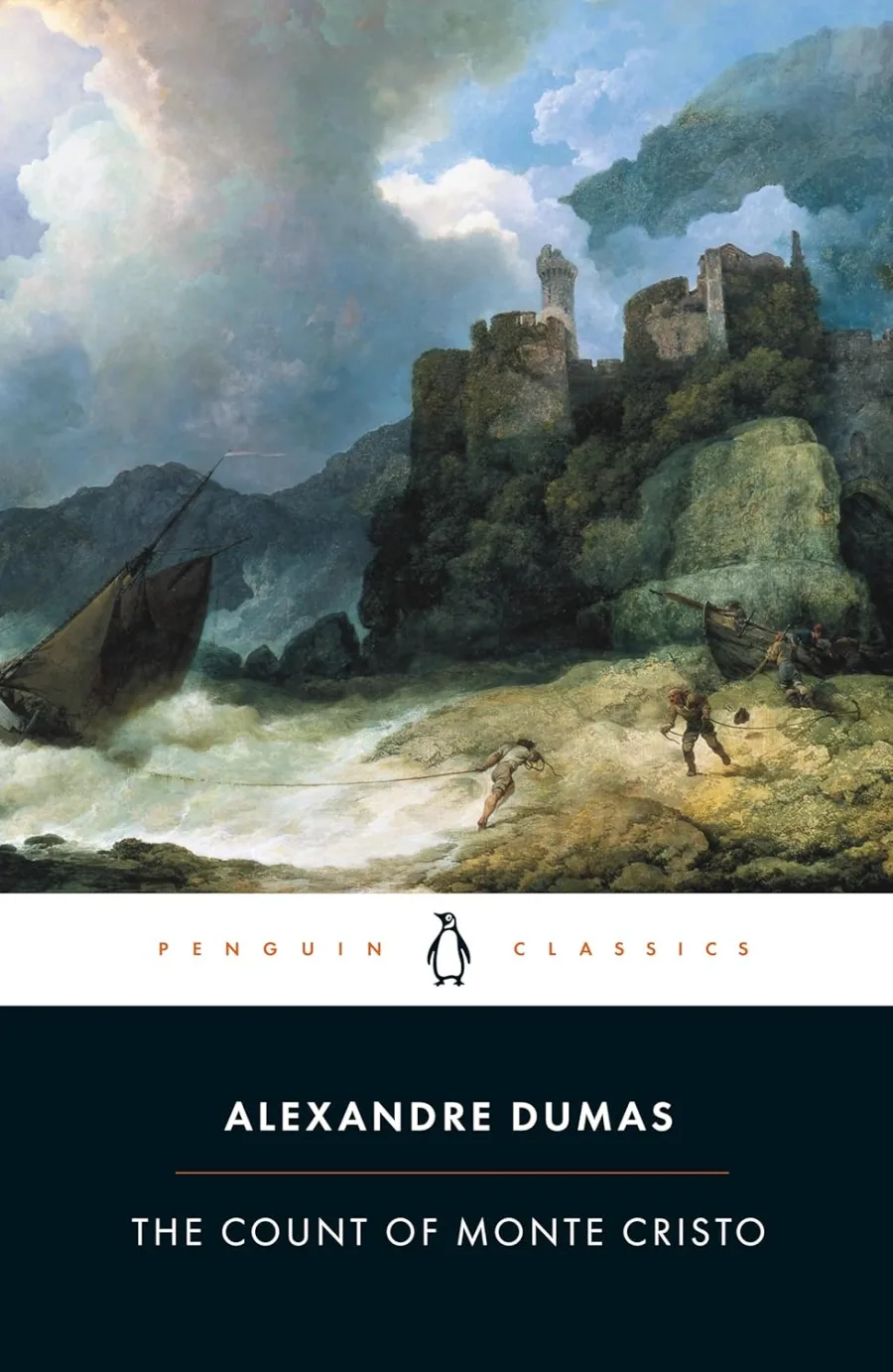
The Count of Monte Cristo (Penguin Classics)
Paperback
• 1213 Pages
• USD 16.00
• English
• 9780140449266
No ratings yet
| Publisher | Penguin Classics |
|---|---|
| ISBN13 | 9780140449266 |
| ASIN/SKU | 0140449264 |
| Book Format | Paperback |
| Language | English |
| Pages | 1213 |
| List Price | USD 16.00 |
| Publishing Date | 27/05/2003 |
| Dimensions | 5.12 x 2.2 x 7.8 inches |
| Weight | 1.97 pounds |
| Book Code | BD00055499 |
Buy this Book
Amazon Stores
Ebook Stores
Other Stores
Discover The Count of Monte Cristo (Penguin Classics) by Alexandre Dumas. This book is published by Penguin Classics in Paperback format, ISBN 9780140449266, ASIN 0140449264, under Literature and Fiction, Classic Action and Adventure, Classic Literature and Fiction.
Book Description
“My desert island book . . . No matter how many times I revisit it, I find new lines to appreciate, new narrative corners to explore.”—V. E. Schwab, The New York Times Book Review
Thrown in prison for a crime he has not committed, Edmond Dantès is confined to the grim fortress of the Château d’If. There he learns of a great hoard of treasure hidden on the Isle of Monte Cristo and he becomes determined not only to escape, but also to use the treasure to plot the destruction of the three men responsible for his incarceration.
Robin Buss’s lively translation is complete and unabridged, and remains faithful to the style of Dumas’s original. This edition includes an introduction, chronology, explanatory notes, and suggestions for further reading.
Penguin Classics is the leading publisher of classic literature in the English-speaking world, representing a global bookshelf of the best works throughout history and across genres and disciplines. Readers trust the series to provide authoritative texts enhanced by introductions and notes by distinguished scholars and contemporary authors, as well as up-to-date translations by award-winning translators.
Thrown in prison for a crime he has not committed, Edmond Dantès is confined to the grim fortress of the Château d’If. There he learns of a great hoard of treasure hidden on the Isle of Monte Cristo and he becomes determined not only to escape, but also to use the treasure to plot the destruction of the three men responsible for his incarceration.
Robin Buss’s lively translation is complete and unabridged, and remains faithful to the style of Dumas’s original. This edition includes an introduction, chronology, explanatory notes, and suggestions for further reading.
Penguin Classics is the leading publisher of classic literature in the English-speaking world, representing a global bookshelf of the best works throughout history and across genres and disciplines. Readers trust the series to provide authoritative texts enhanced by introductions and notes by distinguished scholars and contemporary authors, as well as up-to-date translations by award-winning translators.
Author Biography
Alexandre Dumas, born Dumas Davy de la Pailleterie; (24 July 1802 – 5 December 1870), also known as Alexandre Dumas, père, was a French writer. His works have been translated into nearly 100 languages, and he is one of the most widely read French authors. Many of his historical novels of high adventure were originally published as serials, including The Count of Monte Cristo, The Three Musketeers, Twenty Years After, and The Vicomte de Bragelonne: Ten Years Later. His novels have been adapted since the early twentieth century for nearly 200 films. Dumas' last novel, The Knight of Sainte-Hermine, unfinished at his death, was completed by a scholar and published in 2005, becoming a bestseller. It was published in English in 2008 as The Last Cavalier
Editorial Reviews
“It’s my desert island book, not only because it’s a tome, but because no matter how many times I revisit it, I find new lines to appreciate, new narrative corners to explore.” —V. E. Schwab in The New York Times Book Review
Book Summary
The Count of Monte Cristo by Alexandre Dumas is a grand story of betrayal, suffering, revenge, justice, and forgiveness. It follows the life of Edmond Dantès, a young sailor whose future seems bright at the beginning of the novel. Edmond is honest, hardworking, and deeply in love with Mercédès, a beautiful young woman from his village. He is about to become captain of a ship and marry the woman he loves. However, his happiness creates jealousy in others. Danglars envies his professional success, Fernand wants Mercédès for himself, and Villefort, a powerful prosecutor, sees Edmond as a threat to his own ambitions. Together, through lies and selfishness, these men destroy Edmond’s life.
Edmond is falsely accused of being a Bonapartist traitor and is arrested on the day of his wedding. Though he is innocent and does not even understand the political danger surrounding him, Villefort sends him to the Château d’If, a terrible island prison, to protect his own family secret. Edmond is locked away without trial, without explanation, and without hope. At first, he is confused and desperate. He cannot understand why this has happened or who is responsible. Over time, his innocence turns into bitterness. The prison becomes a place of deep suffering, but it also becomes the place where Edmond is transformed.
In prison, Edmond meets Abbé Faria, an old and brilliant prisoner who has been trying to dig his way to freedom. Faria becomes Edmond’s teacher, friend, and father figure. He educates him in languages, history, science, politics, and philosophy. More importantly, he helps Edmond understand the plot that led to his imprisonment. Edmond finally realizes that Danglars, Fernand, and Villefort betrayed him, each for personal gain. Before Faria dies, he tells Edmond about a hidden treasure on the island of Monte Cristo. This knowledge gives Edmond a new purpose. After Faria’s death, Edmond escapes from prison by taking the dead man’s place in a burial sack and being thrown into the sea. He survives, finds the treasure, and becomes immensely wealthy.
With his new wealth and knowledge, Edmond recreates himself as the mysterious and powerful Count of Monte Cristo. He no longer appears to be the simple sailor he once was. He becomes elegant, educated, distant, and almost supernatural in the eyes of others. His fortune gives him access to the highest levels of society, and his intelligence allows him to manipulate events carefully. He returns to the world not as Edmond Dantès, but as a man dedicated to rewarding the good and punishing the wicked. His main goal is revenge against those who stole his youth, love, freedom, and identity.
The Count begins by helping those who remained loyal to him. He secretly saves his former employer, Monsieur Morrel, who had tried to defend him and later fallen into financial ruin. This act shows that Edmond has not lost all kindness. He still remembers goodness and believes it should be rewarded. But when it comes to his enemies, he is patient, cold, and precise. He does not simply kill them. Instead, he studies their lives, weaknesses, secrets, and sins, then creates situations in which their own corruption destroys them.
Danglars, who betrayed Edmond out of jealousy and greed, has become a wealthy banker. The Count ruins him financially by exploiting his greed and pride. Fernand, who married Mercédès after Edmond disappeared and became a respected nobleman, is exposed as a traitor who committed crimes in the past to gain power. His public disgrace destroys his reputation and family life. Villefort, the prosecutor who imprisoned Edmond to protect himself, is attacked through the exposure of his hidden crimes and through tragedy within his own household. Each enemy falls because of the very flaws that led them to betray Edmond in the first place.
Yet the novel is not a simple revenge fantasy. As the Count’s plans unfold, innocent people are also hurt. Families are broken, young people suffer, and Edmond begins to see that revenge is not as clean or godlike as he imagined. He believed he was acting as an instrument of divine justice, but he slowly realizes that no human being can fully control the consequences of punishment. His actions bring pain not only to the guilty but also to those connected to them. This realization becomes one of the most important parts of the story, because Edmond must face the moral cost of becoming the judge of other people’s lives.
Mercédès is one of the most emotional figures in the novel. She never truly forgets Edmond, though she marries Fernand because she believes Edmond is gone forever. When she recognizes the Count as Edmond, their meeting is full of sadness. They are no longer the young lovers they once were. Time, suffering, and choices have changed them both. Mercédès represents the life Edmond lost and can never fully recover. Their relationship shows the tragic side of revenge: even when justice is served, the past cannot be restored.
The younger generation brings hope into the story, especially through characters like Albert, Valentine, and Maximilien Morrel. Maximilien, the son of Edmond’s loyal former employer, becomes especially important because he represents love, honor, and goodness. Through Maximilien’s suffering and devotion to Valentine, Edmond is reminded of the value of compassion. He begins to understand that life cannot be guided only by revenge. Love and mercy must also have a place.
By the end of the novel, Edmond’s revenge is mostly complete, but he is no longer the same man who began it. He has punished his enemies, but he has also learned humility. He sees that he is not God and that human justice must be tempered with forgiveness. He chooses to leave behind the identity of the Count and seek a quieter future. His final message is one of patience and hope: human beings must “wait and hope.” This means that even after great suffering, life can still offer renewal, but it cannot be forced through hatred alone.
The Count of Monte Cristo is a powerful novel because it combines adventure with deep moral questions. It is about a man who loses everything, gains unimaginable power, and then must decide what kind of person he will become. Dumas shows the excitement of revenge but also its danger. In the end, the book suggests that justice matters, but mercy, love, and hope are what truly save the human soul.
Edmond is falsely accused of being a Bonapartist traitor and is arrested on the day of his wedding. Though he is innocent and does not even understand the political danger surrounding him, Villefort sends him to the Château d’If, a terrible island prison, to protect his own family secret. Edmond is locked away without trial, without explanation, and without hope. At first, he is confused and desperate. He cannot understand why this has happened or who is responsible. Over time, his innocence turns into bitterness. The prison becomes a place of deep suffering, but it also becomes the place where Edmond is transformed.
In prison, Edmond meets Abbé Faria, an old and brilliant prisoner who has been trying to dig his way to freedom. Faria becomes Edmond’s teacher, friend, and father figure. He educates him in languages, history, science, politics, and philosophy. More importantly, he helps Edmond understand the plot that led to his imprisonment. Edmond finally realizes that Danglars, Fernand, and Villefort betrayed him, each for personal gain. Before Faria dies, he tells Edmond about a hidden treasure on the island of Monte Cristo. This knowledge gives Edmond a new purpose. After Faria’s death, Edmond escapes from prison by taking the dead man’s place in a burial sack and being thrown into the sea. He survives, finds the treasure, and becomes immensely wealthy.
With his new wealth and knowledge, Edmond recreates himself as the mysterious and powerful Count of Monte Cristo. He no longer appears to be the simple sailor he once was. He becomes elegant, educated, distant, and almost supernatural in the eyes of others. His fortune gives him access to the highest levels of society, and his intelligence allows him to manipulate events carefully. He returns to the world not as Edmond Dantès, but as a man dedicated to rewarding the good and punishing the wicked. His main goal is revenge against those who stole his youth, love, freedom, and identity.
The Count begins by helping those who remained loyal to him. He secretly saves his former employer, Monsieur Morrel, who had tried to defend him and later fallen into financial ruin. This act shows that Edmond has not lost all kindness. He still remembers goodness and believes it should be rewarded. But when it comes to his enemies, he is patient, cold, and precise. He does not simply kill them. Instead, he studies their lives, weaknesses, secrets, and sins, then creates situations in which their own corruption destroys them.
Danglars, who betrayed Edmond out of jealousy and greed, has become a wealthy banker. The Count ruins him financially by exploiting his greed and pride. Fernand, who married Mercédès after Edmond disappeared and became a respected nobleman, is exposed as a traitor who committed crimes in the past to gain power. His public disgrace destroys his reputation and family life. Villefort, the prosecutor who imprisoned Edmond to protect himself, is attacked through the exposure of his hidden crimes and through tragedy within his own household. Each enemy falls because of the very flaws that led them to betray Edmond in the first place.
Yet the novel is not a simple revenge fantasy. As the Count’s plans unfold, innocent people are also hurt. Families are broken, young people suffer, and Edmond begins to see that revenge is not as clean or godlike as he imagined. He believed he was acting as an instrument of divine justice, but he slowly realizes that no human being can fully control the consequences of punishment. His actions bring pain not only to the guilty but also to those connected to them. This realization becomes one of the most important parts of the story, because Edmond must face the moral cost of becoming the judge of other people’s lives.
Mercédès is one of the most emotional figures in the novel. She never truly forgets Edmond, though she marries Fernand because she believes Edmond is gone forever. When she recognizes the Count as Edmond, their meeting is full of sadness. They are no longer the young lovers they once were. Time, suffering, and choices have changed them both. Mercédès represents the life Edmond lost and can never fully recover. Their relationship shows the tragic side of revenge: even when justice is served, the past cannot be restored.
The younger generation brings hope into the story, especially through characters like Albert, Valentine, and Maximilien Morrel. Maximilien, the son of Edmond’s loyal former employer, becomes especially important because he represents love, honor, and goodness. Through Maximilien’s suffering and devotion to Valentine, Edmond is reminded of the value of compassion. He begins to understand that life cannot be guided only by revenge. Love and mercy must also have a place.
By the end of the novel, Edmond’s revenge is mostly complete, but he is no longer the same man who began it. He has punished his enemies, but he has also learned humility. He sees that he is not God and that human justice must be tempered with forgiveness. He chooses to leave behind the identity of the Count and seek a quieter future. His final message is one of patience and hope: human beings must “wait and hope.” This means that even after great suffering, life can still offer renewal, but it cannot be forced through hatred alone.
The Count of Monte Cristo is a powerful novel because it combines adventure with deep moral questions. It is about a man who loses everything, gains unimaginable power, and then must decide what kind of person he will become. Dumas shows the excitement of revenge but also its danger. In the end, the book suggests that justice matters, but mercy, love, and hope are what truly save the human soul.
Sample Chapters
Sample Chapters will be added soon…
Reader Reviews
No reviews yet.
The Count of Monte Cristo (Penguin Classics)
Download Cover Image
Do you want to download the full cover image for The Count of Monte Cristo (Penguin Classics)?