
The Great Gatsby
Paperback
• 162 Pages
• USD 9.99
• English
• 9781954839243
No ratings yet
| Publisher | Reader's Library Classics |
|---|---|
| ISBN13 | 9781954839243 |
| ASIN/SKU | 1954839243 |
| Book Format | Paperback |
| Language | English |
| Pages | 162 |
| List Price | USD 9.99 |
| Publishing Date | 25/02/2021 |
| Dimensions | 5.25 x 0.41 x 8 inches |
| Weight | 6.7 ounces |
| Book Code | BD00055515 |
Buy this Book
Amazon Stores
Ebook Stores
Other Stores
Discover The Great Gatsby by F. Scott Fitzgerald. This book is published by Reader's Library Classics in Paperback format, ISBN 9781954839243, ASIN 1954839243, under Literature and Fiction, Classic American Literature, Classic Literature and Fiction.
Book Description
There are only the pursued, the pursuing, the busy and the tired.
Extravagant rumors abound of a man named Jay Gatsby who has newly arrived to the coastline of a section of Long Island known colloquially as West Egg. Long into the night, the mysterious Gatsby threw lavish parties at his sprawling estate, but when alone, Gatsby could be found staring longingly at a solitary green light across the dark water. For all Gatsby has attained in his life, that green light represents all that he lost.
The greatest story to encapsulate the roaring twenties, The Great Gatsby follows the eventful lives of the denizens from East and West Egg in this timeless classic of American literature.
Extravagant rumors abound of a man named Jay Gatsby who has newly arrived to the coastline of a section of Long Island known colloquially as West Egg. Long into the night, the mysterious Gatsby threw lavish parties at his sprawling estate, but when alone, Gatsby could be found staring longingly at a solitary green light across the dark water. For all Gatsby has attained in his life, that green light represents all that he lost.
The greatest story to encapsulate the roaring twenties, The Great Gatsby follows the eventful lives of the denizens from East and West Egg in this timeless classic of American literature.
Author Biography
F. Scott Fitzgerald was born in 1896 in St Paul, Minnesota, and went to Princeton University which he left in 1917 to join the army. Fitzgerald was said to have epitomised the Jazz Age, an age inhabited by a generation he defined as 'grown up to find all Gods dead, all wars fought, all faiths in man shaken'.
In 1920 he married Zelda Sayre. Their destructive relationship and her subsequent mental breakdowns became a major influence on his writing. Among his publications were five novels, This Side of Paradise, The Great Gatsby, The Beautiful and Damned, Tender is the Night and The Love of the Last Tycoon (his last and unfinished work): six volumes of short stories and The Crack-Up, a selection of autobiographical pieces.
Fitzgerald died suddenly in 1940. After his death The New York Times said of him that 'He was better than he knew, for in fact and in the literary sense he invented a "generation" ... he might have interpreted them and even guided them, as in their middle years they saw a different and nobler freedom threatened with destruction.'
In 1920 he married Zelda Sayre. Their destructive relationship and her subsequent mental breakdowns became a major influence on his writing. Among his publications were five novels, This Side of Paradise, The Great Gatsby, The Beautiful and Damned, Tender is the Night and The Love of the Last Tycoon (his last and unfinished work): six volumes of short stories and The Crack-Up, a selection of autobiographical pieces.
Fitzgerald died suddenly in 1940. After his death The New York Times said of him that 'He was better than he knew, for in fact and in the literary sense he invented a "generation" ... he might have interpreted them and even guided them, as in their middle years they saw a different and nobler freedom threatened with destruction.'
Editorial Reviews
Editorial Reviews will be added soon…
Book Summary
“The Great Gatsby” by F. Scott Fitzgerald is a tragic story about love, wealth, illusion, and the collapse of the American Dream. Told through the eyes of Nick Carraway, the novel follows the mysterious millionaire Jay Gatsby, whose entire life is centered on winning back Daisy Buchanan, the woman he loved years earlier and never forgot.
The story begins in the summer of 1922, when Nick moves to West Egg on Long Island to work in the bond business. He lives next to Gatsby’s enormous mansion and is drawn into the glittering world of the wealthy, where parties are extravagant but often empty beneath the surface. Across the bay lives Daisy, Nick’s cousin, with her husband Tom Buchanan, a powerful and careless man from old money.
Nick slowly learns that Gatsby is not just a rich man who loves entertaining guests. Gatsby has built his wealth, partly through shady connections, with one goal in mind: to recreate the past and reunite with Daisy. He throws lavish parties hoping she will one day appear, and his life becomes a symbol of longing, ambition, and the belief that money can restore lost time.
Through Nick, the novel contrasts different worlds: West Egg and East Egg, new money and old money, glamour and emptiness, hope and decay. Tom is having an affair with Myrtle Wilson, the wife of a mechanic in the “valley of ashes,” a bleak industrial wasteland that represents the moral and social emptiness behind the wealthy lifestyle. This setting makes the novel more than a love story; it becomes a critique of class division and corruption.
When Nick arranges for Gatsby and Daisy to meet again, Gatsby’s dream briefly seems possible. Their reunion revives old feelings, and Gatsby believes he can recover the life they might have had together. But the past cannot truly be restored, and Daisy is more complicated and fragile than Gatsby’s fantasy allowed. She is attracted to Gatsby, but she is also tied to Tom’s status and to the security of her old world.
The turning point comes during the confrontation in New York City, where Tom exposes Gatsby’s background and challenges his claim on Daisy. Gatsby insists Daisy never loved Tom, but the truth is more painful and uncertain. Daisy cannot fully give up the life she already has, and Gatsby’s dream begins to collapse in that moment. Soon after, Daisy accidentally kills Myrtle while driving Gatsby’s car, and Gatsby chooses to protect her by taking the blame.
The tragedy deepens when George Wilson, misled into believing Gatsby was responsible for Myrtle’s death, kills Gatsby and then himself. Gatsby dies not surrounded by admirers, but by a hollow silence that reveals how shallow his social world really was. The people who had enjoyed his parties and glamour vanish when he is gone, showing how little loyalty or humanity exists beneath the surface of wealth.
Nick is left disillusioned by everything he has seen. He recognizes Gatsby as both flawed and deeply admirable, a man who believed completely in his dream even when the dream was built on illusion. Gatsby’s greatness lies not in moral perfection, but in his rare capacity for hope, imagination, and total devotion. At the same time, the novel makes clear that this faith in a perfect future can become destructive when it is detached from reality.
By the end, Nick returns to the Midwest, disgusted by the carelessness and emptiness of East Coast society. He reflects on Gatsby’s life and on the larger American dream, which promises success, reinvention, and happiness but often delivers disappointment instead. The famous final image of the green light becomes a symbol of desire itself—something always visible, always distant, and never fully attainable.
In simple terms, “The Great Gatsby” is about a man who tries to turn memory into reality and fails. It is about love that cannot survive time, wealth that cannot create meaning, and a society that values appearance over truth. Fitzgerald’s novel remains powerful because it captures both the beauty of dreaming and the sadness of discovering that dreams can never fully return what was lost.
The story begins in the summer of 1922, when Nick moves to West Egg on Long Island to work in the bond business. He lives next to Gatsby’s enormous mansion and is drawn into the glittering world of the wealthy, where parties are extravagant but often empty beneath the surface. Across the bay lives Daisy, Nick’s cousin, with her husband Tom Buchanan, a powerful and careless man from old money.
Nick slowly learns that Gatsby is not just a rich man who loves entertaining guests. Gatsby has built his wealth, partly through shady connections, with one goal in mind: to recreate the past and reunite with Daisy. He throws lavish parties hoping she will one day appear, and his life becomes a symbol of longing, ambition, and the belief that money can restore lost time.
Through Nick, the novel contrasts different worlds: West Egg and East Egg, new money and old money, glamour and emptiness, hope and decay. Tom is having an affair with Myrtle Wilson, the wife of a mechanic in the “valley of ashes,” a bleak industrial wasteland that represents the moral and social emptiness behind the wealthy lifestyle. This setting makes the novel more than a love story; it becomes a critique of class division and corruption.
When Nick arranges for Gatsby and Daisy to meet again, Gatsby’s dream briefly seems possible. Their reunion revives old feelings, and Gatsby believes he can recover the life they might have had together. But the past cannot truly be restored, and Daisy is more complicated and fragile than Gatsby’s fantasy allowed. She is attracted to Gatsby, but she is also tied to Tom’s status and to the security of her old world.
The turning point comes during the confrontation in New York City, where Tom exposes Gatsby’s background and challenges his claim on Daisy. Gatsby insists Daisy never loved Tom, but the truth is more painful and uncertain. Daisy cannot fully give up the life she already has, and Gatsby’s dream begins to collapse in that moment. Soon after, Daisy accidentally kills Myrtle while driving Gatsby’s car, and Gatsby chooses to protect her by taking the blame.
The tragedy deepens when George Wilson, misled into believing Gatsby was responsible for Myrtle’s death, kills Gatsby and then himself. Gatsby dies not surrounded by admirers, but by a hollow silence that reveals how shallow his social world really was. The people who had enjoyed his parties and glamour vanish when he is gone, showing how little loyalty or humanity exists beneath the surface of wealth.
Nick is left disillusioned by everything he has seen. He recognizes Gatsby as both flawed and deeply admirable, a man who believed completely in his dream even when the dream was built on illusion. Gatsby’s greatness lies not in moral perfection, but in his rare capacity for hope, imagination, and total devotion. At the same time, the novel makes clear that this faith in a perfect future can become destructive when it is detached from reality.
By the end, Nick returns to the Midwest, disgusted by the carelessness and emptiness of East Coast society. He reflects on Gatsby’s life and on the larger American dream, which promises success, reinvention, and happiness but often delivers disappointment instead. The famous final image of the green light becomes a symbol of desire itself—something always visible, always distant, and never fully attainable.
In simple terms, “The Great Gatsby” is about a man who tries to turn memory into reality and fails. It is about love that cannot survive time, wealth that cannot create meaning, and a society that values appearance over truth. Fitzgerald’s novel remains powerful because it captures both the beauty of dreaming and the sadness of discovering that dreams can never fully return what was lost.
Sample Chapters
Sample Chapters will be added soon…
Reader Reviews
No reviews yet.
The Great Gatsby
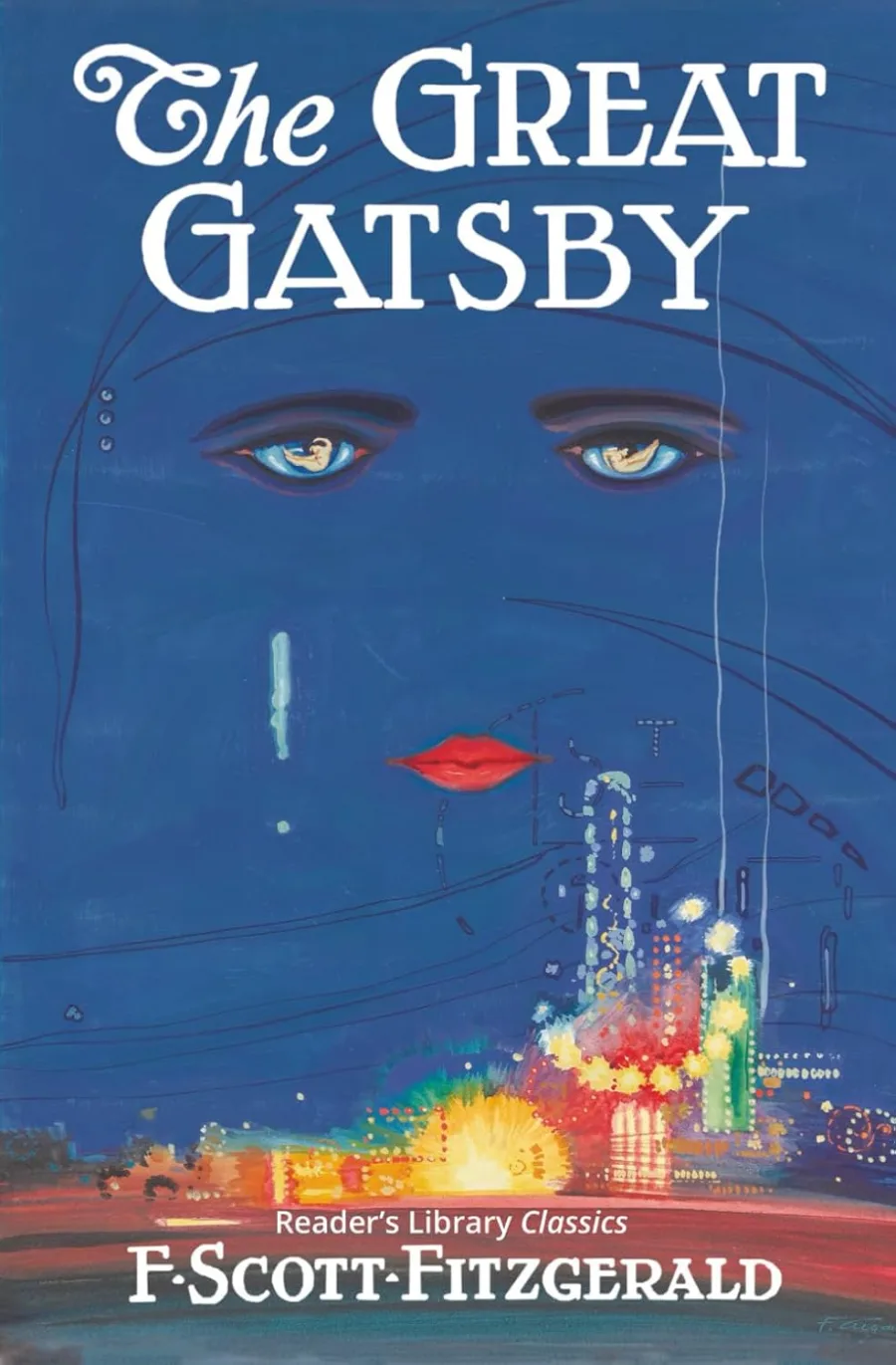
Download Cover Image
Do you want to download the full cover image for The Great Gatsby?