
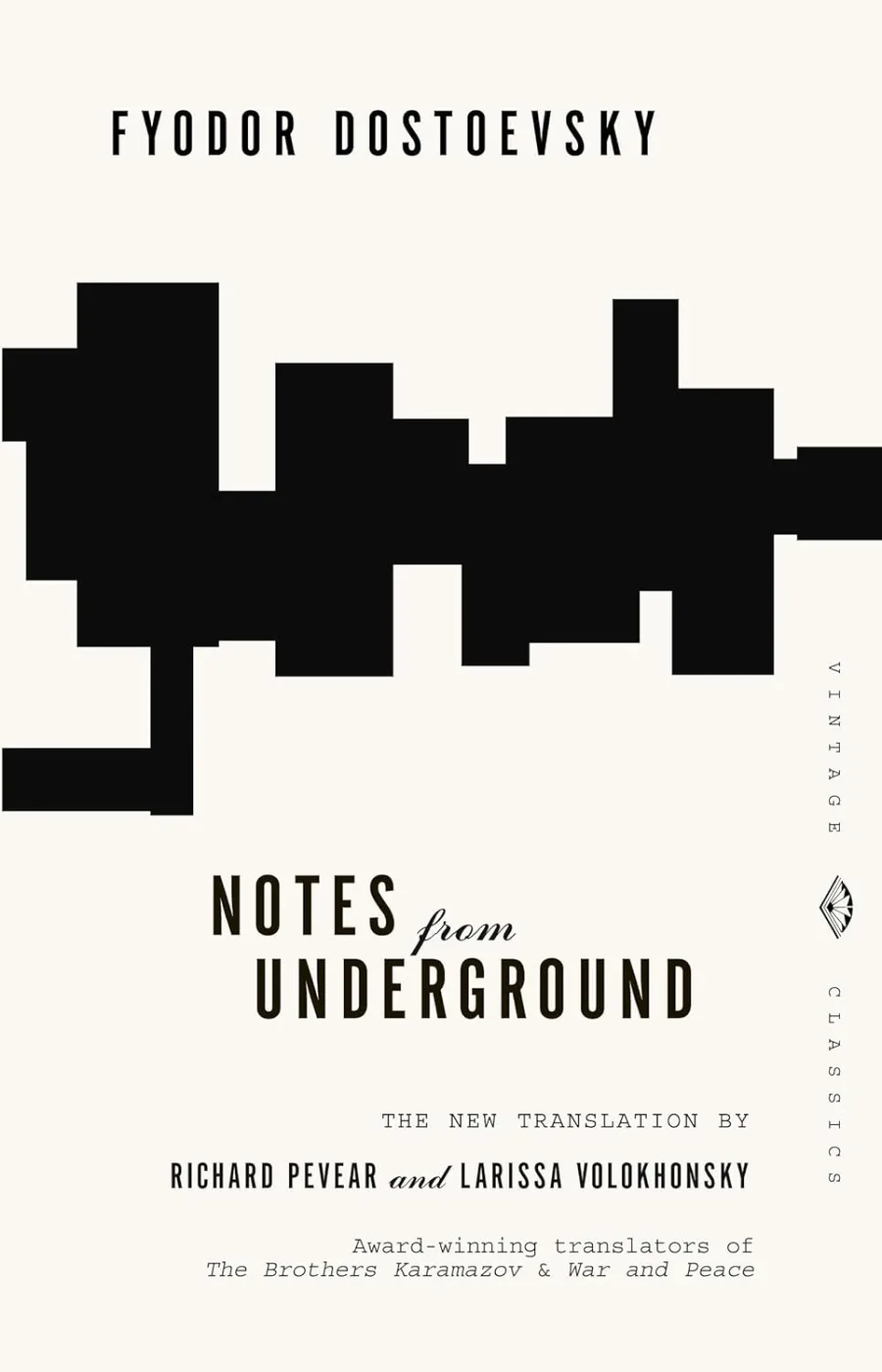
Notes from Underground (Vintage Classics)
Paperback
• 136 Pages
• USD 16.00
• English
• 9780679734529
No ratings yet
| Publisher | Vintage |
|---|---|
| ISBN13 | 9780679734529 |
| ASIN/SKU | 067973452X |
| Book Format | Paperback |
| Language | English |
| Pages | 136 |
| List Price | USD 16.00 |
| Publishing Date | 30/08/1994 |
| Dimensions | 5.1 x 0.5 x 8 inches |
| Weight | 6.4 ounces |
| Book Code | BD00055519 |
Buy this Book
Amazon Stores
Ebook Stores
Other Stores
Discover Notes from Underground (Vintage Classics) by Fyodor Dostoevsky. This book is published by Vintage in Paperback format, ISBN 9780679734529, ASIN 067973452X, under Literature and Fiction, Russian and Soviet Literature, Teen and Young Adult Classic Literature.
Book Description
Award-winning translators Richard Pevear and Larissa Volokhonsky give us a brilliantly faithful rendition of this classic novel, in all its tragedy and tormented comedy. In this second edition, they have updated their translation in honor of the 200th anniversary of Dostoevsky’s birth.
One of the most remarkable characters in literature, the unnamed narrator of Dostoevsky's most revolutionary novel is a former official who has defiantly withdrawn into an underground existence. In full retreat from society, he scrawls a passionate, obsessive, self-contradictory narrative that serves as a devastating attack on social utopianism and an assertion of man’s essentially irrational nature.
One of the most remarkable characters in literature, the unnamed narrator of Dostoevsky's most revolutionary novel is a former official who has defiantly withdrawn into an underground existence. In full retreat from society, he scrawls a passionate, obsessive, self-contradictory narrative that serves as a devastating attack on social utopianism and an assertion of man’s essentially irrational nature.
Author Biography
Fyodor Mikhailovich Dostoyevsky (/ˌdɒstəˈjɛfski, ˌdʌs-/; Russian: Фёдор Миха́йлович Достое́вский; IPA: [ˈfʲɵdər mʲɪˈxajləvʲɪtɕ dəstɐˈjɛfskʲɪj]; 11 November 1821 – 9 February 1881), sometimes transliterated Dostoevsky, was a Russian novelist, short story writer, essayist, journalist and philosopher. Dostoyevsky's literary works explore human psychology in the troubled political, social, and spiritual atmosphere of 19th-century Russia. Many of his works are marked by a preoccupation with Christianity, explored through the prism of the individual confronted with life's hardships and beauty.
He began writing in his 20s, and his first novel, Poor Folk, was published in 1846 when he was 25. His major works include Crime and Punishment (1866), The Idiot (1869), Demons (1872) and The Brothers Karamazov (1880). His output consists of 11 novels, three novellas, 17 short novels and numerous other works. Many literary critics rate him as one of the greatest psychologists in world literature. His 1864 novella Notes from Underground is considered to be one of the first works of existentialist literature.
Born in Moscow in 1821, Dostoyevsky was introduced to literature at an early age through fairy tales and legends, and through books by Russian and foreign authors. His mother died in 1837, when he was 15, and around the same time he left school to enter the Nikolayev Military Engineering Institute. After graduating, he worked as an engineer and briefly enjoyed a lavish lifestyle, translating books to earn extra money. In the mid-1840s he wrote his first novel, Poor Folk, which gained him entry into St. Petersburg's literary circles.
In the following years, Dostoyevsky worked as a journalist, publishing and editing several magazines of his own and later A Writer's Diary, a collection of his writings. He began to travel around western Europe and developed a gambling addiction, which led to financial hardship. For a time, he had to beg for money, but he eventually became one of the most widely read and highly regarded Russian writers. His books have been translated into more than 170 languages. Dostoyevsky influenced a multitude of writers and philosophers, from Anton Chekhov and Ernest Hemingway to Friedrich Nietzsche and Jean-Paul Sartre.
Bio from Wikipedia, the free encyclopedia.
He began writing in his 20s, and his first novel, Poor Folk, was published in 1846 when he was 25. His major works include Crime and Punishment (1866), The Idiot (1869), Demons (1872) and The Brothers Karamazov (1880). His output consists of 11 novels, three novellas, 17 short novels and numerous other works. Many literary critics rate him as one of the greatest psychologists in world literature. His 1864 novella Notes from Underground is considered to be one of the first works of existentialist literature.
Born in Moscow in 1821, Dostoyevsky was introduced to literature at an early age through fairy tales and legends, and through books by Russian and foreign authors. His mother died in 1837, when he was 15, and around the same time he left school to enter the Nikolayev Military Engineering Institute. After graduating, he worked as an engineer and briefly enjoyed a lavish lifestyle, translating books to earn extra money. In the mid-1840s he wrote his first novel, Poor Folk, which gained him entry into St. Petersburg's literary circles.
In the following years, Dostoyevsky worked as a journalist, publishing and editing several magazines of his own and later A Writer's Diary, a collection of his writings. He began to travel around western Europe and developed a gambling addiction, which led to financial hardship. For a time, he had to beg for money, but he eventually became one of the most widely read and highly regarded Russian writers. His books have been translated into more than 170 languages. Dostoyevsky influenced a multitude of writers and philosophers, from Anton Chekhov and Ernest Hemingway to Friedrich Nietzsche and Jean-Paul Sartre.
Bio from Wikipedia, the free encyclopedia.
Editorial Reviews
Praise for previous translations by Richard Pevear and Larissa Volokhonsky, winners of the PEN/Book-of-the-Month Club Prize
The Brothers Karamazov
“One finally gets the musical whole of Dostoevsky’s original.” –New York Times Book Review
“It may well be that Dostoevsky’s [world], with all its resourceful energies of life and language, is only now–and through the medium of [this] new translation–beginning to come home to the English-speaking reader.” –New York Review of Books
Crime and Punishment
“The best [translation] currently available…An especially faithful re-creation…with a coiled-spring kinetic energy… Don’t miss it.” –Washington Post Book World
“Reaches as close to Dostoevsky’s Russian as is possible in English…The original’s force and frightening immediacy is captured…The Pevear and Volokhonsky translation will become the standard version.” –Chicago Tribune
Demons
“The merit in this edition of Demons resides in the technical virtuosity of the translators…They capture the feverishly intense, personal explosions of activity and emotion that manifest themselves in Russian life.” –New York Times Book Review
“[Pevear and Volokhonsky] have managed to capture and differentiate the characters’ many voices…They come into their own when faced with Dostoevsky’s wonderfully quirky use of varied speech patterns…A capital job of restoration.” –Los Angeles Times
The Brothers Karamazov
“One finally gets the musical whole of Dostoevsky’s original.” –New York Times Book Review
“It may well be that Dostoevsky’s [world], with all its resourceful energies of life and language, is only now–and through the medium of [this] new translation–beginning to come home to the English-speaking reader.” –New York Review of Books
Crime and Punishment
“The best [translation] currently available…An especially faithful re-creation…with a coiled-spring kinetic energy… Don’t miss it.” –Washington Post Book World
“Reaches as close to Dostoevsky’s Russian as is possible in English…The original’s force and frightening immediacy is captured…The Pevear and Volokhonsky translation will become the standard version.” –Chicago Tribune
Demons
“The merit in this edition of Demons resides in the technical virtuosity of the translators…They capture the feverishly intense, personal explosions of activity and emotion that manifest themselves in Russian life.” –New York Times Book Review
“[Pevear and Volokhonsky] have managed to capture and differentiate the characters’ many voices…They come into their own when faced with Dostoevsky’s wonderfully quirky use of varied speech patterns…A capital job of restoration.” –Los Angeles Times
Book Summary
“Notes from Underground” by Fyodor Dostoevsky is a short but powerful novel about alienation, pride, resentment, self-awareness, and the contradictions of human nature. It is often considered one of the first great works of psychological and existential fiction. The book does not follow a traditional plot in the usual sense. Instead, it presents the thoughts and memories of an unnamed narrator, often called the Underground Man, who speaks directly to the reader from a place of bitterness, isolation, and inner conflict. Through him, Dostoevsky explores what happens when a person becomes trapped inside his own mind and turns intelligence into suffering.
The narrator is a retired civil servant living alone in St. Petersburg. He describes himself as sick, spiteful, unattractive, and deeply unhappy. From the beginning, he is full of contradictions. He says he is ill but refuses to see a doctor. He claims to be intelligent but also says intelligence has made him incapable of action. He despises society, yet he desperately wants recognition from others. He attacks reason, progress, and moral confidence, but he is also painfully aware of his own weakness and absurdity. This conflict gives the book its intense and unsettling voice.
In the first part of the novel, the Underground Man presents his ideas about life and human nature. He argues against the optimistic belief that people will become good and happy if they are guided by reason and self-interest. In his time, many thinkers believed that science, logic, and social reform could create a rational society where people would naturally choose what benefited them. The Underground Man rejects this idea. He believes human beings are not simple machines who always want what is useful or comfortable. Sometimes people knowingly choose pain, failure, chaos, or self-destruction simply to prove they are free.
For him, freedom is more important than happiness. He suggests that if life were reduced to perfect logic, with every human action predicted and explained, people would rebel against it. They might do something foolish or harmful just to show that they are not controlled by formulas. This is one of the most important ideas in the book. Dostoevsky shows that human beings are complicated, irrational, and often self-defeating. People do not always want what is best for them. They also want dignity, independence, revenge, and the right to choose, even badly.
The Underground Man is deeply conscious of himself, but this consciousness does not help him live better. Instead, it paralyzes him. He thinks too much about every feeling and action. He analyzes insults, imagines conversations, remembers humiliations, and turns small events into sources of endless bitterness. He believes that active people are able to act because they are less aware of life’s complexity. He envies them but also looks down on them. His intelligence becomes a prison. He can see his own pettiness and cruelty, but he cannot escape them.
The second part of the novel, called “Apropos of the Wet Snow,” moves from theory to memory. The Underground Man recalls events from his younger life that reveal how his ideas appear in action. One important episode involves an officer who once moves him aside in a public place without noticing him. The narrator becomes obsessed with this small humiliation. Instead of confronting the officer directly, he spends a long time planning a symbolic revenge. He wants to bump into the officer on the street as an equal, proving his dignity. When the moment finally happens, it is meaningless and unsatisfying. This episode shows how the Underground Man’s pride turns ordinary social life into a battlefield.
Another major episode involves a dinner with former schoolmates. The narrator invites himself even though he knows they do not like him. He wants their respect, but he behaves in ways that make respect impossible. He insults them, embarrasses himself, and swings between feelings of superiority and shame. He imagines himself as morally deeper than they are, yet he longs to be accepted by them. The dinner becomes a painful display of his social insecurity and self-sabotage. He wants connection, but his pride makes connection unbearable.
After the dinner, the Underground Man follows the group to a brothel, where he meets a young woman named Liza. She is vulnerable, poor, and trapped in a life that will likely lead to suffering. At first, he speaks to her with seriousness and compassion. He describes the misery she may face and urges her to seek a better life. His words affect her deeply because they seem to come from genuine concern. For a brief moment, he appears capable of human kindness. Liza sees something in him and later comes to visit him, hoping for help or emotional connection.
But when Liza arrives at his room, the Underground Man cannot bear the reality of her trust. Her presence exposes his loneliness, poverty, and emotional weakness. Instead of accepting her compassion, he feels humiliated by it. He becomes cruel, telling her that his earlier words were only a performance and that he wanted power over her emotions. He gives her money, turning a possible moment of love and redemption into another act of degradation. Liza leaves quietly, with dignity, and the narrator is left in shame. He wants to run after her and ask forgiveness, but he does not. His pride defeats his desire for human connection.
This episode is the emotional center of the novel. Liza represents the possibility of love, humility, and rescue from isolation. The Underground Man recognizes this possibility but rejects it because accepting love would require him to become vulnerable. He would have to give up the bitter superiority that protects him from life. His cruelty toward Liza shows how deeply damaged he is, but also how responsible he is for his own suffering. He is not only a victim of society; he actively chooses isolation again and again.
In the end, “Notes from Underground” does not offer a simple solution. The narrator remains trapped in his underground world, full of resentment and self-disgust. Yet the book is powerful because it tells the truth about parts of human nature that people often hide: the desire to be loved but also to reject love, the wish to be free even at the cost of happiness, and the strange satisfaction people sometimes find in their own suffering. Dostoevsky uses the Underground Man to challenge easy ideas about progress, reason, and goodness. The novel suggests that human beings cannot be understood only through logic or social theories. They are spiritual, irrational, proud, wounded, and capable of both cruelty and tenderness.
“Notes from Underground” remains important because it feels surprisingly modern. Its narrator is isolated, overthinking, angry, and unable to connect honestly with others. He understands himself too well in some ways and not enough in others. Through his bitter confession, Dostoevsky creates a disturbing but unforgettable portrait of a person who has turned away from life and then blamed life for his misery. The book is a warning about what happens when pride, resentment, and excessive self-consciousness replace love, action, and humility.
The narrator is a retired civil servant living alone in St. Petersburg. He describes himself as sick, spiteful, unattractive, and deeply unhappy. From the beginning, he is full of contradictions. He says he is ill but refuses to see a doctor. He claims to be intelligent but also says intelligence has made him incapable of action. He despises society, yet he desperately wants recognition from others. He attacks reason, progress, and moral confidence, but he is also painfully aware of his own weakness and absurdity. This conflict gives the book its intense and unsettling voice.
In the first part of the novel, the Underground Man presents his ideas about life and human nature. He argues against the optimistic belief that people will become good and happy if they are guided by reason and self-interest. In his time, many thinkers believed that science, logic, and social reform could create a rational society where people would naturally choose what benefited them. The Underground Man rejects this idea. He believes human beings are not simple machines who always want what is useful or comfortable. Sometimes people knowingly choose pain, failure, chaos, or self-destruction simply to prove they are free.
For him, freedom is more important than happiness. He suggests that if life were reduced to perfect logic, with every human action predicted and explained, people would rebel against it. They might do something foolish or harmful just to show that they are not controlled by formulas. This is one of the most important ideas in the book. Dostoevsky shows that human beings are complicated, irrational, and often self-defeating. People do not always want what is best for them. They also want dignity, independence, revenge, and the right to choose, even badly.
The Underground Man is deeply conscious of himself, but this consciousness does not help him live better. Instead, it paralyzes him. He thinks too much about every feeling and action. He analyzes insults, imagines conversations, remembers humiliations, and turns small events into sources of endless bitterness. He believes that active people are able to act because they are less aware of life’s complexity. He envies them but also looks down on them. His intelligence becomes a prison. He can see his own pettiness and cruelty, but he cannot escape them.
The second part of the novel, called “Apropos of the Wet Snow,” moves from theory to memory. The Underground Man recalls events from his younger life that reveal how his ideas appear in action. One important episode involves an officer who once moves him aside in a public place without noticing him. The narrator becomes obsessed with this small humiliation. Instead of confronting the officer directly, he spends a long time planning a symbolic revenge. He wants to bump into the officer on the street as an equal, proving his dignity. When the moment finally happens, it is meaningless and unsatisfying. This episode shows how the Underground Man’s pride turns ordinary social life into a battlefield.
Another major episode involves a dinner with former schoolmates. The narrator invites himself even though he knows they do not like him. He wants their respect, but he behaves in ways that make respect impossible. He insults them, embarrasses himself, and swings between feelings of superiority and shame. He imagines himself as morally deeper than they are, yet he longs to be accepted by them. The dinner becomes a painful display of his social insecurity and self-sabotage. He wants connection, but his pride makes connection unbearable.
After the dinner, the Underground Man follows the group to a brothel, where he meets a young woman named Liza. She is vulnerable, poor, and trapped in a life that will likely lead to suffering. At first, he speaks to her with seriousness and compassion. He describes the misery she may face and urges her to seek a better life. His words affect her deeply because they seem to come from genuine concern. For a brief moment, he appears capable of human kindness. Liza sees something in him and later comes to visit him, hoping for help or emotional connection.
But when Liza arrives at his room, the Underground Man cannot bear the reality of her trust. Her presence exposes his loneliness, poverty, and emotional weakness. Instead of accepting her compassion, he feels humiliated by it. He becomes cruel, telling her that his earlier words were only a performance and that he wanted power over her emotions. He gives her money, turning a possible moment of love and redemption into another act of degradation. Liza leaves quietly, with dignity, and the narrator is left in shame. He wants to run after her and ask forgiveness, but he does not. His pride defeats his desire for human connection.
This episode is the emotional center of the novel. Liza represents the possibility of love, humility, and rescue from isolation. The Underground Man recognizes this possibility but rejects it because accepting love would require him to become vulnerable. He would have to give up the bitter superiority that protects him from life. His cruelty toward Liza shows how deeply damaged he is, but also how responsible he is for his own suffering. He is not only a victim of society; he actively chooses isolation again and again.
In the end, “Notes from Underground” does not offer a simple solution. The narrator remains trapped in his underground world, full of resentment and self-disgust. Yet the book is powerful because it tells the truth about parts of human nature that people often hide: the desire to be loved but also to reject love, the wish to be free even at the cost of happiness, and the strange satisfaction people sometimes find in their own suffering. Dostoevsky uses the Underground Man to challenge easy ideas about progress, reason, and goodness. The novel suggests that human beings cannot be understood only through logic or social theories. They are spiritual, irrational, proud, wounded, and capable of both cruelty and tenderness.
“Notes from Underground” remains important because it feels surprisingly modern. Its narrator is isolated, overthinking, angry, and unable to connect honestly with others. He understands himself too well in some ways and not enough in others. Through his bitter confession, Dostoevsky creates a disturbing but unforgettable portrait of a person who has turned away from life and then blamed life for his misery. The book is a warning about what happens when pride, resentment, and excessive self-consciousness replace love, action, and humility.
Sample Chapters
Sample Chapters will be added soon…
Reader Reviews
No reviews yet.
Notes from Underground (Vintage Classics)
Download Cover Image
Do you want to download the full cover image for Notes from Underground (Vintage Classics)?