
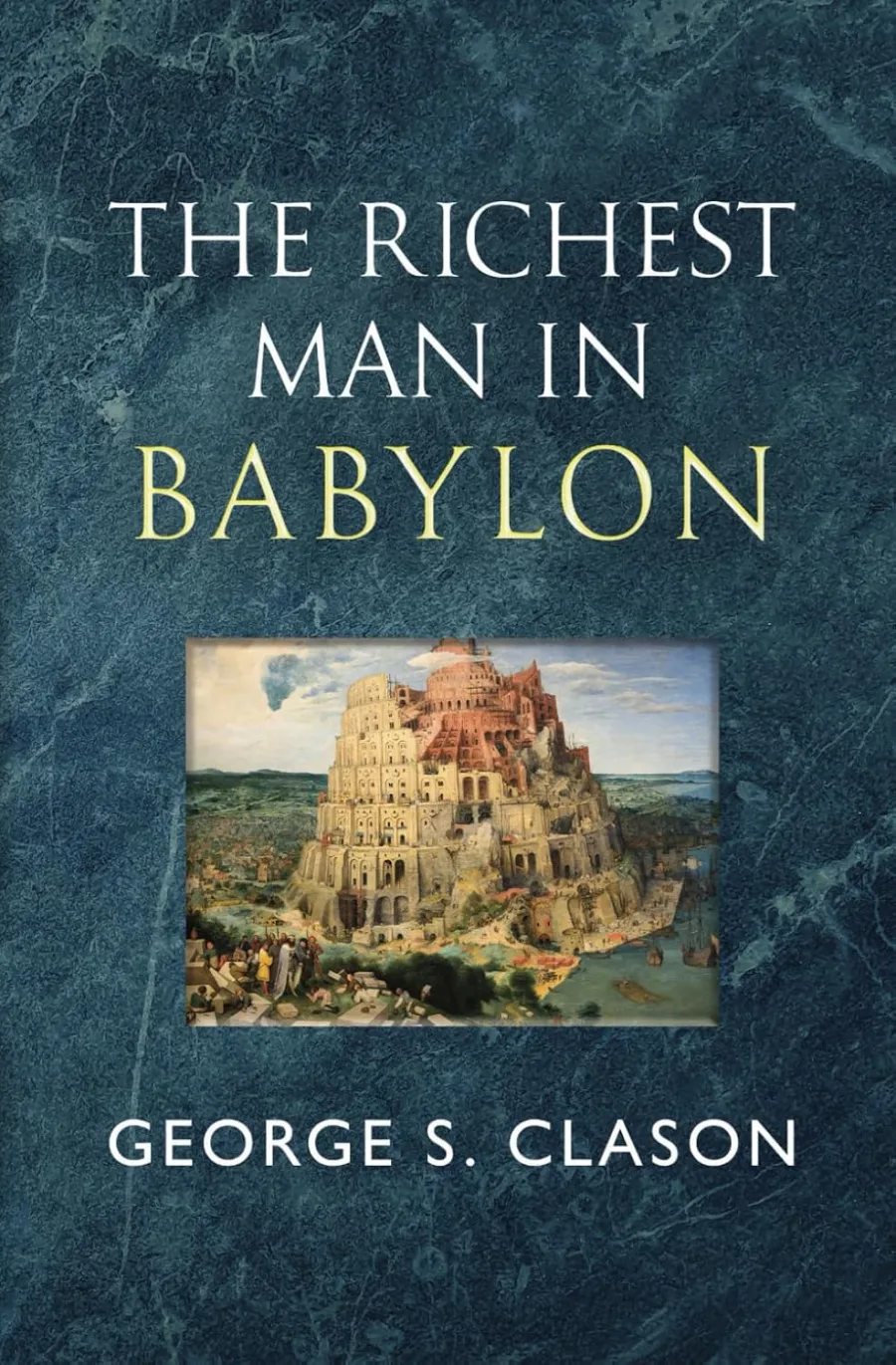
The Richest Man in Babylon - The Original 1926 Classic
Paperback
• 124 Pages
• USD 9.99
• English
• 9781954839496
No ratings yet
| Publisher | Reader's Library Classics |
|---|---|
| ISBN13 | 9781954839496 |
| ASIN/SKU | 1954839499 |
| Book Format | Paperback |
| Language | English |
| Pages | 124 |
| List Price | USD 9.99 |
| Publishing Date | 01/04/2023 |
| Dimensions | 5.25 x 0.31 x 8 inches |
| Weight | 5.3 ounces |
| Book Code | BD00055520 |
Buy this Book
Amazon Stores
Ebook Stores
Other Stores
Discover The Richest Man in Babylon - The Original 1926 Classic by George S. Clason. This book is published by Reader's Library Classics in Paperback format, ISBN 9781954839496, ASIN 1954839499, under Business and Money, Financial Risk Management, Success Self-Help.
Book Description
Money is plentiful for those who understand the simple laws which govern its acquisition.
In the early 1920s, George S. Clason wrote a collection of parables set in ancient Babylon that provided guidance on one’s financial well-being. These parables were distributed as pamphlets to U.S. banking and insurance customers and were so well-received by the public that in 1926, the parables were collected into one volume under the title of his most famous story, The Richest Man in Babylon. Largely seen as a classic in personal financial advice, The Richest Man in Babylon has provided millions with guidance and inspiration for financial wellness.
In the early 1920s, George S. Clason wrote a collection of parables set in ancient Babylon that provided guidance on one’s financial well-being. These parables were distributed as pamphlets to U.S. banking and insurance customers and were so well-received by the public that in 1926, the parables were collected into one volume under the title of his most famous story, The Richest Man in Babylon. Largely seen as a classic in personal financial advice, The Richest Man in Babylon has provided millions with guidance and inspiration for financial wellness.
Author Biography
George Samuel Clason (November 7, 1874 – April 7, 1957 ), also known as George S. Clason, was born in Louisiana, Missouri, and died in Napa, California.
During his eighty two years he was a soldier, businessman and writer. He served in the United States Army during the Spanish–American War.
Clason started two companies, the Clason Map Company of Denver Colorado and the Clason Publishing Company. The Clason Map Company was the first to publish a road atlas of the United States and Canada, and did not survive the Great Depression.
George Clason is best known for writing a series of informational pamphlets about being thrifty and how to achieve financial success. He started writing the pamphlets in 1926, using parables that were set in ancient Babylon. Banks and insurance companies began to distribute the parables, and the most famous ones were compiled into the book The Richest Man in Babylon. Clason's book "Gold Ahead" was renamed as The Richest Man in Babylon. Clason was married twice, the first time to Ida Ann Venable and the second to Anna Burt.
Bio from Wikipedia, the free encyclopedia.
During his eighty two years he was a soldier, businessman and writer. He served in the United States Army during the Spanish–American War.
Clason started two companies, the Clason Map Company of Denver Colorado and the Clason Publishing Company. The Clason Map Company was the first to publish a road atlas of the United States and Canada, and did not survive the Great Depression.
George Clason is best known for writing a series of informational pamphlets about being thrifty and how to achieve financial success. He started writing the pamphlets in 1926, using parables that were set in ancient Babylon. Banks and insurance companies began to distribute the parables, and the most famous ones were compiled into the book The Richest Man in Babylon. Clason's book "Gold Ahead" was renamed as The Richest Man in Babylon. Clason was married twice, the first time to Ida Ann Venable and the second to Anna Burt.
Bio from Wikipedia, the free encyclopedia.
Editorial Reviews
Editorial Reviews will be added soon…
Book Summary
“The Richest Man in Babylon” by George S. Clason is a timeless personal finance classic told through simple parables set in ancient Babylon. Instead of sounding like a modern money guide, it uses stories about merchants, laborers, lenders, and scholars to teach practical lessons about saving, spending, investing, and building lasting wealth. The book’s most famous character is Arkad, a poor scribe who becomes the richest man in Babylon through discipline, wise habits, and a deep understanding of money. His story forms the center of the book and gives the reader both inspiration and instruction.
The main idea of the book is that wealth is not mainly the result of luck or high income, but of clear habits and consistent self-control. Arkad explains that anyone can build wealth if they follow the basic laws of money. He teaches that the first step is to “start thy purse to fattening,” which means saving a portion of income before spending anything else. This simple rule is one of the strongest messages in the book. Clason presents saving not as a sacrifice that ruins life, but as the foundation of future freedom. Even a small amount, saved regularly, can grow into something meaningful over time.
Another major lesson is to live below your means. The book warns that expenses have a way of expanding to match income if people are careless. Many people think they need more money when, in truth, they need more discipline. Clason shows that wealth begins when a person learns to distinguish between real needs and unnecessary desires. This does not mean living miserably or denying all pleasure. Rather, it means spending wisely, avoiding waste, and making sure money is used for what truly matters.
The book also emphasizes the importance of making money work for you. Arkad teaches that savings should not sit idle, but should be invested carefully so they can produce more income. This idea is repeated in the stories of various characters who learn that gold can multiply when handled with intelligence and patience. The lesson is not to chase fast profit or risky schemes, but to let money grow steadily through sound judgment. In this way, Clason presents wealth as something that can be built gradually, not something that only the already rich can enjoy.
A related lesson is the warning against losing money through foolish decisions. The book strongly discourages get-rich-quick behavior, reckless borrowing, and trusting unreliable advice. Clason suggests that protecting wealth is just as important as earning it. This is why the stories often stress caution, wisdom, and patience. A person who gains money but loses it carelessly is no better off than before. The goal is not only to acquire wealth, but to preserve it.
The book also gives attention to debt and responsibility. It shows how debt can trap people and prevent them from moving forward. Many of the characters struggle because they have promised money they cannot repay or because they have lived too carelessly. Clason treats debt as something dangerous when it is uncontrolled, but he does not present the issue in a hopeless way. With discipline, planning, and honesty, debt can be overcome. The larger message is that personal financial freedom comes from taking ownership of one’s decisions.
Another important theme is improving one’s ability to earn. Clason insists that a person should always be learning, developing skill, and becoming more valuable. Income grows when ability grows. This means wealth is connected not just to thrift, but to self-improvement. A person who becomes wiser, more skilled, and more dependable increases their chances of success. The book encourages readers to think of themselves as capable of growth, not fixed in their current condition.
What makes “The Richest Man in Babylon” memorable is the way it presents financial wisdom in story form. The parables are simple and easy to remember, but they carry lessons that feel surprisingly modern. Behind the ancient setting is a very practical message: money should be handled with discipline, intelligence, and patience. Clason does not promise instant riches. He teaches habits. He shows that steady progress, repeated over time, can change a person’s future.
At its core, the book is about freedom. Financial freedom comes from learning to save, spend wisely, invest carefully, avoid unnecessary debt, and keep improving oneself. Its message is direct and encouraging: no matter where a person starts, wealth can be built through good habits. That is why the book has remained popular for so long. It is simple, but not shallow. It gives readers a clear path toward financial stability and a better life.
The main idea of the book is that wealth is not mainly the result of luck or high income, but of clear habits and consistent self-control. Arkad explains that anyone can build wealth if they follow the basic laws of money. He teaches that the first step is to “start thy purse to fattening,” which means saving a portion of income before spending anything else. This simple rule is one of the strongest messages in the book. Clason presents saving not as a sacrifice that ruins life, but as the foundation of future freedom. Even a small amount, saved regularly, can grow into something meaningful over time.
Another major lesson is to live below your means. The book warns that expenses have a way of expanding to match income if people are careless. Many people think they need more money when, in truth, they need more discipline. Clason shows that wealth begins when a person learns to distinguish between real needs and unnecessary desires. This does not mean living miserably or denying all pleasure. Rather, it means spending wisely, avoiding waste, and making sure money is used for what truly matters.
The book also emphasizes the importance of making money work for you. Arkad teaches that savings should not sit idle, but should be invested carefully so they can produce more income. This idea is repeated in the stories of various characters who learn that gold can multiply when handled with intelligence and patience. The lesson is not to chase fast profit or risky schemes, but to let money grow steadily through sound judgment. In this way, Clason presents wealth as something that can be built gradually, not something that only the already rich can enjoy.
A related lesson is the warning against losing money through foolish decisions. The book strongly discourages get-rich-quick behavior, reckless borrowing, and trusting unreliable advice. Clason suggests that protecting wealth is just as important as earning it. This is why the stories often stress caution, wisdom, and patience. A person who gains money but loses it carelessly is no better off than before. The goal is not only to acquire wealth, but to preserve it.
The book also gives attention to debt and responsibility. It shows how debt can trap people and prevent them from moving forward. Many of the characters struggle because they have promised money they cannot repay or because they have lived too carelessly. Clason treats debt as something dangerous when it is uncontrolled, but he does not present the issue in a hopeless way. With discipline, planning, and honesty, debt can be overcome. The larger message is that personal financial freedom comes from taking ownership of one’s decisions.
Another important theme is improving one’s ability to earn. Clason insists that a person should always be learning, developing skill, and becoming more valuable. Income grows when ability grows. This means wealth is connected not just to thrift, but to self-improvement. A person who becomes wiser, more skilled, and more dependable increases their chances of success. The book encourages readers to think of themselves as capable of growth, not fixed in their current condition.
What makes “The Richest Man in Babylon” memorable is the way it presents financial wisdom in story form. The parables are simple and easy to remember, but they carry lessons that feel surprisingly modern. Behind the ancient setting is a very practical message: money should be handled with discipline, intelligence, and patience. Clason does not promise instant riches. He teaches habits. He shows that steady progress, repeated over time, can change a person’s future.
At its core, the book is about freedom. Financial freedom comes from learning to save, spend wisely, invest carefully, avoid unnecessary debt, and keep improving oneself. Its message is direct and encouraging: no matter where a person starts, wealth can be built through good habits. That is why the book has remained popular for so long. It is simple, but not shallow. It gives readers a clear path toward financial stability and a better life.
Sample Chapters
Sample Chapters will be added soon…
Reader Reviews
No reviews yet.
The Richest Man in Babylon - The Original 1926 Classic
Download Cover Image
Do you want to download the full cover image for The Richest Man in Babylon - The Original 1926 Classic?