
The Call of the Wild
Paperback
• 106 Pages
• USD 9.99
• English
• 9781954839144
No ratings yet
| Publisher | Reader's Library Classics |
|---|---|
| ISBN13 | 9781954839144 |
| ASIN/SKU | 1954839146 |
| Book Format | Paperback |
| Language | English |
| Pages | 106 |
| List Price | USD 9.99 |
| Publishing Date | 18/02/2021 |
| Dimensions | 5.25 x 0.27 x 8 inches |
| Weight | 4.5 ounces |
| Book Code | BD00055529 |
Buy this Book
Amazon Stores
Ebook Stores
Other Stores
Discover The Call of the Wild by Jack London. This book is published by Reader's Library Classics in Paperback format, ISBN 9781954839144, ASIN 1954839146, under Literature and Fiction, Animal Fiction, Classic Action and Adventure.
Book Description
There is an ecstasy that marks the summit of life, and beyond which life cannot rise. And such is the paradox of living, this ecstasy comes when one is most alive, and it comes as a complete forgetfulness that one is alive.
The domesticated life of a powerful St. Bernard-Shepherd mix named Buck is quickly turned on end when he is stolen away from his master and put to work as a sled dog in Alaska. His once life of luxury turns into a life of survival and adaptation as he learns the ways of the wilderness.
Set in the Klondike region of Canada during the 1890s Klondike Gold Rush, The Call of the Wild showcases the transformation of a canine as he learns to adapt to what life has given him, fair or not.
The domesticated life of a powerful St. Bernard-Shepherd mix named Buck is quickly turned on end when he is stolen away from his master and put to work as a sled dog in Alaska. His once life of luxury turns into a life of survival and adaptation as he learns the ways of the wilderness.
Set in the Klondike region of Canada during the 1890s Klondike Gold Rush, The Call of the Wild showcases the transformation of a canine as he learns to adapt to what life has given him, fair or not.
Author Biography
John Griffith "Jack" London (born John Griffith Chaney, January 12, 1876 – November 22, 1916) was an American novelist, journalist, and social activist. A pioneer in the then-burgeoning world of commercial magazine fiction, he was one of the first fiction writers to obtain worldwide celebrity and a large fortune from his fiction alone.
Some of his most famous works include The Call of the Wild and White Fang, both set in the Klondike Gold Rush, as well as the short stories "To Build a Fire", "An Odyssey of the North", and "Love of Life". He also wrote of the South Pacific in such stories as "The Pearls of Parlay" and "The Heathen", and of the San Francisco Bay area in The Sea Wolf.
London was part of the radical literary group "The Crowd" in San Francisco and a passionate advocate of unionization, socialism, and the rights of workers. He wrote several powerful works dealing with these topics, such as his dystopian novel The Iron Heel, his non-fiction exposé The People of the Abyss, and The War of the Classes.
Some of his most famous works include The Call of the Wild and White Fang, both set in the Klondike Gold Rush, as well as the short stories "To Build a Fire", "An Odyssey of the North", and "Love of Life". He also wrote of the South Pacific in such stories as "The Pearls of Parlay" and "The Heathen", and of the San Francisco Bay area in The Sea Wolf.
London was part of the radical literary group "The Crowd" in San Francisco and a passionate advocate of unionization, socialism, and the rights of workers. He wrote several powerful works dealing with these topics, such as his dystopian novel The Iron Heel, his non-fiction exposé The People of the Abyss, and The War of the Classes.
Editorial Reviews
Editorial Reviews will be added soon…
Book Summary
“The Call of the Wild” by Jack London is a powerful adventure novel about survival, instinct, freedom, and transformation. The story follows Buck, a large and strong dog who begins life in comfort but is forced into a brutal world where only strength, intelligence, and adaptability can keep him alive. Through Buck’s journey from a pampered pet to a wild leader, the novel explores the conflict between civilization and nature, showing how deeply buried instincts can awaken when life becomes harsh and primitive.
At the beginning of the story, Buck lives an easy and pleasant life on Judge Miller’s estate in California. He is not an ordinary house dog; he is proud, powerful, and respected by both humans and animals around him. He enjoys warmth, food, space, and attention. He has never known real hunger, violence, or fear. But this peaceful life ends suddenly when he is stolen by a gardener’s helper and sold into the dog trade. The discovery of gold in the Klondike has created a huge demand for strong sled dogs, and Buck becomes one of many animals taken north to work in the frozen wilderness.
Buck’s first lesson in this new world is the “law of club and fang.” After being beaten by a man with a club, he learns that human power can be cruel and that open rebellion against it can bring pain. This lesson does not break him, but it teaches him caution. Buck realizes that survival in this new life requires understanding power and knowing when to resist and when to wait. The civilized rules of his old life no longer apply. In the North, strength rules, and every creature must fight to live.
Buck is sold to Perrault and François, two Canadian mail carriers who use sled dogs to travel across the snow. They are not cruel like some men, but they are strict and practical. Under their command, Buck learns how to pull a sled, sleep in the snow, steal food when necessary, and defend himself against other dogs. The work is exhausting, and the cold is harsh, but Buck adapts quickly. He is intelligent and observant, and he learns from the experienced sled dogs around him. Little by little, the comfortable pet from California becomes a capable working dog of the North.
One of Buck’s greatest conflicts is with Spitz, the lead dog of the team. Spitz is experienced, fierce, and dominant. He sees Buck as a threat, and the two dogs become rivals. Their struggle is not just a personal fight but a battle for leadership. Buck grows stronger, more confident, and more connected to his instincts. He learns to fight with patience and strategy, not just force. Eventually, Buck and Spitz face each other in a final battle. Buck defeats and kills Spitz, proving himself the stronger dog. After this, he becomes the lead dog, and under his leadership the team performs better than ever.
Buck’s rise to leadership is an important part of his transformation. He is not simply becoming savage; he is becoming fully alive in a world that demands courage, intelligence, and endurance. He discovers abilities within himself that were hidden during his comfortable life. The wild environment does not create a new Buck as much as it reveals the ancient instincts already inside him. London often describes Buck feeling the pull of earlier generations, as if the memories of his ancestors are waking in his blood. He begins to sense a connection to a more primitive world, one beyond human homes and rules.
After serving Perrault and François, Buck passes through several owners. Some understand dogs and the wilderness, while others do not. His worst experience comes with Hal, Charles, and Mercedes, inexperienced and foolish people who travel north without proper knowledge or discipline. They overload the sled, fail to manage supplies, and treat the dogs badly. Their ignorance and selfishness lead to disaster. Buck becomes weak from exhaustion and starvation, and when he refuses to move because he senses danger ahead, Hal beats him. At this moment, John Thornton, a kind and experienced man, steps in and saves Buck’s life. Soon after, the ice breaks beneath Hal, Charles, Mercedes, and the remaining team, and they disappear. Buck survives because Thornton recognized his suffering and respected his instinct.
John Thornton becomes the most important human in Buck’s life. For the first time since leaving California, Buck feels deep love and loyalty toward a man. Thornton treats him with kindness, and Buck responds with devotion. Their bond is powerful and emotional. Buck saves Thornton’s life more than once and performs incredible feats out of love for him, including pulling a heavily loaded sled to win a bet. With Thornton, Buck experiences affection without domination. Yet even while he loves Thornton, the call of the wild grows stronger inside him.
As Buck spends more time in the wilderness, he begins to wander away from camp. He hunts, explores, and feels drawn to the forest. He encounters wolves and starts to feel that he belongs with them. The wild is no longer only a place of danger; it becomes a place of freedom. Still, his love for Thornton keeps him connected to human life. Buck is divided between two worlds: the world of human companionship and the world of instinct.
The final break comes when Buck returns from a hunt and finds that Thornton and his companions have been killed by Yeehat people. In a rage, Buck attacks and kills several of them, becoming almost legendary in his fury. With Thornton dead, Buck’s last tie to civilization is gone. He no longer has a reason to remain with humans. He joins a pack of wolves and becomes their leader, fully answering the call that has been growing inside him throughout the novel.
By the end of “The Call of the Wild”, Buck has changed completely. He began as a domestic dog living in comfort and ends as a powerful creature of the wilderness. But the transformation feels natural rather than tragic. Buck loses the safety of civilization, but he gains freedom, strength, and a deeper connection to his true nature. Jack London’s novel shows that beneath comfort and training, ancient instincts remain alive. It is a story about survival, but also about identity: Buck becomes what he was always capable of becoming. The novel remains memorable because it presents nature as both beautiful and cruel, and because Buck’s journey speaks to a deep desire for freedom that exists in all living beings.
At the beginning of the story, Buck lives an easy and pleasant life on Judge Miller’s estate in California. He is not an ordinary house dog; he is proud, powerful, and respected by both humans and animals around him. He enjoys warmth, food, space, and attention. He has never known real hunger, violence, or fear. But this peaceful life ends suddenly when he is stolen by a gardener’s helper and sold into the dog trade. The discovery of gold in the Klondike has created a huge demand for strong sled dogs, and Buck becomes one of many animals taken north to work in the frozen wilderness.
Buck’s first lesson in this new world is the “law of club and fang.” After being beaten by a man with a club, he learns that human power can be cruel and that open rebellion against it can bring pain. This lesson does not break him, but it teaches him caution. Buck realizes that survival in this new life requires understanding power and knowing when to resist and when to wait. The civilized rules of his old life no longer apply. In the North, strength rules, and every creature must fight to live.
Buck is sold to Perrault and François, two Canadian mail carriers who use sled dogs to travel across the snow. They are not cruel like some men, but they are strict and practical. Under their command, Buck learns how to pull a sled, sleep in the snow, steal food when necessary, and defend himself against other dogs. The work is exhausting, and the cold is harsh, but Buck adapts quickly. He is intelligent and observant, and he learns from the experienced sled dogs around him. Little by little, the comfortable pet from California becomes a capable working dog of the North.
One of Buck’s greatest conflicts is with Spitz, the lead dog of the team. Spitz is experienced, fierce, and dominant. He sees Buck as a threat, and the two dogs become rivals. Their struggle is not just a personal fight but a battle for leadership. Buck grows stronger, more confident, and more connected to his instincts. He learns to fight with patience and strategy, not just force. Eventually, Buck and Spitz face each other in a final battle. Buck defeats and kills Spitz, proving himself the stronger dog. After this, he becomes the lead dog, and under his leadership the team performs better than ever.
Buck’s rise to leadership is an important part of his transformation. He is not simply becoming savage; he is becoming fully alive in a world that demands courage, intelligence, and endurance. He discovers abilities within himself that were hidden during his comfortable life. The wild environment does not create a new Buck as much as it reveals the ancient instincts already inside him. London often describes Buck feeling the pull of earlier generations, as if the memories of his ancestors are waking in his blood. He begins to sense a connection to a more primitive world, one beyond human homes and rules.
After serving Perrault and François, Buck passes through several owners. Some understand dogs and the wilderness, while others do not. His worst experience comes with Hal, Charles, and Mercedes, inexperienced and foolish people who travel north without proper knowledge or discipline. They overload the sled, fail to manage supplies, and treat the dogs badly. Their ignorance and selfishness lead to disaster. Buck becomes weak from exhaustion and starvation, and when he refuses to move because he senses danger ahead, Hal beats him. At this moment, John Thornton, a kind and experienced man, steps in and saves Buck’s life. Soon after, the ice breaks beneath Hal, Charles, Mercedes, and the remaining team, and they disappear. Buck survives because Thornton recognized his suffering and respected his instinct.
John Thornton becomes the most important human in Buck’s life. For the first time since leaving California, Buck feels deep love and loyalty toward a man. Thornton treats him with kindness, and Buck responds with devotion. Their bond is powerful and emotional. Buck saves Thornton’s life more than once and performs incredible feats out of love for him, including pulling a heavily loaded sled to win a bet. With Thornton, Buck experiences affection without domination. Yet even while he loves Thornton, the call of the wild grows stronger inside him.
As Buck spends more time in the wilderness, he begins to wander away from camp. He hunts, explores, and feels drawn to the forest. He encounters wolves and starts to feel that he belongs with them. The wild is no longer only a place of danger; it becomes a place of freedom. Still, his love for Thornton keeps him connected to human life. Buck is divided between two worlds: the world of human companionship and the world of instinct.
The final break comes when Buck returns from a hunt and finds that Thornton and his companions have been killed by Yeehat people. In a rage, Buck attacks and kills several of them, becoming almost legendary in his fury. With Thornton dead, Buck’s last tie to civilization is gone. He no longer has a reason to remain with humans. He joins a pack of wolves and becomes their leader, fully answering the call that has been growing inside him throughout the novel.
By the end of “The Call of the Wild”, Buck has changed completely. He began as a domestic dog living in comfort and ends as a powerful creature of the wilderness. But the transformation feels natural rather than tragic. Buck loses the safety of civilization, but he gains freedom, strength, and a deeper connection to his true nature. Jack London’s novel shows that beneath comfort and training, ancient instincts remain alive. It is a story about survival, but also about identity: Buck becomes what he was always capable of becoming. The novel remains memorable because it presents nature as both beautiful and cruel, and because Buck’s journey speaks to a deep desire for freedom that exists in all living beings.
Sample Chapters
Sample Chapters will be added soon…
Reader Reviews
No reviews yet.
The Call of the Wild
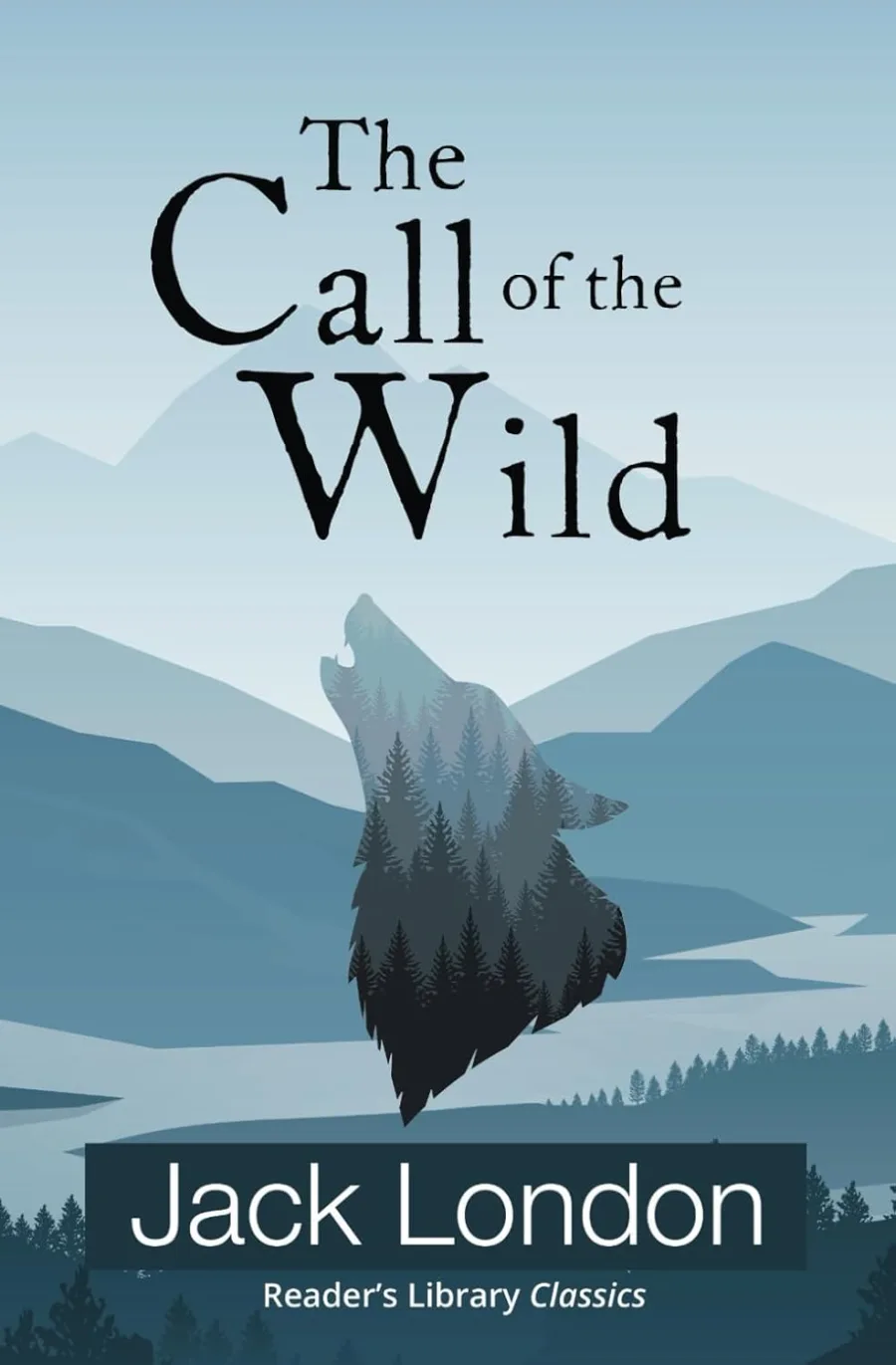
Download Cover Image
Do you want to download the full cover image for The Call of the Wild?