
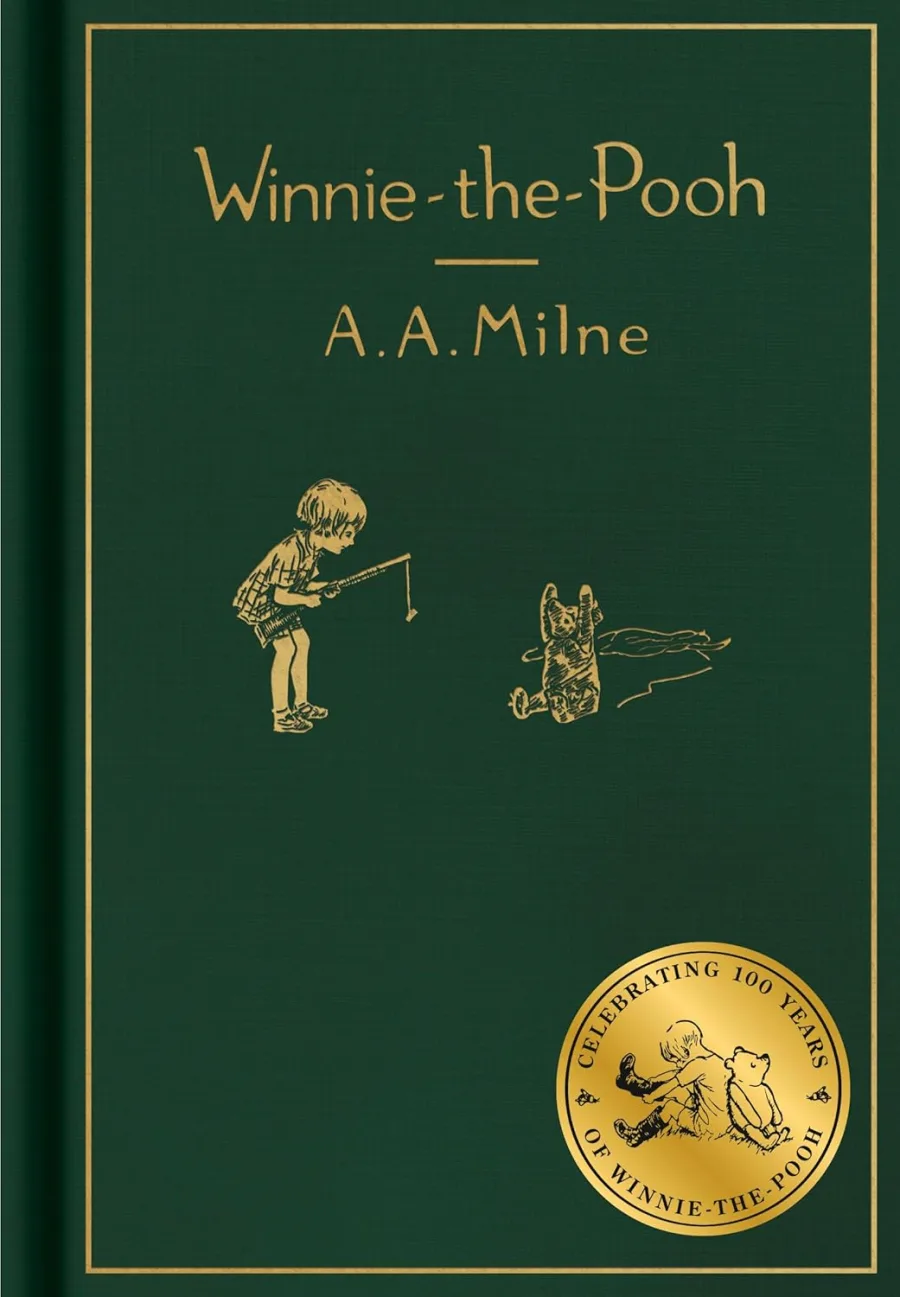
Winnie-the-Pooh: Classic Gift Edition
A. A. Milne, Ernest H. Shepard (Illustrator)
Hardcover
• 176 Pages
• USD 17.00
• English
• 9780525555315
No ratings yet
| Publisher | Dutton Books for Young Readers |
|---|---|
| ISBN13 | 9780525555315 |
| ASIN/SKU | 0525555315 |
| Book Format | Hardcover |
| Language | English |
| Pages | 176 |
| List Price | USD 17.00 |
| Publishing Date | 19/09/2017 |
| Dimensions | 5.5 x 0.7 x 7.81 inches |
| Weight | 2.31 pounds |
| Book Code | BD00055530 |
Buy this Book
Amazon Stores
Ebook Stores
Other Stores
Discover Winnie-the-Pooh: Classic Gift Edition by A. A. Milne. This book is published by Dutton Books for Young Readers in Hardcover format, ISBN 9780525555315, ASIN 0525555315, under Children's Books, Children's Bear Books, Children's Classics.
Book Description
Celebrating 100 years of one of the most beloved icons of children's literature, Winnie-the-Pooh!
The perfect gift for both new readers and passionate collectors!
A gorgeous new collectible edition of the beloved classic, Winnie-the-Pooh, crafted as a replica of the first American edition from 1926. This elegant book features a textured case, gold foil stamping, and illustrated endpapers.
For a century, Winnie-the-Pooh and his friends—Piglet, Owl, Tigger, and the ever doleful Eeyore—have endured as the unforgettable creations of A.A. Milne, who wrote this book for his son, Christopher Robin, and Ernest H. Shepard, who lovingly gave Pooh and his companions shape through his illustrations.
Now fans can celebrate the legacy of Pooh with a beautiful new gift edition of the original stories as they were first published in the United States.
The perfect gift for both new readers and passionate collectors!
A gorgeous new collectible edition of the beloved classic, Winnie-the-Pooh, crafted as a replica of the first American edition from 1926. This elegant book features a textured case, gold foil stamping, and illustrated endpapers.
For a century, Winnie-the-Pooh and his friends—Piglet, Owl, Tigger, and the ever doleful Eeyore—have endured as the unforgettable creations of A.A. Milne, who wrote this book for his son, Christopher Robin, and Ernest H. Shepard, who lovingly gave Pooh and his companions shape through his illustrations.
Now fans can celebrate the legacy of Pooh with a beautiful new gift edition of the original stories as they were first published in the United States.
Author Biography
A.A. Milne was born in London in 1882 and became a successful playwright and poet. He based Winnie-the-Pooh, Piglet and friends on the real nursery toys of his son Christopher Robin and published the first of their adventures in 1926. Since then, Pooh has become a world-famous bear, and Milne’s stories have been translated into sixty-two languages.
Editorial Reviews
Editorial Reviews will be added soon…
Book Summary
“Winnie-the-Pooh” by A. A. Milne is a gentle and imaginative children’s classic that follows the everyday adventures of a honey-loving bear and his friends in the Hundred Acre Wood. At first glance, it seems like a simple story about animals in a forest, but beneath that simplicity lies a warm and thoughtful look at friendship, loyalty, imagination, and the quiet joys of ordinary life. The book is made up of short connected chapters, each centered on a small adventure or problem, and together they create a world that feels safe, playful, and timeless.
The story introduces Winnie-the-Pooh, a bear of “very little brain” but great kindness and curiosity, who lives in the forest with his friends Piglet, Eeyore, Rabbit, Owl, Kanga, Roo, and Christopher Robin. The characters are memorable because each one has a distinct personality and often represents a different way of thinking or feeling. Pooh is cheerful and simple-minded, Piglet is timid but loyal, Eeyore is gloomy and doubtful, Rabbit is practical and bossy, Owl is pompous, and Christopher Robin stands a little apart as the thoughtful child who understands them all.
One of the first and best-known episodes involves Pooh’s attempt to get honey from a bee tree. Hungry as ever, he tries to climb the tree but fails, so he comes up with a clever plan to float up on a balloon and pretend to be a cloud. For a moment, he believes he has outsmarted the bees, but the plan does not work, and he ends up needing Christopher Robin’s help to get down. This episode captures the spirit of the whole book: Pooh is imaginative, determined, and often wrong, but his mistakes are harmless, and his friends are always there to help him.
Another famous chapter shows Pooh visiting Rabbit and eating so much that he gets stuck in the doorway. This comic situation becomes a surprisingly patient and humorous lesson in self-control, as Pooh must remain in Rabbit’s house until he has slimmed down enough to fit through the door again. The scene is funny, but it also reflects the book’s gentle view of human weakness. Pooh is never mocked cruelly; instead, his appetite, carelessness, and cheerfulness are treated with affection.
The book continues with a series of small adventures that reveal both the charm and the vulnerability of the characters. Pooh and Piglet follow what they think are mysterious footprints in the snow, only to discover they are really tracking themselves. Pooh helps Eeyore find his missing tail. Piglet worries about imaginary Heffalumps. Christopher Robin organizes a playful “Expotition” to the North Pole. Later, a flood threatens the forest, and Pooh proves his bravery by helping Piglet survive. These stories are not driven by dramatic plot twists, but by the emotional life of the characters and the small crises that arise in their ordinary world.
A major theme of the book is friendship. The characters may be very different, but they are connected by affection, habit, and mutual care. Christopher Robin is the center of this little community, but each friend matters in his own way. Even when they annoy one another or misunderstand one another, they remain part of the same circle. The book suggests that friendship does not require perfection. It depends on being present, helping one another, and sharing time together in simple activities.
The book also celebrates imagination. The Hundred Acre Wood is not just a setting but a mental landscape shaped by a child’s view of the world. A stick can become important, a balloon can become a cloud, and an empty day can become an adventure. Milne shows how children create meaning out of ordinary things, and how that kind of imaginative life has value in itself. The stories are playful, but they also preserve the freedom and wonder of childhood.
At the same time, Winnie-the-Pooh gently satirizes adult behavior. Through characters like Rabbit, Owl, and Eeyore, Milne pokes fun at fussiness, pride, gloom, and unnecessary seriousness. The humor is mild rather than sharp, but it points to a larger truth: grown-up thinking can become too rigid, while childlike simplicity often sees things more clearly. The book never argues this directly, but it creates a world where kindness and imagination are more useful than cleverness or pride.
Another important idea in the book is home and ritual. The forest may be full of wandering and adventure, but the characters also return again and again to familiar places, routines, and relationships. There is comfort in repetition, in tea parties, in visiting friends, and in knowing where everyone belongs. This gives the book its warm and comforting tone. Nothing in the Hundred Acre Wood feels permanent or threatening; even mishaps are handled with patience and care.
In the end, “Winnie-the-Pooh” is a story about living gently and paying attention to the small things that make life meaningful. Its charm lies in its simplicity, but its depth comes from the affection it shows for each character’s quirks and limitations. Pooh is not wise in the usual sense, yet he is lovable, brave when needed, and always sincere. The book teaches that friendship, imagination, and kindness matter more than intelligence or success. That is why it has remained beloved for generations: it offers not just stories, but a comforting way of seeing the world.
The story introduces Winnie-the-Pooh, a bear of “very little brain” but great kindness and curiosity, who lives in the forest with his friends Piglet, Eeyore, Rabbit, Owl, Kanga, Roo, and Christopher Robin. The characters are memorable because each one has a distinct personality and often represents a different way of thinking or feeling. Pooh is cheerful and simple-minded, Piglet is timid but loyal, Eeyore is gloomy and doubtful, Rabbit is practical and bossy, Owl is pompous, and Christopher Robin stands a little apart as the thoughtful child who understands them all.
One of the first and best-known episodes involves Pooh’s attempt to get honey from a bee tree. Hungry as ever, he tries to climb the tree but fails, so he comes up with a clever plan to float up on a balloon and pretend to be a cloud. For a moment, he believes he has outsmarted the bees, but the plan does not work, and he ends up needing Christopher Robin’s help to get down. This episode captures the spirit of the whole book: Pooh is imaginative, determined, and often wrong, but his mistakes are harmless, and his friends are always there to help him.
Another famous chapter shows Pooh visiting Rabbit and eating so much that he gets stuck in the doorway. This comic situation becomes a surprisingly patient and humorous lesson in self-control, as Pooh must remain in Rabbit’s house until he has slimmed down enough to fit through the door again. The scene is funny, but it also reflects the book’s gentle view of human weakness. Pooh is never mocked cruelly; instead, his appetite, carelessness, and cheerfulness are treated with affection.
The book continues with a series of small adventures that reveal both the charm and the vulnerability of the characters. Pooh and Piglet follow what they think are mysterious footprints in the snow, only to discover they are really tracking themselves. Pooh helps Eeyore find his missing tail. Piglet worries about imaginary Heffalumps. Christopher Robin organizes a playful “Expotition” to the North Pole. Later, a flood threatens the forest, and Pooh proves his bravery by helping Piglet survive. These stories are not driven by dramatic plot twists, but by the emotional life of the characters and the small crises that arise in their ordinary world.
A major theme of the book is friendship. The characters may be very different, but they are connected by affection, habit, and mutual care. Christopher Robin is the center of this little community, but each friend matters in his own way. Even when they annoy one another or misunderstand one another, they remain part of the same circle. The book suggests that friendship does not require perfection. It depends on being present, helping one another, and sharing time together in simple activities.
The book also celebrates imagination. The Hundred Acre Wood is not just a setting but a mental landscape shaped by a child’s view of the world. A stick can become important, a balloon can become a cloud, and an empty day can become an adventure. Milne shows how children create meaning out of ordinary things, and how that kind of imaginative life has value in itself. The stories are playful, but they also preserve the freedom and wonder of childhood.
At the same time, Winnie-the-Pooh gently satirizes adult behavior. Through characters like Rabbit, Owl, and Eeyore, Milne pokes fun at fussiness, pride, gloom, and unnecessary seriousness. The humor is mild rather than sharp, but it points to a larger truth: grown-up thinking can become too rigid, while childlike simplicity often sees things more clearly. The book never argues this directly, but it creates a world where kindness and imagination are more useful than cleverness or pride.
Another important idea in the book is home and ritual. The forest may be full of wandering and adventure, but the characters also return again and again to familiar places, routines, and relationships. There is comfort in repetition, in tea parties, in visiting friends, and in knowing where everyone belongs. This gives the book its warm and comforting tone. Nothing in the Hundred Acre Wood feels permanent or threatening; even mishaps are handled with patience and care.
In the end, “Winnie-the-Pooh” is a story about living gently and paying attention to the small things that make life meaningful. Its charm lies in its simplicity, but its depth comes from the affection it shows for each character’s quirks and limitations. Pooh is not wise in the usual sense, yet he is lovable, brave when needed, and always sincere. The book teaches that friendship, imagination, and kindness matter more than intelligence or success. That is why it has remained beloved for generations: it offers not just stories, but a comforting way of seeing the world.
Sample Chapters
Sample Chapters will be added soon…
Reader Reviews
No reviews yet.
Winnie-the-Pooh: Classic Gift Edition
Download Cover Image
Do you want to download the full cover image for Winnie-the-Pooh: Classic Gift Edition?