
The Handmaid's Tale (Movie Tie-in)
Paperback
• 336 Pages
• USD 18.00
• English
• 9780525435006
No ratings yet
| Publisher | Vintage |
|---|---|
| ISBN13 | 9780525435006 |
| ASIN/SKU | 052543500X |
| Book Format | Paperback |
| Language | English |
| Pages | 336 |
| List Price | USD 18.00 |
| Publishing Date | 18/04/2017 |
| Dimensions | 5.21 x 0.76 x 8 inches |
| Weight | 2.31 pounds |
| Book Code | BD00055583 |
Buy this Book
Amazon Stores
Ebook Stores
Other Stores
Discover The Handmaid's Tale (Movie Tie-in) by Margaret Atwood. This book is published by Vintage in Paperback format, ISBN 9780525435006, ASIN 052543500X, under Literature and Fiction, Political Fiction.
Book Description
#1 NEW YORK TIMES BESTSELLER • An instant classic and eerily prescient cultural phenomenon, from “the patron saint of feminist dystopian fiction” (New York Times) • The sixth and final season of the award-winning Hulu series starring Elisabeth Moss is now streaming • Includes an introduction by Margaret Atwood
In Margaret Atwood’s dystopian future, environmental disasters and declining birthrates have led to a Second American Civil War. The result is the rise of the Republic of Gilead, a totalitarian regime that enforces rigid social roles and enslaves the few remaining fertile women. Offred is one of these, a Handmaid bound to produce children for one of Gilead’s commanders. Deprived of her husband, her child, her freedom, and even her own name, Offred clings to her memories and her will to survive. At once a scathing satire, an ominous warning, and a tour de force of narrative suspense, The Handmaid’s Tale is a modern classic.
In Margaret Atwood’s dystopian future, environmental disasters and declining birthrates have led to a Second American Civil War. The result is the rise of the Republic of Gilead, a totalitarian regime that enforces rigid social roles and enslaves the few remaining fertile women. Offred is one of these, a Handmaid bound to produce children for one of Gilead’s commanders. Deprived of her husband, her child, her freedom, and even her own name, Offred clings to her memories and her will to survive. At once a scathing satire, an ominous warning, and a tour de force of narrative suspense, The Handmaid’s Tale is a modern classic.
Author Biography
Margaret Atwood is the author of more than fifty books of fiction, poetry and critical essays. Her novels include Cat's Eye, The Robber Bride, Alias Grace, The Blind Assassin and the MaddAddam trilogy. Her 1985 classic, The Handmaid's Tale, went back into the bestseller charts with the election of Donald Trump, when the Handmaids became a symbol of resistance against the disempowerment of women, and with the 2017 release of the award-winning Channel 4 TV series. ‘Her sequel, The Testaments, was published in 2019. It was an instant international bestseller and won the Booker Prize.’
Atwood has won numerous awards including the Booker Prize, the Arthur C. Clarke Award for Imagination in Service to Society, the Franz Kafka Prize, the Peace Prize of the German Book Trade and the PEN USA Lifetime Achievement Award. In 2019 she was made a member of the Order of the Companions of Honour for services to literature. She has also worked as a cartoonist, illustrator, librettist, playwright and puppeteer. She lives in Toronto, Canada.
Atwood has won numerous awards including the Booker Prize, the Arthur C. Clarke Award for Imagination in Service to Society, the Franz Kafka Prize, the Peace Prize of the German Book Trade and the PEN USA Lifetime Achievement Award. In 2019 she was made a member of the Order of the Companions of Honour for services to literature. She has also worked as a cartoonist, illustrator, librettist, playwright and puppeteer. She lives in Toronto, Canada.
Editorial Reviews
"Brilliantly illuminates some of the darker interconnections between politics and sex." —The Washington Post
"The Handmaid's Tale deserves the highest praise." —San Francisco Chronicle
"Atwood takes many trends which exist today and stretches them to their logical and chilling conclusions. . . . An excellent novel about the directions our lives are taking." —Houston Chronicle
"Splendid." —Newsweek
"The Handmaid's Tale deserves the highest praise." —San Francisco Chronicle
"Atwood takes many trends which exist today and stretches them to their logical and chilling conclusions. . . . An excellent novel about the directions our lives are taking." —Houston Chronicle
"Splendid." —Newsweek
Book Summary
“The Handmaid’s Tale” by Margaret Atwood is a powerful dystopian novel about oppression, control, gender, religion, and survival. The story is set in the Republic of Gilead, a totalitarian society that has replaced the United States after political unrest, environmental disasters, and a sharp decline in birth rates. In this new regime, women have lost almost all rights. They are not allowed to read, write, own property, work freely, or make choices about their own bodies. Society is organized around strict religious laws, but these laws are used mainly to justify power and control. The novel is told by Offred, a woman forced to become a Handmaid, whose role is to bear children for powerful men and their wives.
Before Gilead, Offred had a normal life. She had a husband named Luke, a young daughter, a job, money, and a close friendship with a rebellious woman named Moira. She remembers ordinary things like going to the store, reading books, having her own bank account, and choosing what to wear. These memories are painful because they remind her of everything that was taken from her. When Gilead came to power, women were dismissed from their jobs and their bank accounts were transferred to male relatives. Offred and Luke tried to escape with their daughter to Canada, but they were caught. Luke’s fate remains uncertain, her daughter is taken away, and Offred is sent into the system that turns fertile women into Handmaids.
As a Handmaid, Offred is assigned to the household of a high-ranking official known only as the Commander. Her name, “Offred,” means “of Fred,” showing that she is treated as the property of the man she serves. She wears a red dress and white wings around her face, a uniform meant to mark her role and limit her vision. The Commander’s Wife, Serena Joy, is bitter and resentful because she cannot have a child herself and must accept Offred into her home. The relationship between the two women is tense and painful. Serena Joy has power over Offred, but she is also trapped by the same system that limits all women, even privileged ones.
Offred’s life in the Commander’s house is full of fear and silence. Every action is watched. The Eyes, Gilead’s secret police, may be anywhere. People can disappear without warning. Public executions and displays of dead bodies serve as warnings to anyone who might resist. Offred must perform her duties without showing too much emotion or individuality. Once a month, during her fertile period, she is forced to take part in a state-sanctioned ritual called the Ceremony, where the Commander tries to impregnate her while Serena Joy is present. The ritual is presented as religious and lawful, but it is deeply violent and dehumanizing.
Despite the strict control around her, Offred holds on to her inner life. Much of the novel happens through her thoughts, memories, and quiet observations. She remembers her mother, who was a feminist activist, and Moira, who resisted Gilead more openly. Moira becomes a symbol of courage and rebellion for Offred. At the Red Center, where women are trained to become Handmaids, Moira escapes, giving the others hope. Offred admires Moira’s bravery, even though she herself is more cautious. Her survival depends on hiding her true feelings and obeying enough to stay alive.
Offred’s relationship with the Commander becomes more complicated when he secretly asks her to visit him in his study at night. These meetings are illegal, but because he has power, he can take the risk more easily than she can. At first, the meetings seem strangely harmless. He wants to play Scrabble, let her read old magazines, and talk. For Offred, these small things are forbidden pleasures, especially reading, which has been taken from women. Yet the situation is still unequal and dangerous. The Commander wants emotional comfort and excitement, but he does not truly understand or care about Offred’s suffering. He enjoys breaking rules while still benefiting from the system.
Serena Joy also breaks the rules for her own reasons. Believing that the Commander may be infertile, she arranges for Offred to have sex with Nick, the household chauffeur, in the hope that Offred will become pregnant. This is dangerous for all of them, but Serena is desperate for a child. Offred and Nick’s first encounter is arranged, but later Offred returns to him by choice. Their relationship becomes one of the few sources of comfort and human connection in her life. With Nick, Offred feels desire, tenderness, and a sense of being alive again. However, this relationship also makes her more vulnerable, because love and attachment can be dangerous in Gilead.
The novel also shows how Gilead controls people by turning them against each other. Women are divided into categories: Wives, Handmaids, Marthas, Aunts, Econowives, and Unwomen. Each group has a specific role and is encouraged to judge or fear the others. The Aunts train Handmaids by using shame, punishment, and religious language. They teach women to blame themselves and each other rather than the men or the system. This division makes collective resistance harder. Still, signs of rebellion exist. Offred learns of a secret resistance network called Mayday, though she never fully knows whom to trust.
One of the most disturbing parts of the story is how ordinary Gilead can seem after a while. Offred shows that people can adjust to terrible conditions when they are forced to survive day by day. She does not become a heroic rebel in the traditional sense. Instead, her resistance is quieter: remembering her real name, telling her story, loving, desiring, noticing details, and refusing inwardly to accept the lies of the regime. Her narration itself becomes an act of survival because it preserves the truth of what happened.
Near the end of the novel, Offred’s situation becomes more dangerous. The Commander takes her to Jezebel’s, a secret club where powerful men keep women as prostitutes despite Gilead’s public claims of morality. There, Offred finds Moira, but Moira has changed. She is alive, but she has lost much of her old fire, showing how even the strongest people can be broken by oppression. Later, Serena discovers evidence of Offred’s secret meetings with the Commander and confronts her. Offred fears punishment, torture, or death.
Soon after, a black van arrives to take Offred away. Nick tells her that the men are part of Mayday and that she should trust him, but Offred cannot know for certain whether he is telling the truth. She steps into the van, unsure whether she is being rescued or arrested. The main story ends with this uncertainty, leaving her fate unknown. The final section, called “Historical Notes,” takes place far in the future at an academic conference, where scholars discuss Offred’s recorded testimony. This ending shows that Gilead eventually falls, but it also raises questions about how history is studied and how easily human suffering can be turned into a distant subject.
“The Handmaid’s Tale” is not only a story about a frightening future but also a warning about how rights can be taken away gradually when fear, extremism, and power go unchecked. Through Offred’s voice, Margaret Atwood shows the importance of memory, freedom, language, and bodily autonomy. The novel remains powerful because it reminds readers that oppression often begins with small losses that people are told to accept, until an entire society has changed.
Before Gilead, Offred had a normal life. She had a husband named Luke, a young daughter, a job, money, and a close friendship with a rebellious woman named Moira. She remembers ordinary things like going to the store, reading books, having her own bank account, and choosing what to wear. These memories are painful because they remind her of everything that was taken from her. When Gilead came to power, women were dismissed from their jobs and their bank accounts were transferred to male relatives. Offred and Luke tried to escape with their daughter to Canada, but they were caught. Luke’s fate remains uncertain, her daughter is taken away, and Offred is sent into the system that turns fertile women into Handmaids.
As a Handmaid, Offred is assigned to the household of a high-ranking official known only as the Commander. Her name, “Offred,” means “of Fred,” showing that she is treated as the property of the man she serves. She wears a red dress and white wings around her face, a uniform meant to mark her role and limit her vision. The Commander’s Wife, Serena Joy, is bitter and resentful because she cannot have a child herself and must accept Offred into her home. The relationship between the two women is tense and painful. Serena Joy has power over Offred, but she is also trapped by the same system that limits all women, even privileged ones.
Offred’s life in the Commander’s house is full of fear and silence. Every action is watched. The Eyes, Gilead’s secret police, may be anywhere. People can disappear without warning. Public executions and displays of dead bodies serve as warnings to anyone who might resist. Offred must perform her duties without showing too much emotion or individuality. Once a month, during her fertile period, she is forced to take part in a state-sanctioned ritual called the Ceremony, where the Commander tries to impregnate her while Serena Joy is present. The ritual is presented as religious and lawful, but it is deeply violent and dehumanizing.
Despite the strict control around her, Offred holds on to her inner life. Much of the novel happens through her thoughts, memories, and quiet observations. She remembers her mother, who was a feminist activist, and Moira, who resisted Gilead more openly. Moira becomes a symbol of courage and rebellion for Offred. At the Red Center, where women are trained to become Handmaids, Moira escapes, giving the others hope. Offred admires Moira’s bravery, even though she herself is more cautious. Her survival depends on hiding her true feelings and obeying enough to stay alive.
Offred’s relationship with the Commander becomes more complicated when he secretly asks her to visit him in his study at night. These meetings are illegal, but because he has power, he can take the risk more easily than she can. At first, the meetings seem strangely harmless. He wants to play Scrabble, let her read old magazines, and talk. For Offred, these small things are forbidden pleasures, especially reading, which has been taken from women. Yet the situation is still unequal and dangerous. The Commander wants emotional comfort and excitement, but he does not truly understand or care about Offred’s suffering. He enjoys breaking rules while still benefiting from the system.
Serena Joy also breaks the rules for her own reasons. Believing that the Commander may be infertile, she arranges for Offred to have sex with Nick, the household chauffeur, in the hope that Offred will become pregnant. This is dangerous for all of them, but Serena is desperate for a child. Offred and Nick’s first encounter is arranged, but later Offred returns to him by choice. Their relationship becomes one of the few sources of comfort and human connection in her life. With Nick, Offred feels desire, tenderness, and a sense of being alive again. However, this relationship also makes her more vulnerable, because love and attachment can be dangerous in Gilead.
The novel also shows how Gilead controls people by turning them against each other. Women are divided into categories: Wives, Handmaids, Marthas, Aunts, Econowives, and Unwomen. Each group has a specific role and is encouraged to judge or fear the others. The Aunts train Handmaids by using shame, punishment, and religious language. They teach women to blame themselves and each other rather than the men or the system. This division makes collective resistance harder. Still, signs of rebellion exist. Offred learns of a secret resistance network called Mayday, though she never fully knows whom to trust.
One of the most disturbing parts of the story is how ordinary Gilead can seem after a while. Offred shows that people can adjust to terrible conditions when they are forced to survive day by day. She does not become a heroic rebel in the traditional sense. Instead, her resistance is quieter: remembering her real name, telling her story, loving, desiring, noticing details, and refusing inwardly to accept the lies of the regime. Her narration itself becomes an act of survival because it preserves the truth of what happened.
Near the end of the novel, Offred’s situation becomes more dangerous. The Commander takes her to Jezebel’s, a secret club where powerful men keep women as prostitutes despite Gilead’s public claims of morality. There, Offred finds Moira, but Moira has changed. She is alive, but she has lost much of her old fire, showing how even the strongest people can be broken by oppression. Later, Serena discovers evidence of Offred’s secret meetings with the Commander and confronts her. Offred fears punishment, torture, or death.
Soon after, a black van arrives to take Offred away. Nick tells her that the men are part of Mayday and that she should trust him, but Offred cannot know for certain whether he is telling the truth. She steps into the van, unsure whether she is being rescued or arrested. The main story ends with this uncertainty, leaving her fate unknown. The final section, called “Historical Notes,” takes place far in the future at an academic conference, where scholars discuss Offred’s recorded testimony. This ending shows that Gilead eventually falls, but it also raises questions about how history is studied and how easily human suffering can be turned into a distant subject.
“The Handmaid’s Tale” is not only a story about a frightening future but also a warning about how rights can be taken away gradually when fear, extremism, and power go unchecked. Through Offred’s voice, Margaret Atwood shows the importance of memory, freedom, language, and bodily autonomy. The novel remains powerful because it reminds readers that oppression often begins with small losses that people are told to accept, until an entire society has changed.
Sample Chapters
Sample Chapters will be added soon…
Reader Reviews
No reviews yet.
The Handmaid's Tale (Movie Tie-in)
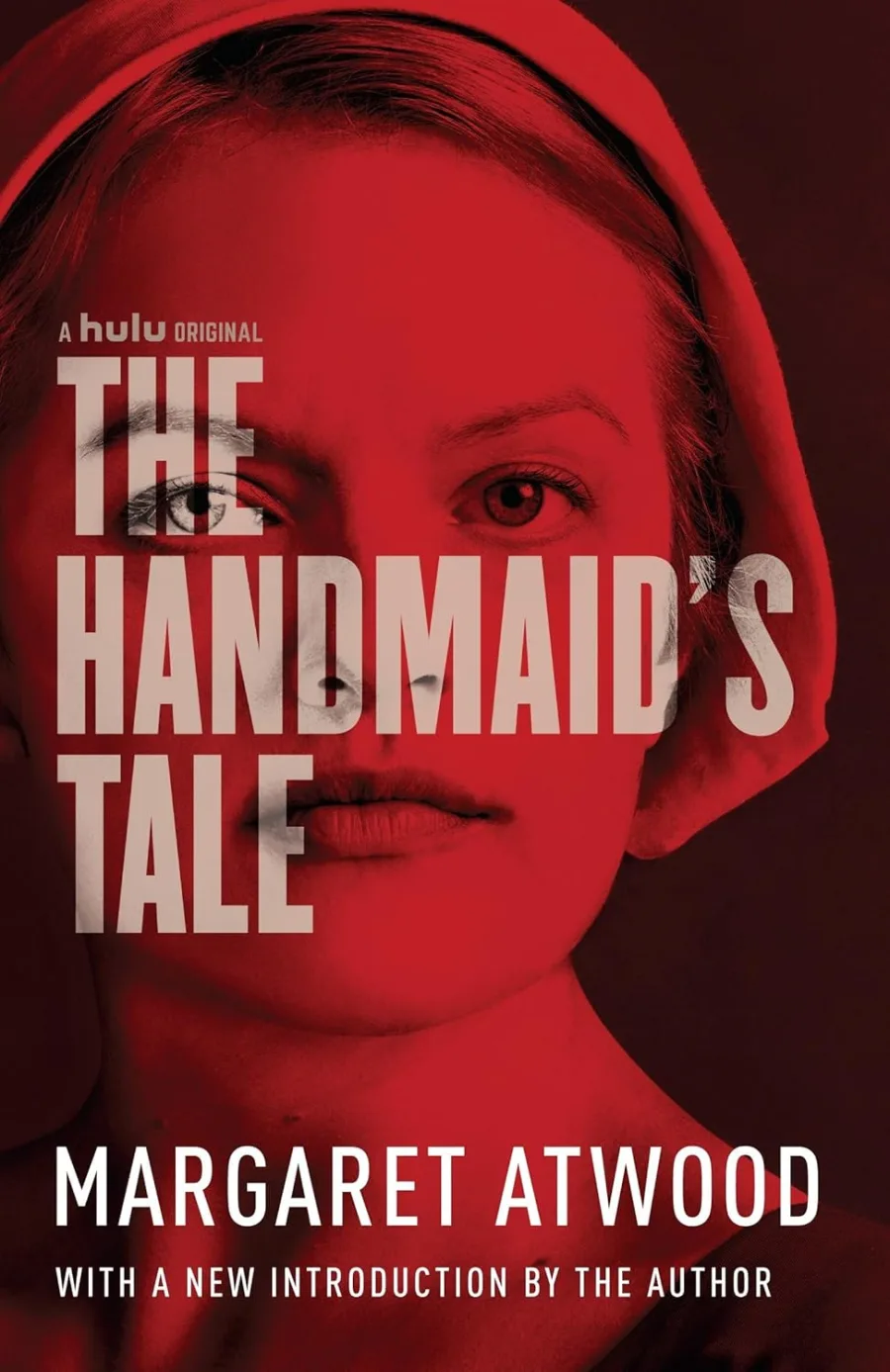
Download Cover Image
Do you want to download the full cover image for The Handmaid's Tale (Movie Tie-in)?