
Rich Dad Poor Dad: What the Rich Teach Their Kids About Money That the Poor and Middle Class Do Not!
Mass Market Paperback
• 336 Pages
• USD 9.99
• English
• 9781612681139
No ratings yet
| Publisher | Plata Publishing |
|---|---|
| ISBN13 | 9781612681139 |
| ASIN/SKU | 1612681131 |
| Book Format | Mass Market Paperback |
| Language | English |
| Pages | 336 |
| List Price | USD 9.99 |
| Publishing Date | 05/04/2022 |
| Dimensions | 4.1 x 0.7 x 6.6 inches |
| Weight | 2.31 pounds |
| Book Code | BD00055589 |
Buy this Book
Amazon Stores
Ebook Stores
Other Stores
Discover Rich Dad Poor Dad: What the Rich Teach Their Kids About Money That the Poor and Middle Class Do Not! by Robert T. Kiyosaki. This book is published by Plata Publishing in Mass Market Paperback format, ISBN 9781612681139, ASIN 1612681131, under Business and Money, Personal Finance.
Book Description
April of 2022 marks a 25-year milestone for the personal finance classic Rich Dad Poor Dad that still ranks as the #1 Personal Finance book of all time. And although 25 years have passed since Rich Dad Poor Dad was first published, readers will find that very little in the book itself has changed — and for good reason. While so much in our world is changing a high speed, the lessons about money and the principles of Rich Dad Poor Dad haven’t changed. Today, as money continues to play a key role in our daily lives, the messages in Robert Kiyosaki’s international bestseller are more timely and more important than ever.
Milestones
While there is a milestone to commemorate — and a new section in the book on Why Milestones Are Important — preserving the integrity of the original content is testimony to the fact that this book has truly stood the test of time. The sidebars throughout the book (that were updated for the 20-year anniversary edition) have been updated again, but the core principles that parents and grandparents — those who embraced Robert’s story and messages 25 years ago — are sharing them with new generations who have found that its timeless wisdom and no-nonsense lessons can be applied to anyone’s life and their vision for a future that includes taking control of their finances.
People of all cultures and countries celebrate milestones. We use them to measure time, mark progress, reflect on the lessons we’ve learned, and celebrate accomplishments… and they give meaning to our life’s journey. They are a way that we integrate past, present, and future… looking back at where we started, where we are today… and the promise of all that the future can hold.
In the quarter century that has passed since Rich Dad Poor Dad was first published — 25 years since April 8, 1997 — so many things in our world have changed. But the one thing that has not changed is the pressing need for and the power of financial education. Money is still a mainstay of our lives, like it or not, and technology has brought both speed and innovations to the world of money. In an ever-changing world, we can all still get smarter when it comes to money… and learn as much as we can to secure our future.
Still the One… #1
Today Rich Dad Poor Dad consistently ranks among bestsellers around the world in the categories of Personal Finance, Parenting, and Investing, has been translated into 38 languages, and has sold more than 40 million copies worldwide.
Rich Dad Poor Dad is Robert's story of growing up with two dads — his real father and the father of his best friend, his rich dad — and the ways in which both men shaped his thoughts about money and investing. The book explodes the myth that you need to earn a high income to be rich and explains the difference between working for money and having your money work for you.
Milestones
While there is a milestone to commemorate — and a new section in the book on Why Milestones Are Important — preserving the integrity of the original content is testimony to the fact that this book has truly stood the test of time. The sidebars throughout the book (that were updated for the 20-year anniversary edition) have been updated again, but the core principles that parents and grandparents — those who embraced Robert’s story and messages 25 years ago — are sharing them with new generations who have found that its timeless wisdom and no-nonsense lessons can be applied to anyone’s life and their vision for a future that includes taking control of their finances.
People of all cultures and countries celebrate milestones. We use them to measure time, mark progress, reflect on the lessons we’ve learned, and celebrate accomplishments… and they give meaning to our life’s journey. They are a way that we integrate past, present, and future… looking back at where we started, where we are today… and the promise of all that the future can hold.
In the quarter century that has passed since Rich Dad Poor Dad was first published — 25 years since April 8, 1997 — so many things in our world have changed. But the one thing that has not changed is the pressing need for and the power of financial education. Money is still a mainstay of our lives, like it or not, and technology has brought both speed and innovations to the world of money. In an ever-changing world, we can all still get smarter when it comes to money… and learn as much as we can to secure our future.
Still the One… #1
Today Rich Dad Poor Dad consistently ranks among bestsellers around the world in the categories of Personal Finance, Parenting, and Investing, has been translated into 38 languages, and has sold more than 40 million copies worldwide.
Rich Dad Poor Dad is Robert's story of growing up with two dads — his real father and the father of his best friend, his rich dad — and the ways in which both men shaped his thoughts about money and investing. The book explodes the myth that you need to earn a high income to be rich and explains the difference between working for money and having your money work for you.
Author Biography
Best known as the author of Rich Dad Poor Dad―the #1 personal finance book of all time―Robert Kiyosaki has challenged and changed the way tens of millions of people around the world think about money. He is an entrepreneur, educator, and investor who believes that each of us has the power to makes changes in our lives, take control of our financial future, and live the rich life we deserve. With perspectives on money and investing that often contradict conventional wisdom, Robert has earned an international reputation for straight talk, irreverence, and courage and has become a passionate and outspoken advocate for financial education. Robert's most recent books―Why the Rich Are Getting Richer and More Important Than Money―were published in the spring of last year to mark the 20th Anniversary of the 1997 release of Rich Dad Poor Dad. That book and its messages, viewed around the world as a classic in the personal finance arena, have stood the test of time. Why the Rich Are Getting Richer, released two decades after the international blockbuster bestseller Rich Dad Poor Dad, is positioned as Rich Dad Graduate School. Robert has also co-authored two books with Donald Trump, prior to his successful bid for the White House and election as President of the United States.
Editorial Reviews
Editorial Reviews will be added soon…
Book Summary
Rich Dad Poor Dad by Robert T. Kiyosaki is a personal finance book built around the contrast between two father figures in the author’s life: his own biological father, whom he calls “Poor Dad,” and his best friend’s father, whom he calls “Rich Dad.” Through stories about money, work, and life choices, Kiyosaki explains how each man shaped a very different way of thinking about wealth, education, and success. The central idea of the book is that many people work hard their whole lives, earn good salaries, and still remain financially insecure because they never learn how money truly works. Kiyosaki uses his two father figures to show the difference between earning money through labor and building wealth through assets, financial literacy, and smart decisions.
Poor Dad, in Kiyosaki’s telling, was highly educated, respected the traditional path of school, stable employment, and job security, and believed that working hard, getting good grades, and finding a safe career would lead to success. He emphasized caution, stability, and loyalty to employers. Rich Dad, by contrast, had little formal education but a sharp understanding of money, business, and investing. He believed in learning to make money work for you rather than spending your life working for money. He taught that financial freedom comes from owning income-producing assets, understanding accounting and taxes, and developing the confidence to see opportunities where others only see risk. The book is essentially Kiyosaki’s reflection on which mindset better prepared him for real-world success.
One of the strongest messages in the book is that schools do not teach enough about money. Kiyosaki argues that most people are trained to become employees, not investors or business owners. They learn how to follow rules, get grades, and seek approval, but not how to manage cash flow, understand assets and liabilities, or build wealth over time. According to his experience, this creates a pattern in which people chase paychecks, buy things they cannot afford, and become trapped in a cycle of earning and spending without ever building financial independence. He uses this point to encourage readers to become financially educated rather than simply academically successful.
A key concept in the book is the difference between assets and liabilities. Kiyosaki defines assets as things that put money in your pocket, such as investments or income-generating businesses, while liabilities take money out of your pocket, even if they appear valuable on the surface. This idea is one of the foundation stones of the book. He believes many people mistakenly buy liabilities and call them assets, especially when they purchase homes, cars, or consumer goods that create ongoing expenses rather than income. The lesson he tries to drive home is that wealth is not measured by income alone, but by the ability to acquire and hold assets that generate more money over time.
Kiyosaki also discusses the importance of courage and learning through action. Rich Dad does not simply hand him answers. Instead, he teaches through challenges, tasks, and sometimes deliberate frustration, forcing Kiyosaki to think for himself. This style of teaching is important because it reflects the book’s larger message that financial intelligence grows through experience, observation, and problem-solving, not just theory. Rich Dad tells him that fear, laziness, and ignorance are major obstacles to wealth. Many people want financial security, but they avoid learning about money because it seems complicated or uncomfortable. Kiyosaki argues that if people want different results, they must first be willing to develop different habits and a different mindset.
Another major theme is the idea that working for money alone is not enough. Kiyosaki does not say that work is bad, but he insists that most people depend too heavily on wages and salary. He encourages readers to think beyond the next paycheck and ask how their money can be used to create future opportunities. That may mean investing, starting a business, or building systems that generate income without requiring constant labor. In his view, the wealthy often focus on acquiring and managing assets, while the poor and middle class focus on earning and spending. This difference, he says, is less about luck and more about knowledge, habits, and perspective.
The book also spends time on the emotional side of money. Kiyosaki suggests that fear, greed, and insecurity can control people more than they realize. Many people stay in jobs they dislike because they fear losing a steady income. Others spend money to impress others or to feel successful, even when doing so weakens their financial position. Rich Dad teaches him that emotional discipline is just as important as technical knowledge. A person who cannot control fear or the desire for approval will often make poor financial choices. Building wealth requires patience, confidence, and the ability to think long-term rather than reacting impulsively to pressure.
Kiyosaki’s storytelling style makes the book feel approachable and motivational. He does not present himself as someone who had all the answers from the start. Instead, he shows how he was confused by the conflicting lessons from the two fathers and had to decide which worldview made more sense. That conflict gives the book its energy. Poor Dad represents traditional security and formal success, while Rich Dad represents entrepreneurial thinking, financial education, and independence. Kiyosaki does not portray one as evil and the other as perfect, but he clearly believes that Rich Dad’s approach offered more practical freedom.
By the end of the book, the reader is left with a simple but powerful message: if you want to change your financial life, you must change how you think about money. Kiyosaki urges people to read, learn, observe, and take control of their finances rather than leaving those decisions entirely to employers, banks, or advisors. He emphasizes that wealth is not only about how much money you make, but about how much money you keep, how wisely you use it, and whether your money continues working after you stop. The book’s lasting appeal comes from that direct, easy-to-understand message. It challenges readers to question common assumptions about education, job security, and success, and to start thinking like owners instead of employees.
Rich Dad Poor Dad has become popular because it speaks in simple terms about ideas that many people feel but never clearly articulate. It tells readers that financial freedom is possible, but not automatic. It requires learning, discipline, and a willingness to see money differently. Even when readers do not agree with every idea in the book, its core lesson remains memorable: the path to wealth begins with financial education, and the sooner a person learns that lesson, the more options they are likely to have in life.
Poor Dad, in Kiyosaki’s telling, was highly educated, respected the traditional path of school, stable employment, and job security, and believed that working hard, getting good grades, and finding a safe career would lead to success. He emphasized caution, stability, and loyalty to employers. Rich Dad, by contrast, had little formal education but a sharp understanding of money, business, and investing. He believed in learning to make money work for you rather than spending your life working for money. He taught that financial freedom comes from owning income-producing assets, understanding accounting and taxes, and developing the confidence to see opportunities where others only see risk. The book is essentially Kiyosaki’s reflection on which mindset better prepared him for real-world success.
One of the strongest messages in the book is that schools do not teach enough about money. Kiyosaki argues that most people are trained to become employees, not investors or business owners. They learn how to follow rules, get grades, and seek approval, but not how to manage cash flow, understand assets and liabilities, or build wealth over time. According to his experience, this creates a pattern in which people chase paychecks, buy things they cannot afford, and become trapped in a cycle of earning and spending without ever building financial independence. He uses this point to encourage readers to become financially educated rather than simply academically successful.
A key concept in the book is the difference between assets and liabilities. Kiyosaki defines assets as things that put money in your pocket, such as investments or income-generating businesses, while liabilities take money out of your pocket, even if they appear valuable on the surface. This idea is one of the foundation stones of the book. He believes many people mistakenly buy liabilities and call them assets, especially when they purchase homes, cars, or consumer goods that create ongoing expenses rather than income. The lesson he tries to drive home is that wealth is not measured by income alone, but by the ability to acquire and hold assets that generate more money over time.
Kiyosaki also discusses the importance of courage and learning through action. Rich Dad does not simply hand him answers. Instead, he teaches through challenges, tasks, and sometimes deliberate frustration, forcing Kiyosaki to think for himself. This style of teaching is important because it reflects the book’s larger message that financial intelligence grows through experience, observation, and problem-solving, not just theory. Rich Dad tells him that fear, laziness, and ignorance are major obstacles to wealth. Many people want financial security, but they avoid learning about money because it seems complicated or uncomfortable. Kiyosaki argues that if people want different results, they must first be willing to develop different habits and a different mindset.
Another major theme is the idea that working for money alone is not enough. Kiyosaki does not say that work is bad, but he insists that most people depend too heavily on wages and salary. He encourages readers to think beyond the next paycheck and ask how their money can be used to create future opportunities. That may mean investing, starting a business, or building systems that generate income without requiring constant labor. In his view, the wealthy often focus on acquiring and managing assets, while the poor and middle class focus on earning and spending. This difference, he says, is less about luck and more about knowledge, habits, and perspective.
The book also spends time on the emotional side of money. Kiyosaki suggests that fear, greed, and insecurity can control people more than they realize. Many people stay in jobs they dislike because they fear losing a steady income. Others spend money to impress others or to feel successful, even when doing so weakens their financial position. Rich Dad teaches him that emotional discipline is just as important as technical knowledge. A person who cannot control fear or the desire for approval will often make poor financial choices. Building wealth requires patience, confidence, and the ability to think long-term rather than reacting impulsively to pressure.
Kiyosaki’s storytelling style makes the book feel approachable and motivational. He does not present himself as someone who had all the answers from the start. Instead, he shows how he was confused by the conflicting lessons from the two fathers and had to decide which worldview made more sense. That conflict gives the book its energy. Poor Dad represents traditional security and formal success, while Rich Dad represents entrepreneurial thinking, financial education, and independence. Kiyosaki does not portray one as evil and the other as perfect, but he clearly believes that Rich Dad’s approach offered more practical freedom.
By the end of the book, the reader is left with a simple but powerful message: if you want to change your financial life, you must change how you think about money. Kiyosaki urges people to read, learn, observe, and take control of their finances rather than leaving those decisions entirely to employers, banks, or advisors. He emphasizes that wealth is not only about how much money you make, but about how much money you keep, how wisely you use it, and whether your money continues working after you stop. The book’s lasting appeal comes from that direct, easy-to-understand message. It challenges readers to question common assumptions about education, job security, and success, and to start thinking like owners instead of employees.
Rich Dad Poor Dad has become popular because it speaks in simple terms about ideas that many people feel but never clearly articulate. It tells readers that financial freedom is possible, but not automatic. It requires learning, discipline, and a willingness to see money differently. Even when readers do not agree with every idea in the book, its core lesson remains memorable: the path to wealth begins with financial education, and the sooner a person learns that lesson, the more options they are likely to have in life.
Sample Chapters
Sample Chapters will be added soon…
Reader Reviews
No reviews yet.
Rich Dad Poor Dad: What the Rich Teach Their Kids About Money That the Poor and Middle Class Do Not!
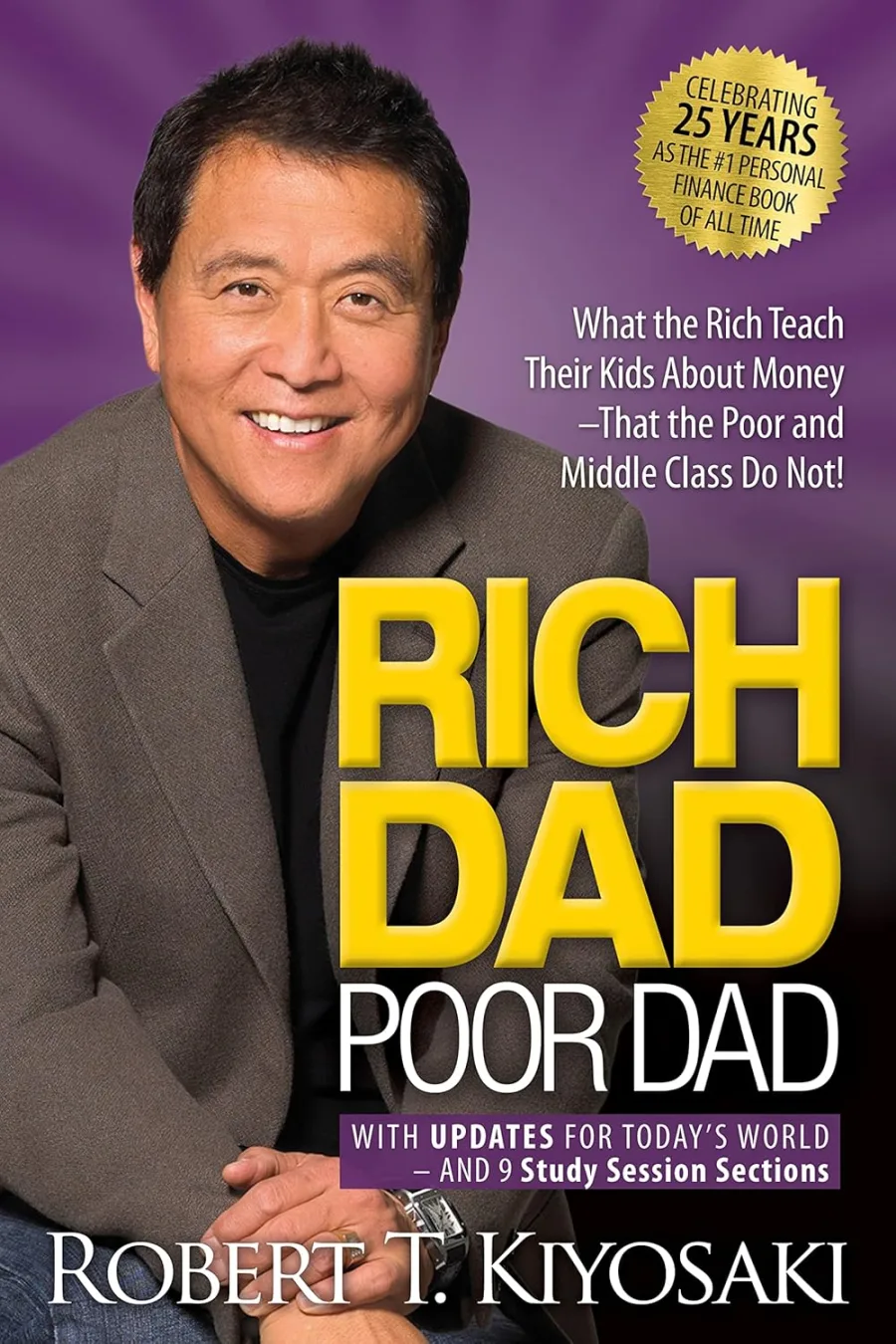
Download Cover Image
Do you want to download the full cover image for Rich Dad Poor Dad: What the Rich Teach Their Kids About Money That the Poor and Middle Class Do Not!?