
Can't Hurt Me: Master Your Mind and Defy the Odds
Paperback
• 364 Pages
• USD 24.99
• English
• 9781544512273
No ratings yet
| Publisher | Lioncrest Publishing |
|---|---|
| ISBN13 | 9781544512273 |
| ASIN/SKU | 1544512279 |
| Book Format | Paperback |
| Language | English |
| Pages | 364 |
| List Price | USD 24.99 |
| Publishing Date | 10/12/2018 |
| Dimensions | 6 x 0.91 x 9 inches |
| Weight | 1.2 pounds |
| Book Code | BD00055599 |
Buy this Book
Amazon Stores
Ebook Stores
Other Stores
Discover Can't Hurt Me: Master Your Mind and Defy the Odds by David Goggins. This book is published by Lioncrest Publishing in Paperback format, ISBN 9781544512273, ASIN 1544512279, under Self-Help, Success Self-Help, Motivational Self-Help.
Book Description
New York Times Best Seller
Over 7 million copies sold
For David Goggins, childhood was a nightmare -- poverty, prejudice, and physical abuse colored his days and haunted his nights. But through self-discipline, mental toughness, and hard work, Goggins transformed himself from a depressed, overweight young man with no future into a U.S. Armed Forces icon and one of the world's top endurance athletes. The only man in history to complete elite training as a Navy SEAL, Army Ranger, and Air Force Tactical Air Controller, he went on to set records in numerous endurance events, inspiring Outside magazine to name him "The Fittest (Real) Man in America."
In Can't Hurt Me, he shares his astonishing life story and reveals that most of us tap into only 40% of our capabilities. Goggins calls this The 40% Rule, and his story illuminates a path that anyone can follow to push past pain, demolish fear, and reach their full potential.
Over 7 million copies sold
For David Goggins, childhood was a nightmare -- poverty, prejudice, and physical abuse colored his days and haunted his nights. But through self-discipline, mental toughness, and hard work, Goggins transformed himself from a depressed, overweight young man with no future into a U.S. Armed Forces icon and one of the world's top endurance athletes. The only man in history to complete elite training as a Navy SEAL, Army Ranger, and Air Force Tactical Air Controller, he went on to set records in numerous endurance events, inspiring Outside magazine to name him "The Fittest (Real) Man in America."
In Can't Hurt Me, he shares his astonishing life story and reveals that most of us tap into only 40% of our capabilities. Goggins calls this The 40% Rule, and his story illuminates a path that anyone can follow to push past pain, demolish fear, and reach their full potential.
Author Biography
David Goggins is a Retired Navy SEAL and the only member of the U.S. Armed Forces ever to complete SEAL training, U.S. Army Ranger School, and Air Force Tactical Air Controller training. Goggins has competed in more than sixty ultra-marathons, triathlons, and ultra-triathlons, setting new course records and regularly placing in the top five. A former Guinness World Record holder for completing 4,030 pull-ups in seventeen hours, he's a much-sought-after public speaker who's shared his story with the staffs of Fortune 500 companies, professional sports teams, and hundreds of thousands of students across the country.
Editorial Reviews
"David Goggins is a being of pure will and inspiration. Just listening to this guy talk makes you want to run up a mountain. I firmly believe people like him can change the course of the world just by inspiring us to push harder and dig deeper in everything we do. His goal to be 'uncommon amongst uncommon people' is something we can all use to propel ourselves to fulfill our true potential. I'm a better man having met him."
--Joe Rogan, Standup Comedian and Host of the Joe Rogan Experience Podcast "David Goggins lives out every goal, every dream no matter what. PERIOD. He's unstoppable. There's no limit to him because he doesn't live in a comfort zone. His mental and physical capacity are equal. Goggins proves that your body can handle anything if you let your mind keep up. There's no way to stop something or someone that doesn't understand the concept of being beat."
--Marcus Luttrell, Retired Navy SEAL, Author of New York Times Best Seller Lone Survivor
"Modern neuroscience is teaching us that the path to courage and success arrives through embracing pain and fear, not by avoiding them. If ever there was a real-life example of this, it is the story of David Goggins. In his unrelenting pursuit to self-conquer, Goggins taught himself how to tap into that elusive holy grail of human existence: the ability to rewire one's own brain in order to continually do better and actually become better, regardless of feelings, external conditions, or motivational state. Can't Hurt Me is the remarkable description of that journey and the capacity to leverage and better the mind. More importantly, it also teaches you how."
--Andrew D. Huberman, PhD, Professor of Neurobiology, Stanford University School of Medicine "David Goggins throws the door open on pain, evil, darkness, the worst and yes, the best of humanity, and the strength of the human soul...and that's just in chapter one. If you are looking for a book that will heal, stretch, inspire, and dig into the corners of what it takes to persevere and overcome in a messed-up world, this is your book."
--Taya Kyle, Widow of American Sniper Chris Kyle, Author of New York Times Best Seller American Wife "By the time you finish David Goggins's new book, you'll have kicked your victim mentality in the butt. Where you go from there is entirely up to you--as Goggins makes clear in this entertaining and poignant memoir cum inspirational how-to. As the man with a hole in his heart tells you, there are no excuses in life, only reasons to try harder."
--Jim DeFelice, Author of American Sniper "David Goggins's book is not the first about overcoming severe hardships to achieve success, but it is certainly one of the most compelling. His story of beating the odds, of achieving athletic greatness, of serving his country and his charities, and of mastering his own destiny will inspire all of us to reach a little higher and give a little more. 'I will never quit' is a tenet of the Navy SEAL ethos, and one that David Goggins ap
--Joe Rogan, Standup Comedian and Host of the Joe Rogan Experience Podcast "David Goggins lives out every goal, every dream no matter what. PERIOD. He's unstoppable. There's no limit to him because he doesn't live in a comfort zone. His mental and physical capacity are equal. Goggins proves that your body can handle anything if you let your mind keep up. There's no way to stop something or someone that doesn't understand the concept of being beat."
--Marcus Luttrell, Retired Navy SEAL, Author of New York Times Best Seller Lone Survivor
"Modern neuroscience is teaching us that the path to courage and success arrives through embracing pain and fear, not by avoiding them. If ever there was a real-life example of this, it is the story of David Goggins. In his unrelenting pursuit to self-conquer, Goggins taught himself how to tap into that elusive holy grail of human existence: the ability to rewire one's own brain in order to continually do better and actually become better, regardless of feelings, external conditions, or motivational state. Can't Hurt Me is the remarkable description of that journey and the capacity to leverage and better the mind. More importantly, it also teaches you how."
--Andrew D. Huberman, PhD, Professor of Neurobiology, Stanford University School of Medicine "David Goggins throws the door open on pain, evil, darkness, the worst and yes, the best of humanity, and the strength of the human soul...and that's just in chapter one. If you are looking for a book that will heal, stretch, inspire, and dig into the corners of what it takes to persevere and overcome in a messed-up world, this is your book."
--Taya Kyle, Widow of American Sniper Chris Kyle, Author of New York Times Best Seller American Wife "By the time you finish David Goggins's new book, you'll have kicked your victim mentality in the butt. Where you go from there is entirely up to you--as Goggins makes clear in this entertaining and poignant memoir cum inspirational how-to. As the man with a hole in his heart tells you, there are no excuses in life, only reasons to try harder."
--Jim DeFelice, Author of American Sniper "David Goggins's book is not the first about overcoming severe hardships to achieve success, but it is certainly one of the most compelling. His story of beating the odds, of achieving athletic greatness, of serving his country and his charities, and of mastering his own destiny will inspire all of us to reach a little higher and give a little more. 'I will never quit' is a tenet of the Navy SEAL ethos, and one that David Goggins ap
Book Summary
Can’t Hurt Me: Master Your Mind and Defy the Odds by David Goggins is an intense, brutally honest memoir about turning extreme hardship into extraordinary mental and physical strength. Goggins tells the story of his life from a childhood filled with abuse, racism, fear, and poverty to becoming a Navy SEAL, ultra-endurance athlete, and symbol of relentless discipline. He frames his journey around a central idea: most people use only a small portion of their potential because they accept comfort, excuses, and self-doubt as normal. Through vivid, sometimes shocking stories, he shows how he pushed himself far beyond what seemed possible, using pain, failure, and fear as tools rather than barriers. The book is both a personal story and a kind of manual for building what he calls an “uncommon mind,” and he delivers it in a direct, no-nonsense voice that challenges the reader at every turn.
Goggins begins with his childhood in Buffalo, New York, where he grew up in an environment shaped by his violent, controlling father and a climate of constant fear. He describes nights spent working in his father’s skating rink, enduring physical abuse, and living with a mother who was trying to protect him while struggling with her own trauma. At school and in the neighborhood, Goggins faced racism and bullying, which deepened his sense of worthlessness and isolation. As a young boy, he felt small and powerless, often escaping into fantasy and daydreams rather than confronting reality. These early chapters make clear that he did not start life as a tough or confident person; he started broken, scared, and full of self-hate. He also struggled with learning difficulties and anxiety, cheating to get through tests and lying to himself about who he was, which later became a key pattern he would have to break.
One turning point comes when he sees a television program about Navy SEALs and is struck by their toughness and discipline. At that time, he is overweight—around 300 pounds—working a dead-end job, and feeling as though his life is going nowhere. The idea of becoming a SEAL is absurd given his condition, but it lodges in his mind and refuses to leave. Goggins decides that if he wants to change his life, he has to stop lying to himself and embrace discomfort. He embarks on a radical transformation, forcing himself through grueling workouts, extreme dieting, and a complete shift in attitude. He embraces the pain of the process, accepting that suffering is the path to growth. His journey to Navy SEAL training—BUD/S—is not simple or smooth; he fails, gets injured, and has to start over multiple times, but he keeps coming back, driven by a refusal to quit.
The sections on SEAL training and BUD/S are some of the most intense in the book. Goggins describes Hell Week in graphic detail: days without sleep, cold ocean water, heavy boats carried on bruised shoulders, endless push-ups and runs, and instructors trying to break candidates mentally and physically. He recounts how he watched stronger, seemingly more prepared men quit, and realized that pure physical strength was not enough. What mattered most was mental toughness—the ability to keep going long after comfort, motivation, and hope had disappeared. He came up with the idea of the “40% Rule,” the notion that when you think you’ve reached your limit, you’ve only used about 40 percent of your capacity. By pushing past that perceived limit, he believed anyone could access deeper reserves of strength. He shares moments when his body was wrecked, his feet were bleeding, and his mind was screaming at him to stop, but he kept moving by narrowing his focus to the next step, the next minute, the next evolution.
After becoming a SEAL, Goggins continued to test himself through extreme endurance challenges. He ran ultra-marathons, completed long-distance races, and took on feats that most people would never even attempt. He describes running on fractured feet, competing with serious injuries, and finishing races in states of near-collapse. These stories are not told as glamorous achievements; he emphasizes how miserable and painful many of these experiences were. Yet he chose them deliberately, treating them as laboratories for building resilience. The more he suffered on purpose, the more he toughened his mind. He believed that deliberately choosing difficult tasks—whether physical, mental, or emotional—was the key to becoming “uncommon among uncommon people.” He did not aim to be just better than average; he wanted to stand out even among elite performers by embracing hardship that others would avoid.
Alongside the physical stories, Goggins shares the mental tools he developed to survive and thrive. One of these is the idea of the “Accountability Mirror,” where he would stand in front of his mirror and write brutally honest notes about his weaknesses and failures, then commit to specific actions to change them. He refused to soften the truth with gentle language; instead, he spoke to himself in direct, sometimes harsh terms, stripping away excuses. Another tool is his “cookie jar,” a mental storehouse of past successes and victories. When he felt exhausted or close to quitting, he would reach into this “cookie jar” and remember times he had overcome incredible odds, using those memories to fuel his belief that he could keep going. He also talked about creating a “calloused mind,” similar to calloused hands from hard work; by repeatedly facing discomfort, he believed the mind could become less reactive to pain, fear, and doubt.
Throughout the book, Goggins admits that his approach is extreme and not always healthy in a conventional sense. He suffered serious injuries, heart issues, and lifelong physical consequences from pushing himself so relentlessly. He does not hide the costs. However, he argues that for him, the greater danger was living a small, safe life filled with regrets and lies. He insists that most people let themselves off the hook too easily, choosing comfort over potential. His message is not that everyone should run ultra-marathons or join the military, but that everyone can raise their personal standards and stop settling for less than they are capable of. He encourages readers to identify their weaknesses, confront their fears, and commit to daily actions that build discipline.
The structure of Can’t Hurt Me reinforces this message, as each chapter ends with a challenge to the reader. These challenges ask you to reflect on your own life—your excuses, your habits, your goals—and then take specific steps to change. For example, he might ask you to write down everything that’s holding you back, or to schedule something difficult every day, or to track your efforts and hold yourself publicly accountable. The tone of these challenges is demanding but not cruel; Goggins wants the reader to feel uncomfortable enough to move, not ashamed into paralysis. The overall narrative is less polished than many traditional memoirs, but it feels raw and genuine, like listening to someone who has lived at the edge of human endurance and is determined to shake you out of complacency.
By the end of the book, Goggins circles back to the central idea that pain and hardship, while unavoidable, can be powerful teachers. His life—from an abused boy with learning problems and crippling self-doubt to a record-setting endurance athlete and respected military veteran—serves as a dramatic example of what can happen when someone refuses to accept the limits they were handed. Can’t Hurt Me is not about perfection or hero worship; it is about the messy, often brutal process of choosing growth over comfort again and again. Goggins wants readers to see that while they may never choose to live as extremely as he did, they can still transform their minds, raise their standards, and discover how much more they are capable of when they stop backing down from difficulty.
Goggins begins with his childhood in Buffalo, New York, where he grew up in an environment shaped by his violent, controlling father and a climate of constant fear. He describes nights spent working in his father’s skating rink, enduring physical abuse, and living with a mother who was trying to protect him while struggling with her own trauma. At school and in the neighborhood, Goggins faced racism and bullying, which deepened his sense of worthlessness and isolation. As a young boy, he felt small and powerless, often escaping into fantasy and daydreams rather than confronting reality. These early chapters make clear that he did not start life as a tough or confident person; he started broken, scared, and full of self-hate. He also struggled with learning difficulties and anxiety, cheating to get through tests and lying to himself about who he was, which later became a key pattern he would have to break.
One turning point comes when he sees a television program about Navy SEALs and is struck by their toughness and discipline. At that time, he is overweight—around 300 pounds—working a dead-end job, and feeling as though his life is going nowhere. The idea of becoming a SEAL is absurd given his condition, but it lodges in his mind and refuses to leave. Goggins decides that if he wants to change his life, he has to stop lying to himself and embrace discomfort. He embarks on a radical transformation, forcing himself through grueling workouts, extreme dieting, and a complete shift in attitude. He embraces the pain of the process, accepting that suffering is the path to growth. His journey to Navy SEAL training—BUD/S—is not simple or smooth; he fails, gets injured, and has to start over multiple times, but he keeps coming back, driven by a refusal to quit.
The sections on SEAL training and BUD/S are some of the most intense in the book. Goggins describes Hell Week in graphic detail: days without sleep, cold ocean water, heavy boats carried on bruised shoulders, endless push-ups and runs, and instructors trying to break candidates mentally and physically. He recounts how he watched stronger, seemingly more prepared men quit, and realized that pure physical strength was not enough. What mattered most was mental toughness—the ability to keep going long after comfort, motivation, and hope had disappeared. He came up with the idea of the “40% Rule,” the notion that when you think you’ve reached your limit, you’ve only used about 40 percent of your capacity. By pushing past that perceived limit, he believed anyone could access deeper reserves of strength. He shares moments when his body was wrecked, his feet were bleeding, and his mind was screaming at him to stop, but he kept moving by narrowing his focus to the next step, the next minute, the next evolution.
After becoming a SEAL, Goggins continued to test himself through extreme endurance challenges. He ran ultra-marathons, completed long-distance races, and took on feats that most people would never even attempt. He describes running on fractured feet, competing with serious injuries, and finishing races in states of near-collapse. These stories are not told as glamorous achievements; he emphasizes how miserable and painful many of these experiences were. Yet he chose them deliberately, treating them as laboratories for building resilience. The more he suffered on purpose, the more he toughened his mind. He believed that deliberately choosing difficult tasks—whether physical, mental, or emotional—was the key to becoming “uncommon among uncommon people.” He did not aim to be just better than average; he wanted to stand out even among elite performers by embracing hardship that others would avoid.
Alongside the physical stories, Goggins shares the mental tools he developed to survive and thrive. One of these is the idea of the “Accountability Mirror,” where he would stand in front of his mirror and write brutally honest notes about his weaknesses and failures, then commit to specific actions to change them. He refused to soften the truth with gentle language; instead, he spoke to himself in direct, sometimes harsh terms, stripping away excuses. Another tool is his “cookie jar,” a mental storehouse of past successes and victories. When he felt exhausted or close to quitting, he would reach into this “cookie jar” and remember times he had overcome incredible odds, using those memories to fuel his belief that he could keep going. He also talked about creating a “calloused mind,” similar to calloused hands from hard work; by repeatedly facing discomfort, he believed the mind could become less reactive to pain, fear, and doubt.
Throughout the book, Goggins admits that his approach is extreme and not always healthy in a conventional sense. He suffered serious injuries, heart issues, and lifelong physical consequences from pushing himself so relentlessly. He does not hide the costs. However, he argues that for him, the greater danger was living a small, safe life filled with regrets and lies. He insists that most people let themselves off the hook too easily, choosing comfort over potential. His message is not that everyone should run ultra-marathons or join the military, but that everyone can raise their personal standards and stop settling for less than they are capable of. He encourages readers to identify their weaknesses, confront their fears, and commit to daily actions that build discipline.
The structure of Can’t Hurt Me reinforces this message, as each chapter ends with a challenge to the reader. These challenges ask you to reflect on your own life—your excuses, your habits, your goals—and then take specific steps to change. For example, he might ask you to write down everything that’s holding you back, or to schedule something difficult every day, or to track your efforts and hold yourself publicly accountable. The tone of these challenges is demanding but not cruel; Goggins wants the reader to feel uncomfortable enough to move, not ashamed into paralysis. The overall narrative is less polished than many traditional memoirs, but it feels raw and genuine, like listening to someone who has lived at the edge of human endurance and is determined to shake you out of complacency.
By the end of the book, Goggins circles back to the central idea that pain and hardship, while unavoidable, can be powerful teachers. His life—from an abused boy with learning problems and crippling self-doubt to a record-setting endurance athlete and respected military veteran—serves as a dramatic example of what can happen when someone refuses to accept the limits they were handed. Can’t Hurt Me is not about perfection or hero worship; it is about the messy, often brutal process of choosing growth over comfort again and again. Goggins wants readers to see that while they may never choose to live as extremely as he did, they can still transform their minds, raise their standards, and discover how much more they are capable of when they stop backing down from difficulty.
Sample Chapters
Sample Chapters will be added soon…
Reader Reviews
No reviews yet.
Can't Hurt Me: Master Your Mind and Defy the Odds
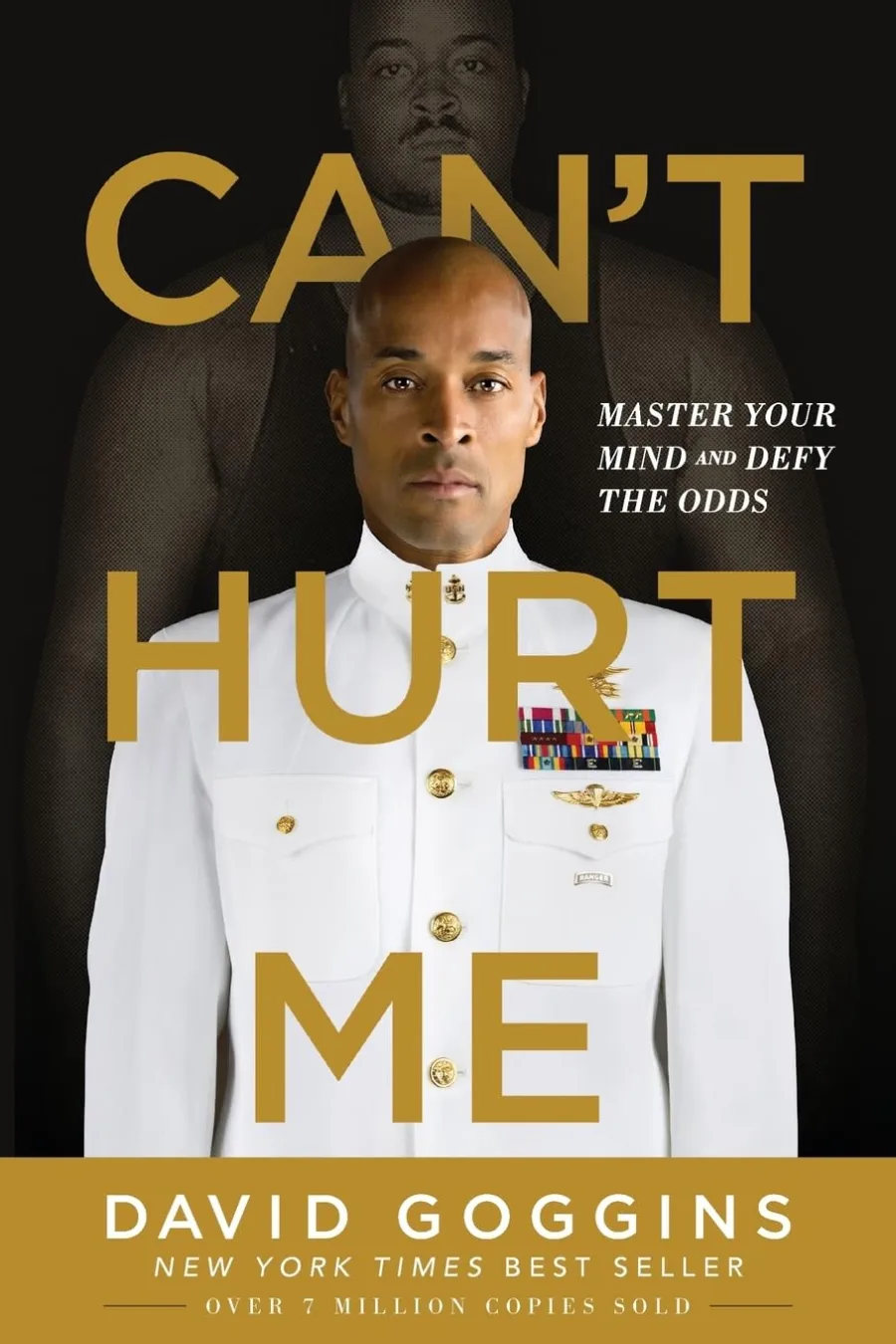
Download Cover Image
Do you want to download the full cover image for Can't Hurt Me: Master Your Mind and Defy the Odds?