
Don't Let Her Stay: An unputdownable psychological thriller with a breathtaking twist
Paperback
• 288 Pages
• USD 11.69
• English
• 9798374567144
No ratings yet
| Publisher | Independently published |
|---|---|
| ISBN13 | 9798374567144 |
| ASIN/SKU | B0BV1SS8X3 |
| Book Format | Paperback |
| Language | English |
| Pages | 288 |
| List Price | USD 11.69 |
| Publishing Date | 06/02/2023 |
| Dimensions | 5 x 0.72 x 8 inches |
| Weight | 11.4 ounces |
| Book Code | BD00055601 |
Buy this Book
Amazon Stores
Ebook Stores
Other Stores
Discover Don't Let Her Stay: An unputdownable psychological thriller with a breathtaking twist by Nicola Sanders. This book is published by Independently published in Paperback format, ISBN 9798374567144, ASIN B0BV1SS8X3, under Literature and Fiction, Psychological Fiction, Suspense Thrillers.
Book Description
It seemed only five minutes ago that Richard went to the station to pick up Chloe, and now they were here. I was so excited. Finally, I would meet my stepdaughter for the first time, and Chloe would meet her baby sister Evie.
Richard was over the moon that his daughter wanted to come back into his life. ‘You’ll love her,’ he'd said, beaming. ‘She’s very sweet. She just had a wobble about me marrying again, but that’s over now.’
Well, she was going to find out she had nothing to worry about. I’d been fantasising non-stop about the two of us becoming close. I had visions of us baking together while Richard was at work, chatting about her boyfriends, her studies, what kind of job she’d like to do. I would be someone she could rely on, someone she could talk to when she would have spoken to her mum if she’d still been alive.
Anyway, let’s just say things haven't quite worked out that way.
Whenever we’re alone, Chloe makes it clear that she hates me. But in front of her father, she’s a perfect little angel. Richard says I’m not giving her a chance, but he doesn’t see what I see. I don’t trust Chloe, and I certainly won’t leave her alone with Evie.
Because I know something isn’t right with Chloe, and I will do everything possible to protect my family.
Before it’s too late…
Fans of Freida McFadden, Daniel Hurst and Claire McGowan will be hooked by this totally addictive psychological thriller with a jaw-dropping twist!
What readers are saying about Don’t Let Her Stay:
'Wow!! I was hooked by the first page. The suspense in the last third of the book was almost unbearable. Don't miss this thrilling read!' Amazon reviewer, 5 stars
'The ending was OMG!'Goodreads reviewer, 5 stars
'This one kept me guessing until literally the last line! Couldn’t put it down!' Netgalley reviewer, '10/10'
'Rarely do I let a book keep me up this late. I just couldn’t put it down. Twists, turns, and tension throughout. I felt like I was holding my breath a lot. So I’m tired but it was worth it. Well done!' Amazon reviewer, 5 stars’
Richard was over the moon that his daughter wanted to come back into his life. ‘You’ll love her,’ he'd said, beaming. ‘She’s very sweet. She just had a wobble about me marrying again, but that’s over now.’
Well, she was going to find out she had nothing to worry about. I’d been fantasising non-stop about the two of us becoming close. I had visions of us baking together while Richard was at work, chatting about her boyfriends, her studies, what kind of job she’d like to do. I would be someone she could rely on, someone she could talk to when she would have spoken to her mum if she’d still been alive.
Anyway, let’s just say things haven't quite worked out that way.
Whenever we’re alone, Chloe makes it clear that she hates me. But in front of her father, she’s a perfect little angel. Richard says I’m not giving her a chance, but he doesn’t see what I see. I don’t trust Chloe, and I certainly won’t leave her alone with Evie.
Because I know something isn’t right with Chloe, and I will do everything possible to protect my family.
Before it’s too late…
Fans of Freida McFadden, Daniel Hurst and Claire McGowan will be hooked by this totally addictive psychological thriller with a jaw-dropping twist!
What readers are saying about Don’t Let Her Stay:
'Wow!! I was hooked by the first page. The suspense in the last third of the book was almost unbearable. Don't miss this thrilling read!' Amazon reviewer, 5 stars
'The ending was OMG!'Goodreads reviewer, 5 stars
'This one kept me guessing until literally the last line! Couldn’t put it down!' Netgalley reviewer, '10/10'
'Rarely do I let a book keep me up this late. I just couldn’t put it down. Twists, turns, and tension throughout. I felt like I was holding my breath a lot. So I’m tired but it was worth it. Well done!' Amazon reviewer, 5 stars’
Author Biography
Nicola Sanders writes psychological thrillers. She lives with her partner on the edge of a forest where she is regularly swooped by magpies.
Editorial Reviews
Editorial Reviews will be added soon…
Book Summary
Don’t Let Her Stay by Nicola Sanders is a tense domestic psychological thriller about trust, motherhood, and the fear that danger can enter a home wearing the face of someone you are supposed to love. The story centers on Joanne, a new mother who is already overwhelmed by the exhaustion and emotional strain of caring for her baby daughter, Evie. Joanne’s life has been unsettled by recent upheaval, and she is trying to adjust to the daily demands of motherhood while also feeling isolated and vulnerable. Into this fragile situation comes Richard, her husband, who brings with him a figure from his past that Joanne would rather keep at a distance: his daughter Chloe, his older child from a previous relationship. From the beginning, Chloe’s arrival creates unease. She is polite enough on the surface, but her behavior feels unsettling, her presence is intrusive, and Joanne cannot shake the sense that something about her is deeply wrong.
The novel’s suspense comes from Joanne’s growing conviction that Chloe is not simply a difficult teenager struggling to fit into a new family. Instead, Joanne begins to suspect that Chloe has arrived with hidden motives and a disturbing ability to manipulate the people around her. Chloe is intelligent, watchful, and skilled at saying the right thing at the right time. To others, she may appear harmless, even vulnerable. But to Joanne, every interaction with her feels loaded with threat. Chloe seems to insert herself into private spaces, challenge Joanne’s authority, and quietly undermine her confidence. Because Joanne is already exhausted and emotionally stretched, it becomes harder for her to tell whether she is reacting to real warning signs or whether stress is making her overly suspicious. That uncertainty is one of the book’s strongest tools, because it traps both Joanne and the reader in the same atmosphere of doubt.
Richard’s role in the novel adds another layer of tension. Joanne wants her husband to see what she sees, but Richard is caught between the two women and may not fully believe Joanne’s warnings. Like many domestic thrillers, the novel uses the family home as a place that should be safe but instead becomes a site of dread. Joanne is not dealing with an obvious intruder from outside; the threat is inside the house, at the dinner table, near the baby’s room, and in every ordinary routine of family life. This makes the fear more intimate and more frightening. The conflict is not just about whether Chloe is dangerous; it is also about whether Joanne can convince anyone that her instincts are valid before something terrible happens.
As the story unfolds, Nicola Sanders builds tension through small, escalating incidents. Strange remarks, unexplained moments, and subtle acts of sabotage accumulate until Joanne’s anxiety becomes impossible to ignore. Chloe’s behavior grows more controlling and unnerving, and Joanne increasingly feels that her daughter-in-law role, her marriage, and even her safety are under threat. The book plays with the possibility that Chloe may be obsessed with Richard, resentful of Joanne, or hiding a darker agenda altogether. Joanne’s greatest fear is not just that Chloe wants to disrupt the household, but that she may want to take her place entirely. The psychological pressure comes from the question of how far Chloe is willing to go and whether Joanne can protect her baby from someone who is already embedded in the family.
Motherhood is central to the emotional core of the novel. Joanne’s protectiveness toward Evie is immediate and instinctive, and that love gives her both strength and vulnerability. She is exhausted, but she is also alert in a way that only a mother of a newborn can be—constantly watching for danger, constantly evaluating who can be trusted near her child. The novel uses this maternal instinct as a source of both insight and frustration. Joanne senses that something is off before she can prove it, which makes her seem irrational to others and leaves her doubting herself. This dynamic is especially effective because many of her fears are tied to ordinary domestic life: a missed glance, a moment alone with the baby, a strange tone of voice. The terror builds not through dramatic action alone, but through the possibility that a mother’s worst instincts might be right.
The novel also explores the aftermath of personal wounds and the way unresolved family history can seep into the present. Chloe is not simply an unexplained menace; her place in the family carries emotional baggage from Richard’s past, and the novel gradually suggests that old relationships, secrets, and resentments have shaped the current crisis. Joanne’s own history matters too, because it affects how confidently she can speak up and how much she is willing to endure before she breaks. The tension between appearance and reality runs throughout the book. Everyone seems to be performing a role: the devoted husband, the polite stepdaughter, the tired new mother, the happy family. Underneath those roles, however, are fear, resentment, and hidden power struggles.
As the plot moves toward its climax, the atmosphere becomes increasingly claustrophobic. Joanne’s attempts to uncover the truth put her in greater danger, and the home that once represented security becomes a battleground of suspicion and control. The novel keeps readers guessing about Chloe’s true intentions, the extent of Richard’s awareness, and whether Joanne will be able to prove what she knows before it is too late. Nicola Sanders uses misdirection well, revealing just enough to keep the reader uncertain while pushing the emotional stakes higher. The best psychological thrillers work because they make ordinary domestic details feel dangerous, and this book does exactly that. A baby monitor, a locked door, a family conversation, or a routine visit can all become sources of dread.
By the end of Don’t Let Her Stay, the story has turned into a grim battle over truth, safety, and who gets to define the reality of the household. Joanne must face not only the external threat she believes Chloe represents, but also the possibility that the people closest to her may not protect her when she needs them most. The novel’s power lies in how it captures the fear of being disbelieved, especially when a mother feels something is wrong but cannot easily explain it. It is a story about how fragile domestic life can be when trust erodes, and how quickly a home can become hostile when one person’s hidden agenda goes unchecked. The ending leaves a strong impression because it ties together the book’s central anxieties: love can blind, family can deceive, and the instinct to protect your child may be the only thing standing between safety and catastrophe.
The novel’s suspense comes from Joanne’s growing conviction that Chloe is not simply a difficult teenager struggling to fit into a new family. Instead, Joanne begins to suspect that Chloe has arrived with hidden motives and a disturbing ability to manipulate the people around her. Chloe is intelligent, watchful, and skilled at saying the right thing at the right time. To others, she may appear harmless, even vulnerable. But to Joanne, every interaction with her feels loaded with threat. Chloe seems to insert herself into private spaces, challenge Joanne’s authority, and quietly undermine her confidence. Because Joanne is already exhausted and emotionally stretched, it becomes harder for her to tell whether she is reacting to real warning signs or whether stress is making her overly suspicious. That uncertainty is one of the book’s strongest tools, because it traps both Joanne and the reader in the same atmosphere of doubt.
Richard’s role in the novel adds another layer of tension. Joanne wants her husband to see what she sees, but Richard is caught between the two women and may not fully believe Joanne’s warnings. Like many domestic thrillers, the novel uses the family home as a place that should be safe but instead becomes a site of dread. Joanne is not dealing with an obvious intruder from outside; the threat is inside the house, at the dinner table, near the baby’s room, and in every ordinary routine of family life. This makes the fear more intimate and more frightening. The conflict is not just about whether Chloe is dangerous; it is also about whether Joanne can convince anyone that her instincts are valid before something terrible happens.
As the story unfolds, Nicola Sanders builds tension through small, escalating incidents. Strange remarks, unexplained moments, and subtle acts of sabotage accumulate until Joanne’s anxiety becomes impossible to ignore. Chloe’s behavior grows more controlling and unnerving, and Joanne increasingly feels that her daughter-in-law role, her marriage, and even her safety are under threat. The book plays with the possibility that Chloe may be obsessed with Richard, resentful of Joanne, or hiding a darker agenda altogether. Joanne’s greatest fear is not just that Chloe wants to disrupt the household, but that she may want to take her place entirely. The psychological pressure comes from the question of how far Chloe is willing to go and whether Joanne can protect her baby from someone who is already embedded in the family.
Motherhood is central to the emotional core of the novel. Joanne’s protectiveness toward Evie is immediate and instinctive, and that love gives her both strength and vulnerability. She is exhausted, but she is also alert in a way that only a mother of a newborn can be—constantly watching for danger, constantly evaluating who can be trusted near her child. The novel uses this maternal instinct as a source of both insight and frustration. Joanne senses that something is off before she can prove it, which makes her seem irrational to others and leaves her doubting herself. This dynamic is especially effective because many of her fears are tied to ordinary domestic life: a missed glance, a moment alone with the baby, a strange tone of voice. The terror builds not through dramatic action alone, but through the possibility that a mother’s worst instincts might be right.
The novel also explores the aftermath of personal wounds and the way unresolved family history can seep into the present. Chloe is not simply an unexplained menace; her place in the family carries emotional baggage from Richard’s past, and the novel gradually suggests that old relationships, secrets, and resentments have shaped the current crisis. Joanne’s own history matters too, because it affects how confidently she can speak up and how much she is willing to endure before she breaks. The tension between appearance and reality runs throughout the book. Everyone seems to be performing a role: the devoted husband, the polite stepdaughter, the tired new mother, the happy family. Underneath those roles, however, are fear, resentment, and hidden power struggles.
As the plot moves toward its climax, the atmosphere becomes increasingly claustrophobic. Joanne’s attempts to uncover the truth put her in greater danger, and the home that once represented security becomes a battleground of suspicion and control. The novel keeps readers guessing about Chloe’s true intentions, the extent of Richard’s awareness, and whether Joanne will be able to prove what she knows before it is too late. Nicola Sanders uses misdirection well, revealing just enough to keep the reader uncertain while pushing the emotional stakes higher. The best psychological thrillers work because they make ordinary domestic details feel dangerous, and this book does exactly that. A baby monitor, a locked door, a family conversation, or a routine visit can all become sources of dread.
By the end of Don’t Let Her Stay, the story has turned into a grim battle over truth, safety, and who gets to define the reality of the household. Joanne must face not only the external threat she believes Chloe represents, but also the possibility that the people closest to her may not protect her when she needs them most. The novel’s power lies in how it captures the fear of being disbelieved, especially when a mother feels something is wrong but cannot easily explain it. It is a story about how fragile domestic life can be when trust erodes, and how quickly a home can become hostile when one person’s hidden agenda goes unchecked. The ending leaves a strong impression because it ties together the book’s central anxieties: love can blind, family can deceive, and the instinct to protect your child may be the only thing standing between safety and catastrophe.
Sample Chapters
Sample Chapters will be added soon…
Reader Reviews
No reviews yet.
Don't Let Her Stay: An unputdownable psychological thriller with a breathtaking twist
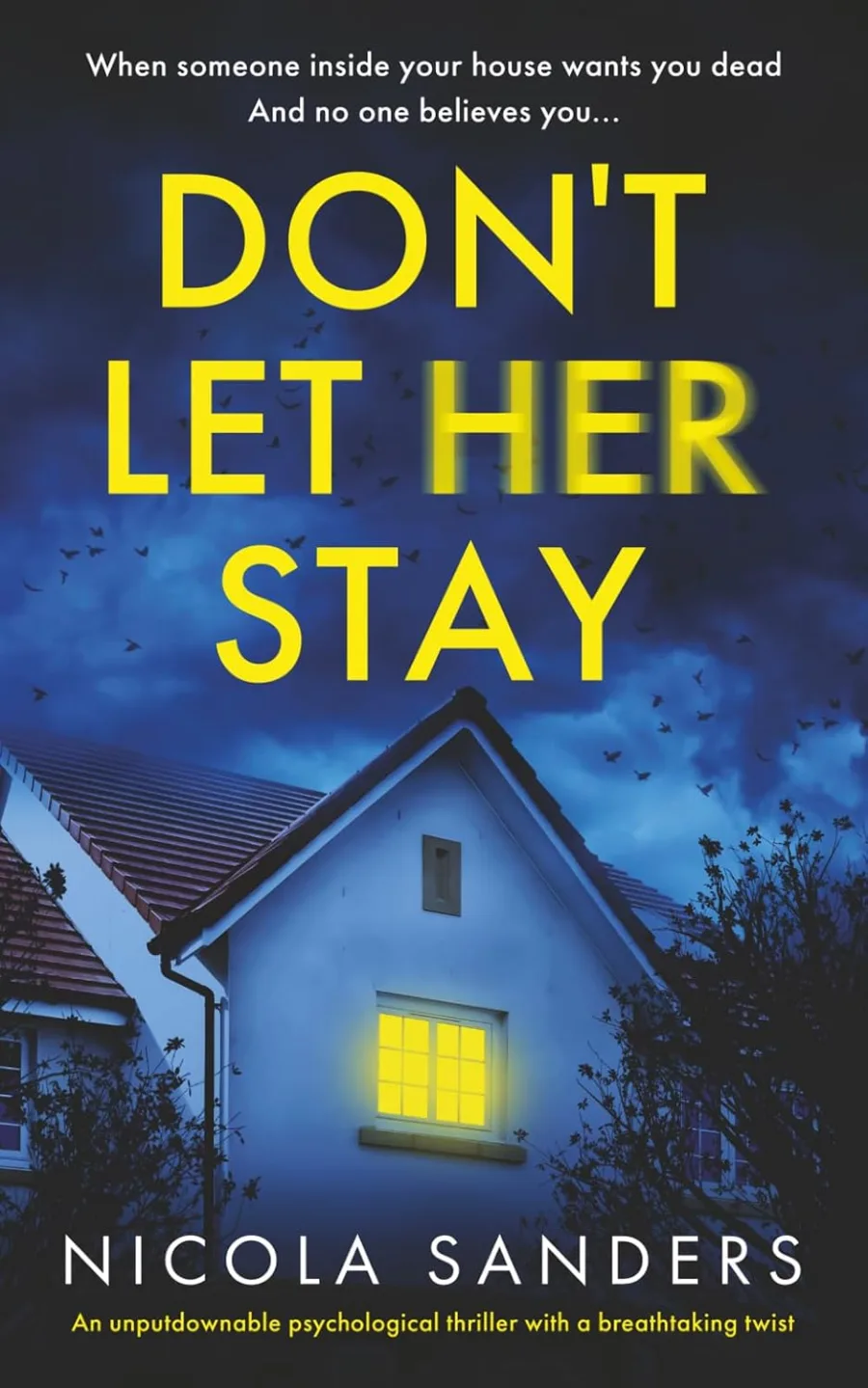
Download Cover Image
Do you want to download the full cover image for Don't Let Her Stay: An unputdownable psychological thriller with a breathtaking twist?