
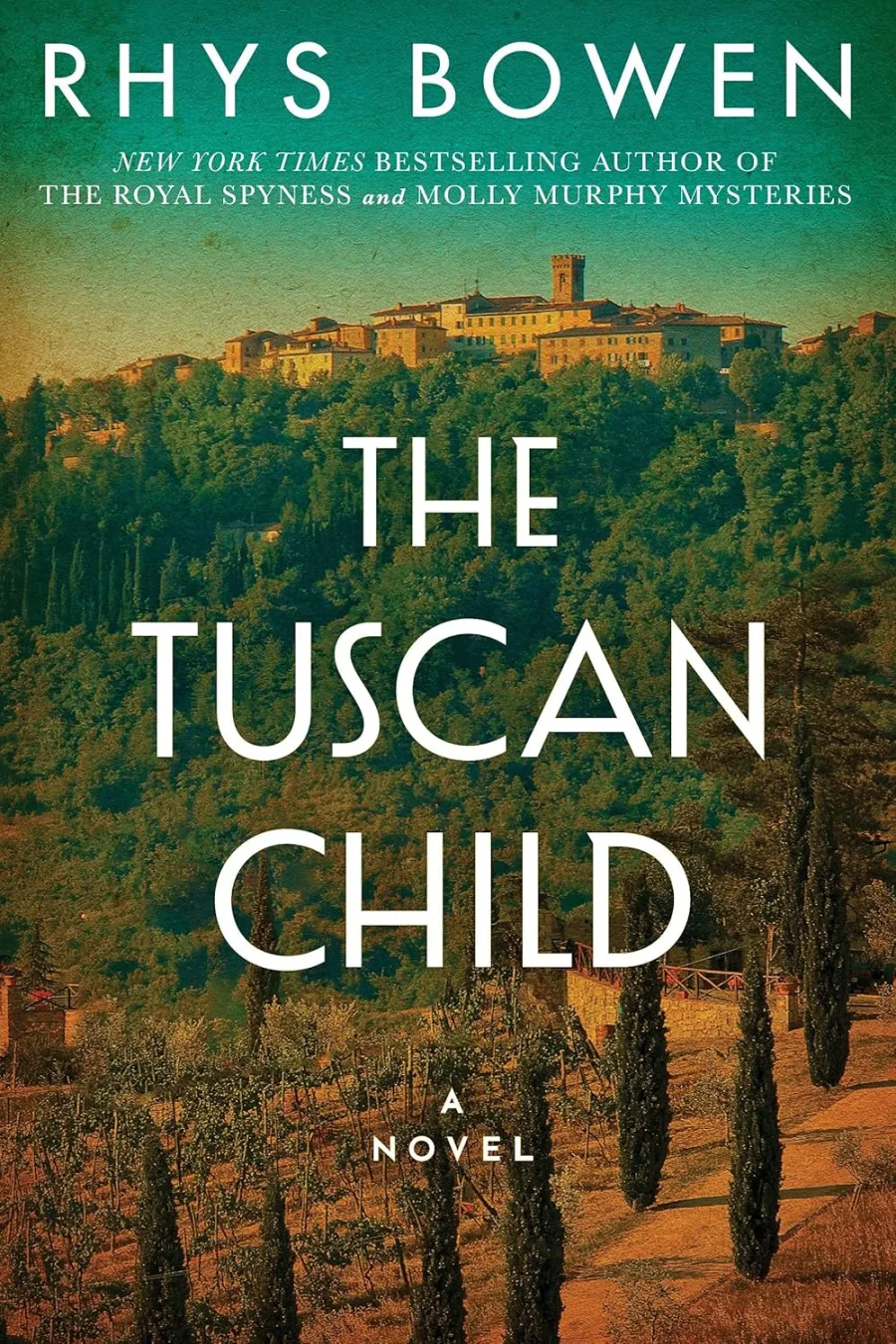
The Tuscan Child
Paperback
• 351 Pages
• USD 14.95
• English
• 9781503951815
No ratings yet
| Publisher | Lake Union Publishing |
|---|---|
| ISBN13 | 9781503951815 |
| ASIN/SKU | 1503951812 |
| Book Format | Paperback |
| Language | English |
| Pages | 351 |
| List Price | USD 14.95 |
| Publishing Date | 20/02/2018 |
| Dimensions | 5.5 x 1 x 8.25 inches |
| Weight | 2.31 pounds |
| Book Code | BD00055604 |
Buy this Book
Amazon Stores
Ebook Stores
Other Stores
Discover The Tuscan Child by Rhys Bowen. This book is published by Lake Union Publishing in Paperback format, ISBN 9781503951815, ASIN 1503951812, under Literature and Fiction, World War II Historical Fiction, Historical World War II and Holocaust Fiction.
Book Description
From New York Times and Wall Street Journal bestselling author Rhys Bowen comes a haunting novel about a woman who braves her father’s hidden past to discover his secrets…
“Pass the bread, the olives, and the wine. Oh, and a copy of The Tuscan Child to savor with them.” ―NPR
In 1944, British bomber pilot Hugo Langley parachuted from his stricken plane into the verdant fields of German-occupied Tuscany. Badly wounded, he found refuge in a ruined monastery and in the arms of Sofia Bartoli. But the love that kindled between them was shaken by an irreversible betrayal.
Nearly thirty years later, Hugo’s estranged daughter, Joanna, has returned home to the English countryside to arrange her father’s funeral. Among his personal effects is an unopened letter addressed to Sofia. In it is a startling revelation.
Still dealing with the emotional wounds of her own personal trauma, Joanna embarks on a healing journey to Tuscany to understand her father’s history―and maybe come to understand herself as well. Joanna soon discovers that some would prefer the past be left undisturbed, but she has come too far to let go of her father’s secrets now…
“Pass the bread, the olives, and the wine. Oh, and a copy of The Tuscan Child to savor with them.” ―NPR
In 1944, British bomber pilot Hugo Langley parachuted from his stricken plane into the verdant fields of German-occupied Tuscany. Badly wounded, he found refuge in a ruined monastery and in the arms of Sofia Bartoli. But the love that kindled between them was shaken by an irreversible betrayal.
Nearly thirty years later, Hugo’s estranged daughter, Joanna, has returned home to the English countryside to arrange her father’s funeral. Among his personal effects is an unopened letter addressed to Sofia. In it is a startling revelation.
Still dealing with the emotional wounds of her own personal trauma, Joanna embarks on a healing journey to Tuscany to understand her father’s history―and maybe come to understand herself as well. Joanna soon discovers that some would prefer the past be left undisturbed, but she has come too far to let go of her father’s secrets now…
Author Biography
Rhys Bowen is the New York Times bestselling author of the Royal Spyness, Molly Murphy, and Constable Evans mystery series, as well as the #1 Kindle bestseller In Farleigh Field. She has won the Agatha Award for Best Novel and has been nominated for the Edgar Award for Best Novel, among numerous other awards, nominations, and starred reviews. Bowen was born in Bath, England, studied at London University, married into a family with historic royal connections, and now divides her time between Northern California and Arizona.
Editorial Reviews
A Goodreads Choice Award Semifinalist, Historical Fiction
A New York Post Must-Read Selection
“Pass the bread, the olives, and the wine. Oh, and a copy of The Tuscan Child to savor with them.” ―NPR
“The next best thing to going to Italy right now.” ―HelloGiggles
“Readers who enjoy World War II historical fiction and rural Italian culture will appreciate this story by a master of her genre.” ―Library Journal
“The alternating narratives keep the story moving along, and the pastoral setting is transporting.” ―Booklist
“Besides being an action-packed story that is intense and haunting, Bowen also brings to life the setting where the reader can smell the cooking scents, see the brilliant olive groves, and hear the Italian chatter.” ―Crimespree
“This novel is well plotted with characters that are so compelling, with their attributes and flaws, that the reader can almost feel as if they had sat down and shared a glass of vin santo with them.” ―Historical Novel Society
“The interwoven mystery is expertly crafted and unravels at a pace that will keep readers guessing until the end. This is an overall enjoyable trip to the Tuscan countryside and readers will be reluctant to leave this charming and intriguing place.” ―RT Book Reviews
“That Rhys Bowen is the consummate storyteller is a given―from her insightful characterizations to her plotting wizardry, she is a wonderful writer. But now Rhys has outdone herself―The Tuscan Child is a poignant story of love in wartime, woven into a compelling search for the truth when mysteries consigned to the past begin to unravel. The Tuscan Child presented me with a conundrum―didn’t want the book to end, yet I couldn’t put it down. Best read with a glass of Chianti beside a roaring fire. Brava Rhys Bowen―brava!” ―Jacqueline Winspear, New York Times bestselling author of the Maisie Dobbs historical mystery novels
A New York Post Must-Read Selection
“Pass the bread, the olives, and the wine. Oh, and a copy of The Tuscan Child to savor with them.” ―NPR
“The next best thing to going to Italy right now.” ―HelloGiggles
“Readers who enjoy World War II historical fiction and rural Italian culture will appreciate this story by a master of her genre.” ―Library Journal
“The alternating narratives keep the story moving along, and the pastoral setting is transporting.” ―Booklist
“Besides being an action-packed story that is intense and haunting, Bowen also brings to life the setting where the reader can smell the cooking scents, see the brilliant olive groves, and hear the Italian chatter.” ―Crimespree
“This novel is well plotted with characters that are so compelling, with their attributes and flaws, that the reader can almost feel as if they had sat down and shared a glass of vin santo with them.” ―Historical Novel Society
“The interwoven mystery is expertly crafted and unravels at a pace that will keep readers guessing until the end. This is an overall enjoyable trip to the Tuscan countryside and readers will be reluctant to leave this charming and intriguing place.” ―RT Book Reviews
“That Rhys Bowen is the consummate storyteller is a given―from her insightful characterizations to her plotting wizardry, she is a wonderful writer. But now Rhys has outdone herself―The Tuscan Child is a poignant story of love in wartime, woven into a compelling search for the truth when mysteries consigned to the past begin to unravel. The Tuscan Child presented me with a conundrum―didn’t want the book to end, yet I couldn’t put it down. Best read with a glass of Chianti beside a roaring fire. Brava Rhys Bowen―brava!” ―Jacqueline Winspear, New York Times bestselling author of the Maisie Dobbs historical mystery novels
Book Summary
The Tuscan Child by Rhys Bowen is a gentle, emotional mystery that moves back and forth between World War II and the 1970s, weaving together the stories of a father and daughter and a long-hidden secret in a small Italian village. In 1944, British bomber pilot Hugo Langley is shot down over German-occupied Italy. Badly wounded, he parachutes into the Tuscan countryside and crashes near the village of San Salvatore. There, he is discovered and secretly sheltered by a young local woman, Sofia Bartoli. Hugo is supposed to be the enemy in the eyes of the Nazis, but to Sofia he is a fragile human being in desperate need. As she hides him and helps him heal, they grow close despite the danger all around them. Their bond becomes both tender and risky, because if the Germans or collaborators discover Sofia is harboring a British airman, both of them could be killed.
In the present-day thread set in 1973, Hugo has died back in England, leaving his grown daughter Joanna to deal with his estate and memories. Joanna’s relationship with her father was complicated. He had been distant, often silent about his past, and their home life was shadowed by personal pain. After his death, Joanna finds among his belongings a strange clue: the deed to property in Tuscany and a heartfelt, unfinished letter addressed to a woman named Sofia. The letter hints at a child and a love that once mattered deeply to Hugo but was never spoken of. The discovery shocks Joanna, who had always thought of her father as somewhat reserved and broken, and never imagined that he might have had a secret romance and another life in Italy. Curious, and also longing to understand the man she never really knew, she decides to travel to San Salvatore to uncover the truth.
When Joanna arrives in Tuscany, she finds a beautifully atmospheric village, full of sun-drenched hills, old stone buildings, olive groves, and a tight-knit community that carries long memories. But beneath the charm, there is a sense of reluctance and guardedness. The war might be long over, yet its scars remain, and some people do not welcome questions about the past. Joanna tries to ask about Hugo and Sofia, only to discover that the story is wrapped in hints, half-truths, and silence. Some villagers claim not to remember; others remember too well and prefer not to talk. Sofia herself is gone, and what became of her is initially unclear. Joanna realizes that she has walked into a place where secrets have been carefully buried for decades.
Rhys Bowen alternates between Hugo’s wartime experiences and Joanna’s investigation, letting the reader piece together the mystery alongside her. In the 1944 chapters, we see Hugo through his own eyes: injured, far from home, and dependent on the kindness of strangers. Sofia’s courage is striking. She brings him food, hides him in a ruined monastery, and risks suspicion from neighbors and soldiers. As Hugo heals, they share stories and hopes, even though the war makes any future uncertain. A quiet, intense romance develops between them, fragile but very genuine. There is a sense that their connection, formed in a time of fear and desperation, might be the only bright thing in Hugo’s shattered existence. However, the war also brings betrayal, hunger, and violence. German forces and local collaborators are always near, and choices made under pressure will have consequences that ripple into the future.
In 1973, Joanna struggles with her own wounds. She is dealing with grief, a disrupted career, and the long shadow of a complicated childhood. Tuscany starts as a quest for answers, but it also becomes a place of healing for her. She meets friendly and sometimes wary locals, tastes the food, walks the hills, and slowly finds a sense of peace that she has not felt in England. Among the villagers, she encounters Paola and her handsome son Renzo, who become important figures in her search. Renzo, in particular, serves as a bridge between Joanna and the village’s past. He is both protective of his home and curious about the foreign woman asking difficult questions. Their growing connection gives Joanna a sense of companionship and gentle romance, mirroring Hugo and Sofia’s earlier story in a softer, more hopeful way.
As Joanna continues to dig, she uncovers fragments of what happened to her father. She learns that Hugo was not just a downed pilot who disappeared after the war. He left behind complicated feelings, unresolved grief, and possibly a child—someone who might still be alive. The more she discovers, the more she realizes that the villagers are hiding a long-ago tragedy tied to wartime loyalties and shame. There are hints of betrayal: someone may have informed on Sofia and Hugo, leading to terrible consequences; someone may have profited from that betrayal. These old decisions explain the strange tension Joanna encounters in San Salvatore. For some of the older generation, remembering the truth means facing their own guilt or the guilt of people they loved.
Joanna’s investigation is not a straightforward detective story, but rather a gradual revelation shaped by personal encounters and emotional moments. She is not a professional sleuth; she is a grieving daughter trying to understand her heritage. This makes her discoveries more intimate. Every new detail about Hugo and Sofia changes how she sees her father and herself. The idea that he loved passionately, suffered deeply, and possibly lost a child transforms him from a distant parent into a flawed, human man. At the same time, the emerging possibility that Joanna might have family ties in Tuscany—someone connected to her by blood and by Hugo’s hidden past—gives her journey a personal stake beyond curiosity.
The atmosphere of the novel plays a big role in its charm. Bowen fills the story with descriptions of Tuscan food, landscapes, and village rhythms, which give Joanna’s sections a warm, almost comforting feel even when she is dealing with painful truths. In contrast, Hugo’s wartime chapters are tense and shadowed by danger. The alternation between the two timelines allows the reader to feel both the beauty of the place and the horror of what once happened there. Over time, these threads converge, and the mystery of what became of Sofia and the child hinted at in Hugo’s letter comes into focus.
By the end of The Tuscan Child, Joanna has unraveled the main secrets surrounding her father's crash and his love affair with Sofia. She uncovers how the war shattered lives in San Salvatore and how some people tried to make up for their actions afterward, while others clung tightly to silence. The truth is not purely happy; it involves loss and injustice. Yet, there is also a sense of reconciliation and quiet hope. Joanna’s discoveries allow her to reclaim a fuller picture of her father, accept parts of her family history that were hidden from her, and build new connections in the very place where his life once changed forever. The novel closes with an emotional feeling of closure and new beginnings, as the past and present finally meet in the Tuscan hills, showing how love, courage, and regret can echo across generations—but also how healing can grow in the same soil where old wounds were once buried.
In the present-day thread set in 1973, Hugo has died back in England, leaving his grown daughter Joanna to deal with his estate and memories. Joanna’s relationship with her father was complicated. He had been distant, often silent about his past, and their home life was shadowed by personal pain. After his death, Joanna finds among his belongings a strange clue: the deed to property in Tuscany and a heartfelt, unfinished letter addressed to a woman named Sofia. The letter hints at a child and a love that once mattered deeply to Hugo but was never spoken of. The discovery shocks Joanna, who had always thought of her father as somewhat reserved and broken, and never imagined that he might have had a secret romance and another life in Italy. Curious, and also longing to understand the man she never really knew, she decides to travel to San Salvatore to uncover the truth.
When Joanna arrives in Tuscany, she finds a beautifully atmospheric village, full of sun-drenched hills, old stone buildings, olive groves, and a tight-knit community that carries long memories. But beneath the charm, there is a sense of reluctance and guardedness. The war might be long over, yet its scars remain, and some people do not welcome questions about the past. Joanna tries to ask about Hugo and Sofia, only to discover that the story is wrapped in hints, half-truths, and silence. Some villagers claim not to remember; others remember too well and prefer not to talk. Sofia herself is gone, and what became of her is initially unclear. Joanna realizes that she has walked into a place where secrets have been carefully buried for decades.
Rhys Bowen alternates between Hugo’s wartime experiences and Joanna’s investigation, letting the reader piece together the mystery alongside her. In the 1944 chapters, we see Hugo through his own eyes: injured, far from home, and dependent on the kindness of strangers. Sofia’s courage is striking. She brings him food, hides him in a ruined monastery, and risks suspicion from neighbors and soldiers. As Hugo heals, they share stories and hopes, even though the war makes any future uncertain. A quiet, intense romance develops between them, fragile but very genuine. There is a sense that their connection, formed in a time of fear and desperation, might be the only bright thing in Hugo’s shattered existence. However, the war also brings betrayal, hunger, and violence. German forces and local collaborators are always near, and choices made under pressure will have consequences that ripple into the future.
In 1973, Joanna struggles with her own wounds. She is dealing with grief, a disrupted career, and the long shadow of a complicated childhood. Tuscany starts as a quest for answers, but it also becomes a place of healing for her. She meets friendly and sometimes wary locals, tastes the food, walks the hills, and slowly finds a sense of peace that she has not felt in England. Among the villagers, she encounters Paola and her handsome son Renzo, who become important figures in her search. Renzo, in particular, serves as a bridge between Joanna and the village’s past. He is both protective of his home and curious about the foreign woman asking difficult questions. Their growing connection gives Joanna a sense of companionship and gentle romance, mirroring Hugo and Sofia’s earlier story in a softer, more hopeful way.
As Joanna continues to dig, she uncovers fragments of what happened to her father. She learns that Hugo was not just a downed pilot who disappeared after the war. He left behind complicated feelings, unresolved grief, and possibly a child—someone who might still be alive. The more she discovers, the more she realizes that the villagers are hiding a long-ago tragedy tied to wartime loyalties and shame. There are hints of betrayal: someone may have informed on Sofia and Hugo, leading to terrible consequences; someone may have profited from that betrayal. These old decisions explain the strange tension Joanna encounters in San Salvatore. For some of the older generation, remembering the truth means facing their own guilt or the guilt of people they loved.
Joanna’s investigation is not a straightforward detective story, but rather a gradual revelation shaped by personal encounters and emotional moments. She is not a professional sleuth; she is a grieving daughter trying to understand her heritage. This makes her discoveries more intimate. Every new detail about Hugo and Sofia changes how she sees her father and herself. The idea that he loved passionately, suffered deeply, and possibly lost a child transforms him from a distant parent into a flawed, human man. At the same time, the emerging possibility that Joanna might have family ties in Tuscany—someone connected to her by blood and by Hugo’s hidden past—gives her journey a personal stake beyond curiosity.
The atmosphere of the novel plays a big role in its charm. Bowen fills the story with descriptions of Tuscan food, landscapes, and village rhythms, which give Joanna’s sections a warm, almost comforting feel even when she is dealing with painful truths. In contrast, Hugo’s wartime chapters are tense and shadowed by danger. The alternation between the two timelines allows the reader to feel both the beauty of the place and the horror of what once happened there. Over time, these threads converge, and the mystery of what became of Sofia and the child hinted at in Hugo’s letter comes into focus.
By the end of The Tuscan Child, Joanna has unraveled the main secrets surrounding her father's crash and his love affair with Sofia. She uncovers how the war shattered lives in San Salvatore and how some people tried to make up for their actions afterward, while others clung tightly to silence. The truth is not purely happy; it involves loss and injustice. Yet, there is also a sense of reconciliation and quiet hope. Joanna’s discoveries allow her to reclaim a fuller picture of her father, accept parts of her family history that were hidden from her, and build new connections in the very place where his life once changed forever. The novel closes with an emotional feeling of closure and new beginnings, as the past and present finally meet in the Tuscan hills, showing how love, courage, and regret can echo across generations—but also how healing can grow in the same soil where old wounds were once buried.
Sample Chapters
Sample Chapters will be added soon…
Reader Reviews
No reviews yet.
The Tuscan Child
Download Cover Image
Do you want to download the full cover image for The Tuscan Child?