
When We Believed in Mermaids: A Novel
Paperback
• 352 Pages
• USD 14.95
• English
• 9781542004527
No ratings yet
| Publisher | Lake Union Publishing |
|---|---|
| ISBN13 | 9781542004527 |
| ASIN/SKU | 1542004527 |
| Book Format | Paperback |
| Language | English |
| Pages | 352 |
| List Price | USD 14.95 |
| Publishing Date | 16/07/2019 |
| Dimensions | 5.5 x 1 x 8.25 inches |
| Weight | 2.31 pounds |
| Book Code | BD00055633 |
Buy this Book
Amazon Stores
Ebook Stores
Other Stores
Discover When We Believed in Mermaids: A Novel by Barbara O'Neal. This book is published by Lake Union Publishing in Paperback format, ISBN 9781542004527, ASIN 1542004527, under Literature and Fiction, Sisters Fiction, Contemporary Women Fiction.
Book Description
An Amazon Charts, Washington Post, Wall Street Journal, and USA Today bestseller.
From the author of The Art of Inheriting Secrets comes an emotional new tale of two sisters, an ocean of lies, and a search for the truth.
Her sister has been dead for fifteen years when she sees her on the TV news…
Josie Bianci was killed years ago on a train during a terrorist attack. Gone forever. It’s what her sister, Kit, an ER doctor in Santa Cruz, has always believed. Yet all it takes is a few heart-wrenching seconds to upend Kit’s world. Live coverage of a club fire in Auckland has captured the image of a woman stumbling through the smoke and debris. Her resemblance to Josie is unbelievable. And unmistakable. With it comes a flood of emotions―grief, loss, and anger―that Kit finally has a chance to put to rest: by finding the sister who’s been living a lie.
After arriving in New Zealand, Kit begins her journey with the memories of the past: of days spent on the beach with Josie. Of a lost teenage boy who’d become part of their family. And of a trauma that has haunted Kit and Josie their entire lives.
Now, if two sisters are to reunite, it can only be by unearthing long-buried secrets and facing a devastating truth that has kept them apart far too long. To regain their relationship, they may have to lose everything.
From the author of The Art of Inheriting Secrets comes an emotional new tale of two sisters, an ocean of lies, and a search for the truth.
Her sister has been dead for fifteen years when she sees her on the TV news…
Josie Bianci was killed years ago on a train during a terrorist attack. Gone forever. It’s what her sister, Kit, an ER doctor in Santa Cruz, has always believed. Yet all it takes is a few heart-wrenching seconds to upend Kit’s world. Live coverage of a club fire in Auckland has captured the image of a woman stumbling through the smoke and debris. Her resemblance to Josie is unbelievable. And unmistakable. With it comes a flood of emotions―grief, loss, and anger―that Kit finally has a chance to put to rest: by finding the sister who’s been living a lie.
After arriving in New Zealand, Kit begins her journey with the memories of the past: of days spent on the beach with Josie. Of a lost teenage boy who’d become part of their family. And of a trauma that has haunted Kit and Josie their entire lives.
Now, if two sisters are to reunite, it can only be by unearthing long-buried secrets and facing a devastating truth that has kept them apart far too long. To regain their relationship, they may have to lose everything.
Author Biography
Barbara O’Neal is the author of more than a dozen award-winning, bestselling novels, including the runaway bestseller, When We Believed in Mermaids, which has been published in more than 20 countries and spent many months on the Amazon Charts, as well as the Wall Street Journal, USA Today, and Washington Post bestseller lists. Barbara lives on the beach in rugged Oregon with her husband, a British endurance athlete who vows he’ll never lose his accent and their zoo of cats and dogs. You can find more information on her newsletter and where to find her on social media at barbaraoneal.com.
Editorial Reviews
“An emotional story about the relationship between two sisters and the difficulty of facing the truth head-on.” ―Today
“There’s a reason Barbara O’Neal is one of the most decorated authors in fiction. With her trademark lyrical style, she’s written a page-turner of the first order. From the very first page, I was drawn into the drama and irresistibly teased along as layers of a family’s complicated past were artfully peeled away. Don’t miss this masterfully told story of sisters and secrets, damage and redemption, hope and healing.” ―Susan Wiggs, #1 New York Times bestselling author
“More than a mystery, Barbara O’Neal’s When We Believed in Mermaids is a story of childhood―and innocence―lost, and the long-hidden secrets, lies, and betrayals two sisters must face in order to make themselves whole as adults. Plunge in and enjoy the intriguing depths of this passionate, lustrous novel, and you just might find yourself believing in mermaids.” ―Juliet Blackwell, New York Times bestselling author of The Lost Carousel of Provence, Letters from Paris, and The Paris Key
“In When We Believed in Mermaids, Barbara O’Neal draws us into the story with her crisp prose, well-drawn settings, and compelling characters, in whom we invest our hearts as we experience the full range of human emotion and, ultimately, celebrate their triumph over the past.” ―Grace Greene, author of The Memory of Butterflies and The Wildflower House series
“When We Believed in Mermaids is a deftly woven tale of two sisters, separated by tragedy and reunited by fate, discovering that the past isn’t always what it seems. By turns shattering and life affirming, as luminous and mesmerizing as the sea by which it unfolds, this is a book club essential―definitely one for the shelf!” ―Kerry Anne King, bestselling author of Whisper Me This
“There’s a reason Barbara O’Neal is one of the most decorated authors in fiction. With her trademark lyrical style, she’s written a page-turner of the first order. From the very first page, I was drawn into the drama and irresistibly teased along as layers of a family’s complicated past were artfully peeled away. Don’t miss this masterfully told story of sisters and secrets, damage and redemption, hope and healing.” ―Susan Wiggs, #1 New York Times bestselling author
“More than a mystery, Barbara O’Neal’s When We Believed in Mermaids is a story of childhood―and innocence―lost, and the long-hidden secrets, lies, and betrayals two sisters must face in order to make themselves whole as adults. Plunge in and enjoy the intriguing depths of this passionate, lustrous novel, and you just might find yourself believing in mermaids.” ―Juliet Blackwell, New York Times bestselling author of The Lost Carousel of Provence, Letters from Paris, and The Paris Key
“In When We Believed in Mermaids, Barbara O’Neal draws us into the story with her crisp prose, well-drawn settings, and compelling characters, in whom we invest our hearts as we experience the full range of human emotion and, ultimately, celebrate their triumph over the past.” ―Grace Greene, author of The Memory of Butterflies and The Wildflower House series
“When We Believed in Mermaids is a deftly woven tale of two sisters, separated by tragedy and reunited by fate, discovering that the past isn’t always what it seems. By turns shattering and life affirming, as luminous and mesmerizing as the sea by which it unfolds, this is a book club essential―definitely one for the shelf!” ―Kerry Anne King, bestselling author of Whisper Me This
Book Summary
When We Believed in Mermaids by Barbara O’Neal is an emotional story about two sisters, the damage caused by childhood trauma, and the possibility of finding healing even after years of loss and separation. The novel centers on Kit Bianci, an emergency room doctor in Santa Cruz, whose life is shaken when she sees what appears to be her sister Josie on television during live coverage of a nightclub fire in Auckland, New Zealand. Kit has believed for fifteen years that Josie died in a terrorist attack in Paris, so seeing her face again feels impossible. The sight sends Kit into a storm of grief, confusion, hope, and anger. If Josie is alive, then everything Kit thought she knew about her sister’s disappearance is a lie. The mystery becomes the heart of the novel, but the story is just as much about memory, family wounds, and the long shadow of childhood suffering.
As Kit travels to New Zealand in search of answers, the novel slowly reveals the painful past she shares with Josie. The sisters grew up in a neglectful and abusive household, where safety was scarce and love was unreliable. Their childhood was shaped by instability, fear, and the need to protect one another as best they could. One of the most important figures in their early lives is a teenage boy who becomes part of their small world and offers them a brief sense of belonging and care. These memories are central to the emotional weight of the novel because they show how deeply the sisters were bonded, even as life pulled them apart. Their relationship was never simple, but it was always intense, complicated, and rooted in survival.
Kit is a woman who has built a life around responsibility and control. As a doctor, she is used to being practical and focused, but the news report forces her to confront parts of herself she has kept buried. She has lived with the grief of Josie’s supposed death for years, and the possibility that her sister is still alive reopens old wounds. Her journey to New Zealand is not just a search for Josie; it is also a search for truth about what happened in the past and why the sisters ended up on such different paths. Kit’s emotional state is shaped by guilt, longing, and the fear that she may discover something even more painful than loss. The novel treats her perspective with great sympathy, showing how trauma can stay alive in the body and mind long after the event itself has passed.
Josie’s story is revealed gradually and gives the novel much of its tension and depth. She has built a new life in New Zealand, but that life is based on secrecy, reinvention, and a desire to escape the pain of her past. Her reasons for disappearing are complicated, and the novel does not frame her choices as simple betrayal. Instead, it shows how trauma can make survival feel like the only possible priority. Josie’s life in New Zealand is tied to new relationships, new routines, and a kind of fragile peace that she has worked hard to create. When Kit enters that world, everything begins to shift. The sisters are forced to face not only each other, but also the truth about the events that separated them and the emotional damage they have each carried for years.
New Zealand is more than a backdrop in the novel. Its beauty, remoteness, and atmosphere reflect the story’s emotional themes of distance, memory, and renewal. The setting gives the book a feeling of both openness and isolation, which fits the characters’ inner lives. As Kit searches for Josie, she also encounters people and places that help her see her life more clearly. The novel includes moments of romance and human connection, but it keeps returning to the central relationship between the sisters. The emotional pull of the story comes from whether they can speak honestly to each other after so much pain and secrecy. Their reunion is not easy or sentimental. It is messy, tender, and full of the anger that often lives alongside love in families shaped by trauma.
The title, When We Believed in Mermaids, captures the novel’s reflective tone. It suggests childhood innocence, imagination, and the way people cling to stories that help them endure hard realities. The sisters once lived in a world where mermaids felt possible, where beauty and magic could exist alongside hardship. As adults, they must deal with a harsher truth, but the novel never fully lets go of that sense of wonder. Instead, it suggests that belief itself can be a kind of survival, and that hope can still exist even after betrayal and loss. The emotional core of the book lies in that tension between illusion and truth, fantasy and reality, escape and return.
By the end, the novel becomes a story about facing buried pain and deciding whether love can survive what time and trauma have done to it. Kit’s journey to New Zealand leads her not only toward her sister, but also toward a deeper understanding of herself. Josie, too, must reckon with the cost of the life she chose and the people she left behind. The book does not offer easy answers, but it does offer healing in a careful, believable way. It shows that family wounds can take years to understand, that truth can be devastating, and that reconciliation is possible even when everything seems broken. When We Believed in Mermaids is a moving novel about sisterhood, survival, and the long, painful path toward forgiveness and peace.
As Kit travels to New Zealand in search of answers, the novel slowly reveals the painful past she shares with Josie. The sisters grew up in a neglectful and abusive household, where safety was scarce and love was unreliable. Their childhood was shaped by instability, fear, and the need to protect one another as best they could. One of the most important figures in their early lives is a teenage boy who becomes part of their small world and offers them a brief sense of belonging and care. These memories are central to the emotional weight of the novel because they show how deeply the sisters were bonded, even as life pulled them apart. Their relationship was never simple, but it was always intense, complicated, and rooted in survival.
Kit is a woman who has built a life around responsibility and control. As a doctor, she is used to being practical and focused, but the news report forces her to confront parts of herself she has kept buried. She has lived with the grief of Josie’s supposed death for years, and the possibility that her sister is still alive reopens old wounds. Her journey to New Zealand is not just a search for Josie; it is also a search for truth about what happened in the past and why the sisters ended up on such different paths. Kit’s emotional state is shaped by guilt, longing, and the fear that she may discover something even more painful than loss. The novel treats her perspective with great sympathy, showing how trauma can stay alive in the body and mind long after the event itself has passed.
Josie’s story is revealed gradually and gives the novel much of its tension and depth. She has built a new life in New Zealand, but that life is based on secrecy, reinvention, and a desire to escape the pain of her past. Her reasons for disappearing are complicated, and the novel does not frame her choices as simple betrayal. Instead, it shows how trauma can make survival feel like the only possible priority. Josie’s life in New Zealand is tied to new relationships, new routines, and a kind of fragile peace that she has worked hard to create. When Kit enters that world, everything begins to shift. The sisters are forced to face not only each other, but also the truth about the events that separated them and the emotional damage they have each carried for years.
New Zealand is more than a backdrop in the novel. Its beauty, remoteness, and atmosphere reflect the story’s emotional themes of distance, memory, and renewal. The setting gives the book a feeling of both openness and isolation, which fits the characters’ inner lives. As Kit searches for Josie, she also encounters people and places that help her see her life more clearly. The novel includes moments of romance and human connection, but it keeps returning to the central relationship between the sisters. The emotional pull of the story comes from whether they can speak honestly to each other after so much pain and secrecy. Their reunion is not easy or sentimental. It is messy, tender, and full of the anger that often lives alongside love in families shaped by trauma.
The title, When We Believed in Mermaids, captures the novel’s reflective tone. It suggests childhood innocence, imagination, and the way people cling to stories that help them endure hard realities. The sisters once lived in a world where mermaids felt possible, where beauty and magic could exist alongside hardship. As adults, they must deal with a harsher truth, but the novel never fully lets go of that sense of wonder. Instead, it suggests that belief itself can be a kind of survival, and that hope can still exist even after betrayal and loss. The emotional core of the book lies in that tension between illusion and truth, fantasy and reality, escape and return.
By the end, the novel becomes a story about facing buried pain and deciding whether love can survive what time and trauma have done to it. Kit’s journey to New Zealand leads her not only toward her sister, but also toward a deeper understanding of herself. Josie, too, must reckon with the cost of the life she chose and the people she left behind. The book does not offer easy answers, but it does offer healing in a careful, believable way. It shows that family wounds can take years to understand, that truth can be devastating, and that reconciliation is possible even when everything seems broken. When We Believed in Mermaids is a moving novel about sisterhood, survival, and the long, painful path toward forgiveness and peace.
Sample Chapters
Sample Chapters will be added soon…
Reader Reviews
No reviews yet.
When We Believed in Mermaids: A Novel
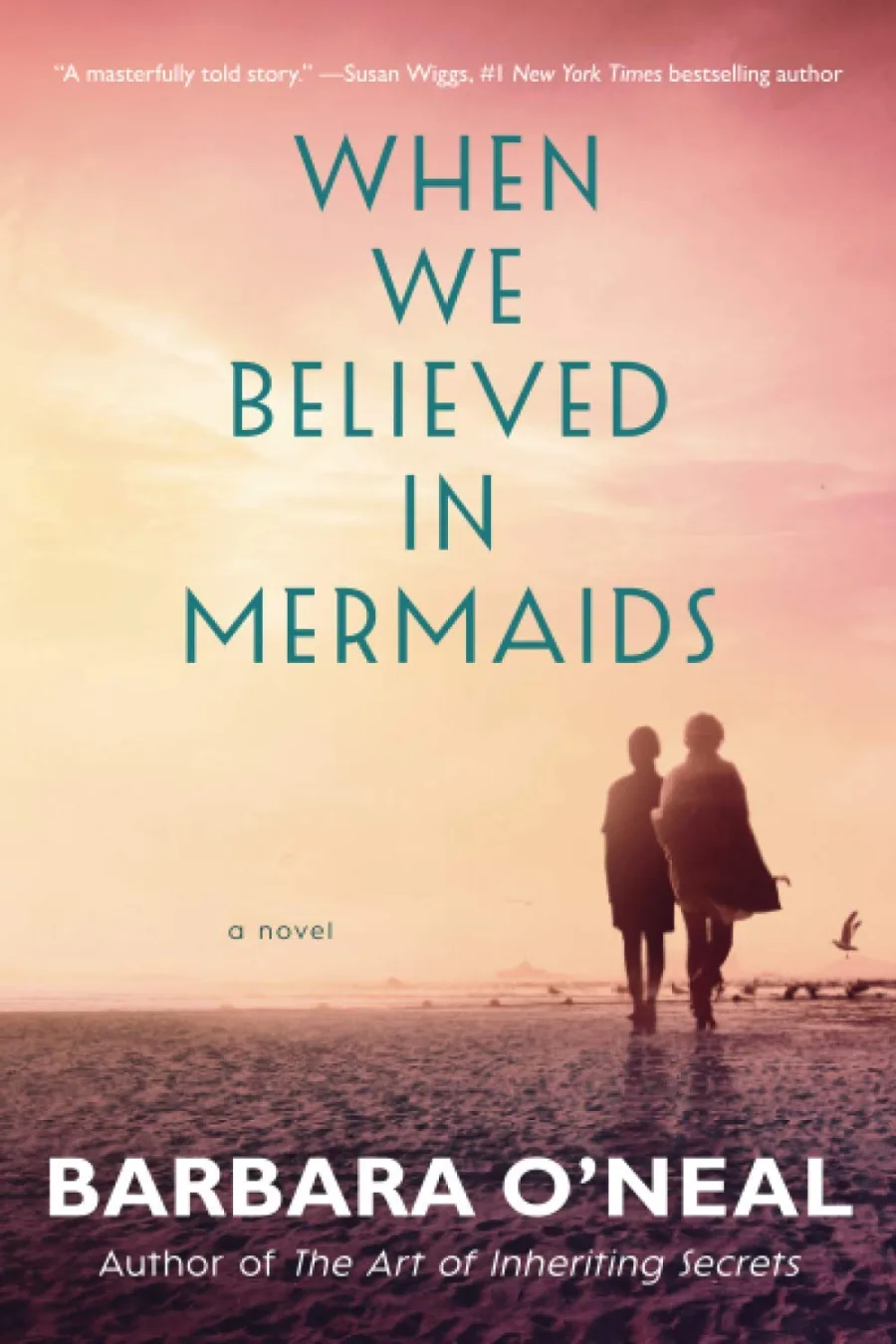
Download Cover Image
Do you want to download the full cover image for When We Believed in Mermaids: A Novel?