
Atomic Habits: An Easy and Proven Way to Build Good Habits and Break Bad Ones
Paperback
• 250 Pages
• USD 16.55
• English
• 9781847941848
No ratings yet
| Publisher | Random House Business Books |
|---|---|
| ISBN13 | 9781847941848 |
| ASIN/SKU | 1847941842 |
| Book Format | Paperback |
| Language | English |
| Pages | 250 |
| List Price | USD 16.55 |
| Publishing Date | 01/01/2025 |
| Dimensions | 0.04 x 0.04 x 0.04 inches |
| Weight | 11.4 ounces |
| Book Code | BD00055668 |
Buy this Book
Amazon Stores
Ebook Stores
Other Stores
Discover Atomic Habits: An Easy and Proven Way to Build Good Habits and Break Bad Ones by James Clear. This book is published by Random House Business Books in Paperback format, ISBN 9781847941848, ASIN 1847941842, under Self-Help, Personal Transformation Self-Help, Non Fiction.
Book Description
a·tom·ic hab·it, noun.
Definition: A small habit with big results.
People say when you want to change your life, you need to think big: swap job, move house, change partner. But they’re wrong.
World-renowned life coach James Clear has discovered a completely different way to revolutionise your behaviour. He knows that lasting change comes from hundreds of tiny decisions – doing two push-ups a day, waking up five minutes early, or holding a single short phone call. He calls these atomic habits.
Clear delves deep into cutting-edge psychology to explain why your brain is able to amplify such small changes into such big outcomes. He uncovers a handful of simple life hacks (the forgotten art of Habit Stacking, or the unexpected power of the Two-Minute Rule), to show how you too can grow miniscule shifts into life-transforming changes in behaviour. And he reveals a simple four-stage method that will let you build atomic habits into your day-to-day life, starting now.
These nuclear changes will have an explosive effect on your career, your relationships and your life.
Definition: A small habit with big results.
People say when you want to change your life, you need to think big: swap job, move house, change partner. But they’re wrong.
World-renowned life coach James Clear has discovered a completely different way to revolutionise your behaviour. He knows that lasting change comes from hundreds of tiny decisions – doing two push-ups a day, waking up five minutes early, or holding a single short phone call. He calls these atomic habits.
Clear delves deep into cutting-edge psychology to explain why your brain is able to amplify such small changes into such big outcomes. He uncovers a handful of simple life hacks (the forgotten art of Habit Stacking, or the unexpected power of the Two-Minute Rule), to show how you too can grow miniscule shifts into life-transforming changes in behaviour. And he reveals a simple four-stage method that will let you build atomic habits into your day-to-day life, starting now.
These nuclear changes will have an explosive effect on your career, your relationships and your life.
Author Biography
James Clear is a writer and speaker focused on habits, decision making, and continuous improvement. He is the author of the #1 New York Times bestseller, Atomic Habits. The book has sold over 20 million copies worldwide and has been translated into more than 60 languages.
Clear is a regular speaker at Fortune 500 companies and his work has been featured in places like Time magazine, the New York Times, the Wall Street Journal and on CBS This Morning. His popular "3-2-1" email newsletter is sent out each week to more than 3 million subscribers.
Clear is a regular speaker at Fortune 500 companies and his work has been featured in places like Time magazine, the New York Times, the Wall Street Journal and on CBS This Morning. His popular "3-2-1" email newsletter is sent out each week to more than 3 million subscribers.
Editorial Reviews
Editorial Reviews will be added soon…
Book Summary
Atomic Habits by James Clear is a practical and motivating book about how small daily actions can create remarkable long-term change. Instead of focusing only on big goals, Clear argues that real progress comes from building better systems and habits that gradually shape the kind of person you become. The central idea of the book is simple but powerful: tiny improvements, repeated consistently, compound over time. Just as small bad habits can slowly lead to failure, small good habits can quietly transform a life. The book shows that success is rarely the result of one dramatic moment. More often, it is the result of many small choices made every day.
Clear begins by explaining that habits are the compound interest of self-improvement. A single good decision may not seem important at first, but when repeated often enough, it can produce major results. He uses the idea of getting 1 percent better each day to show how progress works in real life. The difference is not usually visible in the short term, which is why many people give up too early. But over months and years, those small changes become significant. In the same way, one bad habit may seem harmless in isolation, but repeated over time, it can create serious problems. The message is that people should stop expecting instant transformation and instead trust the power of consistency.
A major part of the book is devoted to identity. Clear argues that the most effective way to change habits is not by focusing first on outcomes or even on actions, but on identity. In other words, lasting change happens when a person begins to believe, “I am someone who does this.” Rather than saying, “I want to run a marathon,” the deeper shift is saying, “I am a runner.” Rather than saying, “I want to write a book,” the real change is becoming a writer. Habits, in this sense, are not just tools for reaching goals. They are votes for the kind of person someone wants to become. This identity-based approach makes habits more meaningful and more likely to last.
Clear also explains the habit loop, which has four stages: cue, craving, response, and reward. A cue triggers the brain to notice an opportunity. That cue leads to a craving, which creates the desire to act. The response is the actual habit, and the reward is the payoff that teaches the brain whether the behavior is worth repeating. This framework helps explain why habits form so naturally and why they can be so hard to break. Once a habit is learned, the brain starts to expect the reward, and the cycle becomes automatic. Clear uses this process to show both how good habits are built and how bad habits can be dismantled.
To make good habits easier to adopt, he introduces the four laws of behavior change. The first is make it obvious. If a habit is visible and easy to notice, it is more likely to happen. The second is make it attractive. People are more likely to repeat habits that feel rewarding or appealing. The third is make it easy. The simpler a behavior is, the more likely it is to stick. The fourth is make it satisfying. Immediate satisfaction helps reinforce the habit and makes it more likely to happen again. Clear presents these laws as a practical system for designing behavior in a way that supports growth rather than relying on willpower alone.
He also shows the reverse process for breaking bad habits. Instead of making the habit obvious, make it invisible. Instead of making it attractive, make it unattractive. Instead of making it easy, make it difficult. Instead of making it satisfying, make it unsatisfying. This is one of the strongest parts of the book because it turns vague self-improvement advice into a concrete method. Rather than depending on motivation, Clear suggests changing the environment so that good behavior becomes the default and bad behavior becomes harder to follow. In this way, the environment becomes a silent partner in behavior change.
Another important idea in the book is the focus on systems over goals. Goals are useful because they give direction, but systems are what produce results. A person may have a goal to lose weight, write a novel, or save money, but without a daily system, the goal alone will not create change. Clear argues that people should spend less time obsessing over the end result and more time improving the process. The process is where habits live, and habits are what shape the future. This shift in thinking helps reduce frustration because it moves attention away from waiting for results and toward building a better routine.
The book is especially appealing because it is not abstract. It gives readers a simple framework they can apply to everyday life. Whether the goal is to exercise more, read regularly, eat better, or stop procrastinating, the same principles apply. Clear’s writing is straightforward and practical, which makes the book feel accessible rather than preachy. He does not promise instant success. Instead, he shows that progress is often quiet, gradual, and easy to miss at first. But over time, those tiny choices build into something much larger.
In the end, Atomic Habits is about more than productivity. It is about self-shaping. It teaches that people are not fixed, and that meaningful change does not require a complete life overhaul. It begins with small steps, repeated consistently, and guided by a clear sense of identity. The book leaves the reader with a hopeful message: anyone can change, not by doing everything at once, but by improving little by little and letting those improvements compound into a new life.
Clear begins by explaining that habits are the compound interest of self-improvement. A single good decision may not seem important at first, but when repeated often enough, it can produce major results. He uses the idea of getting 1 percent better each day to show how progress works in real life. The difference is not usually visible in the short term, which is why many people give up too early. But over months and years, those small changes become significant. In the same way, one bad habit may seem harmless in isolation, but repeated over time, it can create serious problems. The message is that people should stop expecting instant transformation and instead trust the power of consistency.
A major part of the book is devoted to identity. Clear argues that the most effective way to change habits is not by focusing first on outcomes or even on actions, but on identity. In other words, lasting change happens when a person begins to believe, “I am someone who does this.” Rather than saying, “I want to run a marathon,” the deeper shift is saying, “I am a runner.” Rather than saying, “I want to write a book,” the real change is becoming a writer. Habits, in this sense, are not just tools for reaching goals. They are votes for the kind of person someone wants to become. This identity-based approach makes habits more meaningful and more likely to last.
Clear also explains the habit loop, which has four stages: cue, craving, response, and reward. A cue triggers the brain to notice an opportunity. That cue leads to a craving, which creates the desire to act. The response is the actual habit, and the reward is the payoff that teaches the brain whether the behavior is worth repeating. This framework helps explain why habits form so naturally and why they can be so hard to break. Once a habit is learned, the brain starts to expect the reward, and the cycle becomes automatic. Clear uses this process to show both how good habits are built and how bad habits can be dismantled.
To make good habits easier to adopt, he introduces the four laws of behavior change. The first is make it obvious. If a habit is visible and easy to notice, it is more likely to happen. The second is make it attractive. People are more likely to repeat habits that feel rewarding or appealing. The third is make it easy. The simpler a behavior is, the more likely it is to stick. The fourth is make it satisfying. Immediate satisfaction helps reinforce the habit and makes it more likely to happen again. Clear presents these laws as a practical system for designing behavior in a way that supports growth rather than relying on willpower alone.
He also shows the reverse process for breaking bad habits. Instead of making the habit obvious, make it invisible. Instead of making it attractive, make it unattractive. Instead of making it easy, make it difficult. Instead of making it satisfying, make it unsatisfying. This is one of the strongest parts of the book because it turns vague self-improvement advice into a concrete method. Rather than depending on motivation, Clear suggests changing the environment so that good behavior becomes the default and bad behavior becomes harder to follow. In this way, the environment becomes a silent partner in behavior change.
Another important idea in the book is the focus on systems over goals. Goals are useful because they give direction, but systems are what produce results. A person may have a goal to lose weight, write a novel, or save money, but without a daily system, the goal alone will not create change. Clear argues that people should spend less time obsessing over the end result and more time improving the process. The process is where habits live, and habits are what shape the future. This shift in thinking helps reduce frustration because it moves attention away from waiting for results and toward building a better routine.
The book is especially appealing because it is not abstract. It gives readers a simple framework they can apply to everyday life. Whether the goal is to exercise more, read regularly, eat better, or stop procrastinating, the same principles apply. Clear’s writing is straightforward and practical, which makes the book feel accessible rather than preachy. He does not promise instant success. Instead, he shows that progress is often quiet, gradual, and easy to miss at first. But over time, those tiny choices build into something much larger.
In the end, Atomic Habits is about more than productivity. It is about self-shaping. It teaches that people are not fixed, and that meaningful change does not require a complete life overhaul. It begins with small steps, repeated consistently, and guided by a clear sense of identity. The book leaves the reader with a hopeful message: anyone can change, not by doing everything at once, but by improving little by little and letting those improvements compound into a new life.
Sample Chapters
Sample Chapters will be added soon…
Reader Reviews
No reviews yet.
Atomic Habits: An Easy and Proven Way to Build Good Habits and Break Bad Ones
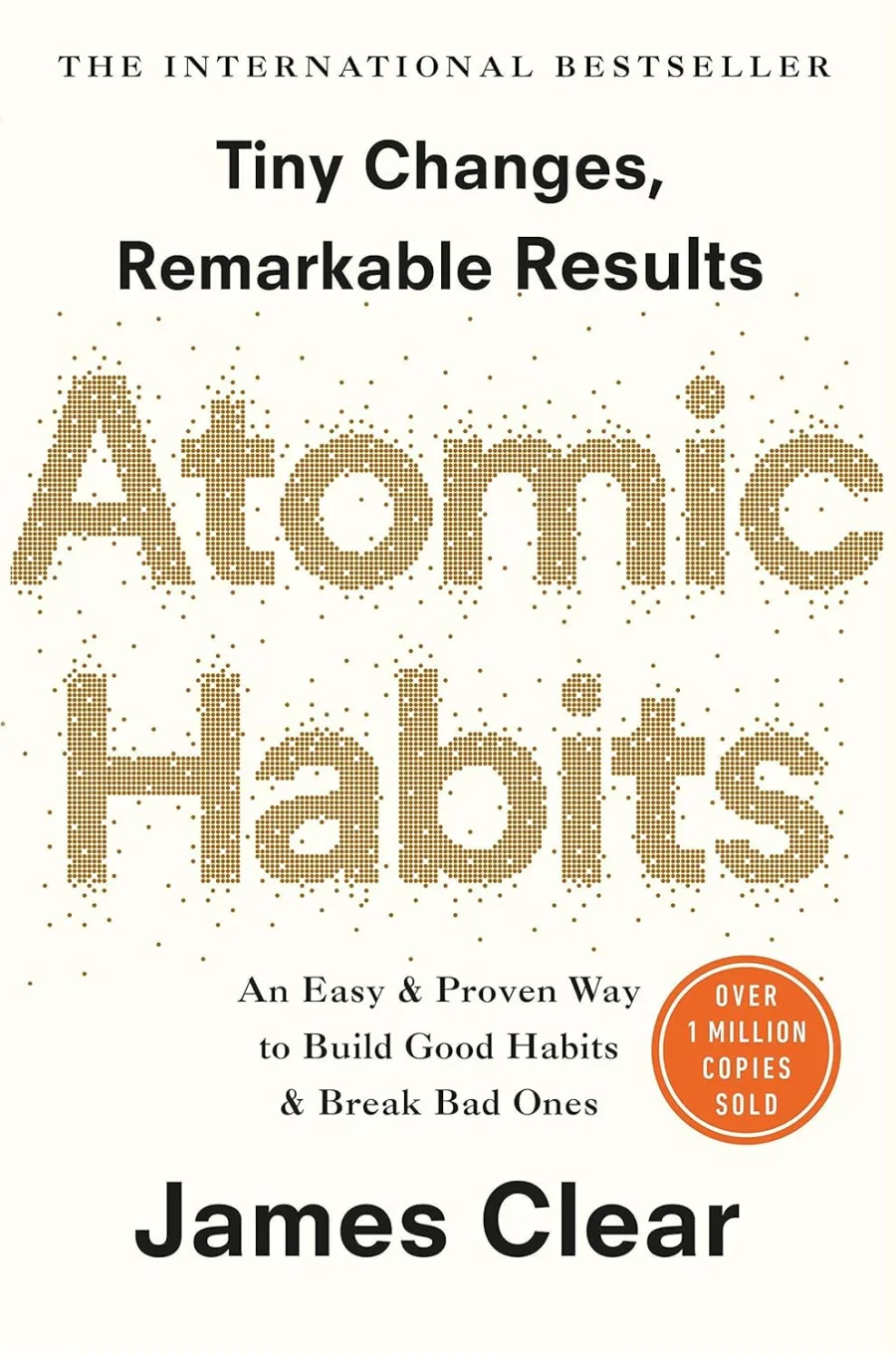
Download Cover Image
Do you want to download the full cover image for Atomic Habits: An Easy and Proven Way to Build Good Habits and Break Bad Ones?