
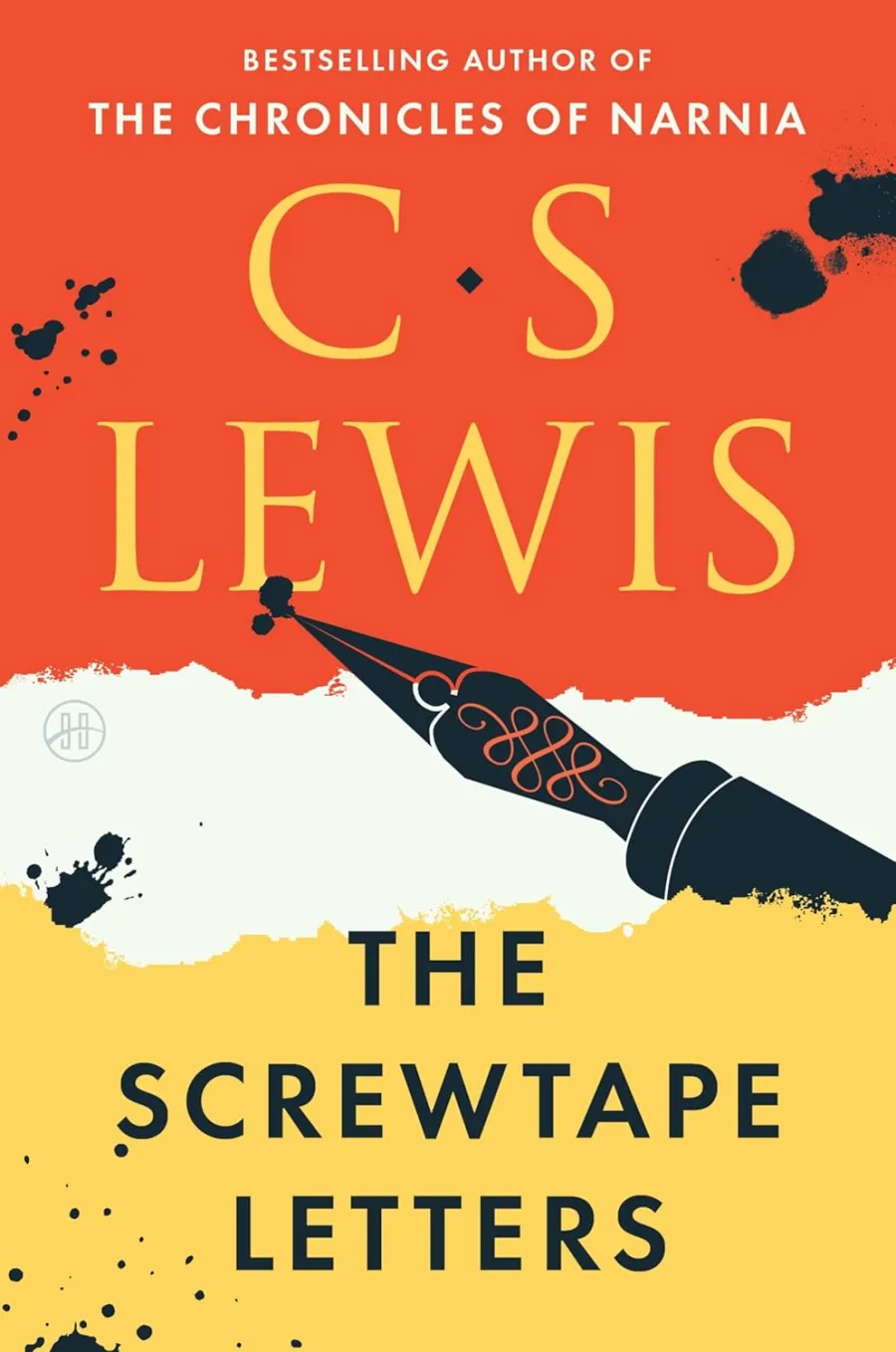
The Screwtape Letters
Paperback
• 224 Pages
• USD 17.99
• English
• 9780060652937
No ratings yet
| Publisher | HarperOne |
|---|---|
| ISBN13 | 9780060652937 |
| ASIN/SKU | 0060652934 |
| Book Format | Paperback |
| Language | English |
| Pages | 224 |
| List Price | USD 17.99 |
| Publishing Date | 06/02/2021 |
| Dimensions | 5.43 x 0.43 x 7.99 inches |
| Weight | 2.31 pounds |
| Book Code | BD00055697 |
Buy this Book
Amazon Stores
Ebook Stores
Other Stores
Discover The Screwtape Letters by C. S. Lewis. This book is published by HarperOne in Paperback format, ISBN 9780060652937, ASIN 0060652934, under Christian Books and Bibles, Religious Humor, Religious Ethics.
Book Description
A Masterpiece of Satire on Hell’s Latest Novelties and Heaven’s Unanswerable Answer
C.S. Lewis’s The Screwtape Letters has entertained and enlightened readers the world over with its sly and ironic portrayal of human life and foibles from the unique vantage point of Screwtape, a highly placed assistant to “Our Father Below.” At once wildly comic, deadly serious, and strikingly original, C.S. Lewis gives us the correspondence of the wordly-wise devil to his nephew Wormwood, a novice demon in charge of securing the damnation of an ordinary young man. The Screwtape Letters is the most engaging account of temptation—and triumph over it—ever written.
C.S. Lewis’s The Screwtape Letters has entertained and enlightened readers the world over with its sly and ironic portrayal of human life and foibles from the unique vantage point of Screwtape, a highly placed assistant to “Our Father Below.” At once wildly comic, deadly serious, and strikingly original, C.S. Lewis gives us the correspondence of the wordly-wise devil to his nephew Wormwood, a novice demon in charge of securing the damnation of an ordinary young man. The Screwtape Letters is the most engaging account of temptation—and triumph over it—ever written.
Author Biography
CLIVE STAPLES LEWIS (1898-1963) was one of the intellectual giants of the twentieth century and arguably one of the most influential writers of his day. He was a fellow and tutor in English Literature at Oxford University until 1954 when he was unanimously elected to the Chair of Medieval and Renaissance English at Cambridge University, a position he held until his retirement. He wrote more than thirty books, allowing him to reach a vast audience, and his works continue to attract thousands of new readers every year. His most distinguished and popular accomplishments include Mere Christianity, Out of the Silent Planet, The Great Divorce, The Screwtape Letters, and the universally acknowledged classics, the Chronicles of Narnia. To date, the Narnia books have sold over 100 million copies and been transformed into three major motion pictures.
Editorial Reviews
“This book is sparkling yet truly reverent, in fact a perfect joy, and should become a classic.” - Guardian
“Excellent, hard-hitting, challenging, provoking.” - Observer
“C.S. Lewis is the ideal persuader for the half-convinced, for the good man who would like to be a Christian but finds his intellect getting in the way.” - New York Times Book Review
“Apparently this Oxford don and Cambridge professor is going to be around for a long time; he calls himself a dinosaur but he seems to speak to people where they are.” - The Washington Post Book World
“Why get a new Screwtape Letters? I love the feel and look of this annotated edition. …I love the addition of red ink inside this book for the notes. There are a couple of hundred helpful annotations that first-time and veteran readers will find intriguing.” - Read the Spirit
“[The Screwtape Letters] show[s] his ability to dramatize: to set forth an attractive vision of the Christian life, proceeding by means of character and plot to narrate an engaging story, everything colorful, vibrant, and active.” - Christianity Today
“C. S. Lewis understood, like few in the past century, just how deeply faith is both imaginative and rational.” - Christianity Today
“Excellent, hard-hitting, challenging, provoking.” - Observer
“C.S. Lewis is the ideal persuader for the half-convinced, for the good man who would like to be a Christian but finds his intellect getting in the way.” - New York Times Book Review
“Apparently this Oxford don and Cambridge professor is going to be around for a long time; he calls himself a dinosaur but he seems to speak to people where they are.” - The Washington Post Book World
“Why get a new Screwtape Letters? I love the feel and look of this annotated edition. …I love the addition of red ink inside this book for the notes. There are a couple of hundred helpful annotations that first-time and veteran readers will find intriguing.” - Read the Spirit
“[The Screwtape Letters] show[s] his ability to dramatize: to set forth an attractive vision of the Christian life, proceeding by means of character and plot to narrate an engaging story, everything colorful, vibrant, and active.” - Christianity Today
“C. S. Lewis understood, like few in the past century, just how deeply faith is both imaginative and rational.” - Christianity Today
Book Summary
The Screwtape Letters by C. S. Lewis is a classic Christian book about temptation, human weakness, spiritual warfare, and the subtle ways people can be pulled away from God without realizing it. First published in 1942, the book is written as a series of fictional letters from Screwtape, an experienced demon, to his inexperienced nephew Wormwood, who has been assigned to tempt a human being known simply as “the Patient.” The unusual perspective is the heart of the book: Lewis asks readers to look at ordinary human behavior from the perspective of Hell. Instead of giving demons dramatic supernatural powers, he portrays them as patient, calculating tempters who prefer small distractions, rationalizations, resentments, and habits over spectacular evil. The result is a witty, unsettling, and deeply insightful exploration of how people can gradually lose sight of what is good.
The basic premise of The Screwtape Letters is simple but brilliant. Screwtape is teaching Wormwood how to keep the Patient spiritually confused and prevent him from becoming a committed Christian. The letters therefore reverse the normal moral perspective. God becomes “the Enemy,” while Satan and the demons refer to themselves as the forces working for their own cause. Lewis uses this inversion to expose temptation in a way that direct preaching might not. When Screwtape explains how to destroy a person's spiritual life, readers begin to recognize the same patterns in themselves. The humor makes the lessons accessible, but underneath the humor is a serious warning: the most dangerous temptations are often not the ones that look obviously evil.
One of Lewis's most important ideas is that evil frequently succeeds through distraction rather than open rebellion. Screwtape repeatedly advises Wormwood not to make the Patient think too deeply about God. If the Patient begins reading a serious Christian book or attending church, Wormwood does not necessarily need to argue against Christianity. Instead, he can encourage the Patient to think about something trivial. Perhaps the Patient becomes hungry, remembers an unfinished task, notices an annoying person nearby, or starts worrying about something unrelated. The objective is to interrupt concentration before the person reaches an important insight. Lewis's point is remarkably relevant to modern life: people can spend enormous amounts of time consuming information, entertainment, notifications, and arguments without ever stopping long enough to ask what is ultimately true or meaningful.
The book also emphasizes the difference between real temptation and dramatic temptation. Screwtape understands that human beings often imagine temptation as an obvious invitation to commit some terrible act. In reality, many moral failures begin with seemingly harmless choices. A small resentment becomes bitterness. A little dishonesty becomes a habit. Occasional vanity becomes an obsession with other people's approval. A reasonable desire for comfort becomes selfishness. Lewis is interested in this gradual process because it reveals how character is formed. People rarely wake up one morning having completely transformed themselves into someone they never intended to become. Instead, repeated small choices slowly shape who they are.
A particularly memorable theme in The Screwtape Letters is the danger of pride. Screwtape understands that pride can be useful because it makes people focus on themselves and compare themselves with others. Even apparently virtuous behavior can become an opportunity for pride. A person can become proud of being humble, proud of being morally superior, proud of having the correct religious beliefs, or proud of belonging to the “right” group. Lewis exposes the absurdity of this cycle by allowing a demon to celebrate it. His underlying Christian message is that genuine humility is not constant self-hatred; it is freedom from the need to make oneself the center of everything.
Another major subject is relationships. Screwtape gives Wormwood advice about the Patient's interactions with family, friends, neighbors, and other Christians. Lewis understands that people often behave differently toward strangers than toward those closest to them. A person may appear patient, generous, and polite in public while being irritable, dismissive, or cruel at home. For Screwtape, this is an opportunity. He wants Wormwood to encourage the Patient to magnify the faults of people around him while minimizing his own faults. This creates resentment and makes ordinary relationships increasingly difficult.
Lewis is especially sharp when discussing irritation and misunderstanding. Two people can have completely different assumptions about what happened during a conversation. Each person interprets the other's words according to their own mood and expectations. A minor misunderstanding can then become a serious emotional conflict. Screwtape's strategy is to make each person believe that his own interpretation is obviously correct. The lesson is both psychological and spiritual: much conflict comes not from deliberate hatred but from people refusing to question their own perceptions.
The book also explores the relationship between pleasure and temptation. Lewis does not portray pleasure itself as evil. In fact, one of his cleverest observations is that God created many things that human beings genuinely enjoy. The problem occurs when good things are detached from their proper place. Food, friendship, romance, ambition, entertainment, comfort, and success can all become destructive when they become ends in themselves. Screwtape's goal is therefore not always to make the Patient hate good things. Sometimes he wants the Patient to love a good thing too much, use it selfishly, or allow it to replace God.
The Screwtape Letters also contains a powerful discussion of prayer. Screwtape recognizes that prayer can become spiritually meaningful, so he encourages Wormwood to make the Patient think about prayer rather than actually pray. The Patient might worry about whether he is using the correct words, whether he feels sufficiently religious, or whether he is doing the practice correctly. The temptation is to become preoccupied with the mechanics of religion instead of developing a genuine relationship with God. Lewis repeatedly returns to the distinction between outward religious activity and inward transformation.
One of the book's deepest themes is the human tendency to live either in the past or the future instead of the present. Screwtape wants the Patient to become consumed by regret about the past or anxiety about what might happen in the future. Lewis presents the present moment as the place where real choices occur. A person cannot change yesterday, and tomorrow has not yet arrived. Yet people can waste enormous amounts of emotional energy on both. By constantly pulling attention away from the present, temptation can prevent people from actually living responsibly and faithfully in the moment they have been given.
Lewis also addresses suffering and difficulty. From the demonic perspective, suffering can be dangerous because hardship sometimes drives people toward God. A comfortable person may ignore spiritual questions, but a person facing pain may begin asking deeper questions about meaning, mortality, dependence, and hope. Screwtape therefore recognizes that adversity does not automatically destroy faith. Sometimes it strengthens it. This is an important reversal in the book: what demons regard as a threat can become an opportunity for spiritual growth.
The relationship between churchgoing and genuine Christianity is another recurring concern. Screwtape is not particularly frightened by superficial religion. Someone can attend church, participate in religious conversations, and still remain spiritually self-centered. What matters is whether the person's life is actually being transformed. Lewis therefore distinguishes between religious identity and Christian character. The Patient's goal is not simply to “look Christian” but to become increasingly aligned with God.
As the letters progress, the Patient's spiritual journey becomes increasingly important. Wormwood experiences both successes and failures, while Screwtape's confidence sometimes gives way to frustration. The Patient's choices demonstrate Lewis's central argument: spiritual life is shaped through countless ordinary decisions. Eventually, the consequences of those decisions become profound. Lewis uses the fictional correspondence to show that what appears insignificant from one day's perspective may become extremely important when repeated over months and years.
The conclusion provides a dramatic inversion of Screwtape's entire project. What the demons regard as their victory or defeat is measured in spiritual terms completely opposite to human expectations. Lewis reminds readers that life is moving toward an ultimate reality beyond temporary earthly concerns. The Patient's death reveals the limits of the demons' influence and the ultimate significance of his spiritual condition. The ending reinforces the book's central warning: human beings have less time than they imagine, and the choices they make with that time matter.
Ultimately, The Screwtape Letters by C. S. Lewis is much more than a collection of clever letters from fictional demons. It is a penetrating Christian examination of how temptation works, how evil enters ordinary life, why pride is dangerous, how relationships become corrupted, and how people gradually drift away from what they know is good. Lewis's genius lies in making the reader laugh at the demons while slowly realizing that their advice sounds disturbingly familiar. The book encourages readers to pay attention to small habits, private thoughts, emotional reactions, distractions, and rationalizations. Its enduring message is that spiritual failure does not always arrive dramatically. Often it begins quietly—with a distraction, an irritation, a little pride, an unnecessary worry, or a seemingly harmless compromise. By learning to recognize these patterns, Lewis suggests, people can become more attentive to their inner lives and more deliberate about choosing truth, humility, love, faith, and God.
The basic premise of The Screwtape Letters is simple but brilliant. Screwtape is teaching Wormwood how to keep the Patient spiritually confused and prevent him from becoming a committed Christian. The letters therefore reverse the normal moral perspective. God becomes “the Enemy,” while Satan and the demons refer to themselves as the forces working for their own cause. Lewis uses this inversion to expose temptation in a way that direct preaching might not. When Screwtape explains how to destroy a person's spiritual life, readers begin to recognize the same patterns in themselves. The humor makes the lessons accessible, but underneath the humor is a serious warning: the most dangerous temptations are often not the ones that look obviously evil.
One of Lewis's most important ideas is that evil frequently succeeds through distraction rather than open rebellion. Screwtape repeatedly advises Wormwood not to make the Patient think too deeply about God. If the Patient begins reading a serious Christian book or attending church, Wormwood does not necessarily need to argue against Christianity. Instead, he can encourage the Patient to think about something trivial. Perhaps the Patient becomes hungry, remembers an unfinished task, notices an annoying person nearby, or starts worrying about something unrelated. The objective is to interrupt concentration before the person reaches an important insight. Lewis's point is remarkably relevant to modern life: people can spend enormous amounts of time consuming information, entertainment, notifications, and arguments without ever stopping long enough to ask what is ultimately true or meaningful.
The book also emphasizes the difference between real temptation and dramatic temptation. Screwtape understands that human beings often imagine temptation as an obvious invitation to commit some terrible act. In reality, many moral failures begin with seemingly harmless choices. A small resentment becomes bitterness. A little dishonesty becomes a habit. Occasional vanity becomes an obsession with other people's approval. A reasonable desire for comfort becomes selfishness. Lewis is interested in this gradual process because it reveals how character is formed. People rarely wake up one morning having completely transformed themselves into someone they never intended to become. Instead, repeated small choices slowly shape who they are.
A particularly memorable theme in The Screwtape Letters is the danger of pride. Screwtape understands that pride can be useful because it makes people focus on themselves and compare themselves with others. Even apparently virtuous behavior can become an opportunity for pride. A person can become proud of being humble, proud of being morally superior, proud of having the correct religious beliefs, or proud of belonging to the “right” group. Lewis exposes the absurdity of this cycle by allowing a demon to celebrate it. His underlying Christian message is that genuine humility is not constant self-hatred; it is freedom from the need to make oneself the center of everything.
Another major subject is relationships. Screwtape gives Wormwood advice about the Patient's interactions with family, friends, neighbors, and other Christians. Lewis understands that people often behave differently toward strangers than toward those closest to them. A person may appear patient, generous, and polite in public while being irritable, dismissive, or cruel at home. For Screwtape, this is an opportunity. He wants Wormwood to encourage the Patient to magnify the faults of people around him while minimizing his own faults. This creates resentment and makes ordinary relationships increasingly difficult.
Lewis is especially sharp when discussing irritation and misunderstanding. Two people can have completely different assumptions about what happened during a conversation. Each person interprets the other's words according to their own mood and expectations. A minor misunderstanding can then become a serious emotional conflict. Screwtape's strategy is to make each person believe that his own interpretation is obviously correct. The lesson is both psychological and spiritual: much conflict comes not from deliberate hatred but from people refusing to question their own perceptions.
The book also explores the relationship between pleasure and temptation. Lewis does not portray pleasure itself as evil. In fact, one of his cleverest observations is that God created many things that human beings genuinely enjoy. The problem occurs when good things are detached from their proper place. Food, friendship, romance, ambition, entertainment, comfort, and success can all become destructive when they become ends in themselves. Screwtape's goal is therefore not always to make the Patient hate good things. Sometimes he wants the Patient to love a good thing too much, use it selfishly, or allow it to replace God.
The Screwtape Letters also contains a powerful discussion of prayer. Screwtape recognizes that prayer can become spiritually meaningful, so he encourages Wormwood to make the Patient think about prayer rather than actually pray. The Patient might worry about whether he is using the correct words, whether he feels sufficiently religious, or whether he is doing the practice correctly. The temptation is to become preoccupied with the mechanics of religion instead of developing a genuine relationship with God. Lewis repeatedly returns to the distinction between outward religious activity and inward transformation.
One of the book's deepest themes is the human tendency to live either in the past or the future instead of the present. Screwtape wants the Patient to become consumed by regret about the past or anxiety about what might happen in the future. Lewis presents the present moment as the place where real choices occur. A person cannot change yesterday, and tomorrow has not yet arrived. Yet people can waste enormous amounts of emotional energy on both. By constantly pulling attention away from the present, temptation can prevent people from actually living responsibly and faithfully in the moment they have been given.
Lewis also addresses suffering and difficulty. From the demonic perspective, suffering can be dangerous because hardship sometimes drives people toward God. A comfortable person may ignore spiritual questions, but a person facing pain may begin asking deeper questions about meaning, mortality, dependence, and hope. Screwtape therefore recognizes that adversity does not automatically destroy faith. Sometimes it strengthens it. This is an important reversal in the book: what demons regard as a threat can become an opportunity for spiritual growth.
The relationship between churchgoing and genuine Christianity is another recurring concern. Screwtape is not particularly frightened by superficial religion. Someone can attend church, participate in religious conversations, and still remain spiritually self-centered. What matters is whether the person's life is actually being transformed. Lewis therefore distinguishes between religious identity and Christian character. The Patient's goal is not simply to “look Christian” but to become increasingly aligned with God.
As the letters progress, the Patient's spiritual journey becomes increasingly important. Wormwood experiences both successes and failures, while Screwtape's confidence sometimes gives way to frustration. The Patient's choices demonstrate Lewis's central argument: spiritual life is shaped through countless ordinary decisions. Eventually, the consequences of those decisions become profound. Lewis uses the fictional correspondence to show that what appears insignificant from one day's perspective may become extremely important when repeated over months and years.
The conclusion provides a dramatic inversion of Screwtape's entire project. What the demons regard as their victory or defeat is measured in spiritual terms completely opposite to human expectations. Lewis reminds readers that life is moving toward an ultimate reality beyond temporary earthly concerns. The Patient's death reveals the limits of the demons' influence and the ultimate significance of his spiritual condition. The ending reinforces the book's central warning: human beings have less time than they imagine, and the choices they make with that time matter.
Ultimately, The Screwtape Letters by C. S. Lewis is much more than a collection of clever letters from fictional demons. It is a penetrating Christian examination of how temptation works, how evil enters ordinary life, why pride is dangerous, how relationships become corrupted, and how people gradually drift away from what they know is good. Lewis's genius lies in making the reader laugh at the demons while slowly realizing that their advice sounds disturbingly familiar. The book encourages readers to pay attention to small habits, private thoughts, emotional reactions, distractions, and rationalizations. Its enduring message is that spiritual failure does not always arrive dramatically. Often it begins quietly—with a distraction, an irritation, a little pride, an unnecessary worry, or a seemingly harmless compromise. By learning to recognize these patterns, Lewis suggests, people can become more attentive to their inner lives and more deliberate about choosing truth, humility, love, faith, and God.
Sample Chapters
Sample Chapters will be added soon…
Reader Reviews
No reviews yet.
The Screwtape Letters
Download Cover Image
Do you want to download the full cover image for The Screwtape Letters?