
The Ruthless Elimination of Hurry
Hardcover
• 304 Pages
• USD 25.00
• English
• 9780525653097
No ratings yet
| Publisher | WaterBrook |
|---|---|
| ISBN13 | 9780525653097 |
| ASIN/SKU | 0525653090 |
| Book Format | Hardcover |
| Language | English |
| Pages | 304 |
| List Price | USD 25.00 |
| Publishing Date | 29/10/2019 |
| Dimensions | 5.38 x 1.11 x 8.27 inches |
| Weight | 14.4 ounces |
| Book Code | BD00055700 |
Buy this Book
Amazon Stores
Ebook Stores
Other Stores
Discover The Ruthless Elimination of Hurry by John Mark Comer. This book is published by WaterBrook in Hardcover format, ISBN 9780525653097, ASIN 0525653090, under Christian Books and Bibles, Christian Discipleship, Spiritual Self-Help.
Book Description
THE NATIONAL BESTSELLER WITH ONE MILLION COPIES SOLD! • AN ECPA BESTSELLER • A compelling emotional and spiritual case against hurry and in favor of a slower, simpler way of life—from the author of Practicing the Way
“Prophetic, practical, and profoundly life giving . . . provides a way forward that creates hope, hunger, and a vision of a beautiful life. I consider this required reading.”—Jon Tyson, lead pastor of the Church of the City New York and author of Beautiful Resistance
“Who am I becoming?”
That was the question nagging pastor and author John Mark Comer. Outwardly, he appeared successful. But inwardly, things weren’t pretty. So he turned to a trusted mentor for guidance and heard these words:
“Ruthlessly eliminate hurry from your life. Hurry is the great enemy of the spiritual life.”
It wasn’t the response he expected, but it was—and continues to be—the answer he needs. Too often we treat the symptoms of toxicity in our modern world instead of trying to pinpoint the cause. A growing number of voices are pointing at hurry, or busyness, as a root of much evil.
Within the pages of this book, you’ll find a fascinating roadmap to staying emotionally healthy and spiritually alive in the chaos of the modern world.
“Prophetic, practical, and profoundly life giving . . . provides a way forward that creates hope, hunger, and a vision of a beautiful life. I consider this required reading.”—Jon Tyson, lead pastor of the Church of the City New York and author of Beautiful Resistance
“Who am I becoming?”
That was the question nagging pastor and author John Mark Comer. Outwardly, he appeared successful. But inwardly, things weren’t pretty. So he turned to a trusted mentor for guidance and heard these words:
“Ruthlessly eliminate hurry from your life. Hurry is the great enemy of the spiritual life.”
It wasn’t the response he expected, but it was—and continues to be—the answer he needs. Too often we treat the symptoms of toxicity in our modern world instead of trying to pinpoint the cause. A growing number of voices are pointing at hurry, or busyness, as a root of much evil.
Within the pages of this book, you’ll find a fascinating roadmap to staying emotionally healthy and spiritually alive in the chaos of the modern world.
Author Biography
John Mark Comer is the New York Times bestselling author of eight books, including Into the quiet and Practicing the Way, which received the 2025 Christian Book of the Year award from the ECPA. His book The Ruthless Elimination of Hurry has sold more than a million copies and been translated into over twenty languages.
He's also a pastor and the founder of Practicing the Way, an organization that helps churches form lifelong apprentices of Jesus.
The Comers live in the Santa Monica Mountains just outside LA.
He's also a pastor and the founder of Practicing the Way, an organization that helps churches form lifelong apprentices of Jesus.
The Comers live in the Santa Monica Mountains just outside LA.
Editorial Reviews
“As someone all too familiar with ‘hurry sickness,’ I desperately needed this book.”—Scott Harrison, New York Times best-selling author of Thirst
“John Mark Comer is a hugely talented leader, speaker, and writer. You will find lots of wise advice here.”—Nicky Gumbel, vicar of Holy Trinity Brompton, London
“Necessary. Freeing.”—Annie F. Downs, best-selling author of 100 Days to Brave and Remember God
“Never has a generation needed a book as much as this. John Mark has beautifully written a remedy for our overworked and tired souls.”—Jeremy and Audrey Roloff, New York Times best-selling authors of A Love Letter Life
“Great guy; even better book!”—Bob Goff, author of the New York Times bestsellers Love Does and Everybody, Always
“Like a tall glass of ice cold water on the hottest day of the year, The Ruthless Elimination of Hurry is refreshing, revitalizing, and a shock to the system. Beautifully and compellingly written by one of our foremost thinkers, it is a prophetic message for our time.”—Pete Greig, founder of the 24-7 Prayer movement and senior pastor of Emmaus Rd, Guildford, UK
“There are those rare books that every single waking person needs to immediately go read. This is that book. We’ve found no better conversation or a more much-needed antidote to our culture’s problem of busyness and hurry than John Mark’s words in this book. Beyond helpful and encouraging and insightful to us!”—Alyssa and Jefferson Bethke, New York Times best-selling authors of Jesus > Religion and Love That Lasts
“John Mark Comer has given a gift to the church. This book is prophetic, practical, and profoundly life giving. He confronts the idolatry of speed that is causing so much emotional and relational trauma, and he provides a way forward that creates hope, hunger, and a vision of a beautiful life. I consider this required reading.”—Jon Tyson, lead pastor of the Church of the City New York and author of The Burden Is Light
“John Mark Comer’s transparency invites us to reconsider how we live our lives by getting straight to the point: if we don’t eliminate our busyness, we just may eliminate our souls. The Ruthless Elimination of Hurry will inspire you to make the hard but practical choices that will utterly change your trajectory for the better.”—Gabe Lyons, president of Q Ideas and author of Good Faith
“Living as a spiritually and mentally healthy follower of Jesus in our technological, calendar-driven culture is, it turns out, quite difficult. In this book John Mark Comer shares his story of discovering a different way of life that’s inspired by the way and wisdom of Jesus. This is a practical, personal, and challenging call to imagine new ways that our lives can imitate Jesus.”—Tim Mackie, cofounder of the Bible Project
“John Mark Comer is a hugely talented leader, speaker, and writer. You will find lots of wise advice here.”—Nicky Gumbel, vicar of Holy Trinity Brompton, London
“Necessary. Freeing.”—Annie F. Downs, best-selling author of 100 Days to Brave and Remember God
“Never has a generation needed a book as much as this. John Mark has beautifully written a remedy for our overworked and tired souls.”—Jeremy and Audrey Roloff, New York Times best-selling authors of A Love Letter Life
“Great guy; even better book!”—Bob Goff, author of the New York Times bestsellers Love Does and Everybody, Always
“Like a tall glass of ice cold water on the hottest day of the year, The Ruthless Elimination of Hurry is refreshing, revitalizing, and a shock to the system. Beautifully and compellingly written by one of our foremost thinkers, it is a prophetic message for our time.”—Pete Greig, founder of the 24-7 Prayer movement and senior pastor of Emmaus Rd, Guildford, UK
“There are those rare books that every single waking person needs to immediately go read. This is that book. We’ve found no better conversation or a more much-needed antidote to our culture’s problem of busyness and hurry than John Mark’s words in this book. Beyond helpful and encouraging and insightful to us!”—Alyssa and Jefferson Bethke, New York Times best-selling authors of Jesus > Religion and Love That Lasts
“John Mark Comer has given a gift to the church. This book is prophetic, practical, and profoundly life giving. He confronts the idolatry of speed that is causing so much emotional and relational trauma, and he provides a way forward that creates hope, hunger, and a vision of a beautiful life. I consider this required reading.”—Jon Tyson, lead pastor of the Church of the City New York and author of The Burden Is Light
“John Mark Comer’s transparency invites us to reconsider how we live our lives by getting straight to the point: if we don’t eliminate our busyness, we just may eliminate our souls. The Ruthless Elimination of Hurry will inspire you to make the hard but practical choices that will utterly change your trajectory for the better.”—Gabe Lyons, president of Q Ideas and author of Good Faith
“Living as a spiritually and mentally healthy follower of Jesus in our technological, calendar-driven culture is, it turns out, quite difficult. In this book John Mark Comer shares his story of discovering a different way of life that’s inspired by the way and wisdom of Jesus. This is a practical, personal, and challenging call to imagine new ways that our lives can imitate Jesus.”—Tim Mackie, cofounder of the Bible Project
Book Summary
The Ruthless Elimination of Hurry: How to Stay Emotionally Healthy and Spiritually Alive in the Chaos of Modern Life by John Mark Comer is a practical Christian book about slowing down, recovering inner peace, and learning to live more intentionally in the presence of God. Comer begins with a problem that has become almost universal in modern life: people are constantly busy, distracted, connected, and mentally overloaded, yet often feel increasingly empty. Phones, social media, work, entertainment, notifications, endless choices, and pressure to accomplish more can create a life in which there is very little physical stillness or emotional quiet. In The Ruthless Elimination of Hurry, Comer argues that hurry is not simply a scheduling problem. It is a deeper spiritual problem that can prevent people from becoming the kind of person they want to be. His solution is not to escape ordinary responsibilities but to build a slower, more attentive way of living modeled on the life and teachings of Jesus.
The book's central question is especially relevant to anyone searching for a summary of The Ruthless Elimination of Hurry, how to slow down, how to stop being busy all the time, Christian ways to deal with stress and distraction, or how to develop a deeper relationship with God. Comer presents the problem in simple but powerful terms: it is difficult to love God, love other people, and live with emotional health when life is constantly rushed. A hurried person may sincerely want patience, kindness, compassion, and spiritual maturity, but hurry continually pushes the mind toward the next task. Instead of fully experiencing the present moment, the person is already thinking about what comes next. Comer therefore asks readers to consider whether their lifestyle is actually compatible with the kind of character they hope to develop.
One of Comer's most important arguments is that hurry is incompatible with love. Love requires attention. To love another person means being willing to notice them, listen to them, and remain emotionally present with them. Hurry does the opposite. It makes people impatient and easily irritated because every interruption feels like an obstacle between them and the next thing on their list. Someone who is constantly rushing may technically spend time with family or friends while mentally remaining somewhere else. Comer suggests that this is one reason modern people can be surrounded by others yet still experience loneliness. Presence is a form of love, and a hurried life makes genuine presence increasingly difficult.
Comer draws heavily upon the life of Jesus Christ, who becomes the model for an alternative way of living. The Gospels portray Jesus as someone with an enormous mission and limited time, yet He was not controlled by hurry. He could stop for individuals, withdraw to quiet places, eat slowly with people, listen to questions, and respond to interruptions. Comer sees this as profoundly significant. If Jesus could live with purpose without living in constant haste, then Christians do not need to accept frantic busyness as an unavoidable part of meaningful life. The issue is not whether life contains demands but whether those demands control the pace and character of the person.
This leads Comer to distinguish busyness from hurry. Being busy is not automatically wrong. People have jobs, families, responsibilities, commitments, and important work. Some seasons of life genuinely require extraordinary effort. Hurry, however, is an internal condition characterized by constant pressure, restlessness, impatience, and an inability to be fully present. A person can be busy without being hurried, just as someone can have relatively few responsibilities while remaining internally frantic. The goal is therefore not simply to reduce the number of activities but to change the way one inhabits life.
The book identifies technology and digital distraction as major contributors to this problem. Smartphones and social media have made entertainment, information, comparison, shopping, news, and communication available almost continuously. Technology can be useful, but Comer argues that its constant presence trains people toward distraction and short attention spans. Instead of allowing the mind to become quiet, people automatically reach for their phones whenever they experience boredom, discomfort, or waiting. This can gradually make silence feel uncomfortable. The result is a life filled with stimulation but lacking reflection.
Comer therefore advocates what he calls “digital minimalism” or a more intentional relationship with technology. The objective is not to reject technology completely but to ensure that technology remains a servant rather than becoming a master. Readers are encouraged to examine which digital habits genuinely contribute to their lives and which simply consume attention. Social media, entertainment, notifications, and constant online engagement should be evaluated according to whether they help people become healthier, more loving, and more spiritually attentive. The broader lesson is that attention is valuable, and whatever repeatedly captures attention eventually shapes the person.
Another major practice Comer recommends is silence and solitude. These practices can initially seem strange or even uncomfortable because modern life provides very few opportunities for genuine quiet. Silence means deliberately stepping away from constant noise and input, while solitude means spending time alone with God and oneself. Comer presents these practices not as ways of becoming antisocial but as ways of becoming more deeply grounded. When external stimulation is reduced, people have an opportunity to notice their thoughts, emotions, fears, desires, and relationship with God.
Closely connected to silence and solitude is the Christian practice of Sabbath. Comer presents Sabbath as a deliberate period of stopping ordinary work and allowing oneself to rest, worship, enjoy life, and reconnect with God and other people. In a culture that often measures human value by productivity, Sabbath becomes a powerful declaration that a person's worth does not depend upon constant achievement. Rest is not merely what happens when all useful work is finished. It is a necessary rhythm of a healthy human life.
The book also emphasizes simplicity. Modern culture frequently tells people that happiness can be found through acquiring more—more money, more possessions, more experiences, more followers, more achievements, and more entertainment. Comer argues that constantly pursuing “more” can produce a subtle form of slavery. Every new possession or commitment can create another responsibility. Simplicity, by contrast, involves intentionally removing unnecessary commitments and distractions so that there is room for what matters most. For Christians, that means creating space for God, relationships, service, rest, and meaningful work.
One of the book's deeper insights is that spiritual formation happens through repeated habits. People do not suddenly become patient, peaceful, loving, or emotionally healthy simply because they sincerely desire these qualities. Character develops through the way people repeatedly spend their time and attention. Comer therefore treats spiritual disciplines as practical training rather than religious obligations. Prayer, Scripture reading, solitude, Sabbath, community, worship, and other practices gradually shape a person's inner life. The question is not simply, “What do I believe?” but also, “What kind of person is my lifestyle making me?”
Comer repeatedly returns to the idea of becoming an apprentice of Jesus. Christianity, in his understanding, is more than agreeing with certain doctrines or attending church. It involves learning to live like Jesus. An apprentice watches a master, adopts the master's practices, and gradually develops the master's skills and character. Similarly, Christians are called to organize their lives around Jesus so that His way of living becomes increasingly natural. This requires intentionality because the surrounding culture is already discipling people through advertising, technology, consumerism, entertainment, and social expectations.
The book's emphasis on emotional health is equally important. Hurry often produces irritability, anxiety, impatience, shallow relationships, and difficulty concentrating. When people constantly move from one stimulus to another, they may lose touch with their own inner condition. Slowing down creates space for emotional awareness. A person may discover grief, loneliness, anger, insecurity, or exhaustion that was previously hidden beneath activity. Comer argues that facing these emotions is healthier than continually distracting oneself from them.
Importantly, The Ruthless Elimination of Hurry does not present slowing down as an excuse for laziness or irresponsibility. Comer is not arguing that people should abandon ambition, meaningful work, or service. Instead, he challenges the assumption that maximum productivity is the ultimate goal of life. A person can accomplish many things and still become emotionally and spiritually unhealthy. Conversely, a slower life can sometimes make a person more effective because attention becomes focused, relationships become deeper, and decisions become more deliberate.
Ultimately, the main message of The Ruthless Elimination of Hurry is that the pace of your life matters because the pace of your life shapes the person you become. If a person wants to become more loving, peaceful, patient, attentive, and spiritually alive, then the habits of hurry and constant distraction must be confronted intentionally. The answer is not simply to make a better timetable but to create a different rhythm of life.
For readers searching for John Mark Comer books, The Ruthless Elimination of Hurry summary, Christian books about slowing down, how to overcome busyness, spiritual disciplines for modern life, or ways to reduce digital distraction, the book offers a practical and accessible framework. Its message is particularly powerful because it addresses a problem that often feels normal precisely because almost everyone experiences it. Comer reminds readers that constant busyness is not necessarily evidence of a meaningful life. Sometimes the most important spiritual decision is to stop, become present, and make room for God.
The book ultimately invites readers to imagine a different kind of existence: a life in which technology is used intentionally, relationships receive genuine attention, work has boundaries, rest is valued, silence is welcomed, and God is not squeezed into the leftover spaces of the day. Eliminating hurry is therefore not about doing nothing; it is about making room to become someone different. For Comer, the goal is a life modeled after Jesus—a life marked by purpose without panic, productivity without slavery, relationships without distraction, and spiritual depth without constant noise. In that sense, The Ruthless Elimination of Hurry is not simply a book about time management. It is an invitation to reconsider the entire rhythm of modern life and to choose, deliberately, a slower and more attentive way of following Jesus.
The book's central question is especially relevant to anyone searching for a summary of The Ruthless Elimination of Hurry, how to slow down, how to stop being busy all the time, Christian ways to deal with stress and distraction, or how to develop a deeper relationship with God. Comer presents the problem in simple but powerful terms: it is difficult to love God, love other people, and live with emotional health when life is constantly rushed. A hurried person may sincerely want patience, kindness, compassion, and spiritual maturity, but hurry continually pushes the mind toward the next task. Instead of fully experiencing the present moment, the person is already thinking about what comes next. Comer therefore asks readers to consider whether their lifestyle is actually compatible with the kind of character they hope to develop.
One of Comer's most important arguments is that hurry is incompatible with love. Love requires attention. To love another person means being willing to notice them, listen to them, and remain emotionally present with them. Hurry does the opposite. It makes people impatient and easily irritated because every interruption feels like an obstacle between them and the next thing on their list. Someone who is constantly rushing may technically spend time with family or friends while mentally remaining somewhere else. Comer suggests that this is one reason modern people can be surrounded by others yet still experience loneliness. Presence is a form of love, and a hurried life makes genuine presence increasingly difficult.
Comer draws heavily upon the life of Jesus Christ, who becomes the model for an alternative way of living. The Gospels portray Jesus as someone with an enormous mission and limited time, yet He was not controlled by hurry. He could stop for individuals, withdraw to quiet places, eat slowly with people, listen to questions, and respond to interruptions. Comer sees this as profoundly significant. If Jesus could live with purpose without living in constant haste, then Christians do not need to accept frantic busyness as an unavoidable part of meaningful life. The issue is not whether life contains demands but whether those demands control the pace and character of the person.
This leads Comer to distinguish busyness from hurry. Being busy is not automatically wrong. People have jobs, families, responsibilities, commitments, and important work. Some seasons of life genuinely require extraordinary effort. Hurry, however, is an internal condition characterized by constant pressure, restlessness, impatience, and an inability to be fully present. A person can be busy without being hurried, just as someone can have relatively few responsibilities while remaining internally frantic. The goal is therefore not simply to reduce the number of activities but to change the way one inhabits life.
The book identifies technology and digital distraction as major contributors to this problem. Smartphones and social media have made entertainment, information, comparison, shopping, news, and communication available almost continuously. Technology can be useful, but Comer argues that its constant presence trains people toward distraction and short attention spans. Instead of allowing the mind to become quiet, people automatically reach for their phones whenever they experience boredom, discomfort, or waiting. This can gradually make silence feel uncomfortable. The result is a life filled with stimulation but lacking reflection.
Comer therefore advocates what he calls “digital minimalism” or a more intentional relationship with technology. The objective is not to reject technology completely but to ensure that technology remains a servant rather than becoming a master. Readers are encouraged to examine which digital habits genuinely contribute to their lives and which simply consume attention. Social media, entertainment, notifications, and constant online engagement should be evaluated according to whether they help people become healthier, more loving, and more spiritually attentive. The broader lesson is that attention is valuable, and whatever repeatedly captures attention eventually shapes the person.
Another major practice Comer recommends is silence and solitude. These practices can initially seem strange or even uncomfortable because modern life provides very few opportunities for genuine quiet. Silence means deliberately stepping away from constant noise and input, while solitude means spending time alone with God and oneself. Comer presents these practices not as ways of becoming antisocial but as ways of becoming more deeply grounded. When external stimulation is reduced, people have an opportunity to notice their thoughts, emotions, fears, desires, and relationship with God.
Closely connected to silence and solitude is the Christian practice of Sabbath. Comer presents Sabbath as a deliberate period of stopping ordinary work and allowing oneself to rest, worship, enjoy life, and reconnect with God and other people. In a culture that often measures human value by productivity, Sabbath becomes a powerful declaration that a person's worth does not depend upon constant achievement. Rest is not merely what happens when all useful work is finished. It is a necessary rhythm of a healthy human life.
The book also emphasizes simplicity. Modern culture frequently tells people that happiness can be found through acquiring more—more money, more possessions, more experiences, more followers, more achievements, and more entertainment. Comer argues that constantly pursuing “more” can produce a subtle form of slavery. Every new possession or commitment can create another responsibility. Simplicity, by contrast, involves intentionally removing unnecessary commitments and distractions so that there is room for what matters most. For Christians, that means creating space for God, relationships, service, rest, and meaningful work.
One of the book's deeper insights is that spiritual formation happens through repeated habits. People do not suddenly become patient, peaceful, loving, or emotionally healthy simply because they sincerely desire these qualities. Character develops through the way people repeatedly spend their time and attention. Comer therefore treats spiritual disciplines as practical training rather than religious obligations. Prayer, Scripture reading, solitude, Sabbath, community, worship, and other practices gradually shape a person's inner life. The question is not simply, “What do I believe?” but also, “What kind of person is my lifestyle making me?”
Comer repeatedly returns to the idea of becoming an apprentice of Jesus. Christianity, in his understanding, is more than agreeing with certain doctrines or attending church. It involves learning to live like Jesus. An apprentice watches a master, adopts the master's practices, and gradually develops the master's skills and character. Similarly, Christians are called to organize their lives around Jesus so that His way of living becomes increasingly natural. This requires intentionality because the surrounding culture is already discipling people through advertising, technology, consumerism, entertainment, and social expectations.
The book's emphasis on emotional health is equally important. Hurry often produces irritability, anxiety, impatience, shallow relationships, and difficulty concentrating. When people constantly move from one stimulus to another, they may lose touch with their own inner condition. Slowing down creates space for emotional awareness. A person may discover grief, loneliness, anger, insecurity, or exhaustion that was previously hidden beneath activity. Comer argues that facing these emotions is healthier than continually distracting oneself from them.
Importantly, The Ruthless Elimination of Hurry does not present slowing down as an excuse for laziness or irresponsibility. Comer is not arguing that people should abandon ambition, meaningful work, or service. Instead, he challenges the assumption that maximum productivity is the ultimate goal of life. A person can accomplish many things and still become emotionally and spiritually unhealthy. Conversely, a slower life can sometimes make a person more effective because attention becomes focused, relationships become deeper, and decisions become more deliberate.
Ultimately, the main message of The Ruthless Elimination of Hurry is that the pace of your life matters because the pace of your life shapes the person you become. If a person wants to become more loving, peaceful, patient, attentive, and spiritually alive, then the habits of hurry and constant distraction must be confronted intentionally. The answer is not simply to make a better timetable but to create a different rhythm of life.
For readers searching for John Mark Comer books, The Ruthless Elimination of Hurry summary, Christian books about slowing down, how to overcome busyness, spiritual disciplines for modern life, or ways to reduce digital distraction, the book offers a practical and accessible framework. Its message is particularly powerful because it addresses a problem that often feels normal precisely because almost everyone experiences it. Comer reminds readers that constant busyness is not necessarily evidence of a meaningful life. Sometimes the most important spiritual decision is to stop, become present, and make room for God.
The book ultimately invites readers to imagine a different kind of existence: a life in which technology is used intentionally, relationships receive genuine attention, work has boundaries, rest is valued, silence is welcomed, and God is not squeezed into the leftover spaces of the day. Eliminating hurry is therefore not about doing nothing; it is about making room to become someone different. For Comer, the goal is a life modeled after Jesus—a life marked by purpose without panic, productivity without slavery, relationships without distraction, and spiritual depth without constant noise. In that sense, The Ruthless Elimination of Hurry is not simply a book about time management. It is an invitation to reconsider the entire rhythm of modern life and to choose, deliberately, a slower and more attentive way of following Jesus.
Sample Chapters
Sample Chapters will be added soon…
Reader Reviews
No reviews yet.
The Ruthless Elimination of Hurry
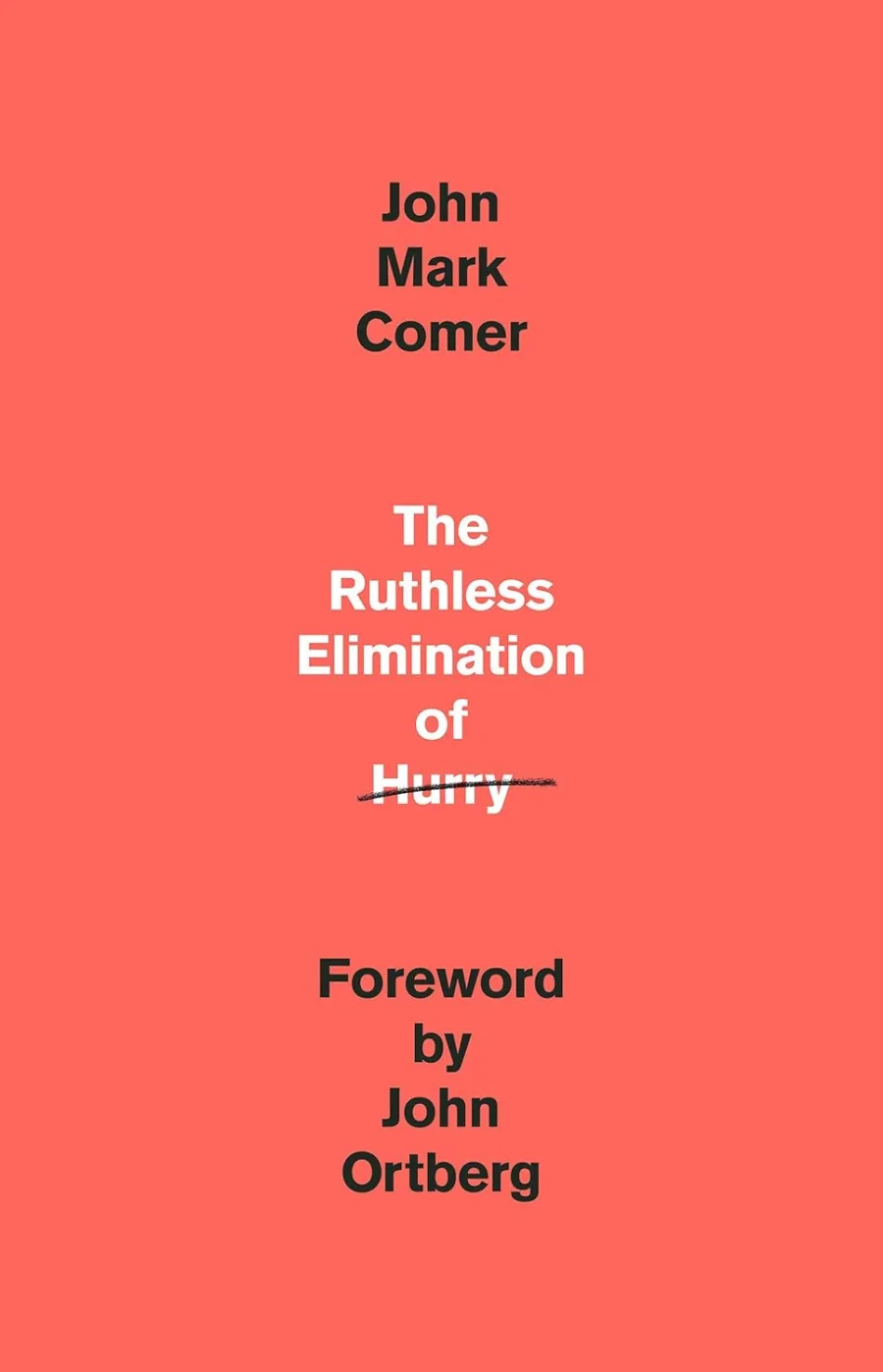
Download Cover Image
Do you want to download the full cover image for The Ruthless Elimination of Hurry?