
The Case for Christ: A Journalist's Personal Investigation of the Evidence for Jesus
Paperback
• 336 Pages
• USD 19.99
• English
• 9780310345862
No ratings yet
| Publisher | Zondervan |
|---|---|
| ISBN13 | 9780310345862 |
| ASIN/SKU | 0310345863 |
| Book Format | Paperback |
| Language | English |
| Pages | 336 |
| List Price | USD 19.99 |
| Publishing Date | 06/09/2016 |
| Dimensions | 5.45 x 0.89 x 8.48 inches |
| Weight | 11.2 ounces |
| Book Code | BD00055705 |
Buy this Book
Amazon Stores
Ebook Stores
Other Stores
Discover The Case for Christ: A Journalist's Personal Investigation of the Evidence for Jesus by Lee Strobel. This book is published by Zondervan in Paperback format, ISBN 9780310345862, ASIN 0310345863, under Christian Books and Bibles, Christian Apologetics, Religion Encyclopedias.
Book Description
NEW YORK TIMES BESTSELLER! OVER 5 MILLION COPIES SOLD!
Is there credible evidence that Jesus of Nazareth really is the Son of God? Former atheist and Chicago Tribune journalist Lee Strobel takes an investigative look at the evidence from the fields of science, philosophy, and history.
In this revised and updated bestseller, The Case for Christ, Lee Strobel cross-examines a dozen experts with doctorates from schools such as Cambridge, Princeton, and Brandeis, asking hard-hitting questions--and building a captivating case for Christ's divinity.
Strobel asks challenging questions like:
How reliable is the New Testament?
Does evidence for Jesus exist outside the Bible?
Is Jesus who he said he was?
Is there any reason to believe the resurrection was an actual event?
Winner of the Gold Medallion Book Award and twice nominated for the Christian Book of the Year Award, Strobel's tough, point-blank questions read like a captivating, fast-paced novel. But it's not fiction. It's a riveting quest for the truth about history's most compelling figure.
This edition includes scores of revisions and additions, including updated material on archaeological and manuscript discoveries, fresh recommendations for further study, and an interview with the author that tells dramatic stories about the book's impact, provides behind-the-scenes information, and responds to critiques of the book by skeptics.
Also available: The Case for Christ Spanish edition, kids' edition, and student edition. Plus, be sure to check out Lee Strobel's entire collection of Case for books:
The Case for a Creator explores the scientific evidence for God
The Case for Grace uncovers the "how" and "why" behind God's amazing grace
The Case for Faith responds to eight major objections about Christianity
. . . and more!
Is there credible evidence that Jesus of Nazareth really is the Son of God? Former atheist and Chicago Tribune journalist Lee Strobel takes an investigative look at the evidence from the fields of science, philosophy, and history.
In this revised and updated bestseller, The Case for Christ, Lee Strobel cross-examines a dozen experts with doctorates from schools such as Cambridge, Princeton, and Brandeis, asking hard-hitting questions--and building a captivating case for Christ's divinity.
Strobel asks challenging questions like:
How reliable is the New Testament?
Does evidence for Jesus exist outside the Bible?
Is Jesus who he said he was?
Is there any reason to believe the resurrection was an actual event?
Winner of the Gold Medallion Book Award and twice nominated for the Christian Book of the Year Award, Strobel's tough, point-blank questions read like a captivating, fast-paced novel. But it's not fiction. It's a riveting quest for the truth about history's most compelling figure.
This edition includes scores of revisions and additions, including updated material on archaeological and manuscript discoveries, fresh recommendations for further study, and an interview with the author that tells dramatic stories about the book's impact, provides behind-the-scenes information, and responds to critiques of the book by skeptics.
Also available: The Case for Christ Spanish edition, kids' edition, and student edition. Plus, be sure to check out Lee Strobel's entire collection of Case for books:
The Case for a Creator explores the scientific evidence for God
The Case for Grace uncovers the "how" and "why" behind God's amazing grace
The Case for Faith responds to eight major objections about Christianity
. . . and more!
Author Biography
Lee Strobel (www.LeeStrobel.com), with a journalism degree from the University of Missouri and a Master of Studies in Law degree from Yale Law School, was the award-winning legal editor of the Chicago Tribune and a spiritual skeptic until 1981. His books include four Gold Medallion winners and the 2005 Christian Book of the Year (coauthored with Garry Poole). He and his wife live in Colorado.
Editorial Reviews
Editorial Reviews will be added soon…
Book Summary
The Case for Christ: A Journalist's Personal Investigation of the Evidence for Jesus by Lee Strobel is a nonfiction Christian apologetics book built around one of the most important questions in the history of Christianity: Who was Jesus Christ, and is there convincing evidence that He was truly the Son of God? First published in 1998, the book follows Strobel, a former legal affairs journalist at the Chicago Tribune and a committed skeptic at the beginning of his investigation, as he examines the historical, documentary, archaeological, medical, psychological, and theological evidence surrounding Jesus. Rather than presenting the story as a devotional exercise, Strobel frames his investigation almost like a courtroom case, interviewing recognized scholars and challenging them with difficult questions. The book's central purpose is to determine whether Christian belief in Jesus can reasonably be supported by evidence rather than resting entirely on blind faith.
The personal story behind the investigation is essential to understanding the book. Strobel describes himself as an atheist who was deeply uncomfortable when his wife, Leslie, became a Christian. Her growing faith affected her outlook, priorities, and behavior, and instead of welcoming the change, Strobel initially regarded Christianity as something that could damage their marriage and family life. Rather than simply arguing with her, however, he decided to investigate Christianity for himself. His initial goal was not to prove Christianity true but to discover whether the central claims about Jesus could withstand serious scrutiny. With his background in journalism and legal reporting, Strobel approached the subject as an investigator gathering evidence, testing testimony, examining documents, and questioning assumptions. His investigation eventually became a lengthy personal search that transformed his own understanding of Christianity.
The first major part of The Case for Christ examines the reliability of the historical record. Strobel begins with the four Gospels—Matthew, Mark, Luke, and John—and asks whether they can reasonably be regarded as trustworthy accounts of Jesus's life. His concern is straightforward: if the Gospels were written too late, altered substantially over time, or based upon unreliable traditions, then the Christian claims built upon them would be seriously weakened. In his interview with New Testament scholar Craig Blomberg, Strobel investigates the authorship, historical proximity, consistency, and credibility of the Gospel accounts. The argument presented is that the Gospels contain substantial historical information about Jesus and preserve traditions that originated close to the events themselves. Strobel is particularly interested in whether the differences among the Gospel accounts necessarily make them unreliable. Instead, the book argues that variations in secondary details do not automatically destroy the credibility of their central testimony.
Strobel then turns to the manuscript and documentary evidence behind the New Testament. One of his concerns is whether the biblical text Christians read today accurately reflects what the original authors wrote. His interview with textual scholar Bruce Metzger addresses the transmission and preservation of the New Testament. The broader argument is that textual criticism allows scholars to compare a large body of manuscripts and identify variations while reconstructing the earliest recoverable form of the text. Strobel regards the quantity and comparative richness of the manuscript tradition as an important reason for taking the New Testament seriously as an ancient historical source. This section is especially significant because it challenges the popular assumption that the Bible must have been hopelessly changed simply because centuries separate modern readers from the earliest Christian writings.
The investigation next considers evidence outside the biblical text. Strobel asks whether Jesus can be supported by non-Christian historical sources and whether archaeology confirms details found in the Gospels. His interviews with historians and archaeologists explore references to Jesus and early Christianity in the wider ancient world, as well as geographical and cultural details preserved in the New Testament. The archaeological discussion is deliberately more limited than some readers might expect: archaeology cannot scientifically prove that Jesus was the Son of God or that a miracle occurred. What it can do, according to the case presented in the book, is test whether biblical writers understood the places, customs, political circumstances, and historical environment they described. When such details correspond with what is known about the ancient world, they provide supporting evidence for the historical credibility of the narratives.
Having examined the record about Jesus, Strobel moves to the more personal question of Jesus's identity. Was Jesus merely a wise teacher, an extraordinary moral figure, or something far more significant? Strobel investigates whether Jesus actually claimed divine authority or whether later Christians placed those claims upon Him. This leads to questions about Jesus's use of titles such as Messiah and Son of God, His authority to forgive sins, His statements about His relationship with God, and His actions as portrayed in the Gospels. New Testament scholar Ben Witherington III helps Strobel examine the historical and Jewish context of Jesus's claims. Strobel's investigation therefore asks readers to consider not simply whether Jesus existed but what Jesus believed about Himself. If the Gospel accounts are substantially reliable, then the question becomes much more difficult to avoid: What kind of person makes the claims attributed to Jesus?
Strobel also considers whether Jesus could have been psychologically unstable or delusional if He claimed a unique relationship with God. This section explores the famous dilemma that Jesus's claims must be assessed seriously: if He really claimed divine authority, perhaps He was mistaken, deceptive, or genuinely who Christianity says He was. Strobel interviews psychologist Gary Collins and examines Jesus's personality, teachings, behavior, and interactions with other people. The book argues that the Gospel portrait does not resemble someone whose extraordinary religious claims can simply be dismissed as evidence of mental illness. Instead, Jesus appears as a coherent, emotionally complex, morally demanding, and remarkably influential teacher. Strobel uses this examination to narrow what he sees as the reasonable explanations for Jesus's identity.
Another important part of the investigation concerns Old Testament prophecy and the Jewish expectation of the Messiah. Strobel explores whether Jesus's life corresponds to earlier Jewish expectations concerning the coming Messiah. His discussion with Louis Lapides, a Jewish scholar and Christian convert, examines particular prophetic passages and the claim that Jesus fulfilled them. For Strobel, this becomes another layer in the cumulative case: the Christian claim is not presented as an isolated belief that appeared suddenly in the first century but as something connected to a much older Jewish tradition. At the same time, readers should understand that interpretations of biblical prophecy are matters of substantial theological debate, and different Jewish and Christian traditions interpret these passages differently. The significance of this section within Strobel's argument is that he sees the pattern as evidence that Jesus fits a larger historical and theological framework.
The final and most important stage of Strobel's investigation is the death and resurrection of Jesus. For Christianity, the resurrection is not merely another miracle among many. It is the central event upon which the claim that Jesus is the Son of God ultimately depends. Strobel therefore treats the resurrection almost as the decisive piece of evidence in his case. He first examines whether Jesus actually died on the cross. Physician Alexander Metherell discusses the physical effects of Roman crucifixion and the severe injuries associated with the execution. Strobel considers theories suggesting that Jesus survived the crucifixion and later appeared alive, but the medical argument presented in the book rejects the idea that someone subjected to Roman crucifixion could simply recover and walk away.
Strobel then investigates the empty tomb and the reports that Jesus appeared alive after His death. The book considers several possible explanations: perhaps the disciples stole the body, perhaps authorities moved it, perhaps the resurrection accounts developed from legend, or perhaps the disciples experienced visions or hallucinations. Strobel interviews scholars including William Lane Craig, Gary Habermas, and J. P. Moreland to examine these competing explanations. Particular attention is given to early Christian testimony concerning Jesus's resurrection, the disciples' conviction that they had encountered the risen Jesus, the transformation of the disciples, and the rapid growth of the early Christian movement. Strobel concludes that these pieces of evidence form a cumulative case that, in his judgment, is best explained by the resurrection.
One of the strongest themes running throughout The Case for Christ is the idea of cumulative evidence. Strobel does not rely on one archaeological discovery, one manuscript, one philosophical argument, or one eyewitness account. Instead, he brings together many different categories of evidence and asks whether they point in the same direction. His method resembles investigative journalism: establish the facts, identify weaknesses, interview specialists, test alternative explanations, and then determine which conclusion best fits the available evidence. The book's persuasive force therefore comes less from a single dramatic discovery than from the accumulation of arguments concerning the reliability of the Gospels, historical references to Jesus, archaeological confirmation of the biblical setting, Jesus's claims, His crucifixion, the empty tomb, and the testimony of His followers.
The personal conclusion is what gives the book its emotional dimension. Strobel begins the investigation wanting to protect his skepticism, but gradually finds himself unable to maintain the same confidence in his earlier assumptions. After an investigation lasting more than six hundred days, he concludes that the evidence he encountered supports Christianity more strongly than he had expected. According to accounts of his journey, he eventually became a Christian in 1981. The book consequently becomes both an investigation of Jesus and an account of intellectual transformation: a skeptic begins by asking whether Christianity can survive serious questioning and ends by deciding that the evidence has changed his own understanding of reality.
Ultimately, the main message of The Case for Christ is that faith and evidence do not necessarily have to stand on opposite sides. Strobel wants readers to see Christianity as a belief system that can be investigated through history, documents, testimony, archaeology, philosophy, and reason. The book is particularly aimed at readers who have wondered whether Jesus was a real historical person, whether the Gospels are reliable, whether Jesus claimed to be divine, whether He really died on the cross, and whether there is historical evidence for the resurrection. Strobel does not claim that a laboratory experiment can prove every theological statement about God. Rather, he argues that the historical evidence surrounding Jesus provides a rational foundation upon which faith can be considered.
For believers, the book offers a structured way to think about questions they may already have asked about the Bible, Jesus, and the resurrection. For skeptics and seekers, it presents Christianity through the eyes of someone who says he once approached the subject from a position of disbelief. Its greatest appeal lies in this investigative framework: instead of beginning with the assumption that Jesus must be believed, Strobel asks what conclusion follows if the historical evidence is examined seriously. Whether every argument in the book persuades every reader is ultimately a personal and scholarly question, but its enduring importance lies in the questions it raises. The Case for Christ invites readers to investigate Jesus not merely as a religious symbol, but as a historical figure whose identity, teachings, death, and reported resurrection have shaped world history for nearly two thousand years.
The personal story behind the investigation is essential to understanding the book. Strobel describes himself as an atheist who was deeply uncomfortable when his wife, Leslie, became a Christian. Her growing faith affected her outlook, priorities, and behavior, and instead of welcoming the change, Strobel initially regarded Christianity as something that could damage their marriage and family life. Rather than simply arguing with her, however, he decided to investigate Christianity for himself. His initial goal was not to prove Christianity true but to discover whether the central claims about Jesus could withstand serious scrutiny. With his background in journalism and legal reporting, Strobel approached the subject as an investigator gathering evidence, testing testimony, examining documents, and questioning assumptions. His investigation eventually became a lengthy personal search that transformed his own understanding of Christianity.
The first major part of The Case for Christ examines the reliability of the historical record. Strobel begins with the four Gospels—Matthew, Mark, Luke, and John—and asks whether they can reasonably be regarded as trustworthy accounts of Jesus's life. His concern is straightforward: if the Gospels were written too late, altered substantially over time, or based upon unreliable traditions, then the Christian claims built upon them would be seriously weakened. In his interview with New Testament scholar Craig Blomberg, Strobel investigates the authorship, historical proximity, consistency, and credibility of the Gospel accounts. The argument presented is that the Gospels contain substantial historical information about Jesus and preserve traditions that originated close to the events themselves. Strobel is particularly interested in whether the differences among the Gospel accounts necessarily make them unreliable. Instead, the book argues that variations in secondary details do not automatically destroy the credibility of their central testimony.
Strobel then turns to the manuscript and documentary evidence behind the New Testament. One of his concerns is whether the biblical text Christians read today accurately reflects what the original authors wrote. His interview with textual scholar Bruce Metzger addresses the transmission and preservation of the New Testament. The broader argument is that textual criticism allows scholars to compare a large body of manuscripts and identify variations while reconstructing the earliest recoverable form of the text. Strobel regards the quantity and comparative richness of the manuscript tradition as an important reason for taking the New Testament seriously as an ancient historical source. This section is especially significant because it challenges the popular assumption that the Bible must have been hopelessly changed simply because centuries separate modern readers from the earliest Christian writings.
The investigation next considers evidence outside the biblical text. Strobel asks whether Jesus can be supported by non-Christian historical sources and whether archaeology confirms details found in the Gospels. His interviews with historians and archaeologists explore references to Jesus and early Christianity in the wider ancient world, as well as geographical and cultural details preserved in the New Testament. The archaeological discussion is deliberately more limited than some readers might expect: archaeology cannot scientifically prove that Jesus was the Son of God or that a miracle occurred. What it can do, according to the case presented in the book, is test whether biblical writers understood the places, customs, political circumstances, and historical environment they described. When such details correspond with what is known about the ancient world, they provide supporting evidence for the historical credibility of the narratives.
Having examined the record about Jesus, Strobel moves to the more personal question of Jesus's identity. Was Jesus merely a wise teacher, an extraordinary moral figure, or something far more significant? Strobel investigates whether Jesus actually claimed divine authority or whether later Christians placed those claims upon Him. This leads to questions about Jesus's use of titles such as Messiah and Son of God, His authority to forgive sins, His statements about His relationship with God, and His actions as portrayed in the Gospels. New Testament scholar Ben Witherington III helps Strobel examine the historical and Jewish context of Jesus's claims. Strobel's investigation therefore asks readers to consider not simply whether Jesus existed but what Jesus believed about Himself. If the Gospel accounts are substantially reliable, then the question becomes much more difficult to avoid: What kind of person makes the claims attributed to Jesus?
Strobel also considers whether Jesus could have been psychologically unstable or delusional if He claimed a unique relationship with God. This section explores the famous dilemma that Jesus's claims must be assessed seriously: if He really claimed divine authority, perhaps He was mistaken, deceptive, or genuinely who Christianity says He was. Strobel interviews psychologist Gary Collins and examines Jesus's personality, teachings, behavior, and interactions with other people. The book argues that the Gospel portrait does not resemble someone whose extraordinary religious claims can simply be dismissed as evidence of mental illness. Instead, Jesus appears as a coherent, emotionally complex, morally demanding, and remarkably influential teacher. Strobel uses this examination to narrow what he sees as the reasonable explanations for Jesus's identity.
Another important part of the investigation concerns Old Testament prophecy and the Jewish expectation of the Messiah. Strobel explores whether Jesus's life corresponds to earlier Jewish expectations concerning the coming Messiah. His discussion with Louis Lapides, a Jewish scholar and Christian convert, examines particular prophetic passages and the claim that Jesus fulfilled them. For Strobel, this becomes another layer in the cumulative case: the Christian claim is not presented as an isolated belief that appeared suddenly in the first century but as something connected to a much older Jewish tradition. At the same time, readers should understand that interpretations of biblical prophecy are matters of substantial theological debate, and different Jewish and Christian traditions interpret these passages differently. The significance of this section within Strobel's argument is that he sees the pattern as evidence that Jesus fits a larger historical and theological framework.
The final and most important stage of Strobel's investigation is the death and resurrection of Jesus. For Christianity, the resurrection is not merely another miracle among many. It is the central event upon which the claim that Jesus is the Son of God ultimately depends. Strobel therefore treats the resurrection almost as the decisive piece of evidence in his case. He first examines whether Jesus actually died on the cross. Physician Alexander Metherell discusses the physical effects of Roman crucifixion and the severe injuries associated with the execution. Strobel considers theories suggesting that Jesus survived the crucifixion and later appeared alive, but the medical argument presented in the book rejects the idea that someone subjected to Roman crucifixion could simply recover and walk away.
Strobel then investigates the empty tomb and the reports that Jesus appeared alive after His death. The book considers several possible explanations: perhaps the disciples stole the body, perhaps authorities moved it, perhaps the resurrection accounts developed from legend, or perhaps the disciples experienced visions or hallucinations. Strobel interviews scholars including William Lane Craig, Gary Habermas, and J. P. Moreland to examine these competing explanations. Particular attention is given to early Christian testimony concerning Jesus's resurrection, the disciples' conviction that they had encountered the risen Jesus, the transformation of the disciples, and the rapid growth of the early Christian movement. Strobel concludes that these pieces of evidence form a cumulative case that, in his judgment, is best explained by the resurrection.
One of the strongest themes running throughout The Case for Christ is the idea of cumulative evidence. Strobel does not rely on one archaeological discovery, one manuscript, one philosophical argument, or one eyewitness account. Instead, he brings together many different categories of evidence and asks whether they point in the same direction. His method resembles investigative journalism: establish the facts, identify weaknesses, interview specialists, test alternative explanations, and then determine which conclusion best fits the available evidence. The book's persuasive force therefore comes less from a single dramatic discovery than from the accumulation of arguments concerning the reliability of the Gospels, historical references to Jesus, archaeological confirmation of the biblical setting, Jesus's claims, His crucifixion, the empty tomb, and the testimony of His followers.
The personal conclusion is what gives the book its emotional dimension. Strobel begins the investigation wanting to protect his skepticism, but gradually finds himself unable to maintain the same confidence in his earlier assumptions. After an investigation lasting more than six hundred days, he concludes that the evidence he encountered supports Christianity more strongly than he had expected. According to accounts of his journey, he eventually became a Christian in 1981. The book consequently becomes both an investigation of Jesus and an account of intellectual transformation: a skeptic begins by asking whether Christianity can survive serious questioning and ends by deciding that the evidence has changed his own understanding of reality.
Ultimately, the main message of The Case for Christ is that faith and evidence do not necessarily have to stand on opposite sides. Strobel wants readers to see Christianity as a belief system that can be investigated through history, documents, testimony, archaeology, philosophy, and reason. The book is particularly aimed at readers who have wondered whether Jesus was a real historical person, whether the Gospels are reliable, whether Jesus claimed to be divine, whether He really died on the cross, and whether there is historical evidence for the resurrection. Strobel does not claim that a laboratory experiment can prove every theological statement about God. Rather, he argues that the historical evidence surrounding Jesus provides a rational foundation upon which faith can be considered.
For believers, the book offers a structured way to think about questions they may already have asked about the Bible, Jesus, and the resurrection. For skeptics and seekers, it presents Christianity through the eyes of someone who says he once approached the subject from a position of disbelief. Its greatest appeal lies in this investigative framework: instead of beginning with the assumption that Jesus must be believed, Strobel asks what conclusion follows if the historical evidence is examined seriously. Whether every argument in the book persuades every reader is ultimately a personal and scholarly question, but its enduring importance lies in the questions it raises. The Case for Christ invites readers to investigate Jesus not merely as a religious symbol, but as a historical figure whose identity, teachings, death, and reported resurrection have shaped world history for nearly two thousand years.
Sample Chapters
Sample Chapters will be added soon…
Reader Reviews
No reviews yet.
The Case for Christ: A Journalist's Personal Investigation of the Evidence for Jesus
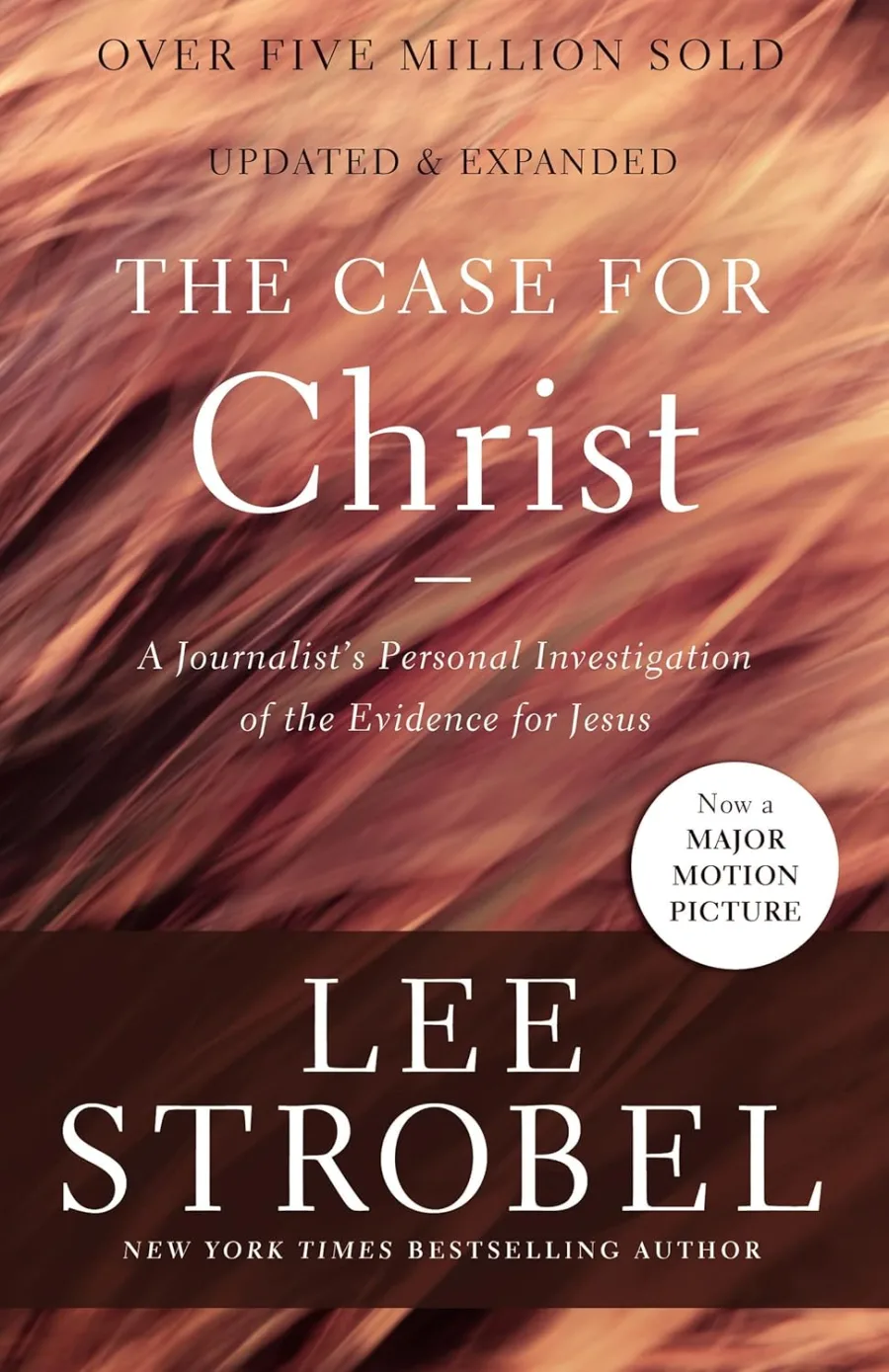
Download Cover Image
Do you want to download the full cover image for The Case for Christ: A Journalist's Personal Investigation of the Evidence for Jesus?