
The Judge's List: A Novel (The Whistler)
Paperback
• 368 Pages
• USD 18.00
• English
• 9780593157848
No ratings yet
| Publisher | Vintage |
|---|---|
| ISBN13 | 9780593157848 |
| ASIN/SKU | 0593157842 |
| Book Format | Paperback |
| Language | English |
| Pages | 368 |
| List Price | USD 18.00 |
| Publishing Date | 21/06/2022 |
| Dimensions | 5.25 x 0.8 x 8 inches |
| Weight | 9.6 ounces |
| Book Code | BD00055753 |
Buy this Book
Amazon Stores
Ebook Stores
Other Stores
Discover The Judge's List: A Novel (The Whistler) by John Grisham. This book is published by Vintage in Paperback format, ISBN 9780593157848, ASIN 0593157842, under Mystery, Thriller and Suspense, Legal Thrillers, Political Thrillers.
Book Description
#1 NEW YORK TIMES BESTSELLER • John Grisham returns to Florida, where The Whistler’s Lacy Stoltz takes on a cold case that reveals a judge’s darkest secrets.
“One of the best crime reads of the year . . . a world-class shocker, worth staying up all night to finish.”—The Wall Street Journal
In The Whistler, Lacy Stoltz investigated a corrupt judge who was taking millions in bribes from a crime syndicate. She put the criminals away, but only after being attacked and nearly killed. Three years later, and approaching forty, she is tired of her work for the Florida Board on Judicial Conduct and ready for a change.
Then she meets a mysterious woman who is so frightened she uses a number of aliases. Jeri Crosby’s father was murdered twenty years earlier in a case that remains unsolved and that has grown stone cold. But Jeri has a suspect whom she has become obsessed with and has stalked for two decades. Along the way, she has discovered other victims.
The man Jeri holds responsible for all these deaths is brilliant, patient, and always one step ahead of law enforcement. He is the most cunning of all serial killers. He knows forensics, police procedure, and most important: he knows the law.
He is a judge, in Florida—under Lacy’s jurisdiction.
But the man keeps a record of all his victims and targets, people unlucky enough to have crossed his path and wronged him in some way. Lacy must work to take him down, while somehow keeping her name off his list.
“One of the best crime reads of the year . . . a world-class shocker, worth staying up all night to finish.”—The Wall Street Journal
In The Whistler, Lacy Stoltz investigated a corrupt judge who was taking millions in bribes from a crime syndicate. She put the criminals away, but only after being attacked and nearly killed. Three years later, and approaching forty, she is tired of her work for the Florida Board on Judicial Conduct and ready for a change.
Then she meets a mysterious woman who is so frightened she uses a number of aliases. Jeri Crosby’s father was murdered twenty years earlier in a case that remains unsolved and that has grown stone cold. But Jeri has a suspect whom she has become obsessed with and has stalked for two decades. Along the way, she has discovered other victims.
The man Jeri holds responsible for all these deaths is brilliant, patient, and always one step ahead of law enforcement. He is the most cunning of all serial killers. He knows forensics, police procedure, and most important: he knows the law.
He is a judge, in Florida—under Lacy’s jurisdiction.
But the man keeps a record of all his victims and targets, people unlucky enough to have crossed his path and wronged him in some way. Lacy must work to take him down, while somehow keeping her name off his list.
Author Biography
John Grisham is the author of numerous #1 bestsellers, including The Firm, A Time to Kill, The Rainmaker, The Innocent Man, The Whistler, The Boys from Biloxi, and many more. His books have been translated into nearly fifty languages. Grisham is a two-time winner of the Harper Lee Prize for Legal Fiction and was honored with the Library of Congress Creative Achievement Award for Fiction. Grisham serves on the board of directors of the Innocence Project and Centurion Ministries, two national organizations dedicated to exonerating those who have been wrongfully convicted. Much of his fiction explores deep-seated problems in our criminal justice system. He lives on a farm in central Virginia.
Editorial Reviews
Praise for the novels of John Grisham
“John Grisham is about as good a storyteller as we’ve got in the United States these days.”—The New York Times Book Review
“In all of Grisham’s best books . . . the reader gets good company, a vigorous runaround and . . . a bit of a legal education.”—Janet Maslin, The New York Times
“Grisham’s books are smart, imaginative, and funny, populated by complex, interesting people.”—The Washington Post
“The law, by its nature, creates drama, and a new Grisham promises us an inside look at the dirty machineries of process and power, with plenty of entertainment.”—Los Angeles Times
“John Grisham owns the legal thriller.” —The Denver Post
“John Grisham is about as good a storyteller as we’ve got in the United States these days.”—The New York Times Book Review
“In all of Grisham’s best books . . . the reader gets good company, a vigorous runaround and . . . a bit of a legal education.”—Janet Maslin, The New York Times
“Grisham’s books are smart, imaginative, and funny, populated by complex, interesting people.”—The Washington Post
“The law, by its nature, creates drama, and a new Grisham promises us an inside look at the dirty machineries of process and power, with plenty of entertainment.”—Los Angeles Times
“John Grisham owns the legal thriller.” —The Denver Post
Book Summary
The Judge’s List by John Grisham is a tense, slow-burning legal thriller that blends murder mystery with the chilling idea that a respected member of the justice system might secretly be a serial killer. The story revolves around Lacy Stoltz, an investigator for the Florida Board on Judicial Conduct, and Jeri Crosby, a woman who has spent decades quietly hunting the man she believes murdered her father. Lacy is not a cop or a prosecutor; her job is to investigate judges who break ethical rules—corruption, misconduct, abuse of power. She is experienced, steady, and a bit worn down from years of dealing with difficult cases, but she has never handled anything like what Jeri brings her. Jeri arrives with a story that sounds almost unbelievable: she is certain that a sitting judge, one who has never been publicly suspected of anything, is a calculating serial killer who has been murdering people for more than twenty years, including Jeri’s father.
Jeri is intense, secretive, and clearly traumatized, but also sharp and methodical. Her father was killed in a brutal, unsolved murder years ago, and she never accepted that the police were helpless. Over time, she started looking at old cases herself, digging into records and patterns, and she became convinced that the same person was behind multiple murders. She didn’t choose this suspect randomly. She noticed strange coincidences, grudges, and connections between victims and one particular man: Judge Ross Bannick. To everyone else, Bannick appears to be an intelligent, meticulous, and successful judge with a strong career and a respectable life. But Jeri believes that behind his calm exterior, he is obsessive, vindictive, and capable of extreme violence. The most terrifying part is that Bannick uses his knowledge of law, investigation, and procedure to plan murders that are nearly impossible to trace back to him. He chooses victims with care, takes years to plot, studies their habits, and then kills in ways that leave little evidence. Jeri has compiled what she calls “the judge’s list,” a list of people she thinks Bannick has murdered or plans to murder, all of whom have crossed him in some way.
When she shares this with Lacy, Jeri insists on anonymity and caution, because she believes Bannick is always watching. She suspects he monitors online activity and learns about anyone who comes close to uncovering him. Lacy is skeptical at first—not of Jeri’s pain, but of the idea that a judge could secretly be a serial killer for decades without raising alarms. Still, she listens and reviews the material Jeri has gathered: dates, police reports, victim profiles, and the subtle threads connecting them. The more she sees, the less she can dismiss it. The Board on Judicial Conduct is not set up to solve murders, but if a judge is using his position and knowledge to commit crimes, then he falls squarely under Lacy’s jurisdiction. The challenge is enormous: there is no clear physical evidence, only patterns, motives, and Jeri’s relentless research.
Grisham alternates between Lacy’s perspective, Jeri’s backstory, and glimpses into Bannick’s world, creating a creeping sense of dread. Jeri’s sections show how her obsession formed. She sacrificed relationships, time, and peace of mind to chase shadows and connect cases that everyone else treated as isolated tragedies. She is not trained in law enforcement, but she has learned a lot by sheer determination, becoming an amateur detective out of necessity. Her life has been defined by the question of who killed her father and why. Lacy’s sections, on the other hand, show a professional who is used to working inside institutions. She knows the limits of her power and the bureaucratic hurdles she has to clear. For her, this case is dangerous not just because of the suspected killer, but because accusing a judge of murder could trigger intense political pressure and legal backlash, especially if she can’t prove it solidly.
Judge Bannick’s shadow looms over the book even when he isn’t on the page. As the investigation slowly gains momentum, it becomes clear that he is extremely intelligent and deeply paranoid. He hates those who cross him: lawyers who embarrass him in court, colleagues who disrespect him, people who threaten his reputation. He remembers every slight and stores it away. Then, years later, when all eyes are elsewhere, he strikes. He doesn’t kill impulsively; he practices, rehearses, and refines his methods. He studies forensic science and criminal procedure so he can avoid common mistakes. He uses his position to access information and hide his tracks. This kind of villain is frightening not because he is wild, but because he is controlled and patient, and because he wears the mask of respectability every day.
As Lacy cautiously begins to investigate, she must keep the case off the radar to avoid tipping Bannick off. She knows that if he suspects someone is onto him, he might add new names to his list—including hers and Jeri’s. She quietly brings in a trusted colleague and slowly checks Jeri’s claims against official records. The tension lies in the gap between what they suspect and what they can prove. They find patterns in the murders: victims with specific connections to Bannick, strange similarities in how the bodies were discovered, investigations that were misdirected or abandoned. The more they look, the more the judge’s list seems horrifyingly plausible. At the same time, Lacy has to deal with her own fears: she is not a detective armed for a fight, she is an investigator who usually works in offices and meeting rooms. Now she is walking into the territory of a man who thinks like a hunter.
The sense of danger grows as Lacy and Jeri move closer to Bannick’s secrets. They must balance urgency with caution. Jeri is desperate to act quickly; she fears that someone else on the list could die soon. Lacy knows that a rushed move with weak evidence could backfire badly. They also worry about leaks. If anyone in law enforcement or the judiciary warns Bannick, he could disappear, destroy evidence, or retaliate. Throughout the story, there is the feeling that Bannick is always one step ahead, watching and waiting. He lives in a disciplined routine, making sure nothing unusual in his environment hints at his double life, but mentally, he is constantly assessing risks, potential enemies, and opportunities.
Grisham uses this setup to explore the broader question of trust in the system. Judges are supposed to be the guardians of the law, people the public turns to for fairness and order. The idea that one of them might be secretly killing people while continuing to preside over cases is deeply unsettling. Lacy and her colleagues wrestle with that discomfort. If they go public too early, they risk damaging public confidence without certainty. If they stay quiet too long, more people may die. Jeri’s personal story adds another layer: she represents those who feel abandoned by institutions, forced to seek justice on their own when the system fails them.
As the book moves toward its climax, the cat-and-mouse dynamic intensifies. Lacy has to work faster, gathering enough evidence to confront Bannick or bring in the authorities who can arrest him. Bannick, in turn, becomes more alert and begins to sense that someone might be closing in. The possibility that Jeri’s investigation might finally expose him pushes him toward new plans and potential violence. Grisham builds the suspense around whether Lacy and Jeri can force the law to catch a man who has used that very law as his shield.
By the end of The Judge’s List, the truth about Bannick and his crimes is brought into the open, but not without risk, fear, and near misses. Lacy proves that even a system designed mainly for ethics complaints can confront something far darker when necessary, and Jeri’s long, painful quest for justice finally reaches a turning point. The novel leaves a lingering impact by reminding the reader how terrifying it is when the people meant to uphold justice are the ones perverting it—and how crucial it is that someone, even quietly and patiently, refuses to look away, keeps asking questions, and insists on holding power to account, no matter how untouchable it seems.
Jeri is intense, secretive, and clearly traumatized, but also sharp and methodical. Her father was killed in a brutal, unsolved murder years ago, and she never accepted that the police were helpless. Over time, she started looking at old cases herself, digging into records and patterns, and she became convinced that the same person was behind multiple murders. She didn’t choose this suspect randomly. She noticed strange coincidences, grudges, and connections between victims and one particular man: Judge Ross Bannick. To everyone else, Bannick appears to be an intelligent, meticulous, and successful judge with a strong career and a respectable life. But Jeri believes that behind his calm exterior, he is obsessive, vindictive, and capable of extreme violence. The most terrifying part is that Bannick uses his knowledge of law, investigation, and procedure to plan murders that are nearly impossible to trace back to him. He chooses victims with care, takes years to plot, studies their habits, and then kills in ways that leave little evidence. Jeri has compiled what she calls “the judge’s list,” a list of people she thinks Bannick has murdered or plans to murder, all of whom have crossed him in some way.
When she shares this with Lacy, Jeri insists on anonymity and caution, because she believes Bannick is always watching. She suspects he monitors online activity and learns about anyone who comes close to uncovering him. Lacy is skeptical at first—not of Jeri’s pain, but of the idea that a judge could secretly be a serial killer for decades without raising alarms. Still, she listens and reviews the material Jeri has gathered: dates, police reports, victim profiles, and the subtle threads connecting them. The more she sees, the less she can dismiss it. The Board on Judicial Conduct is not set up to solve murders, but if a judge is using his position and knowledge to commit crimes, then he falls squarely under Lacy’s jurisdiction. The challenge is enormous: there is no clear physical evidence, only patterns, motives, and Jeri’s relentless research.
Grisham alternates between Lacy’s perspective, Jeri’s backstory, and glimpses into Bannick’s world, creating a creeping sense of dread. Jeri’s sections show how her obsession formed. She sacrificed relationships, time, and peace of mind to chase shadows and connect cases that everyone else treated as isolated tragedies. She is not trained in law enforcement, but she has learned a lot by sheer determination, becoming an amateur detective out of necessity. Her life has been defined by the question of who killed her father and why. Lacy’s sections, on the other hand, show a professional who is used to working inside institutions. She knows the limits of her power and the bureaucratic hurdles she has to clear. For her, this case is dangerous not just because of the suspected killer, but because accusing a judge of murder could trigger intense political pressure and legal backlash, especially if she can’t prove it solidly.
Judge Bannick’s shadow looms over the book even when he isn’t on the page. As the investigation slowly gains momentum, it becomes clear that he is extremely intelligent and deeply paranoid. He hates those who cross him: lawyers who embarrass him in court, colleagues who disrespect him, people who threaten his reputation. He remembers every slight and stores it away. Then, years later, when all eyes are elsewhere, he strikes. He doesn’t kill impulsively; he practices, rehearses, and refines his methods. He studies forensic science and criminal procedure so he can avoid common mistakes. He uses his position to access information and hide his tracks. This kind of villain is frightening not because he is wild, but because he is controlled and patient, and because he wears the mask of respectability every day.
As Lacy cautiously begins to investigate, she must keep the case off the radar to avoid tipping Bannick off. She knows that if he suspects someone is onto him, he might add new names to his list—including hers and Jeri’s. She quietly brings in a trusted colleague and slowly checks Jeri’s claims against official records. The tension lies in the gap between what they suspect and what they can prove. They find patterns in the murders: victims with specific connections to Bannick, strange similarities in how the bodies were discovered, investigations that were misdirected or abandoned. The more they look, the more the judge’s list seems horrifyingly plausible. At the same time, Lacy has to deal with her own fears: she is not a detective armed for a fight, she is an investigator who usually works in offices and meeting rooms. Now she is walking into the territory of a man who thinks like a hunter.
The sense of danger grows as Lacy and Jeri move closer to Bannick’s secrets. They must balance urgency with caution. Jeri is desperate to act quickly; she fears that someone else on the list could die soon. Lacy knows that a rushed move with weak evidence could backfire badly. They also worry about leaks. If anyone in law enforcement or the judiciary warns Bannick, he could disappear, destroy evidence, or retaliate. Throughout the story, there is the feeling that Bannick is always one step ahead, watching and waiting. He lives in a disciplined routine, making sure nothing unusual in his environment hints at his double life, but mentally, he is constantly assessing risks, potential enemies, and opportunities.
Grisham uses this setup to explore the broader question of trust in the system. Judges are supposed to be the guardians of the law, people the public turns to for fairness and order. The idea that one of them might be secretly killing people while continuing to preside over cases is deeply unsettling. Lacy and her colleagues wrestle with that discomfort. If they go public too early, they risk damaging public confidence without certainty. If they stay quiet too long, more people may die. Jeri’s personal story adds another layer: she represents those who feel abandoned by institutions, forced to seek justice on their own when the system fails them.
As the book moves toward its climax, the cat-and-mouse dynamic intensifies. Lacy has to work faster, gathering enough evidence to confront Bannick or bring in the authorities who can arrest him. Bannick, in turn, becomes more alert and begins to sense that someone might be closing in. The possibility that Jeri’s investigation might finally expose him pushes him toward new plans and potential violence. Grisham builds the suspense around whether Lacy and Jeri can force the law to catch a man who has used that very law as his shield.
By the end of The Judge’s List, the truth about Bannick and his crimes is brought into the open, but not without risk, fear, and near misses. Lacy proves that even a system designed mainly for ethics complaints can confront something far darker when necessary, and Jeri’s long, painful quest for justice finally reaches a turning point. The novel leaves a lingering impact by reminding the reader how terrifying it is when the people meant to uphold justice are the ones perverting it—and how crucial it is that someone, even quietly and patiently, refuses to look away, keeps asking questions, and insists on holding power to account, no matter how untouchable it seems.
Sample Chapters
Sample Chapters will be added soon…
Reader Reviews
No reviews yet.
The Judge's List: A Novel (The Whistler)
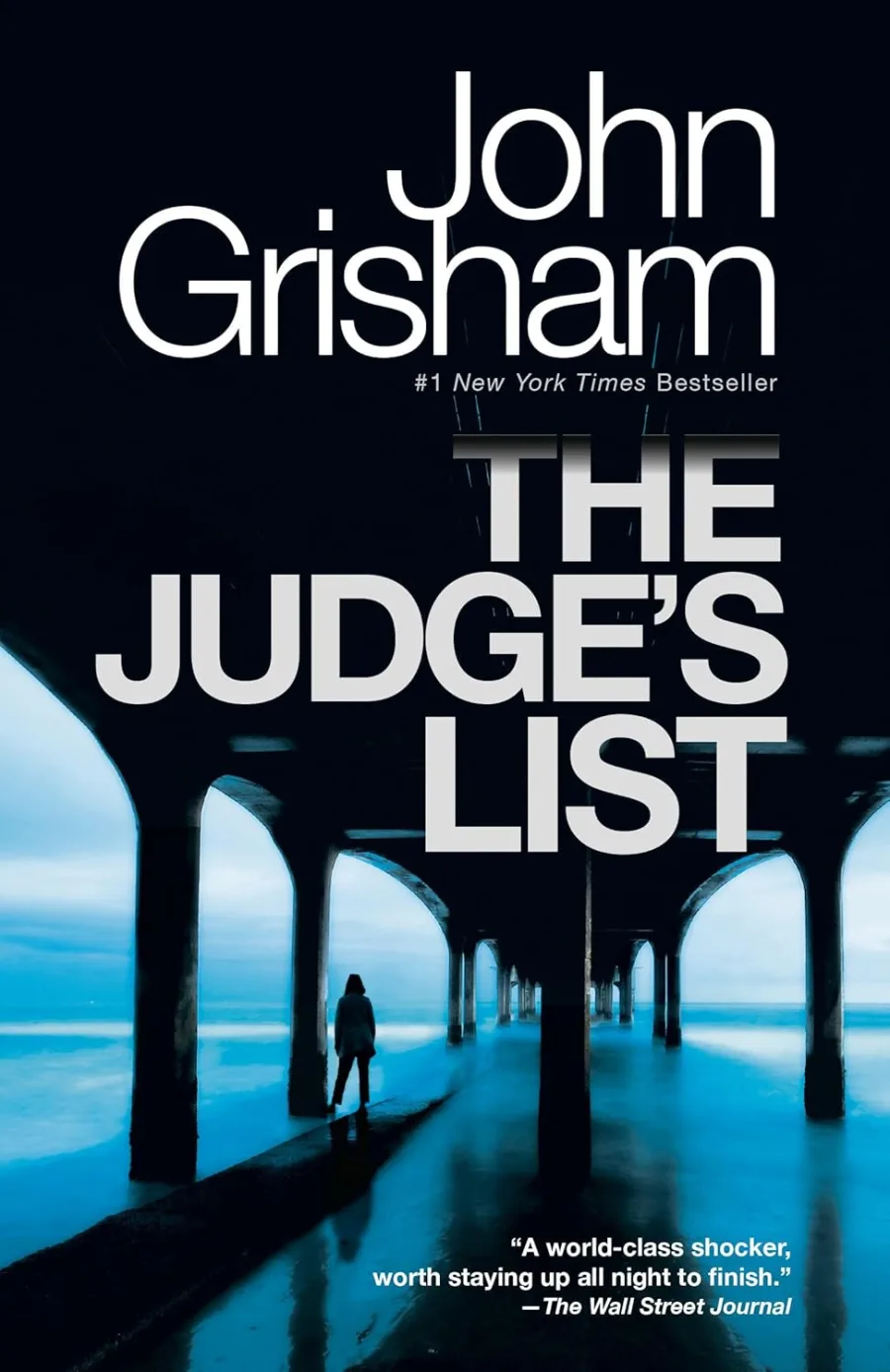
Download Cover Image
Do you want to download the full cover image for The Judge's List: A Novel (The Whistler)?