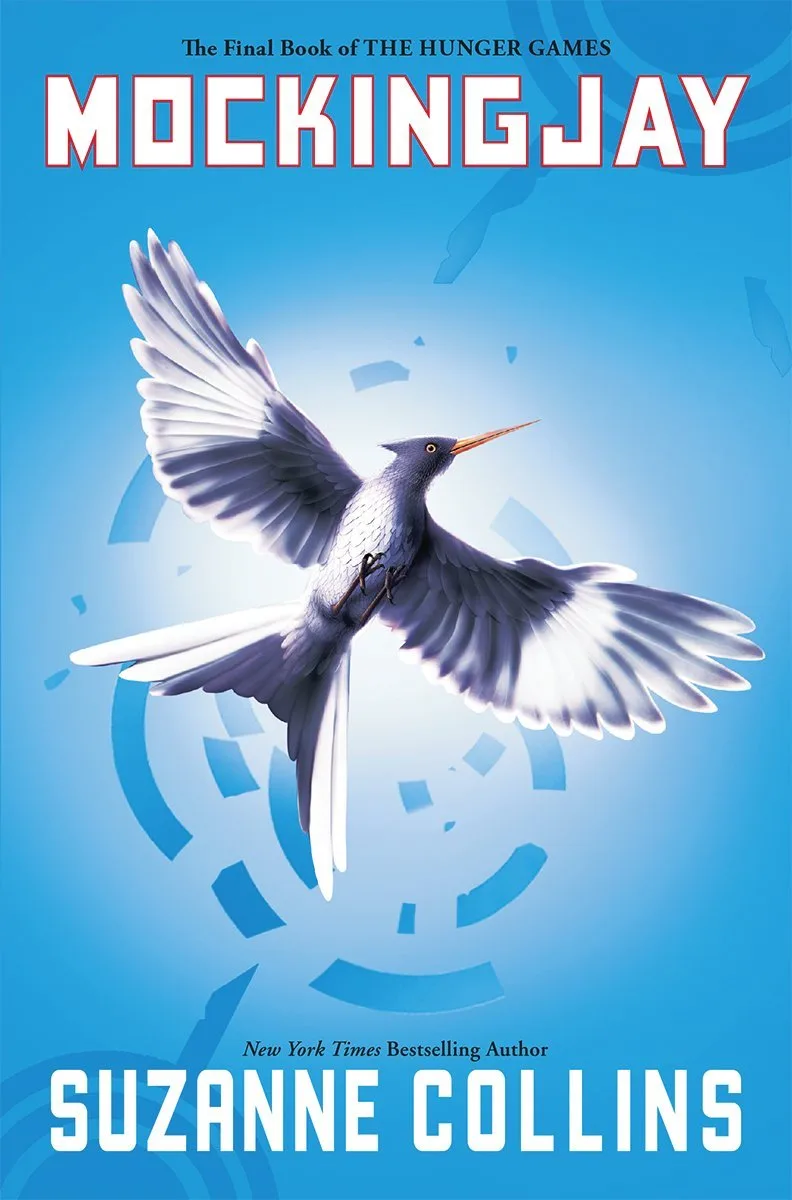
Mockingjay
Paperback
• 400 Pages
• USD 14.99
• English
• 9780545663267
No ratings yet
Teen & Young Adult
Teen & Young Adult Fiction on Physical & Emotional Abuse
Teen & Young Adult Survival Stories
| Publisher | Scholastic Press |
|---|---|
| ISBN13 | 9780545663267 |
| ASIN/SKU | 0545663261 |
| Book Format | Paperback |
| Language | English |
| Pages | 400 |
| List Price | USD 14.99 |
| Series Title | Hunger Games |
| Publishing Date | 25/02/2014 |
| Dimensions | 5.26 x 0.79 x 9.1 inches |
| Weight | 11.5 ounces |
| Book Code | BD00055754 |
Buy this Book
Amazon Stores
Ebook Stores
Other Stores
Discover Mockingjay by Suzanne Collins. This book is published by Scholastic Press in Paperback format, ISBN 9780545663267, ASIN 0545663261, under Teen and Young Adult, Teen and Young Adult Fiction on Physical and Emotional Abuse, Teen and Young Adult Survival Stories.
Book Description
The third book in Suzanne Collins's phenomenal and worldwide bestselling Hunger Games trilogy.
The final book in Suzanne Collins's worldwide bestselling Hunger Games trilogy is now available in paperback.
"My name is Katniss Everdeen. Why am I not dead? I should be dead."
Katniss Everdeen, girl on fire, has survived, even though her home has been destroyed. There are rebels. There are new leaders. A revolution is unfolding.
District 13 has come out of the shadows and is plotting to overthrow the Capitol. Though she's long been a part of the revolution, Katniss hasn't known it. Now it seems that everyone has had a hand in the carefully laid plans but her.
The success of the rebellion hinges on Katniss's willingness to be a pawn, to accept responsibility for countless lives, and to change the course of the future of Panem. To do this, she must put aside her feelings of anger and distrust. She must become the rebels' Mockingjay - no matter what the cost.
The final book in Suzanne Collins's worldwide bestselling Hunger Games trilogy is now available in paperback.
"My name is Katniss Everdeen. Why am I not dead? I should be dead."
Katniss Everdeen, girl on fire, has survived, even though her home has been destroyed. There are rebels. There are new leaders. A revolution is unfolding.
District 13 has come out of the shadows and is plotting to overthrow the Capitol. Though she's long been a part of the revolution, Katniss hasn't known it. Now it seems that everyone has had a hand in the carefully laid plans but her.
The success of the rebellion hinges on Katniss's willingness to be a pawn, to accept responsibility for countless lives, and to change the course of the future of Panem. To do this, she must put aside her feelings of anger and distrust. She must become the rebels' Mockingjay - no matter what the cost.
Author Biography
Suzanne Collins is the internationally bestselling author of the Hunger Games series, which also includes the novels The Hunger Games, Catching Fire, Mockingjay, and The Ballad of Songbirds and Snakes. Together, the books have sold over 100 million copies and were the basis for five popular films. Her other books include the acclaimed Underland Chronicles series, which begins with Gregor the Overlander, and the picture book Year of the Jungle, illustrated by James Proimos. To date, her books have been published in fifty-three languages around the world.
Editorial Reviews
Praise for Mockingjay:
#1 USA Today Bestseller
#1 New York Times Bestseller
#1 Wall Street Journal Bestseller
#1 Publishers Weekly Bestseller
A New York Times Notable Children's Book of 2010
A New York Times Book Review Editors' Choice
A 2010 Booklist Editors' Choice
A 2010 Kirkus Best Book of the Year
A Publishers Weekly Best Book of 2010
"Fans will be happy to hear that Mockingjay is every bit as complex and imaginative as Hunger Games and Catching Fire."
-Entertainment Weekly
"Suspenseful... Collins' fans, grown-ups included, will race to the end."
-USA Today
"At its best the trilogy channels the political passion of 1984, the memorable violence of A Clockwork Orange, the imaginative ambience of The Chronicles of Narnia and the detailed inventiveness of Harry Potter."
-New York Times Book Review
"Unfolding in Collins' engaging, intelligent prose and assembled into chapters that end with didn't-see-that-coming cliffhangers, this finale is every bit the pressure cooker of its forebears. [Mockingjay] is nearly as shocking, and certainly every bit as original and thought provoking, as The Hunger Games. Wow."
-Los Angeles Times
*"This concluding volume in Collins's Hunger Games trilogy accomplishes a rare feat, the last installment being the best yet, a beautifully orchestrated and intelligent novel that succeeds on every level."
-Publishers Weekly, starred review
#1 USA Today Bestseller
#1 New York Times Bestseller
#1 Wall Street Journal Bestseller
#1 Publishers Weekly Bestseller
A New York Times Notable Children's Book of 2010
A New York Times Book Review Editors' Choice
A 2010 Booklist Editors' Choice
A 2010 Kirkus Best Book of the Year
A Publishers Weekly Best Book of 2010
"Fans will be happy to hear that Mockingjay is every bit as complex and imaginative as Hunger Games and Catching Fire."
-Entertainment Weekly
"Suspenseful... Collins' fans, grown-ups included, will race to the end."
-USA Today
"At its best the trilogy channels the political passion of 1984, the memorable violence of A Clockwork Orange, the imaginative ambience of The Chronicles of Narnia and the detailed inventiveness of Harry Potter."
-New York Times Book Review
"Unfolding in Collins' engaging, intelligent prose and assembled into chapters that end with didn't-see-that-coming cliffhangers, this finale is every bit the pressure cooker of its forebears. [Mockingjay] is nearly as shocking, and certainly every bit as original and thought provoking, as The Hunger Games. Wow."
-Los Angeles Times
*"This concluding volume in Collins's Hunger Games trilogy accomplishes a rare feat, the last installment being the best yet, a beautifully orchestrated and intelligent novel that succeeds on every level."
-Publishers Weekly, starred review
Book Summary
Mockingjay by Suzanne Collins is the third and final book in The Hunger Games trilogy and follows Katniss Everdeen as she becomes the reluctant symbol of a full-scale rebellion against the Capitol. The story begins after the destruction of District 12. Katniss has been rescued from the arena and now lives in District 13, a hidden underground district that has been planning revolution for years. Physically and emotionally damaged from her experiences in the Hunger Games and the Quarter Quell, Katniss struggles with trauma, nightmares, and guilt, especially over the fact that Peeta was left behind in the Capitol. District 13, led by President Alma Coin, wants Katniss to be their “Mockingjay,” a symbol of hope and defiance to unite the districts. Though she is exhausted and angry, Katniss eventually agrees, but only under certain conditions: that Peeta and the other captured tributes will be rescued if possible, that her sister Prim’s cat is allowed in District 13, and that President Snow will be killed, with Katniss personally responsible if she gets the chance. These demands show how deeply personal her motivations are—she is not a calm, strategic leader, but a traumatized young woman trying to protect those she loves and punish the man she sees as the face of evil.
A major part of the book focuses on propaganda and the way images and messages are used as weapons in war. District 13 wants Katniss to appear in “propos”—short propaganda films—showing her defiance to inspire the other districts to fight. At first, Katniss struggles to perform in staged scenes, but she becomes powerful and convincing when she reacts authentically to real destruction, such as when she visits bombed Districts and sees suffering firsthand. Her raw anger and grief make her a believable symbol, and the rebellion spreads. However, she quickly realizes that both sides—the Capitol and District 13—use manipulation and media to control people. The Capitol broadcasts Peeta, who has been tortured and brainwashed (hijacked) to turn him against Katniss, while District 13 carefully edits Katniss’s words and actions to fit their narrative. Katniss is caught in the middle and often feels like a pawn again, just as she did in the Hunger Games. Instead of a simple good-versus-evil battle, she sees layers of power, control, and moral compromise.
When Peeta appears on television, he at first seems to be warning Katniss and the rebels about impending attacks, but over time his words become harsher and more hostile. Eventually, he openly condemns Katniss and the rebellion, shocking her and everyone in District 13. Later, the Capitol uses him to deliver a warning about an upcoming assault, which turns out to be real and helps District 13 survive a bombing. This creates confusion about Peeta’s state of mind and loyalties. When Peeta and some other captured tributes are finally rescued by a daring mission, it is not a joyful reunion. Peeta has been “hijacked” with tracker venom, a poison that distorts his memories and emotions, making him fear and hate Katniss. He believes she is a threat and tries to kill her at one point. Watching Peeta struggle against the false memories and violence in his mind becomes one of the most painful parts of the book. Katniss’s hope for simple rescue and healing is replaced by the reality that war damages people in ways that are not easily fixed.
As the rebellion gains strength, Katniss trains and eventually joins a special team of soldiers, including Gale, Finnick, and later Peeta, in an operation aimed at the Capitol. The plan is to film more propos and help lead the fight toward Snow’s mansion. The Capitol is filled with deadly pods—high-tech traps similar to those in the Hunger Games arena—turning the city itself into a kind of battlefield game board. The team moves through the Capitol street by street, facing hidden dangers like explosive traps, muttations (genetically modified creatures), and constant surveillance. Several beloved characters die along the way, including Finnick, whose death is sudden and brutal. These losses remind Katniss that war demands heavy sacrifices and that victory will never be clean or painless. The journey is both a military mission and a symbolic one, with the rebels trying to reach Snow to end his rule and set the stage for a new world.
Eventually, the fighting reaches the center of the Capitol, near Snow’s mansion, where refugees—Capitol children and citizens—are gathered, hoping for safety. Rebel forces and Capitol forces clash, and in the chaos, a group of children is used as human shields near the mansion. Suddenly, bombs drop among the children, causing horrific explosions. Medics, including Katniss’s sister Prim, run in to help. A second wave of bombs detonates, killing many, including Prim. Katniss is injured and dazed, but she notices something important: the bombing does not look like typical Capitol tactics, and the design of the bombs resembles devices Gale had once described. This raises the possibility that the rebels, under Coin’s leadership, may have staged the attack to turn public opinion fully against Snow, sacrificing innocent lives for strategic gain. Prim’s death shatters Katniss, who had fought so hard mainly to protect her.
After the Capitol falls, Snow is captured and the war ends. A new government begins to form, with Coin as the provisional leader. The surviving victors and key figures are called to a meeting where Coin suggests a final symbolic Hunger Games, but this time using children of Capitol leaders. This chilling idea shows that even the new leadership is willing to repeat the cruelty of the old system in the name of justice or revenge. When asked to vote, Katniss, scarred by her experiences, surprisingly agrees, believing that only a gesture as terrible as the Games can satisfy the demands for punishment—or perhaps because she no longer believes in pure justice and is too broken to argue. Later, she visits Snow, who claims that Coin, not he, was behind the attack that killed Prim. Whether he is completely truthful or not, Katniss has already begun to suspect Coin’s hunger for power and her willingness to sacrifice lives for control.
On the day Snow is to be executed, Katniss is given the role of shooting him with an arrow. She steps forward, but instead of killing Snow, she turns and shoots Coin, recognizing that replacing one cruel, manipulative leader with another would only repeat the cycle of oppression. Snow dies anyway, likely from illness and the crowd’s rage, while Katniss is taken away and judged mentally unstable rather than formally tried and executed. In the aftermath, she returns to the ruins of District 12 and slowly tries to rebuild a life amid trauma and grief. Gale goes to another district to work, and their relationship fades, burdened by the possibility that his designs for bombs contributed to Prim’s death. Peeta, gradually recovering some of his true memories and feelings, comes back to District 12 as well.
The final pages show Katniss and Peeta over time building a fragile peace together. They eventually have children, even though Katniss once swore she would never bring kids into a world that had the Hunger Games. The Games are gone, but the scars remain. Katniss still has flashbacks and moments of fear, but she learns to manage them by focusing on the good: small acts of kindness, the safety of her family, and a mental list she keeps of every good thing people have done. Mockingjay ends on a bittersweet note. The rebellion has succeeded, but at enormous cost. The book shows that war, even when fought for freedom, destroys innocence and leaves deep psychological wounds. It emphasizes that true change requires not just defeating a tyrant, but confronting the desire for revenge and the temptation to repeat old cruelties under new names. Ultimately, Katniss’s journey is about surviving trauma, questioning power, and finding a reason to keep living in a world that will always carry memories of pain as well as hope.
A major part of the book focuses on propaganda and the way images and messages are used as weapons in war. District 13 wants Katniss to appear in “propos”—short propaganda films—showing her defiance to inspire the other districts to fight. At first, Katniss struggles to perform in staged scenes, but she becomes powerful and convincing when she reacts authentically to real destruction, such as when she visits bombed Districts and sees suffering firsthand. Her raw anger and grief make her a believable symbol, and the rebellion spreads. However, she quickly realizes that both sides—the Capitol and District 13—use manipulation and media to control people. The Capitol broadcasts Peeta, who has been tortured and brainwashed (hijacked) to turn him against Katniss, while District 13 carefully edits Katniss’s words and actions to fit their narrative. Katniss is caught in the middle and often feels like a pawn again, just as she did in the Hunger Games. Instead of a simple good-versus-evil battle, she sees layers of power, control, and moral compromise.
When Peeta appears on television, he at first seems to be warning Katniss and the rebels about impending attacks, but over time his words become harsher and more hostile. Eventually, he openly condemns Katniss and the rebellion, shocking her and everyone in District 13. Later, the Capitol uses him to deliver a warning about an upcoming assault, which turns out to be real and helps District 13 survive a bombing. This creates confusion about Peeta’s state of mind and loyalties. When Peeta and some other captured tributes are finally rescued by a daring mission, it is not a joyful reunion. Peeta has been “hijacked” with tracker venom, a poison that distorts his memories and emotions, making him fear and hate Katniss. He believes she is a threat and tries to kill her at one point. Watching Peeta struggle against the false memories and violence in his mind becomes one of the most painful parts of the book. Katniss’s hope for simple rescue and healing is replaced by the reality that war damages people in ways that are not easily fixed.
As the rebellion gains strength, Katniss trains and eventually joins a special team of soldiers, including Gale, Finnick, and later Peeta, in an operation aimed at the Capitol. The plan is to film more propos and help lead the fight toward Snow’s mansion. The Capitol is filled with deadly pods—high-tech traps similar to those in the Hunger Games arena—turning the city itself into a kind of battlefield game board. The team moves through the Capitol street by street, facing hidden dangers like explosive traps, muttations (genetically modified creatures), and constant surveillance. Several beloved characters die along the way, including Finnick, whose death is sudden and brutal. These losses remind Katniss that war demands heavy sacrifices and that victory will never be clean or painless. The journey is both a military mission and a symbolic one, with the rebels trying to reach Snow to end his rule and set the stage for a new world.
Eventually, the fighting reaches the center of the Capitol, near Snow’s mansion, where refugees—Capitol children and citizens—are gathered, hoping for safety. Rebel forces and Capitol forces clash, and in the chaos, a group of children is used as human shields near the mansion. Suddenly, bombs drop among the children, causing horrific explosions. Medics, including Katniss’s sister Prim, run in to help. A second wave of bombs detonates, killing many, including Prim. Katniss is injured and dazed, but she notices something important: the bombing does not look like typical Capitol tactics, and the design of the bombs resembles devices Gale had once described. This raises the possibility that the rebels, under Coin’s leadership, may have staged the attack to turn public opinion fully against Snow, sacrificing innocent lives for strategic gain. Prim’s death shatters Katniss, who had fought so hard mainly to protect her.
After the Capitol falls, Snow is captured and the war ends. A new government begins to form, with Coin as the provisional leader. The surviving victors and key figures are called to a meeting where Coin suggests a final symbolic Hunger Games, but this time using children of Capitol leaders. This chilling idea shows that even the new leadership is willing to repeat the cruelty of the old system in the name of justice or revenge. When asked to vote, Katniss, scarred by her experiences, surprisingly agrees, believing that only a gesture as terrible as the Games can satisfy the demands for punishment—or perhaps because she no longer believes in pure justice and is too broken to argue. Later, she visits Snow, who claims that Coin, not he, was behind the attack that killed Prim. Whether he is completely truthful or not, Katniss has already begun to suspect Coin’s hunger for power and her willingness to sacrifice lives for control.
On the day Snow is to be executed, Katniss is given the role of shooting him with an arrow. She steps forward, but instead of killing Snow, she turns and shoots Coin, recognizing that replacing one cruel, manipulative leader with another would only repeat the cycle of oppression. Snow dies anyway, likely from illness and the crowd’s rage, while Katniss is taken away and judged mentally unstable rather than formally tried and executed. In the aftermath, she returns to the ruins of District 12 and slowly tries to rebuild a life amid trauma and grief. Gale goes to another district to work, and their relationship fades, burdened by the possibility that his designs for bombs contributed to Prim’s death. Peeta, gradually recovering some of his true memories and feelings, comes back to District 12 as well.
The final pages show Katniss and Peeta over time building a fragile peace together. They eventually have children, even though Katniss once swore she would never bring kids into a world that had the Hunger Games. The Games are gone, but the scars remain. Katniss still has flashbacks and moments of fear, but she learns to manage them by focusing on the good: small acts of kindness, the safety of her family, and a mental list she keeps of every good thing people have done. Mockingjay ends on a bittersweet note. The rebellion has succeeded, but at enormous cost. The book shows that war, even when fought for freedom, destroys innocence and leaves deep psychological wounds. It emphasizes that true change requires not just defeating a tyrant, but confronting the desire for revenge and the temptation to repeat old cruelties under new names. Ultimately, Katniss’s journey is about surviving trauma, questioning power, and finding a reason to keep living in a world that will always carry memories of pain as well as hope.
Sample Chapters
Sample Chapters will be added soon…
Reader Reviews
No reviews yet.
Mockingjay