
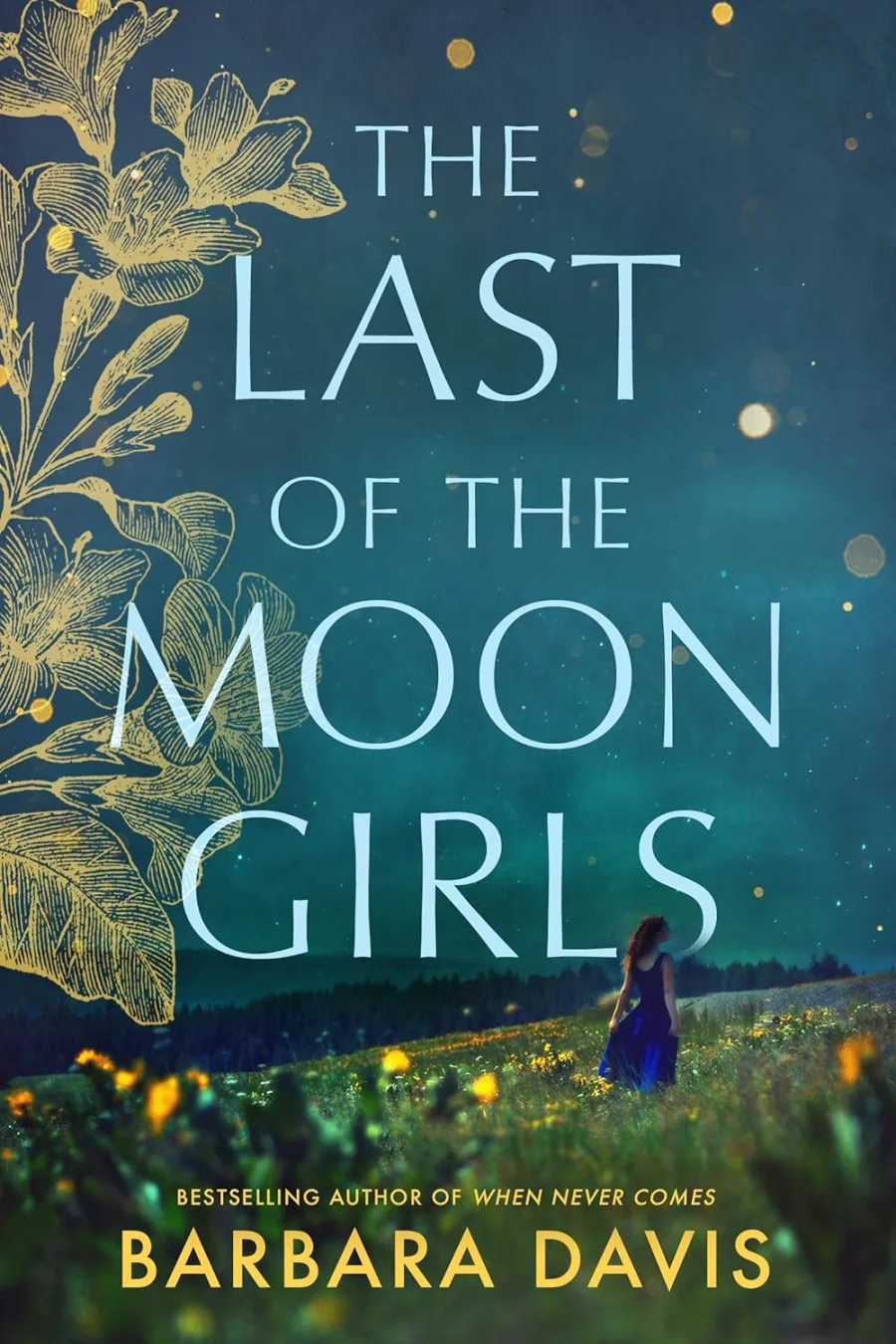
The Last of the Moon Girls
Paperback
• 399 Pages
• USD 14.95
• English
• 9781542006491
No ratings yet
| Publisher | Lake Union Publishing |
|---|---|
| ISBN13 | 9781542006491 |
| ASIN/SKU | 154200649X |
| Book Format | Paperback |
| Language | English |
| Pages | 399 |
| List Price | USD 14.95 |
| Publishing Date | 01/08/2020 |
| Dimensions | 5.5 x 1 x 8.25 inches |
| Weight | 2.31 pounds |
| Book Code | BD00055758 |
Buy this Book
Amazon Stores
Ebook Stores
Other Stores
Discover The Last of the Moon Girls by Barbara Davis. This book is published by Lake Union Publishing in Paperback format, ISBN 9781542006491, ASIN 154200649X, under Literature and Fiction, Mothers and Children Fiction, Women's Domestic Life Fiction.
Book Description
An Amazon Charts bestseller.
A novel of secrets, memory, family, and forgiveness by the bestselling author of When Never Comes.
Lizzy Moon never wanted Moon Girl Farm. Eight years ago, she left the land that nine generations of gifted healers had tended, determined to distance herself from the whispers about her family’s strange legacy. But when her beloved grandmother Althea dies, Lizzy must return and face the tragedy still hanging over the farm’s withered lavender fields: the unsolved murders of two young girls, and the cruel accusations that followed Althea to her grave.
Lizzy wants nothing more than to sell the farm and return to her life in New York, until she discovers a journal Althea left for her―a Book of Remembrances meant to help Lizzy embrace her own special gifts. When she reconnects with Andrew Greyson, one of the few in town who believed in Althea’s innocence, she resolves to clear her grandmother’s name.
But to do so, she’ll have to decide if she can accept her legacy and whether to follow in the footsteps of all the Moon women who came before her.
A novel of secrets, memory, family, and forgiveness by the bestselling author of When Never Comes.
Lizzy Moon never wanted Moon Girl Farm. Eight years ago, she left the land that nine generations of gifted healers had tended, determined to distance herself from the whispers about her family’s strange legacy. But when her beloved grandmother Althea dies, Lizzy must return and face the tragedy still hanging over the farm’s withered lavender fields: the unsolved murders of two young girls, and the cruel accusations that followed Althea to her grave.
Lizzy wants nothing more than to sell the farm and return to her life in New York, until she discovers a journal Althea left for her―a Book of Remembrances meant to help Lizzy embrace her own special gifts. When she reconnects with Andrew Greyson, one of the few in town who believed in Althea’s innocence, she resolves to clear her grandmother’s name.
But to do so, she’ll have to decide if she can accept her legacy and whether to follow in the footsteps of all the Moon women who came before her.
Author Biography
Barbara Davis spent more than a decade as an executive in the jewelry business before leaving the corporate world to pursue her lifelong passion for writing. She is the author of When Never Comes, Summer at Hideaway Key, The Wishing Tide, The Secrets She Carried, and Love, Alice. A Jersey girl raised in the south, Barbara now lives in Rochester, New Hampshire, with her husband, Tom, and their beloved ginger cat, Simon. She’s currently working on her next book. Visit her at www.barbaradavis-author.com
Editorial Reviews
“Fans of Tana French, Alena Dillon, and Hannah Mary McKinnon will adore Davis’ multilayered tale of intrigue, romance, and long-held biases set straight.” ―Booklist
“Davis uses a fine brush to draw complex, colorful characters, including a fiercely independent protagonist whose greatest obstacle is her own self-limiting beliefs. Stepped in equal parts magical realism and beguiling mystery, The Last of the Moon Girls is a captivating story that will leave you under its luminous spell long after you turn the last page.” ―Eldonna Edwards, award-winning author of This I Know and Clover Blue
“The Last of the Moon Girls is an enchanting tale of letting go and finding forgiveness. A five-star must read.” ―Bette Lee Crosby, bestselling author of Emily, Gone
“Woven through the compelling mystery and suspense that keep the pages of The Last of the Moon Girls turning is a story of a powerful family legacy and the discovery of the best kind of magic―that of embracing our own gifts and finding our place in the world. A glorious, shimmering read that resonated in my soul long after I finished reading.” ―Kerry Anne King, bestselling author of Everything You Are
“The Last of the Moon Girls is reminiscent of two of my all-time favorites, Sarah Addison Allen’s Garden Spells [and] Alice Hoffman’s Practical Magic, because it’s witchy, full of plant magic, and painfully human.” ―Kristen Fields, bestselling author of Lily in the Light
“The Last of the Moon Girls is a fantastic blend of mystery and magic, with the perfect dash of romance…a story of family and forgiveness and what it truly means to come home. From the first page to the last, I was riveted by the fascinating, heartbreaking story of the many generations of Moon girls―and, like all the best novels, I was sad when I turned the last page.” ―Jane Healey, bestselling author of The Beantown Girls
“Davis uses a fine brush to draw complex, colorful characters, including a fiercely independent protagonist whose greatest obstacle is her own self-limiting beliefs. Stepped in equal parts magical realism and beguiling mystery, The Last of the Moon Girls is a captivating story that will leave you under its luminous spell long after you turn the last page.” ―Eldonna Edwards, award-winning author of This I Know and Clover Blue
“The Last of the Moon Girls is an enchanting tale of letting go and finding forgiveness. A five-star must read.” ―Bette Lee Crosby, bestselling author of Emily, Gone
“Woven through the compelling mystery and suspense that keep the pages of The Last of the Moon Girls turning is a story of a powerful family legacy and the discovery of the best kind of magic―that of embracing our own gifts and finding our place in the world. A glorious, shimmering read that resonated in my soul long after I finished reading.” ―Kerry Anne King, bestselling author of Everything You Are
“The Last of the Moon Girls is reminiscent of two of my all-time favorites, Sarah Addison Allen’s Garden Spells [and] Alice Hoffman’s Practical Magic, because it’s witchy, full of plant magic, and painfully human.” ―Kristen Fields, bestselling author of Lily in the Light
“The Last of the Moon Girls is a fantastic blend of mystery and magic, with the perfect dash of romance…a story of family and forgiveness and what it truly means to come home. From the first page to the last, I was riveted by the fascinating, heartbreaking story of the many generations of Moon girls―and, like all the best novels, I was sad when I turned the last page.” ―Jane Healey, bestselling author of The Beantown Girls
Book Summary
The Last of the Moon Girls by Barbara Davis is a gently haunting, emotionally rich story about family, grief, small town judgment, and the quiet power of embracing who you really are. It follows Lizzy Moon, a woman who has spent eight years trying to escape the legacy of her family and the place where she grew up. Lizzy comes from a long line of Moon women, all of them known in their rural New England town for their herbal remedies and a kind of intuitive, mystical gift that borders on magic. Her grandmother Althea, who raised her at the Moon Girl farm, was especially famous—and feared—for this gift. When two young girls were found dead in the nearby river and Althea became the prime suspect in their deaths, the town turned on her and on the entire Moon family. Overnight, the Moon women went from being eccentric healers to suspicious outsiders. Lizzy fled to New York City, determined to build a life where she could be just another ordinary person, not the strange girl from the haunted farm.
The book begins with Lizzy being called back home after Althea’s death. Returning to Moon Girl farm forces her to confront everything she has spent years avoiding: her own unresolved grief, the town’s lingering suspicion, and the question of what really happened to those two little girls. The farm itself is full of memories—wild gardens, drying herbs, the old house soaked in Althea’s presence and teachings. Lizzy is torn between the comfort of the place that formed her and the shame and anger she still carries. The will adds a new complication: Althea has left Lizzy the farm and her journals, giving her both a physical inheritance and a spiritual one. Lizzy’s initial plan is practical and distant. She intends to sort through Althea’s things, sell the property, and leave town as quickly as possible, shutting the door on this chapter of her life forever.
But being back among the ghosts of her childhood makes that plan harder than she expects. Lizzy’s memories of Althea are warm and complicated. Her grandmother was loving but stubborn, wise but sometimes cryptic, and deeply committed to the Moon legacy of healing and intuition. Through flashbacks and recollections, we see the bond between them: Althea teaching Lizzy about plants, about listening to the quiet messages of the world, about trusting the strange gift that runs in their blood. We also see the painful distance that grew between them after the tragedy at the river, when Lizzy couldn’t reconcile the grandmother she loved with the accusations swirling around her. The guilt of leaving Althea alone in the face of that suspicion weighs heavily on Lizzy now that Althea is gone and cannot be defended.
The town of Salem Creek is a character in its own right—insular, gossip driven, and slow to let go of old stories. Many locals still believe Althea was involved in the girls’ deaths, even though no clear evidence ever proved it. The mystery of what happened that day hangs over everything. People watch Lizzy with curiosity and distrust, convinced that anything connected to the Moon women must be touched by darkness. Yet, not everyone in Salem Creek is hostile. Some remember Althea’s kindness and the healing work she did. Some quietly continued to rely on her remedies even after the accusations. This mix of suspicion and buried gratitude gives the town a layered, realistic feel and makes Lizzy’s position more complicated: she is hated, needed, and misunderstood all at once.
Into this atmosphere steps Andrew Greyson, Lizzy’s former childhood friend, now a man with his own scars and responsibilities. Andrew is connected to the tragedy in a way that makes his presence both painful and necessary, and he has reasons of his own to want the truth finally uncovered. Where Lizzy wants to run from the past, Andrew believes the only way forward is through it. Their relationship starts off tense, shaped by old hurts and a long separation, but gradually shifts as they begin to work together. Andrew encourages Lizzy to reopen the question of what happened to the two girls, not as a witch hunt, but as a way to clear Althea’s name and allow them both to heal. As they talk, argue, and investigate, old feelings resurface: affection, loyalty, and a slow, tender attraction that neither quite trusts.
Althea’s journals become the emotional and narrative backbone of the story. Within them, Lizzy finds recipes, remedies, and personal reflections that reveal more of her grandmother’s inner life than she ever saw while Althea was alive. The entries are filled with love, warnings, and hints about the Moon women’s gifts and responsibilities. Some pages seem to point directly at the day of the tragedy, though rarely in straightforward language. Reading them, Lizzy begins to understand that Althea carried heavy burdens—from the town, from the Moon legacy, from secrets she felt she had to keep. The journals ask Lizzy, gently but firmly, to reconsider everything she thought she knew about her grandmother and about herself. They encourage her to stop hiding her gifts, to listen to her instincts, and to accept that denial will never bring peace.
As Lizzy starts to dig into the past, the story shifts into a quiet mystery. She revisits old places, speaks to people who were there, and tries to reconstruct the events that led to the girls’ deaths. Her gift—an intuitive sensitivity that she has tried to suppress—keeps stirring, offering impressions and insights she struggles to trust. The more she uncovers, the clearer it becomes that the easy story the town clung to was wrong or at least incomplete. There were other people with motives, other forces at play, and choices made in fear or confusion. Lizzy faces the uncomfortable truth that her refusal to face this earlier may have helped keep that false story alive. With Andrew’s support and Althea’s words guiding her, she begins to piece together a more truthful version of events.
Alongside the external mystery is Lizzy’s internal journey. She has spent years trying to be “normal,” rejecting anything that might mark her as a Moon woman. But that rejection has left her hollow. As she reconnects with the farm, with the land, and with the quiet rituals she once shared with Althea, she begins to feel more like herself than she has in years. The herbs, the moonlit gardens, the small acts of healing she performs almost without thinking—all of these call her back to the life she was meant to live. The choice before her becomes not only whether to clear Althea’s name, but whether to accept her inheritance fully: the farm, the journals, and the gift. Can she be the next Moon woman in a town that still whispers about curses and river ghosts? Can she embrace the very thing that once made her a target?
The romance between Lizzy and Andrew unfolds quietly, in glances, shared labor, and honest conversations. It is never separate from the heavier themes of the book; instead, it grows out of mutual healing. Both of them are dealing with grief, regret, and a sense that their lives were knocked off course by that tragedy years ago. As they inch closer emotionally, they also risk more—because if the truth they uncover is painful or divisive, it could tear them apart again. The story treats their connection gently, using it as a symbol of the possibility that something good can grow out of even the darkest soil.
By the time the truth about the girls’ deaths is revealed, the mystery resolves in a way that feels both shocking and sadly human. It involves fear, misguided protection, and the kind of split second choices that change lives forever. Althea’s role is finally understood, and the town’s long held judgment is forced to shift. This resolution allows Lizzy to see her grandmother clearly, not as an accused monster or untouchable saint, but as a strong, flawed woman who did the best she could under impossible circumstances. It also gives Lizzy a chance to forgive herself—for leaving, for doubting, for staying away so long.
In the end, The Last of the Moon Girls is about coming home in every sense of the word. Lizzy must decide whether Moon Girl farm is her future or just a place to say goodbye to. Her journey leads her to accept that her gift is not something shameful or dangerous, but something that can bring comfort, healing, and meaning—if she is brave enough to use it. The town of Salem Creek still has its gossip and its shadows, but cracks open for change as long buried truths come to light. With Althea gone, Lizzy steps into her own power, not by perfectly fixing the past, but by telling the truth, claiming her heritage, and choosing love and belonging over fear and running. The novel blends a gentle sense of magic with realistic emotion, delivering a story that feels like standing in a twilight garden: bittersweet, hopeful, and touched by something just beyond ordinary sight.
The book begins with Lizzy being called back home after Althea’s death. Returning to Moon Girl farm forces her to confront everything she has spent years avoiding: her own unresolved grief, the town’s lingering suspicion, and the question of what really happened to those two little girls. The farm itself is full of memories—wild gardens, drying herbs, the old house soaked in Althea’s presence and teachings. Lizzy is torn between the comfort of the place that formed her and the shame and anger she still carries. The will adds a new complication: Althea has left Lizzy the farm and her journals, giving her both a physical inheritance and a spiritual one. Lizzy’s initial plan is practical and distant. She intends to sort through Althea’s things, sell the property, and leave town as quickly as possible, shutting the door on this chapter of her life forever.
But being back among the ghosts of her childhood makes that plan harder than she expects. Lizzy’s memories of Althea are warm and complicated. Her grandmother was loving but stubborn, wise but sometimes cryptic, and deeply committed to the Moon legacy of healing and intuition. Through flashbacks and recollections, we see the bond between them: Althea teaching Lizzy about plants, about listening to the quiet messages of the world, about trusting the strange gift that runs in their blood. We also see the painful distance that grew between them after the tragedy at the river, when Lizzy couldn’t reconcile the grandmother she loved with the accusations swirling around her. The guilt of leaving Althea alone in the face of that suspicion weighs heavily on Lizzy now that Althea is gone and cannot be defended.
The town of Salem Creek is a character in its own right—insular, gossip driven, and slow to let go of old stories. Many locals still believe Althea was involved in the girls’ deaths, even though no clear evidence ever proved it. The mystery of what happened that day hangs over everything. People watch Lizzy with curiosity and distrust, convinced that anything connected to the Moon women must be touched by darkness. Yet, not everyone in Salem Creek is hostile. Some remember Althea’s kindness and the healing work she did. Some quietly continued to rely on her remedies even after the accusations. This mix of suspicion and buried gratitude gives the town a layered, realistic feel and makes Lizzy’s position more complicated: she is hated, needed, and misunderstood all at once.
Into this atmosphere steps Andrew Greyson, Lizzy’s former childhood friend, now a man with his own scars and responsibilities. Andrew is connected to the tragedy in a way that makes his presence both painful and necessary, and he has reasons of his own to want the truth finally uncovered. Where Lizzy wants to run from the past, Andrew believes the only way forward is through it. Their relationship starts off tense, shaped by old hurts and a long separation, but gradually shifts as they begin to work together. Andrew encourages Lizzy to reopen the question of what happened to the two girls, not as a witch hunt, but as a way to clear Althea’s name and allow them both to heal. As they talk, argue, and investigate, old feelings resurface: affection, loyalty, and a slow, tender attraction that neither quite trusts.
Althea’s journals become the emotional and narrative backbone of the story. Within them, Lizzy finds recipes, remedies, and personal reflections that reveal more of her grandmother’s inner life than she ever saw while Althea was alive. The entries are filled with love, warnings, and hints about the Moon women’s gifts and responsibilities. Some pages seem to point directly at the day of the tragedy, though rarely in straightforward language. Reading them, Lizzy begins to understand that Althea carried heavy burdens—from the town, from the Moon legacy, from secrets she felt she had to keep. The journals ask Lizzy, gently but firmly, to reconsider everything she thought she knew about her grandmother and about herself. They encourage her to stop hiding her gifts, to listen to her instincts, and to accept that denial will never bring peace.
As Lizzy starts to dig into the past, the story shifts into a quiet mystery. She revisits old places, speaks to people who were there, and tries to reconstruct the events that led to the girls’ deaths. Her gift—an intuitive sensitivity that she has tried to suppress—keeps stirring, offering impressions and insights she struggles to trust. The more she uncovers, the clearer it becomes that the easy story the town clung to was wrong or at least incomplete. There were other people with motives, other forces at play, and choices made in fear or confusion. Lizzy faces the uncomfortable truth that her refusal to face this earlier may have helped keep that false story alive. With Andrew’s support and Althea’s words guiding her, she begins to piece together a more truthful version of events.
Alongside the external mystery is Lizzy’s internal journey. She has spent years trying to be “normal,” rejecting anything that might mark her as a Moon woman. But that rejection has left her hollow. As she reconnects with the farm, with the land, and with the quiet rituals she once shared with Althea, she begins to feel more like herself than she has in years. The herbs, the moonlit gardens, the small acts of healing she performs almost without thinking—all of these call her back to the life she was meant to live. The choice before her becomes not only whether to clear Althea’s name, but whether to accept her inheritance fully: the farm, the journals, and the gift. Can she be the next Moon woman in a town that still whispers about curses and river ghosts? Can she embrace the very thing that once made her a target?
The romance between Lizzy and Andrew unfolds quietly, in glances, shared labor, and honest conversations. It is never separate from the heavier themes of the book; instead, it grows out of mutual healing. Both of them are dealing with grief, regret, and a sense that their lives were knocked off course by that tragedy years ago. As they inch closer emotionally, they also risk more—because if the truth they uncover is painful or divisive, it could tear them apart again. The story treats their connection gently, using it as a symbol of the possibility that something good can grow out of even the darkest soil.
By the time the truth about the girls’ deaths is revealed, the mystery resolves in a way that feels both shocking and sadly human. It involves fear, misguided protection, and the kind of split second choices that change lives forever. Althea’s role is finally understood, and the town’s long held judgment is forced to shift. This resolution allows Lizzy to see her grandmother clearly, not as an accused monster or untouchable saint, but as a strong, flawed woman who did the best she could under impossible circumstances. It also gives Lizzy a chance to forgive herself—for leaving, for doubting, for staying away so long.
In the end, The Last of the Moon Girls is about coming home in every sense of the word. Lizzy must decide whether Moon Girl farm is her future or just a place to say goodbye to. Her journey leads her to accept that her gift is not something shameful or dangerous, but something that can bring comfort, healing, and meaning—if she is brave enough to use it. The town of Salem Creek still has its gossip and its shadows, but cracks open for change as long buried truths come to light. With Althea gone, Lizzy steps into her own power, not by perfectly fixing the past, but by telling the truth, claiming her heritage, and choosing love and belonging over fear and running. The novel blends a gentle sense of magic with realistic emotion, delivering a story that feels like standing in a twilight garden: bittersweet, hopeful, and touched by something just beyond ordinary sight.
Sample Chapters
Sample Chapters will be added soon…
Reader Reviews
No reviews yet.
The Last of the Moon Girls
Download Cover Image
Do you want to download the full cover image for The Last of the Moon Girls?