
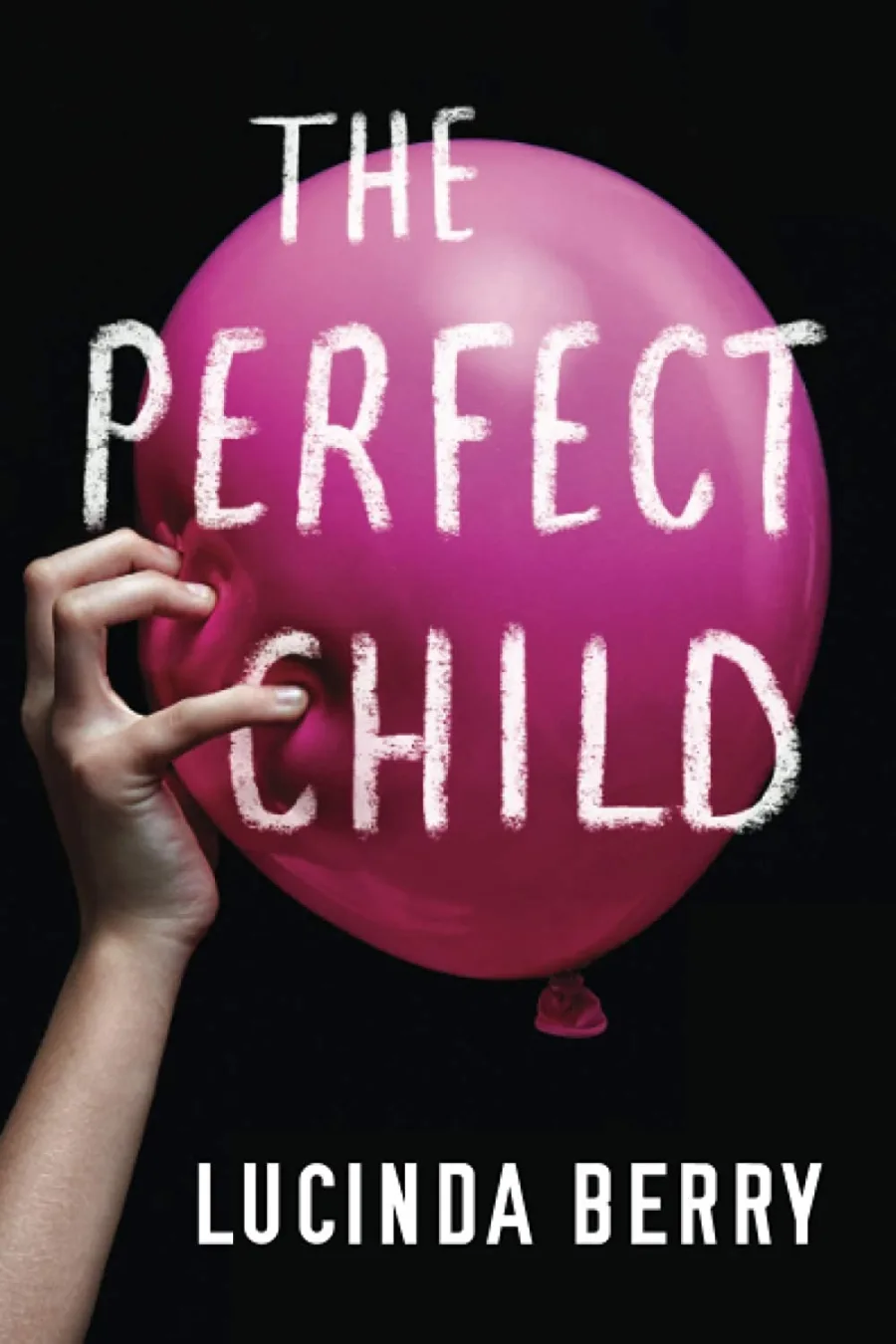
The Perfect Child
Paperback
• 370 Pages
• USD 15.95
• English
• 9781503905122
No ratings yet
| Publisher | Thomas & Mercer |
|---|---|
| ISBN13 | 9781503905122 |
| ASIN/SKU | 1503905128 |
| Book Format | Paperback |
| Language | English |
| Pages | 370 |
| List Price | USD 15.95 |
| Publishing Date | 01/03/2019 |
| Dimensions | 5.5 x 1 x 8.25 inches |
| Weight | 2.31 pounds |
| Book Code | BD00055762 |
Buy this Book
Amazon Stores
Ebook Stores
Other Stores
Discover The Perfect Child by Lucinda Berry. This book is published by Thomas and Mercer in Paperback format, ISBN 9781503905122, ASIN 1503905128, under Literature and Fiction, Police Procedurals, Murder Thrillers.
Book Description
A Washington Post and Amazon Charts bestseller.
A page-turning debut of suspense about a young couple desperate to have a child of their own―and the unsettling consequences of getting what they always wanted.
Christopher and Hannah are a happily married surgeon and nurse with picture-perfect lives. All that’s missing is a child. When Janie, an abandoned six-year-old, turns up at their hospital, Christopher forms an instant connection with her, and he convinces Hannah they should take her home as their own.
But Janie is no ordinary child, and her damaged psyche proves to be more than her new parents were expecting. Janie is fiercely devoted to Christopher, but she acts out in increasingly disturbing ways, directing all her rage at Hannah. Unable to bond with Janie, Hannah is drowning under the pressure, and Christopher refuses to see Janie’s true nature.
Hannah knows that Janie is manipulating Christopher and isolating him from her, despite Hannah’s attempts to bring them all together. But as Janie’s behavior threatens to tear Christopher and Hannah apart, the truth behind Janie’s past may be enough to push them all over the edge.
A page-turning debut of suspense about a young couple desperate to have a child of their own―and the unsettling consequences of getting what they always wanted.
Christopher and Hannah are a happily married surgeon and nurse with picture-perfect lives. All that’s missing is a child. When Janie, an abandoned six-year-old, turns up at their hospital, Christopher forms an instant connection with her, and he convinces Hannah they should take her home as their own.
But Janie is no ordinary child, and her damaged psyche proves to be more than her new parents were expecting. Janie is fiercely devoted to Christopher, but she acts out in increasingly disturbing ways, directing all her rage at Hannah. Unable to bond with Janie, Hannah is drowning under the pressure, and Christopher refuses to see Janie’s true nature.
Hannah knows that Janie is manipulating Christopher and isolating him from her, despite Hannah’s attempts to bring them all together. But as Janie’s behavior threatens to tear Christopher and Hannah apart, the truth behind Janie’s past may be enough to push them all over the edge.
Author Biography
Dr. Lucinda Berry is a trauma psychologist and leading researcher in childhood trauma. She uses her clinical experience to create disturbing psychological thrillers, blurring the line between fiction and nonfiction. She enjoys taking her readers on a journey through the dark recesses of the human psyche. If she’s not chasing after her ten-year-old son, you can find her running through Los Angeles, prepping for her next marathon. To hear about her upcoming releases, visit her on Facebook or sign up for her newsletter at https://about.me/lucindaberry.
Editorial Reviews
“I am a compulsive reader of literary novels―but this has been a terrible year for fiction that is actually readable, and not experimental. I have been so disappointed when well-known writers came out with books that, to me, were just duds. But there was one book that kept me reading, the sort of novel I can’t put down…The Perfect Child by Lucinda Berry. It speaks to the fear of every parent: What if your child is a psychopath? This novel takes it a step farther. A couple, desperate for a child, have the chance to adopt a beautiful little girl who, they are told, has been abused. They’re told it might take a while for her to learn to behave and trust people. She can be sweet and loving, and in public is adorable. But in private―well, I won’t give away what happens. But, needless to say, it’s chilling.” ―Gina Kolata, New York Times
“[O]n the nightmare scale, Lucinda Berry’s thriller may top the charts.” ―Popular Culture Association
“A mesmerizing, unbearably tense thriller that will have you looking over your shoulder and sleeping with one eye open. This creepy, serpentine tale explores the darkest corners of parenthood and the profoundly unsettling lengths one will go to to keep a family together―no matter the consequences. Electrifying and atmospheric, this dark gem of a novel is one I couldn’t put down.” ―Heather Gudenkauf, New York Times bestselling author
“A deep, dark, and dangerously addictive read. All-absorbing to the very end!” ―Minka Kent, Washington Post bestselling author
“[O]n the nightmare scale, Lucinda Berry’s thriller may top the charts.” ―Popular Culture Association
“A mesmerizing, unbearably tense thriller that will have you looking over your shoulder and sleeping with one eye open. This creepy, serpentine tale explores the darkest corners of parenthood and the profoundly unsettling lengths one will go to to keep a family together―no matter the consequences. Electrifying and atmospheric, this dark gem of a novel is one I couldn’t put down.” ―Heather Gudenkauf, New York Times bestselling author
“A deep, dark, and dangerously addictive read. All-absorbing to the very end!” ―Minka Kent, Washington Post bestselling author
Book Summary
The Perfect Child by Lucinda Berry is a tense, unsettling psychological thriller about a couple whose dream of starting a family turns into a nightmare when the child they adopt brings darkness, fear, and devastating secrets into their home. The story centers on Christopher and Hannah Bauer, a loving, successful couple who seem well positioned for a happy life. Christopher is a pediatric surgeon, calm and confident, used to dealing with emergencies and saving children’s lives. Hannah works in healthcare administration and has longed for motherhood but has struggled with infertility, leaving a painful gap in their marriage. When a little girl named Janie arrives in Christopher’s hospital after being found severely neglected and abused, both he and Hannah feel an immediate emotional pull. Janie is tiny, malnourished, injured, and emotionally shut down, a child who has clearly suffered unimaginable trauma. To Hannah, she represents a chance not only to become a mother, but to rescue someone who desperately needs love. To Christopher, she is a patient who has slowly become much more than a case file.
Janie’s background is horrifying. She has been locked away, starved, and abused by her biological parents, left to live in filth and isolation. The damage is not just physical but deeply psychological. She rarely speaks, avoids touch, and reacts with intense fear or rage to ordinary situations. Yet, Christopher and Hannah convince themselves that with patience, therapy, and unconditional love, they can help her heal. They decide to adopt Janie, believing that their stable home and their medical knowledge will give her the best possible chance at recovery. People around them warn that this kind of trauma can have long-term effects, but the couple places their faith in nurture over nature, certain that love will be enough. This hope becomes the foundation on which the story builds—and then slowly tears apart.
Once Janie moves in, it becomes clear that her problems go far beyond what they expected. She is not just shy or withdrawn; she can be deliberately cruel, manipulative, and frighteningly calm in situations where other children would be upset or frightened. She shows affection selectively, often toward Christopher while pointedly rejecting Hannah. To Hannah, Janie seems to be waging a quiet war, undermining her authority, refusing to bond, and behaving sweetly only when Christopher is watching. In Hannah’s presence, Janie can be cold, defiant, and disturbingly clever, sometimes harming herself or others in ways that are easy to conceal or explain away. At first, Christopher does not see what Hannah sees. Janie appears vulnerable and loving in front of him, clinging to him, calling him “Daddy,” and making him feel needed and heroic. This difference in perception becomes one of the main sources of tension in the book.
The story is told through shifting points of view, mainly from Hannah and Christopher, which allows the reader to witness how the same events can look radically different depending on who is watching. Hannah begins to feel gaslit by her own household, as the behavior she reports is doubted by her husband and minimized by some professionals. When she tries to explain that Janie is terrorizing her—destroying objects, lashing out, setting up situations that make Hannah look unstable—Christopher often thinks Hannah is exaggerating or struggling with the adjustment to motherhood. He believes that trauma explains everything and that they must simply be more patient, more understanding. This imbalance leaves Hannah increasingly isolated and fearful inside her own home, the place that was supposed to be safe and loving.
The novel explores the unsettling question of whether a child can be truly dangerous and what happens when a parent senses that danger but no one believes them. Janie exhibits behaviors often associated with severe attachment disorders: she lacks empathy, she lies easily, and she seems to enjoy causing distress. There are disturbing incidents with other children and with pets, as well as moments that suggest she might be capable of far worse harm. Hannah becomes convinced that Janie is not just troubled but possibly dangerous, particularly to her and to any future child they might have. Her anxiety and desperation grow as she realizes that the more she tries to protect herself or set boundaries, the more everyone around her sees her as the problem. She worries that she is losing Christopher, losing her grip on reality, and losing the chance to feel safe in the family she once dreamed of having.
Lucinda Berry, who has a background in psychology, makes the emotional and behavioral aspects of Janie’s trauma feel disturbingly believable. The book doesn’t present Janie as a simple “evil child,” but it does show how deep trauma can warp attachment and trust in ways that are difficult to repair, especially when the damage happened early and repeatedly. At the same time, the story pushes into horror territory by emphasizing the fear of living with someone who seems sweet and innocent in public but cruel and calculating in private. Hannah’s experiences—waking up to strange noises, finding disturbing scenes, watching Janie smile in a way that feels more like a threat than affection—create a constant tension that builds as the book progresses.
As time goes on, the stress in the marriage intensifies. Christopher, worn down by work and his desire to believe the best about Janie, begins to doubt Hannah’s perspective. Their communication breaks down, and their intimacy suffers. Hannah feels betrayed, not only because Christopher does not fully believe her, but because he appears to side with Janie, reinforcing the child’s power in the household. This triangle—father, mother, child—becomes the emotional core of the novel. The family’s attempts at therapy and intervention bring only partial results. Professionals offer suggestions, routines, and diagnoses, but none of them are with Janie behind closed doors the way Hannah is. The gap between theory and lived reality becomes painfully clear.
Throughout the story, the reader is made to question what is truly happening and how much can be blamed on trauma versus inherent cruelty or deep mental illness. The title, The Perfect Child, becomes ironic: Janie is presented to the outside world as a miracle of rescue, a brave survivor, and the perfect symbol of loving adoption. She is perfect on paper, perfect in photographs, and perfect in public. Only inside the walls of the Bauer home does another version of her emerge, one that threatens the very foundation of the family. This contrast raises uncomfortable questions about how much we really know about anyone’s private life, and how quickly society is willing to embrace neat, uplifting stories even when the truth is messy and frightening.
As the book hurtles toward its climax, the stakes grow higher. The possibility of bringing a baby into the family triggers Hannah’s deepest fears, and Janie’s behavior escalates in ways that suggest she will not tolerate sharing attention or affection. The tension between Hannah’s desperate need to be believed and Christopher’s reluctant hope that things will somehow improve comes to a breaking point. The final events are shocking and emotionally intense, forcing a reckoning with everything the family has tried to ignore or explain away. In the aftermath, the novel leaves readers grappling with the lingering impact of unresolved trauma, the limits of love and good intentions, and the haunting knowledge that not every child can be healed simply by being wanted.
In the end, The Perfect Child is less about an “evil child” and more about the terrifying, lonely experience of trying to parent a deeply damaged child without adequate support or understanding. It examines how love can blind us, how institutions can fail families, and how easily a dream of saving someone can twist into a struggle to survive them. The story is chilling not because it relies on supernatural elements, but because it feels like something that could happen: a family opening their door to a child they believe they can save, only to discover that some wounds run deeper than they ever imagined, and that the cost of ignoring that truth can be devastating.
Janie’s background is horrifying. She has been locked away, starved, and abused by her biological parents, left to live in filth and isolation. The damage is not just physical but deeply psychological. She rarely speaks, avoids touch, and reacts with intense fear or rage to ordinary situations. Yet, Christopher and Hannah convince themselves that with patience, therapy, and unconditional love, they can help her heal. They decide to adopt Janie, believing that their stable home and their medical knowledge will give her the best possible chance at recovery. People around them warn that this kind of trauma can have long-term effects, but the couple places their faith in nurture over nature, certain that love will be enough. This hope becomes the foundation on which the story builds—and then slowly tears apart.
Once Janie moves in, it becomes clear that her problems go far beyond what they expected. She is not just shy or withdrawn; she can be deliberately cruel, manipulative, and frighteningly calm in situations where other children would be upset or frightened. She shows affection selectively, often toward Christopher while pointedly rejecting Hannah. To Hannah, Janie seems to be waging a quiet war, undermining her authority, refusing to bond, and behaving sweetly only when Christopher is watching. In Hannah’s presence, Janie can be cold, defiant, and disturbingly clever, sometimes harming herself or others in ways that are easy to conceal or explain away. At first, Christopher does not see what Hannah sees. Janie appears vulnerable and loving in front of him, clinging to him, calling him “Daddy,” and making him feel needed and heroic. This difference in perception becomes one of the main sources of tension in the book.
The story is told through shifting points of view, mainly from Hannah and Christopher, which allows the reader to witness how the same events can look radically different depending on who is watching. Hannah begins to feel gaslit by her own household, as the behavior she reports is doubted by her husband and minimized by some professionals. When she tries to explain that Janie is terrorizing her—destroying objects, lashing out, setting up situations that make Hannah look unstable—Christopher often thinks Hannah is exaggerating or struggling with the adjustment to motherhood. He believes that trauma explains everything and that they must simply be more patient, more understanding. This imbalance leaves Hannah increasingly isolated and fearful inside her own home, the place that was supposed to be safe and loving.
The novel explores the unsettling question of whether a child can be truly dangerous and what happens when a parent senses that danger but no one believes them. Janie exhibits behaviors often associated with severe attachment disorders: she lacks empathy, she lies easily, and she seems to enjoy causing distress. There are disturbing incidents with other children and with pets, as well as moments that suggest she might be capable of far worse harm. Hannah becomes convinced that Janie is not just troubled but possibly dangerous, particularly to her and to any future child they might have. Her anxiety and desperation grow as she realizes that the more she tries to protect herself or set boundaries, the more everyone around her sees her as the problem. She worries that she is losing Christopher, losing her grip on reality, and losing the chance to feel safe in the family she once dreamed of having.
Lucinda Berry, who has a background in psychology, makes the emotional and behavioral aspects of Janie’s trauma feel disturbingly believable. The book doesn’t present Janie as a simple “evil child,” but it does show how deep trauma can warp attachment and trust in ways that are difficult to repair, especially when the damage happened early and repeatedly. At the same time, the story pushes into horror territory by emphasizing the fear of living with someone who seems sweet and innocent in public but cruel and calculating in private. Hannah’s experiences—waking up to strange noises, finding disturbing scenes, watching Janie smile in a way that feels more like a threat than affection—create a constant tension that builds as the book progresses.
As time goes on, the stress in the marriage intensifies. Christopher, worn down by work and his desire to believe the best about Janie, begins to doubt Hannah’s perspective. Their communication breaks down, and their intimacy suffers. Hannah feels betrayed, not only because Christopher does not fully believe her, but because he appears to side with Janie, reinforcing the child’s power in the household. This triangle—father, mother, child—becomes the emotional core of the novel. The family’s attempts at therapy and intervention bring only partial results. Professionals offer suggestions, routines, and diagnoses, but none of them are with Janie behind closed doors the way Hannah is. The gap between theory and lived reality becomes painfully clear.
Throughout the story, the reader is made to question what is truly happening and how much can be blamed on trauma versus inherent cruelty or deep mental illness. The title, The Perfect Child, becomes ironic: Janie is presented to the outside world as a miracle of rescue, a brave survivor, and the perfect symbol of loving adoption. She is perfect on paper, perfect in photographs, and perfect in public. Only inside the walls of the Bauer home does another version of her emerge, one that threatens the very foundation of the family. This contrast raises uncomfortable questions about how much we really know about anyone’s private life, and how quickly society is willing to embrace neat, uplifting stories even when the truth is messy and frightening.
As the book hurtles toward its climax, the stakes grow higher. The possibility of bringing a baby into the family triggers Hannah’s deepest fears, and Janie’s behavior escalates in ways that suggest she will not tolerate sharing attention or affection. The tension between Hannah’s desperate need to be believed and Christopher’s reluctant hope that things will somehow improve comes to a breaking point. The final events are shocking and emotionally intense, forcing a reckoning with everything the family has tried to ignore or explain away. In the aftermath, the novel leaves readers grappling with the lingering impact of unresolved trauma, the limits of love and good intentions, and the haunting knowledge that not every child can be healed simply by being wanted.
In the end, The Perfect Child is less about an “evil child” and more about the terrifying, lonely experience of trying to parent a deeply damaged child without adequate support or understanding. It examines how love can blind us, how institutions can fail families, and how easily a dream of saving someone can twist into a struggle to survive them. The story is chilling not because it relies on supernatural elements, but because it feels like something that could happen: a family opening their door to a child they believe they can save, only to discover that some wounds run deeper than they ever imagined, and that the cost of ignoring that truth can be devastating.
Sample Chapters
Sample Chapters will be added soon…
Reader Reviews
No reviews yet.
The Perfect Child
Download Cover Image
Do you want to download the full cover image for The Perfect Child?