
The Covenant of Water (Oprah's Book Club)
Paperback
• 768 Pages
• USD 22.00
• English
• 9780802162731
No ratings yet
| Publisher | Grove Press |
|---|---|
| ISBN13 | 9780802162731 |
| ASIN/SKU | 0802162738 |
| Book Format | Paperback |
| Language | English |
| Pages | 768 |
| List Price | USD 22.00 |
| Publishing Date | 06/05/2025 |
| Dimensions | 5.5 x 1.5 x 8.25 inches |
| Weight | 1.25 pounds |
| Book Code | BD00055768 |
Buy this Book
Amazon Stores
Ebook Stores
Other Stores
Discover The Covenant of Water (Oprah's Book Club) by Abraham Verghese. This book is published by Grove Press in Paperback format, ISBN 9780802162731, ASIN 0802162738, under Literature and Fiction, Medical Fiction, Literary Fiction.
Book Description
OPRAH’S BOOK CLUB PICK • INSTANT NEW YORK TIMES BESTSELLER • SUBJECT OF A SIX-PART SUPER SOUL PODCAST SERIES HOSTED BY OPRAH WINFREY
From the New York Times-bestselling author of Cutting for Stone comes a stunning and magisterial epic of love, faith, and medicine, set in Kerala, South India, following three generations of a family seeking the answers to a strange secret
“One of the best books I’ve read in my entire life. It’s epic. It’s transportive . . . It was unputdownable!”—Oprah Winfrey, OprahDaily.com
An instant New York Times and indie bestseller and an Oprah Book Club Pick, The Covenant of Water has sold more than two million copies worldwide and was widely named as a best book of the year. Spanning the years 1900 to 1977, Abraham Verghese’s long-awaited, masterful novel follows three generations of a Christian family in Kerala, South India, that suffers a peculiar affliction: in every generation, at least one person dies by drowning. As the novel opens, a twelve-year-old girl is sent by boat to her wedding, where she meets her husband for the first time. She joins a prosperous household and becomes known as Big Ammachi, the matriarch of an extraordinary family that will endure hardship, celebrate triumph, and witness unthinkable changes over the coming decades.
An exquisite modern classic finally available in paperback, The Covenant of Water is an unforgettable and stunning epic of love, faith, and medicine.
From the New York Times-bestselling author of Cutting for Stone comes a stunning and magisterial epic of love, faith, and medicine, set in Kerala, South India, following three generations of a family seeking the answers to a strange secret
“One of the best books I’ve read in my entire life. It’s epic. It’s transportive . . . It was unputdownable!”—Oprah Winfrey, OprahDaily.com
An instant New York Times and indie bestseller and an Oprah Book Club Pick, The Covenant of Water has sold more than two million copies worldwide and was widely named as a best book of the year. Spanning the years 1900 to 1977, Abraham Verghese’s long-awaited, masterful novel follows three generations of a Christian family in Kerala, South India, that suffers a peculiar affliction: in every generation, at least one person dies by drowning. As the novel opens, a twelve-year-old girl is sent by boat to her wedding, where she meets her husband for the first time. She joins a prosperous household and becomes known as Big Ammachi, the matriarch of an extraordinary family that will endure hardship, celebrate triumph, and witness unthinkable changes over the coming decades.
An exquisite modern classic finally available in paperback, The Covenant of Water is an unforgettable and stunning epic of love, faith, and medicine.
Author Biography
ABRAHAM VERGHESE is a graduate of the Iowa Writers’ Workshop and the author of the NBCC Award finalist My Own Country and the New York Times Notable Book The Tennis Partner. His most recent book, Cutting for Stone, spent 107 weeks on the New York Times bestseller list and sold more than two million copies worldwide. It was translated into more than twenty languages and is being adapted for film by Anonymous Content. Verghese was awarded the National Humanities Medal by President Obama, has received six honorary degrees, and is an elected member of the National Academy of Medicine and the American Academy of Arts and Sciences. He lives and practices medicine in Stanford, California where he is the Linda R. Meier and Joan F. Lane Provostial Professor in the Stanford University School of Medicine. A decade in the making, The Covenant of Water is his first book since Cutting for Stone.
Editorial Reviews
Praise for The Covenant of Water:
*OPRAH'S BOOK CLUB PICK*
Winner of the Golden Poppy Award for Fiction
Longlisted for the New American Voices Award
An Instant New York Times Bestseller
Named One of Barack Obama’s Favorite Books of the Year
Named the #7 Best Book of the Year by Amazon
A New York Times Book Review Editors’ Choice
Named a Best Book of the Year by the New York Times, TIME, NPR, San Francisco Chronicle, Kirkus Reviews, BookPage, Library Journal, Apple, Minnesota Public Radio, Washington Independent Review of Books, and Chicago Public Library
Named an Amazon Best Book of the Last 25 Years
Named a Most Anticipated Book by the Washington Post, Minneapolis Star Tribune, Oprah Daily, Publishers Weekly (Top 10), Literary Hub, and BookPage
“One of the best books I’ve read in my entire life. It’s epic. It’s transportive . . . It was unputdownable!”—Oprah Winfrey, OprahDaily.com
“A rich, heartfelt novel . . . A lavish smorgasbord of genealogy, medicine and love affairs, tracing a family’s evolution from 1900 through the 1970s, in pointillist detail . . . What binds and drives this vast, intricate history as it patiently unspools are vibrant characters, sensuous detail and an intimate tour of cultures, landscapes and mores across eras . . . Verghese’s technical strengths are consistent and versatile: crisp, taut pacing, sensuous descriptions that can fan out into rhapsody . . . Verghese’s compassion for his ensemble, which subtly multiplies, infuses every page. So does his ability to inhabit a carousel of sensibilities—including those of myriad women—with penetrating insight and empathy . . . Rich and reverberant. The further into the novel readers sink, the more power it accrues . . . Grandly ambitious, impassioned . . . A magnificent feat.”—Joan Frank, Washington Post
“Grand, spectacular, sweeping and utterly absorbing . . . It is a better world for having a book in it that chronicles so many tragedies in a tone that never deviates from hope.”—Andrew Solomon, New York Times Book Review (cover review)
“An immense, immersive work, brimming with interconnected storylines that meander and converge like great river tributaries . . . The novel encompasses intense passion and tragedy, as well as a medical mystery . . . An essential, even healing feat of imagination, a whole world to get lost in.”—Anderson Tepper, Los Angeles Times
“Much will be written about Abraham Verghese’s multigenerational South Indian novel in the coming months and years. As we’ve seen with Verghese’s earlier fiction, there will be frequent references to that other celebrated doctor-writer, Anton Chekhov. There will also be continued invocations of the likes of Charles Dickens and George Eliot to describe Verghese’s ambitious literary scope and realism. Indeed, the literary feats in The Covenant of Water deserve to be lauded as much as those of such canonical authors . . . Ever the skillful surgeon, Verghese threads meaningful connections between macrocosmic and micr
*OPRAH'S BOOK CLUB PICK*
Winner of the Golden Poppy Award for Fiction
Longlisted for the New American Voices Award
An Instant New York Times Bestseller
Named One of Barack Obama’s Favorite Books of the Year
Named the #7 Best Book of the Year by Amazon
A New York Times Book Review Editors’ Choice
Named a Best Book of the Year by the New York Times, TIME, NPR, San Francisco Chronicle, Kirkus Reviews, BookPage, Library Journal, Apple, Minnesota Public Radio, Washington Independent Review of Books, and Chicago Public Library
Named an Amazon Best Book of the Last 25 Years
Named a Most Anticipated Book by the Washington Post, Minneapolis Star Tribune, Oprah Daily, Publishers Weekly (Top 10), Literary Hub, and BookPage
“One of the best books I’ve read in my entire life. It’s epic. It’s transportive . . . It was unputdownable!”—Oprah Winfrey, OprahDaily.com
“A rich, heartfelt novel . . . A lavish smorgasbord of genealogy, medicine and love affairs, tracing a family’s evolution from 1900 through the 1970s, in pointillist detail . . . What binds and drives this vast, intricate history as it patiently unspools are vibrant characters, sensuous detail and an intimate tour of cultures, landscapes and mores across eras . . . Verghese’s technical strengths are consistent and versatile: crisp, taut pacing, sensuous descriptions that can fan out into rhapsody . . . Verghese’s compassion for his ensemble, which subtly multiplies, infuses every page. So does his ability to inhabit a carousel of sensibilities—including those of myriad women—with penetrating insight and empathy . . . Rich and reverberant. The further into the novel readers sink, the more power it accrues . . . Grandly ambitious, impassioned . . . A magnificent feat.”—Joan Frank, Washington Post
“Grand, spectacular, sweeping and utterly absorbing . . . It is a better world for having a book in it that chronicles so many tragedies in a tone that never deviates from hope.”—Andrew Solomon, New York Times Book Review (cover review)
“An immense, immersive work, brimming with interconnected storylines that meander and converge like great river tributaries . . . The novel encompasses intense passion and tragedy, as well as a medical mystery . . . An essential, even healing feat of imagination, a whole world to get lost in.”—Anderson Tepper, Los Angeles Times
“Much will be written about Abraham Verghese’s multigenerational South Indian novel in the coming months and years. As we’ve seen with Verghese’s earlier fiction, there will be frequent references to that other celebrated doctor-writer, Anton Chekhov. There will also be continued invocations of the likes of Charles Dickens and George Eliot to describe Verghese’s ambitious literary scope and realism. Indeed, the literary feats in The Covenant of Water deserve to be lauded as much as those of such canonical authors . . . Ever the skillful surgeon, Verghese threads meaningful connections between macrocosmic and micr
Book Summary
The Covenant of Water by Abraham Verghese is a sweeping, emotionally rich novel that follows three generations of a family in Kerala, India, linked together by love, loss, and a strange inherited curse tied to water. The story begins in the early 1900s with a twelve year old girl from a poor Christian village who is suddenly married off to a much older widower, a prosperous landowner known as Big Ammachi’s husband. She is terrified, leaving behind her mother and the only world she has known, and entering a large estate filled with new customs, responsibilities, and people. Over time, this girl grows into the matriarch “Big Ammachi,” the beating heart of the family. She discovers that her husband’s family carries a tragic problem they call the “Condition”: in every generation, at least one person dies by drowning. This eerie pattern feels like a curse carved into their blood and their fate, haunting every moment spent near the rivers, backwaters, and monsoon floods that define their land.
As Big Ammachi learns to navigate her new life, she builds a deep, tender bond with her husband, comes to care for his children, and eventually has children of her own. The estate, Parambil, becomes a living character in the story: coconut palms, shimmering canals, rice paddies, and the ever present water that is both blessing and threat. The “Condition” hangs in the background, shaping the family’s fears and choices. Big Ammachi pays careful attention to every accident, every rumor of drowning, trying to understand something that seems beyond explanation. She is devout and practical, deeply rooted in faith, but also curious and observant. As years pass, she witnesses India’s shift from colonial rule to independence and beyond, while the rhythms of village life slowly modernize. Yet, despite changing times, the family’s secret sorrow remains.
In a parallel thread, Verghese introduces Digby Kilgour, a young Scottish doctor who travels to India seeking purpose and escape from his own painful past. Digby’s storyline at first seems separate, but it slowly weaves itself into the main narrative. Sensitive, idealistic, and committed to medicine, Digby works in Indian hospitals and confronts the harsh realities of disease, poverty, and limited resources. He navigates professional challenges, ethical dilemmas, and complicated relationships against the backdrop of a country in flux. Through him, the novel explores medicine as both science and art, and shows how doctors carry their own emotional burdens while trying to heal others. Digby’s path eventually intersects with the Parambil family, and his medical knowledge offers a way to understand the “Condition” that has shadowed them for decades.
As the story moves into the mid 20th century, Big Ammachi’s son and later her granddaughter take center stage. Each generation struggles with the legacy of the “Condition” and with their place in a rapidly changing India. The granddaughter, Mariamma, grows into a determined, intelligent young woman deeply affected by the family tragedies she has witnessed. She is haunted by questions: Is the “Condition” truly a curse, or can it be explained by science? Why do some members drown while others survive close calls? Mariamma’s curiosity pushes her toward education and medicine, even though social expectations and gender roles make that path difficult. Her journey reflects the broader shifts in Indian society, where women are starting to claim more space in education and professional life, while still wrestling with traditional norms.
The novel is filled with vivid scenes of everyday life: births and funerals, harvests and festivals, marriages arranged and broken, friendships forged across caste and class. Verghese paints the Syrian Christian community of Kerala with warmth and detail—its churches and rituals, its blend of Indian and Christian traditions, its internal tensions. The characters experience historic events like World War II, independence, and political changes not as distant history, but as forces that ripple into their private lives, altering economic realities, social structures, and medical care. The presence of water—rivers, wells, rainstorms, the Arabian Sea—remains constant, symbolizing both continuity and danger.
One of the central emotional threads is Big Ammachi’s own evolution. She begins as a frightened child bride, but over time becomes wise, compassionate, and strong. Through joy and heartbreak, she learns to carry her family’s secrets, protect those she loves, and accept that some mysteries might never be fully solved in her lifetime. Her faith is tested repeatedly—by deaths, by betrayals, by the harshness of fate—but she does not let bitterness consume her. Instead, she searches for meaning, often finding it in small acts of kindness and in the bonds between people. Her perspective gives the novel its sense of moral and emotional grounding.
Medicine and science gradually shed light on the “Condition.” Through Digby and later Mariamma’s medical experiences, the family curse starts to look less like pure superstition and more like a genetic disorder that affects the brain, making those who have it prone to seizures or sudden events that lead to drowning in a water rich landscape. Understanding this does not erase the pain, but it shifts the family’s relationship with their fate. The “covenant of water” in the title suggests not only a curse, but a kind of agreement: the family’s lives are bound to water, and they must learn to live with and around it, respecting its power while trying to protect each other from its dangers. Science and faith come together rather than cancel each other out, and the novel gently invites the reader to see mystery and medicine as two ways of grappling with the same truth.
Love, in many forms, runs through the book. There are marriages that are tender and supportive, marriages strained by secrets, and deep friendships that sometimes carry more emotional weight than romantic bonds. Parents and children are often divided by misunderstandings, yet linked by a fierce, often unspoken devotion. Characters fall in love with people across cultural and social boundaries, complicating their lives but enriching their inner worlds. Verghese shows how love can be both salvation and pain—capable of pushing people to sacrifice, to forgive, and to endure what they never thought they could.
Death and grief are constant companions in the narrative, but they are not treated as purely tragic. Each loss reshapes the family, prompting questions and changes that echo through generations. The story pays close attention to the rituals of mourning and remembrance, the ways in which people hold onto those who are gone through stories, habits, and places. The past never completely disappears; it remains in the land, in the water, and in the minds of those who survive. The multi generational scope allows the reader to see how a single event can ripple out for decades, influencing the choices of people who weren’t even born when it happened.
By the time the novel reaches its later years, the threads of the story—Big Ammachi’s family, Digby’s journey, Mariamma’s medical training, the evolving understanding of the “Condition”—are woven tightly together. Secrets come to light: long hidden truths about parentage, about acts of courage and betrayal, about who knew what and when. Some characters find peace; others must live with unresolved regret. Yet there is a sense that the family has moved from despair to understanding, from helplessness to a more informed, hopeful way of living with their inherited burden. The land of Kerala, with its lush beauty and dangerous waters, remains both home and challenge.
In the end, The Covenant of Water is a novel about how families carry both love and sorrow through time, how place and history shape who we become, and how the search for meaning—through faith, through medicine, through storytelling—can turn even a curse into something that teaches compassion and resilience. It feels like sitting with an elder as they tell you the story of everyone they’ve ever loved, blending intimate moments with big historical currents, until you see that every life is part of a larger, flowing river of connection.
As Big Ammachi learns to navigate her new life, she builds a deep, tender bond with her husband, comes to care for his children, and eventually has children of her own. The estate, Parambil, becomes a living character in the story: coconut palms, shimmering canals, rice paddies, and the ever present water that is both blessing and threat. The “Condition” hangs in the background, shaping the family’s fears and choices. Big Ammachi pays careful attention to every accident, every rumor of drowning, trying to understand something that seems beyond explanation. She is devout and practical, deeply rooted in faith, but also curious and observant. As years pass, she witnesses India’s shift from colonial rule to independence and beyond, while the rhythms of village life slowly modernize. Yet, despite changing times, the family’s secret sorrow remains.
In a parallel thread, Verghese introduces Digby Kilgour, a young Scottish doctor who travels to India seeking purpose and escape from his own painful past. Digby’s storyline at first seems separate, but it slowly weaves itself into the main narrative. Sensitive, idealistic, and committed to medicine, Digby works in Indian hospitals and confronts the harsh realities of disease, poverty, and limited resources. He navigates professional challenges, ethical dilemmas, and complicated relationships against the backdrop of a country in flux. Through him, the novel explores medicine as both science and art, and shows how doctors carry their own emotional burdens while trying to heal others. Digby’s path eventually intersects with the Parambil family, and his medical knowledge offers a way to understand the “Condition” that has shadowed them for decades.
As the story moves into the mid 20th century, Big Ammachi’s son and later her granddaughter take center stage. Each generation struggles with the legacy of the “Condition” and with their place in a rapidly changing India. The granddaughter, Mariamma, grows into a determined, intelligent young woman deeply affected by the family tragedies she has witnessed. She is haunted by questions: Is the “Condition” truly a curse, or can it be explained by science? Why do some members drown while others survive close calls? Mariamma’s curiosity pushes her toward education and medicine, even though social expectations and gender roles make that path difficult. Her journey reflects the broader shifts in Indian society, where women are starting to claim more space in education and professional life, while still wrestling with traditional norms.
The novel is filled with vivid scenes of everyday life: births and funerals, harvests and festivals, marriages arranged and broken, friendships forged across caste and class. Verghese paints the Syrian Christian community of Kerala with warmth and detail—its churches and rituals, its blend of Indian and Christian traditions, its internal tensions. The characters experience historic events like World War II, independence, and political changes not as distant history, but as forces that ripple into their private lives, altering economic realities, social structures, and medical care. The presence of water—rivers, wells, rainstorms, the Arabian Sea—remains constant, symbolizing both continuity and danger.
One of the central emotional threads is Big Ammachi’s own evolution. She begins as a frightened child bride, but over time becomes wise, compassionate, and strong. Through joy and heartbreak, she learns to carry her family’s secrets, protect those she loves, and accept that some mysteries might never be fully solved in her lifetime. Her faith is tested repeatedly—by deaths, by betrayals, by the harshness of fate—but she does not let bitterness consume her. Instead, she searches for meaning, often finding it in small acts of kindness and in the bonds between people. Her perspective gives the novel its sense of moral and emotional grounding.
Medicine and science gradually shed light on the “Condition.” Through Digby and later Mariamma’s medical experiences, the family curse starts to look less like pure superstition and more like a genetic disorder that affects the brain, making those who have it prone to seizures or sudden events that lead to drowning in a water rich landscape. Understanding this does not erase the pain, but it shifts the family’s relationship with their fate. The “covenant of water” in the title suggests not only a curse, but a kind of agreement: the family’s lives are bound to water, and they must learn to live with and around it, respecting its power while trying to protect each other from its dangers. Science and faith come together rather than cancel each other out, and the novel gently invites the reader to see mystery and medicine as two ways of grappling with the same truth.
Love, in many forms, runs through the book. There are marriages that are tender and supportive, marriages strained by secrets, and deep friendships that sometimes carry more emotional weight than romantic bonds. Parents and children are often divided by misunderstandings, yet linked by a fierce, often unspoken devotion. Characters fall in love with people across cultural and social boundaries, complicating their lives but enriching their inner worlds. Verghese shows how love can be both salvation and pain—capable of pushing people to sacrifice, to forgive, and to endure what they never thought they could.
Death and grief are constant companions in the narrative, but they are not treated as purely tragic. Each loss reshapes the family, prompting questions and changes that echo through generations. The story pays close attention to the rituals of mourning and remembrance, the ways in which people hold onto those who are gone through stories, habits, and places. The past never completely disappears; it remains in the land, in the water, and in the minds of those who survive. The multi generational scope allows the reader to see how a single event can ripple out for decades, influencing the choices of people who weren’t even born when it happened.
By the time the novel reaches its later years, the threads of the story—Big Ammachi’s family, Digby’s journey, Mariamma’s medical training, the evolving understanding of the “Condition”—are woven tightly together. Secrets come to light: long hidden truths about parentage, about acts of courage and betrayal, about who knew what and when. Some characters find peace; others must live with unresolved regret. Yet there is a sense that the family has moved from despair to understanding, from helplessness to a more informed, hopeful way of living with their inherited burden. The land of Kerala, with its lush beauty and dangerous waters, remains both home and challenge.
In the end, The Covenant of Water is a novel about how families carry both love and sorrow through time, how place and history shape who we become, and how the search for meaning—through faith, through medicine, through storytelling—can turn even a curse into something that teaches compassion and resilience. It feels like sitting with an elder as they tell you the story of everyone they’ve ever loved, blending intimate moments with big historical currents, until you see that every life is part of a larger, flowing river of connection.
Sample Chapters
Sample Chapters will be added soon…
Reader Reviews
No reviews yet.
The Covenant of Water (Oprah's Book Club)
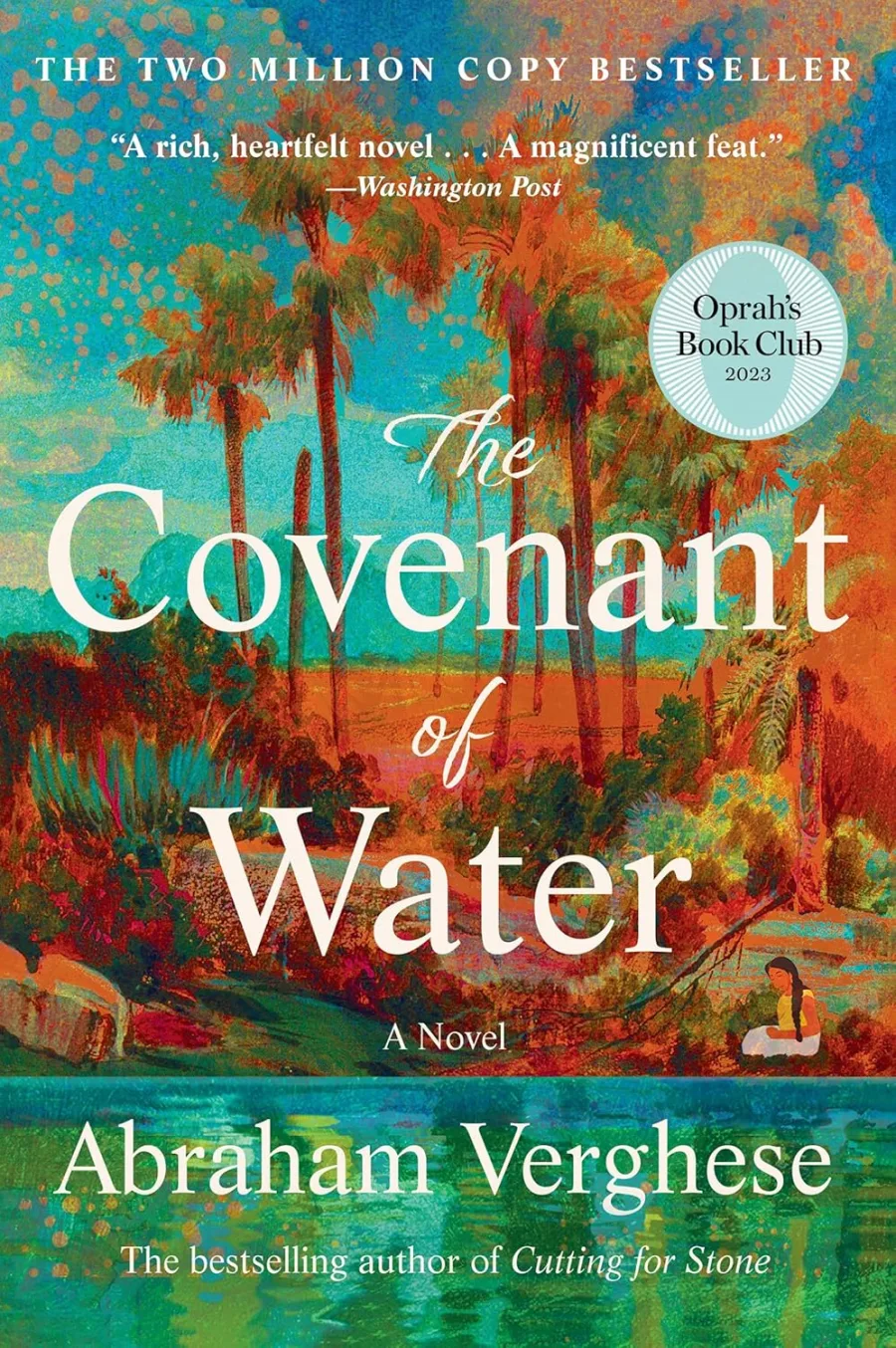
Download Cover Image
Do you want to download the full cover image for The Covenant of Water (Oprah's Book Club)?