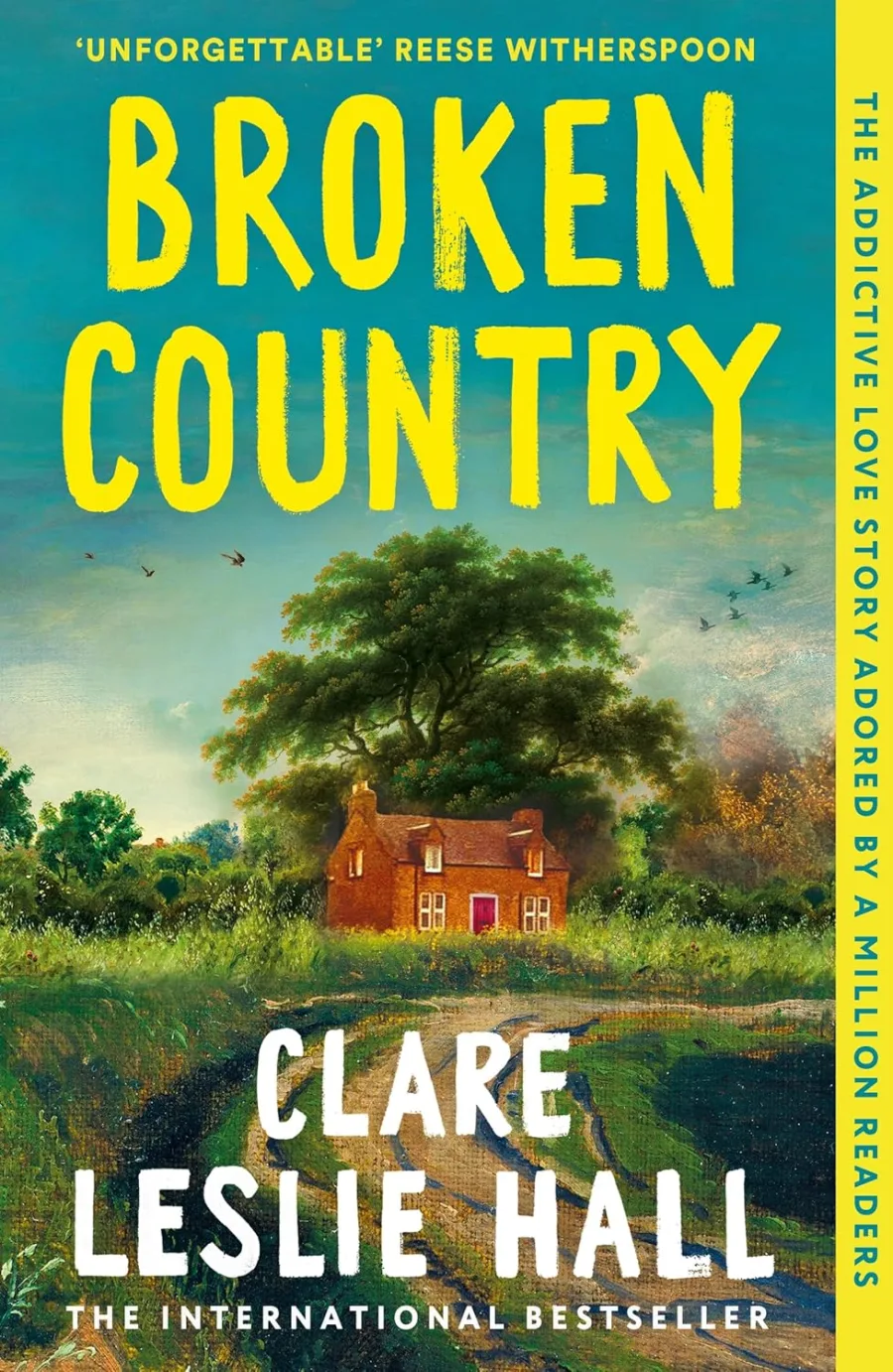
Broken country
Paperback
• 320 Pages
• USD 17.00
• English
• 9781399820431
No ratings yet
| Publisher | Hachette Intl |
|---|---|
| ISBN13 | 9781399820431 |
| ASIN/SKU | 1399820435 |
| Book Format | Paperback |
| Language | English |
| Pages | 320 |
| List Price | USD 17.00 |
| Publishing Date | 06/03/2026 |
| Dimensions | 5.04 x 1.18 x 7.72 inches |
| Weight | 8 ounces |
| Book Code | BD00055783 |
Buy this Book
Amazon Stores
Ebook Stores
Other Stores
Discover Broken country by Clare Leslie Hall. This book is published by Hachette Intl in Paperback format, ISBN 9781399820431, ASIN 1399820435, under Literature and Fiction, Romantic Suspense, Women's Domestic Life Fiction.
Book Description
"Broken Country" is a heart-pounding novel of impossible choices and devastating consequences. Beth was seventeen when she first met Gabriel. Over that heady, intense summer, he made her think and feel and see differently. She thought it was the start of her great love story. When Gabriel left her, she was broken. It was Frank who picked up the pieces.
Author Biography
Clare Leslie Hall is a novelist and journalist who lives in the wilds of Dorset, England, with her family. She’s the author of Broken Country, Pictures of Him, and Days You Were Mine.
Editorial Reviews
A REESE’S BOOK CLUB PICK
A New York Times Bestseller
A People Best Book of 2025
"Layered and lyrical, this stunning novel expertly builds suspense while revealing its secrets, and it conveys deep truths about love and loss."—People
“Broken Country by Clare Leslie Hall is an unforgettable story of love, loss, and the choices that shape our lives…but it’s also a masterfully crafted mystery that will keep you guessing until the very last page. Seriously, that ending?! I did not see it coming.”—Reese Witherspoon
"Sure to top all of 2025’s 'Best Of' lists, Broken Country is a triumphant and truly exciting release from an author guaranteed to become your next favorite. Trust me, this is the one you’ve been waiting for."—Book Reporter
“With an opening line of “The farmer is dead. He is dead, and all anyone wants to know is who killed him,” Broken Country doesn’t waste any time getting you into this sweeping family drama."—USA Today
“In this twisty love story, the happily married Beth is forced to confront her past demons and desires after her brother-in-law shoots a dog belonging to Gabriel, her teenage love who has just returned to town.”—New York Post
“With its sweeping narrative and pulse-pounding suspense, the novel offers a sometimes-jarring reminder that the past, no matter how deeply buried, always finds a way to resurface.”—Post & Courier
"Broken Country is at its heart a novel about love and loss, about selfishness and selflessness, and about the consequences of decisions made for these reasons. Each decision is driven by the one before it, and Beth, especially, is stretched to her breaking point. Both aching and thrilling, Broken Country is a masterful book by an accomplished author."—Booklist
"[Hall's] prose is so transportive that it’s impossible not to hang on...an elegantly written historical novel with a compelling love triangle and a couple of clever twists."—Kirkus
"Hall serves up twist after twist in her canny U.S. debut, a story of grief, love, and murder set in the Dorset countryside. This sharp morality tale will stay with readers."—Publishers Weekly
“A love story like no other. By turns a searing mystery, and a brilliant and beautiful look at the price of a second chance, and the complex notion of fate and forgiveness. Stunning."—Chris Whitaker, New York Times bestselling author of All the Colors of the Dark
“Stirring, poetic and mysterious, Clare Leslie Hall’s novel, Broken Country, reveals how tender and innocent love between a boy and a girl can alter the lives of families for generations. Even on a quaint and quiet sheep farm of rural England, misguided passion brings murder and criminal charges against the most innocent of players because human nature is far from tame. Yet, even as love destroys, it can return to heal on the same sacred meadow where it was first conceived. This evocative, sensitive and compelling novel fires directly at the human heart and hits the mark.”—Delia Owens, New York Times bestselling auth
A New York Times Bestseller
A People Best Book of 2025
"Layered and lyrical, this stunning novel expertly builds suspense while revealing its secrets, and it conveys deep truths about love and loss."—People
“Broken Country by Clare Leslie Hall is an unforgettable story of love, loss, and the choices that shape our lives…but it’s also a masterfully crafted mystery that will keep you guessing until the very last page. Seriously, that ending?! I did not see it coming.”—Reese Witherspoon
"Sure to top all of 2025’s 'Best Of' lists, Broken Country is a triumphant and truly exciting release from an author guaranteed to become your next favorite. Trust me, this is the one you’ve been waiting for."—Book Reporter
“With an opening line of “The farmer is dead. He is dead, and all anyone wants to know is who killed him,” Broken Country doesn’t waste any time getting you into this sweeping family drama."—USA Today
“In this twisty love story, the happily married Beth is forced to confront her past demons and desires after her brother-in-law shoots a dog belonging to Gabriel, her teenage love who has just returned to town.”—New York Post
“With its sweeping narrative and pulse-pounding suspense, the novel offers a sometimes-jarring reminder that the past, no matter how deeply buried, always finds a way to resurface.”—Post & Courier
"Broken Country is at its heart a novel about love and loss, about selfishness and selflessness, and about the consequences of decisions made for these reasons. Each decision is driven by the one before it, and Beth, especially, is stretched to her breaking point. Both aching and thrilling, Broken Country is a masterful book by an accomplished author."—Booklist
"[Hall's] prose is so transportive that it’s impossible not to hang on...an elegantly written historical novel with a compelling love triangle and a couple of clever twists."—Kirkus
"Hall serves up twist after twist in her canny U.S. debut, a story of grief, love, and murder set in the Dorset countryside. This sharp morality tale will stay with readers."—Publishers Weekly
“A love story like no other. By turns a searing mystery, and a brilliant and beautiful look at the price of a second chance, and the complex notion of fate and forgiveness. Stunning."—Chris Whitaker, New York Times bestselling author of All the Colors of the Dark
“Stirring, poetic and mysterious, Clare Leslie Hall’s novel, Broken Country, reveals how tender and innocent love between a boy and a girl can alter the lives of families for generations. Even on a quaint and quiet sheep farm of rural England, misguided passion brings murder and criminal charges against the most innocent of players because human nature is far from tame. Yet, even as love destroys, it can return to heal on the same sacred meadow where it was first conceived. This evocative, sensitive and compelling novel fires directly at the human heart and hits the mark.”—Delia Owens, New York Times bestselling auth
Book Summary
Broken Country by Clare Leslie Hall is a tense, emotionally layered YA novel set in a near-future Australia, where climate change, political collapse, and civil conflict have torn the country apart. Against this harsh backdrop, the story follows a teenage girl named Rhea, who is caught between loyalty to her family, the pull of first love, and the brutal reality of a country that no longer feels safe or whole. The book blends elements of dystopia, road-trip survival, and coming-of-age drama, while always grounding its events in deeply human feelings: fear, guilt, hope, and the desperate need to belong somewhere.
Rhea lives in a fractured Australia where the climate has grown more extreme and the social fabric has unraveled. Drought, fire, and resource scarcity have pushed communities to the edge, and the government’s response has only made things worse. Borders within the country have hardened, and people are sorted into categories—refugees, locals, loyalists, rebels—each label loaded with suspicion and prejudice. Rhea’s family has already been through a lot. They are not powerful or privileged; they are just trying to survive each day, keep food on the table, and stay out of the conflict that seems to touch everything. Rhea’s father is especially shaped by fear and trauma, and his decisions, meant to protect his family, often end up controlling and isolating them.
Early in the story, Rhea’s life is disrupted when a boy named Bastian arrives in her world. He is an outsider, a refugee from one of the more devastated regions, and that alone makes him a target. Rumors swirl about people like him—stories of violence, of betrayal, of disease—but Rhea sees a real person behind those labels. Bastian is quiet, observant, and haunted by his own losses. He has seen the worst of the “broken country” firsthand. There are hints of the horrors he witnessed—displacement, camps, the loss of family—and the stress has left deep marks. Rhea feels drawn to him, partly out of curiosity and partly because he represents a life beyond the small bubble her father has tried to maintain. As they spend time together, a fragile connection grows between them, based on shared fear, small acts of kindness, and the fleeting moments when they can almost forget how dangerous everything is.
This relationship is forbidden in more ways than one. Rhea’s father distrusts all refugees, influenced by the propaganda and panic that have taken over the country, and he has strict rules to keep Rhea “safe.” Those rules limit her movements, her friendships, and even her sense of herself. Rhea loves her father and remembers who he was before the crisis, but she can’t ignore how harsh and controlling he has become. Being with Bastian opens her eyes to how much fear is driving her father’s choices. She begins to see the cracks not only in the country around her but also in the stories she has been told to believe. This clash—between what she’s been taught and what she sees with her own eyes—becomes the emotional core of the novel.
At the same time, tension in the wider world is rising. Violent raids, checkpoints, and skirmishes between different factions grow more frequent. Refugees are blamed for social problems, and ordinary people are encouraged to report or reject them. The fragile peace of Rhea’s community starts to crumble as shortages worsen and political rhetoric grows uglier. The novel doesn’t rush through this; instead, it shows how fear builds little by little, and how neighbors who once trusted each other begin to look for enemies. For Rhea and Bastian, this means that simply being seen together can become dangerous. They are forced into secrecy: stolen conversations, hidden meeting places, and constantly looking over their shoulders.
As the situation deteriorates, something happens—an incident or betrayal—that pushes Rhea’s family and Bastian into direct conflict with the authorities or armed groups controlling their region. Rhea is faced with impossible choices. Does she stay with her father, accepting his rules and his worldview even if it means turning her back on Bastian and what she now believes is right? Or does she risk everything to help Bastian and others like him, stepping into a life where survival is far less certain but her conscience is clearer? The pressure mounts as news of crackdowns, disappearances, and forced relocations creeps closer.
The novel’s journey element intensifies when Rhea is either forced to flee her home or chooses to leave. On the road, Australia is almost unrecognizable: burned landscapes, abandoned towns, makeshift camps, and zones tightly controlled by different factions. Rhea sees firsthand how policy decisions and prejudice have turned ordinary people into both victims and perpetrators. Bastian, used to this kind of instability, becomes a guide of sorts, teaching her how to navigate checkpoints, read danger, and find small pockets of safety. Their bond deepens under this pressure—not as a fairy-tale romance, but as a partnership forged through hardship. They argue, misunderstand each other, and struggle under the weight of their pasts, but they also share moments of tenderness and dark humor that keep them going.
Throughout, Rhea wrestles with guilt: guilt for what her family has done or failed to do, guilt for leaving people behind, guilt for moments when she freezes instead of acting. The book portrays this honestly, showing that in a collapsed society, there are no perfectly clean choices. She grows more aware of her own privilege—how much she was protected compared to people like Bastian—and she tries to use that awareness to make better decisions now. Bastian, meanwhile, deals with his own guilt over people he couldn’t save, and the two of them slowly learn to talk about their pain instead of letting it silently control them.
There are no simple heroes or villains in Broken Country; even the most frightening characters are shaped by fear, loss, and skewed information. Rhea’s father, for example, is not just a controlling parent; he is a man broken by a world he doesn’t know how to fix. His love for Rhea is real, even as his actions hurt her. Similarly, some of the officials and soldiers they encounter are not monsters but ordinary people carrying out orders, often trying to protect their own families. This complexity makes Rhea’s moral choices more difficult and more realistic. She cannot solve the whole crisis, but she can decide who she stands beside and who she refuses to abandon.
As the story moves toward its climax, Rhea is pushed to take a stand. She may have to risk her own safety to protect Bastian or others. She may have to confront her father or grapple with the fact that reconciliation with him might never be fully possible. The title “Broken Country” applies not only to the shattered nation but also to broken relationships, broken promises, and broken assumptions about who deserves safety and who does not. Yet in the middle of all this, the novel keeps a thread of hope alive. Rhea and Bastian’s determination to care for each other, to remember kindness in a cruel world, and to tell the truth about what’s happening around them suggests that healing begins with individuals refusing to accept cruelty as normal.
By the end, Broken Country feels like both a warning and a love story: a warning about what can happen when fear and division go unchecked, and a love story about two teenagers who find a way to choose empathy over hatred. It shows that even in a landscape scorched by climate and conflict, there are still seeds of connection, courage, and change. Rhea’s journey from sheltered girl to someone willing to face danger for what she believes in gives the book its emotional spine, reminding us that growing up is not just about getting older—it’s about deciding what kind of person you will be when the world is at its worst.
Rhea lives in a fractured Australia where the climate has grown more extreme and the social fabric has unraveled. Drought, fire, and resource scarcity have pushed communities to the edge, and the government’s response has only made things worse. Borders within the country have hardened, and people are sorted into categories—refugees, locals, loyalists, rebels—each label loaded with suspicion and prejudice. Rhea’s family has already been through a lot. They are not powerful or privileged; they are just trying to survive each day, keep food on the table, and stay out of the conflict that seems to touch everything. Rhea’s father is especially shaped by fear and trauma, and his decisions, meant to protect his family, often end up controlling and isolating them.
Early in the story, Rhea’s life is disrupted when a boy named Bastian arrives in her world. He is an outsider, a refugee from one of the more devastated regions, and that alone makes him a target. Rumors swirl about people like him—stories of violence, of betrayal, of disease—but Rhea sees a real person behind those labels. Bastian is quiet, observant, and haunted by his own losses. He has seen the worst of the “broken country” firsthand. There are hints of the horrors he witnessed—displacement, camps, the loss of family—and the stress has left deep marks. Rhea feels drawn to him, partly out of curiosity and partly because he represents a life beyond the small bubble her father has tried to maintain. As they spend time together, a fragile connection grows between them, based on shared fear, small acts of kindness, and the fleeting moments when they can almost forget how dangerous everything is.
This relationship is forbidden in more ways than one. Rhea’s father distrusts all refugees, influenced by the propaganda and panic that have taken over the country, and he has strict rules to keep Rhea “safe.” Those rules limit her movements, her friendships, and even her sense of herself. Rhea loves her father and remembers who he was before the crisis, but she can’t ignore how harsh and controlling he has become. Being with Bastian opens her eyes to how much fear is driving her father’s choices. She begins to see the cracks not only in the country around her but also in the stories she has been told to believe. This clash—between what she’s been taught and what she sees with her own eyes—becomes the emotional core of the novel.
At the same time, tension in the wider world is rising. Violent raids, checkpoints, and skirmishes between different factions grow more frequent. Refugees are blamed for social problems, and ordinary people are encouraged to report or reject them. The fragile peace of Rhea’s community starts to crumble as shortages worsen and political rhetoric grows uglier. The novel doesn’t rush through this; instead, it shows how fear builds little by little, and how neighbors who once trusted each other begin to look for enemies. For Rhea and Bastian, this means that simply being seen together can become dangerous. They are forced into secrecy: stolen conversations, hidden meeting places, and constantly looking over their shoulders.
As the situation deteriorates, something happens—an incident or betrayal—that pushes Rhea’s family and Bastian into direct conflict with the authorities or armed groups controlling their region. Rhea is faced with impossible choices. Does she stay with her father, accepting his rules and his worldview even if it means turning her back on Bastian and what she now believes is right? Or does she risk everything to help Bastian and others like him, stepping into a life where survival is far less certain but her conscience is clearer? The pressure mounts as news of crackdowns, disappearances, and forced relocations creeps closer.
The novel’s journey element intensifies when Rhea is either forced to flee her home or chooses to leave. On the road, Australia is almost unrecognizable: burned landscapes, abandoned towns, makeshift camps, and zones tightly controlled by different factions. Rhea sees firsthand how policy decisions and prejudice have turned ordinary people into both victims and perpetrators. Bastian, used to this kind of instability, becomes a guide of sorts, teaching her how to navigate checkpoints, read danger, and find small pockets of safety. Their bond deepens under this pressure—not as a fairy-tale romance, but as a partnership forged through hardship. They argue, misunderstand each other, and struggle under the weight of their pasts, but they also share moments of tenderness and dark humor that keep them going.
Throughout, Rhea wrestles with guilt: guilt for what her family has done or failed to do, guilt for leaving people behind, guilt for moments when she freezes instead of acting. The book portrays this honestly, showing that in a collapsed society, there are no perfectly clean choices. She grows more aware of her own privilege—how much she was protected compared to people like Bastian—and she tries to use that awareness to make better decisions now. Bastian, meanwhile, deals with his own guilt over people he couldn’t save, and the two of them slowly learn to talk about their pain instead of letting it silently control them.
There are no simple heroes or villains in Broken Country; even the most frightening characters are shaped by fear, loss, and skewed information. Rhea’s father, for example, is not just a controlling parent; he is a man broken by a world he doesn’t know how to fix. His love for Rhea is real, even as his actions hurt her. Similarly, some of the officials and soldiers they encounter are not monsters but ordinary people carrying out orders, often trying to protect their own families. This complexity makes Rhea’s moral choices more difficult and more realistic. She cannot solve the whole crisis, but she can decide who she stands beside and who she refuses to abandon.
As the story moves toward its climax, Rhea is pushed to take a stand. She may have to risk her own safety to protect Bastian or others. She may have to confront her father or grapple with the fact that reconciliation with him might never be fully possible. The title “Broken Country” applies not only to the shattered nation but also to broken relationships, broken promises, and broken assumptions about who deserves safety and who does not. Yet in the middle of all this, the novel keeps a thread of hope alive. Rhea and Bastian’s determination to care for each other, to remember kindness in a cruel world, and to tell the truth about what’s happening around them suggests that healing begins with individuals refusing to accept cruelty as normal.
By the end, Broken Country feels like both a warning and a love story: a warning about what can happen when fear and division go unchecked, and a love story about two teenagers who find a way to choose empathy over hatred. It shows that even in a landscape scorched by climate and conflict, there are still seeds of connection, courage, and change. Rhea’s journey from sheltered girl to someone willing to face danger for what she believes in gives the book its emotional spine, reminding us that growing up is not just about getting older—it’s about deciding what kind of person you will be when the world is at its worst.
Sample Chapters
Sample Chapters will be added soon…
Reader Reviews
No reviews yet.
Broken country