
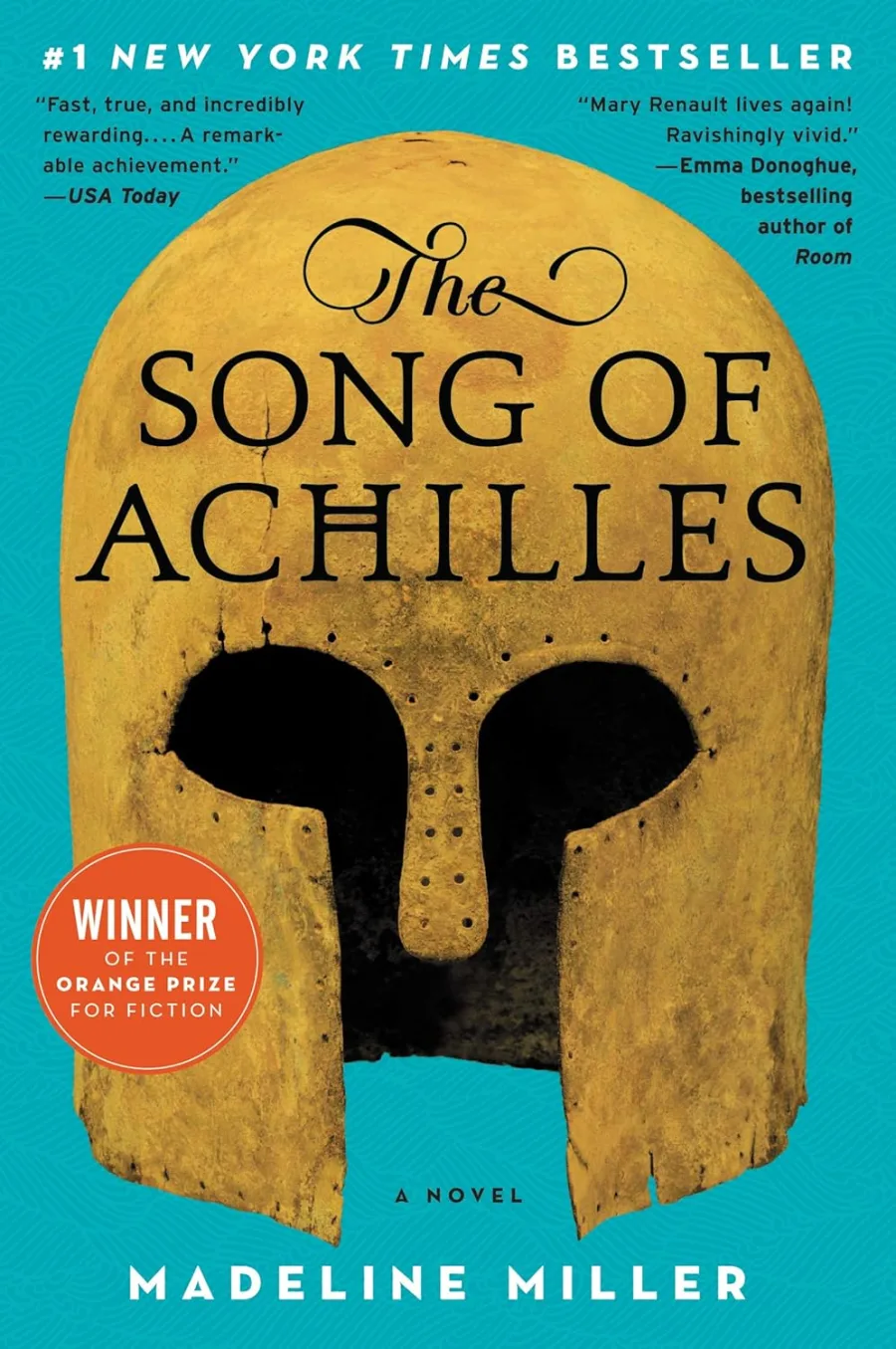
The Song of Achilles: A Novel
Paperback
• 416 Pages
• USD 17.99
• English
• 9780062060624
No ratings yet
| Publisher | Ecco |
|---|---|
| ISBN13 | 9780062060624 |
| ASIN/SKU | 0062060627 |
| Book Format | Paperback |
| Language | English |
| Pages | 416 |
| List Price | USD 17.99 |
| Publishing Date | 28/08/2012 |
| Dimensions | 0.96 x 5.38 x 7.82 inches |
| Weight | 2.31 pounds |
| Book Code | BD00055802 |
Buy this Book
Amazon Stores
Ebook Stores
Other Stores
Discover The Song of Achilles: A Novel by Madeline Miller. This book is published by Ecco in Paperback format, ISBN 9780062060624, ASIN 0062060627, under Romance, Ancient World Historical Romance, Greek and Roman Myth and Legend.
Book Description
A New York Times Bestseller
“At once a scholar’s homage to The Iliad and startlingly original work of art….A book I could not put down.” —Ann Patchett, author of The Dutch House
A thrilling, profoundly moving, and utterly unique retelling of the legend of Achilles and the Trojan War from the bestselling author of Circe
A tale of gods, kings, immortal fame, and the human heart, The Song of Achilles is a dazzling literary feat that brilliantly reimagines Homer’s enduring masterwork, The Iliad. An action-packed adventure, an epic love story, a marvelously conceived and executed page-turner, Miller’s monumental debut novel has already earned resounding acclaim from some of contemporary fiction’s brightest lights—and fans of Mary Renault, Bernard Cornwell, Steven Pressfield, and Colleen McCullough’s Masters of Rome series will delight in this unforgettable journey back to ancient Greece in the Age of Heroes.
“A captivating retelling of The Iliad and events leading up to it through the point of view of Patroclus: it’s a hard book to put down, and any classicist will be enthralled by her characterisation of the goddess Thetis, which carries the true savagery and chill of antiquity.” — Donna Tartt, The Times
“At once a scholar’s homage to The Iliad and startlingly original work of art….A book I could not put down.” —Ann Patchett, author of The Dutch House
A thrilling, profoundly moving, and utterly unique retelling of the legend of Achilles and the Trojan War from the bestselling author of Circe
A tale of gods, kings, immortal fame, and the human heart, The Song of Achilles is a dazzling literary feat that brilliantly reimagines Homer’s enduring masterwork, The Iliad. An action-packed adventure, an epic love story, a marvelously conceived and executed page-turner, Miller’s monumental debut novel has already earned resounding acclaim from some of contemporary fiction’s brightest lights—and fans of Mary Renault, Bernard Cornwell, Steven Pressfield, and Colleen McCullough’s Masters of Rome series will delight in this unforgettable journey back to ancient Greece in the Age of Heroes.
“A captivating retelling of The Iliad and events leading up to it through the point of view of Patroclus: it’s a hard book to put down, and any classicist will be enthralled by her characterisation of the goddess Thetis, which carries the true savagery and chill of antiquity.” — Donna Tartt, The Times
Author Biography
Madeline Miller grew up in New York City and Philadelphia. She attended Brown University, where she earned her BA and MA in Classics. She has taught and tutored Latin, Greek, and Shakespeare to high school students for over fifteen years. She has also studied at the University of Chicago’s Committee on Social Thought, and in the Dramaturgy department at Yale School of Drama, where she focused on the adaptation of classical texts to modern forms.
The Song of Achilles, her first novel, was awarded the 2012 Orange Prize for Fiction and was a New York Times Bestseller. Her second novel, Circe, was an instant number 1 New York Times bestseller, and won the Indies Choice Best Adult Fiction of the Year Award and the Indies Choice Best Audiobook of the Year Award, as well as being shortlisted for the 2019 Women's Prize for Fiction. Circe also won The Red Tentacle Award, an American Library Association Alex Award (adult books of special interest to teen readers), and the 2018 Elle Big Book Award. Miller's novels have been translated into over twenty-five languages including Dutch, Mandarin, Japanese, Turkish, Arabic and Greek, and her essays have appeared in a number of publications including the Guardian, Wall Street Journal, Washington Post, Telegraph, Lapham's Quarterly and NPR.org. Most recently, she has published a standalone short story, Galatea. She currently lives outside Philadelphia, Pennsylvania. Visit her website at: www.madelinemiller.com
The Song of Achilles, her first novel, was awarded the 2012 Orange Prize for Fiction and was a New York Times Bestseller. Her second novel, Circe, was an instant number 1 New York Times bestseller, and won the Indies Choice Best Adult Fiction of the Year Award and the Indies Choice Best Audiobook of the Year Award, as well as being shortlisted for the 2019 Women's Prize for Fiction. Circe also won The Red Tentacle Award, an American Library Association Alex Award (adult books of special interest to teen readers), and the 2018 Elle Big Book Award. Miller's novels have been translated into over twenty-five languages including Dutch, Mandarin, Japanese, Turkish, Arabic and Greek, and her essays have appeared in a number of publications including the Guardian, Wall Street Journal, Washington Post, Telegraph, Lapham's Quarterly and NPR.org. Most recently, she has published a standalone short story, Galatea. She currently lives outside Philadelphia, Pennsylvania. Visit her website at: www.madelinemiller.com
Editorial Reviews
“Mary Renault lives again! A ravishingly vivid and convincing version of one of the most legendary of love stories.” - Emma Donoghue, New York Times bestselling author of ROOM
“Although the details of the story are Miller’s own, the world is one that all who love the Iliad and its epigones will recognize. Reading this book recalled me to the breathless sense of the ancient-yet-present that I felt when I first fell in love with the classics.” - Catherine Conybeare, Professor of Classics, Bryn Mawr College
“At once a scholar’s homage to THE ILIAD and a startlingly original work of art by an incredibly talented new novelist. Madeline Miller has given us her own fresh take on the Trojan war and its heroes. The result is a book I could not put down.” - Ann Patchett, bestselling author of BEL CANTO and STATE OF WONDER
“The Iliad turns on Achilles’ pride and his relationship with Patroclus, but Homer is sparing with the personal---so much so that, though we believe in their friendship, we do not understand it. “The Song of Achilles” brings light to their love. This is a beautiful book.” - Zachary Mason, author of THE LOST BOOKS OF THE ODYSSEY
“Fast, true and incredibly rewarding…A remarkable achievement.” - USA Today
“Powerful, inventive, passionate, and beautifully written. ” - Boston Globe
“Beautifully done. . ..In prose as clean and spare as the driving poetry of Homer, Miller captures the intensity and devotion of adolescent friendship and lets us believe in these long-dead boys...deepening and enriching a tale that has been told for 3,000 years.” - Washington Post
“One of 2012’s most exciting debuts...seductive, hugely entertaining....[I]magining the intimate friendship between Achilles and the devoted Patroclus...Miller conjures...soulmates. The resulting novel is cinematic―one might say epic―in scope, but refreshingly, compellingly human in detail.” - Vogue
“The Song of Achilles...should be read and enjoyed for itself, but if Madeline Miller’s novel sends the reader back to Homer and his successors, she is to be thanked for that as well.” - Washington Independent Review of Books
“One of the best novelistic adaptations of Homer in recent memory, and it offers strikingly well-rounded and compassionate portrait of Achilles....[Miller] injects a newfound sense of suspense into a story with an ending that has already been determined.” - Wall Street Journal
“Wildly romantic [and] surprisingly suspenseful....[B]ringing those dark figures back to life, making them men again, and while she’s at it, us[ing] her passionate companion piece to The Iliad as a subtle swipe at today’s ongoing debate over gay marriage. Talk about updating the classics.” - Time magazine
“Although the details of the story are Miller’s own, the world is one that all who love the Iliad and its epigones will recognize. Reading this book recalled me to the breathless sense of the ancient-yet-present that I felt when I first fell in love with the classics.” - Catherine Conybeare, Professor of Classics, Bryn Mawr College
“At once a scholar’s homage to THE ILIAD and a startlingly original work of art by an incredibly talented new novelist. Madeline Miller has given us her own fresh take on the Trojan war and its heroes. The result is a book I could not put down.” - Ann Patchett, bestselling author of BEL CANTO and STATE OF WONDER
“The Iliad turns on Achilles’ pride and his relationship with Patroclus, but Homer is sparing with the personal---so much so that, though we believe in their friendship, we do not understand it. “The Song of Achilles” brings light to their love. This is a beautiful book.” - Zachary Mason, author of THE LOST BOOKS OF THE ODYSSEY
“Fast, true and incredibly rewarding…A remarkable achievement.” - USA Today
“Powerful, inventive, passionate, and beautifully written. ” - Boston Globe
“Beautifully done. . ..In prose as clean and spare as the driving poetry of Homer, Miller captures the intensity and devotion of adolescent friendship and lets us believe in these long-dead boys...deepening and enriching a tale that has been told for 3,000 years.” - Washington Post
“One of 2012’s most exciting debuts...seductive, hugely entertaining....[I]magining the intimate friendship between Achilles and the devoted Patroclus...Miller conjures...soulmates. The resulting novel is cinematic―one might say epic―in scope, but refreshingly, compellingly human in detail.” - Vogue
“The Song of Achilles...should be read and enjoyed for itself, but if Madeline Miller’s novel sends the reader back to Homer and his successors, she is to be thanked for that as well.” - Washington Independent Review of Books
“One of the best novelistic adaptations of Homer in recent memory, and it offers strikingly well-rounded and compassionate portrait of Achilles....[Miller] injects a newfound sense of suspense into a story with an ending that has already been determined.” - Wall Street Journal
“Wildly romantic [and] surprisingly suspenseful....[B]ringing those dark figures back to life, making them men again, and while she’s at it, us[ing] her passionate companion piece to The Iliad as a subtle swipe at today’s ongoing debate over gay marriage. Talk about updating the classics.” - Time magazine
Book Summary
Madeline Miller’s The Song of Achilles is a deeply emotional retelling of the Greek myth of Achilles and the Trojan War, told from the point of view of Patroclus. Instead of focusing only on war and heroism, the novel turns the ancient legend into an intimate story about love, loyalty, destiny, and loss. From the very beginning, the tone is personal and reflective, because Patroclus looks back on a life shaped by his bond with Achilles, a bond that begins in childhood and grows into the center of both their lives.
Patroclus is born a prince, but he is not strong, handsome, or impressive in the way boys of noble birth are expected to be. He is quiet, awkward, and often overlooked. After a childhood incident leads to the accidental death of another boy, his father exiles him to the kingdom of Phthia. There, Patroclus enters the court of King Peleus, where he meets Achilles, the king’s extraordinary son. Achilles is everything Patroclus is not—beautiful, gifted, graceful, and already marked as someone special. He is the son of a king and the sea goddess Thetis, and everyone around him senses that he is destined for greatness. Yet despite their differences, Achilles reaches out to Patroclus with a surprising warmth, and the two boys become close companions.
Their friendship deepens over the years as they train, learn, and grow together. Patroclus admires Achilles not only for his beauty and skill but for his kindness, humor, and simplicity. With Patroclus, Achilles is not only the legendary hero others expect him to be; he is also human, playful, and affectionate. Eventually, their bond becomes romantic, and the novel treats their love with tenderness and seriousness. Their relationship is not presented as a side note to mythic events, but as the emotional core of the story. Through Patroclus’s eyes, Achilles becomes more than a figure of legend. He becomes a beloved person, someone vulnerable and alive, even as the shadow of prophecy hangs over him.
Part of their youth is spent under the guidance of Chiron, the wise centaur, who teaches them medicine, music, hunting, and survival in the mountains. These scenes are among the most peaceful in the novel, giving the two boys a sense of freedom away from court politics and expectations. During this time, Patroclus and Achilles build a life of private happiness, but it cannot last forever. Achilles’s mother, Thetis, fiercely disapproves of Patroclus. She is cold, powerful, and frightening, and she wants her son to fulfill his divine destiny, not be tied to an ordinary human boy. Her hostility creates tension throughout the story, because she represents the larger forces of fate and ambition that threaten the life Achilles and Patroclus share.
The turning point comes when news spreads that Helen of Sparta has been taken to Troy, and the Greek kings prepare for war. Achilles is drawn into the conflict because prophecy says that the Greeks cannot win without him, and also that if he goes to Troy, he will earn everlasting glory but die young. If he stays home, he will live a long life but be forgotten. This choice lies at the heart of the novel. Achilles chooses glory, knowing the cost, and Patroclus chooses to go with him. His choice is not driven by ambition, but by love. He cannot imagine letting Achilles face that fate alone.
At Troy, the novel shifts from the private world of their relationship to the brutal reality of war. Years pass in conflict, and Patroclus watches Achilles become more and more trapped by the role others expect him to play. He is still capable of tenderness and love, but he is also increasingly burdened by pride, reputation, and the need to become the hero of legend. Patroclus, meanwhile, remains compassionate and practical. He helps heal the wounded and becomes deeply aware of the suffering caused by the war. This contrast between them grows more important as the story moves forward. Achilles seeks immortal fame, while Patroclus remains focused on individual human lives.
The most serious conflict arises between Achilles and Agamemnon, the Greek commander. When Agamemnon insults Achilles and takes the captive woman Briseis, Achilles withdraws from battle in anger. In many tellings of the myth, this moment highlights Achilles’s pride, but Miller adds emotional complexity by showing how the decision affects everyone around him. Without Achilles, Greek soldiers die in large numbers. Patroclus becomes increasingly distressed by the suffering he sees, especially because he knows Achilles has the power to stop it. Their love remains strong, but strain enters their relationship as Patroclus struggles to understand Achilles’s stubbornness and Achilles struggles against the forces of fate, ego, and expectation closing around him.
In the novel’s tragic climax, Patroclus can no longer bear the destruction caused by Achilles’s absence. Hoping to save the Greeks and perhaps bring Achilles back to himself, Patroclus puts on Achilles’s armor and goes into battle in his place. The plan works for a time, inspiring the soldiers and driving the Trojans back, but it ends in disaster. Patroclus is killed by Hector, the Trojan prince. His death becomes the emotional breaking point of the novel. Achilles, overwhelmed by grief and rage, returns to battle and kills Hector, fulfilling part of the destiny long foretold. But Patroclus’s death empties victory of meaning. Achilles’s greatness can no longer protect what mattered most to him.
Even after death, Patroclus continues to narrate, and this gives the ending a haunting, mournful quality. His spirit cannot rest because Achilles’s mother, Thetis, refuses to acknowledge him properly. He remains caught between worlds, watching Achilles move toward his own death. Eventually Achilles is killed, as prophecy promised, and only then does Thetis begin to understand the depth of what Patroclus meant to her son. In one of the novel’s most moving final gestures, she speaks Patroclus’s name and ensures that his ashes are placed together with Achilles’s. This act allows Patroclus at last to find peace and reunite with Achilles in death.
What makes The Song of Achilles so memorable is not just that it retells an ancient myth, but that it gives the myth a human heart. Miller transforms legendary figures into people with longing, fear, tenderness, and grief. The novel is filled with beauty, but also with a steady sense of approaching tragedy, because from early on the reader knows that love and fate are moving toward a terrible end. Even so, the story does not feel hopeless. It suggests that love, even when brief and doomed, has a power that outlasts pride, war, and even death itself. Patroclus and Achilles may not escape fate, but their bond becomes the most lasting part of the story, more meaningful than victory, fame, or legend.
Patroclus is born a prince, but he is not strong, handsome, or impressive in the way boys of noble birth are expected to be. He is quiet, awkward, and often overlooked. After a childhood incident leads to the accidental death of another boy, his father exiles him to the kingdom of Phthia. There, Patroclus enters the court of King Peleus, where he meets Achilles, the king’s extraordinary son. Achilles is everything Patroclus is not—beautiful, gifted, graceful, and already marked as someone special. He is the son of a king and the sea goddess Thetis, and everyone around him senses that he is destined for greatness. Yet despite their differences, Achilles reaches out to Patroclus with a surprising warmth, and the two boys become close companions.
Their friendship deepens over the years as they train, learn, and grow together. Patroclus admires Achilles not only for his beauty and skill but for his kindness, humor, and simplicity. With Patroclus, Achilles is not only the legendary hero others expect him to be; he is also human, playful, and affectionate. Eventually, their bond becomes romantic, and the novel treats their love with tenderness and seriousness. Their relationship is not presented as a side note to mythic events, but as the emotional core of the story. Through Patroclus’s eyes, Achilles becomes more than a figure of legend. He becomes a beloved person, someone vulnerable and alive, even as the shadow of prophecy hangs over him.
Part of their youth is spent under the guidance of Chiron, the wise centaur, who teaches them medicine, music, hunting, and survival in the mountains. These scenes are among the most peaceful in the novel, giving the two boys a sense of freedom away from court politics and expectations. During this time, Patroclus and Achilles build a life of private happiness, but it cannot last forever. Achilles’s mother, Thetis, fiercely disapproves of Patroclus. She is cold, powerful, and frightening, and she wants her son to fulfill his divine destiny, not be tied to an ordinary human boy. Her hostility creates tension throughout the story, because she represents the larger forces of fate and ambition that threaten the life Achilles and Patroclus share.
The turning point comes when news spreads that Helen of Sparta has been taken to Troy, and the Greek kings prepare for war. Achilles is drawn into the conflict because prophecy says that the Greeks cannot win without him, and also that if he goes to Troy, he will earn everlasting glory but die young. If he stays home, he will live a long life but be forgotten. This choice lies at the heart of the novel. Achilles chooses glory, knowing the cost, and Patroclus chooses to go with him. His choice is not driven by ambition, but by love. He cannot imagine letting Achilles face that fate alone.
At Troy, the novel shifts from the private world of their relationship to the brutal reality of war. Years pass in conflict, and Patroclus watches Achilles become more and more trapped by the role others expect him to play. He is still capable of tenderness and love, but he is also increasingly burdened by pride, reputation, and the need to become the hero of legend. Patroclus, meanwhile, remains compassionate and practical. He helps heal the wounded and becomes deeply aware of the suffering caused by the war. This contrast between them grows more important as the story moves forward. Achilles seeks immortal fame, while Patroclus remains focused on individual human lives.
The most serious conflict arises between Achilles and Agamemnon, the Greek commander. When Agamemnon insults Achilles and takes the captive woman Briseis, Achilles withdraws from battle in anger. In many tellings of the myth, this moment highlights Achilles’s pride, but Miller adds emotional complexity by showing how the decision affects everyone around him. Without Achilles, Greek soldiers die in large numbers. Patroclus becomes increasingly distressed by the suffering he sees, especially because he knows Achilles has the power to stop it. Their love remains strong, but strain enters their relationship as Patroclus struggles to understand Achilles’s stubbornness and Achilles struggles against the forces of fate, ego, and expectation closing around him.
In the novel’s tragic climax, Patroclus can no longer bear the destruction caused by Achilles’s absence. Hoping to save the Greeks and perhaps bring Achilles back to himself, Patroclus puts on Achilles’s armor and goes into battle in his place. The plan works for a time, inspiring the soldiers and driving the Trojans back, but it ends in disaster. Patroclus is killed by Hector, the Trojan prince. His death becomes the emotional breaking point of the novel. Achilles, overwhelmed by grief and rage, returns to battle and kills Hector, fulfilling part of the destiny long foretold. But Patroclus’s death empties victory of meaning. Achilles’s greatness can no longer protect what mattered most to him.
Even after death, Patroclus continues to narrate, and this gives the ending a haunting, mournful quality. His spirit cannot rest because Achilles’s mother, Thetis, refuses to acknowledge him properly. He remains caught between worlds, watching Achilles move toward his own death. Eventually Achilles is killed, as prophecy promised, and only then does Thetis begin to understand the depth of what Patroclus meant to her son. In one of the novel’s most moving final gestures, she speaks Patroclus’s name and ensures that his ashes are placed together with Achilles’s. This act allows Patroclus at last to find peace and reunite with Achilles in death.
What makes The Song of Achilles so memorable is not just that it retells an ancient myth, but that it gives the myth a human heart. Miller transforms legendary figures into people with longing, fear, tenderness, and grief. The novel is filled with beauty, but also with a steady sense of approaching tragedy, because from early on the reader knows that love and fate are moving toward a terrible end. Even so, the story does not feel hopeless. It suggests that love, even when brief and doomed, has a power that outlasts pride, war, and even death itself. Patroclus and Achilles may not escape fate, but their bond becomes the most lasting part of the story, more meaningful than victory, fame, or legend.
Sample Chapters
Sample Chapters will be added soon…
Reader Reviews
No reviews yet.
The Song of Achilles: A Novel
Download Cover Image
Do you want to download the full cover image for The Song of Achilles: A Novel?