
Gild: A Dark Romantasy of War and Betrayal (The Plated Prisoner, 1)
Paperback
• 402 Pages
• USD 18.99
• English
• 9781464224416
No ratings yet
| Publisher | Bloom Books |
|---|---|
| ISBN13 | 9781464224416 |
| ASIN/SKU | 1464224412 |
| Book Format | Paperback |
| Language | English |
| Pages | 402 |
| List Price | USD 18.99 |
| Series Title | The Plated Prisoner Series |
| Publishing Date | 26/04/2024 |
| Dimensions | 5 x 1.01 x 8 inches |
| Weight | 12.8 ounces |
| Book Code | BD00055807 |
Buy this Book
Amazon Stores
Ebook Stores
Other Stores
Discover Gild: A Dark Romantasy of War and Betrayal (The Plated Prisoner, 1) by Raven Kennedy. This book is published by Bloom Books in Paperback format, ISBN 9781464224416, ASIN 1464224412, under Romance, Folklore, Romantasy.
Book Description
From internationally bestselling author and TikTok phenom Raven Kennedy comes the first book in a stunning fantasy series inspired by the myth of King Midas, perfect for fans of Sarah J Maas and Jennifer L Armentrout.
The fae abandoned this world to us. And the ones with power rule.
Gold.
Gold floors, gold walls, gold furniture, gold clothes. In Highbell, in the castle built into the frozen mountains, everything is made of gold.
Even me.
King Midas rescued me. Dug me out of the slums and placed me on a pedestal. I'm called his precious. His favored. I'm the woman he Gold-Touched to show everyone that I belong to him. To show how powerful he is. He gave me protection, and I gave him my heart. And even though I don't leave the confines of the palace, I'm safe.
Until war comes to the kingdom and a deal is struck.
Suddenly, my trust is broken. My love is challenged. And I realize that everything I thought I knew about Midas might be wrong.
Because these bars I'm kept in, no matter how gilded, are still just a cage. But the monsters on the other side might make me wish I'd never left.
The fae abandoned this world to us. And the ones with power rule.
Gold.
Gold floors, gold walls, gold furniture, gold clothes. In Highbell, in the castle built into the frozen mountains, everything is made of gold.
Even me.
King Midas rescued me. Dug me out of the slums and placed me on a pedestal. I'm called his precious. His favored. I'm the woman he Gold-Touched to show everyone that I belong to him. To show how powerful he is. He gave me protection, and I gave him my heart. And even though I don't leave the confines of the palace, I'm safe.
Until war comes to the kingdom and a deal is struck.
Suddenly, my trust is broken. My love is challenged. And I realize that everything I thought I knew about Midas might be wrong.
Because these bars I'm kept in, no matter how gilded, are still just a cage. But the monsters on the other side might make me wish I'd never left.
Author Biography
Raven Kennedy is an international bestseller whose love for books pushed her into creating her own worlds. The Plated Prisoner series, a dark fantasy romance, has sold in over twenty countries. It became a New York Times, USA Today, Sunday Times, and Spiegel bestseller, hit #1 in the Amazon store, and has sold over six million copies worldwide.
Editorial Reviews
Editorial Reviews will be added soon…
Book Summary
Gild by Raven Kennedy is a dark, emotional fantasy romance that reimagines the King Midas myth through the eyes of the girl he turned to gold. The story is told entirely from the perspective of Auren, a young woman who has been magically “gilded” by King Midas—her skin, hair, and even her eyes are golden. She lives inside a luxurious gilded cage, both adored and confined, kept as Midas’s prized possession. To the outside world, she is his favored, protected pet, a symbol of his power and his supposed devotion. To Auren herself, this life feels safer than the harsh, starving years she remembers from before he found her. She clings to the belief that Midas saved her, that her love and loyalty to him are a fair price for her survival, even as the world around her treats her as property instead of a person.
At the start, Auren lives in the palace of Orea, where King Midas rules. She spends her days largely shut away in a golden chamber, surrounded by luxury but cut off from freedom. She is not a queen, not a consort, not even a noblewoman. She is the “gilded woman,” the king’s miracle and trophy, the one he boasts about, shows off, and then locks away when he’s finished. Midas is charming, handsome, and charismatic, and he showers Auren with words of affection and insistence that he is protecting her from a brutal world. He saved her from poverty and abuse when she was a desperate, starving girl, and that history has tangled her feelings into a knot of gratitude, love, dependence, and fear. She has grown used to being caged, telling herself that this is safety and that the way he controls her life is an act of love.
But as the story unfolds, it becomes increasingly clear that Auren’s “safety” is built on control. She is not allowed to leave the castle grounds. She is surrounded by guards and courtiers who either fear Midas, worship him, or envy her place by his side. She has golden ribbons that grow from her back—strange, magical extensions of herself that she hides. Those ribbons are both a symbol of her uniqueness and a reminder of how different she is from everyone else. Auren has learned to make herself small, accommodating, always loyal, never questioning him out loud. She believes that Midas’s feelings for her are genuine and that his possessiveness is a form of fierce devotion. In reality, he decides everything about her existence without ever truly asking what she wants.
The kingdom of Orea is not at peace. There are threats from neighboring lands and pressure from the other kingdoms of the realm: Fourth, Fifth, and so on. War is brewing in the background, and Midas’s choices are guided by ambition and the need to keep his crown. Auren, who is kept away from politics, still picks up whispers of conflict, rumors of ruthless kings and queens, and stories of monstrous beings beyond the borders. The larger world feels dangerous and far away—something she hears about but never touches. This distance makes it easier for her to accept the idea that the gilded cage is the only safe place for her. Yet she is also restless, drawn to small rebellions: talking with certain guards, listening at doors, letting her imagination wander past the palace walls.
A key tension in the book lies in the contrast between how Midas presents himself and who he truly is. To outsiders, he is the clever, blessed king who turns things to gold with a touch and keeps a golden woman as testimony to his power. To Auren, he is still the boy who rescued her, the man who made promises to keep her safe forever. But he is also selfish, manipulative, and willing to sacrifice others for his own benefit. His love is conditional: it depends on blindness, obedience, and her constant devotion. When the stability of his reign is threatened, Midas makes decisions that reveal just how much he sees Auren as an object he owns rather than a partner he values.
Eventually, the conflicts outside the palace can’t be ignored. War presses closer, and Midas needs alliances and strategies to protect his kingdom and his throne. In the middle of political maneuvering and shifting loyalties, Auren finds herself used as a bargaining chip. She is moved, traded, or exposed in ways she never agreed to, proving that her wishes are secondary to Midas’s plans. This betrayal shatters some of her illusions. Being sent away from him—supposedly for her own safety or as part of negotiations—throws her into the wider world for the first time in years. She is forced to deal with foreign soldiers, harsh conditions, and the reality that not everyone is impressed or charmed by Midas’s golden miracle.
Away from the palace, Auren slowly starts to see herself and her past more clearly. Other people don’t look at her with reverence; some see her as a weapon, others as a freak, still others as a prize. She faces cruelty and danger, and her golden ribbons, which she has long tried to hide, become both a curse and a potential source of power. The more she is pushed, threatened, and cornered, the more those ribbons respond, hinting that there is much more to her magic than anyone has told her. This opens the door to a deeper realization: she is not just something Midas did to her. Her abilities and her gilding may be tied to him, but they are also a part of her, and that means they might be something she can claim for herself instead of something he owns.
Throughout all of this, Auren’s emotional journey is central. She doesn’t suddenly wake up and stop loving Midas; her feelings are complicated and deeply rooted in trauma, gratitude, and history. She must slowly unravel the difference between protection and possession, love and control, safety and imprisonment. The way she talks to herself, the excuses she makes for him, and the loyalty she feels even in the face of his worst choices are painfully realistic. Part of the book’s power comes from watching her mind change gradually as her experiences force her to question the story she has been telling herself about her life.
There are hints of new connections too—people who challenge her worldview, who treat her as a person rather than a treasure. Certain soldiers, other royals, and figures she meets outside of Orea introduce her to a different kind of attention, one that doesn’t always feel safe but does feel honest. These encounters stir emotions she doesn’t quite know how to name: anger, attraction, resentment, curiosity. They also plant the idea that loyalty to herself might one day matter more than loyalty to the man who “saved” her.
By the end of Gild, Auren has been pushed far beyond the girl who sat in a golden cage and convinced herself that it was enough. She has seen what Midas is capable of when his power is threatened, and she has faced ugliness and brutality without his protection. More importantly, she has glimpsed her own strength. Her ribbons are no longer just a secret she hides; they are a manifestation of a power that frightens others—and sometimes frightens her—but also offers the possibility of real control over her own fate. The final chapters leave her on the edge of transformation: still in danger, still bound by circumstances and old feelings, but more awake than she has ever been.
Gild is ultimately a story about psychological captivity as much as physical confinement. Through Auren’s eyes, Raven Kennedy explores how someone can be gilded, praised, and cherished while still being completely controlled—and how hard it is to recognize abuse when it wears the disguise of devotion. The book blends dark fantasy, political tension, and slow-burning emotional change, setting up a much larger journey in which Auren must decide whether she will remain someone else’s prized possession or become the author of her own story.
At the start, Auren lives in the palace of Orea, where King Midas rules. She spends her days largely shut away in a golden chamber, surrounded by luxury but cut off from freedom. She is not a queen, not a consort, not even a noblewoman. She is the “gilded woman,” the king’s miracle and trophy, the one he boasts about, shows off, and then locks away when he’s finished. Midas is charming, handsome, and charismatic, and he showers Auren with words of affection and insistence that he is protecting her from a brutal world. He saved her from poverty and abuse when she was a desperate, starving girl, and that history has tangled her feelings into a knot of gratitude, love, dependence, and fear. She has grown used to being caged, telling herself that this is safety and that the way he controls her life is an act of love.
But as the story unfolds, it becomes increasingly clear that Auren’s “safety” is built on control. She is not allowed to leave the castle grounds. She is surrounded by guards and courtiers who either fear Midas, worship him, or envy her place by his side. She has golden ribbons that grow from her back—strange, magical extensions of herself that she hides. Those ribbons are both a symbol of her uniqueness and a reminder of how different she is from everyone else. Auren has learned to make herself small, accommodating, always loyal, never questioning him out loud. She believes that Midas’s feelings for her are genuine and that his possessiveness is a form of fierce devotion. In reality, he decides everything about her existence without ever truly asking what she wants.
The kingdom of Orea is not at peace. There are threats from neighboring lands and pressure from the other kingdoms of the realm: Fourth, Fifth, and so on. War is brewing in the background, and Midas’s choices are guided by ambition and the need to keep his crown. Auren, who is kept away from politics, still picks up whispers of conflict, rumors of ruthless kings and queens, and stories of monstrous beings beyond the borders. The larger world feels dangerous and far away—something she hears about but never touches. This distance makes it easier for her to accept the idea that the gilded cage is the only safe place for her. Yet she is also restless, drawn to small rebellions: talking with certain guards, listening at doors, letting her imagination wander past the palace walls.
A key tension in the book lies in the contrast between how Midas presents himself and who he truly is. To outsiders, he is the clever, blessed king who turns things to gold with a touch and keeps a golden woman as testimony to his power. To Auren, he is still the boy who rescued her, the man who made promises to keep her safe forever. But he is also selfish, manipulative, and willing to sacrifice others for his own benefit. His love is conditional: it depends on blindness, obedience, and her constant devotion. When the stability of his reign is threatened, Midas makes decisions that reveal just how much he sees Auren as an object he owns rather than a partner he values.
Eventually, the conflicts outside the palace can’t be ignored. War presses closer, and Midas needs alliances and strategies to protect his kingdom and his throne. In the middle of political maneuvering and shifting loyalties, Auren finds herself used as a bargaining chip. She is moved, traded, or exposed in ways she never agreed to, proving that her wishes are secondary to Midas’s plans. This betrayal shatters some of her illusions. Being sent away from him—supposedly for her own safety or as part of negotiations—throws her into the wider world for the first time in years. She is forced to deal with foreign soldiers, harsh conditions, and the reality that not everyone is impressed or charmed by Midas’s golden miracle.
Away from the palace, Auren slowly starts to see herself and her past more clearly. Other people don’t look at her with reverence; some see her as a weapon, others as a freak, still others as a prize. She faces cruelty and danger, and her golden ribbons, which she has long tried to hide, become both a curse and a potential source of power. The more she is pushed, threatened, and cornered, the more those ribbons respond, hinting that there is much more to her magic than anyone has told her. This opens the door to a deeper realization: she is not just something Midas did to her. Her abilities and her gilding may be tied to him, but they are also a part of her, and that means they might be something she can claim for herself instead of something he owns.
Throughout all of this, Auren’s emotional journey is central. She doesn’t suddenly wake up and stop loving Midas; her feelings are complicated and deeply rooted in trauma, gratitude, and history. She must slowly unravel the difference between protection and possession, love and control, safety and imprisonment. The way she talks to herself, the excuses she makes for him, and the loyalty she feels even in the face of his worst choices are painfully realistic. Part of the book’s power comes from watching her mind change gradually as her experiences force her to question the story she has been telling herself about her life.
There are hints of new connections too—people who challenge her worldview, who treat her as a person rather than a treasure. Certain soldiers, other royals, and figures she meets outside of Orea introduce her to a different kind of attention, one that doesn’t always feel safe but does feel honest. These encounters stir emotions she doesn’t quite know how to name: anger, attraction, resentment, curiosity. They also plant the idea that loyalty to herself might one day matter more than loyalty to the man who “saved” her.
By the end of Gild, Auren has been pushed far beyond the girl who sat in a golden cage and convinced herself that it was enough. She has seen what Midas is capable of when his power is threatened, and she has faced ugliness and brutality without his protection. More importantly, she has glimpsed her own strength. Her ribbons are no longer just a secret she hides; they are a manifestation of a power that frightens others—and sometimes frightens her—but also offers the possibility of real control over her own fate. The final chapters leave her on the edge of transformation: still in danger, still bound by circumstances and old feelings, but more awake than she has ever been.
Gild is ultimately a story about psychological captivity as much as physical confinement. Through Auren’s eyes, Raven Kennedy explores how someone can be gilded, praised, and cherished while still being completely controlled—and how hard it is to recognize abuse when it wears the disguise of devotion. The book blends dark fantasy, political tension, and slow-burning emotional change, setting up a much larger journey in which Auren must decide whether she will remain someone else’s prized possession or become the author of her own story.
Sample Chapters
Sample Chapters will be added soon…
Reader Reviews
No reviews yet.
Gild: A Dark Romantasy of War and Betrayal (The Plated Prisoner, 1)
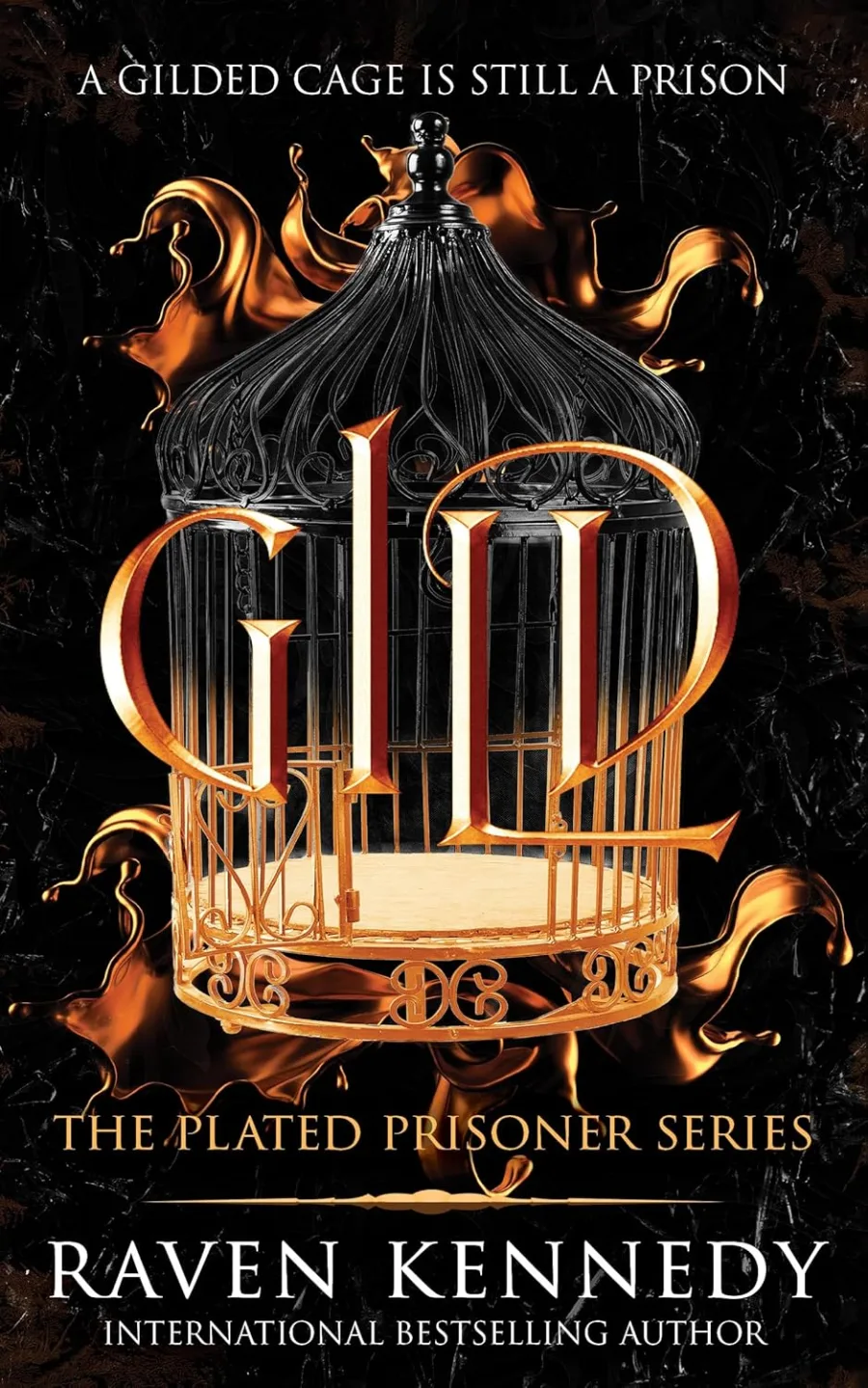
Download Cover Image
Do you want to download the full cover image for Gild: A Dark Romantasy of War and Betrayal (The Plated Prisoner, 1)?