
The Vanishing Half: A Novel
Paperback
• 400 Pages
• USD 18.00
• English
• 9780525536963
No ratings yet
| Publisher | Riverhead Books |
|---|---|
| ISBN13 | 9780525536963 |
| ASIN/SKU | 0525536965 |
| Book Format | Paperback |
| Language | English |
| Pages | 400 |
| List Price | USD 18.00 |
| Publishing Date | 01/02/2022 |
| Dimensions | 5.13 x 1.08 x 7.93 inches |
| Weight | 2.31 pounds |
| Book Code | BD00055808 |
Buy this Book
Amazon Stores
Ebook Stores
Other Stores
Discover The Vanishing Half: A Novel by Brit Bennett. This book is published by Riverhead Books in Paperback format, ISBN 9780525536963, ASIN 0525536965, under Literature and Fiction, Black and African American Women's Fiction, Sisters Fiction.
Book Description
#1 NEW YORK TIMES BESTSELLER
NAMED A BEST BOOK BY THE NEW YORK TIMES • THE WASHINGTON POST • NPR • PEOPLE • TIME MAGAZINE • VANITY FAIR • GLAMOUR • BARACK OBAMA
New York Times Readers Pick: 100 Best Books of the 21st Century
“Bennett’s tone and style recalls James Baldwin and Jacqueline Woodson, but it’s especially reminiscent of Toni Morrison’s 1970 debut novel, The Bluest Eye.” —Kiley Reid, Wall Street Journal
From the New York Times-bestselling author of The Mothers, a stunning new novel about twin sisters, inseparable as children, who ultimately choose to live in two very different worlds, one black and one white.
The Vignes twin sisters will always be identical. But after growing up together in a small, southern black community and running away at age sixteen, it's not just the shape of their daily lives that is different as adults, it's everything: their families, their communities, their racial identities. Many years later, one sister lives with her black daughter in the same southern town she once tried to escape. The other secretly passes for white, and her white husband knows nothing of her past. Still, even separated by so many miles and just as many lies, the fates of the twins remain intertwined. What will happen to the next generation, when their own daughters' storylines intersect?
Weaving together multiple strands and generations of this family, from the Deep South to California, from the 1950s to the 1990s, Brit Bennett produces a story that is at once a riveting, emotional family story and a brilliant exploration of the American history of passing. Looking well beyond issues of race, The Vanishing Half considers the lasting influence of the past as it shapes a person's decisions, desires, and expectations, and explores some of the multiple reasons and realms in which people sometimes feel pulled to live as something other than their origins.
As with her New York Times-bestselling debut The Mothers, Brit Bennett offers an engrossing page-turner about family and relationships that is immersive and provocative, compassionate and wise.
NAMED A BEST BOOK BY THE NEW YORK TIMES • THE WASHINGTON POST • NPR • PEOPLE • TIME MAGAZINE • VANITY FAIR • GLAMOUR • BARACK OBAMA
New York Times Readers Pick: 100 Best Books of the 21st Century
“Bennett’s tone and style recalls James Baldwin and Jacqueline Woodson, but it’s especially reminiscent of Toni Morrison’s 1970 debut novel, The Bluest Eye.” —Kiley Reid, Wall Street Journal
From the New York Times-bestselling author of The Mothers, a stunning new novel about twin sisters, inseparable as children, who ultimately choose to live in two very different worlds, one black and one white.
The Vignes twin sisters will always be identical. But after growing up together in a small, southern black community and running away at age sixteen, it's not just the shape of their daily lives that is different as adults, it's everything: their families, their communities, their racial identities. Many years later, one sister lives with her black daughter in the same southern town she once tried to escape. The other secretly passes for white, and her white husband knows nothing of her past. Still, even separated by so many miles and just as many lies, the fates of the twins remain intertwined. What will happen to the next generation, when their own daughters' storylines intersect?
Weaving together multiple strands and generations of this family, from the Deep South to California, from the 1950s to the 1990s, Brit Bennett produces a story that is at once a riveting, emotional family story and a brilliant exploration of the American history of passing. Looking well beyond issues of race, The Vanishing Half considers the lasting influence of the past as it shapes a person's decisions, desires, and expectations, and explores some of the multiple reasons and realms in which people sometimes feel pulled to live as something other than their origins.
As with her New York Times-bestselling debut The Mothers, Brit Bennett offers an engrossing page-turner about family and relationships that is immersive and provocative, compassionate and wise.
Author Biography
Born and raised in Southern California, Brit Bennett graduated from Stanford University and earned her MFA in fiction at the University of Michigan, where she won a Hopwood Award in Graduate Short Fiction as well as the 2014 Hurston/Wright Award for College Writers. She is a National Book Foundation "5 under 35" honoree, and her essays are featured in The New Yorker, The New York Times Magazine, The Paris Review, and Jezebel.
Editorial Reviews
Named a BEST BOOK OF THE YEAR by The New York Times, The Washington Post, Time, NPR, Entertainment Weekly, Vulture, USA Today, GQ, Vanity Fair, Harper's Bazaar, Glamour, and Bustle
Praise for The Vanishing Half:
“[Bennett’s] second [book], The Vanishing Half, more than lives up to her early promise. . . more expansive yet also deeper, a multi-generational family saga that tackles prickly issues of racial identity and bigotry and conveys the corrosive effects of secrets and dissembling. It's also a great read that will transport you out of your current circumstances, whatever they are. . . Like The Mothers, this novel keeps you turning pages not just to find out what happens.” —NPR
“Bennett’s gorgeously written second novel, an ambitious meditation on race and identity, considers the divergent fates of twin sisters, born in the Jim Crow South, after one decides to pass for white. Bennett balances the literary demands of dynamic characterization with the historical and social realities of her subject matter.”—The New York Times
“An eloquent new entry to literature on that most vital of subjects, identity, The Vanishing Half is the novel of the year.”—TIME
“A story of absolute, universal timelessness — a story of what it means to simply be, to grow up and define oneself and reinvent, to negotiate a place in the world. It's also a deeply American story, rigorously engaged with a country's racist past and present, while interrogative of its foundational values, like choice and legacy. For any era, it's an accomplished, affecting novel. For this moment, it's piercing, subtly wending its way toward questions about who we are and who we want to be….” —Entertainment Weekly
“Beautifully written, thought-provoking and immersive… Issues of privilege, inter-generational trauma, the randomness and unfairness of it all, are teased apart in all their complexity, within a story that also touches on universal themes of love, identity and belonging… The Vanishing Half, with its clever premise and strongly developed characters, is unputdownable and highly recommended.” —Associated Press
“Bennett pulls it off brilliantly… Few novels manage to remain interesting from start to finish, even — maybe especially — the brilliant ones. But… Bennett locks readers in and never lets them go… Stunning…She leaves any weighty parallels — between, for example, racial and gender determinism — to the reader. Her restraint is the novel’s great strength, and it’s tougher than it looks… The Vanishing Half speaks ultimately of a universal vanishing. It concerns the half of everyone that disappears once we leave home — love or hate the place, love or hate ourselves.” —Los Angeles Times
Praise for The Vanishing Half:
“[Bennett’s] second [book], The Vanishing Half, more than lives up to her early promise. . . more expansive yet also deeper, a multi-generational family saga that tackles prickly issues of racial identity and bigotry and conveys the corrosive effects of secrets and dissembling. It's also a great read that will transport you out of your current circumstances, whatever they are. . . Like The Mothers, this novel keeps you turning pages not just to find out what happens.” —NPR
“Bennett’s gorgeously written second novel, an ambitious meditation on race and identity, considers the divergent fates of twin sisters, born in the Jim Crow South, after one decides to pass for white. Bennett balances the literary demands of dynamic characterization with the historical and social realities of her subject matter.”—The New York Times
“An eloquent new entry to literature on that most vital of subjects, identity, The Vanishing Half is the novel of the year.”—TIME
“A story of absolute, universal timelessness — a story of what it means to simply be, to grow up and define oneself and reinvent, to negotiate a place in the world. It's also a deeply American story, rigorously engaged with a country's racist past and present, while interrogative of its foundational values, like choice and legacy. For any era, it's an accomplished, affecting novel. For this moment, it's piercing, subtly wending its way toward questions about who we are and who we want to be….” —Entertainment Weekly
“Beautifully written, thought-provoking and immersive… Issues of privilege, inter-generational trauma, the randomness and unfairness of it all, are teased apart in all their complexity, within a story that also touches on universal themes of love, identity and belonging… The Vanishing Half, with its clever premise and strongly developed characters, is unputdownable and highly recommended.” —Associated Press
“Bennett pulls it off brilliantly… Few novels manage to remain interesting from start to finish, even — maybe especially — the brilliant ones. But… Bennett locks readers in and never lets them go… Stunning…She leaves any weighty parallels — between, for example, racial and gender determinism — to the reader. Her restraint is the novel’s great strength, and it’s tougher than it looks… The Vanishing Half speaks ultimately of a universal vanishing. It concerns the half of everyone that disappears once we leave home — love or hate the place, love or hate ourselves.” —Los Angeles Times
Book Summary
Brit Bennett’s novel The Vanishing Half is a profound and beautifully crafted exploration of race, identity, and the enduring bonds of family. The story begins in Mallard, a small, insular Louisiana town founded by a light-skinned Black man for people who, like him, wanted to live exclusively among others with light skin. Over generations, the townspeople have intermarried, making each generation progressively lighter. Into this unique, colorist society are born the Vignes twins, Desiree and Stella. Identical and inseparable, the girls grow up under the weight of their town’s prejudices and the profound trauma of witnessing their father’s brutal lynching by white men. Suffocated by the narrow expectations of Mallard and the haunting ghosts of their past, the twins decide to run away to New Orleans at the age of sixteen, seeking freedom and a chance to dictate their own futures.
In New Orleans, the harsh realities of survival force the twins down radically different paths. Stella, who secures a job by tentatively passing as a white woman, quickly realizes the immense societal and economic privileges that come with whiteness in Jim Crow-era America. Seduced by the safety and opportunity this new identity offers, she makes the agonizing decision to abandon her sister and fully cross the color line. Without a word of goodbye, Stella disappears into the white world. Desiree is left devastated and utterly alone, mourning her twin as if she had died. This pivotal choice severs their bond and sets the stage for a sprawling narrative that tracks their divergent lives over the next several decades.
Desiree’s journey eventually leads her right back to where she started. After escaping a violently abusive marriage in Washington, D.C., she returns to Mallard in the late 1960s. She does not return alone; she brings her young daughter, Jude, whose skin is described as blue-black. In a town obsessed with lightness, Jude’s dark skin makes her an immediate pariah, and she endures a lonely, cruel childhood. Desiree takes a job as a fingerprint analyst—a fitting profession for a woman obsessed with tracing the missing—though she never stops looking for her sister. Despite the town's harshness toward her daughter, Desiree finds a quiet strength and eventually builds a stable, loving life, holding firmly to her roots and her Black identity.
Miles away in California, Stella has constructed a life built entirely on a foundation of lies. She marries Blake, a wealthy white man who knows nothing of her true heritage, and moves to the affluent, exclusive neighborhood of Brentwood. Stella becomes the epitome of the wealthy white housewife, but her life is defined by suffocating paranoia. She lives in constant terror that someone from her past will recognize her, or that her secret will somehow be exposed. This fear isolates her profoundly. When she has a daughter, Kennedy, who is born with blonde hair and blue eyes, Stella is relieved but also deeply saddened, realizing she can never share her true self, her history, or her family with her own child. The psychological toll of her passing is immense, leaving her fractured and perpetually on guard.
As the novel moves into the 1980s, the focus expands to include the next generation. Jude, desperate to escape Mallard, earns a track scholarship to UCLA. In Los Angeles, she finds her footing, studying medicine and falling in love with Reese, a transgender man who is also in the process of shaping his own physical identity. Reese's transition beautifully mirrors the novel’s broader themes of self-invention and the right to define oneself. Meanwhile, Stella’s daughter, Kennedy, grows up privileged, spoiled, and completely oblivious to her mother’s hidden pain. She drops out of college to pursue an acting career, drifting through life with the confidence that only generational wealth and whiteness can provide.
The sprawling narrative begins to tighten when fate brings the cousins together. While working a catering job in California, Jude recognizes Kennedy's striking resemblance to her mother and uncovers the secret her aunt Stella has guarded for decades. This discovery forces a collision between the two vastly different worlds the twins have built. Jude's intrusion into Stella's carefully constructed reality shatters the illusion of safety Stella has maintained. When the truth finally comes out, Kennedy is forced to grapple with a racial heritage she never knew she had, fundamentally altering her understanding of herself and her mother.
The novel culminates in a poignant, uneasy reunion between Desiree and Stella. After years of silence, the sisters are finally brought face-to-face, but the chasm created by time, betrayal, and profoundly different life experiences cannot be easily bridged. Bennett does not offer a neat, fairy-tale resolution where all wounds are healed. Instead, she presents a realistic portrayal of the permanent scars left by Stella's choice. The twins realize that while they will always be connected by blood and history, they are no longer the two halves of the same whole they once were.
Ultimately, The Vanishing Half is a masterful meditation on the fluidity of identity and the heavy price of reinvention. Bennett asks challenging questions about what we inherit, what we choose, and what we lose when we deny our origins. Since you love utilizing Kindle and Google Books to carry a large, easily searchable personal library, I highly recommend downloading a free sample of this one—its sweeping, multi-generational exploration of identity makes it an incredibly compelling digital read!
In New Orleans, the harsh realities of survival force the twins down radically different paths. Stella, who secures a job by tentatively passing as a white woman, quickly realizes the immense societal and economic privileges that come with whiteness in Jim Crow-era America. Seduced by the safety and opportunity this new identity offers, she makes the agonizing decision to abandon her sister and fully cross the color line. Without a word of goodbye, Stella disappears into the white world. Desiree is left devastated and utterly alone, mourning her twin as if she had died. This pivotal choice severs their bond and sets the stage for a sprawling narrative that tracks their divergent lives over the next several decades.
Desiree’s journey eventually leads her right back to where she started. After escaping a violently abusive marriage in Washington, D.C., she returns to Mallard in the late 1960s. She does not return alone; she brings her young daughter, Jude, whose skin is described as blue-black. In a town obsessed with lightness, Jude’s dark skin makes her an immediate pariah, and she endures a lonely, cruel childhood. Desiree takes a job as a fingerprint analyst—a fitting profession for a woman obsessed with tracing the missing—though she never stops looking for her sister. Despite the town's harshness toward her daughter, Desiree finds a quiet strength and eventually builds a stable, loving life, holding firmly to her roots and her Black identity.
Miles away in California, Stella has constructed a life built entirely on a foundation of lies. She marries Blake, a wealthy white man who knows nothing of her true heritage, and moves to the affluent, exclusive neighborhood of Brentwood. Stella becomes the epitome of the wealthy white housewife, but her life is defined by suffocating paranoia. She lives in constant terror that someone from her past will recognize her, or that her secret will somehow be exposed. This fear isolates her profoundly. When she has a daughter, Kennedy, who is born with blonde hair and blue eyes, Stella is relieved but also deeply saddened, realizing she can never share her true self, her history, or her family with her own child. The psychological toll of her passing is immense, leaving her fractured and perpetually on guard.
As the novel moves into the 1980s, the focus expands to include the next generation. Jude, desperate to escape Mallard, earns a track scholarship to UCLA. In Los Angeles, she finds her footing, studying medicine and falling in love with Reese, a transgender man who is also in the process of shaping his own physical identity. Reese's transition beautifully mirrors the novel’s broader themes of self-invention and the right to define oneself. Meanwhile, Stella’s daughter, Kennedy, grows up privileged, spoiled, and completely oblivious to her mother’s hidden pain. She drops out of college to pursue an acting career, drifting through life with the confidence that only generational wealth and whiteness can provide.
The sprawling narrative begins to tighten when fate brings the cousins together. While working a catering job in California, Jude recognizes Kennedy's striking resemblance to her mother and uncovers the secret her aunt Stella has guarded for decades. This discovery forces a collision between the two vastly different worlds the twins have built. Jude's intrusion into Stella's carefully constructed reality shatters the illusion of safety Stella has maintained. When the truth finally comes out, Kennedy is forced to grapple with a racial heritage she never knew she had, fundamentally altering her understanding of herself and her mother.
The novel culminates in a poignant, uneasy reunion between Desiree and Stella. After years of silence, the sisters are finally brought face-to-face, but the chasm created by time, betrayal, and profoundly different life experiences cannot be easily bridged. Bennett does not offer a neat, fairy-tale resolution where all wounds are healed. Instead, she presents a realistic portrayal of the permanent scars left by Stella's choice. The twins realize that while they will always be connected by blood and history, they are no longer the two halves of the same whole they once were.
Ultimately, The Vanishing Half is a masterful meditation on the fluidity of identity and the heavy price of reinvention. Bennett asks challenging questions about what we inherit, what we choose, and what we lose when we deny our origins. Since you love utilizing Kindle and Google Books to carry a large, easily searchable personal library, I highly recommend downloading a free sample of this one—its sweeping, multi-generational exploration of identity makes it an incredibly compelling digital read!
Sample Chapters
Sample Chapters will be added soon…
Reader Reviews
No reviews yet.
The Vanishing Half: A Novel
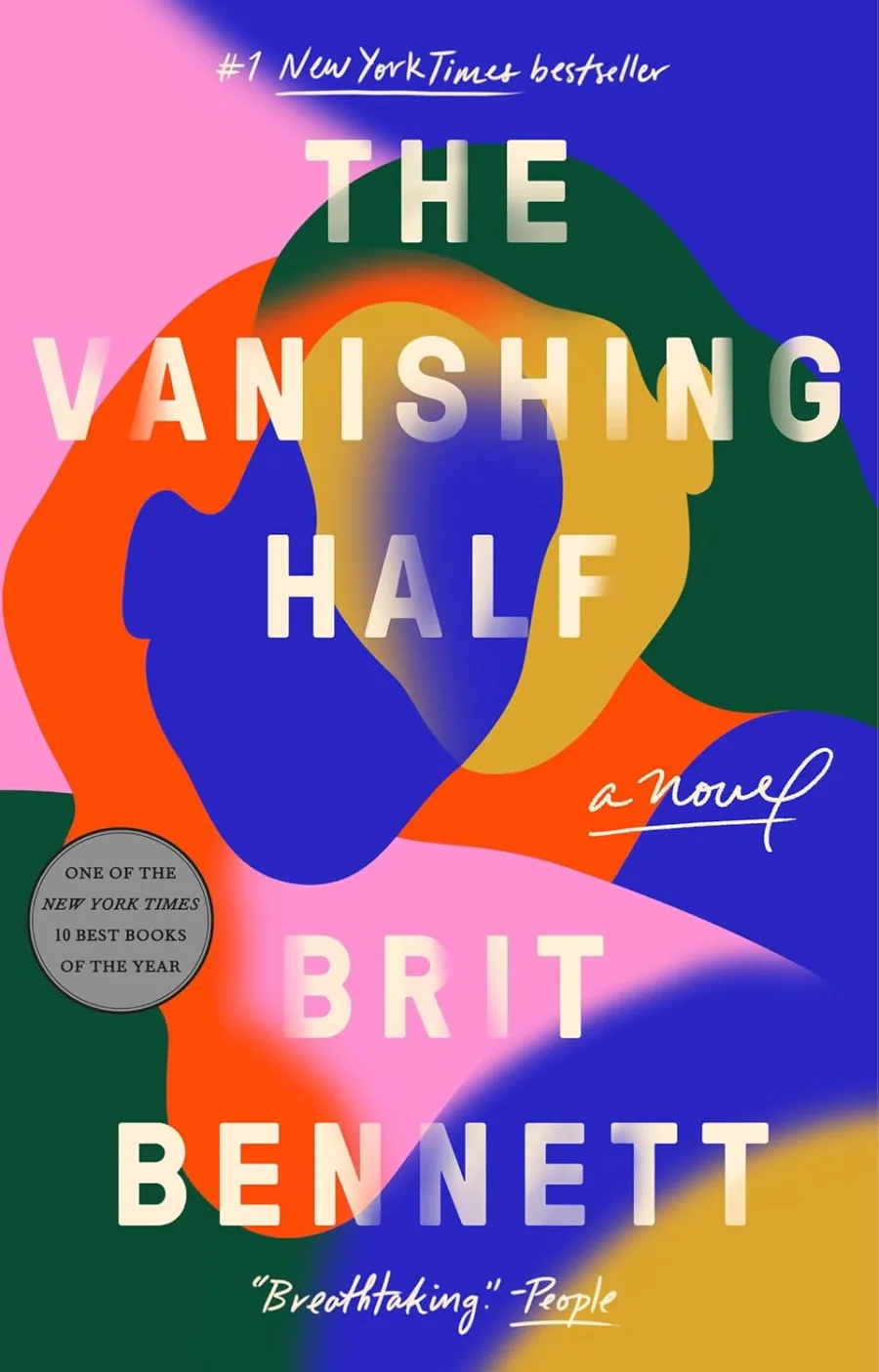
Download Cover Image
Do you want to download the full cover image for The Vanishing Half: A Novel?