
Hillbilly Elegy: A Memoir of a Family and Culture in Crisis
Paperback
• 288 Pages
• USD 21.99
• English
• 9780062300553
No ratings yet
| Publisher | Harper Paperbacks |
|---|---|
| ISBN13 | 9780062300553 |
| ASIN/SKU | 0062300555 |
| Book Format | Paperback |
| Language | English |
| Pages | 288 |
| List Price | USD 21.99 |
| Publishing Date | 01/05/2018 |
| Dimensions | 5.31 x 0.72 x 8 inches |
| Weight | 2.31 pounds |
| Book Code | BD00055820 |
Buy this Book
Amazon Stores
Ebook Stores
Other Stores
Discover Hillbilly Elegy: A Memoir of a Family and Culture in Crisis by J. D. Vance. This book is published by Harper Paperbacks in Paperback format, ISBN 9780062300553, ASIN 0062300555, under Politics and Social Sciences, Poverty, Sociology of Rural Areas.
Book Description
This bestselling memoir, Hillbilly Elegy, is a passionate and personal analysis of a culture in crisis—that of white working-class Americans in the Rust Belt. The disintegration of this group, a process that has been slowly occurring now for more than forty years, has been reported with growing frequency and alarm, but has never before been written about as searingly from the inside. J. D. Vance tells the true story of what a social, regional, and class decline feels like, offering a searing inside look at poverty in America.
The Vance family story, a powerful example of the struggle for social mobility, begins hopefully in postwar America. J. D.'s grandparents were "dirt poor and in love," and moved north from Kentucky's Appalachia region to Ohio in the hopes of escaping the dreadful poverty around them. They raised a middle-class family, and eventually one of their grandchildren would graduate from Yale Law School, a conventional marker of success in achieving generational upward mobility. But as the family saga of Hillbilly Elegy plays out, we learn that J.D.'s grandparents, aunt, uncle, and, most of all, his mother struggled profoundly with the demands of their new middle-class life, never fully escaping the legacy of abuse, addiction, poverty, and family trauma so characteristic of their part of America. With piercing honesty, Vance shows how he himself still carries around the demons of his chaotic family history.
A deeply moving story about Appalachian culture, with its share of humor and vividly colorful figures, Hillbilly Elegy is the story of how upward mobility really feels. And it is an urgent and troubling meditation on the loss of the American dream for a large segment of this country.
What does it take to break a cycle of poverty and trauma that spans generations?
A Raw Look at the White Working Class: Go beyond the headlines for a deeply personal account of a people in crisis, from the hollers of Kentucky to the factory towns of Ohio.
The Legacy of Addiction and Trauma: Witness the devastating impact of alcoholism and abuse as one family grapples with the demons that followed them from Appalachia.
An Unlikely Path to the Ivy League: Follow J.D. Vance's improbable journey from a former marine to a Yale Law School graduate, showing what upward mobility truly feels like.
The Fraying American Dream: An urgent, searingly honest meditation on what happens when the promise of a better life seems to slip away for an entire segment of the country.
The Vance family story, a powerful example of the struggle for social mobility, begins hopefully in postwar America. J. D.'s grandparents were "dirt poor and in love," and moved north from Kentucky's Appalachia region to Ohio in the hopes of escaping the dreadful poverty around them. They raised a middle-class family, and eventually one of their grandchildren would graduate from Yale Law School, a conventional marker of success in achieving generational upward mobility. But as the family saga of Hillbilly Elegy plays out, we learn that J.D.'s grandparents, aunt, uncle, and, most of all, his mother struggled profoundly with the demands of their new middle-class life, never fully escaping the legacy of abuse, addiction, poverty, and family trauma so characteristic of their part of America. With piercing honesty, Vance shows how he himself still carries around the demons of his chaotic family history.
A deeply moving story about Appalachian culture, with its share of humor and vividly colorful figures, Hillbilly Elegy is the story of how upward mobility really feels. And it is an urgent and troubling meditation on the loss of the American dream for a large segment of this country.
What does it take to break a cycle of poverty and trauma that spans generations?
A Raw Look at the White Working Class: Go beyond the headlines for a deeply personal account of a people in crisis, from the hollers of Kentucky to the factory towns of Ohio.
The Legacy of Addiction and Trauma: Witness the devastating impact of alcoholism and abuse as one family grapples with the demons that followed them from Appalachia.
An Unlikely Path to the Ivy League: Follow J.D. Vance's improbable journey from a former marine to a Yale Law School graduate, showing what upward mobility truly feels like.
The Fraying American Dream: An urgent, searingly honest meditation on what happens when the promise of a better life seems to slip away for an entire segment of the country.
Author Biography
JD Vance currently serves as the Vice President of the United States. He is also the author of the bestselling memoir Hillbilly Elegy and a former senator from Ohio. A US Marine Corps veteran of the Iraq War, Vance later worked in venture capital, investing in and advising companies focused on economic growth in the Midwest. He lives with his wife, Usha, and their children.
Editorial Reviews
“[An] understated, engaging debut...An unusually timely and deeply affecting view of a social class whose health and economic problems are making headlines in this election year.” - Kirkus Reviews (starred review)
“Vance compellingly describes the terrible toll that alcoholism, drug abuse, and an unrelenting code of honor took on his family, neither excusing the behavior nor condemning it…The portrait that emerges is a complex one…Unerringly forthright, remarkably insightful, and refreshingly focused, Hillbilly Elegy is the cry of a community in crisis.” - Booklist
“[Vance’s] description of the culture he grew up in is essential reading for this moment in history.” - David Brooks, New York Times
“The troubles of the working poor are well known to policymakers, but Vance offers an insider’s view of the problem.” - Christianity Today
To understand the rage and disaffection of America’s working-class whites, look to Greater Appalachia. In HILLBILLY ELEGY, J.D. Vance confronts us with the economic and spiritual travails of this forgotten corner of our country. Here we find women and men who dearly love their country, yet who feel powerless as their way of life is devastated. Never before have I read a memoir so powerful, and so necessary. - Reihan Salam, executive editor, National Review
“J.D. Vance’s memoir, “Hillbilly Elegy”, offers a starkly honest look at what that shattering of faith feels like for a family who lived through it. You will not read a more important book about America this year.” - The Economist
“[A] compassionate, discerning sociological analysis…Combining thoughtful inquiry with firsthand experience, Mr. Vance has inadvertently provided a civilized reference guide for an uncivilized election, and he’s done so in a vocabulary intelligible to both Democrats and Republicans. Imagine that.” - Jennifer Senior, New York Times
“[Hillbilly Elegy] is a beautiful memoir but it is equally a work of cultural criticism about white working-class America….[Vance] offers a compelling explanation for why it’s so hard for someone who grew up the way he did to make it…a riveting book.” - Wall Street Journal
“[A] frank, unsentimental, harrowing memoir...a superb book...” - New York Post
“Vance movingly recounts the travails of his family.” - Washington Post
“Both heartbreaking and heartwarming, this memoir is akin to investigative journalism. … A quick and engaging read, this book is well suited to anyone interested in a study of modern America, as Vance’s assertions about Appalachia are far more reaching.” - Library Journal
“Vance compellingly describes the terrible toll that alcoholism, drug abuse, and an unrelenting code of honor took on his family, neither excusing the behavior nor condemning it…The portrait that emerges is a complex one…Unerringly forthright, remarkably insightful, and refreshingly focused, Hillbilly Elegy is the cry of a community in crisis.” - Booklist
“[Vance’s] description of the culture he grew up in is essential reading for this moment in history.” - David Brooks, New York Times
“The troubles of the working poor are well known to policymakers, but Vance offers an insider’s view of the problem.” - Christianity Today
To understand the rage and disaffection of America’s working-class whites, look to Greater Appalachia. In HILLBILLY ELEGY, J.D. Vance confronts us with the economic and spiritual travails of this forgotten corner of our country. Here we find women and men who dearly love their country, yet who feel powerless as their way of life is devastated. Never before have I read a memoir so powerful, and so necessary. - Reihan Salam, executive editor, National Review
“J.D. Vance’s memoir, “Hillbilly Elegy”, offers a starkly honest look at what that shattering of faith feels like for a family who lived through it. You will not read a more important book about America this year.” - The Economist
“[A] compassionate, discerning sociological analysis…Combining thoughtful inquiry with firsthand experience, Mr. Vance has inadvertently provided a civilized reference guide for an uncivilized election, and he’s done so in a vocabulary intelligible to both Democrats and Republicans. Imagine that.” - Jennifer Senior, New York Times
“[Hillbilly Elegy] is a beautiful memoir but it is equally a work of cultural criticism about white working-class America….[Vance] offers a compelling explanation for why it’s so hard for someone who grew up the way he did to make it…a riveting book.” - Wall Street Journal
“[A] frank, unsentimental, harrowing memoir...a superb book...” - New York Post
“Vance movingly recounts the travails of his family.” - Washington Post
“Both heartbreaking and heartwarming, this memoir is akin to investigative journalism. … A quick and engaging read, this book is well suited to anyone interested in a study of modern America, as Vance’s assertions about Appalachia are far more reaching.” - Library Journal
Book Summary
Hillbilly Elegy is J. D. Vance’s memoir about growing up in a poor white Appalachian family and trying to escape the instability, violence, and addiction that shaped much of his childhood. The book is both a personal story and a broader reflection on the culture of the white working class in the Rust Belt and Appalachia, especially the people Vance calls “hillbillies,” a term that is often used disrespectfully but that he uses to describe the world he came from. Through his own life and family history, he explores how poverty is not only about money but also about habits, expectations, family patterns, and the sense that the future does not necessarily belong to you. The memoir moves between his personal experiences and his attempts to explain why so many people in his community struggled even when opportunities seemed to exist.
Vance begins by describing his childhood in Middletown, Ohio, where his family had moved from Kentucky generations earlier. On the surface, Middletown seemed like a working-class town with decent jobs, but by the time he was growing up, those jobs were disappearing and the social fabric around him was weakening. His family life was chaotic. His mother struggled with drug addiction and unstable relationships, and he was raised for long stretches by his grandparents, especially his grandmother Mamaw and grandfather Papaw. Mamaw is one of the strongest figures in the book. She is tough, fierce, emotionally intense, and deeply loyal, and although her parenting style is far from gentle, she gives Vance a sense of structure and protection that he desperately needs. His grandfather is quieter and steadier, while his mother’s instability forces Vance to grow up with constant uncertainty.
A major part of the memoir is the contrast between the dysfunction in Vance’s home life and the discipline he eventually finds in the military. As a teenager, he is angry, confused, and often unmotivated. He gets caught in the turbulence of his mother’s many relationships and struggles to trust adults. He also experiences the kind of emotional damage that comes from living in a home where chaos is normal. Eventually, after bouncing around and feeling directionless, he joins the Marine Corps. This becomes one of the most important turning points in his life. The Marines give him order, routine, and a sense of purpose. They teach him how to manage himself, follow rules, and believe that his choices matter. For the first time, he begins to imagine a future that is not limited by the dysfunction around him.
After the military, Vance goes to college and later to Yale Law School, where he experiences a very different world from the one he grew up in. At Yale, he feels out of place among students who often come from wealth, prestige, and stable families. He is smart and determined, but he also feels the weight of his background in every room. One of the memoir’s strongest themes is this tension between social mobility and cultural identity. Vance wants success, but success requires adapting to a world that does not think or behave like his own. He struggles with impostor syndrome, manners, language, confidence, and the invisible rules of elite spaces. At the same time, he also feels guilt and conflict about leaving behind the people he loves, many of whom remain trapped in cycles of addiction, unemployment, and emotional volatility.
The memoir pays close attention to his family’s emotional landscape. Addiction runs through the story again and again, especially in his mother’s life, and Vance shows how addiction is not just a private problem but a force that shapes entire families. The instability it creates affects children, marriages, finances, and trust. He writes about the fear and exhaustion of loving someone who keeps self-destructing, and about the way family loyalty can make people tolerate behavior that destroys them. The book does not present his family members as simply bad or weak. Instead, it shows how they are shaped by trauma, bad habits, and a culture that often normalizes anger, mistrust, and self-sabotage. Vance is critical of these patterns, but he is also deeply aware that they come from generations of hardship and loss.
Another major thread in the book is Vance’s argument that culture matters as much as economics. He does not deny the role of job loss, inequality, and regional decline, but he insists that some people in his community also internalized attitudes that made progress harder. He writes about how people often expected failure, distrusted institutions, and responded to shame with anger rather than reflection. In his view, these cultural habits can become self-perpetuating. Children raised in unstable homes may never learn the habits that help them thrive in school, work, or relationships. He argues that rebuilding communities requires more than jobs; it requires changing expectations, strengthening families, and creating a belief that life can improve through responsibility and discipline. This part of the memoir has sparked debate because some readers see it as compassionate insight, while others see it as too harsh toward poor communities. Still, it is central to how Vance frames his own life story.
What makes “Hillbilly Elegy” compelling is that it is not just a critique of a culture from the outside. It is also an attempt to understand how someone can leave a difficult background without fully leaving it behind. Even as Vance becomes educated and professionally successful, he remains emotionally tied to his roots. He loves the people who raised him, especially Mamaw, and he never forgets the affection, humor, and resilience that also exist in his family and community. The book is honest about the pain, but it also recognizes the warmth and loyalty that can survive even in damaged environments. That balance gives the memoir its power. It is not simply a story of escape; it is a story of belonging, shame, gratitude, and the complicated nature of upward mobility.
By the end of the memoir, Vance presents his life as proof that hard work, support from a few key adults, and a willingness to change can make a difference, but he also makes clear that his path was difficult and not typical. He knows that many people do not get the same chances, or the same combination of luck and guidance, that he received. “Hillbilly Elegy” leaves readers with a portrait of a family and a community under strain, caught between old loyalties and a changing economy, where love exists alongside addiction, and pride exists alongside desperation. It is ultimately a memoir about survival, but also about the possibility of breaking patterns that seem permanent.
Vance begins by describing his childhood in Middletown, Ohio, where his family had moved from Kentucky generations earlier. On the surface, Middletown seemed like a working-class town with decent jobs, but by the time he was growing up, those jobs were disappearing and the social fabric around him was weakening. His family life was chaotic. His mother struggled with drug addiction and unstable relationships, and he was raised for long stretches by his grandparents, especially his grandmother Mamaw and grandfather Papaw. Mamaw is one of the strongest figures in the book. She is tough, fierce, emotionally intense, and deeply loyal, and although her parenting style is far from gentle, she gives Vance a sense of structure and protection that he desperately needs. His grandfather is quieter and steadier, while his mother’s instability forces Vance to grow up with constant uncertainty.
A major part of the memoir is the contrast between the dysfunction in Vance’s home life and the discipline he eventually finds in the military. As a teenager, he is angry, confused, and often unmotivated. He gets caught in the turbulence of his mother’s many relationships and struggles to trust adults. He also experiences the kind of emotional damage that comes from living in a home where chaos is normal. Eventually, after bouncing around and feeling directionless, he joins the Marine Corps. This becomes one of the most important turning points in his life. The Marines give him order, routine, and a sense of purpose. They teach him how to manage himself, follow rules, and believe that his choices matter. For the first time, he begins to imagine a future that is not limited by the dysfunction around him.
After the military, Vance goes to college and later to Yale Law School, where he experiences a very different world from the one he grew up in. At Yale, he feels out of place among students who often come from wealth, prestige, and stable families. He is smart and determined, but he also feels the weight of his background in every room. One of the memoir’s strongest themes is this tension between social mobility and cultural identity. Vance wants success, but success requires adapting to a world that does not think or behave like his own. He struggles with impostor syndrome, manners, language, confidence, and the invisible rules of elite spaces. At the same time, he also feels guilt and conflict about leaving behind the people he loves, many of whom remain trapped in cycles of addiction, unemployment, and emotional volatility.
The memoir pays close attention to his family’s emotional landscape. Addiction runs through the story again and again, especially in his mother’s life, and Vance shows how addiction is not just a private problem but a force that shapes entire families. The instability it creates affects children, marriages, finances, and trust. He writes about the fear and exhaustion of loving someone who keeps self-destructing, and about the way family loyalty can make people tolerate behavior that destroys them. The book does not present his family members as simply bad or weak. Instead, it shows how they are shaped by trauma, bad habits, and a culture that often normalizes anger, mistrust, and self-sabotage. Vance is critical of these patterns, but he is also deeply aware that they come from generations of hardship and loss.
Another major thread in the book is Vance’s argument that culture matters as much as economics. He does not deny the role of job loss, inequality, and regional decline, but he insists that some people in his community also internalized attitudes that made progress harder. He writes about how people often expected failure, distrusted institutions, and responded to shame with anger rather than reflection. In his view, these cultural habits can become self-perpetuating. Children raised in unstable homes may never learn the habits that help them thrive in school, work, or relationships. He argues that rebuilding communities requires more than jobs; it requires changing expectations, strengthening families, and creating a belief that life can improve through responsibility and discipline. This part of the memoir has sparked debate because some readers see it as compassionate insight, while others see it as too harsh toward poor communities. Still, it is central to how Vance frames his own life story.
What makes “Hillbilly Elegy” compelling is that it is not just a critique of a culture from the outside. It is also an attempt to understand how someone can leave a difficult background without fully leaving it behind. Even as Vance becomes educated and professionally successful, he remains emotionally tied to his roots. He loves the people who raised him, especially Mamaw, and he never forgets the affection, humor, and resilience that also exist in his family and community. The book is honest about the pain, but it also recognizes the warmth and loyalty that can survive even in damaged environments. That balance gives the memoir its power. It is not simply a story of escape; it is a story of belonging, shame, gratitude, and the complicated nature of upward mobility.
By the end of the memoir, Vance presents his life as proof that hard work, support from a few key adults, and a willingness to change can make a difference, but he also makes clear that his path was difficult and not typical. He knows that many people do not get the same chances, or the same combination of luck and guidance, that he received. “Hillbilly Elegy” leaves readers with a portrait of a family and a community under strain, caught between old loyalties and a changing economy, where love exists alongside addiction, and pride exists alongside desperation. It is ultimately a memoir about survival, but also about the possibility of breaking patterns that seem permanent.
Sample Chapters
Sample Chapters will be added soon…
Reader Reviews
No reviews yet.
Hillbilly Elegy: A Memoir of a Family and Culture in Crisis
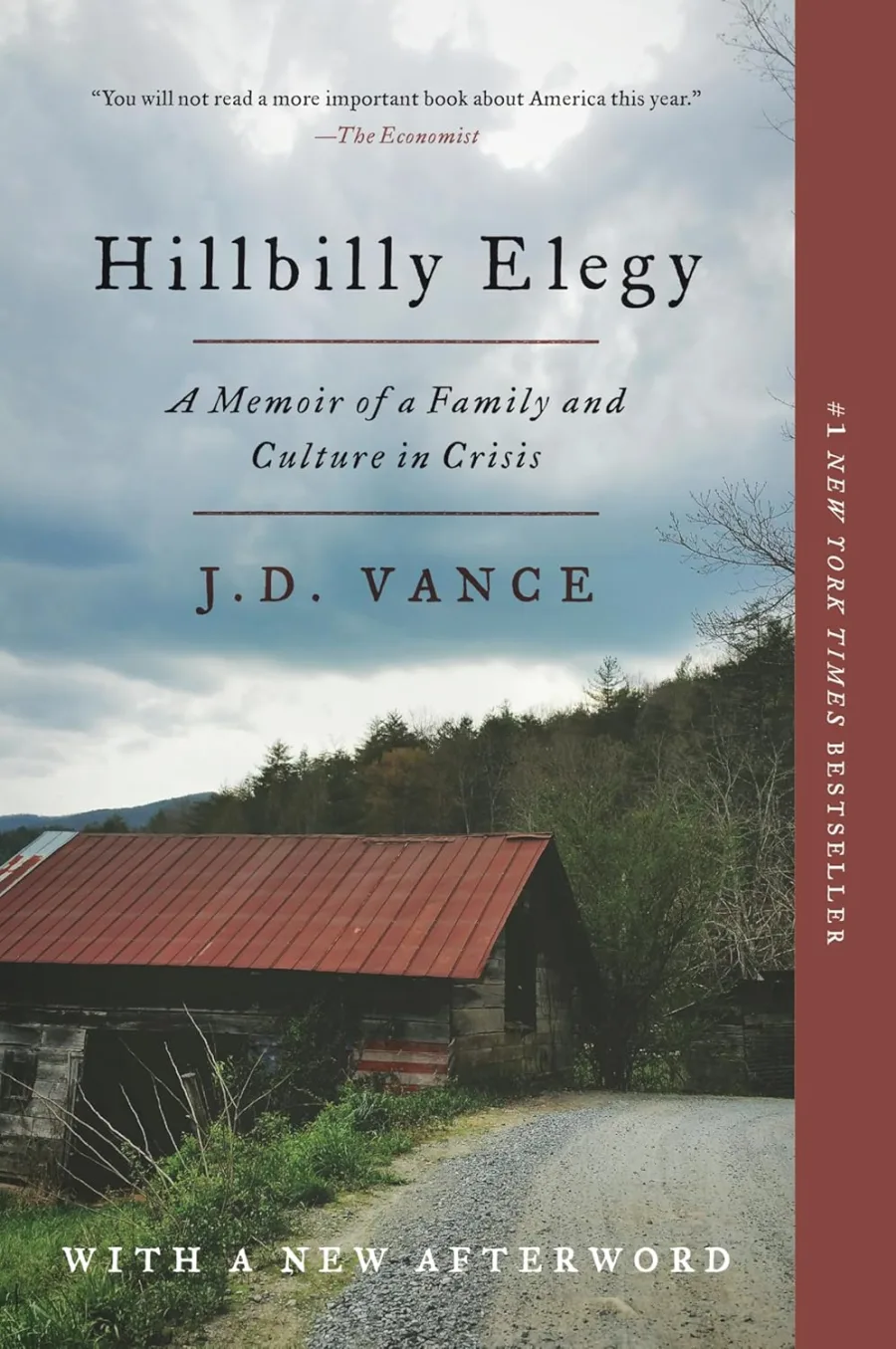
Download Cover Image
Do you want to download the full cover image for Hillbilly Elegy: A Memoir of a Family and Culture in Crisis?