
The Kite Runner
Paperback
• 400 Pages
• USD 19.00
• English
• 9781594631931
No ratings yet
| Publisher | Riverhead Books |
|---|---|
| ISBN13 | 9781594631931 |
| ASIN/SKU | 159463193X |
| Book Format | Paperback |
| Language | English |
| Pages | 400 |
| List Price | USD 19.00 |
| Publishing Date | 05/03/2013 |
| Dimensions | 5.16 x 1.02 x 7.99 inches |
| Weight | 11 ounces |
| Book Code | BD00055828 |
Buy this Book
Amazon Stores
Ebook Stores
Other Stores
Discover The Kite Runner by Khaled Hosseini. This book is published by Riverhead Books in Paperback format, ISBN 9781594631931, ASIN 159463193X, under Literature and Fiction, Asian American and Pacific Islander Literature, Multigenerational Fiction.
Book Description
The #1 New York Times bestselling novel beloved by millions of readers the world over.
New York Times Readers Pick: 100 Best Books of the 21st Century
“A vivid and engaging story that reminds us how long his people [of Afghanistan] have been struggling to triumph over the forces of violence—forces that continue to threaten them even today.”—The New York Times Book Review
The unforgettable, heartbreaking story of the unlikely friendship between a wealthy boy and the son of his father’s servant, caught in the tragic sweep of history, The Kite Runner transports readers to Afghanistan at a tense and crucial moment of change and destruction. A powerful story of friendship, it is also about the power of reading, the price of betrayal, and the possibility of redemption; and an exploration of the power of fathers over sons—their love, their sacrifices, their lies.
Since its publication in 2003 Kite Runner has become a beloved, one-of-a-kind classic of contemporary literature, touching millions of readers, and launching the career of one of America's most treasured writers.
New York Times Readers Pick: 100 Best Books of the 21st Century
“A vivid and engaging story that reminds us how long his people [of Afghanistan] have been struggling to triumph over the forces of violence—forces that continue to threaten them even today.”—The New York Times Book Review
The unforgettable, heartbreaking story of the unlikely friendship between a wealthy boy and the son of his father’s servant, caught in the tragic sweep of history, The Kite Runner transports readers to Afghanistan at a tense and crucial moment of change and destruction. A powerful story of friendship, it is also about the power of reading, the price of betrayal, and the possibility of redemption; and an exploration of the power of fathers over sons—their love, their sacrifices, their lies.
Since its publication in 2003 Kite Runner has become a beloved, one-of-a-kind classic of contemporary literature, touching millions of readers, and launching the career of one of America's most treasured writers.
Author Biography
Khaled Hosseini is one of the most widely read and beloved novelists in the world, with over thirty eight million copies of his books sold in more than seventy countries. The Kite Runner was a major film and was a Book of the Decade, chosen by The Times, Daily Telegraph and Guardian. A Thousand Splendid Suns was the Richard & Judy Best Read of the Year in 2008. Hosseini is also a Goodwill Envoy to the United Nations High Commissioner for Refugees, the UN Refugee Agency and the founder of The Khaled Hosseini Foundation, a not-for-profit organisation which provides humanitarian assistance to the people of Afghanistan. He was born in Kabul, Afghanistan, and lives in northern California.
Editorial Reviews
"A moving portrait of modern Afghanistan."—Entertainment Weekly
"This powerful first novel...tells the story of fierce cruelty and fierce yet redeeming love. Both transform the life of Amir, Khaled Hosseini's privileged young narrator, who comes of age during the last peaceful days of the monarchy, just before his country's revolution and its invasion by Russian forces. But political events, even as dramatic as the ones that are presented in The Kite Runner, are only a part of this story. In The Kite Runner, Khaled Hosseini gives us a vivid and engaging story that reminds us how long his people have been struggling to triumph over the forces of violence—forces that continue to threaten them even today."—The New York Times Book Review
"A powerful book...no frills, no nonsense, just hard, spare prose...an intimate account of family and friendship, betrayal and salvation that requires no atlas or translation to engage and enlighten us. Parts of The Kite Runner are raw and excruciating to read, yet the book in its entirety is lovingly written."—The Washington Post Book World
"An astonishing, powerful book."—Diane Sawyer
"This powerful first novel...tells the story of fierce cruelty and fierce yet redeeming love. Both transform the life of Amir, Khaled Hosseini's privileged young narrator, who comes of age during the last peaceful days of the monarchy, just before his country's revolution and its invasion by Russian forces. But political events, even as dramatic as the ones that are presented in The Kite Runner, are only a part of this story. In The Kite Runner, Khaled Hosseini gives us a vivid and engaging story that reminds us how long his people have been struggling to triumph over the forces of violence—forces that continue to threaten them even today."—The New York Times Book Review
"A powerful book...no frills, no nonsense, just hard, spare prose...an intimate account of family and friendship, betrayal and salvation that requires no atlas or translation to engage and enlighten us. Parts of The Kite Runner are raw and excruciating to read, yet the book in its entirety is lovingly written."—The Washington Post Book World
"An astonishing, powerful book."—Diane Sawyer
Book Summary
“The Kite Runner” by Khaled Hosseini is a deeply emotional story about friendship, betrayal, guilt, and the long search for redemption, told through the life of Amir, a boy growing up in Kabul, Afghanistan. Amir lives in a wealthy neighborhood with his father, Baba, a strong, proud man who is respected in the community but seems distant from his son. Amir’s closest companion is Hassan, the son of Baba’s servant, Ali. Hassan is a Hazara, an ethnic minority often looked down upon and discriminated against by the majority Pashtuns, like Amir. Despite this social divide, the two boys share an intense bond: they spend their days playing together, reading stories, and flying kites. Hassan is unfailingly loyal to Amir, often defending him, and he famously says, “For you, a thousand times over,” which captures his devotion.
One of the most joyful traditions of their childhood is the annual kite fighting tournament in Kabul. Amir is eager to win it, partly to impress Baba, who often seems disappointed in him and wishes he were more physically brave and assertive. With Hassan as his kite runner—the one who chases down the last fallen kite—Amir finally wins the competition. It is the first time Amir feels truly proud and hopeful that Baba will be proud of him, too. However, this moment of triumph quickly turns into tragedy. After the tournament, Hassan runs off to catch the last kite as a trophy for Amir. On his way, he is cornered by Assef, a cruel neighborhood bully, and two of his friends. They assault Hassan in a brutal way. Amir secretly witnesses this attack but is too afraid to intervene. He hides and does nothing, and this cowardice becomes the central wound of his life.
In the days and weeks after, Amir is consumed by guilt and shame. Hassan, loyal as ever, does not blame Amir and tries to continue their friendship as if nothing has changed. But Amir cannot bear Hassan’s presence because he is a living reminder of Amir’s failure to act. Desperate to distance himself, Amir does something terrible: he hides some money and a watch under Hassan’s mattress and falsely accuses him of theft. Baba, who hates lying and values honesty, surprises Amir by forgiving Hassan, but Hassan, aware of Amir’s betrayal, quietly takes the blame. Shortly afterward, Ali and Hassan decide to leave Baba’s house, and Amir watches them go, knowing he is responsible. This marks the end of their childhood and the breaking of a bond that will haunt Amir for decades.
Soon, Afghanistan’s political situation worsens. The Soviet Union invades, and the country descends into conflict. Baba and Amir flee to Pakistan and eventually immigrate to the United States. In California, their lives change dramatically. Baba, who once was a wealthy and respected man, now works at a gas station. Amir grows up in America, goes to college, and becomes a writer. He also meets Soraya, the daughter of another Afghan family, and they marry. Though Amir builds a new life, the guilt over Hassan and the memories of his childhood in Kabul never leave him. He feels that no success in America can erase his past betrayal.
Years later, Amir receives a phone call from Rahim Khan, an old friend of Baba’s, who is now very ill and living in Pakistan. Rahim Khan tells Amir, “There is a way to be good again,” hinting that Amir might find redemption. Amir travels to Pakistan to see him. There, Rahim Khan reveals shocking secrets: Hassan was actually Baba’s son, making him Amir’s half-brother. Baba had kept this hidden because of cultural prejudice and shame over having a child with a Hazara woman. This revelation deeply shakes Amir. His betrayal of Hassan now feels even more painful, because he wronged not just his friend, but his own brother.
Rahim Khan also explains that Hassan married and had a son named Sohrab. After the Taliban took over Afghanistan, Hassan and his wife were killed by the regime, and Sohrab was left in an orphanage in Kabul. Rahim Khan asks Amir to go to Afghanistan and rescue Sohrab, hoping Amir will finally do something brave and right. Amir agrees, seeing this mission as a chance to atone for his past. He returns to a very different Kabul, now ruined by war, poverty, and the harsh rule of the Taliban. The city he remembers from childhood is almost unrecognizable.
Amir eventually finds the orphanage where Sohrab was supposed to be but learns that a Taliban official has taken the boy. To save him, Amir arranges a meeting with this official, who turns out to be Assef, the same bully who abused Hassan years ago. Assef refuses to give up Sohrab unless Amir fights him. Amir, who spent his life avoiding confrontation, is beaten badly, but he does not run away this time. Sohrab, who has endured trauma himself, uses a slingshot—echoing Hassan’s childhood bravery—to injure Assef and help Amir escape. Together, Amir and Sohrab flee Afghanistan.
Amir decides to take Sohrab to the United States and adopt him, but the process is complicated and painful. Sohrab doesn’t trust easily; he is quiet, withdrawn, and deeply scarred by his experiences. A series of bureaucratic hurdles and broken promises push Sohrab into despair, and he attempts suicide. Though he survives, he becomes even more silent and distant. Amir is overwhelmed by guilt, not only for his past with Hassan but now for failing to protect Sohrab from further pain. Still, Amir refuses to give up on the boy. He and Soraya bring Sohrab to their home in California and give him time, space, and gentle care.
The novel’s closing moments are quiet but powerful. At a gathering of Afghan families, Amir offers to run a kite for Sohrab and shows him how the kite fights in the air, just as Hassan once did for him. He runs and chases the kite, and then turns to Sohrab, saying, “For you, a thousand times over,” echoing Hassan’s famous words. It is a small gesture, but it symbolizes Amir’s new role: he cannot change the past, but he can honor Hassan’s memory by loving and protecting Hassan’s son. The story ends on a note of fragile hope, suggesting that redemption does not come all at once, but slowly, through acts of courage, kindness, and the willingness to face one’s own mistakes.
One of the most joyful traditions of their childhood is the annual kite fighting tournament in Kabul. Amir is eager to win it, partly to impress Baba, who often seems disappointed in him and wishes he were more physically brave and assertive. With Hassan as his kite runner—the one who chases down the last fallen kite—Amir finally wins the competition. It is the first time Amir feels truly proud and hopeful that Baba will be proud of him, too. However, this moment of triumph quickly turns into tragedy. After the tournament, Hassan runs off to catch the last kite as a trophy for Amir. On his way, he is cornered by Assef, a cruel neighborhood bully, and two of his friends. They assault Hassan in a brutal way. Amir secretly witnesses this attack but is too afraid to intervene. He hides and does nothing, and this cowardice becomes the central wound of his life.
In the days and weeks after, Amir is consumed by guilt and shame. Hassan, loyal as ever, does not blame Amir and tries to continue their friendship as if nothing has changed. But Amir cannot bear Hassan’s presence because he is a living reminder of Amir’s failure to act. Desperate to distance himself, Amir does something terrible: he hides some money and a watch under Hassan’s mattress and falsely accuses him of theft. Baba, who hates lying and values honesty, surprises Amir by forgiving Hassan, but Hassan, aware of Amir’s betrayal, quietly takes the blame. Shortly afterward, Ali and Hassan decide to leave Baba’s house, and Amir watches them go, knowing he is responsible. This marks the end of their childhood and the breaking of a bond that will haunt Amir for decades.
Soon, Afghanistan’s political situation worsens. The Soviet Union invades, and the country descends into conflict. Baba and Amir flee to Pakistan and eventually immigrate to the United States. In California, their lives change dramatically. Baba, who once was a wealthy and respected man, now works at a gas station. Amir grows up in America, goes to college, and becomes a writer. He also meets Soraya, the daughter of another Afghan family, and they marry. Though Amir builds a new life, the guilt over Hassan and the memories of his childhood in Kabul never leave him. He feels that no success in America can erase his past betrayal.
Years later, Amir receives a phone call from Rahim Khan, an old friend of Baba’s, who is now very ill and living in Pakistan. Rahim Khan tells Amir, “There is a way to be good again,” hinting that Amir might find redemption. Amir travels to Pakistan to see him. There, Rahim Khan reveals shocking secrets: Hassan was actually Baba’s son, making him Amir’s half-brother. Baba had kept this hidden because of cultural prejudice and shame over having a child with a Hazara woman. This revelation deeply shakes Amir. His betrayal of Hassan now feels even more painful, because he wronged not just his friend, but his own brother.
Rahim Khan also explains that Hassan married and had a son named Sohrab. After the Taliban took over Afghanistan, Hassan and his wife were killed by the regime, and Sohrab was left in an orphanage in Kabul. Rahim Khan asks Amir to go to Afghanistan and rescue Sohrab, hoping Amir will finally do something brave and right. Amir agrees, seeing this mission as a chance to atone for his past. He returns to a very different Kabul, now ruined by war, poverty, and the harsh rule of the Taliban. The city he remembers from childhood is almost unrecognizable.
Amir eventually finds the orphanage where Sohrab was supposed to be but learns that a Taliban official has taken the boy. To save him, Amir arranges a meeting with this official, who turns out to be Assef, the same bully who abused Hassan years ago. Assef refuses to give up Sohrab unless Amir fights him. Amir, who spent his life avoiding confrontation, is beaten badly, but he does not run away this time. Sohrab, who has endured trauma himself, uses a slingshot—echoing Hassan’s childhood bravery—to injure Assef and help Amir escape. Together, Amir and Sohrab flee Afghanistan.
Amir decides to take Sohrab to the United States and adopt him, but the process is complicated and painful. Sohrab doesn’t trust easily; he is quiet, withdrawn, and deeply scarred by his experiences. A series of bureaucratic hurdles and broken promises push Sohrab into despair, and he attempts suicide. Though he survives, he becomes even more silent and distant. Amir is overwhelmed by guilt, not only for his past with Hassan but now for failing to protect Sohrab from further pain. Still, Amir refuses to give up on the boy. He and Soraya bring Sohrab to their home in California and give him time, space, and gentle care.
The novel’s closing moments are quiet but powerful. At a gathering of Afghan families, Amir offers to run a kite for Sohrab and shows him how the kite fights in the air, just as Hassan once did for him. He runs and chases the kite, and then turns to Sohrab, saying, “For you, a thousand times over,” echoing Hassan’s famous words. It is a small gesture, but it symbolizes Amir’s new role: he cannot change the past, but he can honor Hassan’s memory by loving and protecting Hassan’s son. The story ends on a note of fragile hope, suggesting that redemption does not come all at once, but slowly, through acts of courage, kindness, and the willingness to face one’s own mistakes.
Sample Chapters
Sample Chapters will be added soon…
Reader Reviews
No reviews yet.
The Kite Runner
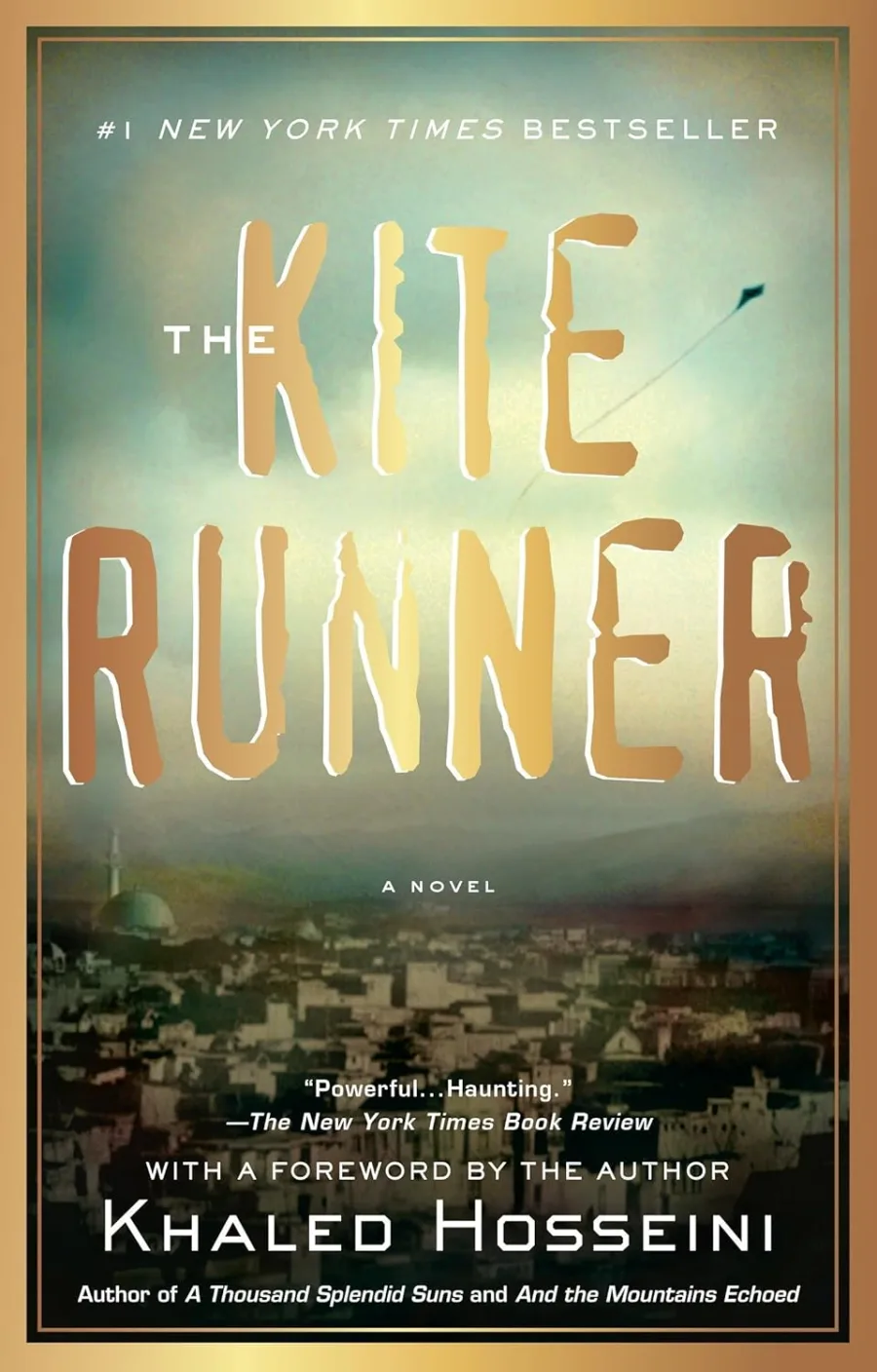
Download Cover Image
Do you want to download the full cover image for The Kite Runner?