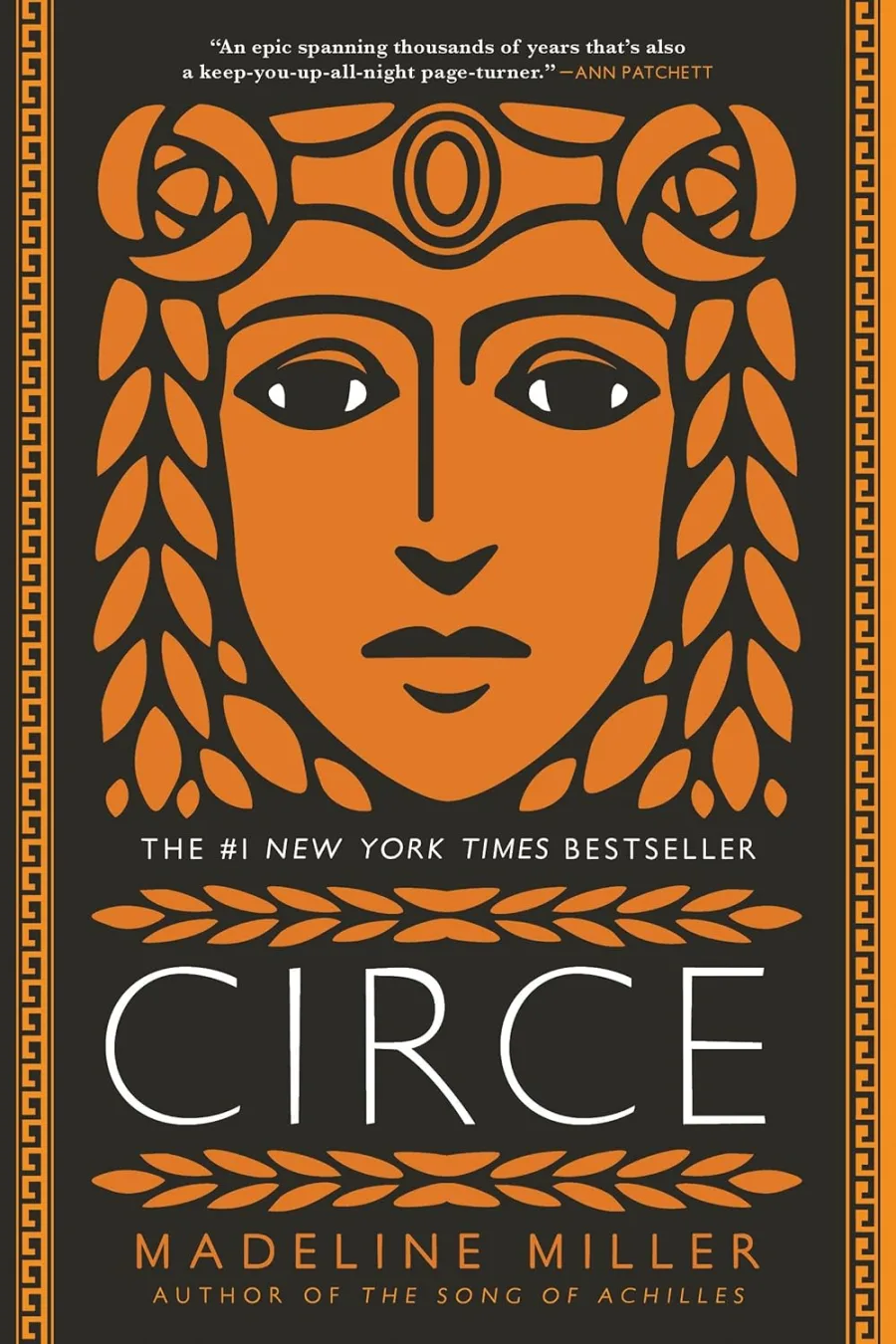
Circe
Paperback
• 416 Pages
• USD 19.99
• English
• 9780316556323
No ratings yet
| Publisher | Little, Brown Paperbacks |
|---|---|
| ISBN13 | 9780316556323 |
| ASIN/SKU | 0316556327 |
| Book Format | Paperback |
| Language | English |
| Pages | 416 |
| List Price | USD 19.99 |
| Publishing Date | 14/04/2020 |
| Dimensions | 5.6 x 1.13 x 8.3 inches |
| Weight | 2.31 pounds |
| Book Code | BD00055829 |
Buy this Book
Amazon Stores
Ebook Stores
Other Stores
Discover Circe by Madeline Miller. This book is published by Little, Brown Paperbacks in Paperback format, ISBN 9780316556323, ASIN 0316556327, under Literature and Fiction, Ancient History Fiction, Folklore.
Book Description
This #1 New York Times bestseller is a "bold and subversive retelling of the goddess's story" that brilliantly reimagines the life of Circe, formidable sorceress of The Odyssey (Alexandra Alter, TheNew York Times).
In the house of Helios, god of the sun and mightiest of the Titans, a daughter is born. But Circe is a strange child -- not powerful, like her father, nor viciously alluring like her mother. Turning to the world of mortals for companionship, she discovers that she does possess power -- the power of witchcraft, which can transform rivals into monsters and menace the gods themselves.
Threatened, Zeus banishes her to a deserted island, where she hones her occult craft, tames wild beasts and crosses paths with many of the most famous figures in all of mythology, including the Minotaur, Daedalus and his doomed son Icarus, the murderous Medea, and, of course, wily Odysseus.
But there is danger, too, for a woman who stands alone, and Circe unwittingly draws the wrath of both men and gods, ultimately finding herself pitted against one of the most terrifying and vengeful of the Olympians. To protect what she loves most, Circe must summon all her strength and choose, once and for all, whether she belongs with the gods she is born from, or the mortals she has come to love.
With unforgettably vivid characters, mesmerizing language, and page-turning suspense, Circe is a triumph of storytelling, an intoxicating epic of family rivalry, palace intrigue, love and loss, as well as a celebration of indomitable female strength in a man's world.
#1 New York Times Bestseller -- named one of the Best Books of the Year by NPR, the Washington Post, People, Time, Amazon, Entertainment Weekly, Bustle, Newsweek, the A.V. Club, Christian Science Monitor, Refinery 29, Buzzfeed, Paste, Audible, Kirkus, Publishers Weekly, Thrillist, NYPL, Self, Real Simple, Goodreads, Boston Globe, Electric Literature, BookPage, the Guardian, Book Riot, Seattle Times, and Business Insider.
In the house of Helios, god of the sun and mightiest of the Titans, a daughter is born. But Circe is a strange child -- not powerful, like her father, nor viciously alluring like her mother. Turning to the world of mortals for companionship, she discovers that she does possess power -- the power of witchcraft, which can transform rivals into monsters and menace the gods themselves.
Threatened, Zeus banishes her to a deserted island, where she hones her occult craft, tames wild beasts and crosses paths with many of the most famous figures in all of mythology, including the Minotaur, Daedalus and his doomed son Icarus, the murderous Medea, and, of course, wily Odysseus.
But there is danger, too, for a woman who stands alone, and Circe unwittingly draws the wrath of both men and gods, ultimately finding herself pitted against one of the most terrifying and vengeful of the Olympians. To protect what she loves most, Circe must summon all her strength and choose, once and for all, whether she belongs with the gods she is born from, or the mortals she has come to love.
With unforgettably vivid characters, mesmerizing language, and page-turning suspense, Circe is a triumph of storytelling, an intoxicating epic of family rivalry, palace intrigue, love and loss, as well as a celebration of indomitable female strength in a man's world.
#1 New York Times Bestseller -- named one of the Best Books of the Year by NPR, the Washington Post, People, Time, Amazon, Entertainment Weekly, Bustle, Newsweek, the A.V. Club, Christian Science Monitor, Refinery 29, Buzzfeed, Paste, Audible, Kirkus, Publishers Weekly, Thrillist, NYPL, Self, Real Simple, Goodreads, Boston Globe, Electric Literature, BookPage, the Guardian, Book Riot, Seattle Times, and Business Insider.
Author Biography
Madeline Miller is the #1 New York Times bestselling author of two novels: The Song of Achilles, which won the Orange Women’s Prize for Fiction 2012, and Circe, which was short-listed for the Women’s Prize for Fiction 2019. Her books have been translated into over thirty two languages. Miller holds an MA in Classics from Brown University, studied in the Dramaturgy department at Yale School of Drama, where she focused on the adaptation of classical texts to modern forms, and taught Latin, Greek, and Shakespeare to high school students for over a decade.
Editorial Reviews
Winner of the 2019 Indie Choice Award
Shortlisted for the 2019 Women's Prize for Fiction
Named one of the 'Best Books of 2018' by NPR, The Washington Post, Buzzfeed, People, Time, Amazon,Entertainment Weekly, Bustle, Newsweek, the A.V. Club, Christian Science Monitor, Southern Living,and Refinery 29.
"Circe,' [is] a bold and subversive retelling of the goddess's story that manages to be both epic and intimate in its scope, recasting the most infamous female figure from the Odyssey as a hero in her own right."―Alexandra Alter, New York Times
"One of the most amazing qualities of this novel [is]: We know how everything here turns out - we've known it for thousands of years - and yet in Miller's lush reimagining, the story feels harrowing and unexpected. The feminist light she shines on these events never distorts their original shape; it only illuminates details we hadn't noticed before."―Ron Charles, Washington Post
"[Miller] gives voice to Circe as a multifaceted and evolving character...'Circe' is very pleasurable to read, combining lively versions of familiar tales and snippets of other, related standards with a highly psychologized, redemptive and ultimately exculpatory account of the protagonist herself."―Claire Messud, New York Times Book Review
"The story of Circe's entanglement with Odysseus lasts far beyond the narrative of "The Odyssey," making for compelling material to revisit. But ultimately it's as a character that Circe stands apart....Through her elegant, psychologically acute prose, Miller gives us a rich female character who inhabits the spaces in between."
―Colleen Abel, Minneapolis Star Tribune
"Miller's lush, gold-lit novel - told from the perspective of the witch whose name in Greek has echoes of a hawk and a weaver's shuttle - paints another picture: of a fierce goddess who, yes, turns men into pigs, but only because they deserve it."―NPR.org
"so vivid, so layered, you could get lost in it... Whether or not you think you like Greek Mythology, this is just great storytelling. It feels cinematic."―NPR's Here & Now
"Miller's spell builds slowly, but by the last page you'll be in awe. In prose of dreamlike simplicity, she reimagines the myth of Circe."―People
"Miller, with her academic bona fides and born instinct for storytelling, seamlessly grafts modern concepts of selfhood and independence to her mystical reveries of smoke and silver, nectar and bones."―Entertainment Weekly
"This telling, in the sorceress's own words, is not the version we think we know."―New York Times 'T Magazine'
"Miller gives voice to a previously muted perspective in the classics, forging a great romance from the scraps left to us by the ancients....Circe is, instead, a romp, an airy delight, a novel to be gobbled greedily in a single sitting."―Aida Edemariam, Guardian
"In Madeline Miller's "Circe" - the gorgeous and gimlet-eyed follow-up to her Orange Prize-winning first novel, "The Song of Achilles" - the goddess is young and romantic eno
Shortlisted for the 2019 Women's Prize for Fiction
Named one of the 'Best Books of 2018' by NPR, The Washington Post, Buzzfeed, People, Time, Amazon,Entertainment Weekly, Bustle, Newsweek, the A.V. Club, Christian Science Monitor, Southern Living,and Refinery 29.
"Circe,' [is] a bold and subversive retelling of the goddess's story that manages to be both epic and intimate in its scope, recasting the most infamous female figure from the Odyssey as a hero in her own right."―Alexandra Alter, New York Times
"One of the most amazing qualities of this novel [is]: We know how everything here turns out - we've known it for thousands of years - and yet in Miller's lush reimagining, the story feels harrowing and unexpected. The feminist light she shines on these events never distorts their original shape; it only illuminates details we hadn't noticed before."―Ron Charles, Washington Post
"[Miller] gives voice to Circe as a multifaceted and evolving character...'Circe' is very pleasurable to read, combining lively versions of familiar tales and snippets of other, related standards with a highly psychologized, redemptive and ultimately exculpatory account of the protagonist herself."―Claire Messud, New York Times Book Review
"The story of Circe's entanglement with Odysseus lasts far beyond the narrative of "The Odyssey," making for compelling material to revisit. But ultimately it's as a character that Circe stands apart....Through her elegant, psychologically acute prose, Miller gives us a rich female character who inhabits the spaces in between."
―Colleen Abel, Minneapolis Star Tribune
"Miller's lush, gold-lit novel - told from the perspective of the witch whose name in Greek has echoes of a hawk and a weaver's shuttle - paints another picture: of a fierce goddess who, yes, turns men into pigs, but only because they deserve it."―NPR.org
"so vivid, so layered, you could get lost in it... Whether or not you think you like Greek Mythology, this is just great storytelling. It feels cinematic."―NPR's Here & Now
"Miller's spell builds slowly, but by the last page you'll be in awe. In prose of dreamlike simplicity, she reimagines the myth of Circe."―People
"Miller, with her academic bona fides and born instinct for storytelling, seamlessly grafts modern concepts of selfhood and independence to her mystical reveries of smoke and silver, nectar and bones."―Entertainment Weekly
"This telling, in the sorceress's own words, is not the version we think we know."―New York Times 'T Magazine'
"Miller gives voice to a previously muted perspective in the classics, forging a great romance from the scraps left to us by the ancients....Circe is, instead, a romp, an airy delight, a novel to be gobbled greedily in a single sitting."―Aida Edemariam, Guardian
"In Madeline Miller's "Circe" - the gorgeous and gimlet-eyed follow-up to her Orange Prize-winning first novel, "The Song of Achilles" - the goddess is young and romantic eno
Book Summary
Circe by Madeline Miller is a lyrical, character driven retelling of Greek myth that turns a notorious “witch” from the margins of epic stories into the center of her own long, complicated life. The novel follows Circe, a minor goddess and daughter of the sun god Helios and the naiad Perse, from her lonely childhood through centuries of exile, heartbreak, and quiet transformation. In the old myths, Circe is mostly known as the sorceress who turns Odysseus’s men into pigs. Here, she becomes a fully realized person: insecure, sharp eyed, compassionate, and stubborn, trying to find meaning in a world ruled by cruel gods and fragile mortals.
At the beginning, Circe is the least favored child in Helios’s palace. Her voice is too human, her powers seemingly weak, her looks plain compared to her glittering divine kin. She is dismissed, mocked, and largely ignored. The gods around her are beautiful and immortal, but they are also cold and self absorbed, treating the mortal world like a playground and its people like disposable toys. Circe, unlike them, is fascinated by humans—their brief lives, their emotions, their creativity. She watches them with curiosity and, eventually, sympathy. This human leaning nature makes her strange in the eyes of her family and leaves her feeling out of place, belonging fully neither to the gods’ world nor the mortal one.
Her life changes when she discovers that she possesses a rare power: pharmaka, the magic of transformation drawn from herbs and the natural world. Circe learns that if she gathers the right plants and speaks the right words, she can change the essence of beings—turning men into animals, altering forms, bending reality in ways that even the gods do not easily control. At first her magic is clumsy, born of desperation and emotion rather than discipline, but as she practices it, she realizes how potent it can be. She uses it in one key moment when she is driven by jealousy and hurt, transforming a rival into something else. The act, while small in her eyes, is considered a dangerous overstep in the rigid hierarchy of the gods.
The Olympian and Titan powers fear what Circe’s magic could become if left unchecked. To them, her independent, earth based witchcraft is unsettling because it relies on knowledge and work rather than inherited divine privilege. As punishment—though it is also a convenient way to get rid of an embarrassing, difficult daughter—Helios exiles Circe to the island of Aiaia. The exile is meant to be a prison: she is cut off from the courts of gods, stripped of her place in her father’s palace, left alone with only the land, the sea, and the wild creatures around her. Yet this is where Circe truly begins to shape her identity. On Aiaia, she refines her magic, learns the plants and animals intimately, and slowly turns the island into a home.
Isolation forces Circe to look inward. She experiences long stretches of solitude, punctuated by visits from gods and mortals who find their way to her shores. Among the earliest are her siblings and fellow immortals—Glaucos, the once mortal fisherman she loves and helps to become a god, and her fierce sister Pasiphaë, who will later give birth to the Minotaur. Circe’s attempt to elevate Glaucos reveals both her strength and her naiveté: once made immortal, he quickly abandons her for the more dazzling, cruel goddess Scylla. Circe’s shattered heart and her rage at Scylla lead to another desperate act of magic, changing Scylla’s form and unwittingly creating the monstrous creature sailors will one day fear. This tragedy becomes one of many painful lessons about how power, love, and transformation are intertwined and unpredictable.
Over time, Aiaia attracts mortals too, especially sailors blown off course. Some arrive hopeful, others hostile, and many see a solitary woman on a remote island as easy prey. Circe learns that she must protect herself. When men come to her home intending violence, she uses her magic to turn them into pigs, a gruesome but effective defense. The story behind her reputation—that she is a treacherous seductress who delights in turning men into animals—is, in Miller’s telling, rooted in self preservation in a violent world. The island becomes both sanctuary and trap: a place where Circe is safe as long as she fights for that safety.
Among her visitors are some of the most famous figures in Greek myth. Her sister Pasiphaë’s monstrous child, the Minotaur, is born elsewhere but indirectly connected to Circe’s family. Later, Circe shelters the goddess Ariadne for a time. She also has a brief, intense connection with the mortal craftsman Daedalus, whose quiet intelligence and gentleness leave a deep impression on her. Each encounter pulls Circe slightly closer to the human world, and her sympathy for mortals grows. She sees their capacity for love, creativity, and courage, even under the constant shadow of death. This stands in sharp contrast to the immortals’ casual cruelty, who act without consequences and view suffering as entertainment.
A major turning point in Circe’s life comes with the arrival of Odysseus. His ship washes up on Aiaia after the Trojan War, and at first his men fall victim to the same spell that has defeated so many violent intruders: they are turned into pigs when they threaten her. Odysseus, however, approaches her with caution, intelligence, and respect. He meets her eyes, speaks to her as an equal, and forces a truce. What begins as a wary ceasefire evolves into genuine companionship. Odysseus stays on Aiaia for a year, and during that time, he and Circe talk, argue, share stories, and become lovers. Through him, she sees a new kind of man—flawed, complex, ambitious, but capable of deep thought and affection.
Their relationship is not a fairy tale romance. Odysseus is a married man, bound to his wife Penelope and his home in Ithaca, and he is also a survivor shaped by war and loss. Circe understands that he cannot stay forever, and their eventual parting is painful but honest. The bond between them leaves a permanent mark, though, especially when Circe later discovers she is pregnant with his child. The idea of motherhood shakes her. Gods usually have children casually, rarely caring for them, but Circe chooses differently. She decides to raise her son, Telegonus, herself on Aiaia, becoming a fiercely protective, loving mother despite constant dangers: vengeful gods, lurking monsters, and the raw fear that she will not be able to shield him from the world.
Telegonus grows into a curious, spirited boy, desperate to know his father and see beyond the island. Circe, terrified yet unwilling to cage him the way she herself was caged, eventually allows him to leave in search of Odysseus. This decision leads to another tragic thread: Telegonus’s quest results in an unintended catastrophe in Ithaca, where he accidentally fulfills a prophecy and causes Odysseus’s death. The grief and chaos that follow bring new people to Aiaia: Penelope and Telemachus, Odysseus’s wife and legitimate son, arrive on the island. Circe now faces a situation loaded with tension—a widow, a son, and a lover’s child under one roof, bound by shared loss and complicated ties.
Instead of the jealous rivalry you might expect, Circe, Penelope, and Telemachus develop a wary but meaningful understanding. Penelope’s quiet strength and intelligence make her a kindred spirit to Circe, and Telemachus is not the glory hungry warrior his father was; he is introspective, gentle, and tired of the cycle of violence. As they live together on Aiaia, these relationships deepen. Circe sees that love can take shapes beyond the dramatic, possessive patterns of the gods. She and Telemachus slowly form a bond grounded in mutual respect and shared longing for a different life—one that values peace and choice over power and conquest.
Throughout the novel, Circe’s perspective on divinity and mortality evolves. She watches gods play out endless cycles of vanity and vengeance while mortals struggle, break, and still find ways to be brave. Over centuries, she begins to envy the very thing gods mock: the mortal ability to change, to grow, to be shaped by time and experience. Immortality, she realizes, can be a trap—an endless repetition with no true transformation. Her magic, which once felt like her only defense, becomes a tool for something deeper: self determination. She asks herself whether it is possible for a god to step out of the old stories written for them and choose another path.
At the beginning, Circe is the least favored child in Helios’s palace. Her voice is too human, her powers seemingly weak, her looks plain compared to her glittering divine kin. She is dismissed, mocked, and largely ignored. The gods around her are beautiful and immortal, but they are also cold and self absorbed, treating the mortal world like a playground and its people like disposable toys. Circe, unlike them, is fascinated by humans—their brief lives, their emotions, their creativity. She watches them with curiosity and, eventually, sympathy. This human leaning nature makes her strange in the eyes of her family and leaves her feeling out of place, belonging fully neither to the gods’ world nor the mortal one.
Her life changes when she discovers that she possesses a rare power: pharmaka, the magic of transformation drawn from herbs and the natural world. Circe learns that if she gathers the right plants and speaks the right words, she can change the essence of beings—turning men into animals, altering forms, bending reality in ways that even the gods do not easily control. At first her magic is clumsy, born of desperation and emotion rather than discipline, but as she practices it, she realizes how potent it can be. She uses it in one key moment when she is driven by jealousy and hurt, transforming a rival into something else. The act, while small in her eyes, is considered a dangerous overstep in the rigid hierarchy of the gods.
The Olympian and Titan powers fear what Circe’s magic could become if left unchecked. To them, her independent, earth based witchcraft is unsettling because it relies on knowledge and work rather than inherited divine privilege. As punishment—though it is also a convenient way to get rid of an embarrassing, difficult daughter—Helios exiles Circe to the island of Aiaia. The exile is meant to be a prison: she is cut off from the courts of gods, stripped of her place in her father’s palace, left alone with only the land, the sea, and the wild creatures around her. Yet this is where Circe truly begins to shape her identity. On Aiaia, she refines her magic, learns the plants and animals intimately, and slowly turns the island into a home.
Isolation forces Circe to look inward. She experiences long stretches of solitude, punctuated by visits from gods and mortals who find their way to her shores. Among the earliest are her siblings and fellow immortals—Glaucos, the once mortal fisherman she loves and helps to become a god, and her fierce sister Pasiphaë, who will later give birth to the Minotaur. Circe’s attempt to elevate Glaucos reveals both her strength and her naiveté: once made immortal, he quickly abandons her for the more dazzling, cruel goddess Scylla. Circe’s shattered heart and her rage at Scylla lead to another desperate act of magic, changing Scylla’s form and unwittingly creating the monstrous creature sailors will one day fear. This tragedy becomes one of many painful lessons about how power, love, and transformation are intertwined and unpredictable.
Over time, Aiaia attracts mortals too, especially sailors blown off course. Some arrive hopeful, others hostile, and many see a solitary woman on a remote island as easy prey. Circe learns that she must protect herself. When men come to her home intending violence, she uses her magic to turn them into pigs, a gruesome but effective defense. The story behind her reputation—that she is a treacherous seductress who delights in turning men into animals—is, in Miller’s telling, rooted in self preservation in a violent world. The island becomes both sanctuary and trap: a place where Circe is safe as long as she fights for that safety.
Among her visitors are some of the most famous figures in Greek myth. Her sister Pasiphaë’s monstrous child, the Minotaur, is born elsewhere but indirectly connected to Circe’s family. Later, Circe shelters the goddess Ariadne for a time. She also has a brief, intense connection with the mortal craftsman Daedalus, whose quiet intelligence and gentleness leave a deep impression on her. Each encounter pulls Circe slightly closer to the human world, and her sympathy for mortals grows. She sees their capacity for love, creativity, and courage, even under the constant shadow of death. This stands in sharp contrast to the immortals’ casual cruelty, who act without consequences and view suffering as entertainment.
A major turning point in Circe’s life comes with the arrival of Odysseus. His ship washes up on Aiaia after the Trojan War, and at first his men fall victim to the same spell that has defeated so many violent intruders: they are turned into pigs when they threaten her. Odysseus, however, approaches her with caution, intelligence, and respect. He meets her eyes, speaks to her as an equal, and forces a truce. What begins as a wary ceasefire evolves into genuine companionship. Odysseus stays on Aiaia for a year, and during that time, he and Circe talk, argue, share stories, and become lovers. Through him, she sees a new kind of man—flawed, complex, ambitious, but capable of deep thought and affection.
Their relationship is not a fairy tale romance. Odysseus is a married man, bound to his wife Penelope and his home in Ithaca, and he is also a survivor shaped by war and loss. Circe understands that he cannot stay forever, and their eventual parting is painful but honest. The bond between them leaves a permanent mark, though, especially when Circe later discovers she is pregnant with his child. The idea of motherhood shakes her. Gods usually have children casually, rarely caring for them, but Circe chooses differently. She decides to raise her son, Telegonus, herself on Aiaia, becoming a fiercely protective, loving mother despite constant dangers: vengeful gods, lurking monsters, and the raw fear that she will not be able to shield him from the world.
Telegonus grows into a curious, spirited boy, desperate to know his father and see beyond the island. Circe, terrified yet unwilling to cage him the way she herself was caged, eventually allows him to leave in search of Odysseus. This decision leads to another tragic thread: Telegonus’s quest results in an unintended catastrophe in Ithaca, where he accidentally fulfills a prophecy and causes Odysseus’s death. The grief and chaos that follow bring new people to Aiaia: Penelope and Telemachus, Odysseus’s wife and legitimate son, arrive on the island. Circe now faces a situation loaded with tension—a widow, a son, and a lover’s child under one roof, bound by shared loss and complicated ties.
Instead of the jealous rivalry you might expect, Circe, Penelope, and Telemachus develop a wary but meaningful understanding. Penelope’s quiet strength and intelligence make her a kindred spirit to Circe, and Telemachus is not the glory hungry warrior his father was; he is introspective, gentle, and tired of the cycle of violence. As they live together on Aiaia, these relationships deepen. Circe sees that love can take shapes beyond the dramatic, possessive patterns of the gods. She and Telemachus slowly form a bond grounded in mutual respect and shared longing for a different life—one that values peace and choice over power and conquest.
Throughout the novel, Circe’s perspective on divinity and mortality evolves. She watches gods play out endless cycles of vanity and vengeance while mortals struggle, break, and still find ways to be brave. Over centuries, she begins to envy the very thing gods mock: the mortal ability to change, to grow, to be shaped by time and experience. Immortality, she realizes, can be a trap—an endless repetition with no true transformation. Her magic, which once felt like her only defense, becomes a tool for something deeper: self determination. She asks herself whether it is possible for a god to step out of the old stories written for them and choose another path.
Sample Chapters
Sample Chapters will be added soon…
Reader Reviews
No reviews yet.
Circe