
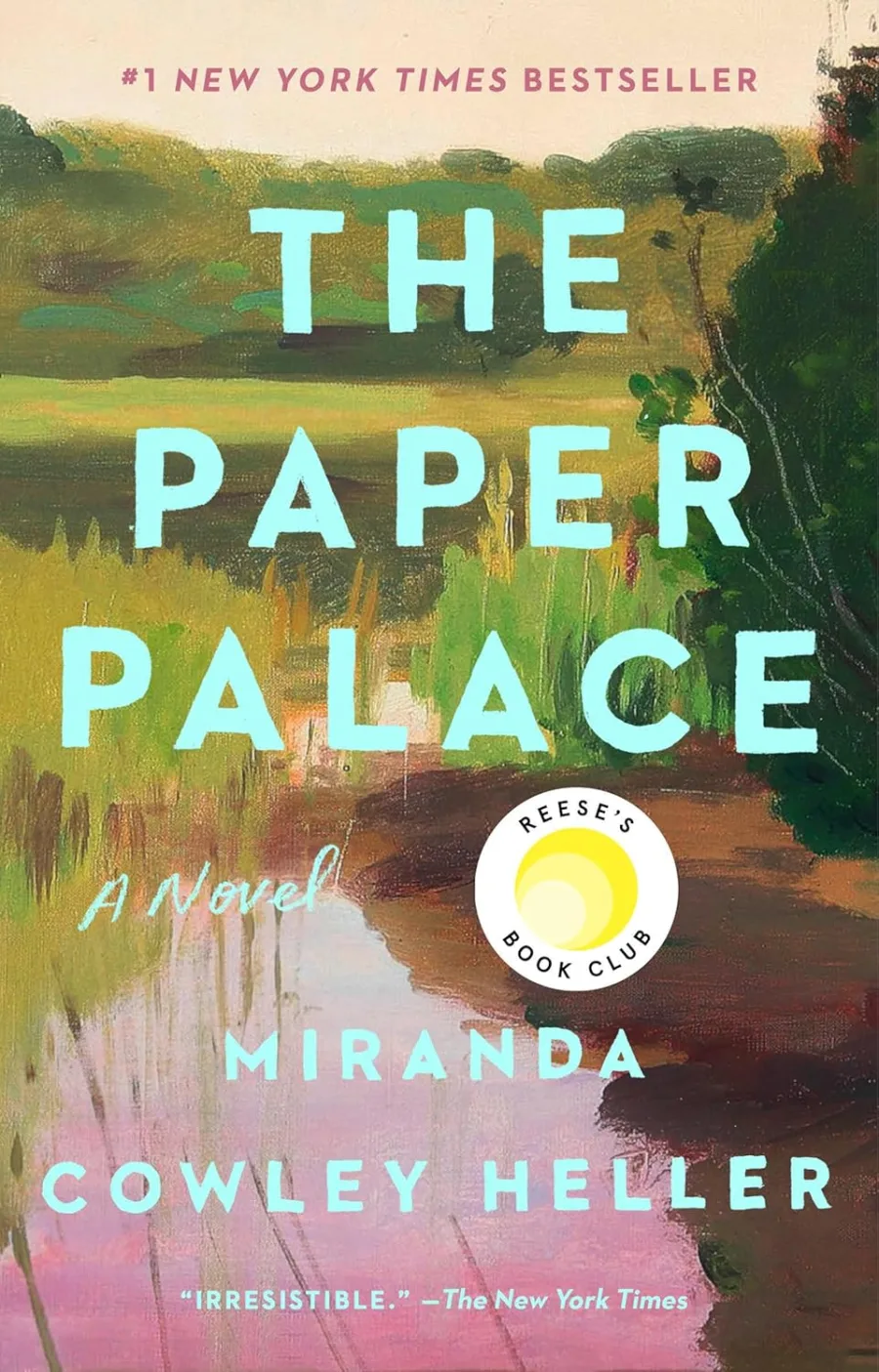
The Paper Palace (Reese's Book Club): A Novel
Paperback
• 400 Pages
• USD 18.00
• English
• 9780593329832
No ratings yet
| Publisher | Riverhead Books |
|---|---|
| ISBN13 | 9780593329832 |
| ASIN/SKU | 059332983X |
| Book Format | Paperback |
| Language | English |
| Pages | 400 |
| List Price | USD 18.00 |
| Publishing Date | 19/04/2022 |
| Dimensions | 5.12 x 1.05 x 7.97 inches |
| Weight | 2.31 pounds |
| Book Code | BD00055834 |
Buy this Book
Amazon Stores
Ebook Stores
Other Stores
Discover The Paper Palace (Reese's Book Club): A Novel by Miranda Cowley Heller. This book is published by Riverhead Books in Paperback format, ISBN 9780593329832, ASIN 059332983X, under Literature and Fiction, Women's Domestic Life Fiction, Literary Fiction.
Book Description
INSTANT #1 NEW YORK TIMES BESTSELLER
REESE'S BOOK CLUB PICK
OVER 2 MILLION COPIES SOLD WORLDWIDE
“Filled with secrets, love, lies and a summer beach house. What more could you ask?”—Parade
“A deeply emotional love story…the unraveling of secrets, lies and a very complex love triangle.” —Reese Witherspoon
“[An] irresistible placement of a complicated family in a bewitching place.” —The New York Times
A story of summer, secrets, love, and lies: in the course of a singular day on Cape Cod, one woman must make a life-changing decision that has been brewing for decades.
“This house, this place, knows all my secrets.”
It is a perfect August morning, and Elle, a fifty-year-old happily married mother of three, awakens at “The Paper Palace”—the family summer place which she has visited every summer of her life. But this morning is different: last night Elle and her oldest friend Jonas crept out the back door into the darkness and had sex with each other for the first time, all while their spouses chatted away inside. Now, over the next twenty-four hours, Elle will have to decide between the life she has made with her genuinely beloved husband, Peter, and the life she always imagined she would have had with her childhood love, Jonas, if a tragic event hadn’t forever changed the course of their lives. As Heller colors in the experiences that have led Elle to this day, we arrive at her ultimate decision with all its complexity. Tender yet devastating, The Paper Palace considers the tensions between desire and dignity, the legacies of abuse, and the crimes and misdemeanors of families.
REESE'S BOOK CLUB PICK
OVER 2 MILLION COPIES SOLD WORLDWIDE
“Filled with secrets, love, lies and a summer beach house. What more could you ask?”—Parade
“A deeply emotional love story…the unraveling of secrets, lies and a very complex love triangle.” —Reese Witherspoon
“[An] irresistible placement of a complicated family in a bewitching place.” —The New York Times
A story of summer, secrets, love, and lies: in the course of a singular day on Cape Cod, one woman must make a life-changing decision that has been brewing for decades.
“This house, this place, knows all my secrets.”
It is a perfect August morning, and Elle, a fifty-year-old happily married mother of three, awakens at “The Paper Palace”—the family summer place which she has visited every summer of her life. But this morning is different: last night Elle and her oldest friend Jonas crept out the back door into the darkness and had sex with each other for the first time, all while their spouses chatted away inside. Now, over the next twenty-four hours, Elle will have to decide between the life she has made with her genuinely beloved husband, Peter, and the life she always imagined she would have had with her childhood love, Jonas, if a tragic event hadn’t forever changed the course of their lives. As Heller colors in the experiences that have led Elle to this day, we arrive at her ultimate decision with all its complexity. Tender yet devastating, The Paper Palace considers the tensions between desire and dignity, the legacies of abuse, and the crimes and misdemeanors of families.
Author Biography
Miranda Cowley Heller has worked as senior vice president and head of drama series at HBO, developing and overseeing such shows as The Sopranos, Six Feet Under, The Wire, Deadwood, and Big Love, among others. This is her first novel. She grew up spending summers on Cape Cod, and now lives in California.
Editorial Reviews
1
Today. August 1, the Back Woods.
6:30 a.m.
Things come from nowhere. The mind is empty and then, inside the frame, a pear. Perfect, green, the stem atilt, a single leaf. It sits in a white ironstone bowl, nestled among the limes, in the center of a weathered picnic table, on an old screen porch, at the edge of a pond, deep in the woods, beside the sea. Next to the bowl is a brass candlestick covered in drips of cold wax and the ingrained dust of a long winter left on an open shelf. Half-eaten plates of pasta, an unfolded linen napkin, dregs of claret in a wine bottle, a breadboard, handmade, rough-hewn, the bread torn not sliced. A mildewed book of poetry lies open on the table. "To a Skylark," soaring into the blue-painful, thrilling-replays in my mind as I stare at the still life of last night's dinner. "The world should listen then, as I am listening now." He read it so beautifully. "For Anna." And we all sat there, spellbound, remembering her. I could look at him and nothing else for eternity and be happy. I could listen to him, my eyes closed, feel his breath and his words wash over me, time and time and time again. It is all I want.
Beyond the edge of the table, the light dims as it passes through the screens before brightening over the dappled trees, the pure blue of the pond, the deep-black shadows of the tupelos at the water's edge where the reach of the sun falters this early in the day. I ponder a quarter-inch of thick, stale espresso in a dirty cup and consider drinking it. The air is raw. I shiver under the faded lavender bathrobe-my mother's-that I put on every summer when we return to the camp. It smells of her, and of dormancy tinged with mouse droppings. This is my favorite hour in the Back Woods. Early morning on the pond before anyone else is awake. The sunlight clear, flinty, the water bracing, the whippoorwills finally quiet.
Outside the porch door, on the small wooden deck, sand has built up between the slats-it needs to be swept. A broom leans against the screen, indenting it, but I ignore it and head down the little path that leads to our beach. Behind me, the door hinges shriek in resistance.
I drop my bathrobe to the ground and stand naked at the water's edge. On the far side of the pond, beyond the break of pine and shrub oak, the ocean is furious, roaring. It must be carrying a storm in its belly from somewhere out at sea. But here, at the edge of the pond, the air is honey-still. I wait, watch, listen . . . the chirping, buzzing of tiny insects, a wind that stirs the trees too gently. Then I wade in up to my knees and dive headlong into the freezing water. I swim out into the deep, past the water lilies, pushed forward by exhilaration, freedom, and an adrenaline rush of nameless panic. I have a shadow-fear of snapping turtles coming up from the depths to bite my heavy breasts. Or perhaps they will be drawn by the smell of sex as I open and close my legs.
Today. August 1, the Back Woods.
6:30 a.m.
Things come from nowhere. The mind is empty and then, inside the frame, a pear. Perfect, green, the stem atilt, a single leaf. It sits in a white ironstone bowl, nestled among the limes, in the center of a weathered picnic table, on an old screen porch, at the edge of a pond, deep in the woods, beside the sea. Next to the bowl is a brass candlestick covered in drips of cold wax and the ingrained dust of a long winter left on an open shelf. Half-eaten plates of pasta, an unfolded linen napkin, dregs of claret in a wine bottle, a breadboard, handmade, rough-hewn, the bread torn not sliced. A mildewed book of poetry lies open on the table. "To a Skylark," soaring into the blue-painful, thrilling-replays in my mind as I stare at the still life of last night's dinner. "The world should listen then, as I am listening now." He read it so beautifully. "For Anna." And we all sat there, spellbound, remembering her. I could look at him and nothing else for eternity and be happy. I could listen to him, my eyes closed, feel his breath and his words wash over me, time and time and time again. It is all I want.
Beyond the edge of the table, the light dims as it passes through the screens before brightening over the dappled trees, the pure blue of the pond, the deep-black shadows of the tupelos at the water's edge where the reach of the sun falters this early in the day. I ponder a quarter-inch of thick, stale espresso in a dirty cup and consider drinking it. The air is raw. I shiver under the faded lavender bathrobe-my mother's-that I put on every summer when we return to the camp. It smells of her, and of dormancy tinged with mouse droppings. This is my favorite hour in the Back Woods. Early morning on the pond before anyone else is awake. The sunlight clear, flinty, the water bracing, the whippoorwills finally quiet.
Outside the porch door, on the small wooden deck, sand has built up between the slats-it needs to be swept. A broom leans against the screen, indenting it, but I ignore it and head down the little path that leads to our beach. Behind me, the door hinges shriek in resistance.
I drop my bathrobe to the ground and stand naked at the water's edge. On the far side of the pond, beyond the break of pine and shrub oak, the ocean is furious, roaring. It must be carrying a storm in its belly from somewhere out at sea. But here, at the edge of the pond, the air is honey-still. I wait, watch, listen . . . the chirping, buzzing of tiny insects, a wind that stirs the trees too gently. Then I wade in up to my knees and dive headlong into the freezing water. I swim out into the deep, past the water lilies, pushed forward by exhilaration, freedom, and an adrenaline rush of nameless panic. I have a shadow-fear of snapping turtles coming up from the depths to bite my heavy breasts. Or perhaps they will be drawn by the smell of sex as I open and close my legs.
Book Summary
The Paper Palace: A Novel by Miranda Cowley Heller is a layered, emotional story about love, betrayal, family secrets, and the long shadows cast by childhood experiences. The novel unfolds over the course of a single day at a rustic, beloved summer vacation home known as the Paper Palace, located in Cape Cod, while simultaneously moving back and forth through decades of the protagonist’s life. At its center is Elle Bishop, a married woman in her early fifties who, on one humid August morning, wakes up and steps outside to the swimming pond behind the house. As she does, she is replaying the events of the previous night in her mind: she has just slept with her lifelong best friend, Jonah, while her husband, Peter, and their families were just inside. This act is not just impulsive infidelity; it is the culmination of decades of buried desire, complicated history, and unresolved trauma, forcing Elle into an agonizing decision about the rest of her life.
From that morning, the novel moves in and out of Elle’s past, carefully revealing how she came to this moment. Elle grew up spending summers at the Paper Palace with her divorced, sharp-tongued, and sometimes self-absorbed mother, Wallace, and other members of her complicated family. The house itself is an old, somewhat ramshackle retreat—beautiful and worn, with peeling walls, mismatched furniture, and a sense of continuity that binds generations together. For Elle, it is both sanctuary and crime scene, a place of joy and belonging, but also the site of her most devastating childhood experience. During one summer, when she was a young girl, Elle was sexually assaulted by her stepbrother, Conrad, in a horrifying incident that nobody truly acknowledges or properly addresses. That trauma becomes a defining event in her life, shaping her feelings about her body, trust, intimacy, and her relationships with family members who failed to protect or believe her in the way she needed.
Jonah enters Elle’s life in her youth as a boy who becomes her closest friend and confidant. The two share a deep bond, rooted in mutual understanding and affection. Jonah is present during the summers, and their friendship slowly deepens into something more complex than childhood companionship. However, life choices and circumstances pull them apart. Over time, Elle marries Peter, an attentive, loving, and fundamentally good man. Together, they build a life in New York, have children, and maintain a seemingly stable, successful marriage. Peter is warm, steady, and devoted, the kind of husband others admire and Elle herself cares for deeply. Jonah, on the other hand, is the embodiment of an alternative life—someone who knows the darkest parts of her story, who has loved her for years, and whose presence stirs a magnetic, almost irresistible emotional and physical connection.
As the story moves through the hours of that single day at the Paper Palace, we see flashes of past summers, marriages, affairs, divorces, deaths, and dramas that shaped Elle’s family. Wallace, with her brittle wit and unapologetic sexuality, sets a tone of emotional complexity in the household—she is neither a purely loving mother nor a villain, but a flawed woman whose choices ripple outward, affecting Elle in complicated ways. Elle’s relationships with her sister and other relatives are equally tangled, full of unspoken tensions and old grievances. The novel lays bare how family patterns—infidelity, secrets, avoidance, denial—repeat themselves across generations, often in new forms, but with similar emotional consequences.
At the core of Elle’s conflict is a difficult question: Can she truly move forward with Peter, the man who represents stability and kindness, and the life they have already constructed? Or should she choose Jonah, who symbolizes authenticity, passion, and a sense of home tied to the landscape and memories of the Paper Palace? This choice is not simply about romantic love. It is tied to whether Elle wants to remain in a life built partially on silences and compromises, or whether she wants to confront the deepest truths about herself, including her unresolved trauma and long-suppressed desire. Jonah has known about what happened to her with Conrad and how it scarred her. He has seen parts of her that Peter never fully has, not out of cruelty on Peter’s part, but because Elle guarded those secrets so tightly.
As the narrative progresses, Elle revisits key moments: the assault, the aftermath, her mother’s disturbing response, her first real connection with Jonah, her courtship with Peter, and various infidelities and choices she witnessed growing up. The structure—shifting between present and past—gradually reveals the emotional weight behind her decision. The natural setting of Cape Cod, the pond, the woods, the old house, all mirror her internal tension: calm surface with deep, sometimes dangerous undercurrents. The Paper Palace itself becomes a symbol of memory and inheritance—filled with clutter, history, and damage, yet cherished and impossible to abandon.
Throughout the book, Heller explores how trauma can inform even seemingly ordinary choices, and how love can exist in conflicting forms at the same time. Elle does love Peter. She also loves Jonah. She is not deciding between love and no love; she is deciding what kind of life she can live with integrity, given who she really is and what she has endured. The novel does not offer simplistic moral judgments about infidelity or marriage. Instead, it presents Elle’s struggle as both morally ambiguous and emotionally honest, inviting readers to empathize with her confusion, guilt, and longing without necessarily approving of her actions.
By the end, the story narrows in on Elle’s final decision, which is hinted at rather than bluntly spelled out, maintaining a level of ambiguity that has generated much discussion among readers. The concluding scenes suggest that Elle chooses one path—either staying with Peter and preserving the life and family they share, or leaving for Jonah and embracing a future rooted in the place and person who have always felt like home. The clues in the closing pages relate back to recurrent images and moments earlier in the book, encouraging readers to reflect on what kind of choice is truest to Elle’s character and journey. In essence, “The Paper Palace” is about the tension between duty and desire, past and present, safety and authenticity, and how one woman, shaped by both love and trauma, finally faces the question of which life she is willing to live.
From that morning, the novel moves in and out of Elle’s past, carefully revealing how she came to this moment. Elle grew up spending summers at the Paper Palace with her divorced, sharp-tongued, and sometimes self-absorbed mother, Wallace, and other members of her complicated family. The house itself is an old, somewhat ramshackle retreat—beautiful and worn, with peeling walls, mismatched furniture, and a sense of continuity that binds generations together. For Elle, it is both sanctuary and crime scene, a place of joy and belonging, but also the site of her most devastating childhood experience. During one summer, when she was a young girl, Elle was sexually assaulted by her stepbrother, Conrad, in a horrifying incident that nobody truly acknowledges or properly addresses. That trauma becomes a defining event in her life, shaping her feelings about her body, trust, intimacy, and her relationships with family members who failed to protect or believe her in the way she needed.
Jonah enters Elle’s life in her youth as a boy who becomes her closest friend and confidant. The two share a deep bond, rooted in mutual understanding and affection. Jonah is present during the summers, and their friendship slowly deepens into something more complex than childhood companionship. However, life choices and circumstances pull them apart. Over time, Elle marries Peter, an attentive, loving, and fundamentally good man. Together, they build a life in New York, have children, and maintain a seemingly stable, successful marriage. Peter is warm, steady, and devoted, the kind of husband others admire and Elle herself cares for deeply. Jonah, on the other hand, is the embodiment of an alternative life—someone who knows the darkest parts of her story, who has loved her for years, and whose presence stirs a magnetic, almost irresistible emotional and physical connection.
As the story moves through the hours of that single day at the Paper Palace, we see flashes of past summers, marriages, affairs, divorces, deaths, and dramas that shaped Elle’s family. Wallace, with her brittle wit and unapologetic sexuality, sets a tone of emotional complexity in the household—she is neither a purely loving mother nor a villain, but a flawed woman whose choices ripple outward, affecting Elle in complicated ways. Elle’s relationships with her sister and other relatives are equally tangled, full of unspoken tensions and old grievances. The novel lays bare how family patterns—infidelity, secrets, avoidance, denial—repeat themselves across generations, often in new forms, but with similar emotional consequences.
At the core of Elle’s conflict is a difficult question: Can she truly move forward with Peter, the man who represents stability and kindness, and the life they have already constructed? Or should she choose Jonah, who symbolizes authenticity, passion, and a sense of home tied to the landscape and memories of the Paper Palace? This choice is not simply about romantic love. It is tied to whether Elle wants to remain in a life built partially on silences and compromises, or whether she wants to confront the deepest truths about herself, including her unresolved trauma and long-suppressed desire. Jonah has known about what happened to her with Conrad and how it scarred her. He has seen parts of her that Peter never fully has, not out of cruelty on Peter’s part, but because Elle guarded those secrets so tightly.
As the narrative progresses, Elle revisits key moments: the assault, the aftermath, her mother’s disturbing response, her first real connection with Jonah, her courtship with Peter, and various infidelities and choices she witnessed growing up. The structure—shifting between present and past—gradually reveals the emotional weight behind her decision. The natural setting of Cape Cod, the pond, the woods, the old house, all mirror her internal tension: calm surface with deep, sometimes dangerous undercurrents. The Paper Palace itself becomes a symbol of memory and inheritance—filled with clutter, history, and damage, yet cherished and impossible to abandon.
Throughout the book, Heller explores how trauma can inform even seemingly ordinary choices, and how love can exist in conflicting forms at the same time. Elle does love Peter. She also loves Jonah. She is not deciding between love and no love; she is deciding what kind of life she can live with integrity, given who she really is and what she has endured. The novel does not offer simplistic moral judgments about infidelity or marriage. Instead, it presents Elle’s struggle as both morally ambiguous and emotionally honest, inviting readers to empathize with her confusion, guilt, and longing without necessarily approving of her actions.
By the end, the story narrows in on Elle’s final decision, which is hinted at rather than bluntly spelled out, maintaining a level of ambiguity that has generated much discussion among readers. The concluding scenes suggest that Elle chooses one path—either staying with Peter and preserving the life and family they share, or leaving for Jonah and embracing a future rooted in the place and person who have always felt like home. The clues in the closing pages relate back to recurrent images and moments earlier in the book, encouraging readers to reflect on what kind of choice is truest to Elle’s character and journey. In essence, “The Paper Palace” is about the tension between duty and desire, past and present, safety and authenticity, and how one woman, shaped by both love and trauma, finally faces the question of which life she is willing to live.
Sample Chapters
Sample Chapters will be added soon…
Reader Reviews
No reviews yet.
The Paper Palace (Reese's Book Club): A Novel
Download Cover Image
Do you want to download the full cover image for The Paper Palace (Reese's Book Club): A Novel?