
Lights Out (Into Darkness Series)
Paperback
• 416 Pages
• USD 19.00
• English
• 9781638932239
No ratings yet
| Publisher | Slowburn |
|---|---|
| ISBN13 | 9781638932239 |
| ASIN/SKU | 1638932239 |
| Book Format | Paperback |
| Language | English |
| Pages | 416 |
| List Price | USD 19.00 |
| Publishing Date | 06/08/2024 |
| Dimensions | 6 x 1.04 x 9 inches |
| Weight | 1 pounds |
| Book Code | BD00055837 |
Buy this Book
Amazon Stores
Ebook Stores
Other Stores
Discover Lights Out (Into Darkness Series) by Navessa Allen. This book is published by Slowburn in Paperback format, ISBN 9781638932239, ASIN 1638932239, under Romance, Romantic Suspense, New Adult and College Romance.
Book Description
#1 New York Times Bestseller. Dark Romcom Sensation. Over 3 million copies sold.
Book one in the #1 New York Times bestselling Into Darkness Series and your gateway to dark romance, burning with high heat and hilarious banter. This is a love story like you’ve never seen before—can you handle the ride?
I want someone with a soul as black as night. Someone who would burn the world down for me and not lose a single minute of sleep over it.
Trauma nurse Aly Cappellucci doesn’t need any more kinks. She likes the one she’s landed on just fine. To her, nothing could top the masked men she follows online. Unless one of those men was shirtless, heavily tattooed, and waiting for her in her bedroom. She dreams about being hunted by one in particular, of him chasing her down and doing deliciously dark things to her willing body. She never could have guessed that by sending one drunken text, those dreams would become her new reality.
I want things most people don’t, craving darkness and depravity instead of light and love.
Josh Hammond has spent his life avoiding the limelight, but his online persona is another story. At night, he posts masked thirst traps for his millions of fans to drool over, but one follower has caught his eye: Aly. After reading a comment begging him to break into her house wearing a mask, he decides to take her up on her offer.
Together, Aly and Josh live out their darkest fantasies, unaware that Aly has captured the attention of someone else. Someone with far more sinister intentions than a little light stalking. As Josh turns from predator to protector and the stakes heighten, he must ask himself how far he’s willing to go for the woman he’s obsessed with.
Lights Out is a fast-paced dark romance with morally grey characters. Some themes and scenes may be disturbing to readers. Please check the content warnings at the beginning of the book.
Tropes: Stalker romance / Morally grey MMC / Masked stalker / He falls first / Black cat x golden retriever / Kink friendly
Book one in the #1 New York Times bestselling Into Darkness Series and your gateway to dark romance, burning with high heat and hilarious banter. This is a love story like you’ve never seen before—can you handle the ride?
I want someone with a soul as black as night. Someone who would burn the world down for me and not lose a single minute of sleep over it.
Trauma nurse Aly Cappellucci doesn’t need any more kinks. She likes the one she’s landed on just fine. To her, nothing could top the masked men she follows online. Unless one of those men was shirtless, heavily tattooed, and waiting for her in her bedroom. She dreams about being hunted by one in particular, of him chasing her down and doing deliciously dark things to her willing body. She never could have guessed that by sending one drunken text, those dreams would become her new reality.
I want things most people don’t, craving darkness and depravity instead of light and love.
Josh Hammond has spent his life avoiding the limelight, but his online persona is another story. At night, he posts masked thirst traps for his millions of fans to drool over, but one follower has caught his eye: Aly. After reading a comment begging him to break into her house wearing a mask, he decides to take her up on her offer.
Together, Aly and Josh live out their darkest fantasies, unaware that Aly has captured the attention of someone else. Someone with far more sinister intentions than a little light stalking. As Josh turns from predator to protector and the stakes heighten, he must ask himself how far he’s willing to go for the woman he’s obsessed with.
Lights Out is a fast-paced dark romance with morally grey characters. Some themes and scenes may be disturbing to readers. Please check the content warnings at the beginning of the book.
Tropes: Stalker romance / Morally grey MMC / Masked stalker / He falls first / Black cat x golden retriever / Kink friendly
Author Biography
#1 New York Times bestselling author of the Into Darkness series Navessa Allen lives on the East Coast with her husband and their spoiled cats.
Editorial Reviews
"Everything a dark romance reader wants--a masked man, epic spice, hilarious banter, and a clingy cat named Fred." --CM Hutton, co-author of the Corrupt Shadows Duet
"Lights Out is a sexy, laugh-out-loud read perfect for those of us with morbid sensibilities. Aly and Josh are just the right amount of unhinged to keep you turning the page. A five-star read." --Thea Claire, author of Go Find Less
"Funny and filthy. Perfect for lovers of masked men, thirst traps, and knife play, this is the dark rom-com of BookTok's dreams." --Ashley Bennett, author of Muscles and Monsters
"Twisted, sexy, and fun, it's the perfect read for those looking to dip their toes into the darker side of romance." --Luna Ramirez, author of Dead Girls Club
"Lights Out is a sexy, laugh-out-loud read perfect for those of us with morbid sensibilities. Aly and Josh are just the right amount of unhinged to keep you turning the page. A five-star read." --Thea Claire, author of Go Find Less
"Funny and filthy. Perfect for lovers of masked men, thirst traps, and knife play, this is the dark rom-com of BookTok's dreams." --Ashley Bennett, author of Muscles and Monsters
"Twisted, sexy, and fun, it's the perfect read for those looking to dip their toes into the darker side of romance." --Luna Ramirez, author of Dead Girls Club
Book Summary
Lights Out by Navessa Allen is a post apocalyptic, dystopian story that follows a young woman named Everly (often called Ev) as she tries to survive in a world that quite literally went dark overnight. In this world, something catastrophic has happened to the power grid and modern technology: the lights went out and never came back on. One moment society was normal, busy, and connected, and the next, people were thrown into a desperate struggle without electricity, phones, or the systems they relied on for safety, food, and order. The book opens with the immediate chaos of the blackout and quickly shows how fragile everyday life really was. Stores are looted, people panic, and the government and emergency services are overwhelmed or simply absent. What starts as a frightening inconvenience rapidly becomes a complete collapse of society, and Allen focuses closely on Everly’s experience as she navigates this new, brutal reality.
Everly is not a trained soldier or survival expert; she is an ordinary woman suddenly forced into extraordinary circumstances. Before the lights went out, she had a relatively typical life and relationships that mattered deeply to her, including family and people she cared about. When the blackout hits, her main goals become basic but urgent: find safety, secure food and water, avoid violence, and stay alive. As the days stretch into weeks, it becomes clear that this is not a temporary disaster. Government announcements, if they come at all, are unclear or unhelpful, and rumors spread wildly. Everly, like everyone else, must choose whether to stay and defend a familiar place that is no longer safe, or to move, searching for something better—some community, refuge, or hope. This sense of constant movement and uncertainty runs through the book, giving it a tense, restless energy.
As Everly’s journey continues, she encounters other survivors, and the story heavily explores how different people respond to the same crisis. Some band together, forming small communities with shared rules and mutual protection. Others turn selfish, cruel, or violent, using the collapse as an excuse to take what they want. Everly realizes quickly that the most dangerous part of the apocalypse is not just the lack of electricity, but the way people change when there are no laws or consequences. Trust becomes complicated. Strangers might be allies, but they might also be threats. Allen shows this through tense encounters, negotiations, and sudden conflicts, highlighting how survival is not just about having supplies, but also about making smart, careful choices about whom to rely on.
One of the emotional cores of Lights Out is Everly’s inner transformation. At the start, she is frightened, overwhelmed, and grieving the loss of normal life and the people she has lost. She often thinks about what life used to be: the small comforts, the ordinary routines, and the innocent assumptions that tomorrow would be like today. As she faces danger, hunger, and moral dilemmas, she slowly becomes tougher, more resourceful, and more decisive. However, Allen does not turn her into a cold, emotionless fighter. Everly struggles with guilt and fear, questions her choices, and tries to hold on to kindness and empathy even when doing so could cost her dearly. This balance—between becoming hardened enough to survive and staying human enough to care—is one of the key tensions in the book.
The setting of Lights Out feels real and gritty. Without power, things that once seemed simple become life or death matters. Food spoils quickly without refrigeration. Travel is dangerous and slow. Water sources can be contaminated or controlled by hostile groups. Nighttime is a real threat because it is truly dark and full of unknown dangers. Allen uses these details to create a constant undercurrent of anxiety, reminding the reader that in this world, there is no “safe” place, only safer choices. Scenes of scavenging, defending territory, or cautiously approaching new settlements paint a picture of a world stripped down to its essentials, where planning and caution are as important as courage.
Along the way, Everly is pulled into larger conflicts that show the broader shape of this world after the blackout. Different groups develop different philosophies: some try to rebuild with firm, fair rules; others create harsh, authoritarian systems in the name of “order”; still others reject any rules and live by force alone. Everly repeatedly finds herself in situations where she must decide whether to stay with a group that seems safe but demands too much control over her, or keep moving into the dangerous unknown. These choices reflect one of the book’s main themes: how much freedom is worth risking your life for, and how much compromise is acceptable to gain some measure of security.
Relationships also play a central role in Lights Out. Everly’s connections—with family, with friends, with people she meets on the road—give the story emotional depth beyond pure survival. Some relationships are supportive and tender, offering comfort and motivation when everything else is falling apart. Others are complicated, full of secrets, power imbalances, or conflicting goals. Love, in its different forms, becomes both a strength and a vulnerability. Caring about someone can give Everly a reason to keep going, to fight harder, and to choose courage over despair. At the same time, it can put her at risk, because protecting others or trusting them can lead to painful losses or betrayal. Allen uses these relationships to show how human connection remains central even when society itself is broken.
As the story moves forward, Everly’s journey becomes not just about surviving from one day to the next, but about deciding what kind of future she wants—if a future is even possible in a world like this. The idea of “home” shifts from a physical place to a state of mind or a group of people. Everly thinks about what kind of world she can imagine building from the ruins: one that repeats old mistakes, or something different, more honest and fair. In her choices, sacrifices, and occasional flashes of hope, the book suggests that even in the darkest times, people still search for meaning, connection, and a sense of belonging.
By the end of Lights Out, the reader has followed Everly through danger, loss, and growth. The novel illustrates how quickly civilization can crumble when its unseen supports—electricity, communication, institutions—disappear, and how individuals must redefine themselves in the aftermath. It is both a survival story and a character study, examining how fear, love, and hope collide when the lights go out and never come back on. Through Everly’s eyes, Navessa Allen delivers a human, emotionally grounded portrait of a world in darkness, and of one woman determined not to let that darkness consume who she is.
Everly is not a trained soldier or survival expert; she is an ordinary woman suddenly forced into extraordinary circumstances. Before the lights went out, she had a relatively typical life and relationships that mattered deeply to her, including family and people she cared about. When the blackout hits, her main goals become basic but urgent: find safety, secure food and water, avoid violence, and stay alive. As the days stretch into weeks, it becomes clear that this is not a temporary disaster. Government announcements, if they come at all, are unclear or unhelpful, and rumors spread wildly. Everly, like everyone else, must choose whether to stay and defend a familiar place that is no longer safe, or to move, searching for something better—some community, refuge, or hope. This sense of constant movement and uncertainty runs through the book, giving it a tense, restless energy.
As Everly’s journey continues, she encounters other survivors, and the story heavily explores how different people respond to the same crisis. Some band together, forming small communities with shared rules and mutual protection. Others turn selfish, cruel, or violent, using the collapse as an excuse to take what they want. Everly realizes quickly that the most dangerous part of the apocalypse is not just the lack of electricity, but the way people change when there are no laws or consequences. Trust becomes complicated. Strangers might be allies, but they might also be threats. Allen shows this through tense encounters, negotiations, and sudden conflicts, highlighting how survival is not just about having supplies, but also about making smart, careful choices about whom to rely on.
One of the emotional cores of Lights Out is Everly’s inner transformation. At the start, she is frightened, overwhelmed, and grieving the loss of normal life and the people she has lost. She often thinks about what life used to be: the small comforts, the ordinary routines, and the innocent assumptions that tomorrow would be like today. As she faces danger, hunger, and moral dilemmas, she slowly becomes tougher, more resourceful, and more decisive. However, Allen does not turn her into a cold, emotionless fighter. Everly struggles with guilt and fear, questions her choices, and tries to hold on to kindness and empathy even when doing so could cost her dearly. This balance—between becoming hardened enough to survive and staying human enough to care—is one of the key tensions in the book.
The setting of Lights Out feels real and gritty. Without power, things that once seemed simple become life or death matters. Food spoils quickly without refrigeration. Travel is dangerous and slow. Water sources can be contaminated or controlled by hostile groups. Nighttime is a real threat because it is truly dark and full of unknown dangers. Allen uses these details to create a constant undercurrent of anxiety, reminding the reader that in this world, there is no “safe” place, only safer choices. Scenes of scavenging, defending territory, or cautiously approaching new settlements paint a picture of a world stripped down to its essentials, where planning and caution are as important as courage.
Along the way, Everly is pulled into larger conflicts that show the broader shape of this world after the blackout. Different groups develop different philosophies: some try to rebuild with firm, fair rules; others create harsh, authoritarian systems in the name of “order”; still others reject any rules and live by force alone. Everly repeatedly finds herself in situations where she must decide whether to stay with a group that seems safe but demands too much control over her, or keep moving into the dangerous unknown. These choices reflect one of the book’s main themes: how much freedom is worth risking your life for, and how much compromise is acceptable to gain some measure of security.
Relationships also play a central role in Lights Out. Everly’s connections—with family, with friends, with people she meets on the road—give the story emotional depth beyond pure survival. Some relationships are supportive and tender, offering comfort and motivation when everything else is falling apart. Others are complicated, full of secrets, power imbalances, or conflicting goals. Love, in its different forms, becomes both a strength and a vulnerability. Caring about someone can give Everly a reason to keep going, to fight harder, and to choose courage over despair. At the same time, it can put her at risk, because protecting others or trusting them can lead to painful losses or betrayal. Allen uses these relationships to show how human connection remains central even when society itself is broken.
As the story moves forward, Everly’s journey becomes not just about surviving from one day to the next, but about deciding what kind of future she wants—if a future is even possible in a world like this. The idea of “home” shifts from a physical place to a state of mind or a group of people. Everly thinks about what kind of world she can imagine building from the ruins: one that repeats old mistakes, or something different, more honest and fair. In her choices, sacrifices, and occasional flashes of hope, the book suggests that even in the darkest times, people still search for meaning, connection, and a sense of belonging.
By the end of Lights Out, the reader has followed Everly through danger, loss, and growth. The novel illustrates how quickly civilization can crumble when its unseen supports—electricity, communication, institutions—disappear, and how individuals must redefine themselves in the aftermath. It is both a survival story and a character study, examining how fear, love, and hope collide when the lights go out and never come back on. Through Everly’s eyes, Navessa Allen delivers a human, emotionally grounded portrait of a world in darkness, and of one woman determined not to let that darkness consume who she is.
Sample Chapters
Sample Chapters will be added soon…
Reader Reviews
No reviews yet.
Lights Out (Into Darkness Series)
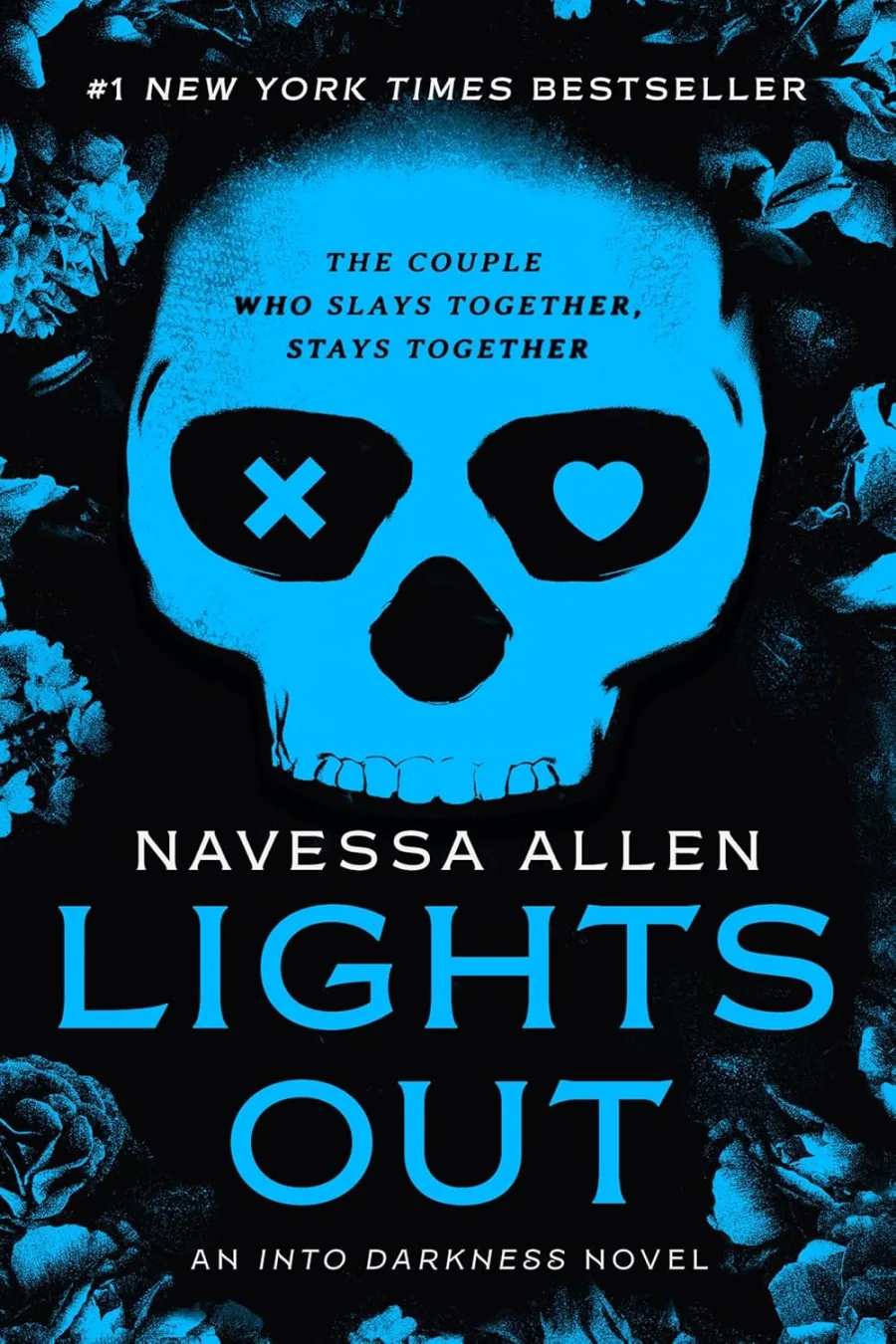
Download Cover Image
Do you want to download the full cover image for Lights Out (Into Darkness Series)?