
A Time for Mercy: A Jake Brigance Novel
Paperback
• 480 Pages
• USD 18.00
• English
• 9780593157824
No ratings yet
| Publisher | Anchor |
|---|---|
| ISBN13 | 9780593157824 |
| ASIN/SKU | 0593157826 |
| Book Format | Paperback |
| Language | English |
| Pages | 480 |
| List Price | USD 18.00 |
| Publishing Date | 29/06/2021 |
| Dimensions | 5.25 x 1.02 x 7.99 inches |
| Weight | 2.31 pounds |
| Book Code | BD00055851 |
Buy this Book
Amazon Stores
Ebook Stores
Other Stores
Discover A Time for Mercy: A Jake Brigance Novel by John Grisham. This book is published by Anchor in Paperback format, ISBN 9780593157824, ASIN 0593157826, under Mystery, Thriller and Suspense, Legal Thrillers, Political Thrillers.
Book Description
#1 NEW YORK TIMES BESTSELLER • Jake Brigance is back! The hero of A Time to Kill, one of the most popular novels of our time, returns in a “riveting” (The New York Times) courtroom drama from “the best thriller writer alive” (Ken Follett).
There is a time to kill and a time for justice. Now comes A Time for Mercy.
Clanton, Mississippi. 1990. Jake Brigance finds himself embroiled in a deeply divisive trial when the court appoints him attorney for Drew Gamble, a timid sixteen-year-old boy accused of murdering a local deputy. Many in Clanton want a swift trial and the death penalty, but Brigance digs in and discovers that there is more to the story than meets the eye. Jake’s fierce commitment to saving Drew from the gas chamber puts his career, his financial security, and the safety of his family on the line.
Bursting with all the courthouse scheming, small-town intrigue, and stunning plot twists that have become the hallmarks of the master of the legal thriller, A Time for Mercy is a richly rewarding novel that is both timely and timeless, full of wit, drama, and—most of all—heart.
Look for all of John Grisham’s gripping Jake Brigance novels:
A Time to Kill
Sycamore Row
A Time for Mercy
There is a time to kill and a time for justice. Now comes A Time for Mercy.
Clanton, Mississippi. 1990. Jake Brigance finds himself embroiled in a deeply divisive trial when the court appoints him attorney for Drew Gamble, a timid sixteen-year-old boy accused of murdering a local deputy. Many in Clanton want a swift trial and the death penalty, but Brigance digs in and discovers that there is more to the story than meets the eye. Jake’s fierce commitment to saving Drew from the gas chamber puts his career, his financial security, and the safety of his family on the line.
Bursting with all the courthouse scheming, small-town intrigue, and stunning plot twists that have become the hallmarks of the master of the legal thriller, A Time for Mercy is a richly rewarding novel that is both timely and timeless, full of wit, drama, and—most of all—heart.
Look for all of John Grisham’s gripping Jake Brigance novels:
A Time to Kill
Sycamore Row
A Time for Mercy
Author Biography
John Grisham is the author of numerous #1 bestsellers, including The Firm, A Time to Kill, The Rainmaker, The Innocent Man, The Whistler, The Boys from Biloxi, and many more. His books have been translated into nearly fifty languages. Grisham is a two-time winner of the Harper Lee Prize for Legal Fiction and was honored with the Library of Congress Creative Achievement Award for Fiction. Grisham serves on the board of directors of the Innocence Project and Centurion Ministries, two national organizations dedicated to exonerating those who have been wrongfully convicted. Much of his fiction explores deep-seated problems in our criminal justice system. He lives on a farm in central Virginia.
Editorial Reviews
“[John Grisham] has returned to the place closest to his heart. . . . The trial is riveting. . . . It’s striking how suspenseful the story is . . . how much we’re gripped by the small details.”—Sarah Lyall, The New York Times
“Textbook Grisham—and that’s a compliment . . . a briskly paced legal drama, with just the right amount of suspense, conflict, plot twists, [and] courtroom theatrics.”—St. Louis Post-Dispatch
“A fine example of [Grisham’s] well-honed skillat hooking readers right into a story.”—Tampa Bay Times
“Textbook Grisham—and that’s a compliment . . . a briskly paced legal drama, with just the right amount of suspense, conflict, plot twists, [and] courtroom theatrics.”—St. Louis Post-Dispatch
“A fine example of [Grisham’s] well-honed skillat hooking readers right into a story.”—Tampa Bay Times
Book Summary
A Time for Mercy by John Grisham is a legal thriller that returns to the small Mississippi town of Clanton and brings back lawyer Jake Brigance, placing him at the center of another explosive, emotionally charged murder case. The story takes place several years after the events of “A Time to Kill” and “Sycamore Row,” and once again Jake finds himself appointed to defend a client whom the town largely sees as unforgivable. This time, his client is Drew Gamble, a quiet, fragile sixteen-year-old boy who shoots and kills Deputy Stuart Kofer, a well-known local cop. On the surface, it looks simple: a teenager has murdered a police officer while he slept, and the community is furious. But Grisham quickly reveals that the situation is far more complicated and painful. Drew lives with his mother, Josie, and younger sister, Kiera, in a home ruled by Kofer’s drinking, violence, and unpredictable rage. The killing, though brutal, grows out of a long history of abuse and terror.
Jake is drawn into the case when the judge appoints him to represent Drew, despite Jake’s reluctance and the pressure he is already under. He knows that defending a cop-killer in a small Southern town, particularly a kid who shot a deputy in his own home, will make him deeply unpopular and could damage his career and finances. At the same time, Jake has a strong moral core; he believes that everyone deserves a fair defense, especially a minor facing the death penalty. As he begins to dig into Drew’s life, Jake discovers the extent of the abuse Josie and her children endured. Kofer, though outwardly respected as a deputy, is privately an alcoholic who beats Josie, terrorizes the children, and creates a home environment of constant fear. The night of the shooting, Kofer had been drinking and had attacked Josie so severely she lay unconscious, and Drew, believing Kofer might kill them all, picked up a gun. The book uses this event to explore the difficult intersection of self-defense, fear, and the law, particularly when the person killed is a law officer.
Grisham portrays Drew not as a hardened killer, but as a desperate, traumatized teenager trapped in a crisis with almost no resources or support. He is shy, confused, and overwhelmed by the legal process, and Jake must constantly remind himself that he is dealing with a child. The town, however, sees only the dead deputy, a man many considered a hero, and demands swift, harsh justice. Kofer’s fellow officers, his girlfriend, his family, and many citizens push for Drew to be tried as an adult and sentenced to death. Political pressures mount, and the prosecutor, backed by public sentiment, pursues a capital murder charge. This sets up one of the book’s central tensions: should a sixteen-year-old, shaped by years of abuse and acting in a moment of terror, face the harshest punishment the law allows? Jake becomes the lone figure standing between Drew and the machinery of the justice system, a system that often responds more to emotion and outrage than to nuance or compassion.
Alongside the main case, Grisham shows Jake struggling with his own life. He is already involved in a high-stakes civil lawsuit stemming from a previous case, fighting for damages on behalf of clients while trying to keep his own finances afloat. His home life with his wife, Carla, and their daughter is strained by his long hours, the stress of constant legal battles, and the sense that Jake keeps risking everything for causes that may not reward him. Carla is torn between admiration for his principles and frustration with the danger he brings into their lives. The Gamble case magnifies this tension. Carla fears the social backlash, worries about their safety, and resents the toll the case takes on their future plans. Jake finds himself pulled in different directions: loyalty to his family, loyalty to his profession, and loyalty to his sense of justice. These personal struggles give the book a human core beyond the courtroom drama.
Grisham also spends time with Josie and Kiera, showing the emotional and physical scars of living under Kofer’s reign. Josie is deeply damaged by years of abuse, dependent on alcohol, and unreliable as a witness or parent. Kiera, young and frightened, has seen more violence than a child should, and her memories become crucial to piecing together what truly happened in the house that night. Their lives highlight a major theme of the book: how poverty, addiction, and domestic violence trap people and make them almost invisible to the broader community until something terrible happens. Until Kofer’s death, few seemed to care about what went on behind closed doors in his home. After the killing, almost everyone is ready to judge, but true understanding requires patience and a willingness to see beyond simple labels like “cop” and “killer.”
The courtroom sections deliver the tension and careful strategy that Grisham is known for. Jake must build a defense that both acknowledges Drew’s actions and explains the context of abuse and fear. He explores options such as arguing self-defense, temporary insanity, or diminished capacity, always aware that the jury will be sitting in a town that loved the deputy and reveres law enforcement. He investigates Kofer’s record, hoping to uncover evidence of prior misconduct or complaints, but official records are thin and fellow officers are reluctant to tarnish his memory. Witnesses must be handled delicately, and every move Jake makes is watched and judged. The trial becomes not only a legal battle but a war over the story: is Drew a cold-blooded murderer, or a scared child pushed past his breaking point? Grisham shows how narrative and perception can decide outcomes as much as statutes and precedents.
The book also touches on the broader debate about juvenile justice and the death penalty. Drew’s age is central to the conflict. Some characters insist that sixteen is old enough to know right from wrong and to face adult consequences; others argue that adolescence, trauma, and fear warp judgment. Jake, dealing directly with Drew’s confusion and emotional fragility, leans strongly toward mercy. The title itself, “A Time for Mercy,” echoes this: Grisham suggests that there are moments when the community must step back from pure revenge and consider mercy as a necessary corrective, especially when the law confronts a young life damaged by circumstances beyond his control. The book does not offer simple answers, but it pushes the reader to question how far justice should go and when compassion must intervene.
As the trial unfolds, secrets surface, loyalties are tested, and Jake’s courage is repeatedly challenged. He is threatened, criticized, and occasionally supported by a few allies who still believe in due process. The verdict and its consequences carry heavy emotional weight, affecting not only Drew and his family but also Jake, Carla, and the entire town. Grisham ends the story in a way that feels both realistic and morally thoughtful, avoiding a neat, fairy-tale resolution while still honoring the idea that mercy and understanding can coexist with accountability. The result is a novel that combines the suspense of a legal battle with a deep examination of family violence, small-town politics, and the fragile lives caught between the law and the human heart. Through Jake Brigance’s struggle, A Time for Mercy asks what it truly means to stand up for justice when almost everyone else demands punishment, and how much one lawyer—and one frightened boy—can change the story that a community tells about right, wrong, and redemption.
Jake is drawn into the case when the judge appoints him to represent Drew, despite Jake’s reluctance and the pressure he is already under. He knows that defending a cop-killer in a small Southern town, particularly a kid who shot a deputy in his own home, will make him deeply unpopular and could damage his career and finances. At the same time, Jake has a strong moral core; he believes that everyone deserves a fair defense, especially a minor facing the death penalty. As he begins to dig into Drew’s life, Jake discovers the extent of the abuse Josie and her children endured. Kofer, though outwardly respected as a deputy, is privately an alcoholic who beats Josie, terrorizes the children, and creates a home environment of constant fear. The night of the shooting, Kofer had been drinking and had attacked Josie so severely she lay unconscious, and Drew, believing Kofer might kill them all, picked up a gun. The book uses this event to explore the difficult intersection of self-defense, fear, and the law, particularly when the person killed is a law officer.
Grisham portrays Drew not as a hardened killer, but as a desperate, traumatized teenager trapped in a crisis with almost no resources or support. He is shy, confused, and overwhelmed by the legal process, and Jake must constantly remind himself that he is dealing with a child. The town, however, sees only the dead deputy, a man many considered a hero, and demands swift, harsh justice. Kofer’s fellow officers, his girlfriend, his family, and many citizens push for Drew to be tried as an adult and sentenced to death. Political pressures mount, and the prosecutor, backed by public sentiment, pursues a capital murder charge. This sets up one of the book’s central tensions: should a sixteen-year-old, shaped by years of abuse and acting in a moment of terror, face the harshest punishment the law allows? Jake becomes the lone figure standing between Drew and the machinery of the justice system, a system that often responds more to emotion and outrage than to nuance or compassion.
Alongside the main case, Grisham shows Jake struggling with his own life. He is already involved in a high-stakes civil lawsuit stemming from a previous case, fighting for damages on behalf of clients while trying to keep his own finances afloat. His home life with his wife, Carla, and their daughter is strained by his long hours, the stress of constant legal battles, and the sense that Jake keeps risking everything for causes that may not reward him. Carla is torn between admiration for his principles and frustration with the danger he brings into their lives. The Gamble case magnifies this tension. Carla fears the social backlash, worries about their safety, and resents the toll the case takes on their future plans. Jake finds himself pulled in different directions: loyalty to his family, loyalty to his profession, and loyalty to his sense of justice. These personal struggles give the book a human core beyond the courtroom drama.
Grisham also spends time with Josie and Kiera, showing the emotional and physical scars of living under Kofer’s reign. Josie is deeply damaged by years of abuse, dependent on alcohol, and unreliable as a witness or parent. Kiera, young and frightened, has seen more violence than a child should, and her memories become crucial to piecing together what truly happened in the house that night. Their lives highlight a major theme of the book: how poverty, addiction, and domestic violence trap people and make them almost invisible to the broader community until something terrible happens. Until Kofer’s death, few seemed to care about what went on behind closed doors in his home. After the killing, almost everyone is ready to judge, but true understanding requires patience and a willingness to see beyond simple labels like “cop” and “killer.”
The courtroom sections deliver the tension and careful strategy that Grisham is known for. Jake must build a defense that both acknowledges Drew’s actions and explains the context of abuse and fear. He explores options such as arguing self-defense, temporary insanity, or diminished capacity, always aware that the jury will be sitting in a town that loved the deputy and reveres law enforcement. He investigates Kofer’s record, hoping to uncover evidence of prior misconduct or complaints, but official records are thin and fellow officers are reluctant to tarnish his memory. Witnesses must be handled delicately, and every move Jake makes is watched and judged. The trial becomes not only a legal battle but a war over the story: is Drew a cold-blooded murderer, or a scared child pushed past his breaking point? Grisham shows how narrative and perception can decide outcomes as much as statutes and precedents.
The book also touches on the broader debate about juvenile justice and the death penalty. Drew’s age is central to the conflict. Some characters insist that sixteen is old enough to know right from wrong and to face adult consequences; others argue that adolescence, trauma, and fear warp judgment. Jake, dealing directly with Drew’s confusion and emotional fragility, leans strongly toward mercy. The title itself, “A Time for Mercy,” echoes this: Grisham suggests that there are moments when the community must step back from pure revenge and consider mercy as a necessary corrective, especially when the law confronts a young life damaged by circumstances beyond his control. The book does not offer simple answers, but it pushes the reader to question how far justice should go and when compassion must intervene.
As the trial unfolds, secrets surface, loyalties are tested, and Jake’s courage is repeatedly challenged. He is threatened, criticized, and occasionally supported by a few allies who still believe in due process. The verdict and its consequences carry heavy emotional weight, affecting not only Drew and his family but also Jake, Carla, and the entire town. Grisham ends the story in a way that feels both realistic and morally thoughtful, avoiding a neat, fairy-tale resolution while still honoring the idea that mercy and understanding can coexist with accountability. The result is a novel that combines the suspense of a legal battle with a deep examination of family violence, small-town politics, and the fragile lives caught between the law and the human heart. Through Jake Brigance’s struggle, A Time for Mercy asks what it truly means to stand up for justice when almost everyone else demands punishment, and how much one lawyer—and one frightened boy—can change the story that a community tells about right, wrong, and redemption.
Sample Chapters
Sample Chapters will be added soon…
Reader Reviews
No reviews yet.
A Time for Mercy: A Jake Brigance Novel
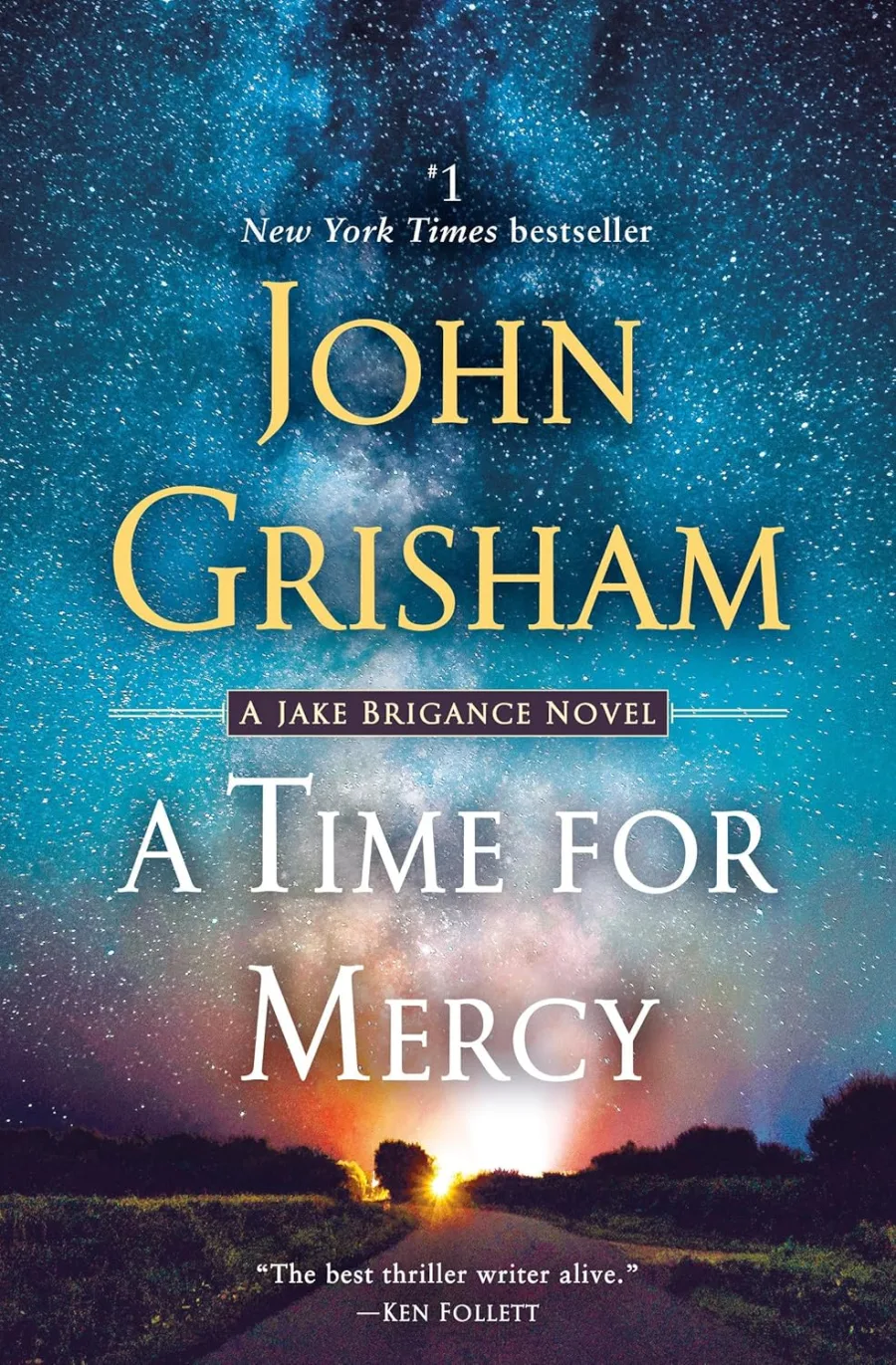
Download Cover Image
Do you want to download the full cover image for A Time for Mercy: A Jake Brigance Novel?