
I'm Glad My Mom Died
Paperback
• 320 Pages
• USD 19.99
• English
• 9781982185831
No ratings yet
| Publisher | Simon & Schuster |
|---|---|
| ISBN13 | 9781982185831 |
| ASIN/SKU | 198218583X |
| Book Format | Paperback |
| Language | English |
| Pages | 320 |
| List Price | USD 19.99 |
| Publishing Date | 18/11/2025 |
| Dimensions | 5.5 x 0.9 x 8.38 inches |
| Weight | 13.2 ounces |
| Book Code | BD00055854 |
Buy this Book
Amazon Stores
Ebook Stores
Other Stores
Discover I'm Glad My Mom Died by Jennette McCurdy. This book is published by Simon and Schuster in Paperback format, ISBN 9781982185831, ASIN 198218583X, under Biographies and Memoirs, Actor and Entertainer Biographies, Dysfunctional Families.
Book Description
* #1 NEW YORK TIMES BESTSELLER * #1 INTERNATIONAL BESTSELLER * MORE THAN 3 MILLION COPIES SOLD!
A heartbreaking and hilarious memoir by iCarly and Sam & Cat star Jennette McCurdy about her struggles as a former child actor—including eating disorders, addiction, and a complicated relationship with her overbearing mother—and how she retook control of her life.
Jennette McCurdy was six years old when she had her first acting audition. Her mother’s dream was for her only daughter to become a star, and Jennette would do anything to make her mother happy. So she went along with what Mom called “calorie restriction,” eating little and weighing herself five times a day. She endured extensive at-home makeovers while Mom chided, “Your eyelashes are invisible, okay? You think Dakota Fanning doesn’t tint hers?” She was even showered by Mom until age sixteen while sharing her diaries, email, and all her income.
In I’m Glad My Mom Died, Jennette recounts all this in unflinching detail—just as she chronicles what happens when the dream finally comes true. Cast in a new Nickelodeon series called iCarly, she is thrust into fame. Though Mom is ecstatic, emailing fan club moderators and getting on a first-name basis with the paparazzi (“Hi Gale!”), Jennette is riddled with anxiety, shame, and self-loathing, which manifest into eating disorders, addiction, and a series of unhealthy relationships. These issues only get worse when, soon after taking the lead in the iCarly spinoff Sam & Cat alongside Ariana Grande, her mother dies of cancer. Finally, after discovering therapy and quitting acting, Jennette embarks on recovery and decides for the first time in her life what she really wants.
Told with refreshing candor and dark humor, I’m Glad My Mom Died is an inspiring story of resilience, independence, and the joy of shampooing your own hair.
A heartbreaking and hilarious memoir by iCarly and Sam & Cat star Jennette McCurdy about her struggles as a former child actor—including eating disorders, addiction, and a complicated relationship with her overbearing mother—and how she retook control of her life.
Jennette McCurdy was six years old when she had her first acting audition. Her mother’s dream was for her only daughter to become a star, and Jennette would do anything to make her mother happy. So she went along with what Mom called “calorie restriction,” eating little and weighing herself five times a day. She endured extensive at-home makeovers while Mom chided, “Your eyelashes are invisible, okay? You think Dakota Fanning doesn’t tint hers?” She was even showered by Mom until age sixteen while sharing her diaries, email, and all her income.
In I’m Glad My Mom Died, Jennette recounts all this in unflinching detail—just as she chronicles what happens when the dream finally comes true. Cast in a new Nickelodeon series called iCarly, she is thrust into fame. Though Mom is ecstatic, emailing fan club moderators and getting on a first-name basis with the paparazzi (“Hi Gale!”), Jennette is riddled with anxiety, shame, and self-loathing, which manifest into eating disorders, addiction, and a series of unhealthy relationships. These issues only get worse when, soon after taking the lead in the iCarly spinoff Sam & Cat alongside Ariana Grande, her mother dies of cancer. Finally, after discovering therapy and quitting acting, Jennette embarks on recovery and decides for the first time in her life what she really wants.
Told with refreshing candor and dark humor, I’m Glad My Mom Died is an inspiring story of resilience, independence, and the joy of shampooing your own hair.
Author Biography
Jennette McCurdy is the author of I’m Glad My Mom Died, winner of the 2023 American Library Association Alex Award and the 2022 Goodreads Choice Award for Memoir & Autobiography. The book is a #1 New York Times bestseller and has spent more than eighty weeks on the list. It has been published in more than thirty countries and has sold more than three million copies. McCurdy is creating, writing, executive producing, directing, and showrunning an Apple TV+ series loosely inspired by I’m Glad My Mom Died, starring Jennifer Aniston. McCurdy’s debut novel, Half His Age, will publish January 2026.
Editorial Reviews
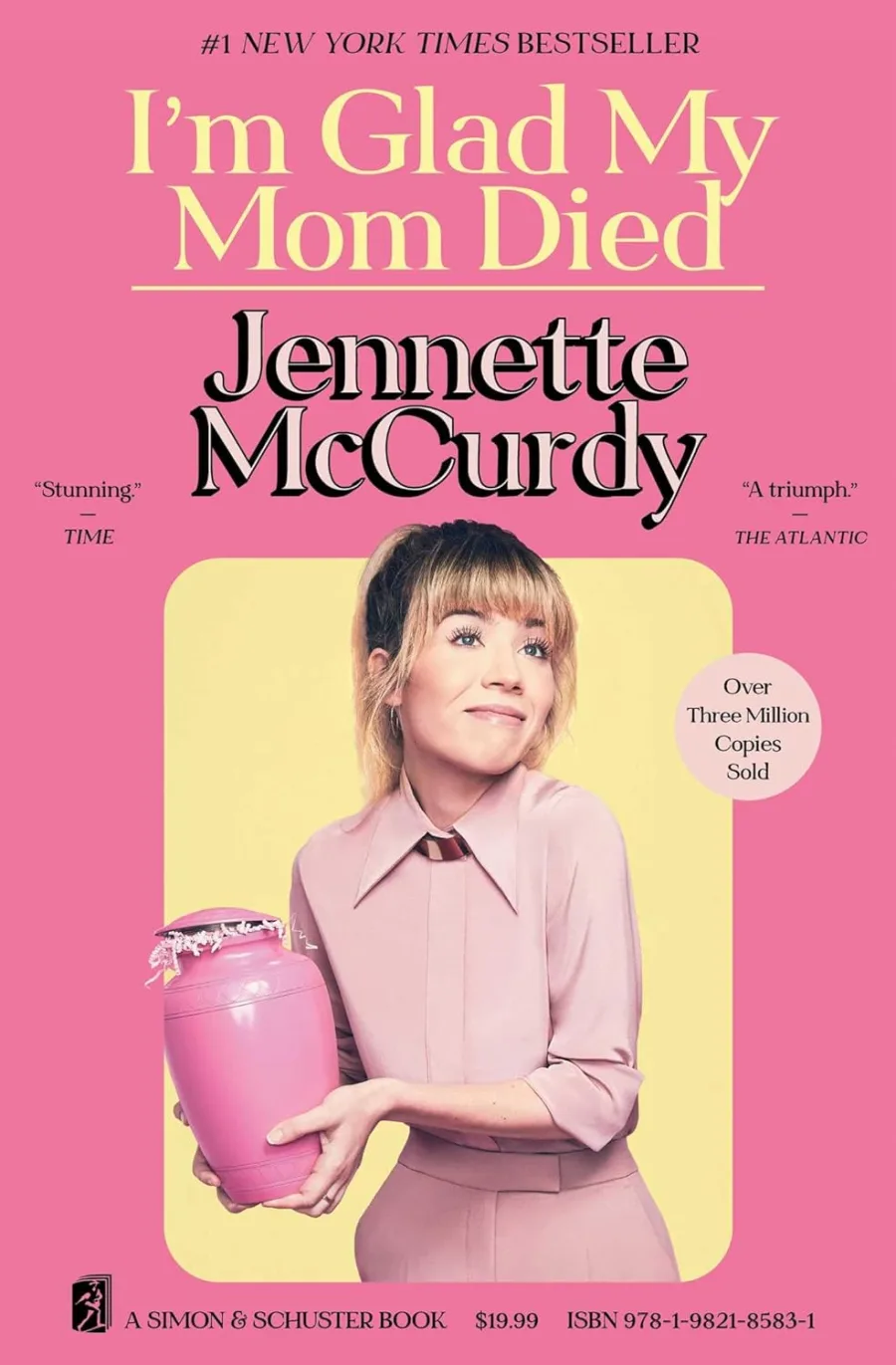
"[A] layered account of a woman reckoning with love and violence at once...[Not] a flippant exposé of childhood stardom, nor an angry diatribe directed at an abuser. This complexity is what makes I'm Glad My Mom Died feel real...Some supposed literary types will think the immense popularity of I'm Glad My Mom Died--the hardcover initially sold out at many major bookstores--is merely the result of McCurdy's former stardom and modern culture's thirst for a sensational take. With its bold headline and bright cover featuring a smirking McCurdy holding a pink urn, the book feels deliberately marketed for virality, perfect for sharing on the internet and catching the eye of bookstore browsers. I've mentioned the title of this memoir to some people who have dismissed it out of hand, remarking that being glad one's parent is dead is crude and a sentiment that should be kept to oneself. But those people haven't read the book. McCurdy takes her time to remember difficult and complex moments of her life, staying true to her younger self while ultimately trying to come to terms with who she is as an independent adult. It's a triumph of the confessional genre."--Nina Li Coomes, The Atlantic
"Not many people rise to her level of fame or are so deeply abused, but McCurdy's narrative will feel familiar to anyone who has navigated poverty and trauma. Taking advantage of the store discount at your dad's retail job, tuning out screaming matches between parents, avoiding calls from debt collectors ... this is what childhood is like for millions of Americans. Like many, I recognized myself in her words."--Sabrina Cartan, Slate
"Unflinching...This year's most candid book...I'm Glad My Mom Died made me laugh; it made me cry. It's such a funny, dark, moving, honest, real, uncensored book, and it's unlike anything I've ever read."--Mary Elizabeth Williams, Salon
"[The]number-one New York Times-bestselling memoir that has also achieved pop-cultural phenomenon status...I'm Glad My Mom Died is more than source material for a deluge of headlines about Grande and the slimy advances of a Nickelodeon svengali McCurdy calls simply 'The Creator.' McCurdy distinguishes herself from standard-issue celebrity memoir fare with a vivid, biting, darkly comic tone and an immersive present tense."--Michelle Ruiz, Vogue
"For McCurdy, this book isn't just her writing debut. It's a reckoning with guilt and grief after her mother's premature death. It's healing from multiple eating disorders and processing decades of trauma. It's finally doing what she wants for the first time: not acting. Writing...Healing from trauma looks different for everyone: For McCurdy, writing this memoir symbolized empowerment over her narrative. And understanding that it's OK not to forgive her late mother provided her peace."--Jenna Ryu, USA Today
"Judging simply by the shocking title of Jennette McCurdy's debut memoir, I'm Glad My Mom Died, you may think the book is a no-holds-barred, scathing takedown of her mot
"Not many people rise to her level of fame or are so deeply abused, but McCurdy's narrative will feel familiar to anyone who has navigated poverty and trauma. Taking advantage of the store discount at your dad's retail job, tuning out screaming matches between parents, avoiding calls from debt collectors ... this is what childhood is like for millions of Americans. Like many, I recognized myself in her words."--Sabrina Cartan, Slate
"Unflinching...This year's most candid book...I'm Glad My Mom Died made me laugh; it made me cry. It's such a funny, dark, moving, honest, real, uncensored book, and it's unlike anything I've ever read."--Mary Elizabeth Williams, Salon
"[The]number-one New York Times-bestselling memoir that has also achieved pop-cultural phenomenon status...I'm Glad My Mom Died is more than source material for a deluge of headlines about Grande and the slimy advances of a Nickelodeon svengali McCurdy calls simply 'The Creator.' McCurdy distinguishes herself from standard-issue celebrity memoir fare with a vivid, biting, darkly comic tone and an immersive present tense."--Michelle Ruiz, Vogue
"For McCurdy, this book isn't just her writing debut. It's a reckoning with guilt and grief after her mother's premature death. It's healing from multiple eating disorders and processing decades of trauma. It's finally doing what she wants for the first time: not acting. Writing...Healing from trauma looks different for everyone: For McCurdy, writing this memoir symbolized empowerment over her narrative. And understanding that it's OK not to forgive her late mother provided her peace."--Jenna Ryu, USA Today
"Judging simply by the shocking title of Jennette McCurdy's debut memoir, I'm Glad My Mom Died, you may think the book is a no-holds-barred, scathing takedown of her mot
Book Summary
I’m Glad My Mom Died by Jennette McCurdy is a raw, darkly funny, and deeply painful memoir about growing up under the control of an abusive, mentally ill mother, becoming a child star, and then trying to rebuild a life after that mother’s death. The shocking title reflects the emotional truth of the book: Jennette reaches a point where her mother’s absence, however tragic, is also the only space in which she can begin to heal. The story is told in a very human, conversational style, starting with Jennette as a little girl who loves her mom more than anyone in the world and believes everything she says. As the memoir unfolds, that love is slowly revealed to be mixed with fear, manipulation, and emotional dependence. McCurdy walks us through her childhood, her years on Nickelodeon, and her twenties, all through the lens of her complicated relationship with her mother and the long shadows it casts over her sense of self.
As a child, Jennette grows up in a poor, chaotic household in Southern California. Her mother, Debra, is obsessed with fame and believes that the best way out of their financial struggles is for Jennette to become an actress. Jennette herself is shy and uncomfortable with performing, but Debra pushes her into acting classes and auditions, praising her whenever she succeeds and guilting her whenever she hesitates. The book shows how Debra’s dreams gradually override Jennette’s own personality. Her mother tracks calories, comments constantly on Jennette’s body, and introduces her to extreme “dieting” and calorie restriction when she’s still a child, framing it as being “healthy” and camera-ready. Jennette adores her mom and sees her as fragile and heroic—Debra has survived cancer once and constantly reminds the family of her suffering—so Jennette feels responsible for keeping her happy. This sense of duty becomes the foundation of Jennette’s willingness to do whatever her mom wants, no matter the emotional cost.
The early chapters often feel almost innocent, even when describing disturbing events, because McCurdy writes from the childlike perspective she had at the time. She describes her mom giving her “showers” until she is sixteen, including checking every part of her body, and performing “breast and vaginal exams” at home under the excuse of medical vigilance. To young Jennette, this is normal; she doesn’t have another standard to compare it to. As an adult narrator, she doesn’t need to spell out how wrong it is—the way she presents the scenes lets the reader feel the violation and the confusion. Debra also controls Jennette’s clothing, friendships, and feelings, teaching her that her main role is to be obedient, grateful, and “a good girl” who sacrifices for family. The book is very clear that this is abuse, but it shows how easily abuse can be disguised as love when it comes from a parent who constantly claims to be suffering and selfless.
Jennette’s acting career starts picking up with small roles and commercials, and eventually she gets her big break on Nickelodeon’s “iCarly.” That job brings fame, money, and visibility, but also intensifies her mother’s control. Debra becomes even more involved, hovering at set, tracking Jennette’s career, and bragging about her achievements. Jennette, meanwhile, feels increasing anxiety and discomfort. She doesn’t enjoy acting; she experiences constant pressure to be perfect, cute, and funny; and she feels trapped by the idea that the entire family’s financial security depends on her work. Inside, she starts to dissociate from herself and her body. She develops anorexia as a way to feel control over at least one thing in her life, telling herself she’s just doing what her mom taught her. As she becomes more famous, people see her smiling on television, but she is secretly consumed by food rituals, obsessive calorie counting, and ordinary teenage feelings she doesn’t know how to handle.
The memoir also delves into Jennette’s relationships with castmates and with “The Creator” behind the shows, a powerful figure clearly based on a real Nickelodeon producer but not named directly. She describes an environment where young actors are pressured to drink, where boundaries are blurred, and where adults behave in ways that are uncomfortable and sometimes predatory. Jennette is praised for being professional and easy to work with, but she feels increasingly hollow. The book shows the strange contrast between the colorful, funny world of a kids’ TV show and the grim reality of what some child actors are going through off-screen. At the same time, Debra is constantly involved in her personal and professional life, writing long, emotional emails, exploding when she thinks Jennette has disrespected her, and collapsing into fits of illness and despair that make it almost impossible for Jennette to set any boundaries.
As Jennette grows older, her eating disorder shifts forms. Anorexia eventually turns into bulimia, and she also struggles with obsessive-compulsive behaviors and drinking. She tries to date, but her mother reacts with jealousy and anger, sending manipulative messages that make Jennette feel like she’s betraying her. The memoir shows how hard it is to grow up when you were never allowed to have your own identity. Jennette’s early attempts at independence—liking someone, wanting different clothes, wanting to write instead of act—are shut down by Debra’s emotional outbursts and guilt trips. Debra’s cancer returns, and the family faces another crisis. Through this period, Jennette is torn between genuine concern for her mother and an underlying exhaustion from years of being emotionally used. The book doesn’t paint Debra as one-dimensional; she is often funny, energetic, and loving in her own warped way, but her love is always conditional and tangled with control.
Debra’s death is a major turning point, but it is not a simple relief. When she dies, Jennette is flooded with grief, confusion, and guilt. She feels like she is supposed to be destroyed, because everyone expects a daughter to mourn deeply, and part of her does. Another part is strangely numb and even slightly freed. The title “I’m Glad My Mom Died” comes out of the complicated truth that only after her mother is gone can Jennette begin to ask who she is without that constant supervision and pressure. The memoir does not present this as a cold or heartless reaction; instead, it shows how someone who endured long-term abuse can feel both love and relief, sorrow and liberation, at the same time. After the funeral and the months that follow, Jennette spirals further into her eating disorder and unhealthy coping mechanisms, because without her mother to blame or cling to, she has to face the pain within herself.
In her twenties, Jennette starts tentatively seeking help. The turning point comes when she sees a therapist who gently guides her toward recognizing her mom’s behavior as abusive, not loving. At first, Jennette resists this idea fiercely; her entire identity is built around the story that her mother was a hero, a victim of illness, and that Jennette’s duty was to please her. Accepting that her mother hurt her changes everything. Slowly, through therapy, she learns to name anorexia and bulimia as illnesses, not achievements, and to question the beliefs her mother planted in her—about her body, her worth, and her career. She also begins to step away from acting, eventually admitting to herself that she never wanted to be an actress and that continuing that path would just be repeating the life her mother chose, not the life she wants.
The later sections of the book focus on recovery, though not in a tidy, magical way. McCurdy describes relapses and doubts, but also small victories: eating more normally, allowing herself to feel anger at her mother, setting boundaries with others, and exploring writing and directing as creative outlets that she truly enjoys. She reflects on how hard it is to separate love from harm when the person who hurt you insisted they were doing everything for your own good. The memoir’s voice stays sharp and often darkly funny, using humor to survive some of the most uncomfortable truths. By the end, Jennette is not “fixed,” but she is more honest with herself. She can say the sentence “I’m glad my mom died” not because she hates her mother, but because her mother’s death is the painful door through which she walked into her own life.
As a child, Jennette grows up in a poor, chaotic household in Southern California. Her mother, Debra, is obsessed with fame and believes that the best way out of their financial struggles is for Jennette to become an actress. Jennette herself is shy and uncomfortable with performing, but Debra pushes her into acting classes and auditions, praising her whenever she succeeds and guilting her whenever she hesitates. The book shows how Debra’s dreams gradually override Jennette’s own personality. Her mother tracks calories, comments constantly on Jennette’s body, and introduces her to extreme “dieting” and calorie restriction when she’s still a child, framing it as being “healthy” and camera-ready. Jennette adores her mom and sees her as fragile and heroic—Debra has survived cancer once and constantly reminds the family of her suffering—so Jennette feels responsible for keeping her happy. This sense of duty becomes the foundation of Jennette’s willingness to do whatever her mom wants, no matter the emotional cost.
The early chapters often feel almost innocent, even when describing disturbing events, because McCurdy writes from the childlike perspective she had at the time. She describes her mom giving her “showers” until she is sixteen, including checking every part of her body, and performing “breast and vaginal exams” at home under the excuse of medical vigilance. To young Jennette, this is normal; she doesn’t have another standard to compare it to. As an adult narrator, she doesn’t need to spell out how wrong it is—the way she presents the scenes lets the reader feel the violation and the confusion. Debra also controls Jennette’s clothing, friendships, and feelings, teaching her that her main role is to be obedient, grateful, and “a good girl” who sacrifices for family. The book is very clear that this is abuse, but it shows how easily abuse can be disguised as love when it comes from a parent who constantly claims to be suffering and selfless.
Jennette’s acting career starts picking up with small roles and commercials, and eventually she gets her big break on Nickelodeon’s “iCarly.” That job brings fame, money, and visibility, but also intensifies her mother’s control. Debra becomes even more involved, hovering at set, tracking Jennette’s career, and bragging about her achievements. Jennette, meanwhile, feels increasing anxiety and discomfort. She doesn’t enjoy acting; she experiences constant pressure to be perfect, cute, and funny; and she feels trapped by the idea that the entire family’s financial security depends on her work. Inside, she starts to dissociate from herself and her body. She develops anorexia as a way to feel control over at least one thing in her life, telling herself she’s just doing what her mom taught her. As she becomes more famous, people see her smiling on television, but she is secretly consumed by food rituals, obsessive calorie counting, and ordinary teenage feelings she doesn’t know how to handle.
The memoir also delves into Jennette’s relationships with castmates and with “The Creator” behind the shows, a powerful figure clearly based on a real Nickelodeon producer but not named directly. She describes an environment where young actors are pressured to drink, where boundaries are blurred, and where adults behave in ways that are uncomfortable and sometimes predatory. Jennette is praised for being professional and easy to work with, but she feels increasingly hollow. The book shows the strange contrast between the colorful, funny world of a kids’ TV show and the grim reality of what some child actors are going through off-screen. At the same time, Debra is constantly involved in her personal and professional life, writing long, emotional emails, exploding when she thinks Jennette has disrespected her, and collapsing into fits of illness and despair that make it almost impossible for Jennette to set any boundaries.
As Jennette grows older, her eating disorder shifts forms. Anorexia eventually turns into bulimia, and she also struggles with obsessive-compulsive behaviors and drinking. She tries to date, but her mother reacts with jealousy and anger, sending manipulative messages that make Jennette feel like she’s betraying her. The memoir shows how hard it is to grow up when you were never allowed to have your own identity. Jennette’s early attempts at independence—liking someone, wanting different clothes, wanting to write instead of act—are shut down by Debra’s emotional outbursts and guilt trips. Debra’s cancer returns, and the family faces another crisis. Through this period, Jennette is torn between genuine concern for her mother and an underlying exhaustion from years of being emotionally used. The book doesn’t paint Debra as one-dimensional; she is often funny, energetic, and loving in her own warped way, but her love is always conditional and tangled with control.
Debra’s death is a major turning point, but it is not a simple relief. When she dies, Jennette is flooded with grief, confusion, and guilt. She feels like she is supposed to be destroyed, because everyone expects a daughter to mourn deeply, and part of her does. Another part is strangely numb and even slightly freed. The title “I’m Glad My Mom Died” comes out of the complicated truth that only after her mother is gone can Jennette begin to ask who she is without that constant supervision and pressure. The memoir does not present this as a cold or heartless reaction; instead, it shows how someone who endured long-term abuse can feel both love and relief, sorrow and liberation, at the same time. After the funeral and the months that follow, Jennette spirals further into her eating disorder and unhealthy coping mechanisms, because without her mother to blame or cling to, she has to face the pain within herself.
In her twenties, Jennette starts tentatively seeking help. The turning point comes when she sees a therapist who gently guides her toward recognizing her mom’s behavior as abusive, not loving. At first, Jennette resists this idea fiercely; her entire identity is built around the story that her mother was a hero, a victim of illness, and that Jennette’s duty was to please her. Accepting that her mother hurt her changes everything. Slowly, through therapy, she learns to name anorexia and bulimia as illnesses, not achievements, and to question the beliefs her mother planted in her—about her body, her worth, and her career. She also begins to step away from acting, eventually admitting to herself that she never wanted to be an actress and that continuing that path would just be repeating the life her mother chose, not the life she wants.
The later sections of the book focus on recovery, though not in a tidy, magical way. McCurdy describes relapses and doubts, but also small victories: eating more normally, allowing herself to feel anger at her mother, setting boundaries with others, and exploring writing and directing as creative outlets that she truly enjoys. She reflects on how hard it is to separate love from harm when the person who hurt you insisted they were doing everything for your own good. The memoir’s voice stays sharp and often darkly funny, using humor to survive some of the most uncomfortable truths. By the end, Jennette is not “fixed,” but she is more honest with herself. She can say the sentence “I’m glad my mom died” not because she hates her mother, but because her mother’s death is the painful door through which she walked into her own life.
Sample Chapters
Sample Chapters will be added soon…
Reader Reviews
No reviews yet.
I'm Glad My Mom Died
Download Cover Image
Do you want to download the full cover image for I'm Glad My Mom Died?