
The Midnight Line: A Jack Reacher Novel
Mass Market Paperback
• 496 Pages
• USD 10.99
• English
• 9780399593505
No ratings yet
| Publisher | Dell |
|---|---|
| ISBN13 | 9780399593505 |
| ASIN/SKU | 0399593500 |
| Book Format | Mass Market Paperback |
| Language | English |
| Pages | 496 |
| List Price | USD 10.99 |
| Series Title | Jack Reacher |
| Publishing Date | 24/04/2018 |
| Dimensions | 4.2 x 1.11 x 7.48 inches |
| Weight | 9.9 ounces |
| Book Code | BD00055896 |
Buy this Book
Amazon Stores
Ebook Stores
Other Stores
Discover The Midnight Line: A Jack Reacher Novel by Lee Child. This book is published by Dell in Mass Market Paperback format, ISBN 9780399593505, ASIN 0399593500, under Mystery, Thriller and Suspense, Mystery Action and Adventure, Military Thrillers.
Book Description
#1 NEW YORK TIMES BESTSELLER • Lee Child returns with a gripping powerhouse thriller featuring Jack Reacher, “one of this century’s most original, tantalizing pop-fiction heroes” (The Washington Post).
Don’t miss the hit streaming series Reacher!
Reacher takes a stroll through a small Wisconsin town and sees a class ring in a pawn shop window: West Point 2005. A tough year to graduate: Iraq, then Afghanistan. The ring is tiny, for a woman, and it has her initials engraved on the inside. Reacher wonders what unlucky circumstance made her give up something she earned over four hard years. He decides to find out. And find the woman. And return her ring. Why not?
So begins a harrowing journey that takes Reacher through the upper Midwest, from a lowlife bar on the sad side of small town to a dirt-blown crossroads in the middle of nowhere, encountering bikers, cops, crooks, muscle, and a missing persons PI who wears a suit and a tie in the Wyoming wilderness.
The deeper Reacher digs, and the more he learns, the more dangerous the terrain becomes. Turns out the ring was just a small link in a far darker chain. Powerful forces are guarding a vast criminal enterprise. Some lines should never be crossed. But then, neither should Reacher.
BONUS: Includes a sneak peek of Lee Child’s novel Past Tense.
Don’t miss the hit streaming series Reacher!
Reacher takes a stroll through a small Wisconsin town and sees a class ring in a pawn shop window: West Point 2005. A tough year to graduate: Iraq, then Afghanistan. The ring is tiny, for a woman, and it has her initials engraved on the inside. Reacher wonders what unlucky circumstance made her give up something she earned over four hard years. He decides to find out. And find the woman. And return her ring. Why not?
So begins a harrowing journey that takes Reacher through the upper Midwest, from a lowlife bar on the sad side of small town to a dirt-blown crossroads in the middle of nowhere, encountering bikers, cops, crooks, muscle, and a missing persons PI who wears a suit and a tie in the Wyoming wilderness.
The deeper Reacher digs, and the more he learns, the more dangerous the terrain becomes. Turns out the ring was just a small link in a far darker chain. Powerful forces are guarding a vast criminal enterprise. Some lines should never be crossed. But then, neither should Reacher.
BONUS: Includes a sneak peek of Lee Child’s novel Past Tense.
Author Biography
Lee Child is the author of twenty-four New York Times bestselling Jack Reacher thrillers, with fifteen having reached the #1 position, and the #1 bestselling complete Jack Reacher story collection, No Middle Name. Foreign rights in the Reacher series have sold in one hundred territories. A native of England and a former television director, Lee Child lives in New York City.
Editorial Reviews
“Each year Lee Child comes up with another Reacher. Each year I lap it up. Love it . . . Here, there is something subversive as well as page-turning. . . . I don’t know another author so skilled at making me turn the page, at putting me in the thick of it all.”—The Times
“Reacher is the purest distillation of the white knight in contemporary mystery fiction. This novel is a tightly plotted ride with characters who will break your heart and linger after you close the book.”—Mystery Scene
“Reacher [is] one of the most alluring and popular characters in contemporary fiction. . . . As always in a Child novel, pace is fast, twists and turns surprise, characters are well-developed, dialogue is exactly right, and the plot is very plausible. . . . Highly entertaining . . . This one is among the best [in the series]. It doesn’t matter in what order you read them since each stands entirely on its own.”—The Washington Times
“A timely, affecting, suspenseful and morally complex thriller. . . . One of the best thrillers I’ve read this year.”—The Washington Post
“Jack Reacher has become arguably the most iconic fictional hero we have.”—Men’s Health
“Compelling and moving . . . bold and mysterious.”—Associated Press
“This, Child’s twenty-second book in the series, has heart to spare, and it proves the franchise has plenty of gas left in its tank.”—Minneapolis Star-Tribune
“Compulsively readable.”—Publishers Weekly (starred review)
“[A] multifaceted novel about dealing with the unthinkable . . . It’s automatic: Reacher gets off a bus, and Child lands on the New York Times bestseller list.”—Booklist
“The book is very smart . . . [and] suggests something that has not been visible in the series’ previous entries: a creeping sadness in Reacher’s wanderings that, set here among the vast and empty landscapes of Wyoming, resembles the peculiarly solitary loneliness of the classic American hero. This return to form is also a hint of new ground to be covered.”—Kirkus Reviews
“Child does a stellar job this time by not following his customary formula; his usually stoic hero who rarely displays softness and compassion is hit hard emotionally by this case.”’—Library Journal (starred review)
“Reacher is the purest distillation of the white knight in contemporary mystery fiction. This novel is a tightly plotted ride with characters who will break your heart and linger after you close the book.”—Mystery Scene
“Reacher [is] one of the most alluring and popular characters in contemporary fiction. . . . As always in a Child novel, pace is fast, twists and turns surprise, characters are well-developed, dialogue is exactly right, and the plot is very plausible. . . . Highly entertaining . . . This one is among the best [in the series]. It doesn’t matter in what order you read them since each stands entirely on its own.”—The Washington Times
“A timely, affecting, suspenseful and morally complex thriller. . . . One of the best thrillers I’ve read this year.”—The Washington Post
“Jack Reacher has become arguably the most iconic fictional hero we have.”—Men’s Health
“Compelling and moving . . . bold and mysterious.”—Associated Press
“This, Child’s twenty-second book in the series, has heart to spare, and it proves the franchise has plenty of gas left in its tank.”—Minneapolis Star-Tribune
“Compulsively readable.”—Publishers Weekly (starred review)
“[A] multifaceted novel about dealing with the unthinkable . . . It’s automatic: Reacher gets off a bus, and Child lands on the New York Times bestseller list.”—Booklist
“The book is very smart . . . [and] suggests something that has not been visible in the series’ previous entries: a creeping sadness in Reacher’s wanderings that, set here among the vast and empty landscapes of Wyoming, resembles the peculiarly solitary loneliness of the classic American hero. This return to form is also a hint of new ground to be covered.”—Kirkus Reviews
“Child does a stellar job this time by not following his customary formula; his usually stoic hero who rarely displays softness and compassion is hit hard emotionally by this case.”’—Library Journal (starred review)
Book Summary
The Midnight Line: A Jack Reacher Novel by Lee Child begins with Jack Reacher doing something very ordinary: walking through a small Midwest town and looking in a pawn shop window. Among the usual items, something catches his eye—a delicate West Point class ring, obviously made for a woman, and very small. Reacher, who himself graduated from West Point, immediately understands how much that ring should mean to its owner. A West Point ring is not something a graduate casually pawns, especially not a woman who would have had to fight through enormous pressure and difficulty to earn it. That single detail tells Reacher that somewhere, something has gone badly wrong in this person’s life. Driven by curiosity and his own sense of justice and loyalty to fellow soldiers, he buys the ring and decides he will find out who it belonged to and what happened to her.
The story becomes a kind of modern detective journey built around that ring. Reacher starts tracing it backward, step by step, from pawn shop to previous owner, following a trail of small-time dealers and shady transactions. Along the way, he meets a private investigator named Carter and a woman named Sanderson, who is looking for her missing sister. Their paths intersect because both are chasing trails that lead into the same strange world of rural crime, drugs, and hidden suffering. As Reacher moves deeper into the investigation, he uncovers a chain of people all trying to make money or survive, with the ring passing from hand to hand, each link revealing a little more about its original owner: a female West Point graduate, an officer, someone who had once been strong, capable, and highly trained.
The search leads Reacher from small-town America to remote areas in Wyoming and South Dakota, places that feel isolated, harsh, and almost forgotten. The landscape itself adds to the novel’s mood—a sense of distance and emptiness, where people can disappear easily and where illegal activities might go unnoticed. He slowly realizes that the ring is connected to something much darker than a simple theft or impulsive pawn. It points toward the world of injured veterans, opioid addiction, and the black-market painkiller trade. Reacher discovers that many wounded soldiers, ruined by pain and trauma and abandoned by the system, have turned to illegal pills and dangerous dealers to cope. This is not a classic conspiracy thriller with grand political stakes; instead, it is a more quiet but deeply tragic story of damaged lives, exploited pain, and moral gray zones.
The woman who owned the ring turns out to be one of those veterans. She had been physically injured, struggling with chronic pain, and emotionally broken by her experiences. Somewhere along the way, she vanished from the structured world of the military and ended up in a shadowy network of people who sell strong pain meds to those who cannot get proper help. Reacher’s search reveals that many people are involved: corrupt pharmacists, ruthless middlemen, and local criminals who view vulnerable addicts as easy profit. Yet not everyone in this underground world is entirely bad. Some are trapped by circumstances, doing terrible things out of desperation rather than cruelty. Lee Child shows a spectrum of motives—greed, fear, loyalty, survival—rather than simple cartoon villains.
As Reacher continues, he uses his usual combination of careful observation, quiet intimidation, and sudden violence when necessary. He questions, threatens, and sometimes helps people he meets. He sees firsthand the devastating impact of addiction and the failures of institutions meant to support servicemen and women after they return home injured. The woman with the ring is no longer just a mystery; she becomes a symbol of all those who have been broken by war and then left to fend for themselves. Reacher, a former military policeman, feels a duty to her as a fellow soldier, and his determination to find her becomes more personal and intense.
The plot gradually shifts from a simple search to a rescue mission. Reacher pieces together clues that suggest the woman is living in hiding, far out in the countryside, protected—or controlled—by people connected to the drug trade. These individuals are making a lot of money from supplying illegal opioids to desperately hurting veterans, and they are not eager to let anyone interfere. The tension grows as Reacher moves closer to the heart of the operation, confronting those who would rather keep her lost and silent. There are fights, threats, and strategic confrontations in typical Jack Reacher style, but the novel keeps its focus firmly on the emotional and moral stakes rather than just action spectacle.
Throughout the story, Reacher is joined by others who care about the missing woman and the broader problem. Sanderson’s search for her sister adds another emotional layer, showing how families are also affected when someone disappears into addiction and isolation. Carter, the private investigator, brings realism and professionalism, contrasting with Reacher’s more direct, lone-wolf approach. Together, their perspectives highlight how difficult it is to bring someone back from the edge once they have fallen into pain, shame, and illegal dependency.
When Reacher finally reaches the end of the trail and finds the owner of the ring, the conclusion is not a neat, heroic rescue where everything is magically fixed. Instead, it is bittersweet and grounded in reality. The woman has been severely damaged by injuries and addiction, her life radically changed from what it might have been when she proudly wore her West Point ring. Reacher’s help can offer her some chance of dignity, safety, and a way out of immediate danger, but it cannot undo the past or fully heal her wounds. The ring, once a symbol of achievement and honor, now represents survival, loss, and the high personal cost of military service. Reacher chooses a course that respects her autonomy and trauma, trying to give her a path forward instead of simply dragging her back to her old life.
The Midnight Line is quieter and more reflective than some other Jack Reacher novels. While it still offers suspense, investigation, and bursts of action, the heart of the book lies in its exploration of pain—physical, emotional, and moral—and the way modern society deals with injured veterans and addiction. It shows Reacher not just as a powerful drifter who beats up bad guys, but as someone who deeply cares about fellow soldiers and acts when he sees injustice and neglect. The story uses one small ring in a pawn shop window as a doorway into a much larger world of hidden suffering, asking how much a person’s pain is worth, who profits from it, and who is willing to stand up for those who cannot stand up for themselves.
The story becomes a kind of modern detective journey built around that ring. Reacher starts tracing it backward, step by step, from pawn shop to previous owner, following a trail of small-time dealers and shady transactions. Along the way, he meets a private investigator named Carter and a woman named Sanderson, who is looking for her missing sister. Their paths intersect because both are chasing trails that lead into the same strange world of rural crime, drugs, and hidden suffering. As Reacher moves deeper into the investigation, he uncovers a chain of people all trying to make money or survive, with the ring passing from hand to hand, each link revealing a little more about its original owner: a female West Point graduate, an officer, someone who had once been strong, capable, and highly trained.
The search leads Reacher from small-town America to remote areas in Wyoming and South Dakota, places that feel isolated, harsh, and almost forgotten. The landscape itself adds to the novel’s mood—a sense of distance and emptiness, where people can disappear easily and where illegal activities might go unnoticed. He slowly realizes that the ring is connected to something much darker than a simple theft or impulsive pawn. It points toward the world of injured veterans, opioid addiction, and the black-market painkiller trade. Reacher discovers that many wounded soldiers, ruined by pain and trauma and abandoned by the system, have turned to illegal pills and dangerous dealers to cope. This is not a classic conspiracy thriller with grand political stakes; instead, it is a more quiet but deeply tragic story of damaged lives, exploited pain, and moral gray zones.
The woman who owned the ring turns out to be one of those veterans. She had been physically injured, struggling with chronic pain, and emotionally broken by her experiences. Somewhere along the way, she vanished from the structured world of the military and ended up in a shadowy network of people who sell strong pain meds to those who cannot get proper help. Reacher’s search reveals that many people are involved: corrupt pharmacists, ruthless middlemen, and local criminals who view vulnerable addicts as easy profit. Yet not everyone in this underground world is entirely bad. Some are trapped by circumstances, doing terrible things out of desperation rather than cruelty. Lee Child shows a spectrum of motives—greed, fear, loyalty, survival—rather than simple cartoon villains.
As Reacher continues, he uses his usual combination of careful observation, quiet intimidation, and sudden violence when necessary. He questions, threatens, and sometimes helps people he meets. He sees firsthand the devastating impact of addiction and the failures of institutions meant to support servicemen and women after they return home injured. The woman with the ring is no longer just a mystery; she becomes a symbol of all those who have been broken by war and then left to fend for themselves. Reacher, a former military policeman, feels a duty to her as a fellow soldier, and his determination to find her becomes more personal and intense.
The plot gradually shifts from a simple search to a rescue mission. Reacher pieces together clues that suggest the woman is living in hiding, far out in the countryside, protected—or controlled—by people connected to the drug trade. These individuals are making a lot of money from supplying illegal opioids to desperately hurting veterans, and they are not eager to let anyone interfere. The tension grows as Reacher moves closer to the heart of the operation, confronting those who would rather keep her lost and silent. There are fights, threats, and strategic confrontations in typical Jack Reacher style, but the novel keeps its focus firmly on the emotional and moral stakes rather than just action spectacle.
Throughout the story, Reacher is joined by others who care about the missing woman and the broader problem. Sanderson’s search for her sister adds another emotional layer, showing how families are also affected when someone disappears into addiction and isolation. Carter, the private investigator, brings realism and professionalism, contrasting with Reacher’s more direct, lone-wolf approach. Together, their perspectives highlight how difficult it is to bring someone back from the edge once they have fallen into pain, shame, and illegal dependency.
When Reacher finally reaches the end of the trail and finds the owner of the ring, the conclusion is not a neat, heroic rescue where everything is magically fixed. Instead, it is bittersweet and grounded in reality. The woman has been severely damaged by injuries and addiction, her life radically changed from what it might have been when she proudly wore her West Point ring. Reacher’s help can offer her some chance of dignity, safety, and a way out of immediate danger, but it cannot undo the past or fully heal her wounds. The ring, once a symbol of achievement and honor, now represents survival, loss, and the high personal cost of military service. Reacher chooses a course that respects her autonomy and trauma, trying to give her a path forward instead of simply dragging her back to her old life.
The Midnight Line is quieter and more reflective than some other Jack Reacher novels. While it still offers suspense, investigation, and bursts of action, the heart of the book lies in its exploration of pain—physical, emotional, and moral—and the way modern society deals with injured veterans and addiction. It shows Reacher not just as a powerful drifter who beats up bad guys, but as someone who deeply cares about fellow soldiers and acts when he sees injustice and neglect. The story uses one small ring in a pawn shop window as a doorway into a much larger world of hidden suffering, asking how much a person’s pain is worth, who profits from it, and who is willing to stand up for those who cannot stand up for themselves.
Sample Chapters
Sample Chapters will be added soon…
Reader Reviews
No reviews yet.
The Midnight Line: A Jack Reacher Novel
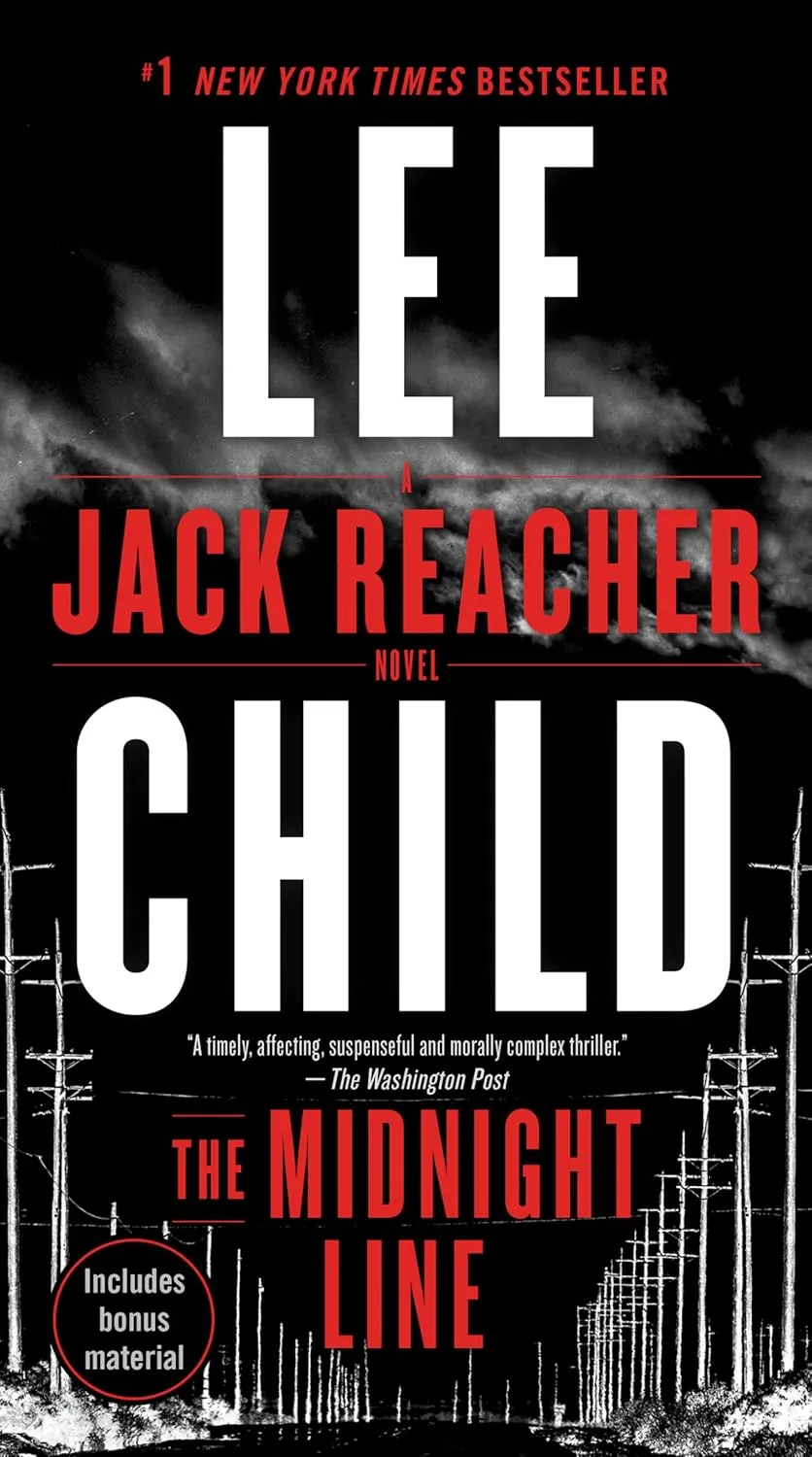
Download Cover Image
Do you want to download the full cover image for The Midnight Line: A Jack Reacher Novel?