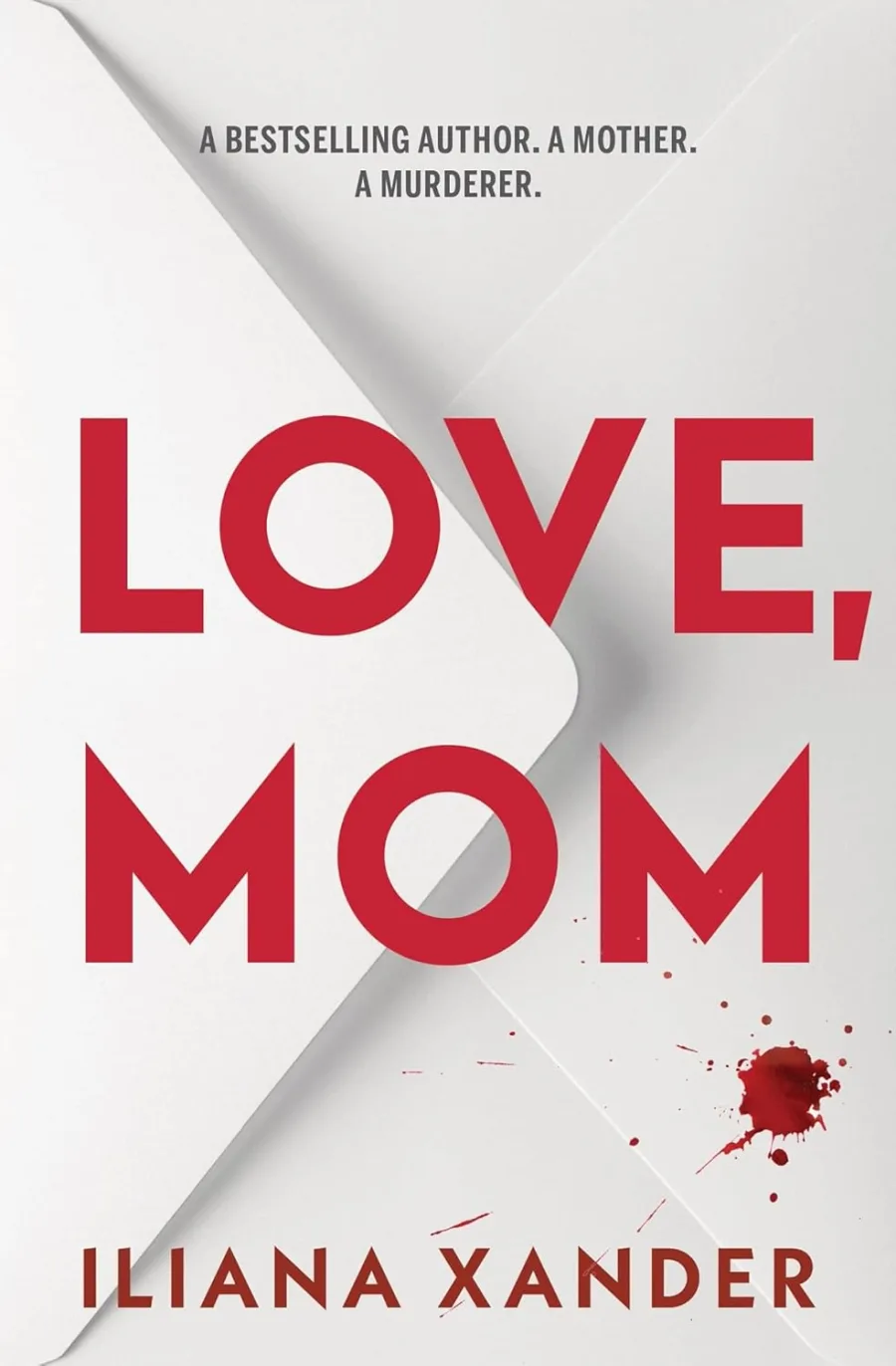
Love, Mom
Paperback
• 368 Pages
• USD 17.99
• English
• 9781464266522
No ratings yet
| Publisher | Poisoned Pen Press |
|---|---|
| ISBN13 | 9781464266522 |
| ASIN/SKU | 1464266522 |
| Book Format | Paperback |
| Language | English |
| Pages | 368 |
| List Price | USD 17.99 |
| Publishing Date | 02/09/2025 |
| Dimensions | 5.25 x 0.92 x 8 inches |
| Weight | 10.7 ounces |
| Book Code | BD00055899 |
Buy this Book
Amazon Stores
Ebook Stores
Other Stores
Discover Love, Mom by Iliana Xander. This book is published by Poisoned Pen Press in Paperback format, ISBN 9781464266522, ASIN 1464266522, under Mystery, Thriller and Suspense, Murder Thrillers, Psychological Thrillers.
Book Description
From #1 bestselling author Iliana Xander comes a twisty, fast-paced psychological thriller, perfect for fans of Freida McFadden.
Mackenzie Casper is a brilliant student. But she is best known for her mother, a best-selling author whose dark, twisted thrillers have a dedicated worldwide fanbase. When her mother dies in an accident, fans across the world are left grieving, and the investigators are asking: Was that really an accident?
The day of the memorial service, Mackenzie gets the first mysterious envelope, signed,
From #1 fan. XOXO.
Inside are the pages of her mother's diary that start with the lines:
Want to know a secret?
Love, Mom.
What Mackenzie reads leaves her in shock.
Then comes the second letter.
And the third...
Mackenzie starts her own investigation and stumbles upon secrets that her family has lived with for years.
Quickly, she realizes that her mother's path to stardom was etched with sinister lies that might have caught up with her.
Sometimes fame is worth a murder. Or worse.
Soon, Mackenzie will come to find out that there are worse things than murder…
Mackenzie Casper is a brilliant student. But she is best known for her mother, a best-selling author whose dark, twisted thrillers have a dedicated worldwide fanbase. When her mother dies in an accident, fans across the world are left grieving, and the investigators are asking: Was that really an accident?
The day of the memorial service, Mackenzie gets the first mysterious envelope, signed,
From #1 fan. XOXO.
Inside are the pages of her mother's diary that start with the lines:
Want to know a secret?
Love, Mom.
What Mackenzie reads leaves her in shock.
Then comes the second letter.
And the third...
Mackenzie starts her own investigation and stumbles upon secrets that her family has lived with for years.
Quickly, she realizes that her mother's path to stardom was etched with sinister lies that might have caught up with her.
Sometimes fame is worth a murder. Or worse.
Soon, Mackenzie will come to find out that there are worse things than murder…
Author Biography
Iliana Xander is the author of the psychological thriller Love, Mom. She's been writing stories since she was a teen and has published over twenty novels in various genres under different pen names. Secrets, heartbreaks, love, envy, and twisty twists―you'll find it all in her books. When she's not writing, she is traveling the world or making crazy art.
Editorial Reviews
Editorial Reviews will be added soon…
Book Summary
Love, Mom by Iliana Xander is a dark, emotionally tense story about the complicated and often painful bond between a mother and daughter, framed inside a twisting psychological mystery. At its core is a woman who has spent her life shaped, controlled, and scarred by her mother’s influence. As the story unfolds, we see how love, guilt, fear, and manipulation can become tangled together until it is almost impossible to separate genuine care from emotional abuse. The book uses that emotional confusion as the engine for suspense: we are never entirely sure whom to trust, what really happened in the past, and how much of what we are told is true. The narrative moves quickly, layering secrets and revelations in ways that constantly force the reader to rethink their assumptions about both mother and daughter.
The story centers around the daughter, who has long carried the emotional weight of a troubled upbringing. Her mother, at first glance, appears to have been a devoted, overprotective parent, someone who insisted she always knew what was best. But as the plot develops, we begin to see the darker side of that “love”: a pattern of control, gaslighting, and subtle cruelty, cloaked in concern. The daughter’s memories are full of moments when her mother insisted she was doing the right thing, even as those actions left emotional scars. This makes the daughter’s present-day reality unstable. She doubts her own perceptions and struggles to decide whether her mother is a victim of her own issues, a well-meaning but damaged person, or a dangerous manipulator who always knew exactly what she was doing.
The book’s tension grows when the mother’s presence shifts from everyday interference to something more haunting and mysterious. Depending on the specific events of the plot, this may take the form of letters, messages, or lingering clues that suggest the mother still has a hold on her daughter’s life, even when she isn’t physically there. The title “Love, Mom” evokes the sign-off of a note or message, and that theme runs throughout the story: the mother’s voice, literal or imagined, continues to invade the daughter’s thoughts. Is the mother reaching out from a distance to protect her child, or is she still trying to control her? Are these communications heartfelt or manipulative? The daughter, already unstable from years of emotional pressure, becomes increasingly unsure of the truth, and that uncertainty drives much of the psychological suspense.
Iliana Xander builds the thriller aspect by combining intense emotional scenes with a series of plot twists that constantly shift the reader’s understanding of what is happening. Details about the mother’s past, the daughter’s childhood, and family secrets gradually come to light. We learn that certain key events, perhaps involving violence, betrayal, or serious mistakes, have been hidden or distorted. The daughter discovers that what she believed about her mother—and sometimes about herself—was incomplete or deliberately shaped. Each new revelation forces her to see her childhood differently, to question where the line lies between parental protection and harm. The fast pacing keeps readers gripped as new evidence appears, confrontations occur, and the emotional stakes rise higher and higher.
One of the central themes of the book is the long-term impact of psychological abuse and manipulation. The daughter’s adult life shows how deeply a parent’s behavior can affect self-esteem, relationships, and mental health. She struggles with trust, fears intimacy, and often second-guesses her own feelings. Even when she recognizes parts of her mother’s behavior as toxic, it is hard for her to let go of the belief that this is what love looks like. The story explores that inner conflict: wanting to hate someone who hurt you, yet still craving their approval and affection, and feeling guilty for seeing them as a villain. The mother’s character is layered, too; she is not portrayed as a simple monster but as a complex, flawed person whose choices collide with her own pain and unresolved issues.
As the plot accelerates, the daughter’s quest for truth pushes her into riskier and more emotionally intense situations. She may investigate old records, confront family members, or retrace the events of her childhood, chasing answers to a central question: what is the real story behind her relationship with her mother? With each step, the boundary between memory and reality becomes more fragile. She begins to question not only what her mother did, but whether her own mind has distorted the past to cope with trauma. The psychological thriller format amplifies this uncertainty: the reader is kept off balance, unsure whether to believe the protagonist’s perspective, the mother’s version of events, or some hidden third reality waiting to be discovered.
The several twists promised in the subtitle come as the daughter uncovers shocking connections and hidden motives. People she thought she understood turn out to have their own secrets; events she took at face value reveal darker layers. There may be revelations about why the mother acted as she did, or about other players who influenced the family dynamic. These twists do not just serve as surprises; they deepen the emotional complexity of the story. Sometimes a character we saw as purely harmful is shown in a more sympathetic light, or someone who seemed supportive turns out to have been quietly contributing to the damage. The novel plays with the idea that in families, no one is entirely innocent, and love can coexist with terrible behavior.
By the time the story reaches its climax, the daughter is forced into a crucial choice: whether to continue living under the shadow of her mother’s influence or break free, even if that means facing painful truths and losing what little comfort that “love” once gave her. The resolution brings together the psychological and thriller elements by revealing the full picture of their relationship, the reality behind the messages and memories, and the consequences of the mother’s actions. The outcome is tense and emotionally charged, offering some measure of closure but not a simple, fairy-tale healing. Instead, it acknowledges that surviving psychological harm is messy, that forgiveness and freedom are complicated, and that some wounds never fully disappear, even when you understand how they were inflicted.
Overall, Love, Mom is a fast-moving, emotionally intense psychological thriller that uses the fragile, powerful bond between mother and child as its main source of suspense. Iliana Xander writes in a way that feels immediate and human, capturing the confusion of someone trying to untangle love from control and truth from manipulation. The story’s pace, combined with its many twists, keeps readers invested, while its focus on psychological depth makes it more than just a puzzle to solve. It is a portrait of how a parent’s voice can echo through a life long after childhood ends, and how uncovering the truth—even when it hurts—can be a necessary step toward reclaiming one’s own identity.
The story centers around the daughter, who has long carried the emotional weight of a troubled upbringing. Her mother, at first glance, appears to have been a devoted, overprotective parent, someone who insisted she always knew what was best. But as the plot develops, we begin to see the darker side of that “love”: a pattern of control, gaslighting, and subtle cruelty, cloaked in concern. The daughter’s memories are full of moments when her mother insisted she was doing the right thing, even as those actions left emotional scars. This makes the daughter’s present-day reality unstable. She doubts her own perceptions and struggles to decide whether her mother is a victim of her own issues, a well-meaning but damaged person, or a dangerous manipulator who always knew exactly what she was doing.
The book’s tension grows when the mother’s presence shifts from everyday interference to something more haunting and mysterious. Depending on the specific events of the plot, this may take the form of letters, messages, or lingering clues that suggest the mother still has a hold on her daughter’s life, even when she isn’t physically there. The title “Love, Mom” evokes the sign-off of a note or message, and that theme runs throughout the story: the mother’s voice, literal or imagined, continues to invade the daughter’s thoughts. Is the mother reaching out from a distance to protect her child, or is she still trying to control her? Are these communications heartfelt or manipulative? The daughter, already unstable from years of emotional pressure, becomes increasingly unsure of the truth, and that uncertainty drives much of the psychological suspense.
Iliana Xander builds the thriller aspect by combining intense emotional scenes with a series of plot twists that constantly shift the reader’s understanding of what is happening. Details about the mother’s past, the daughter’s childhood, and family secrets gradually come to light. We learn that certain key events, perhaps involving violence, betrayal, or serious mistakes, have been hidden or distorted. The daughter discovers that what she believed about her mother—and sometimes about herself—was incomplete or deliberately shaped. Each new revelation forces her to see her childhood differently, to question where the line lies between parental protection and harm. The fast pacing keeps readers gripped as new evidence appears, confrontations occur, and the emotional stakes rise higher and higher.
One of the central themes of the book is the long-term impact of psychological abuse and manipulation. The daughter’s adult life shows how deeply a parent’s behavior can affect self-esteem, relationships, and mental health. She struggles with trust, fears intimacy, and often second-guesses her own feelings. Even when she recognizes parts of her mother’s behavior as toxic, it is hard for her to let go of the belief that this is what love looks like. The story explores that inner conflict: wanting to hate someone who hurt you, yet still craving their approval and affection, and feeling guilty for seeing them as a villain. The mother’s character is layered, too; she is not portrayed as a simple monster but as a complex, flawed person whose choices collide with her own pain and unresolved issues.
As the plot accelerates, the daughter’s quest for truth pushes her into riskier and more emotionally intense situations. She may investigate old records, confront family members, or retrace the events of her childhood, chasing answers to a central question: what is the real story behind her relationship with her mother? With each step, the boundary between memory and reality becomes more fragile. She begins to question not only what her mother did, but whether her own mind has distorted the past to cope with trauma. The psychological thriller format amplifies this uncertainty: the reader is kept off balance, unsure whether to believe the protagonist’s perspective, the mother’s version of events, or some hidden third reality waiting to be discovered.
The several twists promised in the subtitle come as the daughter uncovers shocking connections and hidden motives. People she thought she understood turn out to have their own secrets; events she took at face value reveal darker layers. There may be revelations about why the mother acted as she did, or about other players who influenced the family dynamic. These twists do not just serve as surprises; they deepen the emotional complexity of the story. Sometimes a character we saw as purely harmful is shown in a more sympathetic light, or someone who seemed supportive turns out to have been quietly contributing to the damage. The novel plays with the idea that in families, no one is entirely innocent, and love can coexist with terrible behavior.
By the time the story reaches its climax, the daughter is forced into a crucial choice: whether to continue living under the shadow of her mother’s influence or break free, even if that means facing painful truths and losing what little comfort that “love” once gave her. The resolution brings together the psychological and thriller elements by revealing the full picture of their relationship, the reality behind the messages and memories, and the consequences of the mother’s actions. The outcome is tense and emotionally charged, offering some measure of closure but not a simple, fairy-tale healing. Instead, it acknowledges that surviving psychological harm is messy, that forgiveness and freedom are complicated, and that some wounds never fully disappear, even when you understand how they were inflicted.
Overall, Love, Mom is a fast-moving, emotionally intense psychological thriller that uses the fragile, powerful bond between mother and child as its main source of suspense. Iliana Xander writes in a way that feels immediate and human, capturing the confusion of someone trying to untangle love from control and truth from manipulation. The story’s pace, combined with its many twists, keeps readers invested, while its focus on psychological depth makes it more than just a puzzle to solve. It is a portrait of how a parent’s voice can echo through a life long after childhood ends, and how uncovering the truth—even when it hurts—can be a necessary step toward reclaiming one’s own identity.
Sample Chapters
e
Reader Reviews
No reviews yet.
Love, Mom